1890s Art

to
207
1,016
354
237
106
146
Overall Width
to
Overall Height
to
7,570
21,488
164,301
234,712
2,051
2,298
4,968
6,480
5,738
15,231
20,896
26,029
18,807
14,127
5,379
217
187
74
30
8
8
5
5
3
2
1,084
694
11
1,219
660
406
361
327
194
191
180
175
146
123
119
102
90
89
78
63
62
56
54
718
640
496
410
323
59
36
26
23
16
702
212
1,001
844
Period: 1890s
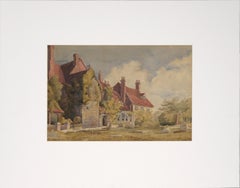
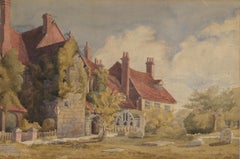
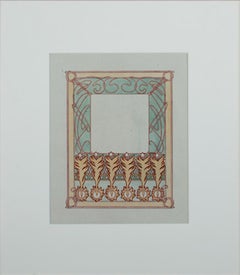
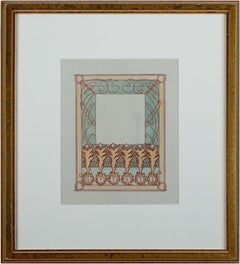
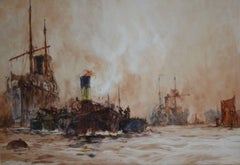
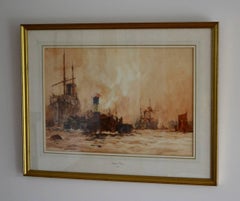
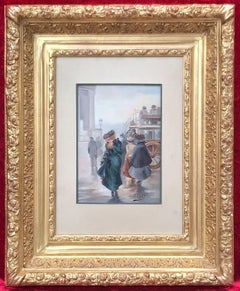
Tower, Original Watercolor Painting, Ready to Hang, Framed

Tower, Original Watercolor Painting, Ready to Hang, Framed

Located in Granada Hills, CA

Artist: August Töpfer Work: Original Watercolor painting, handmade artwork, one of a kind Medium: Watercolor on Satin Paper Year: 1834-1911 Style: Classic Art Title: Tower, Size: 12...

Category

Old Masters 1890s Art

Materials

Watercolor, Satin Paper

The Blacksmith of Solingen / - The Double-edged Sword -

The Blacksmith of Solingen / - The Double-edged Sword -

Located in Berlin, DE

Wilhelm Albermann (1835 Werden an der Ruhr - 1913 Cologne), The Blacksmith of Solingen, after 1895. Bronze-color patinated zinc cast on plinth, 47 cm (height) x 20 cm (width) x 16 cm (depth), weight 5.5 kg. Signed “Albermann.” on the plinth and identified as a cast by “AKT.[TIEN] GES.[ELLSCHAFT] GLADENBECK BERLIN”. Dedication on the front: “Mr. Ing. F. Kuhlmann to the wedding. Management and officials of the Hannoversche Waggonfabrik. Aircraft construction department". - The zinc showing through in spots, the patina somewhat stained, the right upper arm under the sleeve retouched in black. - The Double-edged Sword - The figure is a reduction of Wilhelm Albermann's 1895 fountain figure of the armourer of Solingen, who has always been identified with the historical blacksmith Peter Hahn. In 1839, Karl Simrock wrote the poem “The Blacksmith of Solingen" and thus coined the legendary figure. The first and penultimate verses read: A blacksmith spoke to Solingen With every bayonet, That came to his diligence: "Oh, that Fritz had it!" The war took its course, Many battles were fought, Which often made him fearful and anxious In his soul. The blacksmith had given up his trade to fight for Frederick the Great. Not least because of his strength and will to fight, the battles were won. With his fountain sculpture, Albermann has given the legendary blacksmith a figurative form and at the same time created a landmark for the city of Solingen, which was once famous for the art of sword forging and today still stands for the production of high-quality knives. During the bombing raid in November 1944, the fountain was destroyed along with the entire old town of Solingen. Only the head remained. The broad-shouldered blacksmith stands securely behind his anvil, his leather apron tied around him, and has just finished a sword blade with his own "weapon" - the blacksmith's hammer. His entire body shows the strength with which he wields the hammer, but also the strain of this activity, as evidenced by the wide open shirt, the somewhat 'untidy' apron, and especially the furrowed face. However, the blacksmith does not look at the finished work, but resolutely and at the same time thoughtfully into the distance, in line with the quoted verse from Simrock's poem that the battles "often made him fearful and anxious in his soul". There is certainly something melancholy in his gaze, fed by the knowledge of the necessity of forging swords and taking up arms and their deadly use - experiences Albermann had to make during his own war missions. The flowing full beard gives his gaze into the distance an almost prophetic character. In keeping with the craft of the perfectly formed art of blacksmithing, the detailed casting reproduces the respective materials depicted in perfect form: the leather apron convincingly conveys the impression of leather and lies - also in the back view - like a second formed layer over the body, while the shirt and trousers illustrate their own textile qualities. Due to its masterful execution and profound content, the “Blacksmith of Solingen”, which has survived in its cast reproductions, remains Albermann's most famous work to this day. About the artist The son of a carpenter, Wilhelm Albermann began an apprenticeship as a joiner, but then followed his artistic calling and trained as a sculptor in Elberfeld. In 1855, at the age of twenty, he was drafted into the army in Berlin, where he served until 1857. Albermann attended the Berlin Art Academy on the side and began regular studies after his service. While still a student, he completed commissioned works for his teachers August Fischer and Hugo Hagen. His first independent commissions followed, enabling him to establish a flourishing sculpture studio in Cologne in 1865. His artistic activities were repeatedly interrupted by military service, and he took part in the German-Danish War in 1864, the war against Austria in 1866, and the Franco-Prussian War in 1870/71. After his last war service, Albermann, already a respected artist, founded a commercial drawing school at the request of the city government, where he taught the modeling class and served as director until 1896. In 1890 he also worked for the "Society for the Promotion of Sculpture in the Rhineland and Westphalia". Albermann was one of the most prolific sculptors in Cologne in the second half of the 19th century. He created numerous monuments, fountains, tomb sculptures, architectural ornaments, and domestic statues. At its peak, his workshop employed up to thirty sculptors and stonemasons at a time. GERMAN VERSION Wilhelm Albermann (1835 Werden an der Ruhr - 1913 Köln), Der Schmied von Solingen, nach 1895. Bronzefarben patinierter Zinkguss auf gegossener Plinthe, 47 cm (Höhe) x 20 cm (Breite) x 16 cm (Tiefe), Gewicht 5,5 kg. Auf der Plinthe mit „Albermann.“ signiert und als Guss der „AKT.[TIEN] GES.[ELLSCHAFT] GLADENBECK BERLIN“ ausgewiesen. Schauseitige Widmung: „Herrn Ing. F. Kuhlmann zur Vermählung. Direktion und Beamte der Hannoverschen Waggonfabrik. Abt. Flugzeugbau“. - Punktuelles Durchscheinen des Zinks, Patina etwas fleckig, der rechte Oberarm unter dem Ärmel schwarz retuschiert. - Die Zweischneidigkeit des Schwertes - Die Figur ist eine Reduktion von Wilhelm Albermanns 1895 geschaffener Brunnenfigur des Waffenschmieds von Solingen, der seit jeher mit dem historischen Schmied Peter Hahn identifiziert wurde. 1839 hatte Karl Simrock das Gedicht „Der Schmied von Solingen“ verfasst und damit die legendäre Figur geprägt. Die erste und die vorletzte Strophe lauten: Zu Solingen sprach ein Schmied Bei jedem Bajonette, Das seinem Fleiß geriet: »Ach, daß der Fritz es hätte!« Der Krieg ging seinen Gang, Man schlug noch viele Schlachten, Die oft ihm angst und bang' In seiner Seele machten. Der Schmied hatte sein Handwerk ruhen lassen, um selbst für Friedrich den Großen zu kämpfen. Nicht zuletzt durch seine Kraft und seinen Kampfeswillen verliefen die Schlachten siegreich. Dem legendären Schmied verlieht Albermann mit seiner Brunnenskulptur eine bildliche Gestalt und schuf damit zugleich ein Wahrzeichen der Stadt Solingen, die einst für die Kunst des Schwerterschmiedens berühmt war und bis heute für die Herstellung qualitätvoller Messer einsteht. Beim Bombenangriff im November 1944 wurde mit der gesamten Solinger Altstadt auch der Brunnen zerstört. Einzig der Kopf blieb erhalten. Mit sicherem Stand und umgebundener Lederschürze steht der breitschultrige Schmied hinter seinem Amboss und hat gerade mit seiner eigenen ‚Waffe‘ – dem Schmiedehammer – eine Schwertklinge fertiggestellt. Seinem gesamten Körper ist die Kraft abzulesen, mit der er den Hammer führt, aber auch die Anstrengung dieser Tätigkeit, wovon das weit geöffnete Hemd, die etwas ‚unordentlich‘ arrangierte Schürze und vor allem das zerfurchte Gesicht zeugen. Der Schmied schaut aber nicht auf das vollendete Werk, sondern entschlossen und zugleich sinnierend in die Ferne, entsprechend der zitierten Zeile von Simrocks Gedicht, dass die Schlachten „oft ihm angst und bang‘ in seiner Seele machten“. Der Blick hat durchaus etwas Melancholisches, dass sich aus dem Wissen um die Notwendigkeit, Schwerter zu schmieden und zu den Waffen zu greifen und deren tödlichem Einsatz speist – Erfahrungen, die Albermann bei seinen eigenen Kriegseinsätze machen musste. Der wallende Vollbart verleiht dem in die Ferne schauenden Blick einen beinahe prophetischen Charakter. Dem Handwerk der formvollendenden Schmiedekunst entsprechend, gibt der detaillierte Guss die jeweils dargestellten Materialien in vollendeter Ausformung wieder: Die Lederschürze vermittelt überzeugend den Eindruck des Leders und liegt – auch in der Rückenansicht – wie eine zweite ausgeformte Schicht über dem Körper, während das Hemd und die Hose...

Category

Realist 1890s Art

Materials

Metal

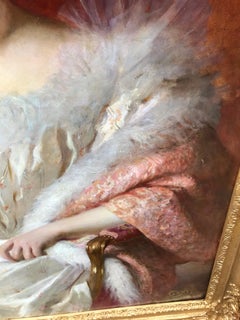
J J A Lecomte du Nouÿ (1842-1923) A shoulder and back study, oil painting

J J A Lecomte du Nouÿ (1842-1923) A shoulder and back study, oil painting

Jean-Jules-Antoine Lecomte du Nouÿ (1842-1923) A shoulder and back study, oil study oil on canvas 34 x 19.5 cm In good condition, a few small inpaintings visible under UV lights Stamp of the Estate sale in Toulouse on the stretcher In a modern frame : 40 x 25 cm Provenance : Estate of the artist and family of the artist by descent Estate sale in Toulouse 22 June 1999 This very interesting oil study was part of a set kept by the artist. He had studied fragments of anatomy both to use them as models in large compositions but probably also because he represented so many fragments. It is clear that this fragment of anatomy has a power of suggestion and serves as a relay to the imagination of the viewer, who is led to imagine the rest of the body taken as a model. We can speak of metonymy in painting and it is clear that the artist had this in mind when he kept such studies with him. Jean-Jules-Antoine Lecomte du Nouÿ was born on 10 June 1842 in Paris. Originally of a Piedmontese origin, his family had been settled in France since the fourteenth century and by the time of his birth had reached the status of nobility He was an Orientalist French painter and sculptor. He was strongly influenced by the works and teachings of Charles Gleyre and Jean-Léon Gérôme. Lecomte du Nouÿ found inspiration for his art through extensive travels to Greece, Turkey, Egypt, Romania and Italy. The thematic content of Lecomte du Nouÿ's work was mainly figural, but also spanned over a vast range of imagery throughout his career, including classical, historical and religious. Lecomte du Nouÿ is known for remaining faithful to his detailed, realistic style throughout the extent of his career, despite the onset of the Impressionist, Fauvist and Constructivist artistic movements during his lifetime. His work is said to have contributed significantly to the establishment of an iconic repertoire representing the Orient in the nineteenth century.A Parisian street was named after him in 1932.  Lecomte du Nouÿ showed a strong attachment to visual art from a young age and was reported to have painted portraits of his father and uncle by the age of 6. In 1861, at 19 years of age, the artistic talents of young Jean-Jules-Antoine Lecomte du Nouÿ prompted him to become a pupil at the atelier of Swiss artist, Charles Gleyre. Under Gleyre's guidance Jean-Jules-Antoine learned the significance of individualistic style and gained the foundations of creative visual presentation. Later, Lecomte du Nouy further perfected his knowledge of the artistic form under the mentorship of Jean-Léon Gérôme, who was a renowned painter of the Academicism movement. It was at this time that Jean-Jules-Antoine learned the precision required to depict "la belle nature" —a style of illustration that aims to create the most beautiful representations of the natural form. This later became one of the main techniques employed in Lecomte du Nouÿ's signature artwork. In 1865, Du Nouÿ accompanied fellow artist, Félix Auguste Clément...

Category

Romantic 1890s Art

Materials

Oil

Street of the Old Quarter British School signed Cade oil on canvas painting

Street of the Old Quarter British School signed Cade oil on canvas painting

Located in Sitges, Barcelona

**Technical Sheet** **Title:** "Street of the Old Quarter" **Author:** British School, 19th Century **Date:** 1892 **Technique:** Oil on canvas **Dimensions:** 14.17 x 10.63 inc...

Category

American Realist 1890s Art

Materials

Canvas, Oil

Chromolithograph after Childe Hassam - Venice

Chromolithograph after Childe Hassam - Venice

By Childe Hassam

Located in Henderson, NV

Medium: chromolithograph (after the watercolor). This delightful antique lithograph was published in a small edition in 1892 to illustrate a rare volume with scenes of Venetian life....

Category

1890s Art

Materials

Lithograph

"Florence´s Bridge", 19th Century Oil on Canvas by Antonietta Brandeis

"Florence´s Bridge", 19th Century Oil on Canvas by Antonietta Brandeis

By Antonietta Brandeis

Located in Madrid, ES

ANTONIETTA BRANDEIS Czechoslovakian, 1848 - 1926 FLORENCE´S BRIDGE signed "ABrandeis" lower right oil on canvas 10-3/5 x 14-4/5 inches (27 x 37.5 cm.) unframed PROVENANCE Private Collection, Barcelona Antonietta Brandeis (also known as Antonie Brandeisová) (1848–1926), was a Czech-born Italian landscape, genre and portrait painter, as well as a painter of religious subjects for altarpieces. She was born on January 13, 1848, in Miskovice (near Kutná Hora) in Bohemia, Austria-Hungary.[2] The first bibliographical indication of Antonietta Brandeis dates from her teens, when she is mentioned as a pupil of the Czech artist Karel Javůrek of Prague.[3] After the death of Brandeis' father, her mother, Giuseppina Dravhozvall, married the Venetian Giovanni Nobile Scaramella; shortly afterward the family apparently moved to Venice. In the 1867 registry of the Venetian Academy of Fine Arts, Brandeis is listed as being enrolled as an art student. At this time, Brandeis would have been nineteen, and one of the first females to receive academic instruction in the fine arts in Italy. In fact, the Ministry granted women the legal right to instruction in the fine arts only in 1875, by which time Brandeis had finished her education at the Academy. Brandeis’s professors at the Venetian Academy of Fine Arts include Michelangelo Grigoletti and Napoleone Nani for life drawing, Domenico Bresolin for landscape, Pompeo Marino Molmenti for painting and Federico Moja for perspective. Already during her first years of study there is evidence of Brandeis' skill-in her first year she is awarded prizes and honors in Perspective and Life Drawing. Brandeis’ continuing excellence and diligence in her artistic studies during the five years she spends at the Academy is attested to in the lists of prize-winning students of the Academy “Elenco alunni premiati Accademia Venezia in Atti della Reale Accademia di Belle Arti in Venezia degli anni 1866-1872”.[4] It includes numerous mentions of prizes and high honours won by Brandeis in Art History, Perspective, Life Drawing, Landscape and Anatomical Drawing, Drawing of Sculpture, and “Class of Folds”. It is in Venice at the Academy that Brandeis perfected her skills as a meticulous landscape and cityscape painter, with intricate and luminous details in the tradition of the eighteenth-century “vedutisti”. In 1870, while still a student at the Academy, she participated in her first exhibition; that of the Società Veneta Promotrice di Belle Arti with the oil painting Cascina della Madonna di Monte Varese. She is documented as having exhibited eight paintings during the years 1872 to 1876 with the Società Veneta Promotrice di Belle Arti, both landscapes and genre scenes. In the exhibit of 1875 her landscape Palazzo, Marin Falier is sold to M. Hall of London for 320 lire, a first indication of the success Brandeis will achieve with foreign collectors of her work (particularly the English and German visitors to Italy on the Grand Tour circuit). During these same years, she showed two paintings in the Florentine exhibit Promotrice Fiorentina. The first painting, entitled “Gondola” is a subject which she repeats in new variations throughout her career with great success. The second, perhaps a genre painting, is entitled “Buon dì !” The two paintings remained unsold and were presented at the same exhibition the following year, together with two more genre scene paintings. In 1876 and 1877 she exhibited three landscapes of Venice at the Promotrice Veneta, which sold to foreign collectors. In November 1877 Brandeis showed the large painting Palazzo Cavalli a Venezia at the exhibition of the Hungarian Fine Arts Society in Budapest. In both Florence and Budapest, Brandeis showed her work under the name “Antonio Brandeis”. The biographer De Gubernatis offers the following explanation for the change of name: “her first pictures received praise and criticism; she took the criticism, but when she was praised as a woman she was annoyed, and therefore exhibited under the name Antonio Brandeis.” During the years 1878 to 1893 Brandeis painted and exhibited numerous works, primarily scenes of Venice, and although she resided chiefly in that city she also traveled and painted in Verona, Bologna, Florence, and Rome. As well as in Venice and Florence, she exhibited in Turin, Milan, and Rome. In 1880 she was present at the International Exposition of Melbourne with three paintings: Palazzo Cavalli, A Balcony in Venice and The Buranella- native of Burano Island near Venice. Brandeis was a prolific painter, and often replicated her most popular subjects with only slight variations. She was represented in Venice at the photographer Naya’s studios in Piazza San Marco and in Campo San Maurizio and in Florence she collaborated with the picture dealer Giovanni Masini. During this period of intense activity painting landscapes en plein air and genre scenes, Brandeis also is documented in De Gubernatis as a painter of religious altarpieces. Several of these altarpieces can be found on the Island of Korcula in Croatia. Two are visible in the parish church of Smokvici and of in the church of St. Vitus in Blato. In the sacristy of the Cathedral of Korcula is a Madonna with Christ Child painted by Brandeis. For the same church she also painted a copy of the central panel of Giovanni Bellini’s triptych from the Venetian Church of Santa Maria dei Frari Gloriosa (1488). In 1899, for the main altar of the chapel of St. Luke in the Korcula town cemetery, Brandeis painted a St. Luke, which shows the sparkling colors and free impasto typical of her plein air oil paintings. On October 27th 1897 at the age of 49, Brandeis married the Venetian Antonio Zamboni, a knight and officer of the Italian Crown and knight of the Order of SS. Maurizio and Lazzaro. The couple continued to reside in Venice and Brandeis continued to show at Italian exhibitions in Venice, Florence, and Rome although more sporadically and with fewer works than before. Although she participated in the International Exposition of Watercolourists in Rome in 1906 with a “Study” and in the Società Promotrice delle Belle Arti in Florence in 1907 and 1908 with two oil paintings, De Gubernatis quotes Brandeis as saying in 1906, that even though she resides in Venice “I am a foreigner, and for some time I have not taken part in Italian Exhibitions, sending all my paintings to London.[3] Antonio Zamboni died 11...

Category

Realist 1890s Art

Materials

Canvas, Oil

A Farmyard with a Haystack. An antique oil painting on canvas

A Farmyard with a Haystack. An antique oil painting on canvas

By Hector Chalmers

Located in St. Albans, GB

Hector CHALMERS 1849-1943 Oil on canvas signed Hector Chalmers bottom right I wonderful depiction of a tranquil Scottish farmstead. An understated piece which enhances the quality o...

Category

Impressionist 1890s Art

Materials

Oil

In the Brambles - Original lithograph - 1897

In the Brambles - Original lithograph - 1897

By Henry Detouche

Located in Paris, IDF

Henry DETOUCHE In the Brambles Original lithograph Printed signature in the plate 1897/98 Printed on paper Vélin Size 40 x 31 cm (c. 16 x 12") INFORMATION : Published by 'Estampe ...

Category

Art Nouveau 1890s Art

Materials

Lithograph

Circa 1895 poster for Miss Francis of Yale - London’s Globe Theatre

Circa 1895 poster for Miss Francis of Yale - London’s Globe Theatre

Located in PARIS, FR

This lively circa 1895 poster for Miss Francis of Yale, performed at London’s Globe Theatre, captures the playful energy of late Victorian theatrical advertising. Printed by Waterlow...

Category

1890s Art

Materials

Paper, Lithograph

“French Countryside at Dusk”

“French Countryside at Dusk”

By Raymond Jean Verdun

Located in Southampton, NY

Oil on heavy card stock laid down on masonite by the French artist, Raymond Jean Verdun. Signed lower right. Circa 1895. Condition: Good. Overall framed 7 by 11 inches. The frame has been restored. Born 1873, in Nogent-le-Rotrou; died 1954...

Category

Barbizon School 1890s Art

Materials

Masonite, Paper, Oil

Sleeping Diana - Original Woodcut by J.J. Weber - 1898

Sleeping Diana - Original Woodcut by J.J. Weber - 1898

By Arnold Bocklin (After)

Located in Roma, IT

Image dimensions: 34.2 x 45.5 cm. Sleeping Diana is an original print, realized in 1898. Black and white woodcut print on applied Japon paper. Good conditions except for yellowing of paper (especially along the margins), and very light folds on lower left side. The print was realized by Johann Jacob Weber and it's part of the series Meisterwerke der Holzschneidekunst (original title: SECHZEHN HOLZSCHNITTE NACH GEMÄLDEN ARNOLD BÖCKLIN...

Category

Symbolist 1890s Art

Materials

Woodcut

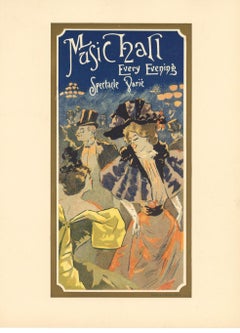
"Music Hall" French lithograph poster, printed in 1897

"Music Hall" French lithograph poster, printed in 1897

Located in Henderson, NV

Medium: lithograph (after the poster). Printed in 1897 on smooth wove paper and published in Paris by Librairie Nilsson. Image size: 9 1/4 x 4 3/4 inches (237 x 122 mm). Sheet size: ...

Category

1890s Art

Materials

Lithograph

ШУТ (Jester) by Sergey Solomko, Russian Art Nouveau folklore lithograph

ШУТ (Jester) by Sergey Solomko, Russian Art Nouveau folklore lithograph

Located in Chicago, IL

“Each country that approached the ideology of the Art Nouveau clearly had their own unique contribution to the movement; these artworks are rare and perfect examples of how Russian artists incorporated the aesthetics of their homeland... The periodical Jester was published in St. Petersburg from 1897 to 1914 and commented on the arts, theater, and public life with humorous prose and illustration. Sergey...

Category

Art Nouveau 1890s Art

Materials

Lithograph

Odalisque
Odalisque

Odalisque

Located in New York, NY

Italian, ca. 19th century Odalisque Signed illegible Oil on canvas 51 in. x 21 3/4 inches Framed: 61 1/2 x 32 1/4 inches

Category

1890s Art

Materials

Canvas, Oil

(after) Caran d'Ache - lithograph poster

(after) Caran d'Ache - lithograph poster

By Caran D'Ache

Located in Henderson, NV

Medium: lithograph (after the poster). Printed in 1897 on smooth wove paper and published in Paris by Librairie Nilsson. Sheet size: 9 x 12 1/4 inches (230 x 310 mm). Signed in the p...

Category

1890s Art

Materials

Lithograph

(after) Albert Depré - lithograph poster

(after) Albert Depré - lithograph poster

Located in Henderson, NV

Medium: lithograph (after the poster). Printed in 1897 on smooth wove paper and published in Paris by Librairie Nilsson. Image size: 9 3/8 x 6 3/4 inches (238 x 173 mm). Sheet size: ...

Category

1890s Art

Materials

Lithograph

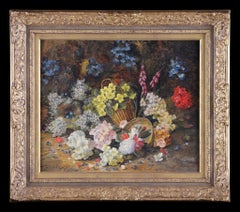
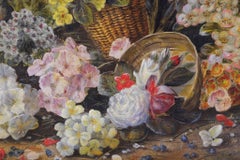
Victorian antique English still life of flowers, birds nest, eggs in a garden

Victorian antique English still life of flowers, birds nest, eggs in a garden

By Henry John Livens

Located in Woodbury, CT

Henry John Livens was born in 1858, in St Pancras, London the direct descendant of Jan Liebens who had left his native Holland in the 1600’s to paint a portrait of the King and subse...

Category

Victorian 1890s Art

Materials

Canvas, Oil

Circa 1895 poster for Cacao Talmone from Turin - Gastronomy

Circa 1895 poster for Cacao Talmone from Turin - Gastronomy

Located in PARIS, FR

This charming circa 1895 poster for Cacao Talmone from Turin is a delightful example of late 19th-century advertising, blending narrative illustration with early brand identity. Root...

Category

Surrealist 1890s Art

Materials

Paper, Lithograph

Iris, Comic Opera - Original Lithograph (Les Maîtres de l'Affiche), 1899

Iris, Comic Opera - Original Lithograph (Les Maîtres de l'Affiche), 1899

By Adolfo Hohenstein

Located in Paris, IDF

HOHENSTEIN Iris, Comic Opera, 1899 Original Lithograph Printed signature in the plate On vellum Size 39 x 29 cm (c. 15.3 x 11.4") INFORMATION : Plate 180 of "Les Maîtres de l'Affiche", Paris, 1899, printed by l'Imprimerie Chaix. Bears the blind stamp of the editor in the lower right corner . This image was created for the italian comic...

Category

Art Nouveau 1890s Art

Materials

Lithograph

"La Vie" original etching

"La Vie" original etching

Located in Henderson, NV

Medium: original etching. Printed in 1897 for the rare portfolio "Art et Nature" by Leon Roger-Miles and published in Paris by Boudet in an edition of 525. Printed on Marais wove pap...

Category

1890s Art

Materials

Etching

On the Anglesea Coast - Welsh Coastal Beach Watercolour Antique Painting

On the Anglesea Coast - Welsh Coastal Beach Watercolour Antique Painting

Located in Sevenoaks, GB

A fine late 19th century watercolour depicting fishermen bringing in the days catch on the Anglesea Coast by James Aitken. The artist specialised in coastal scenes around the British Isles and is very well regarded. Signed lower right. Artist: James Aitken (British, active 1880-1935) Title: On the Anglesea Coast Medium: Watercolour on paper laid on card Size: 15 x 21.5 in (38 x 55 cm) unframed Condition: Very good original condition Provenance: Private collection, Kent James Aitken was born at Newburgh in Fifeshire, Scotland, in 1853/54. He is known to have been active as an artist from 1880 and exhibited at the Royal Academy from 1894-1918. He painted mainly maritime scenes in England and Scotland, and also made several visits to the continent, to paint in France, Italy and Switzerland. From 1894 he visited the Isle of Man, and liked it so much that he moved there permanently with his family in 1911. They took up residence in Port St. Mary. James Aitken exhibited works at the Royal Academy, the Royal Institute, the Royal Watercolour Society and the Royal Cambrian Society as well as in the provinces. He was a member of the Liverpool Academy of Arts. Today, he has works in the Warrington Museum, Walker Art Gallery, Liverpool and the Merseyside Maritime Museum. James Aitken was the father of John Ernest...

Category

1890s Art
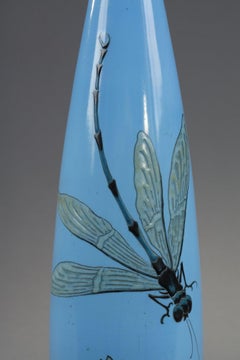
Materials

Watercolor, Laid Paper

Charles Murray Padday Pilot Boat Crew Oil, 1898

Charles Murray Padday Pilot Boat Crew Oil, 1898

Located in Astoria, NY

Charles Murray Padday (English, 1868-1954), Pilot Boat Crew, Oil on Canvas, 1898, signed and dated lower left, giltwood frame. Image: 29.75" H x 48" W; frame: 36" H x 54" W x 2.5" D...

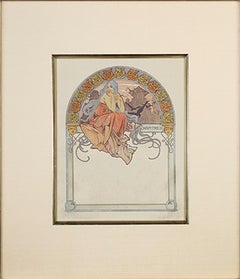
Category

Realist 1890s Art
Materials

Canvas, Oil

Original Outing July 1895 magazine poster  Sailboat

Original Outing July 1895 magazine poster Sailboat

Located in Spokane, WA

Original Outing, July 1895 poster for the Outing magazine. Archivally linen backed in very fine condition. Ready to frame. Images are of the exact poster you will receive. A- ...

Category

Art Nouveau 1890s Art
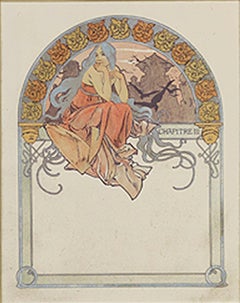
Materials

Lithograph

Der Kuss  The Kiss (plate facing page 116)

Der Kuss The Kiss (plate facing page 116)

By Peter Behrens

Located in Fairlawn, OH

Der Kuss The Kiss (plate facing page 116) Color lithograph, 1898 Signed with the artist's initials in the image (see photo) Published in Pan, Volume IV.2 (Jul-Aug-Sept 1898) Publishe...

Category

Art Nouveau 1890s Art

Materials

Lithograph