1890s Art

to
197
1,016
349
234
101
140
Overall Width
to
Overall Height
to
7,457
21,406
163,677
232,391
2,022
2,274
4,928
6,488
5,800
14,996
20,714
25,753
18,678
14,129
5,309
210
189
73
30
8
8
5
5
3
2
1,079
680
10
1,218
661
403
363
326
192
189
180
175
146
120
118
101
90
88
79
64
62
52
51
715
618
475
410
311
58
36
24
23
16
683
211
936
833
Period: 1890s
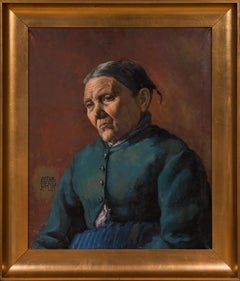
The painter's rest in Denmark

The painter's rest in Denmark

Located in BELEYMAS, FR

Carl SCHLICHTING-CARLSEN (Flensburg 1842 – Hellebæk 1931) The Painter's Rest Oil on canvas H. 130 cm; W. 93 cm Signed and dated lower left – S. Carlsen (18)94 This artist of German ...

Category

French School 1890s Art

Materials

Canvas, Oil

Santa Clara Cuba Antique Tropical Framed Palm Tree River Landscape Oil Painting

Santa Clara Cuba Antique Tropical Framed Palm Tree River Landscape Oil Painting

Located in Buffalo, NY

Cuban impressionist landscape oil painting. Oil painting circa 1890. Framed. Measuring: 13 by 16 inches overall, and 12 by 9 painting alone. Excellent condition, ready to hang and...

Category

Hudson River School 1890s Art

Materials

Canvas, Oil

The Blacksmith of Solingen / - The Double-edged Sword -

The Blacksmith of Solingen / - The Double-edged Sword -

Located in Berlin, DE

Wilhelm Albermann (1835 Werden an der Ruhr - 1913 Cologne), The Blacksmith of Solingen, after 1895. Bronze-color patinated zinc cast on plinth, 47 cm (height) x 20 cm (width) x 16 cm (depth), weight 5.5 kg. Signed “Albermann.” on the plinth and identified as a cast by “AKT.[TIEN] GES.[ELLSCHAFT] GLADENBECK BERLIN”. Dedication on the front: “Mr. Ing. F. Kuhlmann to the wedding. Management and officials of the Hannoversche Waggonfabrik. Aircraft construction department". - The zinc showing through in spots, the patina somewhat stained, the right upper arm under the sleeve retouched in black. - The Double-edged Sword - The figure is a reduction of Wilhelm Albermann's 1895 fountain figure of the armourer of Solingen, who has always been identified with the historical blacksmith Peter Hahn. In 1839, Karl Simrock wrote the poem “The Blacksmith of Solingen" and thus coined the legendary figure. The first and penultimate verses read: A blacksmith spoke to Solingen With every bayonet, That came to his diligence: "Oh, that Fritz had it!" The war took its course, Many battles were fought, Which often made him fearful and anxious In his soul. The blacksmith had given up his trade to fight for Frederick the Great. Not least because of his strength and will to fight, the battles were won. With his fountain sculpture, Albermann has given the legendary blacksmith a figurative form and at the same time created a landmark for the city of Solingen, which was once famous for the art of sword forging and today still stands for the production of high-quality knives. During the bombing raid in November 1944, the fountain was destroyed along with the entire old town of Solingen. Only the head remained. The broad-shouldered blacksmith stands securely behind his anvil, his leather apron tied around him, and has just finished a sword blade with his own "weapon" - the blacksmith's hammer. His entire body shows the strength with which he wields the hammer, but also the strain of this activity, as evidenced by the wide open shirt, the somewhat 'untidy' apron, and especially the furrowed face. However, the blacksmith does not look at the finished work, but resolutely and at the same time thoughtfully into the distance, in line with the quoted verse from Simrock's poem that the battles "often made him fearful and anxious in his soul". There is certainly something melancholy in his gaze, fed by the knowledge of the necessity of forging swords and taking up arms and their deadly use - experiences Albermann had to make during his own war missions. The flowing full beard gives his gaze into the distance an almost prophetic character. In keeping with the craft of the perfectly formed art of blacksmithing, the detailed casting reproduces the respective materials depicted in perfect form: the leather apron convincingly conveys the impression of leather and lies - also in the back view - like a second formed layer over the body, while the shirt and trousers illustrate their own textile qualities. Due to its masterful execution and profound content, the “Blacksmith of Solingen”, which has survived in its cast reproductions, remains Albermann's most famous work to this day. About the artist The son of a carpenter, Wilhelm Albermann began an apprenticeship as a joiner, but then followed his artistic calling and trained as a sculptor in Elberfeld. In 1855, at the age of twenty, he was drafted into the army in Berlin, where he served until 1857. Albermann attended the Berlin Art Academy on the side and began regular studies after his service. While still a student, he completed commissioned works for his teachers August Fischer and Hugo Hagen. His first independent commissions followed, enabling him to establish a flourishing sculpture studio in Cologne in 1865. His artistic activities were repeatedly interrupted by military service, and he took part in the German-Danish War in 1864, the war against Austria in 1866, and the Franco-Prussian War in 1870/71. After his last war service, Albermann, already a respected artist, founded a commercial drawing school at the request of the city government, where he taught the modeling class and served as director until 1896. In 1890 he also worked for the "Society for the Promotion of Sculpture in the Rhineland and Westphalia". Albermann was one of the most prolific sculptors in Cologne in the second half of the 19th century. He created numerous monuments, fountains, tomb sculptures, architectural ornaments, and domestic statues. At its peak, his workshop employed up to thirty sculptors and stonemasons at a time. GERMAN VERSION Wilhelm Albermann (1835 Werden an der Ruhr - 1913 Köln), Der Schmied von Solingen, nach 1895. Bronzefarben patinierter Zinkguss auf gegossener Plinthe, 47 cm (Höhe) x 20 cm (Breite) x 16 cm (Tiefe), Gewicht 5,5 kg. Auf der Plinthe mit „Albermann.“ signiert und als Guss der „AKT.[TIEN] GES.[ELLSCHAFT] GLADENBECK BERLIN“ ausgewiesen. Schauseitige Widmung: „Herrn Ing. F. Kuhlmann zur Vermählung. Direktion und Beamte der Hannoverschen Waggonfabrik. Abt. Flugzeugbau“. - Punktuelles Durchscheinen des Zinks, Patina etwas fleckig, der rechte Oberarm unter dem Ärmel schwarz retuschiert. - Die Zweischneidigkeit des Schwertes - Die Figur ist eine Reduktion von Wilhelm Albermanns 1895 geschaffener Brunnenfigur des Waffenschmieds von Solingen, der seit jeher mit dem historischen Schmied Peter Hahn identifiziert wurde. 1839 hatte Karl Simrock das Gedicht „Der Schmied von Solingen“ verfasst und damit die legendäre Figur geprägt. Die erste und die vorletzte Strophe lauten: Zu Solingen sprach ein Schmied Bei jedem Bajonette, Das seinem Fleiß geriet: »Ach, daß der Fritz es hätte!« Der Krieg ging seinen Gang, Man schlug noch viele Schlachten, Die oft ihm angst und bang' In seiner Seele machten. Der Schmied hatte sein Handwerk ruhen lassen, um selbst für Friedrich den Großen zu kämpfen. Nicht zuletzt durch seine Kraft und seinen Kampfeswillen verliefen die Schlachten siegreich. Dem legendären Schmied verlieht Albermann mit seiner Brunnenskulptur eine bildliche Gestalt und schuf damit zugleich ein Wahrzeichen der Stadt Solingen, die einst für die Kunst des Schwerterschmiedens berühmt war und bis heute für die Herstellung qualitätvoller Messer einsteht. Beim Bombenangriff im November 1944 wurde mit der gesamten Solinger Altstadt auch der Brunnen zerstört. Einzig der Kopf blieb erhalten. Mit sicherem Stand und umgebundener Lederschürze steht der breitschultrige Schmied hinter seinem Amboss und hat gerade mit seiner eigenen ‚Waffe‘ – dem Schmiedehammer – eine Schwertklinge fertiggestellt. Seinem gesamten Körper ist die Kraft abzulesen, mit der er den Hammer führt, aber auch die Anstrengung dieser Tätigkeit, wovon das weit geöffnete Hemd, die etwas ‚unordentlich‘ arrangierte Schürze und vor allem das zerfurchte Gesicht zeugen. Der Schmied schaut aber nicht auf das vollendete Werk, sondern entschlossen und zugleich sinnierend in die Ferne, entsprechend der zitierten Zeile von Simrocks Gedicht, dass die Schlachten „oft ihm angst und bang‘ in seiner Seele machten“. Der Blick hat durchaus etwas Melancholisches, dass sich aus dem Wissen um die Notwendigkeit, Schwerter zu schmieden und zu den Waffen zu greifen und deren tödlichem Einsatz speist – Erfahrungen, die Albermann bei seinen eigenen Kriegseinsätze machen musste. Der wallende Vollbart verleiht dem in die Ferne schauenden Blick einen beinahe prophetischen Charakter. Dem Handwerk der formvollendenden Schmiedekunst entsprechend, gibt der detaillierte Guss die jeweils dargestellten Materialien in vollendeter Ausformung wieder: Die Lederschürze vermittelt überzeugend den Eindruck des Leders und liegt – auch in der Rückenansicht – wie eine zweite ausgeformte Schicht über dem Körper, während das Hemd und die Hose...

Category

Realist 1890s Art
Materials

Metal

A Stone and Wood House in 19th-century Mamaroneck, New York

A Stone and Wood House in 19th-century Mamaroneck, New York

Located in San Francisco, CA

The painting may not illustrate your story, but it is universal—that desire to honor one’s forerunners and reflect on their daily lives. Consider the many opportunities, comforts and...

Category

American Impressionist 1890s Art
Materials

Board, Oil

"La Vache Enragee" iconic vintage poster by Toulouse-Lautrec

"La Vache Enragee" iconic vintage poster by Toulouse-Lautrec

By Henri de Toulouse-Lautrec

Located in Hinsdale, IL

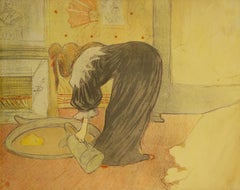
TOULOUSE-LAUTREC, HENRI DE (1864-1901) "LA VACHE ENRAGÉE" Wittrock P27B, Adhemar 197 Original color lithograph Wittrock’s State III of III with letters Printed on buff wove paper, c. 1896 Bears artist stamp “TL” upper right, dated 96 Image size: 22 1/2” x 23 5/8” Several examples are known where Lautrec drew on work by other artists whom he admired. In this poster there are clear references to Adolphe Willette's humorous themes and rococo style of illustration. Willette was the founder and illustrator of the short-lived monthly “La Vache Enragee”(the angry cow) edited by the cartoonist Adolphe Roedel. This colored poster of the same title was commissioned for the appearance of the magazine March 1896. As a reference to the wretched financial state of most artists, the term “manger de la vache enrage” (meaning roughly, “meaning not having enough to eat”) was adopted as the motto for the “Vachalcade”which was held on Montmarte annually from 1896. This was an artists' procession, with fanfares and allegories on fame and the muses; it also included a furious cow and a troupe of pretty girls as a satire on Europa with the bull. The event was organized by Roedel"(Adriani p.217) Toulouse-Lautrec took up lithography at a high point in its history, when technical advances in color printing and new possibilities for large scale led to a proliferation of posters as well as prints for the new bourgeois collector. In his short career, he created more than three hundred fifty prints and thirty posters, as well as lithographed theater programs...

Category

Art Nouveau 1890s Art

Materials

Lithograph

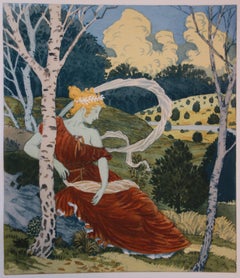
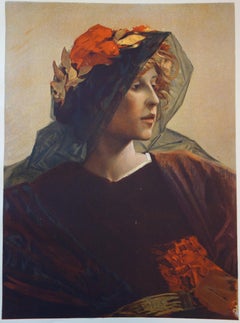
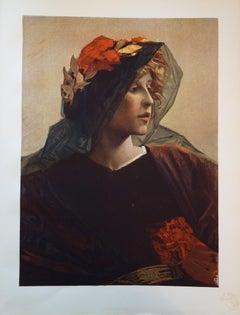
Corrine

Corrine

By Maurice Réalier-Dumas

Located in New York, NY

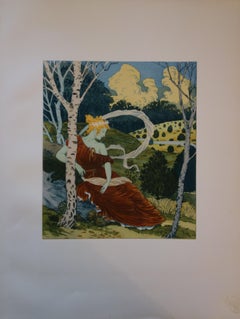
Maurice Realier-Dumas Corrine.Plate from May 1897 issue of L'Estampe Modern. Color Lithograph. Sheet Size: 16 x 12". L'Estampe Moderne was a brilliant portfolio printed betwe...

Category

Art Nouveau 1890s Art

Materials

Lithograph

Original lithographic poster by Henri de Toulouse-Lautrec - Le Théâtre Libre

Original lithographic poster by Henri de Toulouse-Lautrec - Le Théâtre Libre

By Henri de Toulouse-Lautrec

Located in PARIS, FR

This delicate and rare original lithographic poster by Henri de Toulouse-Lautrec was created around 1895 for a double bill at Le Théâtre Libre, featuring Une Faillite and Le Poète et...

Category

1890s Art

Materials

Linen, Paper, Lithograph

'The Hunter waiting with his gun'. A framed antique oil painting on canvas

'The Hunter waiting with his gun'. A framed antique oil painting on canvas

Located in St. Albans, GB

'The Hunter waiting with his gun'. Paul Beckert A framed antique oil painting on canvas. On the reverse is the original exhibition label. The painting shows a hunter with a cape w...

Category

Victorian 1890s Art

Materials

Oil

A Gleam of Sun after a Spring Snowstorm

A Gleam of Sun after a Spring Snowstorm

Located in North Clarendon, VT

Beautiful watercolor of snowy mountains in the spring at Glen Spean, Scotland by Colin Bent Phillip. Watercolor on Paper, signed and dated lower right. Exhibition label on reverse fr...

Category

English School 1890s Art

Materials

Watercolor

'His First Suit, ' a large Victorian oil painting, signed 'Fred Morgan'

'His First Suit, ' a large Victorian oil painting, signed 'Fred Morgan'

By Frederick Morgan

Located in London, GB

'His First Suit,' a large Victorian oil painting, signed 'Fred Morgan' English, c.1899 Frame: Height 109cm, width 133cm, depth 8cm Canvas: Height 92cm, width 116cm, depth 2.5cm Executed in oil-on-canvas, and mounted in a carved giltwood frame, this beautiful English painting, titled 'His first suit,' is by the late Victorian artist Frederick Morgan, an artist working in a similar style to that of the more well known Arthur John Elsley...

Category

Victorian 1890s Art

Materials

Canvas, Oil

Fetching Water by the River /// British Impressionism Yeend King Oil Painting

Fetching Water by the River /// British Impressionism Yeend King Oil Painting

By Henry John Yeend King

Located in Saint Augustine, FL

Artist: Henry John Yeend King (English, 1855-1924) Title: "Fetching Water by the River" *Signed by King lower left Circa: 1890 Medium: Original Oil Painting on Canvas Framing: Frame...

Category

Victorian 1890s Art

Materials

Gesso, Canvas, Paint, Oil

Bateaux sur la mer - Ciel nuageux -  Realist Seascape Oil by Alfred Stevens

Bateaux sur la mer - Ciel nuageux - Realist Seascape Oil by Alfred Stevens

By Alfred Émile Léopold Stevens

Located in Marlow, Buckinghamshire

Signed oil on panel seascape circa 1890 by Belgian realist painter Alfred Emile Leopold Stevens. The work depicts sail boats at sea under a cloudy sky. Signature: Signed lower left ...

Category

Realist 1890s Art
Materials

Oil, Panel

The White Scarf (Self Portrait of the Artist)

The White Scarf (Self Portrait of the Artist)

Located in Fairlawn, OH

The White Scarf (Self Portrait of the Artist) Oil on board, 1894 Signed and dated lower left: E M Heller '94 (see image) Framed in a metal leaf Whistler style frame, Frame: 23 x 18-...

Category

American Impressionist 1890s Art
Materials

Oil

lithograph

lithograph

By (after) Jules Cheret

Located in Henderson, NV

Medium: lithograph (after the original menu illustration). Printed in 1897 on smooth wove paper and published in Paris by Librairie Nilsson. Sheet size: 12 1/4 x 9 inches (310 x 230 ...

Category

1890s Art
Materials

Lithograph

Evening Sun, View of Visby, c. 1896

Evening Sun, View of Visby, c. 1896

Located in Stockholm, SE

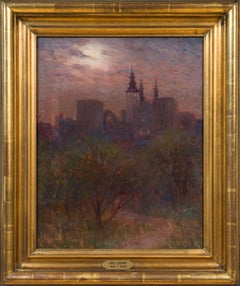
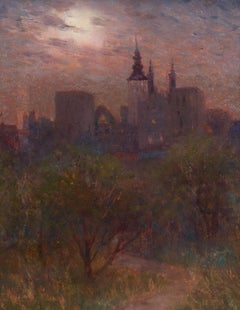
This evocative evening view of Visby by Axel Lindman captures Visby in the warm, fading light of the setting sun. Rendered with atmospheric sensitivity, the silhouette of Visby’s med...

Category

Impressionist 1890s Art
Materials

Canvas, Oil

Sunset - A Sketch
Sunset - A Sketch

Sunset - A Sketch

By Martin Johnson Heade

Located in Bryn Mawr, PA

Sunset - A Sketch, 1895 Oil on board 6 x 12 inches (15.2 x 30.5 cm) Framed dimensions: 13 1/8 x 19 3/8 inches Signed and dated lower right: M.J.H. 95 Provenance Frederick Mont and ...

Category

Hudson River School 1890s Art
Materials

Oil, Board

L'Oeuvre - Avant La Lettre - Lithograph by Hermann Paul - 1890s

L'Oeuvre - Avant La Lettre - Lithograph by Hermann Paul - 1890s

Located in Roma, IT

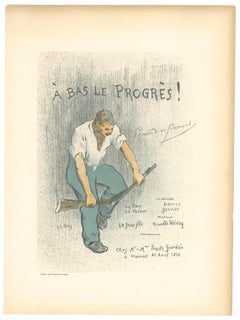
Original lithograph, realized in the last years of 19th Century. Specimen "avant la lettre", before the text. A striking and highly graphic Belle Époque composition by the celebrat...

Category

Modern 1890s Art
Materials

Lithograph

Orientalist View With Characters - Gouache 1894

Orientalist View With Characters - Gouache 1894

By Paul Pascal

Located in Saint-Ouen, FR

PASCAL Paul (1832-1903) Orientalist View With Characters Gouache on card signed low right and dated 1894 New golden frame Dim gouache : 42 X 58 cm Dim Frame : 61 X 78 cm PASCAL Paul...

Category

Academic 1890s Art
Materials

Gouache

Saint-Tropez-Le Port

Saint-Tropez-Le Port

By Paul Signac

Located in Fairlawn, OH

Saint-Tropez-Le Port Color lithograph, 1897-1898 Signed in pencil lower right (see photo) Numbered in pencil lower right: No. 68 (see photo) From: Album des Peintres-Gravures, 1898 ...

Category

Post-Impressionist 1890s Art
Materials

Lithograph

Woman with Parrot - Original lithograph - 1897

Woman with Parrot - Original lithograph - 1897

By Angelo Jank

Located in Paris, IDF

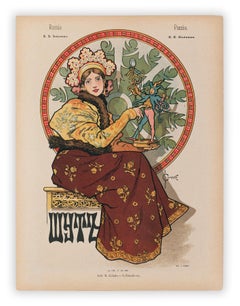
Angelo JANK Woman with Parrot, 1898 Original lithograph (Champenois workshop) Printed signature in the plate On vellum, 40 x 31 cm (c. 16 x 12 in) INFORMATION: Lithograph created f...

Category

Art Nouveau 1890s Art
Materials

Lithograph