1890s Art

to
214
984
344
214
96
143
Overall Width
to
Overall Height
to
7,575
21,447
163,086
226,092
2,003
2,273
4,952
6,501
5,816
14,942
20,557
25,680
18,585
14,022
5,366
199
195
68
31
8
7
7
5
3
2
1,046
681
10
1,176
644
367
348
318
187
184
172
168
138
127
118
96
95
87
80
64
59
50
49
684
603
464
404
303
58
37
24
16
14
656
223
897
804
Period: 1890s
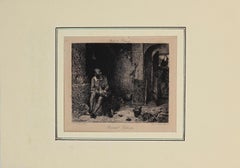
Deux vieillards aux chatons - Impressionist Figurative Oil by J F Raffaelli

Deux vieillards aux chatons - Impressionist Figurative Oil by J F Raffaelli

By Jean-Francois Raffaelli

Located in Marlow, Buckinghamshire

Signed figures in interior oil on panel by French impressionist painter Jean-Francois Raffaelli. The piece depicts two old men seated in an interior. One is reading his paper as the other naps and there are several kittens on the floor. Painted in the artist's distinctive style. Signature: Signed lower left Dimensions: Framed: 9.5"x8" Unframed: 5.5"x4" Provenance: Brame & Lorenceau have confirmed the authenticity of this work and it will be included in the digital catalogue raisonne of the painter which is under preparation A certificate of authenticity fromBrame & Lorenceau accompanies this painting Private collection - United States Original artists label verso Jean-François Raffaëlli's father was a failed Italian businessman and Raffaëlli himself was, among other things, a church chorister, actor and theatre singer. He then studied under Gérôme at the École des Beaux-Arts in Paris. He travelled to Italy, Spain and Algeria and on his return to France settled in Asnières. In 1876, on a trip to Brittany, he first saw the potential of realist subject matter, if treated seriously. He became involved in meetings of artists at the Café Guerbois, where the Impressionist painters used to gather. As a result, Degas, contrary to the advice of the group, introduced Raffaëlli to the Impressionist exhibitions - according to one uncertain source as early as the very first exhibition, at the home of Nadar, and certainly to those of 1880 and 1881. In 1904, Raffaëlli founded the Society for Original Colour Engraving. He first exhibited at the Salon de Paris in 1870 and continued to exhibit there until he joined the Salon des Artistes Français in 1881, where he earned a commendation in 1885, was made Chevalier of the Légion d'Honneur in 1889 and in the same year was awarded a gold medal at the Exposition Universelle. In 1906 he was made Officier of the Légion d'Honneur. He was also a member of the Société Nationale des Beaux-Arts. In 1884, a private exhibition of his work cemented his reputation. He contributed to several newspapers such as The Black Cat (Le Chat Noir) in 1885 and The French Mail (Le Courrier Français) in 1886 and 1887. He published a collection entitled Parisian Characters, which captured his favourite themes of the street, the neighbourhood and local people going about their lives. In 1880 he participated, with Forain, on the illustration of Joris Karl Huysmans' Parisian Sketches (Croquis Parisiens). He also illustrated Huysman's Works. As well as working as an illustrator, he also made etchings and coloured dry-points. His early attempts at painting were genre scenes, but once he was settled in Asnières he started to paint picturesque views of Parisian suburbs. From 1879 onwards, his subject matter drew on the lives of local people. These popular themes, which he treated with humanity and a social conscience, brought him to the attention of the social realist writers of the time such as Émile Zola. In addition to his realist style, Raffaëlli's dark palette, which ran contrary to the Impressionist aesthethic, helped to explain the opposition of those painters to his participation in their exhibitions. More concerned with drawing than colour, he used black and white for most of his paintings. Towards the end of his life, he lightened his palette, but without adopting any other principles of the Impressionist technique. After painting several portraits, including Edmond de Goncourt and Georges Clémenceau, he returned to genre painting, particularly scenes of bourgeois life. Later in his career, he painted mainly Breton-inspired sailors and views of Venice. His views of the Paris slums and the fortifications, sites which have almost completely disappeared, went some way towards establishing a genre in themselves and perpetuated the memory of the area: The Slums, Rag-and-Bone Man, Vagabond, Sandpit, In St-Denis, Area of Fortifications. His realistic and witty portrayal of typical Parisian townscapes accounts for his enduring appeal. Born in Paris, he was of Tuscan descent through his paternal grandparents. He showed an interest in music and theatre before becoming a painter in 1870. One of his landscape paintings was accepted for exhibition at the Salon in that same year. In October 1871 he began three months of study under Jean-Léon Gérôme at the École des Beaux-Arts in Paris; he had no other formal training. Raffaëlli produced primarily costume pictures until 1876, when he began to depict the people of his time—particularly peasants, workers, and ragpickers seen in the suburbs of Paris—in a realistic style. His new work was championed by influential critics such as J.-K. Huysmans, as well as by Edgar Degas. The ragpicker became for Raffaëlli a symbol of the alienation of the individual in modern society. Art historian Barbara S. Fields has written of Raffaëlli's interest in the positivist philosophy of Hippolyte-Adolphe Taine, which led him to articulate a theory of realism that he christened caractérisme. He hoped to set himself apart from those unthinking, so-called realist artists whose art provided the viewer with only a literal depiction of nature. His careful observation of man in his milieu paralleled the anti-aesthetic, anti-romantic approach of the literary Naturalists, such as Zola and Huysmans. Degas invited Raffaëlli to participate in the Impressionist exhibitions of 1880 and 1881, an action that bitterly divided the group; not only was Raffaëlli not an Impressionist, but he threatened to dominate the 1880 exhibition with his outsized display of 37 works. Monet, resentful of Degas's insistence on expanding the Impressionist exhibitions by including several realists, chose not to exhibit, complaining, "The little chapel has become a commonplace school which opens its doors to the first dauber to come along."An example of Raffaëlli's work from this period is Les buveurs d'absinthe (1881, in the California Palace of Legion of Honor Art Museum in San Francisco). Originally titled Les déclassés, the painting was widely praised at the 1881 exhibit. After winning the Légion d'honneur in 1889, Raffaëlli shifted his attention from the suburbs of Paris to city itself, and the street scenes that resulted were well received by the public and the critics. He made a number of sculptures, but these are known today only through photographs.[2] His work was also part of the painting event in the art competition at the 1912 Summer Olympics. In the later years of his life, he concentrated on color printmaking. Raffaëlli died in Paris on February 11, 1924 Museum and Gallery Holdings: Béziers: Peasants Going to Town Bordeaux: Bohemians at a Café Boston: Notre-Dame; Return from the Market Brussels: Chevet of Notre-Dame; pastel Bucharest (Muz. National de Arta al României): Market at Antibes; Pied-à-terre Copenhagen: Fishermen on the Beach Douai: Return from the Market; Blacksmiths Liège: Absinthe Drinker...

Category

Impressionist 1890s Art

Materials

Oil, Panel

Untitled (Woman working in the fields)

Untitled (Woman working in the fields)

By Daniel Ridgway Knight

Located in Fairlawn, OH

Untitled (Woman working in the fields) Graphite on wove paper Unsigned Exhibited: Spanierman Galleries, In Praise of Women, Oct. 21-Nov. 20, 2010 Illustrated: Lisa N. Peters, In Praise of Women, Spanierman Galleries (see catalog entry in photos) Condition: Excellent Sheet size (sight): 14 1//2 x 10 5/16 inches Provenance: Spanierman Galleries, New York The young woman is a known model for Knight. She is depicted in numerous paintings. The striped skirt and wooden shoes she wears also is repeated in Knight's oeuvre. "Daniel Ridgway Knight was born in Philadelphia to a Quaker family and studied at the Pennsylvania Academy of the Fine Arts from 1858 to 1861, the year he became a founding member of the Philadelphia Sketch Club. He went to Paris and studied at the Ecole des Beaux-Arts from 1861 to 1863 with Charles Gleyre (1808-1874) and Alexandre Cabanel (1823-1889), and attended the Accademia di San Lucca, then in Venice, in 1863. Knight returned to Philadelphia that year, married, and served in the Union Army during the Civil War. He went back to France in 1871 and lived there for the remainder of his long and successful career. He settled in Seine-et-Oise near Poissy to study with the noted academic painter Jean-Louis-Ernest Meissonier (1815-1891) in 1873, and the two artists became close friends. Influenced by his French contemporaries Jules Bastien-Lepage (1848-1884) and Jules- Adolphe-Aimé-Louis Breton...

Category

Abstract Impressionist 1890s Art

Materials

Graphite

"The New Woman" from Les Maitres de l'Affiche by Morrow

"The New Woman" from Les Maitres de l'Affiche by Morrow

Located in Hinsdale, IL

MORROW, ALBERT GEORGE (1863 -1927) "The New Woman" Original lithograph from "Les Maitres de L'Affiche" series Printed by Imprimerie Chaix, Paris Bearing MDL stamp lower right, c. 1897. Plate #79 Unframed Size: 11 3/8 x 15 3/4 ”The "Les Maitres de l'Affiche" series was offered as a subscription series to collectors every month for 60 months, from December 1895 through November 1900. The "Maitres de l'Affiche," were issued as separate numbered sheets, referred to as "plates". They were numbered, with the printers name "Imprimerie Chaix," in the margin at the bottom left hand corner, "PL.1" to "PL.240." In the margin at the bottom right hand corner of each, is a blind embossed stamp from a design of Cheret's. The smaller format and the fact the "Maitres" were a paid subscription series, allowed Imprimerie Chaix to use the latest state of the art printing techniques, not normally used in the large format posters...

Category

Art Nouveau 1890s Art

Materials

Lithograph

"An Artist's Model" from "Les Maitres de L'Affiche" series

"An Artist's Model" from "Les Maitres de L'Affiche" series

Located in Hinsdale, IL

PRICE, JULIUS "An Artist’s Model" Original lithograph from “Les Maitres de L’Affiche” series Printed by Imprimerie Chaix, Paris Bearing MDL stamp lower right, from issue #1, 1896. Plate # 3 Unframed Size: 11 3/8 x 15 3/4” The “Les Maitres de l’Affiche” series was offered as a subscription series to collectors every month for 60 months, from December 1895 through November 1900. The “Maitres de l’Affiche,” were issued as separate numbered sheets, referred to as “plates”. They were numbered, with the printers name “Imprimerie Chaix,” in the margin at the bottom left hand corner, “PL.1” to “PL.240.” In the margin at the bottom right hand corner of each, is a blind embossed stamp from a design of Cheret’s. The smaller format and the fact the “Maitres” were a paid subscription series, allowed Imprimerie Chaix to use the latest state of the art printing techniques, not normally used in the large format posters...

Category

Art Nouveau 1890s Art

Materials

Lithograph

Battle of the Big Hole, Magazine Cover

Battle of the Big Hole, Magazine Cover

By Rufus Zogbaum

Located in Fort Washington, PA

Approximate Date: 1895 Medium: Gouache on paper laid to card Signature: Signed and dated 'R.F. Zogbaum/ 95' bottom right Size: 18 x 13 3/4 in. Harper's Weekly: A Journal of Civilization, New York, December 28, 1895, vol. XXXIX, no. 2036, (cover illustration). The present painting represents a battle fought August 9 and 10, 1877, between the United States troops and Chief Joseph...

Category

1890s Art

Materials

Gouache, Laid Paper

Poster for the Saxon Trade and Art Exhibition, Dresden 1896

Poster for the Saxon Trade and Art Exhibition, Dresden 1896

Located in Fairlawn, OH

Poster for the Saxon Trade and Art Exhibition, Dresden 1896 Color lithograph poster mounted on heavy linen, 1896 Signed in the stone lower left corner (see photo) Proof before additi...

Category

Jugendstil 1890s Art

Materials

Lithograph

Ma Petite Ville
Ma Petite Ville

Manuel OraziMa Petite Ville, 1898

$600Sale Price|20% Off

Ma Petite Ville

By Manuel Orazi

Located in Wilton, CT

Handcolored by pochoir master Jean Saude and illustrated by Manuel Orazi and Leon Rudincki. Has 6 full page illustrations and 4 vignettes.

Category

1890s Art

Materials

Gouache

Still Life with Peaches and Grapes

Still Life with Peaches and Grapes

By D.M. Ridley

Located in Fairlawn, OH

Still Life with Peaches and Grapes Oil on paper, 1890 Signed and dated lower right (see photo) Image size: 5 8 5/8 inches Frame size: 10 x 13 1/2 inches Housed in the original frame ...

Category

American Realist 1890s Art

Materials

Oil

Sur le balcon (On the Balcony)

Sur le balcon (On the Balcony)

Located in Mc Lean, VA

Exhibited: Société Nationale des Beaux-arts, Paris, 1893 (as Jeune Fille arrosant ses fleurs) Literature: Michel, Jean Pierre, François Guiguet (Corbelin, France, 1996), p. 102 (n...

Category

Post-Impressionist 1890s Art

Materials

Canvas, Oil

Antique Italian Realist Oil Painting Portrait of Two Children in a Landscape

Antique Italian Realist Oil Painting Portrait of Two Children in a Landscape

Located in Buffalo, NY

A rare antique Italian portrait of two children posed inside a villa against a landscape. This unsigned but beautiful work comes house in contemporary frame added to the work to e...

Category

Realist 1890s Art

Materials

Canvas, Oil

Late Summer River Landscape / - Realistic Impression -

Late Summer River Landscape / - Realistic Impression -

By Jan Hillebrand Wijsmüller

Located in Berlin, DE

Jan Hillebrand Wijsmuller (1855 Amsterdam - 1925 ibid.), Late Summer River Landscape, oil on canvas, relined, 34 x 56 cm (inside measurement), 43 x 64 cm (frame), signed J[an] H[illebrand] Wijsmuller at lower right. - in good condition, the frame with isolated bumped spots - Realistic Impression - About the artwork The panoramic landscape format shows a river landscape, with the course of the river, which curves to the right, leading the eye into the depths of the picture and tempting it to continue the landscape in the imagination beyond the visible area. At the same time, however, the fact that the landscape is not visible through the bend in the river focuses our gaze on the entirety of the landscape depicted, without prompting us to focus on distant details. Accordingly, the brushstroke is not designed to render details with realistic precision. In the front left area of the river there is even a completely free brushwork, trained by Impressionism, which nevertheless remains committed to representational and convincingly suggests the movement of the water. Regardless of the distance of the observer, the entire picture is painted with the same broad brushstroke, so that the landscape is given as an impression. And yet this impression is not ephemeral, as in the case of French Impressionism, to put it exaggeratedly, but reveals to us the essence of the landscape in all its richness. This is why the Dutch variant of Impressionism is always also a realism, although the pictures appear less progressive, but still contain a dimension of landscape painting that is lost with progress. In the impression, the reality of the landscape is revealed, and this happens as we experience the landscape in the visual impression. Wijsmuller does not depict houses or people in order to allow the experience of the landscape to fully unfold. The experience is determined first and foremost by the river, which does not flow into the picture from our point of view, but towards us. Where the river begins to bend, the water is churned by a rapids. Toward us, the riverbed widens and the water comes to rest, covering the entire width of the foreground like a mirror. The stillness of the water corresponds to the evening mood of the late summer landscape, in which the warm tones of the evening light blend with the yellow and brown tones of the plants. A gentle, almost idyllic reality, carried by the brushstroke, yet animated by a liveliness that is also made visible by the brushstroke. The broad, dynamically placed brushstrokes evoke the movement of the treetops and animate even the immobile reeds, while the trunks on the right bank, executed in virtuoso white strokes that seem like markings, make the sunlight shine. On the other bank, a carpet of light also spreads out, its energetic effect again expressed in the brushstroke. The dynamic of the landscape is further enhanced by the complementary color contrasts between the greens, yellows, and browns on the one hand and the blue of the all-encompassing sky on the other. A contrast that is intensified by the reflection in the water. The evening coming to rest of the landscape is thus at the same time an all-encompassing contrasting and yet in itself harmonious movement. This reality becomes accessible to us as an experience in the impression of the landscape. About the artist Jan Hillebrand Wijsmuller entered the Royal Academy of Arts in Amsterdam in 1876 and studied under the innovative Professor August Allebé, who was famous for the Amsterdam Impressionism, also known as the Allebé School. In 1877, Wijsmuller transferred to the Hague Academy of Art, and thus to the Hague School, and then completed his studies at the Brussels Academy of Art. Returning to the Netherlands, Wijsmuller opened his own studio in Amsterdam. In 1883 he won the prestigious Young Artist Award, donated by Willink van Collen, which made Wijsmuller a well-known and sought-after artist. Wijsmuller was a member of the Societät Arti et Amicitiae Amsterdam and the Pulchri Studio in The Hague. Wijsmuller belongs to the second generation of the Hague School. While Vincent van Gogh described the protagonists of the first generation to his brother Theo as "the great gray people," the second generation, and Wijsmuller in particular, used a much more colorful palette. His oeuvre makes him a major player in Dutch Impressionism...

Category

Impressionist 1890s Art

Materials

Canvas

Clay jug on a bench - The essence of the clay jar revealed by the sunlight -

Clay jug on a bench - The essence of the clay jar revealed by the sunlight -

By Hans Richard von Volkmann

Located in Berlin, DE

Hans Richard von Volkmann (1860 Halle (Saale) - 1927 ibid.), Clay jug on a bench. Pencil and Watercolour on paper. 20 x 26,7 cm (visible size), 37 x 45 cm (frame), dated and monogrammed lower left "Februar 1890 - HR. V. V." - Minimally tanned. Framed behind glass in a passepartout. About the artwork Using the technique of his early youth - pencil and watercolour - Hans Richard von Volkmann depicts a still life. However, this is not a conventional indoor still life, but an open-air depiction, painted outdoors and not in the studio. It is therefore an open-air painting, characteristic of von Volkmann's oeuvre, which could have been painted in the Willingshausen colony of painters, where open-air painting was programmatically practised there and the artist stayed there that year. And indeed, this painting is a manifesto of open-air painting. Von Volkmann demonstrates that leaving the studio for the light of nature leads to an entirely new quality of art. To prove this, he uses the genre of still life, which can be described as the studio subject par excellence. Moreover, light plays an essential role in the classical still life. It is the real protagonist of the still life. And it is precisely this moment, essential to the still life, that von Volkmann exploits to demonstrate the potential of plein-air painting: He presents the objects as they appear in the sunlight. The date of February and the bare branches in the foreground make it clear that this is a clear winter day in bright sunlight. The delicate plant in the foreground casts a clearly defined shadow, as does the jug. However, the shadow is most pronounced on the jug itself: The underside of the handle appears almost black, making the top, and therefore the jug itself, shine all the more brightly. The shining of the objects in the sunlight is also visible on the bench. As complementary phenomena to the shadow zones, light edges can be seen on the boards of the seats and the upper foot of the bench shines entirely in the light. To achieve this intensity of light, von Volkmann activated the bright white of the painting ground. By depicting the objects in glistening sunlight, von Volkmann demonstrates that this quality of light is only to be found outdoors. And this light leads to a new way of looking at the objects themselves. The jug on the bench seems like an accidental arrangement, as if the artist had stumbled upon this unintentional still life and captured it with fascination. And in this fascination there is a moment of realisation that refers to the objects themselves. It is only when they shine brightly in the sunlight that their true nature is revealed. In this way, sunlight allows the objects to come into their own, so to speak. Sunlight, which is not present in the studio, gives the still life an entirely new dimension of reality, which is also reflected in the colours interwoven by the sunlight: The bench and the jug stand in a harmonious grey-pink contrast to the green of the implied meadow. The emphasis on the jug as the central subject of the picture also implies that the watercolour has not been completed. This non finito inscribes a processuality into the picture, making it clear that something processual has been depicted, the temporality of which has been made artistically permanent. This is why von Volkmann signed the painting and dated it to the month. About the Artist Von Volkmann made his first artistic attempts at the age of 14. He painted many watercolours of his home town of Halle. This laid the foundation for his later outdoor painting. In 1880 his autodidactic beginnings were professionalised with his admission to the Düsseldorf Art Academy. There he studied under Hugo Crola, Heinrich Lauenstein, Johann Peter Theodor Janssen and Eduard von Gebhardt until 1888. Von Volkmann then moved to the Karlsruhe Academy, where he was Gustav Schönleber's master pupil until 1892. In 1883 he came for the first time to Willingshausen, Germany's oldest painters' colony, at the suggestion of his student friend Adolf Lins...

Category

Naturalistic 1890s Art

Materials

Watercolor

CONTEMPRORAY 1991 "TWIN SPECTRE" PAINTING

CONTEMPRORAY 1991 "TWIN SPECTRE" PAINTING

By Mark Milloff

Located in New York, NY

Mark Milloff (b 1954) is an internationally exhibited American painter and art professor. He is best known for his heavily layered oil paintings. Beautifully rich layers of thick wh...

Category

American Impressionist 1890s Art

Materials

Oil

Portrait de Camille Pissarro à Éragny by Georges Manzana Pissarro - Drawing

Portrait de Camille Pissarro à Éragny by Georges Manzana Pissarro - Drawing

By Georges Henri Manzana Pissarro

Located in London, GB

*PLEASE NOTE UK BUYERS WILL ONLY PAY 5% VAT ON THIS PURCHASE. Portrait de Camille Pissarro à Éragny by Georges Manzana Pissarro (1871-1961) Conté Pierre Noire on paper 29.2 x 24.2 c...

Category

Post-Impressionist 1890s Art

Materials

Paper

Little Physician
Little Physician

Little Physician

By Maud Humphrey

Located in Fort Washington, PA

Approximate Date: 1897 Medium: Watercolor on Board Signature: Signed Lower Right Dimensions: 12.00" x 9.50"

Category

1890s Art

Materials

Board, Watercolor

French School late 19th century,  A woman in a deckchair, drawing

French School late 19th century, A woman in a deckchair, drawing

Located in Paris, FR

French School late 19th century, A woman in a deckchair, pencil on paper 21 x 31.5 cm In a modern frame : 36 x 47 cm This is a very sensitive and interesting drawing. Typical of Im...

Category

Realist 1890s Art

Materials

Pencil

Oil On Canvas "Still life with porcelain and fruit "

Oil On Canvas "Still life with porcelain and fruit "

Located in Gavere, BE

Beautiful painting of a still life with fruit and white soup tureen, restored and cleaned in good condition. Very special painting for collectors! Additional information: Title: S...

Category

1890s Art

Materials

Gold Leaf

Pont Neuf
Pont Neuf

Pont Neuf

By Frank Myers Boggs

Located in Sheffield, MA

Frank Myers Boggs American, 1855-1926 Pont Neuf Oil on Canvas 21 ⅜ by 25 ½ in, w/ frame 27 ⅜ by 31 ¾ in Signed and dated 1896 At an early age, Frank Myers Boggs moved from Springfi...

Category

Impressionist 1890s Art

Materials

Oil

Royal Guardsman
Royal Guardsman

Royal Guardsman

Located in Bristol, CT

Classic British Officer at Sandhurst oil on panel by A.J. Crowther 1891 (LR) Art Sz: 14 3/4"H x 11 1/2"W Frame Sz: 18 1/2"H x 15 1/4"W

Category

1890s Art

Materials

Canvas, Oil

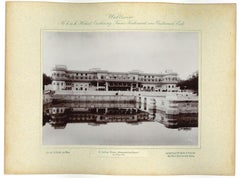
Still Life composition

Still Life composition

Located in Saint-Ouen, FR

Jacques DELANOY (1820-1890) Still Life Fruits and vegetables Oil on canvas signed and dated 1890 low left Old frame regilded with leaves Dim canvas : 41 X 34 cm Dim frame : 53 X 44 ...

Category

Academic 1890s Art
Materials

Oil

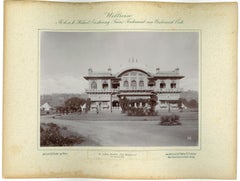
A Travers Bois
A Travers Bois

A Travers Bois

Located in Sheffield, MA

Jean Richard Goubie French, 1842-1899 A Travers Bois Oil on canvas 25 ½ by 39 ¾ in. W/frame 30 ½ by 45 in. Circa 1892 Jean Richard Goubie was bo...

Category

Barbizon School 1890s Art
Materials

Oil

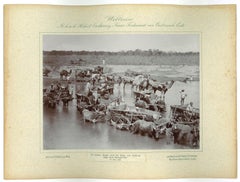
Odalisque
Odalisque

Odalisque

Located in New York, NY

Italian, ca. 19th century Odalisque Signed illegible Oil on canvas 51 in. x 21 3/4 inches Framed: 61 1/2 x 32 1/4 inches

Category

1890s Art
Materials

Canvas, Oil

Horse and Carriage Accident - Gay Female Illustrator Golden Age

Horse and Carriage Accident - Gay Female Illustrator Golden Age

Located in Miami, FL

Trailblazing Gay Female illustrator of the Golden Age, Ida Waugh, paints a powerful narrative of a young woman coming to the aid of another who, due to an accident, is lying prostrate in an unpaved road. The reason why the work is in black and white is because this was assignment art for a book or magazine and color printing was not yet available for mass publications Signed lower left. Framed under glass, Ida Waugh (October 24, 1846 – January 25, 1919) was an American illustrator of children's literature who often collaborated with her lifelong companion, Amy Ella Blanchard. Personal life Ida Waugh was born in Philadelphia, Pennsylvania on October 24, 1846, the daughter of painter Samuel B. Waugh and his first wife, Sarah Mendenhall, therefore she was half-sister of painter Frederick Judd Waugh. Her step-mother was Mary Eliza Young Waugh, a miniaturist. She attended Académie Julian and Académie Delécluse in Paris, studying with Georges Callot, Paul-Louis Delance, and Jean-Joseph Benjamin-Constant.In 1868 she attended the first "Ladies Life Class" at Pennsylvania Academy of the Fine Arts; in the same class there were Emily Sartain and Catherine Ann Drinker. Career Ida Waugh collaborated with her partner Amy Ella Blanchard in publishing children's books, Waugh as illustrator and Blanchard as writer. Waugh also published books on her own Other than a children's book illustrator, Waugh was an award-winning painter. In 1869 she exhibited at the Pennsylvania Academy of the Fine Arts two works, "The Bargain" and a portrait bust of Carl Gaertner. Her self-portrait and another painting, "Little Cosette" (1870), are in the permanent collection of the Woodmere Art Museum, Philadelphia, both donated by Mrs. John S. Haug in 1961.They were part of the exhibition "Women and Biography" in 2014, including: Elizabeth Shippen Green, Violet Oakley, Edith Emerson, Anne Minich, Catherine Mulligan, Mitzi Melnicoff, Alice Kent Stoddard, Aubrey Levinthal, Martha Armstrong...

Category

1890s Art
Materials

Oil, Illustration Board

"Andover Prep" c1898 Watercolor Banners

"Andover Prep" c1898 Watercolor Banners

Located in Bristol, CT

Classic Andover Prep School banner c1898 Replete w/ an inset portrait of Prince William Art Sz: 11 1/2"H x 9 1/2"W Frame Sz: 16"H x 14"W

Category

1890s Art
Materials

Watercolor

Portrait at the Painter's workshop

Portrait at the Painter's workshop

Located in Saint-Ouen, FR

Francesco Brunery (1849–1926) Portrait at the Artist's Workshop Oil on wood panel Old frame gilded with leaves Dim panel : 30 X 24 cm Dim frame : 54 X 46 cm Francesco Brunery (1849...

Category

Academic 1890s Art
Materials

Oil

At the Black Cat
At the Black Cat

At the Black Cat

By Charles Dana Gibson

Located in Fort Washington, PA

Medium: Pen and Ink Over Graphite on Board Signature: Signed "C. D. Gibson" in lower left "At the Black Cat." Illustration for About Paris by Richard Harding Davis (New Yorker: Harp...

Category

1890s Art
Materials

Ink, Board, Pen

James Woodburn Spy Vanity Fair June 21 1890

James Woodburn Spy Vanity Fair June 21 1890

Located in Bristol, CT

1890 Sz: 20"H x 12 7/8"W James Woodburn 1863-1919 Born at York on September 20, 1863, James began life as a doctor’s errand boy but, wanting to become a jockey, he ran away from home. Covering the 13 miles on foot, he arrived at the Hambleton stables of Mr Sanderson, who took an instant liking to the runaway. Woodburn rode his first winner for the stable...

Category

1890s Art
Materials

Lithograph