18th Century Art

5,233 Results
to
556
3,350
1,021
391
261
320
Overall Width
to
Overall Height
to
7,504
21,522
166,025
236,378
2,140
2,329
4,734
6,578
5,996
15,647
21,191
26,537
19,285
14,078
2,280
1,141
38
18
7
2
2
2,797
2,100
366
3,157
1,577
1,092
914
866
759
589
469
395
362
312
276
258
174
165
149
146
134
112
107
3,151
1,257
940
759
461
139
120
83
77
72
1,261
3,044
4,369
799
Period: 18th Century
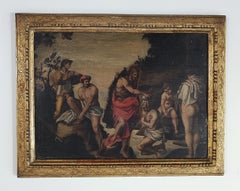
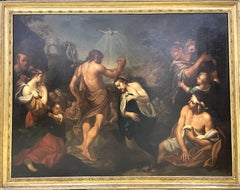
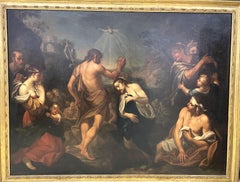
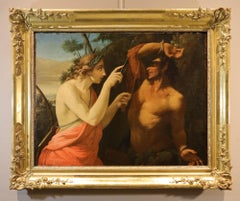
Apollo Marsyas Batoni Paint 18th CEntury Oil on canvas Old master Mythological

Apollo Marsyas Batoni Paint 18th CEntury Oil on canvas Old master Mythological

Located in Riva del Garda, IT

Apollo and Marsyas Pompeo Girolamo Batoni (Lucca 1708 – Rome 1787) circle oil on canvas (65 x 83 cm. - framed 84 x 102 cm.) Provenance: Private collection, Rome The subject...

Category

Old Masters 18th Century Art

Materials

Oil

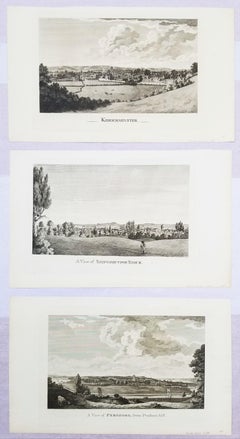
Set of Three Engravings from Nash's "History of Worcestershire" /// Landscapes

Set of Three Engravings from Nash's "History of Worcestershire" /// Landscapes

By Treadway Russell Nash

Located in Saint Augustine, FL

Artist: Treadway Russell Nash (English, 1724-1811) Title: "A View of Pershore, from Pensham hill", "A View of Shipston upon Stour", and "Kidderminster" Portfolio: Collections for the History of Worcestershire Year: 1781-1782 (First edition) Medium: Set of Three Original Engravings on watermarked laid paper Limited edition: Unknown Printer: John Nichols, London, UK Publisher: T. Payne and Son, J. Robson, B. White, Leigh and Sotheby, London, UK; Fletcher, Oxford, UK; and Lewis, Worcester, UK Sheet size (each): approx. 10.13" x 16.75" Image size (each): approx. 7" x 11.88" Reference: Upcott III, page 1330 Condition: A few light handling creases. Have been professionally stored away for decades. They are all strong impressions in excellent condition Notes: Provenance: private collection - Aspen, CO. All three works were engraved by English artist Thomas Sanders (Active: Mid-Late 18th Century) after drawings by himself. Comes from Nash's two volume "Collections for the History of Worcestershire", (1781-1782) (First edition), which consists of 75 engravings. Each work is printed from one copper plate in one color: black. There was a (Second edition) "with Additions" bound in with Volume II of this portfolio published by John White in (1799). And both the First and Second editions of "Collections for the History of Worcestershire" are based off Thomas Sanders' 1779-1781 "Perspective Views of the Market Towns within the County of Worcester". All three, "A View of Pershore, from Pensham hill", "A View of Shipston upon Stour", and "Kidderminster" have an unidentified watermark in the center of their sheets resembling "XV". Biography: Treadway Russell Nash (24 June 1724 – 26 January 1811) was an English clergyman, now known as an early historian of Worcestershire and the author of Collections for the History of Worcestershire, an important source document for Worcestershire county histories. He was a fellow of the Society of Antiquaries of London. Treadway Russell Nash was born on 24 June 1724 born at Clerkenleap, in Kempsey, Worcestershire. His family were from Ombersley. They had lands there and at Claines, and had later bought lands in the Reformation around St Peter's, Droitwich. He was related to James Nash and John Nash, both MPs for Worcester. His father Richard, a grandson of Sir Rowland Berkeley, died in 1740, and Richard's eldest son in 1757. As a result, Treadway Russell Nash inherited the Russells' Strensham estates from his brother, as well as the Nash estates, and took both names. He was educated from the age of twelve at King's School, Worcester, and became a scholar at Worcester College, Oxford aged fifteen. In March 1749, he accompanied his brother on a trip to the continent, to aid Richard's health. They visited Paris for about six weeks, before spending the summer "on the banks of the Loire". They then visited "Bourdeaux, Thoulouse, Montpelier, Marseilles, Leghorn, Florence, Rome, Naples, Bologna, Venice, Padua, Verona, Milan, Lyons, and again Paris"; such expeditions are often known as the Grand Tour. On his return in late summer 1751, Nash took up a post as Vicar of Eynsham through his friend and future brother-in-law, John Martin. He also had an income as a tutor at Oxford. He took his Doctor of Divinity degree and left Oxford, having "gone out grand compounder", following the death of his brother. He also left his benefice at Eynsham in 1757. While at Oxford he had proposed a road from there to Witney (now the A40 and B4022), and also stood for Parliament. Nash married Margaret Martin...

Category

Old Masters 18th Century Art

Materials

Engraving, Laid Paper

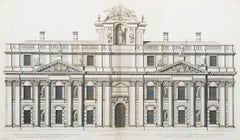
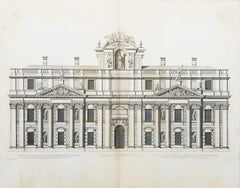
Royal Hospital att Greenwich to the River /// "Vitruvius Britannicus" Engraving

Royal Hospital att Greenwich to the River /// "Vitruvius Britannicus" Engraving

By Colen Campbell

Located in Saint Augustine, FL

Artist: Colen Campbell (Scottish, 1676-1729) Title: "Royal Hospital att Greenwich to the River" (Vol. 1, Plates 86, 87) Portfolio: Vitruvius Britannicus; or The British Architect, Co...

Category

Old Masters 18th Century Art

Materials

Laid Paper, Engraving, Intaglio, Etching

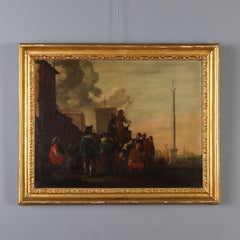
18th-century painting depicting a scene of everyday life, oil on canvas.

18th-century painting depicting a scene of everyday life, oil on canvas.

Located in Milan, IT

Oil on Canvas. In the center of the scene, set outdoors in a city suburb, a figure standing on a stage or a raised platform is handing a handkerchief to someone in the small crowd lo...

Category

Other Art Style 18th Century Art

Materials

Oil

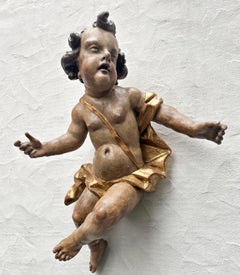
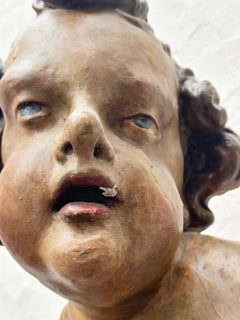
Large Putto, Southern Germany, Bavarian, 1750, Carved Wood, Painted

Large Putto, Southern Germany, Bavarian, 1750, Carved Wood, Painted

Located in Eltville am Rhein, DE

Large Putto, Southern Germany / Tyrol, c. 1750 Wood carving Dimensions: 79 x 55.5 x 24.5 cm paint in places damaged (see photos) Viewing and pickup are available by prior appointment...

Category

Baroque 18th Century Art

Materials

Wood

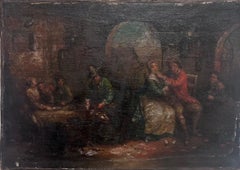
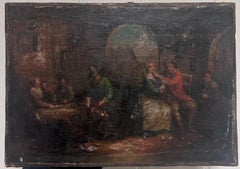
18th Century French Oil Painting Tavern Scene Interior Merry Making Figures

18th Century French Oil Painting Tavern Scene Interior Merry Making Figures

Located in Cirencester, Gloucestershire

Merry Makers in the Tavern French School, 18th century oil on canvas canvas: 8 x 11 inches provenance: private collection, France condition: good and sound condition

Category

Old Masters 18th Century Art

Materials

Oil, Canvas

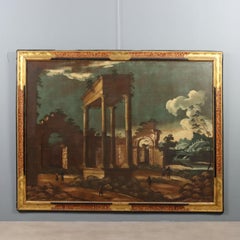
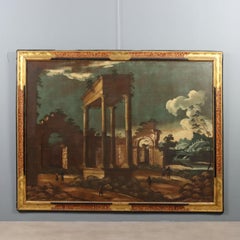
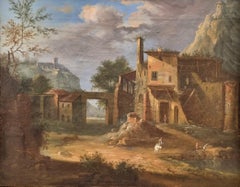
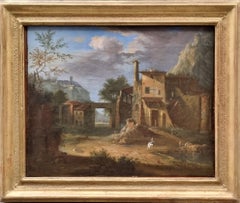
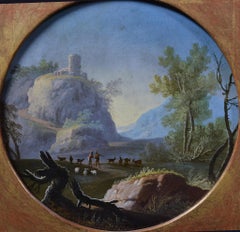
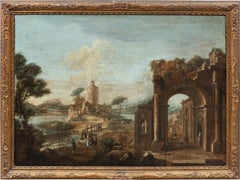
Painting Italian Classical Landscape 18th ruin forteress Signed

Painting Italian Classical Landscape 18th ruin forteress Signed

Located in PARIS, FR

French or Italian school of the 18th century Animated landscape with a ruin Oil on canvas 27 x 33 cm (34 x 40 cm with the frame) Signed and dated lower right "1772 / Contencin? / fec...

Category

Italian School 18th Century Art

Materials

Oil

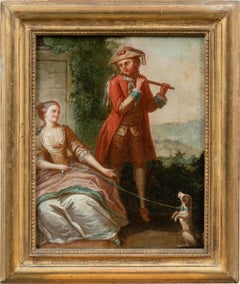
French Rococo painter - 18th century genre scene with flute player and dog

French Rococo painter - 18th century genre scene with flute player and dog

Located in Varmo, IT

French painter (18th century) - Flute Player and Dog. 43.5 x 35 cm (without frame), 54 x 45 cm (with frame). Oil on canvas, in a carved and gilded wooden frame. The scene depicts ...

Category

Rococo 18th Century Art

Materials

Canvas, Oil

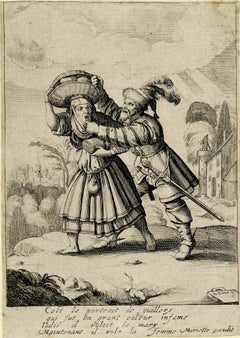
Portrait of an infamous thief

Portrait of an infamous thief

By Abraham Bosse

Located in Middletown, NY

A fascinating image of a well-known theif robbing a merchant of goods held atop her head. Paris: circa 1670. Etching and engraving on cream laid paper, 6 3/4 x 4 15/16 inches (17...

Category

Old Masters 18th Century Art

Materials

Handmade Paper, Engraving, Etching

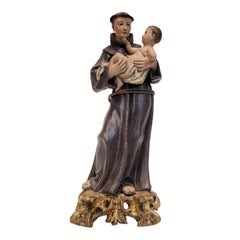
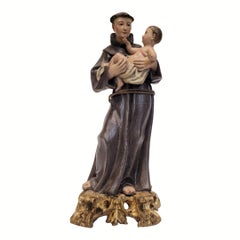
Baroque carving of Saint Anthony of Padua with the Child, Spanish School

Baroque carving of Saint Anthony of Padua with the Child, Spanish School

Located in Valladolid, ES

Exquisite sculpture of Saint Anthony of Padua, 18th century. Of exceptional craftsmanship, the iconography is typical of this saint. He is depicted as a young friar holding the Child...

Category

Baroque 18th Century Art

Materials

Wood

Cuzco School 18th Century Oil - Saint Isidore of Madrid

Cuzco School 18th Century Oil - Saint Isidore of Madrid

Located in Corsham, GB

A remarkable 18th-century Cuzco School painting of Saint Isidore (c.1070-1130), a Spanish agricultural labourer venerated as the patron saint of farmers and of Madrid. He was canonis...

Category

18th Century Art

Materials

Oil

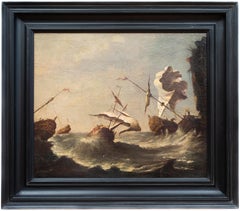
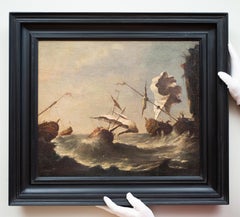
Shipping in Stormy Waters, Attributed to Italian Artist Francesco Guardi

Shipping in Stormy Waters, Attributed to Italian Artist Francesco Guardi

By Francesco Guardi

Located in Stockholm, SE

The splendour of the tragic sea Francesco Guardi and maritime painting in Venetian art No Venetian painter was a stranger to the sea. After all, Venice was not only one of the most prominent ports of the Mediterranean, but indeed a city literally submerged in the ocean from time to time. Curiously however, the famous Venetian school of painting showed little interest in maritime motifs, favouring scenes from the iconic architecture of the city rather than seascapes. That is why this painting is a particularly interesting window into not only the painter Francesco Guardi himself – but to the significance of the element of water in art history, in absence as well as in the centre of attention. Whether it be calm, sunny days with stunning views of the palaces alongside the canals of Venice or – more rarely – stormy shipwrecking tragedies at sea, water as a unifying element is integral to the works of painter Francesco Guardi (1712–1793). During his lifetime, Venetian art saw many of its greatest triumphs with names like Tiepolo or Canaletto gaining international recognition and firmly establishing Venice as one of the most vibrant artistic communities of Europe. While the city itself already in the 18th century was something of an early tourist spot where aristocrats and high society visited on their grand tour or travels, the artists too contributed to the fame and their work spread the image of Venice as the city of romance and leisure to an international audience, many of whom could never visit in person. Still today, the iconic image of Venice with its whimsical array of palaces, churches and other historic buildings is much influenced by these artists, many of whom have stood the test of time like very well and remain some of the most beloved in all of art history. It was not primarily subtility, intellectual meanings or moral ideals that the Venetian art tried to capture; instead it was the sheer vibrancy of life and the fast-paced city with crumbling palaces and festive people that made this atmosphere so special. Of course, Venice could count painters in most genres among its residents, from portraiture to religious motifs, history painting and much else. Still, it is the Vedutas and views of the city that seems to have etched itself into our memory more than anything else, not least in the tradition of Canaletto who was perhaps the undisputed master of all Venetian painters. Born into his profession, Francesco lived and breathed painting all his life. His father, the painter Domenico Guardi (1678–1716) died when Francesco was just a small child, yet both he and his brothers Niccolò and Gian Antonio continued in their fathers’ footsteps. The Guardi family belonged to the nobility and originated from the mountainous area of Trentino, not far from the Alps. The brothers worked together on more challenging commissions and supported each other in the manner typical of family workshops or networks of artists. Their sister Maria Cecilia married no other than the artist Giovanni Battista Tiepolo himself, linking the family to the most renowned Venetian name of the time. During almost a decade, Guardi worked in the studio of Michele Giovanni Marieschi, sometimes simply known as Michiel, a painted similar in both style and motif. Canaletto is, however, the artist Guardi is most often compared to since they shared a mutual fascination for depicting the architecture and cityscape of Venice. During the course of his career, Guardi tried his hand in many different genres. He was as swift in painting landscapes, Vedutas of Venice, sacred motifs, interiors and architectural compositions as he was in a number of other motifs. His style is typical of the Venetian school but also distinct and personal once we look a little closer. There is an absolute certainty in the composition, the choice of which sometimes feels like that of a carefully calculated photograph – yet it is also very painterly, in the best sense of the word: fluid, bold, sensitive and full of character. The brushwork is rapid, intense, seemingly careless and extraordinarily minute at the same time; fresh and planned in a very enjoyable mixture. His interiors often capture the breath-taking spacious glamour of the palaces and all their exquisite decor. He usually constructed the motif through remarkably simple, almost spontaneous yet intuitively precise strokes and shapes. The result was a festive, high-spirited atmospheric quality, far away from the sterile and exact likeness that other painters fell victim to when trying to copy Canaletto. The painting here has nothing of the city of Venice in it. On the contrary, we seem to be transported far away into the solitary ocean, with no architecture, nothing to hold on to – only the roaring sea and the dangerous cliffs upon which the ships are just moments away from being crushed upon. It is a maritime composition evoking both Flemish and Italian precursors, in the proud tradition of maritime painting that for centuries formed a crucial part of our visual culture. This genre of painting is today curiously overlooked, compared to how esteemed and meaningful it was when our relationship to the sea was far more natural than it is today. When both people and goods travelled by water, and many nations and cities – Venice among them – depended entirely on sea fare, the existential connection to the ocean was much more natural and integrated into the imagination. The schools and traditions of maritime art are as manifold as there are countries connected to the sea, and all reflect the need to process the dangers and wonders of the ocean. It could symbolize opportunity, the exciting prospects of a new countries and adventures, prospering trade, beautiful scenery as well as war and tragedy, loss of life, danger and doom. To say that water is ambivalent in nature is an understatement, and these many layers were something that artists explored in the most wondrous ways. Perhaps it takes a bit more time for the modern eye to identify the different nuances and qualities of historic maritime paintings, they may on first impression seem hard to differentiate from each other. But when allowing these motifs to unfold and tell stories of the sea in both fiction and reality – or somewhere in between – we are awarded with an understanding of how the oceans truly built our world. In Guardi’s interpretation, we see an almost theatrically arranged shipwrecking scene. No less than five ships are depicted right in the moment of utter disaster. Caught in a violent storm, the waves have driven them to a shore of sharp cliffs and if not swallowed by the waves, crushing against the cliffs seems to be the only outcome. The large wooden ships are impressively decorated with elaborate sculpture, and in fact relics already during Guardi’s lifetime. They are in fact typical of Dutch and Flemish 17th century ships, giving us a clue to where he got the inspiration from. Guardi must have seen examples of Flemish maritime art, that made him curious about these particular motifs. One is reminded of Flemish painters like Willem van de Velde and Ludolf Backhuysen, and this very painting has indeed been mistakenly attributed to Matthieu van Plattenberg...

Category

Old Masters 18th Century Art
Materials

Canvas, Oil

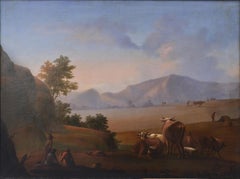
Plow Field at Dawn in Mountain Landscape 18th Century Antique Large Oil Painting

Plow Field at Dawn in Mountain Landscape 18th Century Antique Large Oil Painting

Located in Stockholm, SE

The painting captures a serene moment on the foothill plateau, just as the day is beginning to wake up. The mountains are still wrapped in a soft blanket of morning fog, giving the s...

Category

Realist 18th Century Art

Materials

Canvas, Wood, Oil

Portrait Of Hans Sloane Richardson Paint 18th Century Oil on canvas Old master

Portrait Of Hans Sloane Richardson Paint 18th Century Oil on canvas Old master

Located in Riva del Garda, IT

Jonathan Richardson (London 1665 – 1745) Portrait of Hans Sloane (Killyleagh 1660 – Chelsea 1753), British physician and naturalist Oil on canvas 127 x 104 cm. With an importa...

Category

Old Masters 18th Century Art
Materials

Oil

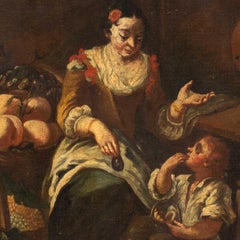
Antique Italian painter - 18th century figure painting - The fruit seller

Antique Italian painter - 18th century figure painting - The fruit seller

Located in Varmo, IT

Italian painter (18th century) - The Fruit Seller. 70.5 x 58.5 cm (without frame) - 88.5 x 75.5 cm (with frame). Oil on canvas, in a carved wood frame (not signed). The painting d...

Category

Rococo 18th Century Art

Materials

Canvas, Oil

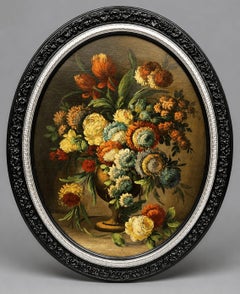
"Still life with flowers"

"Still life with flowers"

Located in Edinburgh, GB

Warm colour and an oval format give this floral composition a concentrated, decorative presence. A full arrangement of orange, cream, yellow, and blue-green blossoms is gathered in a...

Category

18th Century Art

Materials

Canvas, Oil

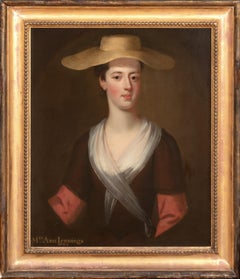
Portrait of a Mrs Ann Jennings, dated 1728 Enoch Seeman (1689-1744)

Portrait of a Mrs Ann Jennings, dated 1728 Enoch Seeman (1689-1744)

By Enoch Seeman

Located in Liphook, GB

Portrait of a Mrs Ann Jennings, dated 1728 Enoch Seeman (1689-1744) Large 18th Century English School half-length portrait of a Mrs Ann Jennings, in straw hat and dress, oil on can...

Category

18th Century Art

Materials

Canvas, Oil

A pair of Orientalist portraits

A pair of Orientalist portraits

Located in Stoke, Hampshire

Edward Alcock (1745-1788) A pair of portraits of Orientalist subjects Both signed 'E. Alcock' Oil on copper Framed size 9 x 8 in Edward Alcock (active 1846–1905) is best known for h...

Category

Old Masters 18th Century Art
Materials

Oil

Four Framed Hogarth Engravings "Four Times of the Day"

Four Framed Hogarth Engravings "Four Times of the Day"

By William Hogarth

Located in Alamo, CA

The four plates in this "Four Times of the Day" set were created utilizing both engraving and etching techniques by William Hogarth in 1738. Hogarth's original copper plates were refurbished where needed by James Heath and these engravings were republished in London in 1822 by Braddock, Cradock & Joy. This was the last time Hogarth's original copper plates were used for printing. Most were melted down during World War I for the construction of bombs. Printed upon early nineteenth century wove paper and with large, full margins as published by William Heath in 1822. The inscription below each print reads "Invented Painted & Engraved by Wm. Hogarth & Publish'd March 25. 1738 according to Act of Parliament". These large folio sized "Four Times of the Day" engravings/etchings are presented in complex gold-colored wood frames with black bands and scalloped gold inner trim. A majority of each thick impressive frame is covered with glass applied near the outer edge. Each frame measures 25.75" high, 22.25" wide and 1.88" deep. There are a few small dents in the edge of these frames, which are otherwise in very good condition. "Morning" has two focal areas of discoloration in the upper margin and some discoloration in the right margin, a short tear in the left margin and a short tear or crease in the right margin. "Noon" has a spot in the upper margin that extends into the upper image, but it is otherwise in very good condition. "Evening" has a faint spot in the upper margin, but it is otherwise in very good condition. "Night" is in excellent condition. The "Four Times of the Day" series is in the collection of many major museums, including: The British Museum, The Metropolitan Museum of Art, The Tate Museum, The Chicago Art Institute and The Victoria and Albert Museum. Through this series Hogarth is portraying early 18th century London street life at "Four Times of the Day". His characters are exhibiting their personalities, quircks, strange activities, but he also wants to draw attention the disparities between the wealthy aristocracy and the common working class. Plate 1, "Morning" depicts morning in Covent Garden in the winter in front of Tom King...

Category

Old Masters 18th Century Art
Materials

Engraving, Etching

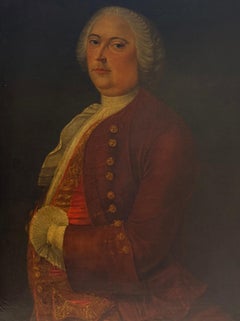
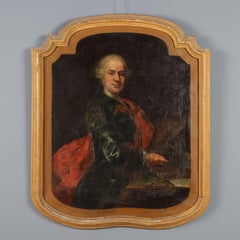
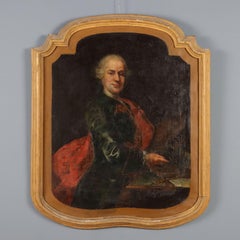
Painting Portrait of a Gentleman 18th century. Oil on Canvas.

Painting Portrait of a Gentleman 18th century. Oil on Canvas.

Located in Milan, IT

Oil on Canvas. Northern Italian school of the 18th century. The gentleman, in an elegant suit with a red cloak, was portrayed with several objects placed on the desk in front of him,...

Category

Other Art Style 18th Century Art

Materials

Oil

Indian Miniature Portrait Maharaja Dip Singh of Kaparan Hunting Boar, Bundi 1800

Indian Miniature Portrait Maharaja Dip Singh of Kaparan Hunting Boar, Bundi 1800

Located in Greenwich, CT

Antique Mughal Miniature Painting of Maharaja Dip Singh of Kaparan (Kapren) in a detailed Hunting Boar scene- ink, opaque watercolor on paper. Bundi, ca. 1775 A comparable pai...

Category

Rajput 18th Century Art

Materials

Watercolor, Gouache, Pigment

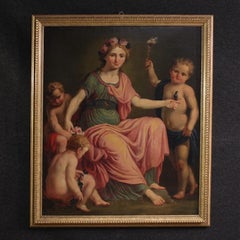
18th-Century Oil on Canvas Italian Antique Painting: Aurora Triumphing over Night

18th-Century Oil on Canvas Italian Antique Painting: Aurora Triumphing over Night

Located in Vicoforte, IT

An important Italian painting from the second half of the 18th century. This oil-on-canvas painting, attributed to the great Tuscan painter Giuliano Traballesi (1731–1812), depicts a...

Category

18th Century Art

Materials

Canvas, Oil

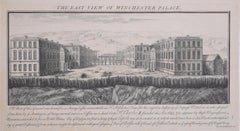
Winchester Palace, Southwark, London engraving after Samuel and Nathaniel Buck

Winchester Palace, Southwark, London engraving after Samuel and Nathaniel Buck

By Samuel & Nathaniel Buck

Located in London, GB

To see more, scroll down to "More from this Seller" and below it click on "See all from this Seller." after Samuel Buck (1696 - 1779) and Nathaniel Buck (active 1724 - 1759) The East View of Winchester Palace (1733) Engraving 20 x 37 cm An engraved view of Winchester Palace, a bishop's palace built in the 12th century. It served as the London townhouse of the Bishops of Winchester and remained in use until around 1700, when it was divided up into tenements and warehouses. The building was largely destroyed by fire in 1814. Samuel and Nathaniel Buck...

Category

18th Century Art

Materials

Engraving

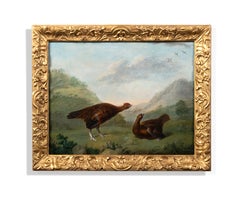
Two partridges in a mountainous landscape

Two partridges in a mountainous landscape

By Stephen Elmer

Located in Stoke, Hampshire

Stephen Elmer (1715-1796) Two partridges in a mountainous landscape Oil on canvas Painting size 15 x 18 in Framed size 17 1/2 x 21 1/2 in Stephen Elmer (1715–1796) was one of the le...

Category

Old Masters 18th Century Art
Materials

Oil

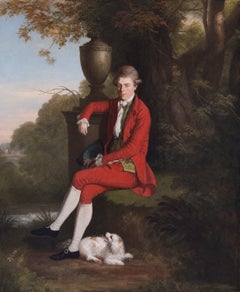
Portrait of a Gentleman

Portrait of a Gentleman

Located in London, GB

Johan Zoffany Portrait of a Gentleman 1733 - 1810 Oil on canvas, unsigned Image size: 29 1/2 x 24 1/2 inches (75 x 62 cm) Original gilt frame Provenance: Scott & Fowles, New York ...

Category

18th Century Art

Materials

Canvas, Oil

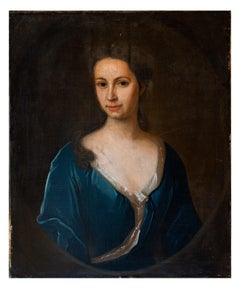
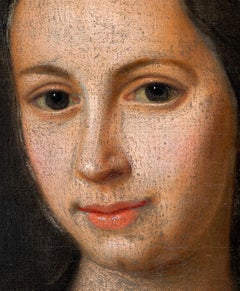
Portrait of a Lady, Oil on Canvas, Mid-18th Century, Unsigned

Portrait of a Lady, Oil on Canvas, Mid-18th Century, Unsigned

Located in GB

This is a restrained and elegant eighteenth-century British or Irish portrait, most likely dating from the mid-1700s, and it fits squarely within the polite, understated portrait tra...

Category

18th Century Art

Materials

Canvas, Oil

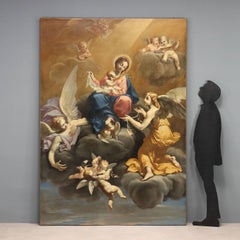
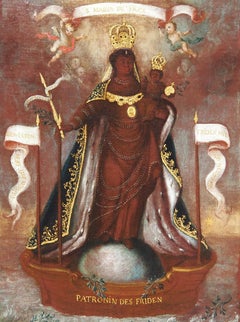
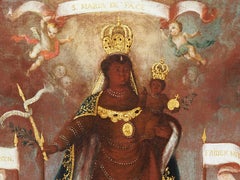
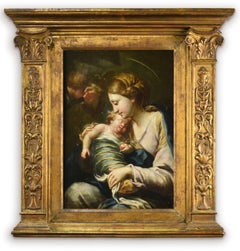
18th Century Italian Genovese Madonna Painting in Baroque Style

18th Century Italian Genovese Madonna Painting in Baroque Style

Located in New York, NY

Italian Madonna, early 18th Century, probably Genovese. Beautiful color palette. Not signed.

Category

Baroque 18th Century Art

Materials

Canvas, Oil

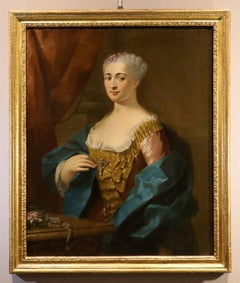
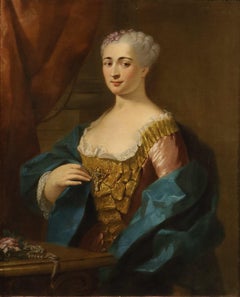
Portrait Noblewoman Van Loo Paint 18th Century Oil on canvas Old master French

Portrait Noblewoman Van Loo Paint 18th Century Oil on canvas Old master French

Located in Riva del Garda, IT

Jean-Baptiste van Loo (Aix-en-Provence, 1684–1745) circle Portrait of a Lady Oil on canvas 93 x 77 cm. In antique frames (with imperfections) 103 x 87 cm. The painting depicts...

Category

Old Masters 18th Century Art
Materials

Oil

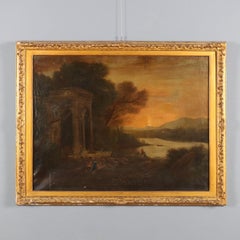
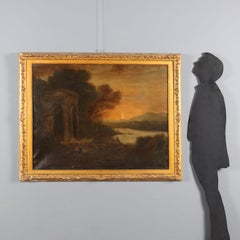
Painting Landscape with Figures and Architecture 18th century

Painting Landscape with Figures and Architecture 18th century

Located in Milan, IT

Oil on Canvas. Large and scenic landscape pervaded with romantic atmosphere for 'sunset setting. On the left an architectural whimsy, on the right a placid and vast river flows; nume...

Category

Other Art Style 18th Century Art
Materials

Oil

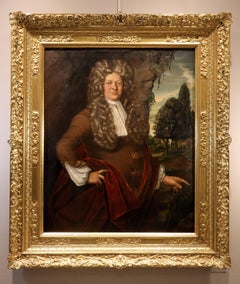
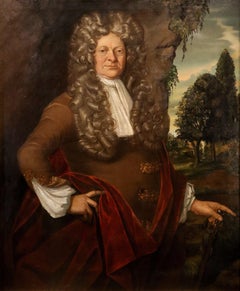
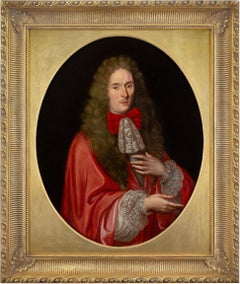
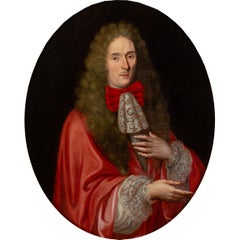
Early 18th-Century Flemish School, Portrait Of A Gentleman In A Red Robe

Early 18th-Century Flemish School, Portrait Of A Gentleman In A Red Robe

Located in Cheltenham, GB

This refined early 18th-century Flemish oil painting depicts a gentleman dressed in a red robe, a fancy lace cravat and cascading cuffs. His wig falls in masses, framing his introspe...

Category

Mannerist 18th Century Art
Materials

Canvas, Oil