Sculptures

to
1,678
10,060
3,428
2,799
1,541
4,529
Overall Width
to
Overall Height
to
217
738
4,079
17,311
102
43
115
129
69
166
376
377
562
533
76
9,625
3,378
1,677
936
444
152
143
122
84
72
20
19
9
7
4,943
2,910
2,709
2,088
1,871
1,703
1,269
1,046
928
761
567
506
498
493
459
453
451
349
340
319
11,369
5,974
3,462
3,264
3,191
216
213
159
128
115
95
223
13,611
6,342
Sculptures For Sale
This Week's Listings Only
Hajime Sorayama Tyrannosaurus T-rex Cyborg Dinosaur Sculpture in Box Nanzuka

Hajime Sorayama Tyrannosaurus T-rex Cyborg Dinosaur Sculpture in Box Nanzuka

Located in Surfside, FL

Hajime Sorayama (Japan, b. 1947) Medium: PVC (vinyl), silvered chrome resin Dimensions: 60 × 23 × 15 cm Approximately 23.5 x 9 x 6 inches. Produced by APPortfolio and Nanzuka A Tyra...

Category

21st Century and Contemporary Contemporary Sculptures

Materials

Resin, Mixed Media

Oriental Jade Sculpture of Two Court Ladies with Tree – Mid-20th Century

Oriental Jade Sculpture of Two Court Ladies with Tree – Mid-20th Century

Located in Sant Celoni, ES

Elegant hand-carved bicolor jade sculpture from the Oriental tradition, depicting two court ladies beneath a flowering tree. The figures are crafted in translucent light green jade, ...

Category

Mid-20th Century Sculptures

Materials

Other Medium

Hope (3/30) - Joyful Figurative Mixed Media Sculpture with Glossy Yellow Balloon

Hope (3/30) - Joyful Figurative Mixed Media Sculpture with Glossy Yellow Balloon

By Nayla Saroufim

Located in Los Angeles, CA

Nayla Saroufim’s contemporary sculptures translate optimism into form. Her works feel playful at first glance, then quietly persistent the longer you live with them. Working in metal...

Category

21st Century and Contemporary Contemporary Sculptures

Materials

Metal, Steel

"Butterball"
"Butterball"

"Butterball"

Located in Warren, NJ

This is an Douglas Brett sculpture “butterball” signed and numbered . In good condition. Measures 15x11x11 150 made

Category

Early 2000s Sculptures

Materials

Bronze

Diogenes, terracotta sculpture, 1939, Giorgio Rossi (1894-1981).

Diogenes, terracotta sculpture, 1939, Giorgio Rossi (1894-1981).

Located in Firenze, IT

**Diogenes.** **Terracotta sculpture, 1939, Giorgio Rossi (1894-1981): Tuscan Sculptor.** **Material:** Hand-modeled terracotta by the artist. **Unique piece.** **Dimensions...

Category

1930s Art Deco Sculptures

Materials

Terracotta

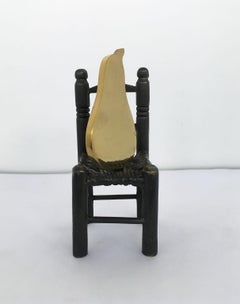
Pearfect in Pink
Pearfect in Pink

Pearfect in Pink

By Bela Bacsi

Located in Pasadena, CA

Provenance Acquired by the gallery directly from the artist Exhibitions Exhibited at the Los Angeles Art Show 2014, January 15-19, 2014

Category

Early 2000s Realist Sculptures

Materials

Marble

Hebru Brantley Flyboy (Hebru Brantley art toy)

Hebru Brantley Flyboy (Hebru Brantley art toy)

By Hebru Brantley

Located in NEW YORK, NY

Hebru Brantley (Hebru Brantley art toy), 2017. New in its original packaging. Medium: Painted cast vinyl. Dimensions: 9 x 8 x 4 inches (22.9 x 20.3 x 10.2 cm). New and sealed in i...

Category

21st Century and Contemporary Pop Art Sculptures

Materials

Resin, Vinyl

Synthetic Fly (blue green) - pop art sculpture, wall sculpture

Synthetic Fly (blue green) - pop art sculpture, wall sculpture

Located in New York, NY

This piece presents a fly reimagined through digital fabrication. Designed and 3D-printed with precise attention to form, surface, and color, the object blurs the boundary between na...

Category

2010s Pop Art Sculptures

Materials

Mixed Media, Digital Pigment

Large Art Nouveau Terracotta Sculpture Signed

Large Art Nouveau Terracotta Sculpture Signed

Located in Pistoia, IT

Strikingly decorative and large in size is this late 19th-century Art Nouveau patinated terracotta sculpture. The sculpture depicts a half-naked young woman sitting in a tree holdi...

Category

1890s Art Nouveau Sculptures

Materials

Terracotta

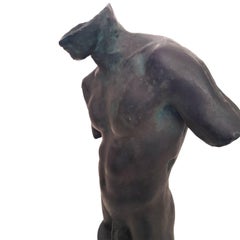
Male Bust - Bronze Sculpture by Igor Mitoraj - 1991

Male Bust - Bronze Sculpture by Igor Mitoraj - 1991

By Igor Mitoraj

Located in Roma, IT

Amazing male bronze bust with a black patina. This work is the 6th from an edition of eight. Its creator, Igor Mitoraj, is a polish sculptor deeply rooted in the classical tradition....

Category

1990s Contemporary Sculptures

Materials

Bronze

Black Swan
Black Swan

Mark MorrisonBlack Swan, ca. 1950

$7,500Sale Price|70% Off

Black Swan

Located in Wilton Manors, FL

Mark Morrison (1895-1964) Black Swan , ca. 1950 Carved and polished black pearl granite 7" wide, 11.5" deep, height is 29" Provenance: Estate of Mrs. Mark Morrison. Born: Kin...

Category

Mid-20th Century Realist Sculptures

Materials

Granite

Small Bronze Of A Lady Opening A Box

Small Bronze Of A Lady Opening A Box

Located in Lake Worth Beach, FL

Small Bronze Of A Lady Opening A Box Artist signed a small bronze with a carved ivory face 4wx2dx2.75h The sculptor Peter Tereszczuk was born in 1875 in the Ukrainian city Wybudow. H...

Category

Early 1900s Sculptures

Materials

Bronze

Pas Seul 3/9 - figurative, female, bronze, outdoor sculpture

Pas Seul 3/9 - figurative, female, bronze, outdoor sculpture

Located in Bloomfield, ON

Using simplified shapes, artist Frances Semple reveals the emotive essence of movement in this bronze sculpture of a walking woman. At 60 inches high, the figure is life-size. The sculpture is inscribed by the artist with initials and edition number, 3/9. The concrete base measures 12h x 24w x 42d inches. Together, the sculpture and base...

Category

2010s Contemporary Sculptures

Materials

Bronze

Cuban Master Florencio Gelabert Sculpture Large Wood Carving Bust Man Portrait

Cuban Master Florencio Gelabert Sculpture Large Wood Carving Bust Man Portrait

Located in Surfside, FL

Florencio Gelabert Y Perez (Cuban, 1904-1995) Hand carved, signed; 1979 Materials: Cuban wood (mahogany?) Dimensions 23 X 4 X 4 inches Label affixed to underside: National Registry of Cultural Assets of the Republic of Cuba Ministry of Culture. Provenance: Art Master Collection, Miami, Florida. Florencio Gelabert, with a style reminiscent of Art Deco and Art Nouveau in a Latin American Expressionist stylization. Carved wood sculpture. Depicts a modernist stylized form of a man in a streamline moderne style. José Florencio Gelabert Pérez (Caibarien, 1904 - Havana, 1995) Cuban musician, sculptor, draftsman and teacher. He graduated from the San Alejandro National Academy of Fine Arts in 1934. He received numerous awards, mentions and recognitions in Fine Arts Halls and Circles. His works are in the permanent collection of the National Museum of Fine Arts. Florencio Gelabert is a renowned sculptor, who made more than twenty solo exhibitions beginning in 1929, several in the National Museum of Fine Arts, and participated in more than thirty collectives in Cuba, Spain and Brazil, the latter in the Sao Paulo Biennial. he traveled from Caibarién to Santa Clara in 1928 to audition to enter the famous San Alejandro Fine Arts School in Havana. He obtained one of the five vacancies. Already in the Cuban capital, he combined fine arts and music. When he graduated, he became a professor in San Alejandro and the academy’s principal in 1960. With a calling common to wood sculptors –which began with his primary school carving carpentry classes and the active life of his home town’s shipyards, his chisels and gouges feverishly turned mahogany, “ácana” and ebony into female heads with black African features dating back to 1930. In 1938 he used his savings to explore Europe: France (Paris, Marseilles), Italy (Naples, Rome, Florence, and Venice), Belgium (Malina). His encounter with the works by Aristide Maillol, Auguste Rodin, Ossip Zadkine, Constantin Brancusi and even with Wifredo Lam, who was also born in another Cuban coastal area, Sagua la Grande, and his encounter with the nude marble David sculpture...

Category

1970s Art Deco Sculptures

Materials

Wood

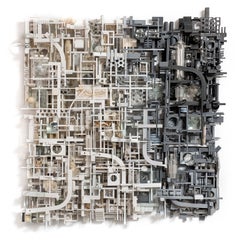
CC #86 - Green Blue Abstract Geometric Wall Sculpture

CC #86 - Green Blue Abstract Geometric Wall Sculpture

Located in Los Angeles, CA

Anna Kruhelska, a talented visual artist and practicing architect from Lodz, Poland, merges her expertise in both fields to create captivating artworks. With a background in major ar...

Category

2010s Abstract Sculptures

Materials

Wood, Plywood, Mixed Media, Acrylic

Moon Bowl No. 2
Moon Bowl No. 2

Moon Bowl No. 2

By Erica Iman

Located in Columbia, MO

Erica Iman received her BFA in Ceramics and BSE in Art from the University of Missouri Columbia in 2005 and obtained her MFA in Ceramics from Southern Illinois University Edwardsvill...

Category

21st Century and Contemporary Contemporary Sculptures

Materials

Clay

Veracruz Mexico Pre-Columbian ceramic Warrior figure sculpture

Veracruz Mexico Pre-Columbian ceramic Warrior figure sculpture

Located in Wilton Manors, FL

Figure of a Chanting Warrior Ceramic with bitumen highlights 300-600 CE (Classic Period) Mexico, Veracruz, possibly Nopiloa Veracruz Culture Pre-Columbian, Mexico, Vera Cruz culture...

Category

15th Century and Earlier Sculptures

Materials

Ceramic

Noche Crist Goddess Sculpture

Noche Crist Goddess Sculpture

Located in Washington, DC

Wonderful and one of a kind nude sculpture by Noche Crist (1909-2004). Sculpture is made from polyester resin. Catalogue of a postumous retrospective in 2008 at the American Universi...

Category

1970s Outsider Art Sculptures

Materials

Acrylic Polymer

Grayson Perry - Piggy Bank

Grayson Perry - Piggy Bank

By Grayson Perry

Located in London, GB

Grayson Perry Piggy Bank, 2017 White ceramic piggy bank painted in blue and glazed, with a rubber stopper, contained in the original cardboard box.
 9 × 21 × 9 cm
 Grayson Perry is ...

Category

2010s Contemporary Sculptures

Materials

Ceramic

Il volume The Book Italy 1975 by Nato Frascà

Il volume The Book Italy 1975 by Nato Frascà

Located in Brescia, IT

This intense and engaging artwork was created by the Italian artist Nato Frascà. The title is "Il Volume" translated in " The Book". This is a multiple of 50 specimens and this piec...

Category

Late 20th Century Post-Modern Sculptures

Materials

Wood

EDWARD BOHLIN 1920s-1930s SILVER ART PARADE SADDLE HOLLYWOOD WESTERN ARTIST VAIL

EDWARD BOHLIN 1920s-1930s SILVER ART PARADE SADDLE HOLLYWOOD WESTERN ARTIST VAIL

By Edward H. Bohlin

Located in San Antonio, TX

Circa Late 1920s - Early 1930s. It is all Bohlin made and marked to include the saddle, the headstall and the breast collar. All made in Hollywood California. The only non-Bohlin item is the bit which appears to also be early California. There is some interesting provenance of the fine saddle. It was commissioned by Charles R. Bell, married to Margaret Vail Bell who was the daughter of Walter Vail. On the Bolin nameplate it has engraved, Vail Ranch as well as made for Charles Bell. Charles Bell Died in 1939. The Vail Ranch has some great Western History which I will go into a little detail. You see, not only am I selling Saddles, but I’m also selling History. If you want to skip the history lesson you can just scroll down past the following info to images of the saddle. It’s no secret that ranching runs in the family blood. There is no greater example of that than California Rangeland Trust CEO Nita Vail. On April 14, 2018 Nita had the opportunity to witness her great-grandfather Walter L. Vail’s induction into the Hall of Great Westerners at the National Cowboy & Western Heritage Museum. This high honor is bestowed by the Museum to “exceptional individuals who have made an indelible impact upon the history of the great West.” A pivotal figure in early California and Arizona ranching, Walter Vail joins just over only 200 individuals who have been inducted into this esteemed hall. The Vail legacy of advocacy and ranching lives on strongly through his descendants, including Nita. All these years later, Nita carries the mantle of advocacy for ranchers in her own work at the California Rangeland Trust. Reflecting on her great-grandfather’s induction ceremony in Oklahoma, Nita says, “Witnessing my great-grandfather’s induction with family and friends was an incredible experience and a reminder of why I do what I do. Ranching plays an integral role in the culture, economy, and quality of life in California. Generations later, I get to honor Walter L. Vail’s legacy in my work with the California Rangeland Trust every day, preserving those open spaces for new generations and partnering with ranchers to continue to sustain life on the range in California.” Walter Vail History A native of Liverpool, Nova Scotia, Walter Vail purchased the 160-acre Empire Ranch southeast of Tucson, Arizona in 1876, along with an Englishman named Herbert Hislop. In 1882, the Empire Land & Cattle Company was formed with Walter L. Vail as principal shareholder. Over the years Vail, along with various partners, expanded the original land holdings to include over one million acres. The year after Walter purchased the Empire Ranch, the Southern Pacific Railroad built a railroad line, which was great news for the Vail family as it provided a means for them to ship their cattle. Edward L. Vail, George Scholefield and Bird at the mouth of Rosemont Canyon ca. 1896-1898 Standing Up for Ranchers In the fall of 1889, the Southern Pacific Railroad announced they would raise cattle freight rates by 25 percent. They ignored loud protests from ranchers who had already been hit hard by depressed cattle prices. In response, the Vails made a plan to drive the cattle overland themselves without the railroad. They knew that, if they were successful, they could break the railroad’s monopoly on the ranchers and force prices down. Walter’s brother Edward Vail and foreman Tom Turner volunteered to drive the almost 1,000 steers on the 300-mile trip to the Warner Ranch in San Diego. The journey ahead would be grueling. Most of their trip was through desert with water sources 15 to 30 miles apart. The ranchers would face a slew of obstacles—a stampede, a chaotic Colorado River crossing, an encounter with a group of horse thieves. In spite of all the dangers and challenges, they reached their destination. Just 71 days after leaving Arizona, the Empire cowboys arrived at the Warner Ranch. They had only lost 30 steers. The historic Empire Ranch Trail Drive of 1890 inspired other Arizona ranchers to make similar drives as a stand against the railroad. That fall, a group of Arizona cattlemen met and agreed to fund improvements to establish a safe cattle trail from Tucson to California. In response to the united stand of the ranchers, sparked by the Vails, the railroad finally agreed to restore the old freight rate—on the condition that the cattlemen would make no more cattle drives. Walter Vail led by example, but he was also an active representative of ranching interests in the legislature. He served in the 10th Arizona Territorial Legislature in 1878 and in 1884 on the Pima County Board of Supervisors. He introduced two significant bills: One proposing the creation of Apache County in the northeastern corner or Arizona Territory, and the other calling for the repeal and replacement of a Pima County fencing ordinance. Elected to the Arizona Stock Growers Association in 1884, Walter L. Vail advocated for levying fines on outfits that brought diseased cattle into the Territory, proposed a system of recording brands and earmarks, and requested the establishment of the livestock sanitary commission to oversee quarantines on infectious diseases, and tighter trespass laws. Moving to California In the late 1880s when a long drought hit Arizona, the Vails began leasing California pastures and shipping increased numbers of their cattle there to fatten. This marked the beginning of Walter’s efforts to purchase land in Temecula Valley. Vaqueros (Mexican cowboys) at the Empire Ranch in Arizona In 1890, with growing corporate holdings in California, Walter Vail established his headquarters in downtown Los Angeles and moved his family there. By this time, he had pieced together four Mexican land grants—Pauba Rancho, Santa Rosa Rancho, Temecula Rancho and Little Temecula Rancho—to form the Pauba Ranch. Eventually, the Vails would own more than 87,500 acres surrounding the little town of Temecula. In 1892 they leased Catalina Island and in 1901-1902 in partnership with J. V. Vickers, they purchased most of the interests in Santa Rosa from the estate of A.P. More. In March of 1894, Vail and Gates joined Vickers in setting up a third cattle company, the Panhandle Pasture Company, with the hopes of expanding new markets in the east. The Panhandle Pasture Company bought seven thousand acres of grassland in Sherman County, Texas, and an equal amount across the line in Beaver County, Indian Territory (later Oklahoma). Walter Vail was tragically killed in a Los Angeles streetcar accident in 1906. After his death, the Empire Land & Cattle Company (later renamed the Vail Company) assumed control of all his ranches and other real estate holdings. Walter had five sons and they would all have a hand in running the various ranches and the Vail Company as whole throughout their lives. The Empire Ranch in Arizona was sold in 1928. The Temecula area ranches continued to operate until it was sold in 1965. Santa Rosa Island, the last of Walter Vail’s holdings, was sold to the National Park Service in 1986, and ranching operations shut down there in 1998. Walter Lennox Vail (May 13, 1852 - December 2, 1906) was an American businessman, cattle dealer, and politician. He is known for his Empire Land & Cattle Company (later the Vail Company), which spanned over one million acres throughout five states.[1] Vail has been called "a pivotal figure in early California and Arizona ranching." Early life Vail was born in Liverpool, Nova Scotia on May 13, 1852, to Mahlon Vail, Sr. and Eliza Vail. Career Empire Ranch The headquarters of the Empire Ranch in the modern day Vail left his family's Plainfield, New Jersey house in the middle of 1875 to pursue riches in the West. He worked for a few months in Virginia City, Nevada as a mine's timekeeper, but in November he wrote of his intention to get involved in Arizona's sheep business. He, along with an Englishman named Herbert R. Hislop, then purchased the Empire Ranch along with its 612 cattle on August 22, 1876. The purchase from Edward Nye Fish and Simon Silverberg cost $1,174 at the time and was only 0.25 square miles (0.65 km2). Vail had met Hislop for the first time in August of that year, at the Lick House in San Francisco. Vail also became the main shareholder of the Empire Land & Cattle Company, which was formed in 1882. Politics Vail additionally served in the House of Representatives on the 10th Arizona Territorial Legislature for two years, starting in 1879. He was one of five representatives from Pima County. There, he proposed the creation of Apache County in the northeast. In 1884, Vail was elected to the Arizona Stock Growers Association, where he introduced many laws relating to cattle farming. California Vail moved his main operations to California in the late 1880s due to a long drought in Arizona. He started leasing Californian land mainly in Temecula Valley, but established his headquarters in downtown Los Angeles. By this time, he had already bought four ranches: the northern half of Rancho Little Temecula, Rancho Pauba, Rancho Santa Rosa, and Rancho Temecula. Later, Vail would own over 135 square miles (350 km2) surrounding the city of Temecula. He also leased Santa Catalina Island and Purchased Santa Rosa Island in 1892 and 1901, respectively. Vail, along with Carroll W. Gates and J.V. Vickers, set up the Panhandle Pasture Company, which bought about 22 square miles (57 km2) in Sherman County, Texas and Beaver County, Oklahoma. Personal life Vail married Margaret "Maggie"[a] Newhall in 1881, with them having five children: Nathan Russel, Mahlon, Mary, Walter Lennox Jr., and William Banning (who used his middle name) together. In 1890, a Gila monster bit Vail on his middle finger, and for years thereafter he experienced bleeding and swelling in his throat, which was thought to be caused by the venom from the bite. Death Vail died at 54 on December 2, 1906, due to complications from a tram (Trolley Car) accident in Los Angeles. He was cremated, then buried at the Hollywood Forever Cemetery on December 6. Legacy Vail's sons took over the company after his death, renaming it to the Vail Company. The Empire Ranch was sold in 1928, and the Temecula ranches were bought by a syndicate of companies, including Kaiser Aluminum, Kaiser Industries, and Macco Realties in 1965. Santa Rosa Island was acquired by the National Park Service in 1986, and ranching ceased in 1998. Vail was inducted into the Hall of Great Westerners at the National Cowboy & Western Heritage Museum in 2018.[2] Various properties have been named after the Vail family including: Vail Headquarters, an outdoor shopping mall, Vail Lake, and Vail, Arizona. In 1867, German immigrant, Louis Wolf, and his Chumash wife, Ramona, built a small adobe trading post next to Temecula Creek. Their Wolf Store helped launch the Temecula community, serving as a saloon, livery stable, legal services, hotel, general store, stagecoach stop, post office, school and employment agency. After Louis and Ramona’s deaths, their land and other Ranchos were purchased by Arizona cattle baron Walter Vail. By 1905, the 87,000-acre Vail Ranch became one of the largest cattle operations in California, stretching from Camp Pendleton to Vail Lake to Murrieta. It operated through the late 1970’s when it was sold to build Temecula’s housing. Some of the ranch’s oldest buildings survived in a cluster around the long-vacant Wolf Store. Together they would wait more than 40 years to be restored and once again become a center for community life in the Temecula Valley. ​ In 1905 after his death, Wolf’s Temecula was purchased by Arizona cattle baron Walter Vail, along with three other Ranchos totaling 87,500 acres. The sprawling Vail Ranch spread from South of Highway 79 to South of Clinton Keith Road, East to Vail Lake Resort and West to Camp Pendleton and continued operations through the late 1970’s when it was sold for housing subdivisions. The remaining buildings that comprised the Vail Ranch Headquarters, several having been demolished, have sat mostly vacant since then awaiting their restoration and re-use. John N. Harvey, Edward L. Vail, Walter L. Vail, 1879 Ned Joins the Partnership - May 1879 In May of 1879 Walter’s older brother, Edward Lang Vail, known as Ned, joined the Empire Ranch partnership. He had no ranching experience but quickly learned. The Empire Ranch herds were finally sufficiently developed for sale, and the Empire Ranch found a ready market in the town of Tombstone and its nearby mines. Walter finally had sufficient funds to begin to pay off some of the loans from his Uncle Nathan and Aunt Anna. North end of the original four rooms of the Empire Ranch House. Empire Ranch Census Records - 1880 The 1880 U.S. Census documents that eight men were living full time at the Empire: the partners, Walter Vail, John Harvey and Ned Vail; John Randolph Vail, Uncle Nathan and Aunt Anna’s son; John Milton Requa, nephew of Isaac Requa who hired Walter in Virginia City; John Dillon, who was instrumental in locating the Total Wreck Mine; Tomás Lopez, a herder; and Mon Ta, the cook. Section of Official Map of Pima County by Roskruge 1893. The Southern Pacific Railroad Arrives in Pantano - April 1880 In 1880 the Southern Pacific Railroad finally reached Tucson and by April it was extended to Pantano, north of the Empire Ranch. The availability of rail transportation was a major boom to the Empire Ranch as it was now possible to sell cattle and beef to markets beyond Southern Arizona. The railroad also increased the availability of goods in Tucson and allowed for much quicker and safer transportation to California and the East. Empire Ranch land acquisitions are highlighted in red. Courtesy of Dave Tuggle Land Holdings Expand-1881-1882 Starting in 1881 the land holdings of the Empire Ranch expanded considerably. They acquired Charles and Agnes Paige’s Happy Valley Ranch near the Rincon Mountains in 1881. 1882 saw the addition of Don Alonzo Sanford’s Stock Valley Ranch totaling over twenty-eight square miles of grassland between the Whetstone and Empire Mountains. Charles Bell Bohlin Saddle. All of the leather has been professionally cleaned and conditioned. All of the sterling has been professionally polished as are all of my saddles. THE BOHLIN BRAND IS AS ICONIC AS THE FAMED WESTERN STARS that wore it. The late actor Richard Farnsworth sported a recognizable gold steer-head Bohlin buckle...

Category

1930s Realist Sculptures

Materials

Silver

Fleurs
Fleurs

Fleurs

By Pablo Picasso

Located in PARIS, FR

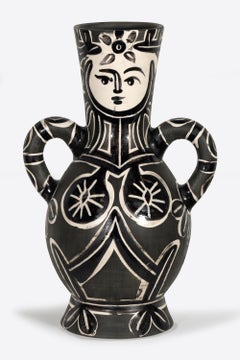
• An authenticated work This work is authenticated by Paloma Ruiz Picasso and Diana Widmaier Ruiz Picasso, who issued a certificate of authenticity on October 7, 2024. • A dated wor...

Category

1950s Modern Sculptures

Materials

Ceramic

I Love You - Red glass pop art pill sculpture

I Love You - Red glass pop art pill sculpture

By Edie Nadelhaft

Located in East Quogue, NY

"I Love U" (I <3 U) - Limited edition red glass pill sculpture by Edie Nadelhaft. Edition of 9. Signed and numbered on the back by the artist. The piece is equipped with a D-ri...

Category

2010s Contemporary Sculptures

Materials

Glass, Mixed Media

Nude, Abstract and Figurative Sculptures for Sale

The history of sculpture as we know it is believed to have origins in Ancient Greece, while small sculptural carvings are among the most common examples of prehistoric art. In short, sculpture as a fine art has been with us forever. A powerful three-dimensional means of creative expression, sculpture has long been most frequently associated with religion — consider the limestone Great Sphinx in Giza, Egypt — while the tradition of collecting sculpture, which has also been traced back to Greece as well as to China, far precedes the emergence of museums.

Technique and materials in sculpture have changed over time. Stone sculpture, which essentially began as images carved into cave walls, is as old as human civilization itself. The majority of surviving sculpted works from ancient cultures are stone. Traditionally, this material and pottery as well as metalbronze in particular — were among the most common materials associated with this field of visual art. Artists have long sought new ways and materials in order to make sculptures and express their ideas. Material, after all, is the vehicle through which artists express themselves, or at least work out the problems knocking around in their heads. It also allows them to push the boundaries of form, subverting our expectations and upending convention. As an influential sculptor as much as he was a revolutionary painter and printmaker, Pablo Picasso worked with everything from wire to wood to bicycle seats.

If you are a lover of art and antiques or are thinking of bringing a work of sculpture into your home for the first time, there are several details to keep in mind. As with all other works of art, think about what you like. What speaks to you? Visit local galleries and museums. Take in works of public art and art fairs when you can and find out what kind of sculpture you like. When you’ve come to a decision about a specific work, try to find out all you can about the piece, and if you’re not buying from a sculptor directly, work with an art expert to confirm the work’s authenticity.

And when you bring your sculpture home, remember: No matter how big or small your new addition is, it will make a statement in your space. Large- and even medium-sized sculptures can be heavy, so hire some professional art handlers as necessary and find a good place in your home for your piece. Whether you’re installing a towering new figurative sculpture — a colorful character by KAWS or hyperreal work by Carole A. Feuerman, perhaps — or an abstract work by Won Lee, you’ll want the sculpture to be safe from being knocked over. (You’ll find that most sculptures should be displayed at eye level, while some large busts look best from below.)

On 1stDibs, find a broad range of exceptional sculptures for sale. Browse works by your favorite creator, style, period or other attribute.

Read More

At Hosfelt Gallery, Bertoia Masterworks Complement Dynamic Contemporary Art

For nearly three decades, San Francisco–based Todd Hosfelt has curated against the grain — with a show on the legendary modernist Harry Bertoia the latest case in point.

This Weathered-Steel Sculpture Distills a Form of Protest into a Minimalist Monument

Part of Alejandro Vega Beuvrin’s “Barricada” series, the work is a subversive tribute to the street smarts of citizen activists.

How the Chunky, Funky Ceramics of 5 Mid-Century American Artists Balanced Out Slick Modernism

Get to know the innovators behind the pottery countercultural revolution.

Art Brings the Drama in These Intriguing 1stDibs 50 Spaces

The world’s top designers explain how they display art to elicit the natural (and supernatural) energy of home interiors.

Chryssa’s 1962 Neon Sculpture Was Way ahead of the Art-World Curve

By working with lettering, neon and Pop imagery, Chryssa pioneered several postmodern themes at a time when most male artists detested commercial mediums.

How to Spot a Fake KAWS Figure

KAWS art toys have developed an avid audience in recent decades, and as in any robust collectible market, counterfeiters have followed the mania. Of course, you don’t have to worry about that on 1stDibs, where all our sellers are highly vetted.

A Giant Wedding Cake Has Us Looking at Portuguese Tiles in a New Light

At Waddesdon Manor, artist Joana Vasconcelos has installed a three-tiered patisserie inspired by the narrative tile work of her homeland. We take a look at the cake sculpture and how Portuguese tiles have been used in architecture from the 17th century to today.
These Soft Sculptures Are Childhood Imaginary Friends Come to Life

Miami artist and designer Gabriela Noelle’s fantastical creations appeal to the Peter Pan in all of us.