Men Sculptures

to
169
1,199
504
404
175
369
Overall Width
to
Overall Height
to
78
306
767
1,499
40
27
48
69
27
20
43
57
76
84
27
1,109
176
100
49
48
24
22
21
15
7
4
3
2
1
4,842
2,758
2,653
1,978
1,875
1,671
1,197
986
923
703
512
487
478
444
436
430
425
329
318
304
1,880
1,723
300
236
228
47
42
39
39
38
2
18
1,379
1,074
Art Subject: Men
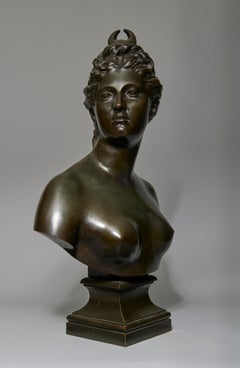
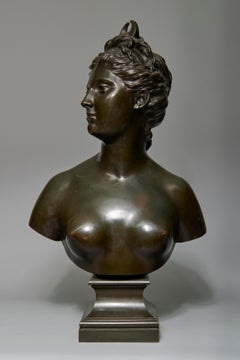
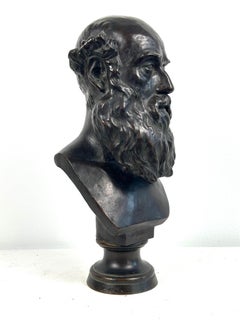
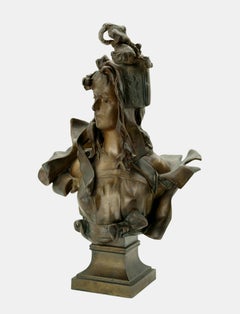
Large French Bronze Bust of Diana the Huntress

Large French Bronze Bust of Diana the Huntress

By Jean-Antoine Houdon

Located in Beachwood, OH

After Jean-Antoine Houdon (French, 1741-1828) Bust of Diana Bronze Signed on side, Susse Frères foundry stamp on base 28.5 x 16.25 inches Jean-Antoine Houdon's bust of Diana is an 1...

Category

19th Century Figurative Sculptures

Materials

Bronze

Hopi Katsina Doll in Carved Cottonwood.

Hopi Katsina Doll in Carved Cottonwood.

Located in Cotignac, FR

A Native North American carved wood and painted effigy figure, Hopi Katsina or Kachina doll. A wonderfully playful, coloured and highly individual Hopi Katsina doll. Each doll repr...

Category

Mid-20th Century Figurative Sculptures

Materials

Wood

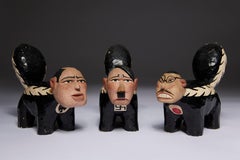
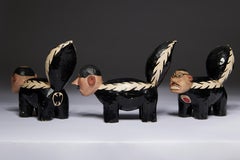
The Three Skunks of WWII, Carved Wooden Figures of Hitler, Mussolini & Tojo

The Three Skunks of WWII, Carved Wooden Figures of Hitler, Mussolini & Tojo

Located in Beachwood, OH

Three Skunks of WWII c. 1940s Carved and painted wood Unsigned 8 x 10 in. h. each These skunks are depicted as Adolf Hitler, Benito Mussolini, and Hideki Tojo. Condition: There ...

Category

1940s Figurative Sculptures

Materials

Wood, Paint

Botero Bronze Bull Sculpture, Contemporary Edition of 50, 20th Century

Botero Bronze Bull Sculpture, Contemporary Edition of 50, 20th Century

By Fernando Botero

Located in Cuauhtemoc, Ciudad de México

After Fernando Botero – Bull Bronze Sculpture Edition of 50 This beautifully executed bronze sculpture is an After Fernando Botero work, created in faithful homage to the artist’s...

Category

20th Century Contemporary Still-life Sculptures

Materials

Marble, Bronze

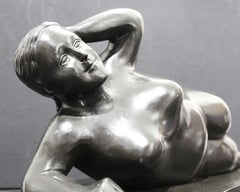
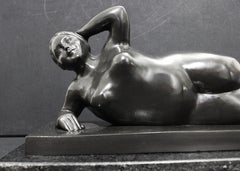
After Botero - Horizontal Nude Woman Bronze Sculpture

After Botero - Horizontal Nude Woman Bronze Sculpture

By Fernando Botero

Located in Cuauhtemoc, Ciudad de México

After Fernando Botero – RECLINING NUDE Bronze Sculpture Edition of 50 This beautifully executed bronze sculpture is an After Fernando Botero work, created in faithful homage to th...

Category

20th Century Contemporary Figurative Sculptures

Materials

Marble, Bronze

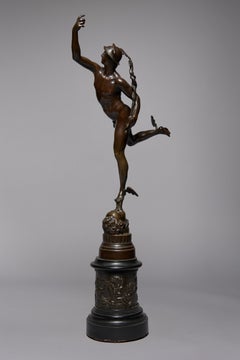
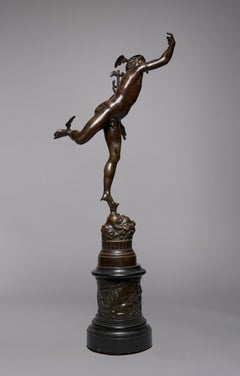
Mercury Standing on the Breath of Zeus, Antique Grand Tour

Mercury Standing on the Breath of Zeus, Antique Grand Tour

By Giambologna

Located in Beachwood, OH

After Giambologna (Italian, 1529-1608) Mercury Standing on the Breath of Zeus Bronze 27.5 x 14.25 x 5.5 inches The sculpture depicts Mercury wearing his winged helmet and sandals and holding a caduceus. Created after one of Giambologna's most celebrated sculptures in the Renaissance, Mercury, was designed as part of a fountain for the Villa Medici in Rome.The head on which Mercury steps symbolizes the figure being “exhaled, purified, unburdened.” When the Giambologna sculpture...

Category

19th Century Figurative Sculptures

Materials

Bronze

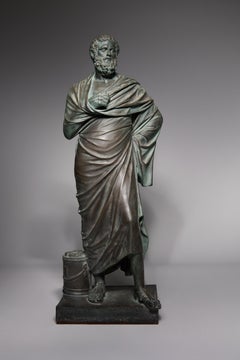
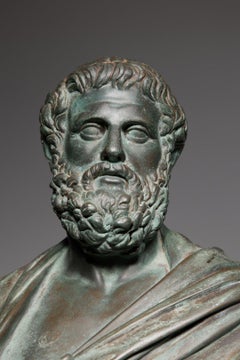
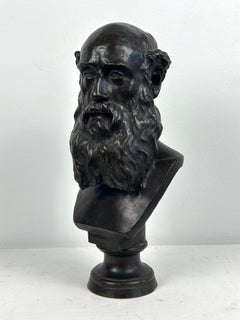
19th Century Grand Tour Figure of Sophocles after the Antique, F. Barbidienne

19th Century Grand Tour Figure of Sophocles after the Antique, F. Barbidienne

Located in Beachwood, OH

19th Century Grand Tour after the Antique Figure of Sophocles Bronze with green patination Signed F. Barbidienne, Fondeur 25 x 8.5 x 6.5 inches Standing figure of the Greek poet, we...

Category

19th Century Figurative Sculptures

Materials

Bronze

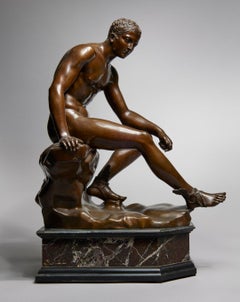
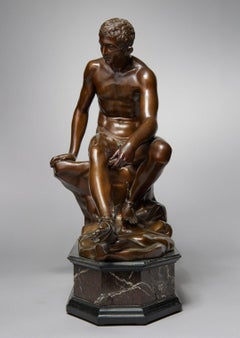
Grand Tour Bronze Figure of Seated Hermes, Early 19th Century After the Antique

Grand Tour Bronze Figure of Seated Hermes, Early 19th Century After the Antique

Located in Beachwood, OH

Large Figure of Seated Hermes, Grand Tour Bronze, Early 19th Century 19th Century Continental School After the Antique The large size figure well cast, with brownish green patination...

Category

Early 19th Century Figurative Sculptures

Materials

Marble, Bronze

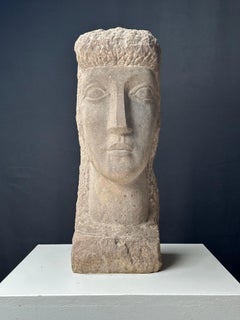
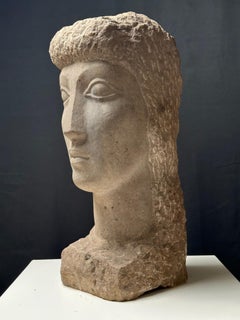
Head of Woman
Head of Woman

Mark MorrisonHead of Woman, ca. 1940

$6,000Sale Price|50% Off

Head of Woman

Located in Wilton Manors, FL

Mark Morrison (1895-1964) Head of Woman , ca. 1950 Carved stone 7.75" wide, 9" deep, height is 20 7/8" Signed at base. Provenance: Estate of Mrs. Mark Morrison. Born: Kingf...

Category

Mid-20th Century Cubist Sculptures

Materials

Granite

Art Nouveau Italian Signed Dated and Inscribed Original Bronze

Art Nouveau Italian Signed Dated and Inscribed Original Bronze

By Constantino Barbella

Located in Roma, IT

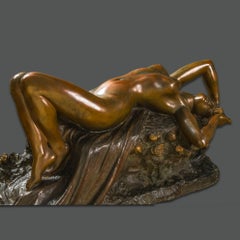
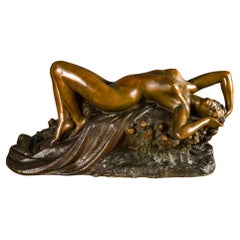
Wonderful Art Nouveau "Ebrezza" bronze sculpture of a woman lying on a bed of roses. It bears at the base the signature Barbella and the wording “Rome Palm Sunday 31 III 1912” Brand...

Category

Early 20th Century Art Nouveau Nude Sculptures

Materials

Bronze

Relining Nude (WG6)
Relining Nude (WG6)

Relining Nude (WG6)

By Waylande Gregory

Located in Wilton Manors, FL

Waylande Gregory (1905-1971). Nude Reclining, ca. 1950's. Painted composite cast from original sculpted in 1930's. Casting sanctioned and approved by the artist during his lifetime in partnership with MPI, Museum Pieces Incorporated. Very few examples were produced and even fewer survive. Waylande Gregory was considered a major American sculptor during the 1930's, although he worked in ceramics, rather than in the more traditional bronze or marble. Exhibiting his ceramic works at such significant American venues for sculpture as the Whitney Museum of American Art in New York City and at the venerable Pennsylvania Academy of the Fine Arts in Philadelphia, he also showed his ceramic sculptures at leading New York City galleries. Gregory was the first modern ceramist to create large scale ceramic sculptures, some measuring more than 70 inches in height. Similar to the technique developed by the ancient Etruscans, he fired his monumental ceramic sculptures only once. Gregory was born in 1905 in Baxter Springs, Kansas and was something of a prodigy. Growing up on a ranch near a Cherokee reservation, Gregory first became interested in ceramics as a child during a native American burial that he had witnessed. He was also musically inclined. In fact, his mother had been a concert pianist and had given her son lessons. At eleven, he was enrolled as a student at the Kansas State Teacher's College, where he studied carpentry and crafts, including ceramics. Gregory's early development as a sculptor was shaped by the encouragement and instruction of Lorado Taft, who was considered both a major American sculptor as well as a leading American sculpture instructor. In fact, Taft's earlier students included such significant sculptors as Bessie Potter Vonnoh and Janet Scudder. But, Taft and his students had primarily worked in bronze or stone, not in clay; and, Gregory's earliest sculptural works were also not in ceramics. In 1924, Gregory moved to Chicago where he caught the attention of Taft. Gregory was invited by Taft to study with him privately for 18 months and to live and work with him at his famed "Midway Studios." The elegant studio was a complex of 13 rooms that overlooked a courtyard. Taft may have been responsible for getting the young man interested in creating large scale sculpture. However, by the 1920's, Taft's brand of academic sculpture was no longer considered progressive. Instead, Gregory was attracted to the latest trends appearing in the United States and Europe. In 1928 he visited Europe with Taft and other students. "Kid Gregory," as he was called, was soon hired by Guy Cowan, the founder of the Cowan Pottery in Cleveland, Ohio, to become the company's only full time employee. From 1928 to 1932, Gregory served as the chief designer and sculptor at the Cowan Pottery. Just as Gregory learned about the process of creating sculpture from Taft, he literally learned about ceramics from Cowan. Cowan was one of the first graduates of Alfred, the New York School of Clayworking and Ceramics. Alfred had one of the first programs in production pottery. Cowan may have known about pottery production, but he had limited sculptural skills, as he was lacking training in sculpture. The focus of the Cowan Pottery would be on limited edition, table top or mantle sculptures. Two of the most successful of these were Gregory's Nautch Dancer, and his Burlesque Dancer. He based both sculptures on the dancing of Gilda Gray, a Ziegfield Follies girl. Gilda Gray was of Polish origin and came to the United States as a child. By 1922, she would become one of the most popular stars in the Follies. After losing her assets in the stock market crash of 1929, she accepted other bookings outside of New York, including Cleveland, which was where Gregory first saw her onstage. She allowed Gregory to make sketches of her performances from the wings of the theatre. She explained to Gregory, "I'm too restless to pose." Gray became noted for her nautch dance, an East Indian folk dance. A nautch is a tight, fitted dress that would curl at the bottom and act like a hoop. This sculpture does not focus on Gray's face at all, but is more of a portrait of her nautch dance. It is very curvilinear, really made of a series of arches that connect in a most feminine way. Gregory created his Burlesque Dancer at about the same time as Nautch Dancer. As with the Nautch Dancer, he focused on the movements of the body rather than on a facial portrait of Gray. Although Gregory never revealed the identity of his model for Burlesque Dancer, a clue to her identity is revealed in the sculpture's earlier title, Shimmy Dance. The dancer who was credited for creating the shimmy dance was also Gilda Gray. According to dance legend, Gray introduced the shimmy when she sang the Star Spangled Banner and forgot some of the lyrics, so, in her embarrassment, started shaking her shoulders and hips but she did not move her legs. Such movement seems to relate to the Burlesque Dancer sculpture, where repeated triangular forms extend from the upper torso and hips. This rapid movement suggests the influence of Italian Futurism, as well as the planar motion of Alexander Archipenko, a sculptor whom Gregory much admired. The Cowan Pottery was a victim of the great depression, and in 1932, Gregory changed careers as a sculptor in the ceramics industry to that of an instructor at the Cranbrook Academy in Bloomfield Hills, Michigan. Cranbrook was perhaps the most prestigious place to study modern design in America. Its faculty included the architect Eliel Saarinen and sculptor Carl Milles. Although Gregory was only at Cranbrook for one and one half years, he created some of his finest works there, including his Kansas Madonna. But, after arriving at Cranbrook, the Gregory's had to face emerging financial pressures. Although Gregory and his wife were provided with complimentary lodgings, all other income had to stem from the sale of artworks and tuition from students that he, himself, had to solicit. Gregory had many people assisting him with production methods at the Cowan Pottery, but now worked largely by himself. And although he still used molds, especially in creating porcelain works, many of his major new sculptures would be unique and sculpted by hand, as is true of Kansas Madonna. The scale of Gregory's works were getting notably larger at Cranbrook than at Cowan. Gregory left the surface of Kansas Madonna totally unglazed. Although some might object to using a religious title to depict a horse nursing its colt, it was considered one of Gregory's most successful works. In fact, it had a whole color page illustration in an article about ceramic sculpture titled, "The Art with the Inferiority Complex," Fortune Magazine, December, 1937. The article notes the sculpture was romantic and expressive and the sculpture was priced at $1,500.00; the most expensive sculpture...

Category

1950s Art Deco Figurative Sculptures

Materials

Plaster

Gothic Renaissance wooden sculpture: bust of a young Saint or Angel

Gothic Renaissance wooden sculpture: bust of a young Saint or Angel

Located in Norwich, GB

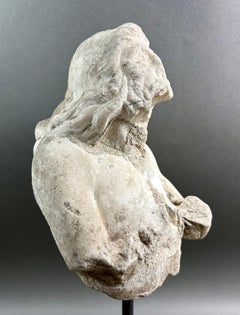
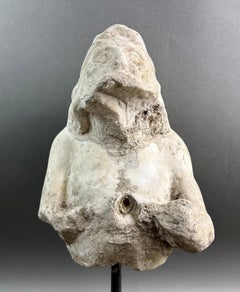
This remarkable, deeply evocative fragment is a hand-carved piece of religious statuary from 16th Century France. It depicts the torso of a serene figure, likely a Saint or Archangel...

Category

16th Century Renaissance Figurative Sculptures

Materials

Wood

Polychrome Marble Sculpture Portrait Emperor Marcus Aurelius Italian 20th

Polychrome Marble Sculpture Portrait Emperor Marcus Aurelius Italian 20th

Located in Roma, IT

A portrait head of the Roman Emperor Marcus Aurelius, carved in Carrara marble, with deeply cut curls and detailed classical roman accents in the hair and in the shave; the carefull...

Category

20th Century Other Art Style Figurative Sculptures

Materials

Marble

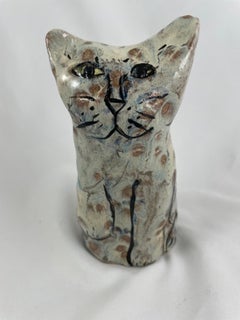
Cat white andbrown

Cat white andbrown

Located in Santa Monica, CA

Original Linda Smith ceramic cat.

Category

21st Century and Contemporary Figurative Sculptures

Materials

Ceramic

Large Ceramic Head Sculpture – Expressive Textured Surface, Testa Series No. 15

Large Ceramic Head Sculpture – Expressive Textured Surface, Testa Series No. 15

By Óscar Aldonza Torres

Located in FISTERRA, ES

Large ceramic head sculpture with an expressive and textured surface, part of Óscar Aldonza’s Testa series. This monumental head (70 × 36 × 34 cm) is crafted from refractory clay wit...

Category

2010s Expressionist Figurative Sculptures
Materials

Clay, Glaze

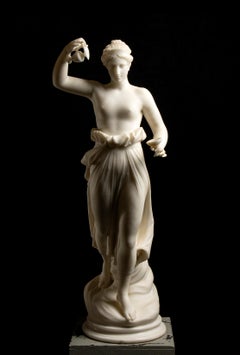
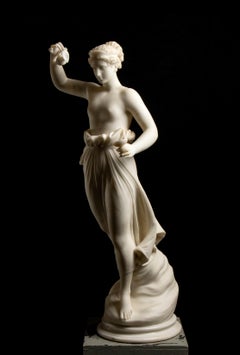
Antonio Canova Ebe Aprés Ebe White Marble Sculpture 19th Century Italian

Antonio Canova Ebe Aprés Ebe White Marble Sculpture 19th Century Italian

By Antonio Canova

Located in Roma, IT

An important grand tour Antonio Canova Ebe (Aprés), carved in white marble by an Italian sculptor artist in the 19th century from a block of white marble. The work depicts the go...

Category

19th Century Other Art Style Figurative Sculptures

Materials

Marble

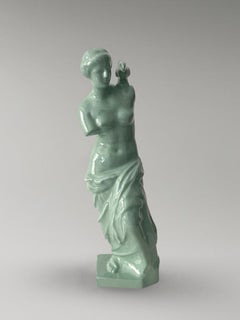
Tropical Venus. From Venus Nostalgia series

Tropical Venus. From Venus Nostalgia series

By Paloma Castello

Located in Miami Beach, FL

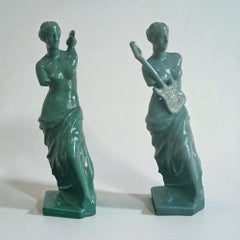
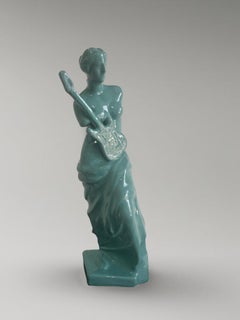
The series "Venus Nostalgia" is a collection of sculptures inspired by the famous Venus de Milo, an emblematic work in the history of art that has had a great impact on Castello's wo...

Category

2010s Contemporary Figurative Sculptures

Materials

Ceramic, Glaze

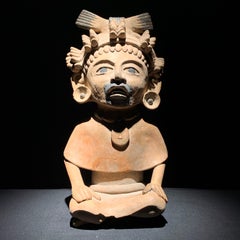
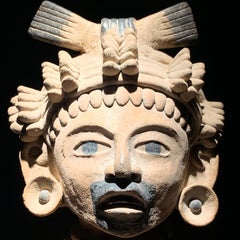
Veracruz Mexico Pre-Columbian ceramic Warrior figure sculpture

Veracruz Mexico Pre-Columbian ceramic Warrior figure sculpture

Located in Wilton Manors, FL

Figure of a Chanting Warrior Ceramic with bitumen highlights 300-600 CE (Classic Period) Mexico, Veracruz, possibly Nopiloa Veracruz Culture Pre-Columbian, Mexico, Vera Cruz culture...

Category

15th Century and Earlier Figurative Sculptures

Materials

Ceramic

Figurative Bronze Skulptur, FAMILY II, Nando Kallweit, limited edition, artwork

Figurative Bronze Skulptur, FAMILY II, Nando Kallweit, limited edition, artwork

By Nando Kallweit

Located in Vienna, Vienna

NANDO KALLWEIT - Figurative Bronze Skulptur, FAMILY II, Limited Edition 34 of 50. Nando Kallweit is a sculptor living in Germany. He specializes in figurative sculptures made of wood...

Category

21st Century and Contemporary Contemporary Figurative Sculptures

Materials

Metal, Bronze

Pair of Bookends “Pégase”

Pair of Bookends “Pégase”

By Max Le Verrier

Located in ROUEN, FR

Model edited by Max Le Verrier. Early 20th century. Georges H. Laurent was a French sculptor known for his animal subjects. Active during the Art Deco period, he produced high‑qualit...

Category

Early 20th Century Art Deco Figurative Sculptures

Materials

Metal

Ricordo Italy Cast Bronze Figurine Man Sculpture by Aron Demetz

Ricordo Italy Cast Bronze Figurine Man Sculpture by Aron Demetz

By Aron Demetz

Located in Brescia, IT

This intense bronze sculpture was made by the well known Italian artist, Aron Demetz, in 2004, Italy. This is a lost wax bronze hand painted. The title is "Ricordo" translated in "Me...

Category

Late 20th Century Post-Modern Figurative Sculptures

Materials

Bronze

Diogenes, terracotta sculpture, 1939, Giorgio Rossi (1894-1981).

Diogenes, terracotta sculpture, 1939, Giorgio Rossi (1894-1981).

Located in Firenze, IT

**Diogenes.** **Terracotta sculpture, 1939, Giorgio Rossi (1894-1981): Tuscan Sculptor.** **Material:** Hand-modeled terracotta by the artist. **Unique piece.** **Dimensions...

Category

1930s Art Deco Figurative Sculptures

Materials

Terracotta

Ceramic Expressionist Head in Refractory Stoneware with Copper Glaze Testa nº 11

Ceramic Expressionist Head in Refractory Stoneware with Copper Glaze Testa nº 11

By Óscar Aldonza Torres

Located in FISTERRA, ES

Ceramic expressionist head sculpture created in refractory stoneware with a semi-transparent copper glaze. This ceramic head belongs to the Testas series, a body of work composed of ...

Category

2010s Expressionist Figurative Sculptures
Materials

Clay, Glaze

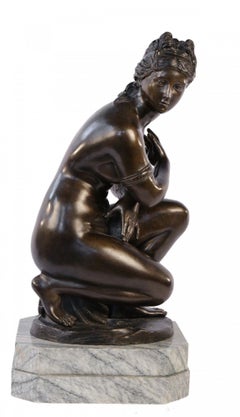
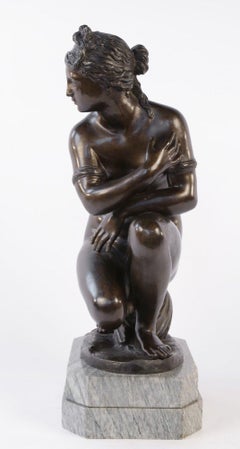
19th Century Bronze Figure of Crouching Venus or Naked Aphrodite

19th Century Bronze Figure of Crouching Venus or Naked Aphrodite

Located in Beachwood, OH

19th Century Bronze Figure of Crouching Venus or Naked Aphrodite Bronze with dark patination 22.5 x 13 x 11 inches The Crouching Venus is a Hellenisti...

Category

19th Century Figurative Sculptures
Materials

Bronze

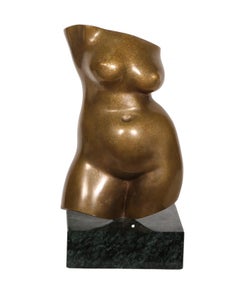
Model Girl Bronze and Stone Sculpture, Realist Style, Vintage, 1980s

Model Girl Bronze and Stone Sculpture, Realist Style, Vintage, 1980s

Located in Zofingen, AG

Classic female torso inspired by examples of high Greek sculpture. Sculptor explores the lines and shapes of the female body, embodied the diversity, slightly changed the poses. Thi...

Category

1980s Realist Nude Sculptures

Materials

Stone, Bronze

Bust Of A Young Girl In Arte Povera Style. Italy. Mid 20th Century.

Bust Of A Young Girl In Arte Povera Style. Italy. Mid 20th Century.

Located in Firenze, IT

Bust Of A Young Girl In Arte Povera Style, Italy,mid 20th century. Bust of a young girl , follower of Arte Povera artistic movement, Italy, around 1970. Sculpture in fir wood. Italy...

Category

Mid-20th Century Arte Povera Figurative Sculptures
Materials

Intaglio, Wood

Standing Nude
Standing Nude

Standing Nude

By Eugene Wagner

Located in Los Angeles, CA

An original carved wood sculpture of an Art Deco standing nude . German sculptor (1871 Berlin to 1942 ibid), studied at the Dresden Academy, took part in exhibitions in Munich, Düsse...

Category

1910s Art Deco Nude Sculptures

Materials

Wood

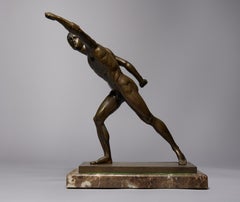
19th Century Bronze of the Borghese Gladiator Sculpture

19th Century Bronze of the Borghese Gladiator Sculpture

Located in Beachwood, OH

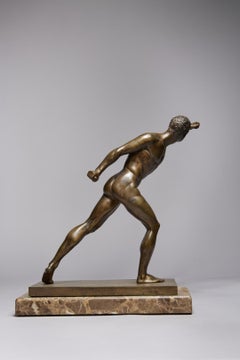
The Borghese Gladiator, 19th Century Bronze on marble base Musée du Louvre signed on base 15 x 12 x 8 inches Since its discovery in the early seventeenth century, the Borghese Gladi...

Category

19th Century Figurative Sculptures
Materials

Marble, Bronze

Mid-Century Ceramic Sculpture of a Seated Female, Cleveland School Artist

Mid-Century Ceramic Sculpture of a Seated Female, Cleveland School Artist

Located in Beachwood, OH

Walter Sinz (American, 1881-1966) Seated Female, c. 1940 Ceramic 6 x 3.5 x 3.5 inches Walter A. Sinz was an American sculptor born in Cleveland, Ohio on July 13, 1881. Sinz’s fathe...

Category

1940s Figurative Sculptures
Materials

Ceramic

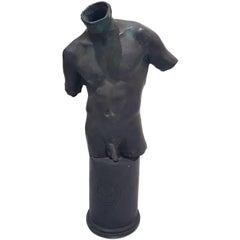
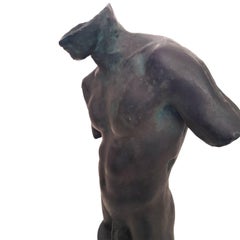
Male Bust - Bronze Sculpture by Igor Mitoraj - 1991

Male Bust - Bronze Sculpture by Igor Mitoraj - 1991

By Igor Mitoraj

Located in Roma, IT

Amazing male bronze bust with a black patina. This work is the 6th from an edition of eight. Its creator, Igor Mitoraj, is a polish sculptor deeply rooted in the classical tradition....

Category

1990s Contemporary Nude Sculptures

Materials

Bronze

Giant Standing Minotaur II

Giant Standing Minotaur II

By Beth Carter

Located in Boston, MA

Carter’s work often morphs the human figure with animal, creating mythological creatures and extraordinary fictional compositions. Her work explores themes of duality, transformation...

Category

2010s Sculptures

Materials

Bronze

Towards Another
Towards Another

Towards Another

Located in London, GB

Bronze Numbered 4/10 76cm × 28cm × 41cm (incl. base) Ian Rank-Broadley is one of the foremost sculptors working today. His effigy of the late Queen Elizabeth II appears on all UK an...

Category

Early 2000s Contemporary Nude Sculptures

Materials

Bronze

Torso of Ryan
Torso of Ryan

Torso of Ryan

Located in London, GB

Bronze Numbered 2/10 57cm × 18cm × 40cm (incl. base) Ian Rank-Broadley is one of the foremost sculptors working today. His effigy of the late Queen Elizabeth II appears on all UK an...

Category

2010s Contemporary Nude Sculptures

Materials

Bronze

Early 20th Century Ceramic Sculpture of a Polo Player and Horse

Early 20th Century Ceramic Sculpture of a Polo Player and Horse

By Waylande Gregory

Located in Beachwood, OH

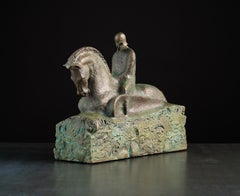
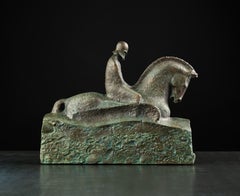
Waylande Gregory (American, 1905-1971) Polo Player, c. 1930s Ceramic Inscribed signature on bottom 11 x 8.5 inches Waylande Gregory was considered a major American sculptor during the 1930's, although he worked in ceramics, rather than in the more traditional bronze or marble. Exhibiting his ceramic works at such significant American venues for sculpture as the Whitney Museum of American Art in New York City and at the venerable Pennsylvania Academy of the Fine Arts in Philadelphia, he also showed his ceramic sculptures at leading New York City galleries. Gregory was the first modern ceramist to create large scale ceramic sculptures, some measuring more than 70 inches in height. Similar to the technique developed by the ancient Etruscans, he fired his monumental ceramic sculptures only once. Gregory was born in 1905 in Baxter Springs, Kansas and was something of a prodigy. Growing up on a ranch near a Cherokee reservation, Gregory first became interested in ceramics as a child during a native American burial that he had witnessed. He was also musically inclined. In fact, his mother had been a concert pianist and had given her son lessons. At eleven, he was enrolled as a student at the Kansas State Teacher's College, where he studied carpentry and crafts, including ceramics. Gregory's early development as a sculptor was shaped by the encouragement and instruction of Lorado Taft, who was considered both a major American sculptor as well as a leading American sculpture instructor. In fact, Taft's earlier students included such significant sculptors as Bessie Potter Vonnoh and Janet Scudder. But, Taft and his students had primarily worked in bronze or stone, not in clay; and, Gregory's earliest sculptural works were also not in ceramics. In 1924, Gregory moved to Chicago where he caught the attention of Taft. Gregory was invited by Taft to study with him privately for 18 months and to live and work with him at his famed "Midway Studios." The elegant studio was a complex of 13 rooms that overlooked a courtyard. Taft may have been responsible for getting the young man interested in creating large scale sculpture. However, by the 1920's, Taft's brand of academic sculpture was no longer considered progressive. Instead, Gregory was attracted to the latest trends appearing in the United States and Europe. In 1928 he visited Europe with Taft and other students. "Kid Gregory," as he was called, was soon hired by Guy Cowan, the founder of the Cowan Pottery in Cleveland, Ohio, to become the company's only full time employee. From 1928 to 1932, Gregory served as the chief designer and sculptor at the Cowan Pottery. Just as Gregory learned about the process of creating sculpture from Taft, he literally learned about ceramics from Cowan. Cowan was one of the first graduates of Alfred, the New York School of Clayworking and Ceramics. Alfred had one of the first programs in production pottery. Cowan may have known about pottery production, but he had limited sculptural skills, as he was lacking training in sculpture. The focus of the Cowan Pottery would be on limited edition, table top or mantle sculptures. Two of the most successful of these were Gregory's "Nautch Dancer," (fig. 1) and his "Burlesque Dancer," (fig. 2). He based both sculptures on the dancing of Gilda Gray, a Ziegfield Follies girl. Gilda Gray was of Polish origin and came to the United States as a child. By 1922, she would become one of the most popular stars in the Follies. After losing her assets in the stock market crash of 1929, she accepted other bookings outside of New York, including Cleveland, which was where Gregory first saw her onstage. She allowed Gregory to make sketches of her performances from the wings of the theatre. She explained to Gregory, "I'm too restless to pose." Gray became noted for her nautch dance, an East Indian folk dance. A nautch is a tight, fitted dress that would curl at the bottom and act like a hoop. This sculpture does not focus on Gray's face at all, but is more of a portrait of her nautch dance. It is very curvilinear, really made of a series of arches that connect in a most feminine way. Gregory created his "Burlesque Dancer" at about the same time as "Nautch Dancer." As with the "Nautch Dancer," he focused on the movements of the body rather than on a facial portrait of Gray. Although Gregory never revealed the identity of his model for "Burlesque Dancer," a clue to her identity is revealed in the sculpture's earlier title, "Shimmy Dance." The dancer who was credited for creating the shimmy dance was also Gilda Gray. According to dance legend, Gray introduced the shimmy when she sang the "Star Spangled Banner" and forgot some of the lyrics, so, in her embarrassment, started shaking her shoulders and hips but she did not move her legs. Such movement seems to relate to the "Burlesque Dancer" sculpture, where repeated triangular forms extend from the upper torso and hips. This rapid movement suggests the influence of Italian Futurism, as well as the planar motion of Alexander Archipenko, a sculptor whom Gregory much admired. The Cowan Pottery was a victim of the great depression, and in 1932, Gregory changed careers as a sculptor in the ceramics industry to that of an instructor at the Cranbrook Academy in Bloomfield Hills, Michigan. Cranbrook was perhaps the most prestigious place to study modern design in America. Its faculty included the architect Eliel Saarinen and sculptor Carl Milles. Although Gregory was only at Cranbrook for one and one half years, he created some of his finest works there, including his "Kansas Madonna" (fig. 3). But, after arriving at Cranbrook, the Gregory's had to face emerging financial pressures. Although Gregory and his wife were provided with complimentary lodgings, all other income had to stem from the sale of artworks and tuition from students that he, himself, had to solicit. Gregory had many people assisting him with production methods at the Cowan Pottery, but now worked largely by himself. And although he still used molds, especially in creating porcelain works, many of his major new sculptures would be unique and sculpted by hand, as is true of "Kansas Madonna." The scale of Gregory's works were getting notably larger at Cranbrook than at Cowan. Gregory left the surface of "Kansas Madonna" totally unglazed. Although some might object to using a religious title to depict a horse nursing its colt, it was considered one of Gregory's most successful works. In fact, it had a whole color page illustration in an article about ceramic sculpture titled, "The Art with the Inferiority Complex," Fortune Magazine, December, 1937. The article notes the sculpture was romantic and expressive and the sculpture was priced at $1,500.00; the most expensive sculpture in the article. Gregory was from Kansas, and "Kansas Madonna" should be considered a major sculptural document of Regionalism. Gregory and his wife Yolande moved to New Jersey in the summer of 1933. And the artist began construction on his new home in the Watchung Mountains of Bound Brook (Warren today) in 1938. His enormous, custom kiln was probably constructed at the start of 1938. Gregory's new sculptures were the largest ceramic sculptures in western art, in modern times. To create these works of ceramic virtuosity, the artist developed a "honeycomb" technique, in which an infrastructure of compartments was covered by a ceramic "skin." Science and atomic energy were a theme in Gregory's most significant work, the "Fountain of the Atom" (fig. 4), at the 1939 New York's World Fair. This major work included twelve monumental ceramic figures at the fairground entrance from the newly constructed railway entrance, giving the work great visibility and prominence. The framework of the fountain itself was of steel and glass bricks. It consisted of a bluish green pool which was sixty five feet in diameter. Above it were two concentric circular tiers, or terraces, as Gregory called them; the first wider than the second. On the first terrace were eight "Electrons," comprised of four male and four female terra cotta figures, each approximately 48 inches high. These relate to the valance shell of the atom. Above them on a narrower terrace, were the much larger and heavier terra cotta figures depicting the four elements, each averaging about 78 inches in height and weighing about a ton and a half. Of the four, "Water" and "Air" were male, while "Earth" and "Fire" were female. This terrace represents the nucleus of the atom. In the center of the fountain, above the "Elements," was a central shaft comprised of sixteen glass tubes from which water tumbled down from tier to tier. At the top, a colorful flame burned constantly. The glass block tiers were lit from within, the whole creating a glowing and gurgling effect. Since the fair was temporary, the figures could be removed after its closing. But the credit for the design of the structure of the fountain belongs to collaborator Nembhard Culin, who was responsible for several other structures on the fair grounds as well. Although Gregory created a figure of "Fire" for the "Fountain of the Atom," he also executed a second, slightly smaller but more defined version which he exhibited at various locations (including Cranbrook, Baltimore Museum, etc.) in 1940-1941, during the second year of the fair (fig.5). Measuring 61 inches in height, "Fire" may be a metaphor for sexual energy, as well as atomic energy. Gregory stated, "Fire is represented by an aquiline female figure being consumed in endless arabesques of flame." Portraiture was also a significant focus of Gregory's sculpture. Gregory produced many commissioned portraits of local people as well as celebrities. He created Albert Einstein's portrait from life (fig. 6, ca. 1940) after Einstein had seen Gregory's "Fountain of the Atom." He also sculpted some of the leading figures in entertainment, including 2 sculptures of Henry Fonda, who became a personal friend. Gregory also sculpted a series of idealized female heads, both in terra cotta and in porcelain. These include "Girl with Olive" (ca. 1932) and "Cretan Girl;"(ca. 1937) both are very reductive and almost abstract works that call to mind Constantine Brancusi's "Mademoiselle Pogany" (1912, Philadelphia Museum of Art). But perhaps one of his most original female heads is "Head of a Child" (fig. 7, ca. 1933), a sensitive white glazed terra cotta portrayal with elaborately crafted braded hair, was originally created as one of a pair. Gregory also produced sculptural works for the Works Progress Administration. The WPA was a work relief project that greatly helped artists during the great depression. Founded by the Federal Government in 1935, an estimated 2500 murals were produced. Among these public works were the iconic post office murals. But, among the painted murals were also sculptural relief murals including Gregory's "R.F.D.," 1938, for the Columbus, Kansas Post Office. But, Gregory's largest WPA relief...

Category

1930s Figurative Sculptures
Materials

Ceramic

Lovers Embrace, Resin Sculpture reproduction after Rodin by Austin Productions

Lovers Embrace, Resin Sculpture reproduction after Rodin by Austin Productions

By Austin Productions

Located in Long Island City, NY

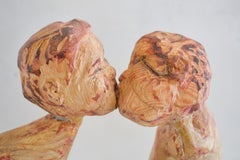
Two nude figures hold each other in a tender embrace, their eyes closed and hair spilling over their shoulders and across their backs. Although rendered in resin, a patina was added to recreate the effect of bronze. This piece is similar to a work by Auguste Rodin, often called "The Kiss" or "The Embrace". The production studio's signature is inscribed in the base. Lovers Embrace...

Category

1960s Nude Sculptures

Materials

Resin

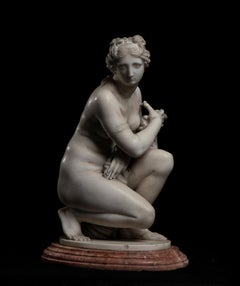
Figure of Crouching Venus/Naked Aphrodite, 19th Century Italian School Sculpture

Figure of Crouching Venus/Naked Aphrodite, 19th Century Italian School Sculpture

Located in Beachwood, OH

Bronze Figure of Crouching Venus, or The Naked Aphrodite, 19th Century Italian School Bronze raised on a marble base 21 in. h. x 10 in. w. x 7 in. d., overall 18 in. h. x 8.5 in. w....

Category

19th Century Figurative Sculptures
Materials

Marble, Bronze

Read More

At Hosfelt Gallery, Bertoia Masterworks Complement Dynamic Contemporary Art

For nearly three decades, San Francisco–based Todd Hosfelt has curated against the grain — with a show on the legendary modernist Harry Bertoia the latest case in point.

This Weathered-Steel Sculpture Distills a Form of Protest into a Minimalist Monument

Part of Alejandro Vega Beuvrin’s “Barricada” series, the work is a subversive tribute to the street smarts of citizen activists.

How the Chunky, Funky Ceramics of 5 Mid-Century American Artists Balanced Out Slick Modernism

Get to know the innovators behind the pottery countercultural revolution.

Art Brings the Drama in These Intriguing 1stDibs 50 Spaces

The world’s top designers explain how they display art to elicit the natural (and supernatural) energy of home interiors.

Chryssa’s 1962 Neon Sculpture Was Way ahead of the Art-World Curve

By working with lettering, neon and Pop imagery, Chryssa pioneered several postmodern themes at a time when most male artists detested commercial mediums.

How to Spot a Fake KAWS Figure

KAWS art toys have developed an avid audience in recent decades, and as in any robust collectible market, counterfeiters have followed the mania. Of course, you don’t have to worry about that on 1stDibs, where all our sellers are highly vetted.

A Giant Wedding Cake Has Us Looking at Portuguese Tiles in a New Light

At Waddesdon Manor, artist Joana Vasconcelos has installed a three-tiered patisserie inspired by the narrative tile work of her homeland. We take a look at the cake sculpture and how Portuguese tiles have been used in architecture from the 17th century to today.

These Soft Sculptures Are Childhood Imaginary Friends Come to Life
Miami artist and designer Gabriela Noelle’s fantastical creations appeal to the Peter Pan in all of us.