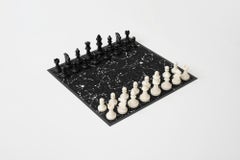
Conceptual Art

CONCEPTUAL STYLE

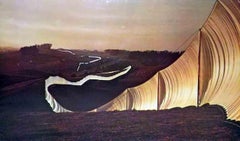
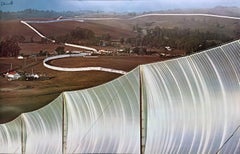
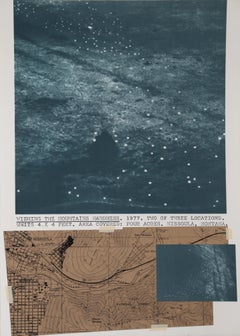
In 1967, artist Sol LeWitt wrote that in “Conceptual art the idea or concept is the most important aspect of the work.” He was giving a name to an art movement that had emerged in the 1960s in which artists were less focused on their medium being something traditionally “artistic” and instead engaged in using any object, movement, form, action or place to express an idea.

LeWitt’s work was featured alongside an assemblage of notes, drawings and outlines by other artists in “Working Drawings and Other Visible Things on Paper Not Necessarily Meant to Be Viewed as Art,” a groundbreaking show at New York City’s School of Visual Arts curated by Mel Bochner, another leading exponent of Conceptualism. Building on radical 20th-century statements, like Fountain (1917) by French artist Marcel Duchamp, Conceptual artists around Europe and North and South America were not interested in the commercial art scene and rather directly challenged its systems and values.

Stretching into the 1970s, this movement has also been called Post-Object art and Dematerialized art. Conceptual art reflected a larger era of social and political upheaval. Pieces associated with the style range from Roelof Louw’s Soul City (Pyramid of Oranges) (1967) — a work of installation art that sees fresh oranges stacked into a pyramid from which visitors are allowed to take one orange away — to On Kawara’s “Today” series, which saw the Japanese artist carefully painting a date in white acrylic on canvases consisting of a single color from 1966 to his death in 2014. Artists such as Ed Ruscha, who created the Twentysix Gasoline Stations book — a collection of photos of gas stations that is widely said to be the first modern artists’ book — made photography a major platform for Conceptual art, as did Bruce Nauman, who burned one of Ruscha's books and then photographed it for his own.

Conceptual art’s legacy of questioning artistic authorship, ownership and how to work with complex ideas of space and time had a significant influence on the decades of culture that followed, and it continues to inform art today.

The collection of Conceptual photography, paintings and sculptures on 1stDibs includes artworks by John Baldessari, Jenny Holzer, Lawrence Weiner, Joseph Kosuth and others.

to
86
413
301
436
397
763
Overall Width
to
Overall Height
to
1
3
710
1,596
3
2
1
7
54
226
200
142
113,325
62,243
57,538
26,680
14,632
9,445
6,466
5,540
4,185
3,039
2,393
2,357
2,228
606
1,203
698
189
630
293
219
186
162
157
142
124
121
108
107
104
97
90
86
84
70
65
65
51
555
429
384
327
320
272
78
77
47
35
202
529
1,483
592
Style: Conceptual
She is my best
She is my best

She is my best

Located in Zofingen, AG

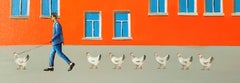
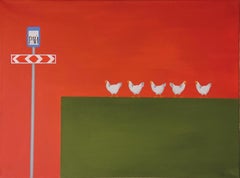
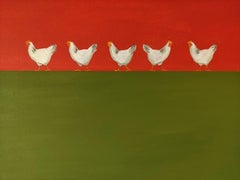
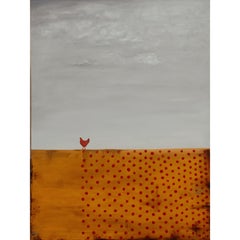
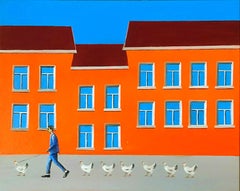
The painting “My Best” - where chickens appear as women - symbolizes the relationship between a man and a woman. A man leading a chicken on a leash symbolizes his attitude towards hi...

Category

2010s Conceptual Art

Materials

Canvas, Oil

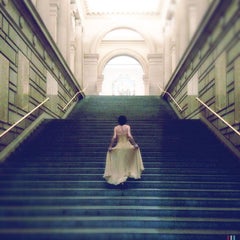
Late to the Party
Late to the Party

Late to the Party

By Savannah Spirit

Located in Los Angeles, CA

Savannah Spirit’s dreamy self-portrait going up the staircase of the Grand Hall at The Metropolitan Museum of Art. Late to the party is a cinematic Cinderella-esque homage to a place...

Category

2010s Conceptual Art

Materials

Archival Pigment

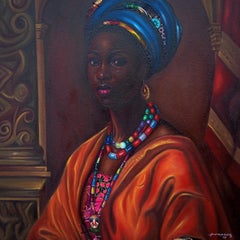
Seeking Perfection 3 -21st Century Contemporary, Figurative, Portrait, Modern

Seeking Perfection 3 -21st Century Contemporary, Figurative, Portrait, Modern

Located in Ibadan, Oyo

Shipping Procedure Ships in a well-protected tube from Nigeria This work is unique, not a print or other type of copy. Accompanied by a Certificate of Authenticity. About Artist Mic...

Category

21st Century and Contemporary Conceptual Art

Materials

Canvas, Archival Ink, Mixed Media, Acrylic

Oscar Niemeyer Staircase, Light Pastel Tones Interior Architecture, Still-Life

Oscar Niemeyer Staircase, Light Pastel Tones Interior Architecture, Still-Life

By Ryan Rivadeneyra

Located in Barcelona, ES

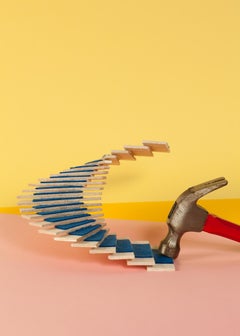
"Sexy Miami Futuristic Cocktail Lounge" is a series of photographs by Ryan Rivadeneyra inspired by the Art Deco colors of Miami that show beautiful objects and textures arranged meti...

Category

2010s Conceptual Art

Materials

Photographic Film, Giclée, Archival Pigment

Reach
Reach

Reach

By Savannah Spirit

Located in Los Angeles, CA

Savannah Spirit’s self-portrait utilizing a side lamp and an Iphone. Her hand gripping her side creating tension in the skin. This is in the permanent collection at the Tom Ford flag...

Category

2010s Conceptual Art

Materials

Archival Pigment

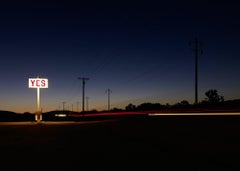
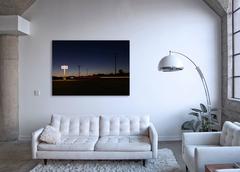
YES - large format photograph of conceptual motivational sign at night

YES - large format photograph of conceptual motivational sign at night

By Frank Schott

Located in San Francisco, CA

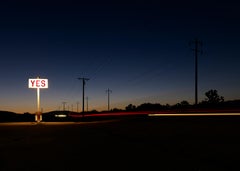
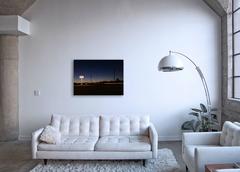
large scale original photograph from a series of conceptual motivational messages on classic Americana billboard signs in iconic landscape of the American West YES by Frank Schott ...

Category

21st Century and Contemporary Conceptual Art

Materials

Archival Ink, Archival Paper, Photographic Paper, Archival Pigment, Giclée

Untitled 2. Self Portrait. Limited Edition Color Nude Photograph

Untitled 2. Self Portrait. Limited Edition Color Nude Photograph

By Jose Sierra

Located in Miami Beach, FL

Jose Sierra work is deeply influenced by themes of self-representation and a homoerotic gaze. Through his unique aesthetic, he creates abject staged environments that challenge tradi...

Category

2010s Conceptual Art

Materials

Photographic Paper, Color, Archival Pigment

"Under construction", Original painting with concrete on paper, Art Povera

"Under construction", Original painting with concrete on paper, Art Povera

Located in Carballo, ES

This new series of works by the multidisciplinary artist TUSET (1997, A Coruña) shows us a completely unique dynamic. In these works he uses the concrete of the construction as picto...

Category

21st Century and Contemporary Conceptual Art

Materials

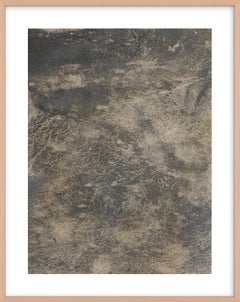
Concrete

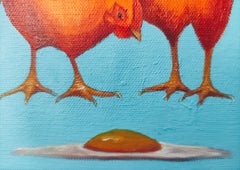
MERCANTILISM
MERCANTILISM

MERCANTILISM

Located in Zofingen, AG

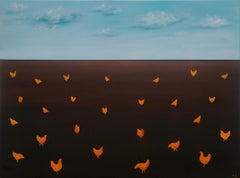
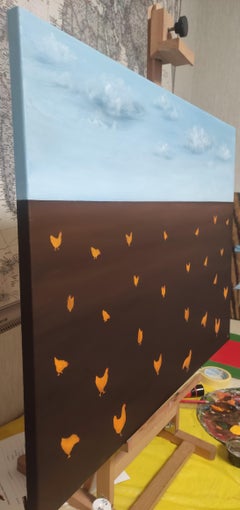
This painting depicts abundance in two dimensions: material abundance, symbolized by golden eggs, and spiritual abundance, because our greatest wealth is our children, the continuati...

Category

2010s Conceptual Art

Materials

Canvas, Oil

Untitled V,  Self Portrait. Limited Edition Color Nude Photograph

Untitled V, Self Portrait. Limited Edition Color Nude Photograph

By Jose Sierra

Located in Miami Beach, FL

José Sierra painted his body as a tribute to Afro-Colombian and pre-Columbian cultures, documenting the performance in photographs that portray him in erotic and suggestive positions...

Category

2010s Conceptual Art

Materials

Photographic Paper, Color, Archival Pigment

YES - large format photograph of conceptual motivational message sign at night

YES - large format photograph of conceptual motivational message sign at night

By Frank Schott

Located in San Francisco, CA

large scale original photograph from a series of conceptual motivational messages on iconic Americana signs in landscape of the American West YES by Frank Schott 48 x 67 inches (122 x 171cm) signed edition of 7 29 x 40 inches (74 x 102cm) signed edition of 25 archival quality fine art pigment print limited art edition published by Edition EKTAlux artist signed + numbered certificate of authenticity _______________ Frank Schott grew up in Germany and attended the prestigious Academy of Arts in Cologne, studying under Professor Arno Jansen, who was an early influence. Moving to California in 1998, Schott's work has evolved to include the epic landscapes and deserts of the American West as well as architectural, conceptual and more formal environments from both home and his travels. Influenced by a number of photographic peers and precursors such as Candida Höfer, Andreas Gursky, Thomas Struth, Jeff Wall, Ed Rusha...

Category

21st Century and Contemporary Conceptual Art

Materials

Giclée, Archival Ink, Archival Paper, Photographic Paper, Archival Pigment

Everyone has their own paradise

Everyone has their own paradise

Located in Zofingen, AG

The subtext of the work points to two types of personal involvement: - blindly following mass ideas, which often lead to undesirable consequences; - independent choice and the abilit...

Category

2010s Conceptual Art

Materials

Canvas, Oil

Shapeshifter no16
Shapeshifter no16

Shapeshifter no16

Located in Vancouver, CA

Jennifer Latour Shapeshifter no16, 2023 Edition of 7 plus 2 artist proofs. Signed in pencil by the artist. Archival pigment print mounted to Dibond, UV laminated, with cleat. Descri...

Category

2010s Conceptual Art

Materials

Archival Pigment

Niemand and Soldier Duo

Niemand and Soldier Duo

Located in Denver, CO

"Niemand and Soldier Duo" is of a limited edition of 25 works, edition 17/25 and signed. The Duo will be shipped directly from the artist's studio in Slovakia to your location. Ship...

Category

2010s Conceptual Art

Materials

Polyurethane

Latin American Art Ink Drawing Mario Perez Sentimental Argentina Modernist

Latin American Art Ink Drawing Mario Perez Sentimental Argentina Modernist

By Mario Perez

Located in Surfside, FL

Mario Segundo Perez Argentine, 1960–2018 Sentimental Ink on Paper Dimensions: 7.5 X 9.75 with frame. sheet is 5 X 7 Does not appear to be signed on front (not examined out of frame. might be signed verso) Provenance: The Estate of Theodore A Bonin (Ted Bonin was a principal in Alexander and Bonin, a New York gallery known for its diverse slate of conceptual artists. He started at Marlborough gallery London in the 60s, then in partnership with Brooke Alexander. In its stable were a host of esteemed artists: Willie Cole, Rita McBride, John Ahearn, Paul Thek, Doris Salcedo, Eugenio Dittborn, Dalton Paula, and Rigoberto Torres, Mona Hatoum and Emily Jacir.) Mario Pérez was born in San Juan, Argentina in 1960. The second of seven children, and the son of a housepainter. He obtained his degree in Visual Arts at Universidad Nacional de San Juan in Argentina. A draughtsman and painter. His style was magic realist or fantastic realism In 2003, Pérez was the recipient of a Pollock Krasner Foundation grant, one of his greatest achievements. He also had the honor of being part of the National Exhibition “200 Years-200 Masters of Argentinean Art”, commemorating the country’s bicentennial. Mario has won international distinctions such as the Cecilia Grierson Award at the Salón Nacional de Pintura in La Plata in 1992; the Marco A. Roca Award at the Salón Pro-Arte, Córdoba, also in 1992; and the first prize in the LXXXVIII Salón Nacional de Pintura in Buenos Aires in 1999. His art often features tiny figures in immense landscapes, and unique backgrounds. It has elements of Conceptual art. His work has been regularly featured in leading auction houses like Christie’s and Sotheby’s in New York, and private and public collections. The magic realism of Mario Segundo Pérez is characteristic of a chiefly Latin-American concept in painting, literature and film that incorporates fantastic or mythical elements into an otherwise realistic scenario. Coined in the 1940s by Cuban novelist Alejo Carpentier, the term often is used when referring to the Colombian novelist Gabriel Garcia Márquez, winner of the 1982 Nobel Prize in Literature. Influences include Frida Kahlo and George Tooker. He was in shows with Ana Fabry and Eduardo Esquivel. Paintings by Pérez are included in numerous private and public collections, including the Ciudad Casa de Gobierno (the Buenos Aires City Hall); the University of Miami School of Architecture, and the College of Communication, Architecture + The Arts (CARTA) at Florida International University. He has been in shows with Juan Cardenas, Anna Mercedes Hoyos, Ignacio Iturria, Alejandro Obregon, Domingo Ravenet, Arnaldo Roche, Edgar Negret, Fidelio Ponce de Leon, Ricardo Martinez, Damian Gonzalez, Jorge Jimenez Deredia, Victor...

Category

20th Century Conceptual Art

Materials

Paper, Ink

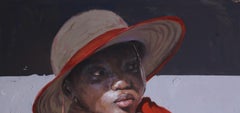
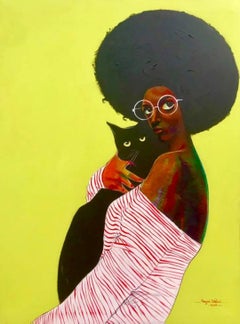
Steadfast Gaze 1 - 21st Century, Contemporary, Figurative Portrait, Africa, Girl

Steadfast Gaze 1 - 21st Century, Contemporary, Figurative Portrait, Africa, Girl

Located in Ibadan, Oyo

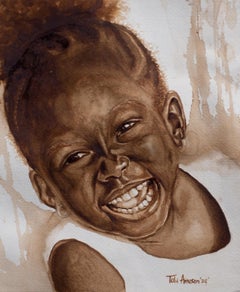
Shipping Procedure Ships in a well-protected tube from Nigeria This work is unique, not a print or other type of copy. Accompanied by a Certificate of Authenticity (Issued by the Gal...

Category

21st Century and Contemporary Conceptual Art

Materials

Canvas, Acrylic

Dialogue
Dialogue

Dialogue

Located in Ibadan, Oyo

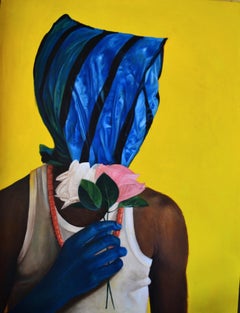
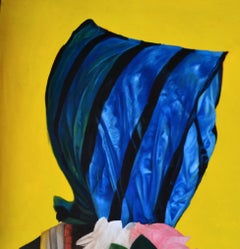
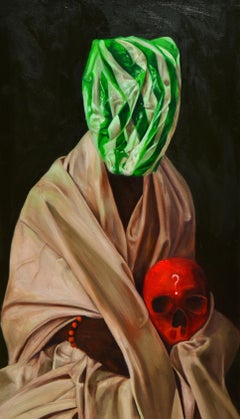
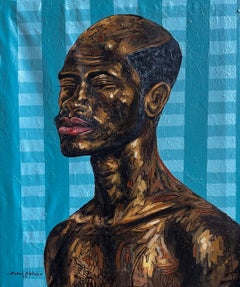
"Dialogue," a thought-provoking creation by artist John Ali, beckons viewers into a realm of symbolism and introspection. The artwork features a young man with his head covered in ny...

Category

21st Century and Contemporary Conceptual Art

Materials

Canvas, Oil

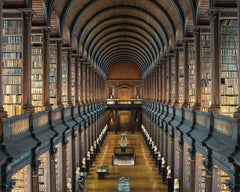
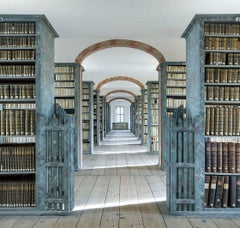
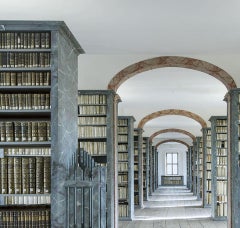
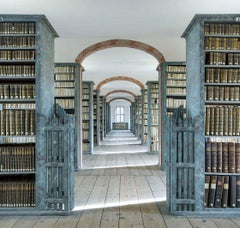
Reinhard Görner 'Francke Foundations II' (Library, Halle, Germany)

Reinhard Görner 'Francke Foundations II' (Library, Halle, Germany)

By Reinhard Görner

Located in Los Angeles, CA

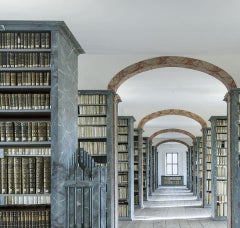
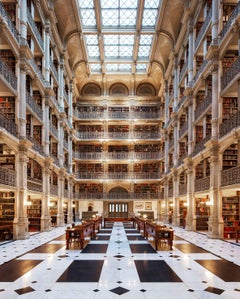
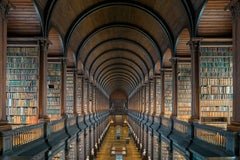
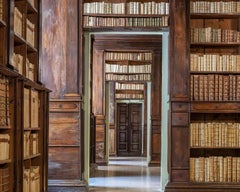
This large-scale architectural photograph by German photographer Reinhard Görner depicts the Francke Foundations library in Halle, Germany. Arches open like portals into the interior, bringing public cultural heritage into private space in the rich, aged tones of wood and marble, taupe, blue and gray. Reinhard Görner is known for invoking an atmosphere of awe, meditation and contemplation through crisp, richly detailed scenes of grand historical and cultural public narratives. This effect is enhanced through aesthetically striking compositions, which might include stunningly perfect (or interestingly-off) symmetry, portals through a series of doorways, and other careful choices of perspective and scale. Reinhard Görner Francke Foundations II Halle, Germany 2014 50 x 52.6 inches ed. of 10 $6,000 60 x 63.2 inches ed. of 7 $9,000 70 x 73.7 inches ed. of 5 $11,000 signed and numbered on label, verso Paper is trimmed to the image: actual image size listed Internal Search: Reinhard Görner, Library series, Halle, Germany, Large-Scale Photography, Large-scale German photography, German Libraries, German Monuments...

Category

2010s Conceptual Art

Materials

C Print, Lambda

Illusion
Illusion

Illusion

Located in Zofingen, AG

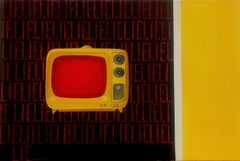
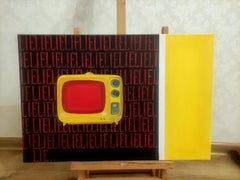
Where does reality end and illusion begin? This work explores the themes of manipulation, simulation, and the fragility of trust. An old television set — a symbol of a past era when...

Category

2010s Conceptual Art

Materials

Canvas, Oil

Mandorla - Large Format Charcoal On Paper, Black White Drawing

Mandorla - Large Format Charcoal On Paper, Black White Drawing

By Krzysztof Gliszczyński

Located in Salzburg, AT

Krzysztof Gliszczyński is Professor for painting on Academy of fine arts Gdansk. The artwork is unframed and will be shipped rolled in a tube Artist Statement In the 1990s I started collecting flakes of paint – leftovers from my work. I would put fresh ones in wooden formworks, dried ones in glass containers. They constituted layers of investigations into the field of painting, enclosed in dated and numbered cuboids measuring 47 × 10.5 × 10.5 cm. I called those objects Urns. In 2016, I displayed them at an exhibition, moulding a single object out of all the Urns. The Urns inspired me to redefine the status of my work as a painter. In order to do it, I performed a daunting task of placing the layers of paint not in an urn, but on a canvas, pressing each fresh bit of paint with my thumb. In the cycle of paintings Autoportret a’retour, the matter was transferred from painting to painting, expanding the area of each consecutive one. Together, the bits, the residua of paint, kept alive the memory of the previous works. It was a stage of the atomization of the painting matter and its alienation from the traditional concepts and aesthetic relations. Thus, the cycle of synergic paintings was created, as I called them, guided by the feeling evoked in me by the mutually intensifying flakes of paint. The final aesthetic result of the refining of the digested matter was a consequence of the automatism of the process of layering, thumb-pressing, and scraping off again. Just like in an archaeological excavation, attempts are made to unite and retrieve that which has been lost. This avant-garde concept consists in transferring into the area of painting of matter, virtually degraded and not belonging to the realm of art. And yet the matter re-enters it, acquiring a new meaning. The matter I created, building up like lava, became my new technique. I called it perpetuum pictura – self-perpetuated painting. Alchemical concepts allowed me to identify the process inherent in the emerging matter, to give it direction and meaning. In a way, I created matter which was introducing me into the pre-symbolic world – a world before form, unnamed. From this painterly magma, ideas sprung up, old theories of colour and the convoluted problem of squaring the circle manifested themselves again. Just like Harriot’s crystal refracted light in 1605, I tried to break up colour in the painting Iosis. Paintings were becoming symptoms, like in the work Pulp fiction, which at that time was a gesture of total fragmentation of matter and of transcending its boundaries, my dialogue with the works of Jackson Pollock and the freedom brought by his art. The painting Geometrica de physiologiam pictura contains a diagram in which I enter four colours that constitute an introduction to protopsychology, alchemical transmutation, and the ancient theory of colour. It this work I managed to present the identification of the essence of human physiology with art. But the essential aspect of my considerations in my most recent paintings is the analysis of abstraction, the study of its significance for the contemporary language of art and the search for the possibilities of creating a new message. For me, abstraction is not an end in itself, catering to the largely predicable expectations of the viewers. To study the boundary between visibility and invisibility, like in the work Unsichtbar, is to ask about the status of the possibilities of the language of abstraction. The moment of fluidity which I am able to attain results from the matter – matter...

Category

Early 2000s Conceptual Art
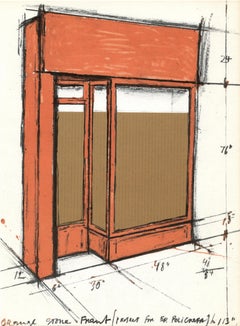
Materials

Paper, Charcoal

THE NAME OF THE FLOWER: PANSY “JOKER VIOLA-GOLD”

THE NAME OF THE FLOWER: PANSY “JOKER VIOLA-GOLD”

By Ken Aptekar

Located in Surfside, FL

Genre: Contemporary Subject: Nature Medium: Ink, Sandblasted Glass, Surface: Paper Country: United States Dimensions: 20" x 20" Dimensions w/Frame: 21" x 21" x 2" KEN APTEKAR (b.19...

Category

Late 20th Century Conceptual Art

Materials

Glass, Ink

Savannah Spirit,  Hold Onto Power (Black and White Nude Photography B&W)

Savannah Spirit, Hold Onto Power (Black and White Nude Photography B&W)

By Savannah Spirit

Located in Los Angeles, CA

In this self portrait, Savannah Spirit turns the tradition of black and white female portraiture back on itself. The muse is the artist, and the gaze is her own. Through her artistic, social and curatorial projects, Spirit also takes on technology and social media censors, who assume that the unclothed body of a human, especially of those who identify as female, is pornography that must be controlled. Her artwork asserts that a woman is her own muse. Archival pigment print on Hahnemühle Photo Rag. Press FORBES: Savannah Spirit Wants to Trigger Your Trump VICE: Erotic Art Fights Trump with Scenes of Female Pleasure BULLETT: The Art Show Fighting Fascism with Erotica HUFFINGTON POST: Artists Are Resisting Trump's Misogyny with Erotic Art DAZED: The Erotic Show Taking on Donald Trump Archival pigment print on Hahnemühle Photo Rag. Published: City Journal Huffington Post The Color Theory Expert Snap The Nation Global Yodel THE magazine Live Mag! The Villager Ravelin D/Railed Magazine Open Letr Style: This photograph combines a feminist eye and modern feminism with classic vintage pinup...

Category

2010s Conceptual Art

Materials

Archival Pigment

Miami Inspired Art Deco Still Life, Studio54, Pastel Tones Disco Lights, Purple

Miami Inspired Art Deco Still Life, Studio54, Pastel Tones Disco Lights, Purple

By Ryan Rivadeneyra

Located in Barcelona, ES

"Sexy Miami Futuristic Cocktail Lounge" is a series of photographs by Ryan Rivadeneyra inspired by the Art Deco colors of Miami that show beautiful objects and textures arranged meti...

Category

2010s Conceptual Art

Materials

Photographic Film, Archival Ink, Photographic Paper, C Print, Digital, G...

Untitled
Untitled

Untitled

By xulong zhang

Located in Morongo Valley, CA

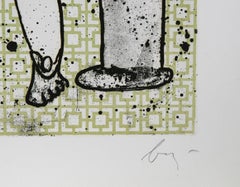
'Untitled' 2013, Edition of 10 plus 2 Artist Proofs, digital C-Print, based on a SX-70 Polaroid, 8.8 cm x 10.7cm, not mounted, Signed, embossed stamp and artist certificate. Xulong...

Category

2010s Conceptual Art

Materials

Photographic Paper, C Print, Color, Polaroid

Ali (Moroccan White)

Ali (Moroccan White)

By Russell Young

Located in Indianapolis, IN

Russell Young (1959) Ali, (2023) Acrylic and enamel screenprint on linen with diamond dust 36 x 27.5 in (91.4 x 69.8 cm) Signed, dated, and marked with the artist's archive number o...

Category

2010s Conceptual Art

Materials

Linen, Mixed Media, Screen

Light, Series Drawing From Israel - Large Format, Charcoal On Paper

Light, Series Drawing From Israel - Large Format, Charcoal On Paper

By Krzysztof Gliszczyński

Located in Salzburg, AT

The artwork is unframed and will be shipped rolled in a tube Krzysztof Gliszczyński is Professor for painting on Academy of fine arts Gdansk. Krzysztof Gliszczyński born in Miastko in 1962. Graduated from the Gdańsk Academy of Fine Arts in 1987 in the studio of Prof. Kazimierz Ostrowski. Between 1995 and 2002 founder and co-manager of Koło Gallery in Gdańsk. lnitiator of the Kazimierz Ostrowski Award, con-ferred by the Union of Polish Artists and Designers (ZPAP), Gdańsk Chapter. Dean of the Painting Faculty of the Gdańsk Academy of Fine Arts in the years 2008-2012. Vice Rector for Development and Cooperation of the Gdańsk Academy of Fine Arts in the years 2012-2016. Obtained a professorship in 2011. Currently head of the Third Painting Studio of the Painting Faculty of the Gdańsk Academy of Fine Arts. He has taken part in a few dozen exhibitions in Poland and abroad. He has received countless prizes and awards for his artistic work. He is active in the field of painting, drawing, objects, and video. Artist Statement In the 1990s I started collecting flakes of paint – leftovers from my work. I would put fresh ones in wooden formworks, dried ones in glass containers. They constituted layers of investigations into the field of painting, enclosed in dated and numbered cuboids measuring 47 × 10.5 × 10.5 cm. I called those objects Urns. In 2016, I displayed them at an exhibition, moulding a single object out of all the Urns. The Urns inspired me to redefine the status of my work as a painter. In order to do it, I performed a daunting task of placing the layers of paint not in an urn, but on a canvas, pressing each fresh bit of paint with my thumb. In the cycle of paintings Autoportret a’retour, the matter was transferred from painting to painting, expanding the area of each consecutive one. Together, the bits, the residua of paint, kept alive the memory of the previous works. It was a stage of the atomization of the painting matter and its alienation from the traditional concepts and aesthetic relations. Thus, the cycle of synergic paintings was created, as I called them, guided by the feeling evoked in me by the mutually intensifying flakes of paint. The final aesthetic result of the refining of the digested matter was a consequence of the automatism of the process of layering, thumb-pressing, and scraping off again. Just like in an archaeological excavation, attempts are made to unite and retrieve that which has been lost. This avant-garde concept consists in transferring into the area of painting of matter, virtually degraded and not belonging to the realm of art. And yet the matter re-enters it, acquiring a new meaning. The matter I created, building up like lava, became my new technique. I called it perpetuum pictura – self-perpetuated painting. Alchemical concepts allowed me to identify the process inherent in the emerging matter, to give it direction and meaning. In a way, I created matter which was introducing me into the pre-symbolic world – a world before form, unnamed. From this painterly magma, ideas sprung up, old theories of colour and the convoluted problem of squaring the circle manifested themselves again. Just like Harriot’s crystal refracted light in 1605, I tried to break up colour in the painting Iosis. Paintings were becoming symptoms, like in the work Pulp fiction, which at that time was a gesture of total fragmentation of matter and of transcending its boundaries, my dialogue with the works of Jackson Pollock and the freedom brought by his art. The painting Geometrica de physiologiam pictura contains a diagram in which I enter four colours that constitute an introduction to protopsychology, alchemical transmutation, and the ancient theory of colour. It this work I managed to present the identification of the essence of human physiology with art. But the essential aspect of my considerations in my most recent paintings is the analysis of abstraction, the study of its significance for the contemporary language of art and the search for the possibilities of creating a new message. For me, abstraction is not an end in itself, catering to the largely predicable expectations of the viewers. To study the boundary between visibility and invisibility, like in the work Unsichtbar, is to ask about the status of the possibilities of the language of abstraction. The moment of fluidity which I am able to attain results from the matter – matter...

Category

Early 2000s Conceptual Art
Materials

Paper, Charcoal

Garment of Hope 3 - 21st Century, Contemporary, Figurative Portrait, Africa Girl

Garment of Hope 3 - 21st Century, Contemporary, Figurative Portrait, Africa Girl

Located in Ibadan, Oyo

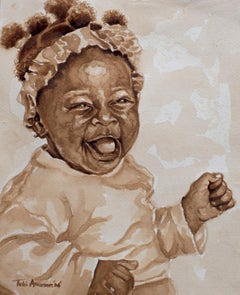
"Garment of Hope," a poignant masterpiece crafted by the skilled hands of artist John Ali, invites viewers into a world where innocence and resilience converge. This evocative artwor...

Category

21st Century and Contemporary Conceptual Art

Materials

Canvas, Acrylic

Drawing 14, Series Drawing - Large Format, Charcoal On Paper Panting

Drawing 14, Series Drawing - Large Format, Charcoal On Paper Panting

By Krzysztof Gliszczyński

Located in Salzburg, AT

The artwork is unframed and will be shipped rolled in a tube Krzysztof Gliszczyński is Professor for painting on Academy of fine arts Gdansk. Krzysztof Gliszczyński born in Miastko in 1962. Graduated from the Gdańsk Academy of Fine Arts in 1987 in the studio of Prof. Kazimierz Ostrowski. Between 1995 and 2002 founder and co-manager of Koło Gallery in Gdańsk. lnitiator of the Kazimierz Ostrowski Award, con-ferred by the Union of Polish Artists and Designers (ZPAP), Gdańsk Chapter. Dean of the Painting Faculty of the Gdańsk Academy of Fine Arts in the years 2008-2012. Vice Rector for Development and Cooperation of the Gdańsk Academy of Fine Arts in the years 2012-2016. Obtained a professorship in 2011. Currently head of the Third Painting Studio of the Painting Faculty of the Gdańsk Academy of Fine Arts. He has taken part in a few dozen exhibitions in Poland and abroad. He has received countless prizes and awards for his artistic work. He is active in the field of painting, drawing, objects, and video. Artist Statement In the 1990s I started collecting flakes of paint – leftovers from my work. I would put fresh ones in wooden formworks, dried ones in glass containers. They constituted layers of investigations into the field of painting, enclosed in dated and numbered cuboids measuring 47 × 10.5 × 10.5 cm. I called those objects Urns. In 2016, I displayed them at an exhibition, moulding a single object out of all the Urns. The Urns inspired me to redefine the status of my work as a painter. In order to do it, I performed a daunting task of placing the layers of paint not in an urn, but on a canvas, pressing each fresh bit of paint with my thumb. In the cycle of paintings Autoportret a’retour, the matter was transferred from painting to painting, expanding the area of each consecutive one. Together, the bits, the residua of paint, kept alive the memory of the previous works. It was a stage of the atomization of the painting matter and its alienation from the traditional concepts and aesthetic relations. Thus, the cycle of synergic paintings was created, as I called them, guided by the feeling evoked in me by the mutually intensifying flakes of paint. The final aesthetic result of the refining of the digested matter was a consequence of the automatism of the process of layering, thumb-pressing, and scraping off again. Just like in an archaeological excavation, attempts are made to unite and retrieve that which has been lost. This avant-garde concept consists in transferring into the area of painting of matter, virtually degraded and not belonging to the realm of art. And yet the matter re-enters it, acquiring a new meaning. The matter I created, building up like lava, became my new technique. I called it perpetuum pictura – self-perpetuated painting. Alchemical concepts allowed me to identify the process inherent in the emerging matter, to give it direction and meaning. In a way, I created matter which was introducing me into the pre-symbolic world – a world before form, unnamed. From this painterly magma, ideas sprung up, old theories of colour and the convoluted problem of squaring the circle manifested themselves again. Just like Harriot’s crystal refracted light in 1605, I tried to break up colour in the painting Iosis. Paintings were becoming symptoms, like in the work Pulp fiction, which at that time was a gesture of total fragmentation of matter and of transcending its boundaries, my dialogue with the works of Jackson Pollock and the freedom brought by his art. The painting Geometrica de physiologiam pictura contains a diagram in which I enter four colours that constitute an introduction to protopsychology, alchemical transmutation, and the ancient theory of colour. It this work I managed to present the identification of the essence of human physiology with art. But the essential aspect of my considerations in my most recent paintings is the analysis of abstraction, the study of its significance for the contemporary language of art and the search for the possibilities of creating a new message. For me, abstraction is not an end in itself, catering to the largely predicable expectations of the viewers. To study the boundary between visibility and invisibility, like in the work Unsichtbar, is to ask about the status of the possibilities of the language of abstraction. The moment of fluidity which I am able to attain results from the matter – matter...

Category

Early 2000s Conceptual Art
Materials

Paper, Charcoal

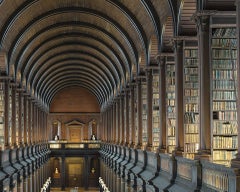
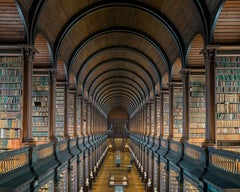
The Long Room III, Trinity College Library, Dublin Ireland

The Long Room III, Trinity College Library, Dublin Ireland

By Reinhard Görner

Located in Los Angeles, CA

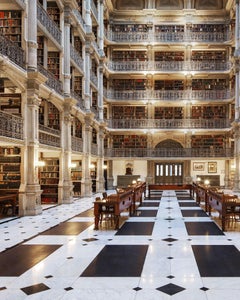
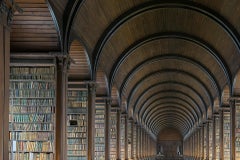
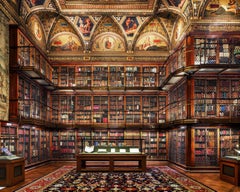
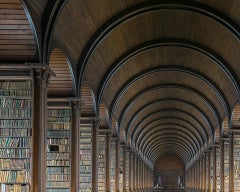
This large-scale architectural photograph by German artist Reinhard Görner depicts the The Long Room, an awe-inspiring vista into the Old Library at Trinity College in Dublin, Ireland. The vaulted ceiling arches above, while below a warm, golden light fills the room, illuminating bookshelves and cultural artifacts. The room is flanked by white marble busts of philosophers, writers, and great minds who have shaped the intellectual landscape of the Western world, adding a sense of gravitas and continuity to the space, and bringing public cultural heritage into private space in the rich, glowing tones of aged brown wood, leather and gilt. Reinhard Görner is known for invoking an atmosphere of awe, meditation and contemplation through crisp, richly detailed scenes of grand historical and cultural narratives. This effect is enhanced through aesthetically striking compositions, which might include stunning symmetry, portals through a series of doorways, and other careful choices of perspective and scale. Görner's photography celebrates libraries as both shelters and places of escape. This particular photograph is part of his quest to explore the most beautiful and solemn reading rooms around the world. Görner aims to convey how architects play with shadows, light, proportions, and rhythms to create spaces that breathe beauty and silence. Starting from his work with architect Sir Norman Foster in 2005, Görner has meticulously documented libraries' cathedral-like atmospheres across the globe. His photographs seek to convey the impact of architecture on our awareness of life, showcasing spaces that tell stories and refer to a time when aesthetics and spatial awareness were intertwined. Embrace the tranquility and beauty encapsulated in Görner's art and allow it to transport you to the grand arches and timeless serenity of The Long Room, Trinity College Library. Perfect for art collectors, architecture enthusiasts, and advocates of intellectual history, this piece serves as a gateway to explore the spirit of great builders through Görner's distinctive lens. Reinhard Görner The Long Room, Trinity College Library Dublin Ireland 50 x 62.5 inches Contemporary large scale photograph Signed and numbered on label, verso Edition of 10 Collector gets the next number in the edition Reinhard Görner, with his large format photographs orchestrates the monumentality of rooms. An active architecture photographer since 1985, is a master of perspectives and precise spatial compositions, and he thus considers classical sculpture, in all of its possible facets, a special challenge. "Görner’s photographs sometimes open the doors to another world and take the viewer with them on a journey through time. Here the palace is no longer a museum but both royal residence and a site steeped in history. The viewer does not have to share the halls with the masses of visitors; instead the images offer him exclusive impressions of the Galerie des Glaces (Hall of Mirrors) and the Galerie des Batailles (Hall of Battles) as even the king of France was probably never granted. The halls are empty of people, yet they seem to be able to unfurl their individual characters of their own accord. These places practically breathe history, and this aspect is also part of the essence captured in the photographs. King Wilhelm of Prussia was named German Emperor Wilhelm...

Category

2010s Conceptual Art
Materials

C Print, Lambda

Conceptual art for sale on 1stDibs.
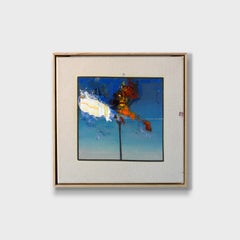
Find a wide variety of authentic Conceptual art available for sale on 1stDibs. Works in this style were very popular during the 21st Century and Contemporary, but contemporary artists have continued to produce works inspired by this movement. If you’re looking to add art created in this style to introduce contrast in an otherwise neutral space in your home, the works available on 1stDibs include elements of blue, purple, orange, red and other colors. Many Pop art paintings were created by popular artists on 1stDibs, including Reinhard Görner, Kojun, Jose Sierra, and xulong zhang. Frequently made by artists working with Paper, and Paint and other materials, all of these pieces for sale are unique and have attracted attention over the years. Not every interior allows for large Conceptual art, so small editions measuring 1 inches across are also available. Prices for art made by famous or emerging artists can differ depending on medium, time period and other attributes. On 1stDibs, the price for these items starts at $45 and tops out at $500,000, while the average work sells for $2,465.