Expressionist Art

EXPRESSIONIST STYLE

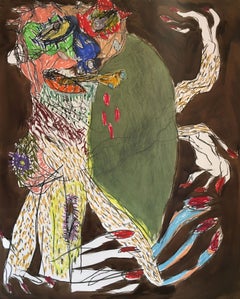
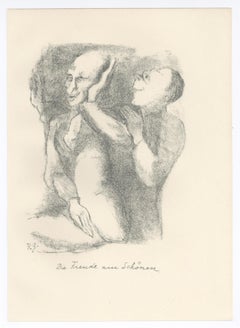
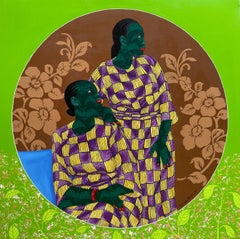
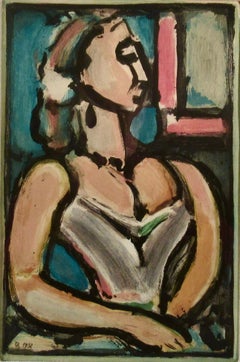
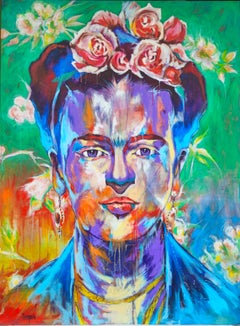
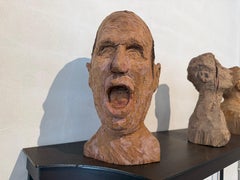
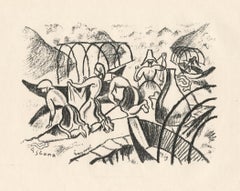
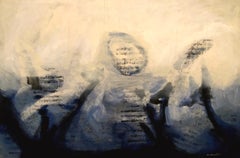
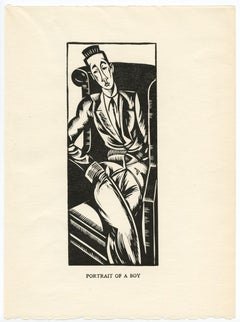
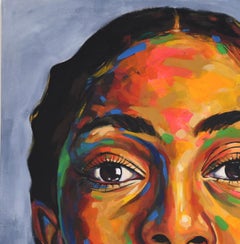
While “expressionist” is used to describe any art that avoids naturalism and instead employs a bold use of flattened forms and intense brushwork, Expressionist art formally describes early-20th-century work from Europe that drew on Symbolism and confronted issues such as urbanization and capitalism. Expressionist artists experimented in paintings and prints with skewed perspectives, abstraction and unconventional, bright colors to portray how isolating and anxious the world felt rather than how it appeared. 

Between 1905 and 1920, Austrian and German artists, in particular, were inspired by Postimpressionists such as Paul Gauguin and Vincent van Gogh in their efforts to strive for a new authenticity in their work. In its geometric patterns and decorative details, Expressionist art was also marked by eclectic sources like German and Russian folk art as well as tribal art from Africa and Oceania, which the movement’s practitioners witnessed at museums and world’s fairs.

Groups of artists came together to share and promote the themes now associated with Expressionism, such as Die Brücke (The Bridge) in Dresden, which included Erich Heckel, Ernst Ludwig Kirchner and Karl Schmidt-Rottluff and investigated alienation and the dissolution of society in vivid color. In Munich, Der Blaue Reiter (The Blue Rider), a group led by Wassily Kandinsky and Franz Marc, instilled Expressionism with a search for spiritual truths. In his iconic painting The Scream, prolific Norwegian painter Edvard Munch conveyed emotional turmoil through his depiction of environmental elements, such as the threatening sky.

Expressionism shifted around the outbreak of World War I, with artists using more elements of the grotesque in reaction to the escalation of unrest and violence. Printmaking was especially popular, as it allowed artists to widely disseminate works that grappled with social and political issues amid this time of upheaval. Although the art movement ended with the rise of Nazi Germany, where Expressionist creators were labeled “degenerate,” the radical ideas of these artists would influence Neo-Expressionism that emerged in the late 1970s with painters like Jean-Michel Basquiat and Francesco Clemente.
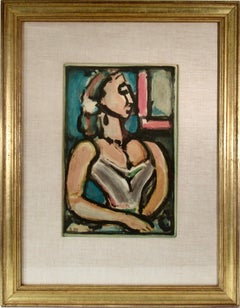
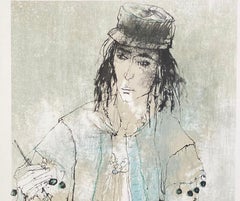
​​Find a collection of authentic Expressionist paintings, sculptures, prints and more art on 1stDibs.
to
1,087
1,931
1,063
1,036
846
934
Overall Width
to
Overall Height
to
1
47
2,696
3,073
99
132
360
106
78
173
400
274
238
181
1
116,008
63,564
56,490
28,020
14,666
9,439
6,663
4,132
3,125
2,525
2,369
2,128
611
3,126
1,951
639
2,534
1,570
1,565
981
726
429
407
385
374
326
290
270
266
232
199
159
141
117
109
98
3,636
2,167
1,876
1,812
1,347
302
85
72
47
46
1,188
396
2,938
2,091
Style: Expressionist
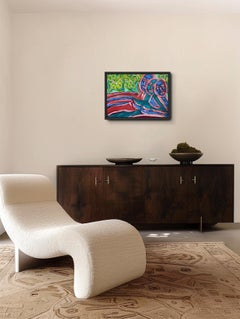
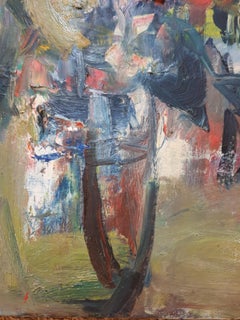
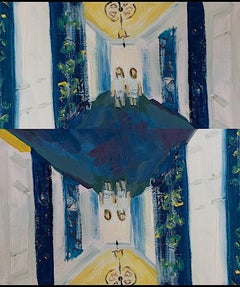
"Honey and tar" abstract interior painting by Volskya Lily.

"Honey and tar" abstract interior painting by Volskya Lily.

Located in Zofingen, AG

"Honey and tar" abstract interior painting by Volskya Lilya. The size of the painting is 30x20cm, canvas on cardboard. The painting was made with the help of a structural paste of va...

Category

2010s Expressionist Art

Materials

Canvas, Mixed Media, Oil

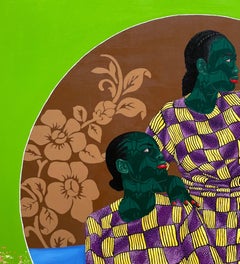
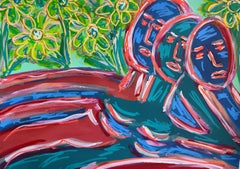
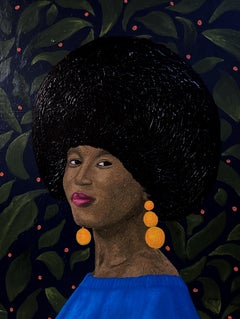
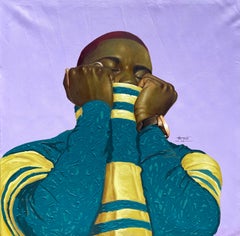
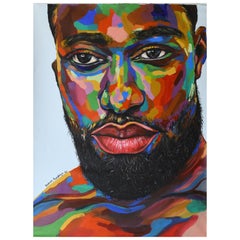
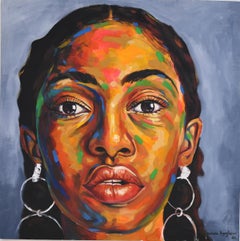
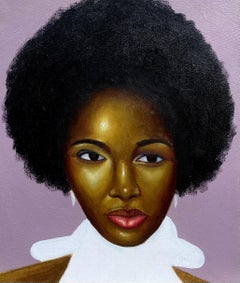
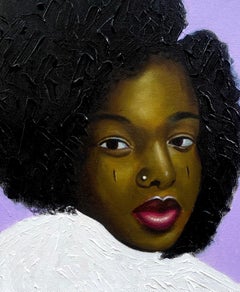
Afro Crown 2 - 21st Century, Expressionist, Figurative Portrait, Human Hair

Afro Crown 2 - 21st Century, Expressionist, Figurative Portrait, Human Hair

Located in Ibadan, Oyo

Shipping Procedure FREE Shipping Worldwide Ships in a well-protected tube from Nigeria This work is unique, not a print or other type of copy. Accompanied by a Certificate of Authent...

Category

21st Century and Contemporary Expressionist Art

Materials

Canvas, Acrylic

Marc Chagall, Untitled, from Derriere le miroir, 1972

Marc Chagall, Untitled, from Derriere le miroir, 1972

By Marc Chagall

Located in Southampton, NY

This exquisite lithograph by Marc Chagall (1887–1985), titled Sans titre (Untitled), from the folio Derriere le miroir, No. 198, originates from the 1972 edition published by Maeght ...

Category

1970s Expressionist Art

Materials

Lithograph

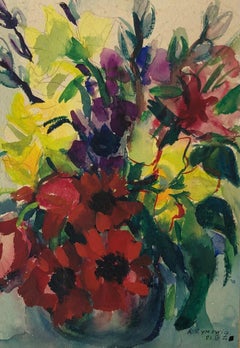
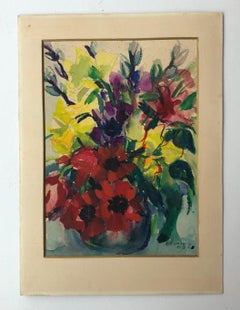
Expressionist Watercolor: The Golden Selection of Cheese & Grapes

Expressionist Watercolor: The Golden Selection of Cheese & Grapes

Located in Zofingen, AG

Artist Statement & Concept: "True art is born from the radical ability to experience the stillness within the everyday. This work, captured in 2020 during a period of global intr...

Category

2010s Expressionist Art

Materials

Paper, Watercolor

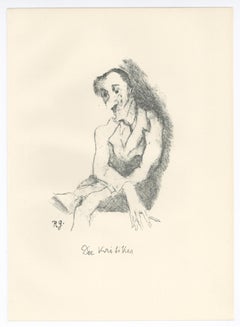
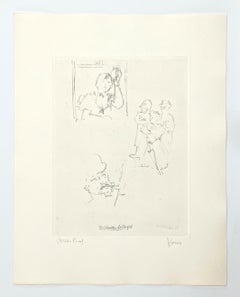
signed original etching - Artist's Proof

signed original etching - Artist's Proof

By Jack Levine

Located in Henderson, NV

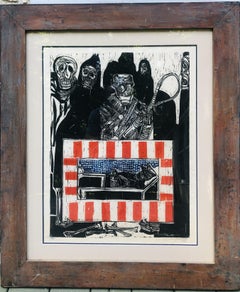
Medium: original soft ground etching. Signed in pencil and annotated "Artist's Proof". Printed in 1967 for the Dreigroschen Film portfolio and published by Touchstone Publishers. Thi...

Category

1960s Expressionist Art

Materials

Etching

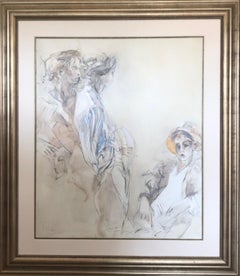
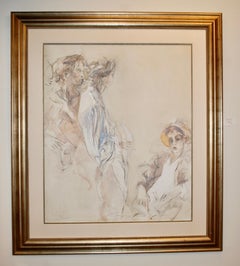
Untitled Figures, by Maurice Golubov, Oil on Board Painting

Untitled Figures, by Maurice Golubov, Oil on Board Painting

By Maurice Golubov

Located in Oklahoma City, OK

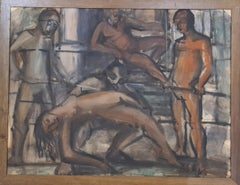
This work by Maurice Golubov, is an oil painting on board, and consists of a red, green, white, grey and brown color palette. This style of art is expressionist and figurative, with ...

Category

Mid-20th Century Expressionist Art

Materials

Oil, Board

Tennis Serve, Expressionist Lithograph by Jim Jonson

Tennis Serve, Expressionist Lithograph by Jim Jonson

By Jim Jonson

Located in Long Island City, NY

Jim Jonson, American (1928 - 1999) - Tennis Serve, Year: circa 1980, Medium: Lithograph, signed and numbered in pencil, Edition: 300; AP, Size: 28 in. x 21 in. (71.12 cm x 53.34 ...

Category

1980s Expressionist Art

Materials

Lithograph

Marc Chagall, The Acrobats, The Lithographs of Chagall, 1963

Marc Chagall, The Acrobats, The Lithographs of Chagall, 1963

By Marc Chagall

Located in Southampton, NY

This exquisite lithograph by Marc Chagall (1887–1985), titled Les Saltimbanques (The Acrobats), from the album The Lithographs of Chagall, Volume II, originates from the 1963 edition...

Category

1960s Expressionist Art

Materials

Lithograph

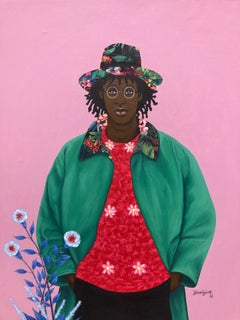
Victim (Meet James)
Victim (Meet James)

Victim (Meet James)

Located in Ibadan, Oyo

Shipping Procedure Ships in a well-protected tube from Nigeria This work is unique, not a print or other type of copy. Accompanied by a Certificate of Authenticity (Issued by the Gal...

Category

21st Century and Contemporary Expressionist Art

Materials

Canvas, Acrylic, Oil

Versailles (France) original lithograph vintage SNCF travel poster

Versailles (France) original lithograph vintage SNCF travel poster

By Maurice Milliere

Located in Spokane, WA

Original Versailles, France vintage lithograph French travel poster. Printed by the French National Railroad, SNCF in the 1938's. Printer: Goossens. A poster fit for a king since he once resided here at Versailles. Transform your living space with the elegance and grandeur of the Versailles Original Poster. This exquisite piece captures the breathtaking beauty of the iconic Palace of Versailles, showcasing its majestic fountains and lush gardens. The vibrant colors and intricate details bring to life the opulence and historical significance of one of the world's most renowned landmarks. The grand fountains had a chariot and horses...

Category

1930s Expressionist Art

Materials

Lithograph

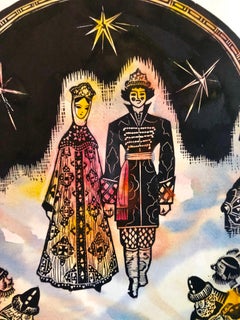
The Venetian Guest: Resonance in Minor Keys

The Venetian Guest: Resonance in Minor Keys

Located in Zofingen, AG

In this seminal work, Elena Lukina explores the boundaries between civilization and the untamed. "The Venetian Guest" is a profound manifestation of the "Minor Key" — where beauty em...

Category

2010s Expressionist Art

Materials

Canvas, Oil

Kathe Kollwitz, Death Seizes the Children, from Ten Lithographs, 1941 (after)

Kathe Kollwitz, Death Seizes the Children, from Ten Lithographs, 1941 (after)

By Käthe Kollwitz

Located in Southampton, NY

This exquisite lithograph after Kathe Kollwitz (1867–1945), titled Tod greift nach den Kindern (Death Seizes the Children), from the folio Kathe Kollwitz, Ten Lithographs, originates from the 1941 edition published by Henry C. Kleemann, New York, and Curt Valentin, New York; printed by Duenewald Printing Corporation, New York. The composition reflects Kollwitz’s profound engagement with themes of mortality, vulnerability, and human suffering, rendered with stark emotional intensity and a powerful graphic economy that underscores her enduring social message. Executed as a lithograph on velin paper, this work measures 19 x 16 inches (48.26 x 40.64 cm), overall; 15.5 x 13 inches (39.37 x 33.02 cm), image. Unsigned and unnumbered as issued. Artwork Details: Artist: After Kathe Kollwitz (1867–1945) Title: Tod greift nach den Kindern (Death Seizes the Children), from Kathe Kollwitz, Ten Lithographs Medium: Lithograph on velin paper Dimensions: 19 x 16 inches (48.26 x 40.64 cm), overall; 15.5 x 13 inches (39.37 x 33.02 cm), image Inscription: Unsigned and unnumbered as issued Date: 1941 Publisher: Henry C. Kleemann, New York, and Curt Valentin, New York Printer: Duenewald Printing Corporation, New York Condition: Well preserved, consistent with age and medium Provenance: From the folio Kathe Kollwitz, Ten Lithographs, 1941 About the Publication: Kathe Kollwitz, Ten Lithographs, published in New York in 1941 by Henry C. Kleemann in collaboration with Curt Valentin, represents an important early American presentation of Kollwitz’s graphic work at a time when her reputation was expanding internationally. Issued during the turbulence of the Second World War and following the suppression of her work in Germany under the Nazi regime, the folio played a crucial role in introducing her imagery to a broader audience outside Europe. The publication gathers a selection of her most powerful lithographic compositions, emphasizing her mastery of tonal contrast, expressive line, and psychological depth. Produced with careful attention to print quality by Duenewald Printing Corporation, the edition reflects the continued transmission of European modernist printmaking traditions into the American context, serving both as a document of artistic excellence and as a vehicle for the preservation and dissemination of Kollwitz’s humanistic vision. About the Artist: Kathe Kollwitz (1867–1945) was a German draughtsman, printmaker, and sculptor whose profoundly moving imagery, exceptional technical mastery, and unwavering social conscience established her as one of the most important and influential artists of the twentieth century, widely recognized as a master of modern printmaking and one of the most powerful visual chroniclers of human suffering, war, and social injustice. Born in Konigsberg, East Prussia, into a progressive and intellectually engaged family, Kollwitz was encouraged from an early age to pursue art and developed a deep awareness of social inequality that would shape her entire career, studying in Berlin and Munich at a time when women were largely excluded from formal academies while mastering drawing and graphic techniques with extraordinary discipline. Her breakthrough came with the monumental graphic cycle A Weavers’ Revolt (1893–1897), followed by The Peasants’ War (1901–1908), works that combined complex narrative structure with extraordinary technical command in etching, aquatint, and lithography, establishing her reputation as one of Europe’s leading graphic artists. Throughout her career, Kollwitz remained committed to portraying the lives of workers, mothers, and victims of poverty and conflict with unflinching honesty, creating compositions defined by bold, sculptural line, dense shadow, and unparalleled psychological depth that conveyed grief, resilience, and dignity. Working during a period transformed by the radical innovations of Pablo Picasso, Alexander Calder, Alberto Giacometti, Salvador Dali, Joan Miro, Wassily Kandinsky, Marcel Duchamp, and Man Ray, Kollwitz maintained a resolutely figurative and human-centered approach, aligning more closely with German Expressionism and artists such as Ernst Barlach, Max Liebermann, and Edvard Munch, whose emotional intensity and symbolic treatment of the human figure profoundly shaped her artistic language. Her later work, particularly the woodcut cycle War (1922–1923), stands among the most powerful anti-war statements in the history of art, reflecting both personal tragedy, including the death of her son in World War I, and a universal condemnation of violence and loss. In addition to her prints, Kollwitz created deeply moving sculptures that extended her exploration of grief and maternal protection into three dimensions, reinforcing her status as a multidisciplinary artist of exceptional range. She achieved significant recognition during her lifetime, becoming the first woman elected to the Prussian Academy of Arts, though her work was later condemned by the Nazi regime as degenerate, leading to her forced resignation and the removal of her works from public collections, yet her reputation expanded internationally after World War II and she is now regarded as a central figure in modern art. Her influence has been profound and far-reaching, shaping later artists including Francis Bacon, Anselm Kiefer, Leon Golub, Kiki Smith, and numerous contemporary figurative and socially engaged artists who continue to explore themes of trauma, memory, and human vulnerability. Today her works are held in major museum collections worldwide, including the Kathe Kollwitz Museum in Berlin, the Museum of Modern Art in New York, the British Museum in London, and the Art Institute of Chicago, and remain highly sought after by collectors for their emotional intensity and historical significance. The highest auction record for a work by Kathe Kollwitz is held by her sculpture Mutter mit totem Sohn (Mother with Dead Son), which achieved approximately 1.2 million EUR at auction, confirming her enduring importance. Kathe Kollwitz Tod greift nach den Kindern 1941 lithograph German Expressionism social realism print.

Category

1940s Expressionist Art

Materials

Lithograph

Kathe Kollwitz, Two Prisoners Listening to Music, 1941 (after)

Kathe Kollwitz, Two Prisoners Listening to Music, 1941 (after)

By Käthe Kollwitz

Located in Southampton, NY

This exquisite lithograph after Kathe Kollwitz (1867–1945), titled Zwei Gefangene, Musik horend (Two Prisoners Listening to Music), from the folio Kathe Kollwitz, Ten Lithographs, originates from the 1941 edition published by Henry C. Kleemann, New York, and Curt Valentin, New York; printed by Duenewald Printing Corporation, New York. The composition reflects Kollwitz’s profound engagement with themes of confinement, empathy, and human suffering, rendered with stark emotional intensity and a powerful graphic economy that underscores her enduring social message. Executed as a lithograph on velin paper, this work measures 19 x 16 inches (48.26 x 40.64 cm), overall; 13 x 11 inches (33.02 x 27.94 cm), image. Unsigned and unnumbered as issued. Artwork Details: Artist: After Kathe Kollwitz (1867–1945) Title: Zwei Gefangene, Musik horend (Two Prisoners Listening to Music), from Kathe Kollwitz, Ten Lithographs Medium: Lithograph on velin paper Dimensions: 19 x 16 inches (48.26 x 40.64 cm), overall; 13 x 11 inches (33.02 x 27.94 cm), image Inscription: Unsigned and unnumbered as issued Date: 1941 Publisher: Henry C. Kleemann, New York, and Curt Valentin, New York Printer: Duenewald Printing Corporation, New York Condition: Well preserved, consistent with age and medium Provenance: From the folio Kathe Kollwitz, Ten Lithographs, 1941 About the Publication: Kathe Kollwitz, Ten Lithographs, published in New York in 1941 by Henry C. Kleemann in collaboration with Curt Valentin, represents an important early American presentation of Kollwitz’s graphic work at a time when her reputation was expanding internationally. Issued during the turbulence of the Second World War and following the suppression of her work in Germany under the Nazi regime, the folio played a crucial role in introducing her imagery to a broader audience outside Europe. The publication gathers a selection of her most powerful lithographic compositions, emphasizing her mastery of tonal contrast, expressive line, and psychological depth. Produced with careful attention to print quality by Duenewald Printing Corporation, the edition reflects the continued transmission of European modernist printmaking traditions into the American context, serving both as a document of artistic excellence and as a vehicle for the preservation and dissemination of Kollwitz’s humanistic vision. About the Artist: Kathe Kollwitz (1867–1945) was a German draughtsman, printmaker, and sculptor whose profoundly moving imagery, exceptional technical mastery, and unwavering social conscience established her as one of the most important and influential artists of the twentieth century, widely recognized as a master of modern printmaking and one of the most powerful visual chroniclers of human suffering, war, and social injustice. Born in Konigsberg, East Prussia, into a progressive and intellectually engaged family, Kollwitz was encouraged from an early age to pursue art and developed a deep awareness of social inequality that would shape her entire career, studying in Berlin and Munich at a time when women were largely excluded from formal academies while mastering drawing and graphic techniques with extraordinary discipline. Her breakthrough came with the monumental graphic cycle A Weavers’ Revolt (1893–1897), followed by The Peasants’ War (1901–1908), works that combined complex narrative structure with extraordinary technical command in etching, aquatint, and lithography, establishing her reputation as one of Europe’s leading graphic artists. Throughout her career, Kollwitz remained committed to portraying the lives of workers, mothers, and victims of poverty and conflict with unflinching honesty, creating compositions defined by bold, sculptural line, dense shadow, and unparalleled psychological depth that conveyed grief, resilience, and dignity. Working during a period transformed by the radical innovations of Pablo Picasso, Alexander Calder, Alberto Giacometti, Salvador Dali, Joan Miro, Wassily Kandinsky, Marcel Duchamp, and Man Ray, Kollwitz maintained a resolutely figurative and human-centered approach, aligning more closely with German Expressionism and artists such as Ernst Barlach, Max Liebermann, and Edvard Munch, whose emotional intensity and symbolic treatment of the human figure profoundly shaped her artistic language. Her later work, particularly the woodcut cycle War (1922–1923), stands among the most powerful anti-war statements in the history of art, reflecting both personal tragedy, including the death of her son in World War I, and a universal condemnation of violence and loss. In addition to her prints, Kollwitz created deeply moving sculptures that extended her exploration of grief and maternal protection into three dimensions, reinforcing her status as a multidisciplinary artist of exceptional range. She achieved significant recognition during her lifetime, becoming the first woman elected to the Prussian Academy of Arts, though her work was later condemned by the Nazi regime as degenerate, leading to her forced resignation and the removal of her works from public collections, yet her reputation expanded internationally after World War II and she is now regarded as a central figure in modern art. Her influence has been profound and far-reaching, shaping later artists including Francis Bacon, Anselm Kiefer, Leon Golub, Kiki Smith, and numerous contemporary figurative and socially engaged artists who continue to explore themes of trauma, memory, and human vulnerability. Today her works are held in major museum collections worldwide, including the Kathe Kollwitz Museum in Berlin, the Museum of Modern Art in New York, the British Museum in London, and the Art Institute of Chicago, and remain highly sought after by collectors for their emotional intensity and historical significance. The highest auction record for a work by Kathe Kollwitz is held by her sculpture Mutter mit totem Sohn (Mother with Dead Son), which achieved approximately 1.2 million EUR at auction, confirming her enduring importance. Kathe Kollwitz Zwei Gefangene Musik horend 1941 lithograph German Expressionism social realism print.

Category

1940s Expressionist Art

Materials

Lithograph

"Late Night at the Studio", Contemporary, Factory Interior, Blue, Oil Painting

"Late Night at the Studio", Contemporary, Factory Interior, Blue, Oil Painting

By Catherine Picard-Gibbs

Located in Franklin, MA

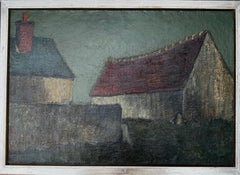
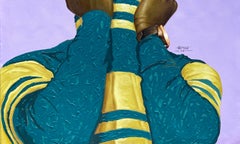
“Late Night at The Studio” by Catherine Picard-Gibbs is an Expressionist interior factory scene in a palette of teal-blue and yellow. This evocative 18 x 24 inch oil on panel painting focuses on light pouring out from the haunting depths of an empty hallway. This textural artwork is framed in a silver crackle floater frame with a black interior, making the framed size 19 x 25 x 1.5 inches. Catherine Picard-Gibbs paints with bold brush strokes, using vibrant colors to show emotion and movement in landscapes and urban scenes. Her inspiration comes from the nuance and drama of her everyday world. Her evocative works have been featured throughout Massachusetts, in New York, and in the Midwest. Picard-Gibbs is represented by Fountain Street Gallery...

Category

2010s Expressionist Art

Materials

Oil, Board

Marina Cyclists, Oil Painting

Marina Cyclists, Oil Painting

By James Hartman

Located in San Francisco, CA

Artist Comments
Artist James Hartman captures the meeting point of the Berkeley Marina and San Francisco Bay in this expressive California landscape. A favorite Bay Area spot t...

Category

21st Century and Contemporary Expressionist Art

Materials

Oil

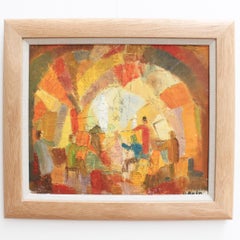
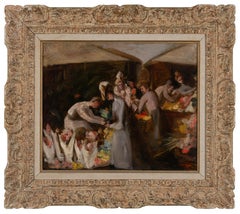
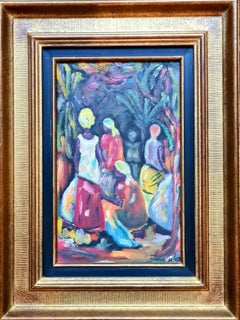
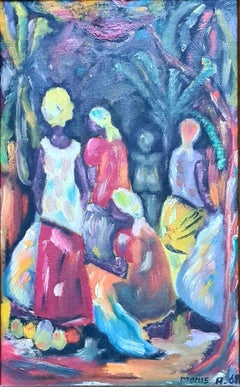
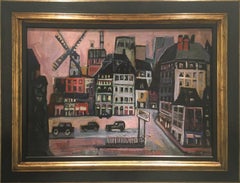
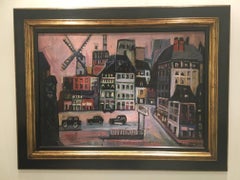
Colourful Expressionist Oil on Canvas Market Scene, Mid-20th Century

Colourful Expressionist Oil on Canvas Market Scene, Mid-20th Century

Located in Cotignac, FR

Colourful Expressionist oil on canvas view of a market scene by A Monis. The painting is signed and dated bottom right and presented in a magnificent custom gilt wood frame. Provena...

Category

Mid-20th Century Expressionist Art

Materials

Oil, Canvas

'Portrait of a Man', by Jim Riley, Oil on Canvas Painting

'Portrait of a Man', by Jim Riley, Oil on Canvas Painting

Located in Oklahoma City, OK

This 19.625" x 15.625" oil on canvas painting is by American artist, Jim Riley. The painting presents a frontal, half-length portrait of a figure with wavy brown hair and a calm, int...

Category

Late 20th Century Expressionist Art

Materials

Canvas, Oil

original etching

original etching

By Leonard Baskin

Located in Henderson, NV

Medium: original etching. Printed in 1984 on Cartiere Magnani paper at the atelier of Bruce Chandler in an edition of 1500. This work was executed by Leonard Baskin to illustrate the...

Category

1980s Expressionist Art

Materials

Etching

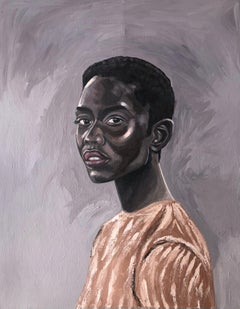
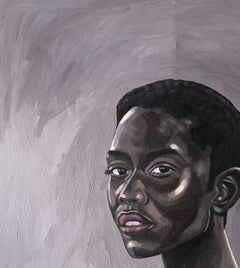
African Boy IV
African Boy IV

African Boy IV

Located in Ibadan, Oyo

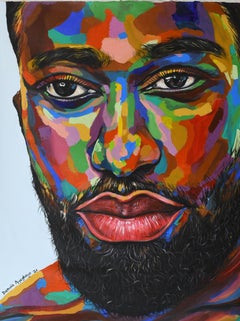
African Boy is a series of paintings by talented artist Faith Gbadero. This series of Artworks capture the response and attitudes of African young adults...

Category

21st Century and Contemporary Expressionist Art

Materials

Canvas, Oil, Acrylic

Sunflower time 65X50

Sunflower time 65X50

Located in Zofingen, AG

In this vibrant oil painting, I poured my heart into capturing the fierce beauty of sunflowers standing tall. Each stroke embodies the energy and warmth these flowers exude, blending...

Category

2010s Expressionist Art

Materials

Canvas, Oil

Mosque / - The Expression of Architecture -

Mosque / - The Expression of Architecture -

Located in Berlin, DE

Walter Dexel (1890 Munich – 1973 Braunschweig), Mosque, 1916. Watercolor woodcut on handmade paper, 15.5 cm x 10 cm (image), 29 cm x 22.3 cm (sheet size), signed “WDexel 16” in penci...

Category

1910s Expressionist Art

Materials

Paper

Marc Chagall, Untitled, from Derriere le miroir, 1979

Marc Chagall, Untitled, from Derriere le miroir, 1979

By Marc Chagall

Located in Southampton, NY

This exquisite lithograph by Marc Chagall (1887–1985), titled Sans titre (Untitled), from the folio Derriere le miroir, No. 235, originates from the 1979 edition published by Maeght ...

Category

1970s Expressionist Art

Materials

Lithograph

A Look at the Menu
A Look at the Menu

A Look at the Menu

By Marcel Dyf

Located in Sheffield, MA

Marcel Dyf French, 1899-1985 A Look at the Menu Oil on Canvas 21 ¼ by 25 ½ in, w/ frame 27 ¾ by 32 ¼ in Signed lower right Marcel Dyf (Marcel Dreyfus) was born in Paris on October ...

Category

Mid-20th Century Expressionist Art

Materials

Oil

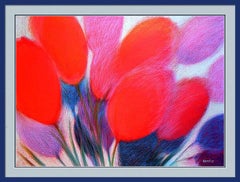
Tulips White 2
Tulips White 2

Tulips White 2

Located in Zofingen, AG

This artwork features a vibrant arrangement of five tulips, each uniquely colored, set against a textured, blue background. The flowers exhibit a smooth gradient of colors: from soft...

Category

2010s Expressionist Art

Materials

Oil Pastel, Acrylic, Archival Paper

Before the Storm
Before the Storm

Before the Storm

Located in Zofingen, AG

In creating this piece, I sought to capture the vibrant yet calm moment before a storm. I used acrylic and oil to blend realism with abstraction, allowing the textures and colors to ...

Category

2010s Expressionist Art

Materials

Oil, Acrylic, Canvas

Tennis Match, Expressionist Lithograph by Jim Jonson

Tennis Match, Expressionist Lithograph by Jim Jonson

By Jim Jonson

Located in Long Island City, NY

Jim Jonson, American (1928 - 1999) - Tennis Match, Year: circa 1980, Medium: Lithograph, signed and numbered in pencil, Edition: 300, AP, Size: 28 in. x 21 in. (71.12 cm x 53.34 ...

Category

1980s Expressionist Art

Materials

Lithograph

During Sunset
During Sunset

During Sunset

Located in Zofingen, AG

In creating this piece, I strove to capture the fleeting beauty of a sunset beach scene, emphasizing the deep, emotional connection between the figures and the vast, soothing expanse...

Category

2010s Expressionist Art

Materials

Canvas, Oil, Cardboard

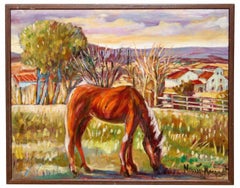
Early 20th Century French Expressionist Landscape “Le pique-nique” Oil Painting

Early 20th Century French Expressionist Landscape “Le pique-nique” Oil Painting

Located in Holywell, GB

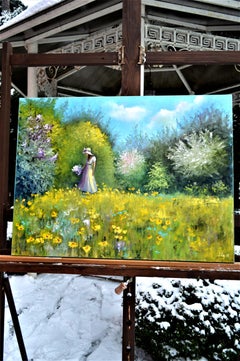
Early 20th Century Expressionist Landscape “Le pique-nique” A colourful landscape painted with confident dramatic brush strokes in the style of the early 20th century expressionist ...

Category

Early 20th Century Expressionist Art

Materials

Oil

Fencers. Figurative Oil Painting, Olympic Games, Sport, Realistic, Polish artist

Fencers. Figurative Oil Painting, Olympic Games, Sport, Realistic, Polish artist

By Dorota Zych-Charaziak

Located in Warsaw, PL

The painting shows sword fighting, which is one of the official sports of the Olympic Games. The fencing fights have a spectacular character, perfectly captured in the painting by Do...

Category

2010s Expressionist Art

Materials

Canvas, Oil

Expressionist art for sale on 1stDibs.

Find a wide variety of authentic Expressionist art available for sale on 1stDibs. Works in this style were very popular during the 21st Century and Contemporary, but contemporary artists have continued to produce works inspired by this movement. If you’re looking to add art created in this style to introduce contrast in an otherwise neutral space in your home, the works available on 1stDibs include elements of orange, blue, purple, green and other colors. Many Pop art paintings were created by popular artists on 1stDibs, including Iryna Kastsova, George Grosz, Stephen Basso, and Marc Chagall. Frequently made by artists working with Paint, and Oil Paint and other materials, all of these pieces for sale are unique and have attracted attention over the years. Not every interior allows for large Expressionist art, so small editions measuring 1 inches across are also available.