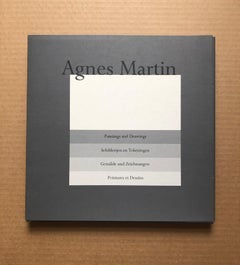
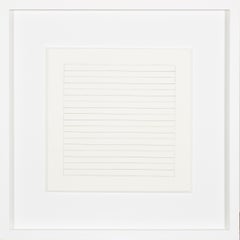
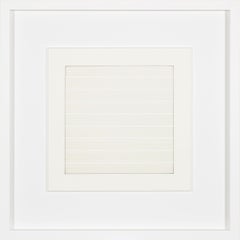
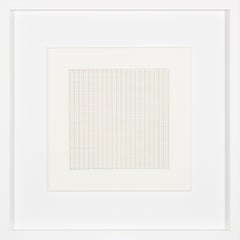
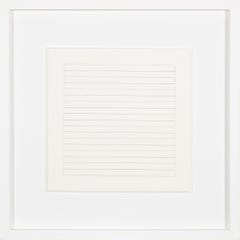
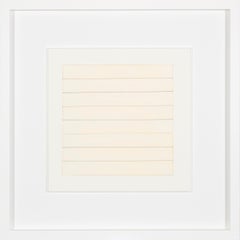
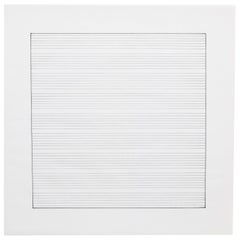
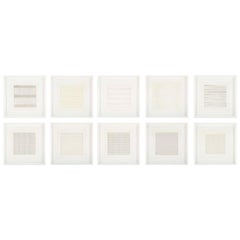
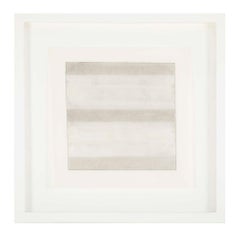
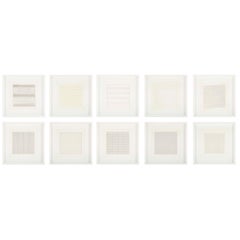
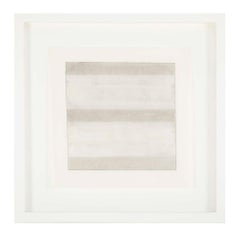
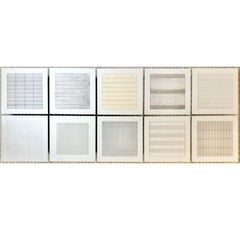
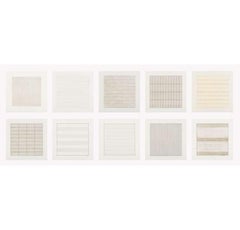
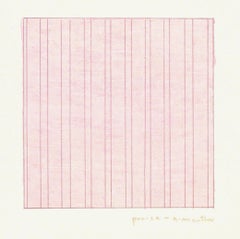
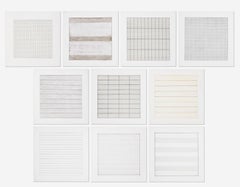
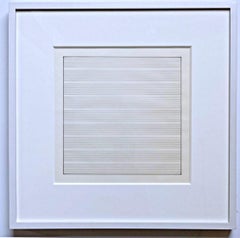
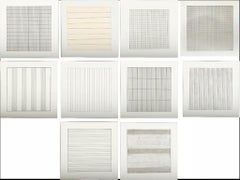
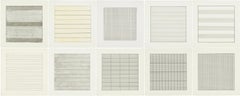
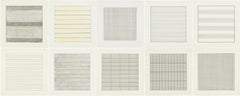
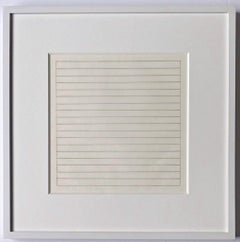
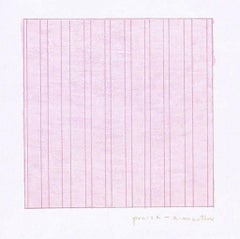
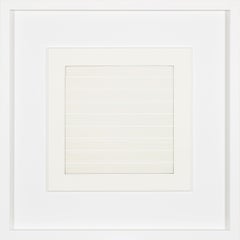
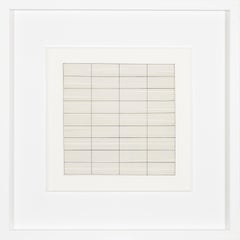
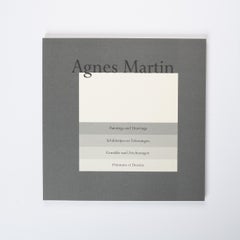
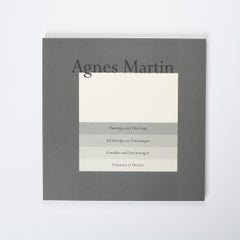
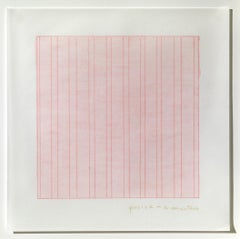
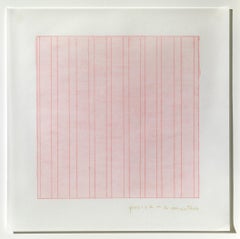
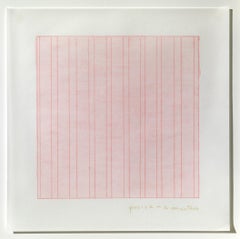
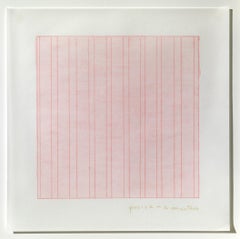
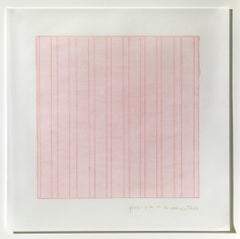
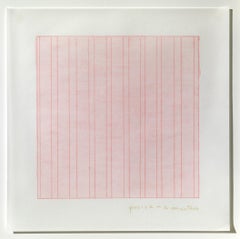
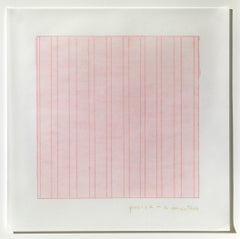
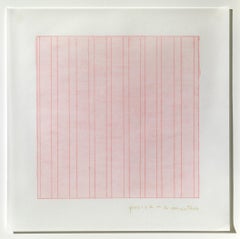
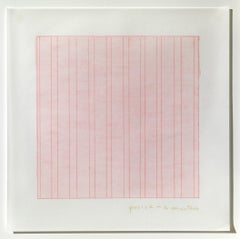
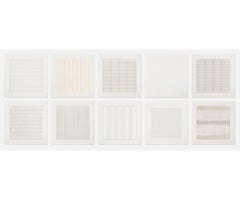
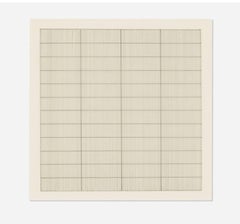
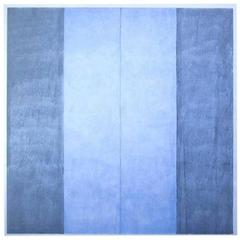
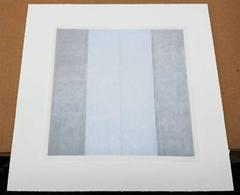
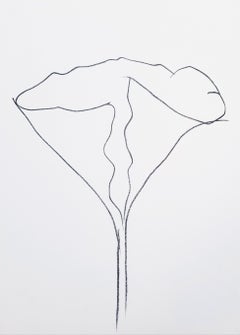
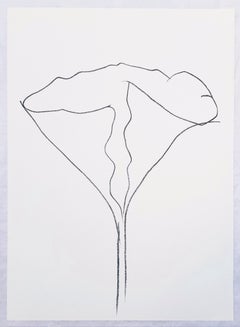
Agnes Martin Lithographs For Sale on 1stDibs
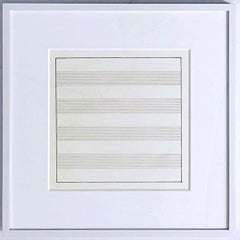
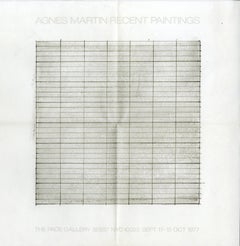
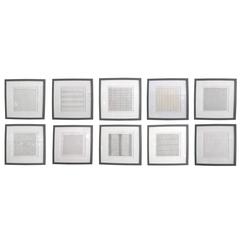
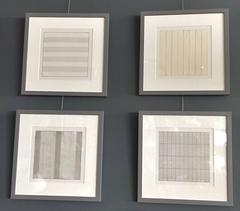
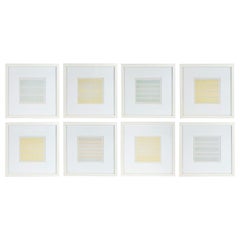
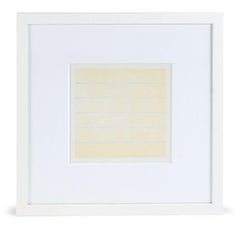
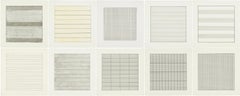
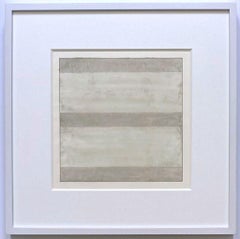
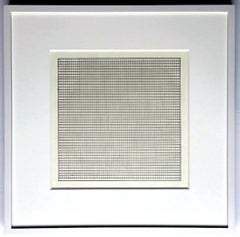
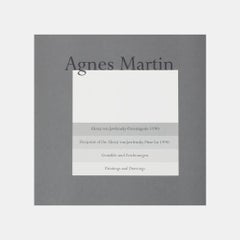
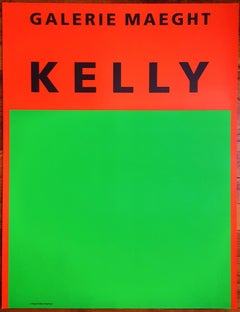
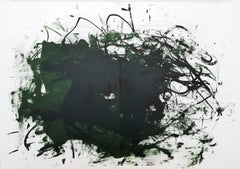
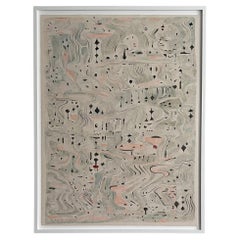
Find a variety of agnes martin lithographs available on 1stDibs. Browse a selection of
Contemporary or
Abstract versions of these works for sale today — there are 8
Contemporary and 2
Abstract examples available. These items have been produced for many years, with earlier versions available from the 20th Century and newer variations made as recently as the 20th Century. You can search the agnes martin lithographs that we have for sale on 1stDibs by color — popular works were created in bold and neutral palettes with elements of
beige and
gray. Many versions of these artworks are appealing in their rich colors and composition, but
Agnes Martin and
(after) Agnes Martin produced especially popular works that are worth a look. Frequently made by artists working in
lithograph, all of these available pieces are unique and have attracted attention over the years.
How Much are Agnes Martin Lithographs?
Agnes martin lithographs can differ in price owing to various characteristics — the average selling price for items in our inventory is $7,078, while the lowest priced sells for $1,500 and the highest can go for as much as $15,900.
Agnes Martin for sale on 1stDibs
Born on a farm in rural Saskatchewan, Canada, Agnes Martin immigrated to the United States in 1932 in the hopes of becoming a teacher. After earning a degree in art education, she moved to the desert plains of Taos, New Mexico, where she made abstract paintings with organic forms, which attracted the attention of renowned New York gallerist Betty Parsons, who convinced the artist to join her roster and move to New York in 1957. There, Martin lived and worked on Coenties Slip, a street in Lower Manhattan, alongside a community of artists—including Robert Indiana, Ellsworth Kelly, and Jack Youngerman—who were all drawn to the area’s cheap rents, expansive loft spaces and proximity to the East River. Harbor Number 1 (1957), one of Martin’s earliest New York paintings, combines the geometric abstraction of her earlier Taos work with the newfound inspiration of the harbor landscape, evident in her choice of blue-gray palette.
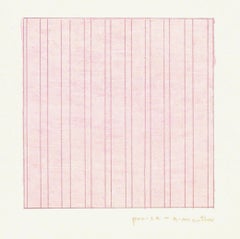
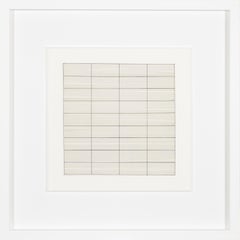
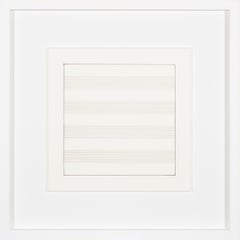
Over the course of the next decade, Martin developed her signature format: six by six foot painted canvases, covered from edge to edge with meticulously penciled grids and finished with a thin layer of gesso. Though she often showed with other New York abstractionists, Martin’s focused pursuit charted new terrain that lay outside of both the broad gestural vocabulary of Abstract Expressionism and the systematic repetitions of Minimalism. Rather, her practice was tethered to spirituality and drew from a mix of Zen Buddhist and American Transcendentalist ideas. For Martin, painting was “a world without objects, without interruption… or obstacle. It is to accept the necessity of … going into a field of vision as you would cross an empty beach to look at the ocean.”1
In 1967, at the height of her career, Martin faced the loss of her home to new development, the sudden death of her friend Ad Reinhardt, and the growing strain of mental illness; she left New York, and returned to Taos, where she abandoned painting, instead pursuing writing and meditation in isolation. Her return to painting in 1974 was marked by a subtle shift in style: no longer defined by the delicate graphite grid, compositions such as Untitled Number 5 (1975) display bolder geometric schemes—like distant relatives of her earliest works. In these late paintings, Martin evoked the warm palette of the arid desert landscape where she remained for the rest of her life.
Finding the Right Prints-works-on-paper for You
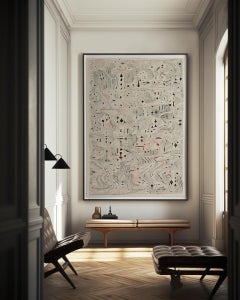
Decorating with fine art prints — whether they’re figurative prints, abstract prints or another variety — has always been a practical way of bringing a space to life as well as bringing works by an artist you love into your home.
Pursued in the 1960s and ’70s, largely by Pop artists drawn to its associations with mass production, advertising, packaging and seriality, as well as those challenging the primacy of the Abstract Expressionist brushstroke, printmaking was embraced in the 1980s by painters and conceptual artists ranging from David Salle and Elizabeth Murray to Adrian Piper and Sherrie Levine.
Printmaking is the transfer of an image from one surface to another. An artist takes a material like stone, metal, wood or wax, carves, incises, draws or otherwise marks it with an image, inks or paints it and then transfers the image to a piece of paper or other material.
Fine art prints are frequently confused with their more commercial counterparts. After all, our closest connection to the printed image is through mass-produced newspapers, magazines and books, and many people don’t realize that even though prints are editions, they start with an original image created by an artist with the intent of reproducing it in a small batch. Fine art prints are created in strictly limited editions — 20 or 30 or maybe 50 — and are always based on an image created specifically to be made into an edition.
Many people think of revered Dutch artist Rembrandt as a painter but may not know that he was a printmaker as well. His prints have been preserved in time along with the work of other celebrated printmakers such as Pablo Picasso, Salvador Dalí and Andy Warhol. These fine art prints are still highly sought after by collectors.
“It’s another tool in the artist’s toolbox, just like painting or sculpture or anything else that an artist uses in the service of mark making or expressing him- or herself,” says International Fine Print Dealers Association (IFPDA) vice president Betsy Senior, of New York’s Betsy Senior Fine Art, Inc.
Because artist’s editions tend to be more affordable and available than his or her unique works, they’re more accessible and can be a great opportunity to bring a variety of colors, textures and shapes into a space.
For tight corners, select small fine art prints as opposed to the oversized bold piece you’ll hang as a focal point in the dining area. But be careful not to choose something that is too big for your space. And feel free to lean into it if need be — not every work needs picture-hanging hooks. Leaning a larger fine art print against the wall behind a bookcase can add a stylish installation-type dynamic to your living room. (Read more about how to arrange wall art here.)
Find fine art prints for sale on 1stDibs today.