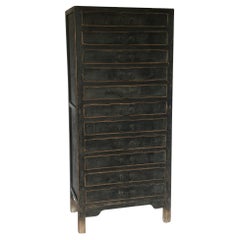
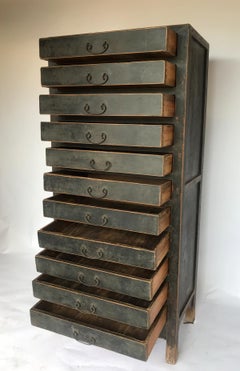
19th Century Chinese Chest
Located in Los Angeles, CA
19th century Chinese Elm wood chest with 11 functioning, dovetailed drawers. Mortise and tenon
Category
19th Century Chinese Rustic Antique Chinese Chest
Materials
Wood, Paint
19th Century Chinese Chest
Located in Los Angeles, CA
19th century Chinese Elm wood chest with 11 functioning, dovetailed drawers. Mortise and tenon
Wood, Paint
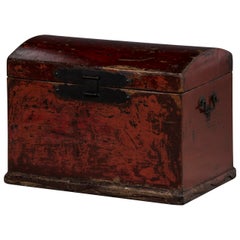
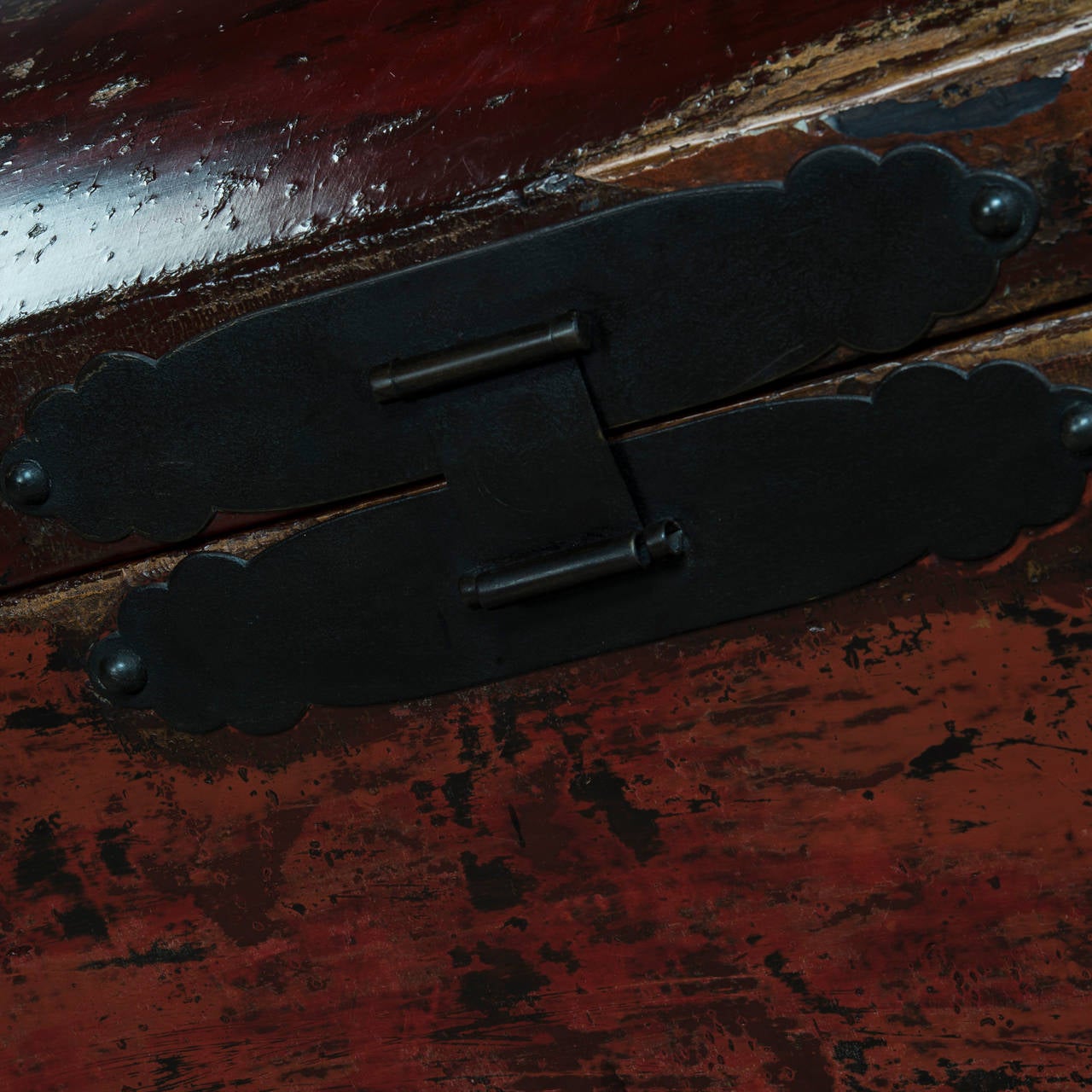
Chinese Chest with Thick Red Original Lacquer
Located in Kastrup, DK
Chest with thick red original lacquer and very charming patina. "Shanxi" China 1780-1820.
Metal
$3,980
H 11.5 in W 14.5 in D 10.5 in
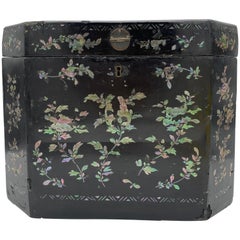
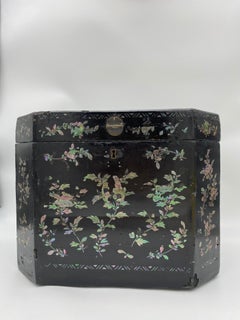
19th Century Shell Inlaid Black Lacquer Big Chinese Chest Labled "Sunshing"
Located in Brea, CA
19th Century Shell Inlaid Black Lacquer Big Export Chinese Chest Labled inside "Sunshing" and with
Lacquer
Small Handcarved Chinese Chest
Located in Lambertville, NJ
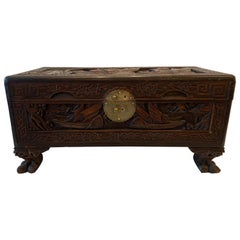
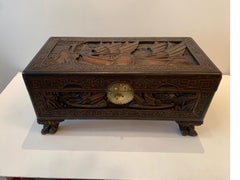
A hand carved Chinese large table box with hinged lid. Intricately carved all-over with Asian
Hardwood
$3,295 / set
H 19.25 in W 30.18 in D 19 in
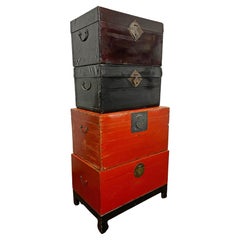
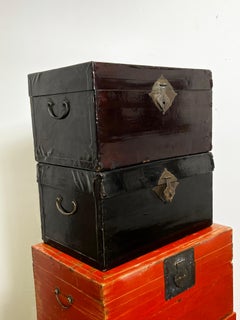
Set of Four Antique Chinese Chests, Lacquered Leather 'Vellum' and Wood
Located in Peabody, MA
A collection of Chinese chests from the late 19th and 20th century includes a vermillion lacquered
Leather, Wood, Lacquer
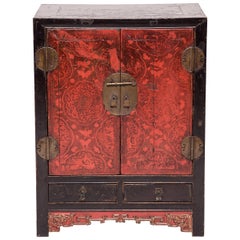
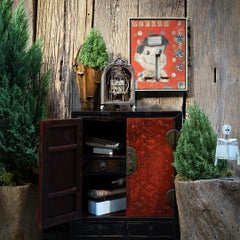
19th Century, Chinese Chest on Stand
Located in Vista, CA
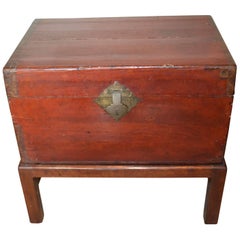
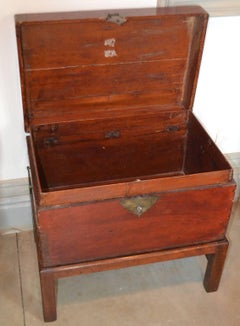
19th century, Chinese lacquered red chest-on-stand.
Wood
Finely Lacquered Chinese Chest, c. 1850
Located in Chicago, IL
China. Although the design follows classic forms, vibrant decoration makes this chest unique. The
Elm
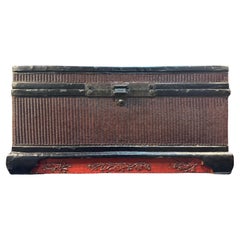
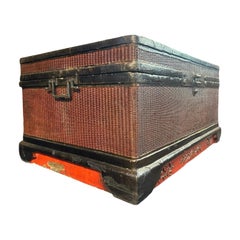
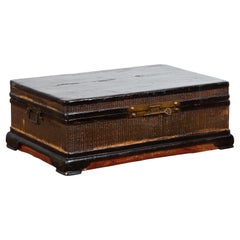
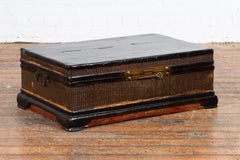
Mid 19th Century Chinese Chest, Bamboo and Pine, Circa 1870
Located in Singapore, SG
This antique Shanxi chest features a black lacquered top and rims with delicate bamboo weave around
Brass
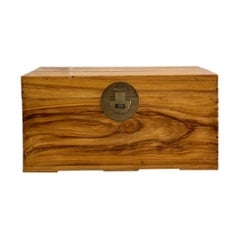
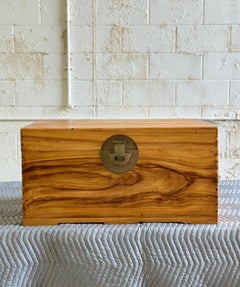
$1,220
H 17.5 in W 34.25 in D 20 in
Antique Chinese Brown Elm Wood and Brass Rectangular Chest Trunk Box
Located in Farmington Hills, MI
We are very pleased to offer an exquisite antique Chinese chest, circa early 1920s, which was
Brass
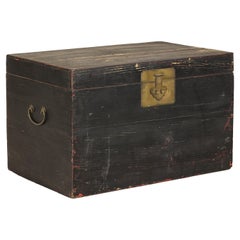
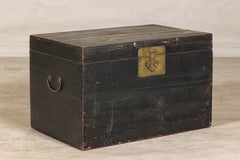
$2,070
H 19 in W 30.5 in D 19.75 in
Qing Dynasty Elmwood Blanket Chest with Black Lacquer Finish and Brass Accents
Located in Yonkers, NY
, this Chinese chest showcases the timeless elegance of Qing Dynasty design. Dating to the late Qing
Brass
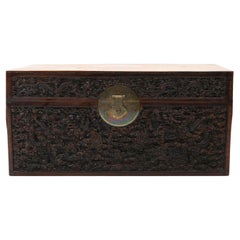
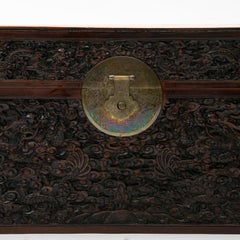
Carved Chinese Camphor Chest
Located in Kastrup, DK
An antique carved Chinese camphor and blackwood chest. Blackwood front carved in relief with
Hardwood
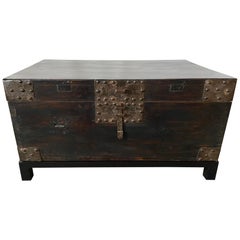
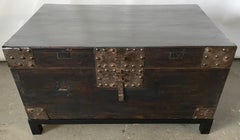
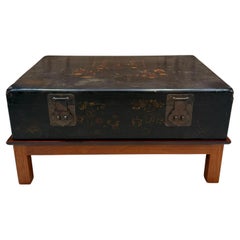
19th Century Chinese Lacquered Chest on Stand
Located in Sheffield, MA
A very handsome Chinese lacquered trunk or coffee table with exceptional heavily embellished hand
Wood
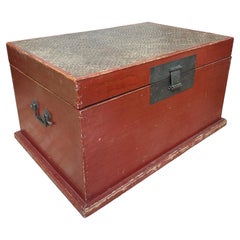
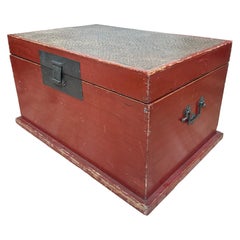
Late 19th Century Chinese Red Lacquer Blanket Chest
Located in Sacramento, CA
Late 19th century Chinese red lacquer blanket chest with rattan top. These chests were often used
Wood
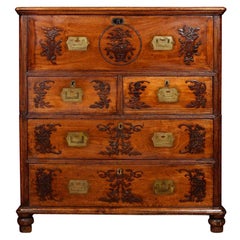
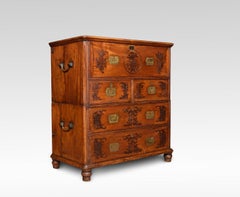
Chinese Camphor Wood Secrétaire Campaign Chest
Located in Cheshire, GB
19th century Chinese camphor wood secrétaire Campaign chest in two sections, the secrétaire frieze
Wood
$1,990
H 9.5 in W 36 in D 27.5 in
Chinese Lacquered Wooden Chest Coffee Table With Animated Palace Scene
Located in Chula Vista, CA
For your consideration, a Chinese lacquered wooden chest coffee table with animated palace scene
Wood
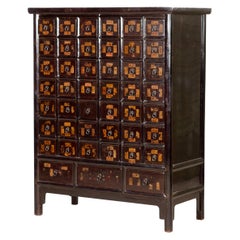
18th Century Chinese Medicine Chest
Located in Kastrup, DK
Medicine Chest in original black lacquer. Shanxi province, China. Dating back from the late 18th
Metal
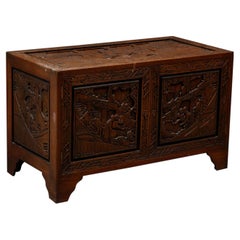
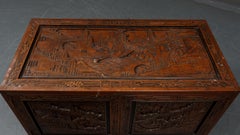
Chest, China, Camphor Wood Richly Carved
Located in Vienna, AT
Chinese camphor wood chest / drawer. Front with two doors behind which drawers chest, richly
Hardwood
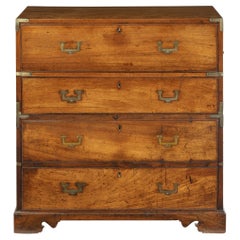
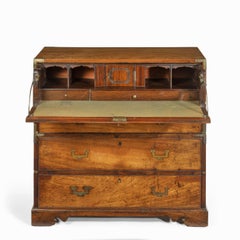
Anglo-Chinese Hardwood Naval Officer’s Campaign Chest
Located in Lymington, Hampshire
An Anglo-Chinese hardwood naval officer’s campaign chest. This chest (probably padouk) is of
Hardwood
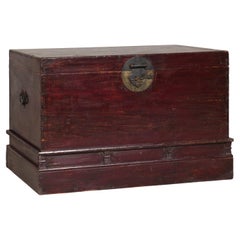
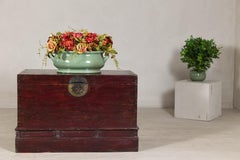
Antique Chinese Blanket Chest with Reddish-Brown Lacquer Finish
Located in Yonkers, NY
This large antique Chinese trunk features a deep reddish-brown lacquer finish and classic form
Brass
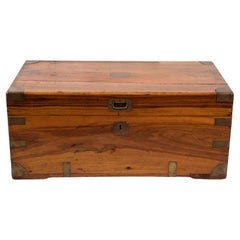
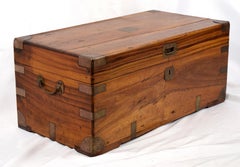
$1,930
H 12.5 in W 30 in D 15 in
Camphorwood Campaign Chest - Late 19th Century Chinese Export Case (Medium)
Located in Soquel, CA
Camphorwood Campaign Chest - Late 19th Century Chinese Export Case (Medium) This hardwood chest
Brass
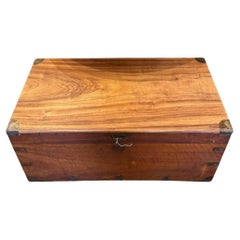
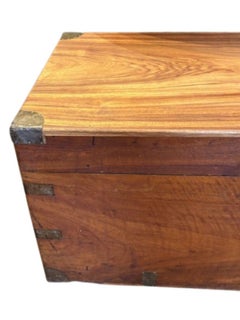
19th Century China Trade Brass Bound Camphor Wood Sea Chest
Located in Nantucket, MA
19th Century China Trade Brass Bound Camphor Wood Sea Chest, second half 19th Century, a hand
Wood
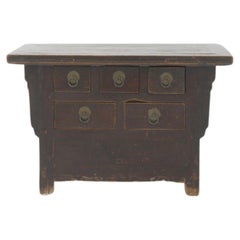
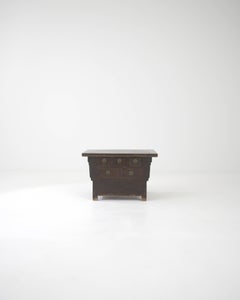
19th Century Chinese Wooden Chest Of Drawers
Located in High Point, NC
This 19th-century Chinese wooden chest of drawers is a magnificent example of traditional Eastern
Wood
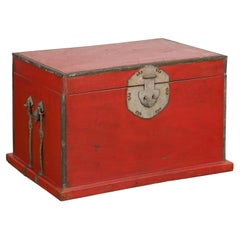
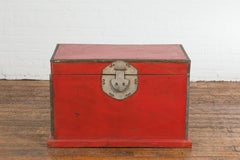
$1,725
H 21 in W 34 in D 23.25 in
Qing Dynasty Period 19th Century Red Lacquer Trunk with Metal Edging
Located in Yonkers, NY
A Chinese Qing Dynasty period red lacquered blanket chest from the 19th century with metal edging
Metal, Brass
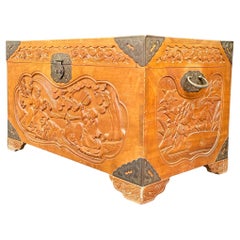
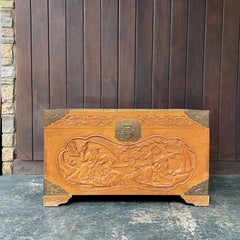
$3,900
H 21 in W 36 in D 20.25 in
Antique 20th Century Carved Camphorwood Chinese Campaign Chest Trunk w/ Rooster
Located in Hyattsville, MD
A wonderful turn of the century hand carved Chinese trunk, uncommon in blonde wood. Heavily
Wood
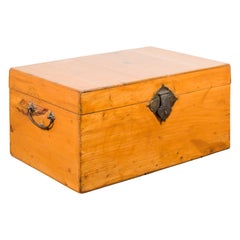
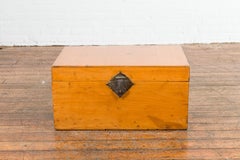
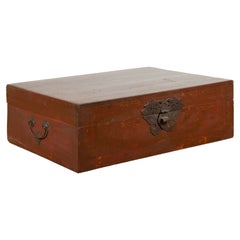
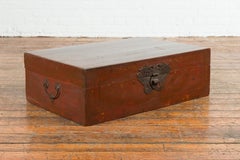
Chinese Early 20th Century Elmwood Blanket Chest with Brass Hardware
Located in Yonkers, NY
A Chinese elmwood blanket chest from the early 20th century, with brass hardware. Created in China
Brass
$1,265
H 9.5 in W 30.5 in D 20 in
Chinese Early 20th Century Blanket Chest with Underglaze Floral Motifs
Located in Yonkers, NY
A Chinese antique blanket chest from the early 20th century, with underglaze design. Created in
Wood
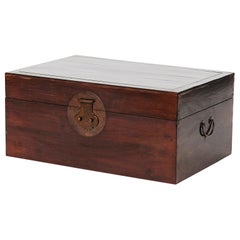
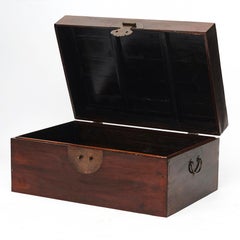
$823
H 15.75 in W 35.04 in D 23.63 in
19th Century Chinese Basswood Blanket Chest with Round Brass Medallion Hardware
Located in Kastrup, DK
A Chinese antique brasswood (also called Linden or Lime wood) blanket chest from the late 19th
Brass
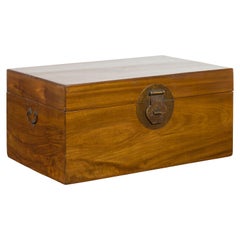
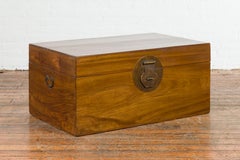
$2,243
H 17.25 in W 37.25 in D 24 in
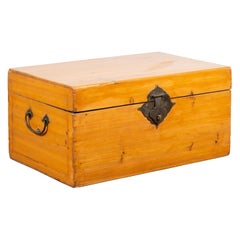
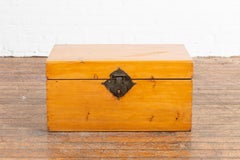
Antique Chinese Early 20th Century Elmwood Blanket Chest with Brass Hardware
Located in Yonkers, NY
A Chinese antique elmwood blanket chest from the early 20th century, with brass hardware. Created
Elm
$1,024
H 13.75 in W 27.5 in D 18.25 in
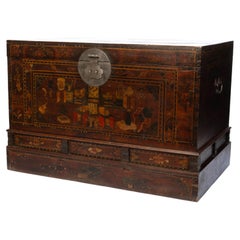
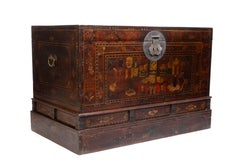
Chinese Early 20th Century Elm Blanket Chest with Honey Toned Patina
Located in Yonkers, NY
A Chinese elmwood blanket chest from the early 20th century, with lateral handles. Created in China
Elm
$3,818
H 27.76 in W 42.13 in D 25.79 in
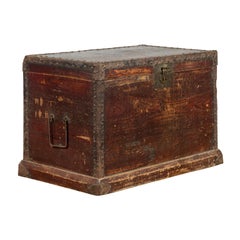
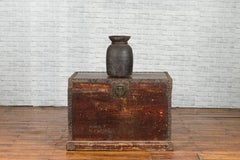
Large Antique Chinese hand-Painted And Lacquered Elm Trunk Blanket Chest
Located in London, GB
Antique Chinese Hand-painted and Lacquered Elm Blanket Chest Early 20th Century, Late Qing dynasty
Iron
$3,220
H 24 in W 34.5 in D 21.5 in
Chinese Qing Dynasty 19th Century Distressed Blanket Chest with Iron Fittings
Located in Yonkers, NY
A large Chinese Qing Dynasty period distressed blanket chest from the 19th century, with iron
Iron
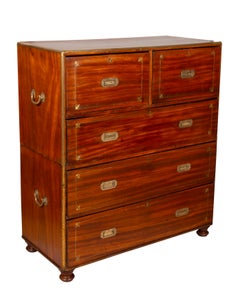
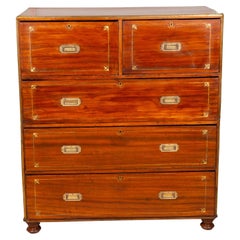
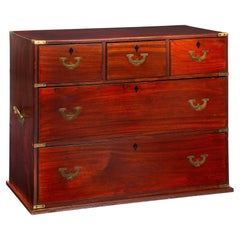
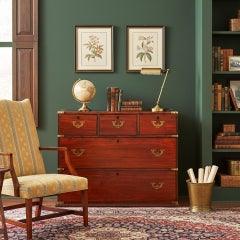
Chinese Export Mahogany and Brass Inlaid Campaign Chest
Located in Essex, MA
Unusually large with a rectangular top with brass edge which continues throughout the whole case. Two drawers over three long drawers all with brass inlay and recessed handles, origi...
Brass
$1,093
H 10.5 in W 29 in D 18.5 in
Chinese Qing Dynasty 19th Century Black Lacquer Blanket Chest with Rattan Inlay
Located in Yonkers, NY
A Chinese Qing Dynasty period antique blanket chest from the 19th century, with rattan inlay
Rattan, Wood
$4,900
H 35.25 in W 44.38 in D 20.38 in
19th Century Chinese Export Campaign Chest, Brass-Bound, 1840-70
Located in Shippensburg, PA
A FINE CHINESE EXPORT BRASS-BOUND CAMPAIGN CHEST Probably Chinese Export for the British market
Brass
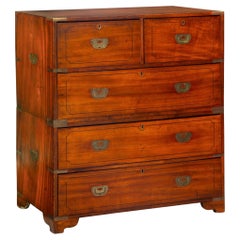
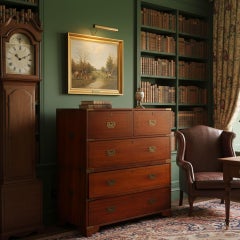
$6,900
H 44.13 in W 40.5 in D 19.5 in
China Trade Camphor Brass-Mounted British Campaign Chest ca. 1840
Located in Shippensburg, PA
CHINA TRADE BRASS-MOUNTED CAMPHOR-WOOD CAMPAIGN CHEST OF DRAWERS Circa 1840 44 1/8" H x 40 1/2" W
Brass
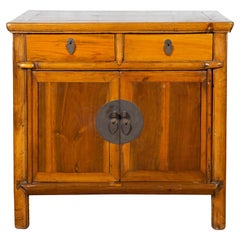
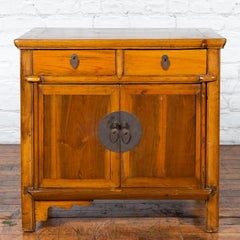
$2,185
H 30 in W 30.5 in D 20 in
Chinese Early 20th Century Elmwood Side Chest with Bronze Medallion Hardware
Located in Yonkers, NY
A Chinese elmwood side chest from the early 20th century, with round bronze medallion hardware, two
Bronze
$4,569
H 41.93 in W 39.18 in D 18.51 in
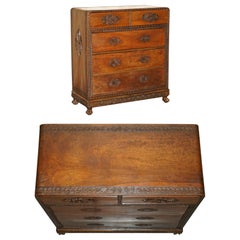
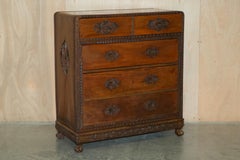
ANTIQUE CHiNESE HAND CARVED CIRCA 1890 CHEST OF DRAWERS VERY DETAILED HANDLES
Located in West Sussex, Pulborough
, ornately hand carved Chinese export circa 1890 chest of drawers in Camphor wood Please note the delivery
Wood
$1,618Sale Price|30% Off
H 18.9 in W 33.86 in D 16.93 in
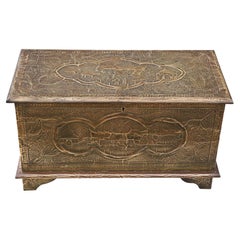
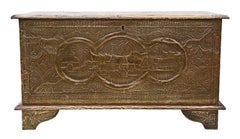
Antique Fine Quality Chinoiserie Chinese Brass Covered Camphor Wood Chest Coffer
Located in Wisbech, Cambridgeshire
Antique fine quality Chinoiserie or Chinese brass bound/covered camphor wood chest or coffer. So
Brass
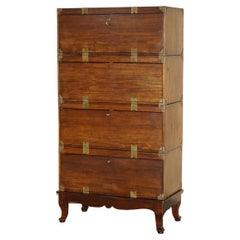
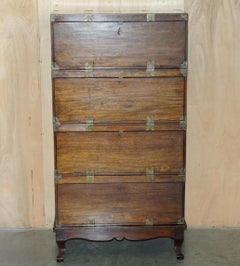
$10,843
H 75.6 in W 40.95 in D 21.26 in
FOUR RARE ANTIQUE ORIGINAL CHINESE EXPORT CIRCA 1880 STACKABLE CAMPAIGN CHESTs
Located in West Sussex, Pulborough
collectable, original Chinese export circa 1880 suite of four stackable campaign chests with the original
Brass
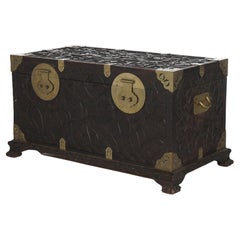
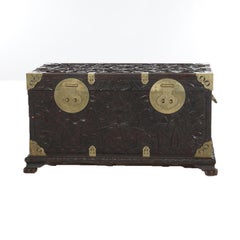
$1,920Sale Price|20% Off
H 24 in W 44 in D 24 in
Antique Chinese Blanket Wedding Chest Carved in Relief with Floral Design C1890
Located in Big Flats, NY
Chinese Blanket Wedding Chest Carved in Relief with Floral Design and Brass Hardware C1890 Measures- 24
Wood
$2,275Sale Price|30% Off
H 35.75 in W 22.5 in D 21.25 in
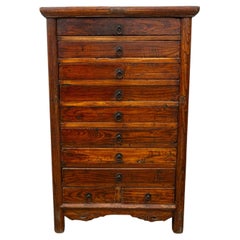
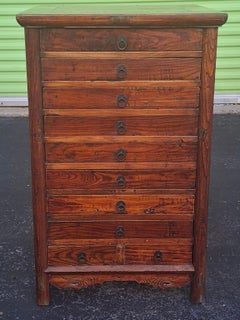
19th Century Chinese Lacquered Elmwood Ten Drawer Document Chest
Located in Germantown, MD
A Mid 19th Century Chinese Lacquered Elmwood Ten-Drawer Document Chest. Measures: 22.5" in width
Elm
$2,275Sale Price|30% Off
H 35.75 in W 22.5 in D 21.25 in
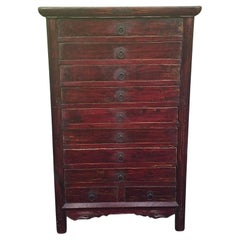
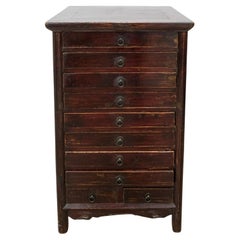
19th Century Chinese Lacquered Elmwood Ten Drawer Document Chest
Located in Germantown, MD
A Mid 19th Century Chinese Lacquered Elmwood Ten-Drawer Document Chest. Measures: 22.5" in width
Elm
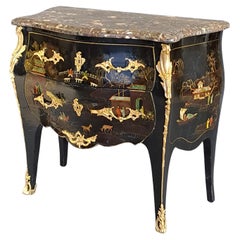
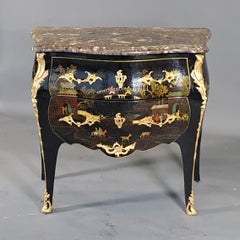
Louis XV Style Chest Of Drawers In Chinese Lacquer
Located in BARSAC, FR
bronze and magnificent animated lakeside decoration in Chinese lacquer. Topped with a beautiful molded
Wood
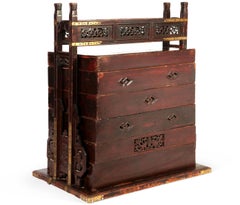
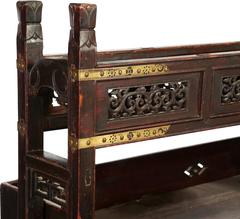
Chinese Carriage Box
Located in Sheffield, MA
19th century Northern Chinese carriage box with five stacking trays. Adorned with brass trim and
Wood
$3,773
H 33.08 in W 36.42 in D 19.69 in
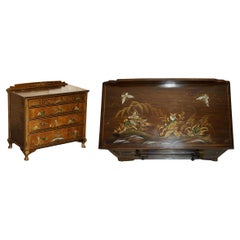
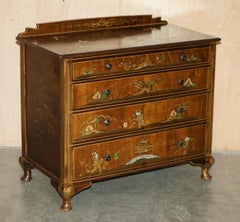
SUBLIME ANTiQUE EDWARDIAN 1910 CHINESE CHINOISERIE PAINTED CHEST OF DRAWERS
Located in West Sussex, Pulborough
circa 1910 Edwardian, Chinese hand painted with Pagoda's oak chest of drawers Please note the delivery
Wood, Oak
$5,419
H 34.26 in W 50.4 in D 20.87 in
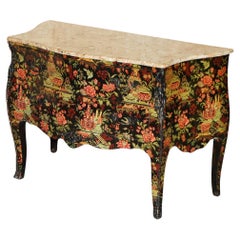
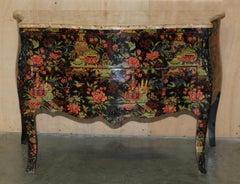
ANTIQUE CHINESE CHINOISERIE HAND PAiNTED COMMODE CHEST OF DRAWERS MARBLED TOP
Located in West Sussex, Pulborough
painted marbled topped Chinoiserie Chinese Chippendale taste bombe commode most likely made in France
Marble
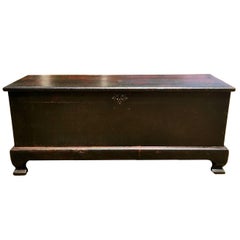
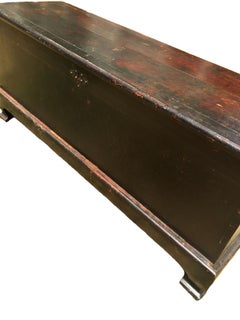
Monumental Antique Trunk Giant Blanket Chest
Located in Somis, CA
This is an extremely heavy, substantial, over scale trunk from Shan Xi province, China's ancient
Iron
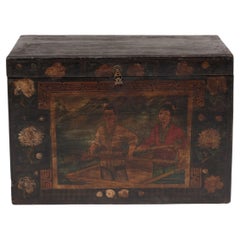
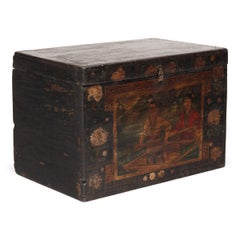
Chinese Painted Folk Trunk, c. 1900
Located in Chicago, IL
Trunks and storage chests were the most ubiquitous form of household storage throughout the Ming
Pine
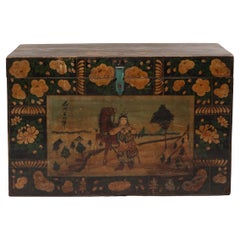
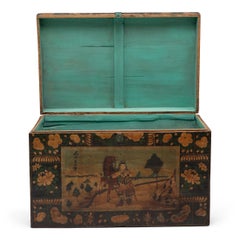
Chinese Painted Folk Trunk, c. 1900
Located in Chicago, IL
Trunks and storage chests were the most ubiquitous form of household storage throughout the Ming
Pine
$3,989
H 32.68 in W 49.61 in D 23.63 in
Crossbow Chest of Drawers in Wood with Grey Patina and Chinese Style Bronzes
Located in Saint-Ouen, FR
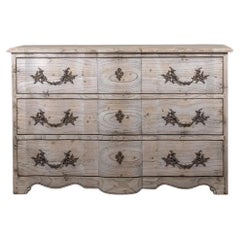
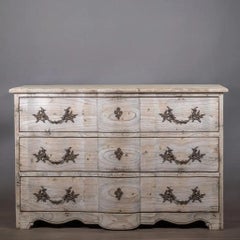
This commode arbalète in wood is a faithful reissue of a prestigious seventeenth-century model. Its facade is distinguished by a characteristic curved shape known as a crossbow front...
Bronze
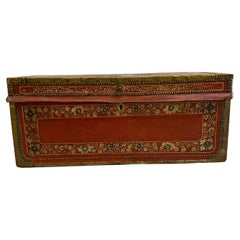
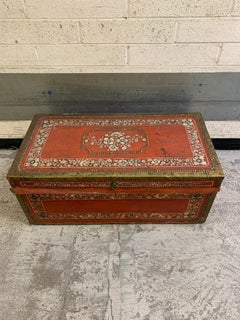
19th century Chinese red leather Camphor trunk
Located in London, GB
Chinese Export red leather trunk, brass bound with hand painted border decoration, over a carcass
Leather
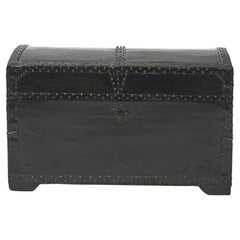
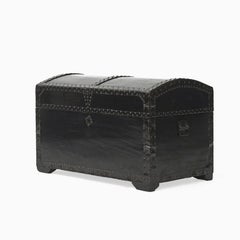
18th Century Wooden Chest with Black Lacquer
Located in Kastrup, DK
Original 18th century wooden chest with black lacquer. Edges with iron band, lid covered with iron
Iron
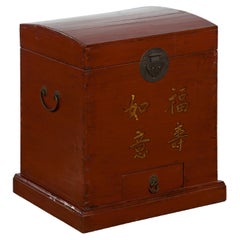
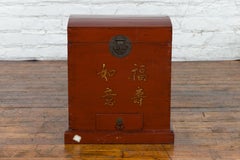
Qing Dynasty Red Lacquer Treasure Chest with Gilded Calligraphy
Located in Yonkers, NY
An antique Chinese Qing Dynasty period red lacquer treasure chest from the 19th century with gilded
Brass
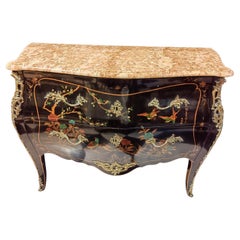
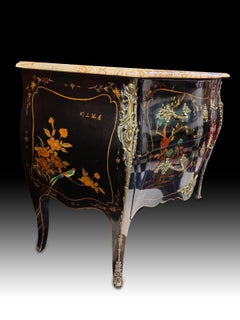
Chinese Commode 20th Century
Located in Madrid, ES
Chinese commode early twentieth century. Black lacquered and decorated to asian taste. Signed. Good
Bronze
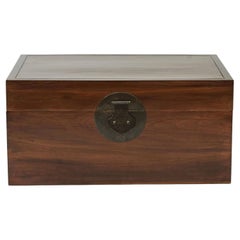
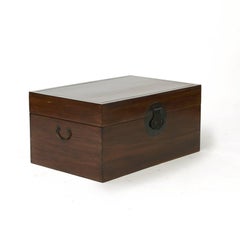
Antique Camphor Wood Chest, Jiangsu Province, C 1900
Located in Kastrup, DK
Camphor wood chest with round metal fittings. Jiangsu Province ca. year 1900. The chest is
Metal
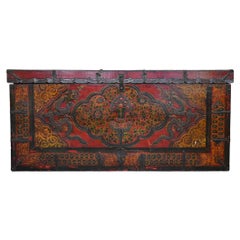
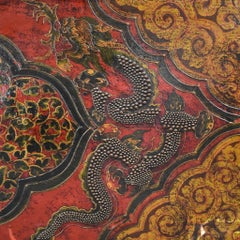
Antique Hand-Painted and Lacquered Chinese Shanxi Trunk
Located in Pittsburgh, PA
Beautiful Mid-19th Century Chinese Shanxi Trunk hand crafted from elmwood and featuring hand
Iron
$1,829
H 17.75 in W 35 in D 18.5 in
1920s Camphor Wood Blanket Chest with Brass Hardware and Natural Patina
Located in Yonkers, NY
An antique Chinese camphor wood blanket chest from the early 20th century, with brass hardware
Brass
19th Century Northern Chinese Chest
Located in Bedford, NY
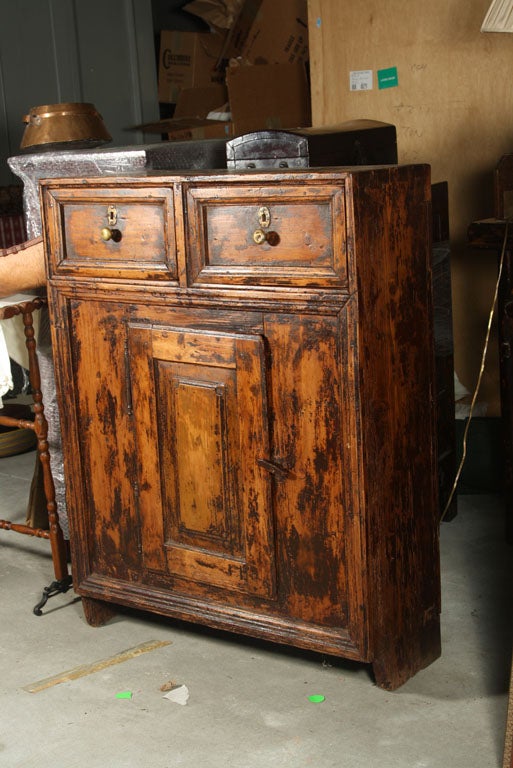
UNUSUAL CHINESE CHEST OF ELM WOOD...MUST HAVE BEEN PAINTED OVER WOOD AND IT WORN OFF IN TIME
Wood
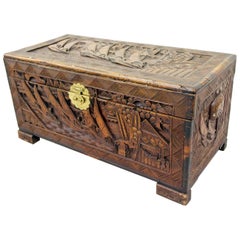
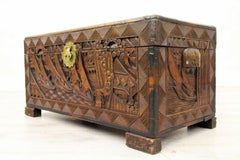
Antique China Chest Sandalwood Hand Carved Coffee Table
Located in Lage, DE
Very beautiful antique china chest of sandalwood, hand-carved. Dimensions: Height x 46cm, width x
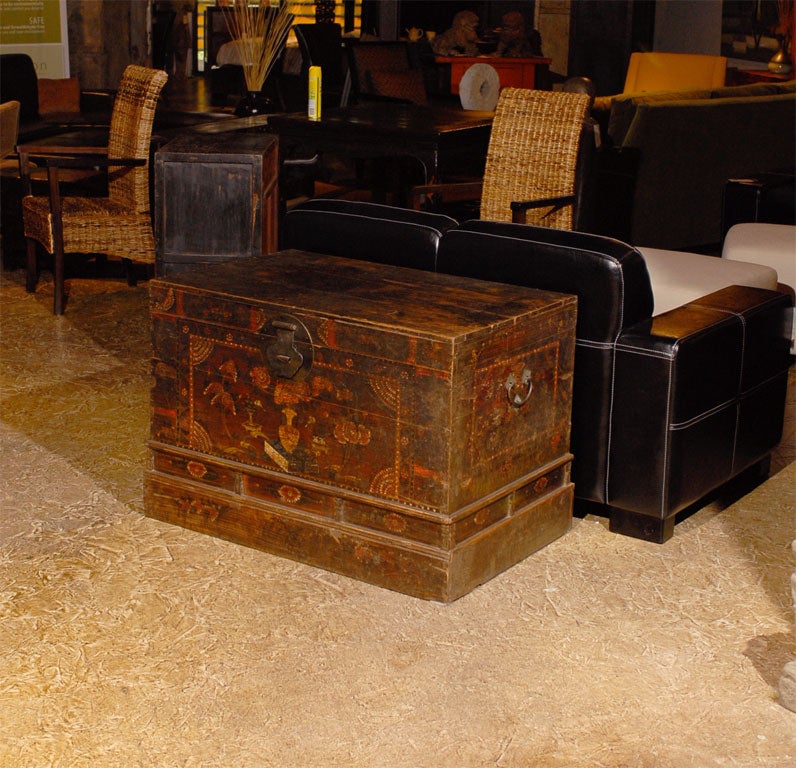
Chinese chest from the Shanxi Province
Located in Atlanta, GA
This Shanxi chest is a true one-of-a-kind piece. It was originally used for clothing/blanket
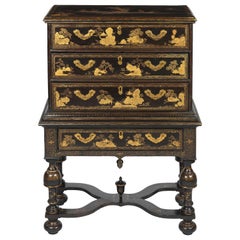
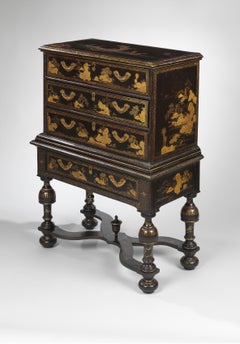
Early 18th Century Chinese Chest on Stand
Located in London, Middlesex
An exceptionally rare and probably unique early 18th century Chinese lacquer chest. The top section
Lacquer
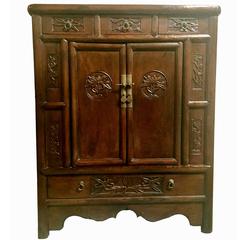
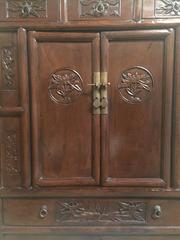
Antique Chinese Chest with Carved Peonies
Located in SOMIS, CA
This special chest dates back to 19th century. Its use of wood, construction and overall style
Wood
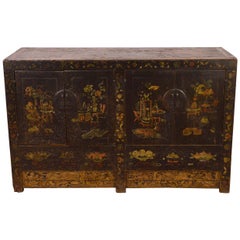
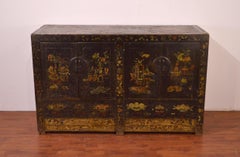
Mid-19th Century Northern Elm Chinese Chest
Located in CILAVEGNA, IT
This is another variation of the double chest, characteristic of the four-side-square construction
Elm
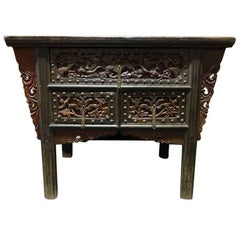
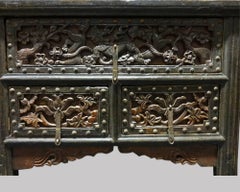
Chinese Carved Elm Chest of Drawers
Located in Applyby Magna, Staffordshire
A very good carved elm Chinese chest of three drawers, all with unusual metal locks, metal studs
Elm
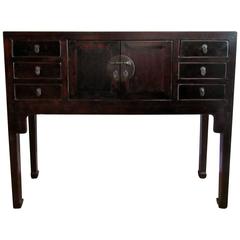
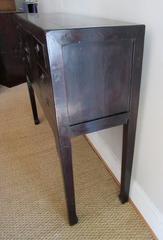
Chinese Lacquered Sideboard, Late 19th-Early 20th Century
Located in Washington, DC
High Chinese chest or sideboard with six small drawers and centre storage cabinet. Stunning dark
Elm
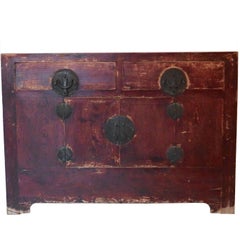
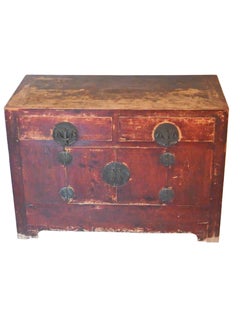
Chinese Buffet, circa 1900
Located in Schoten, BE
Painted Chinese chest with two-drawers and doors. Original paint and bronze hardware. Because of
Bronze
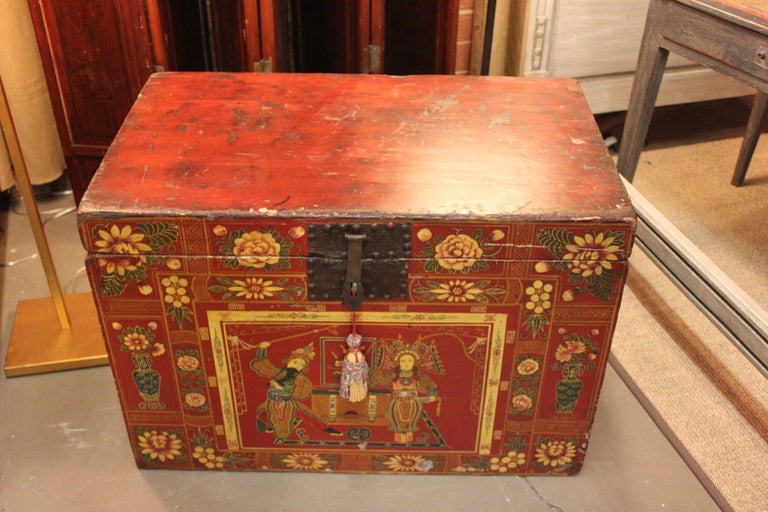
19th Chinese Opera Chest-Trunk
Located in Charlotte, NC
Beautiful, 19thc Chinese Opera chest.
Iron, Metal
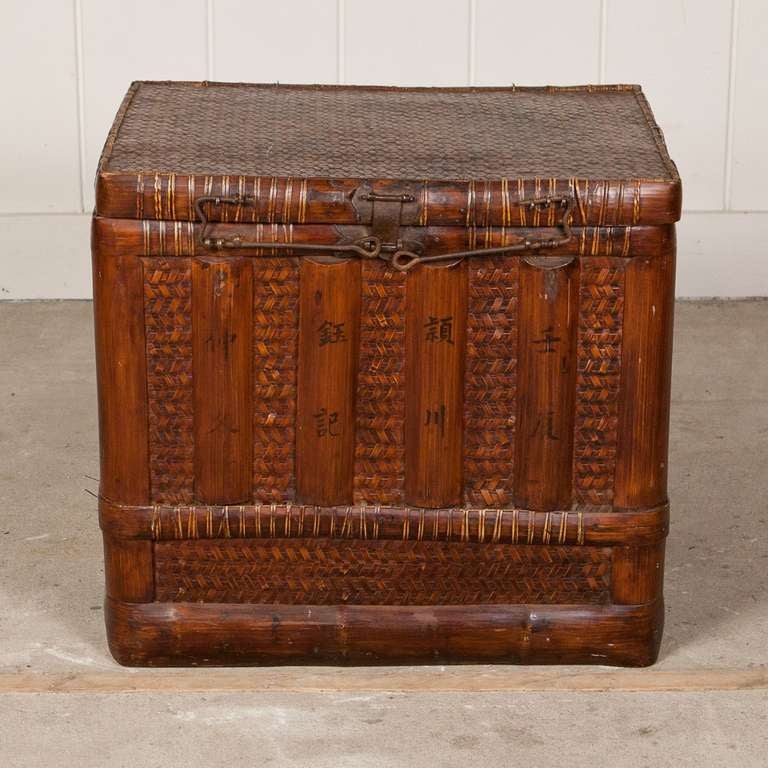
Mr. Rosselli's Antique Chinese Traveling Chest
Located in New York, NY
Antique Chinese traveling chest. Woven Bamboo. From the personal collection of John Rosselli and
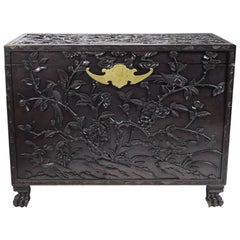
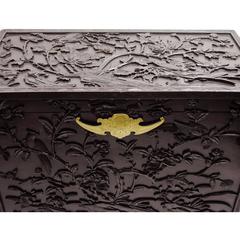
Antique 19th Century Chinese Carved Softwood Blanket Chest
Located in Concord, MA
Chinese carved softwood blanket chest, 19th century. Elaborately carved with bird and floral
Softwood
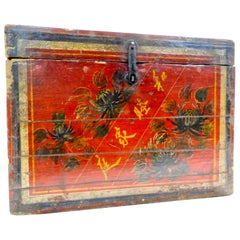
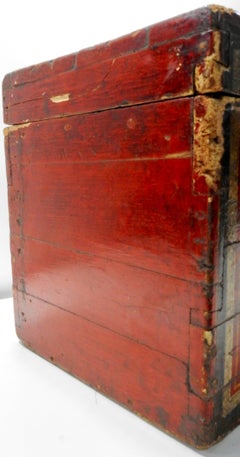
Chinese Storage Chest Hand Painted, Late 19th Century
Located in Cookeville, TN
Vibrant red sings on this stunning wooden box from the 19th century. It is highlighted with flowers in black and gold along with the edges trimmed in these colors. There is a metal c...
Iron
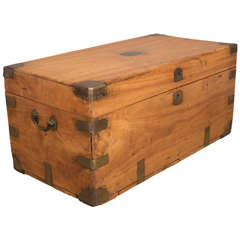
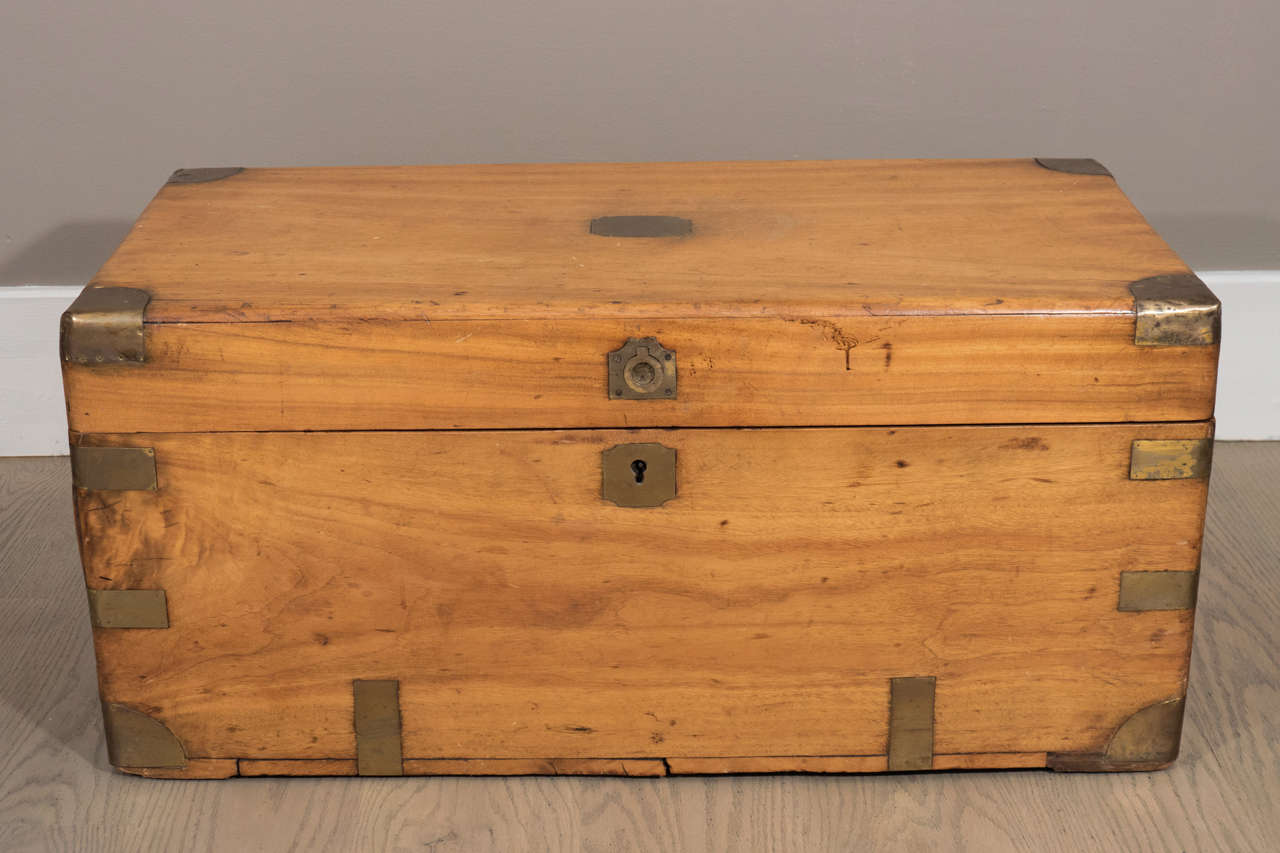
Chinese Export Camphorwood Sea Chest or Campaign Trunk
Located in Long Island City, NY
The rectangular lidded top with brass-mounted edges and sides with brass pull handle and lock, brass side handles.
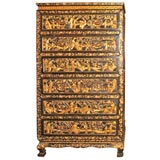
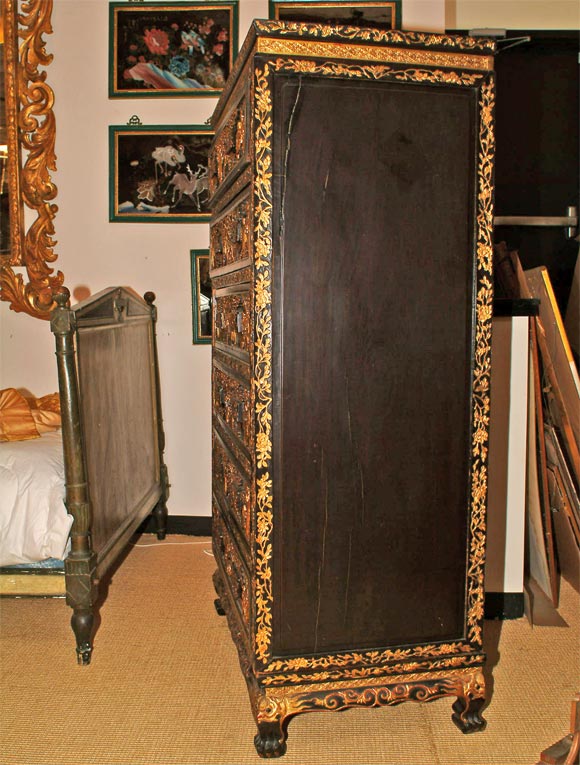
Chinese Export Tall Chest of Drawers
Located in Santa Rosa, CA
Great carved and painted tall dresser or commode on stand. Some of the drawers are divided into sections on the interiors.
Gold Leaf
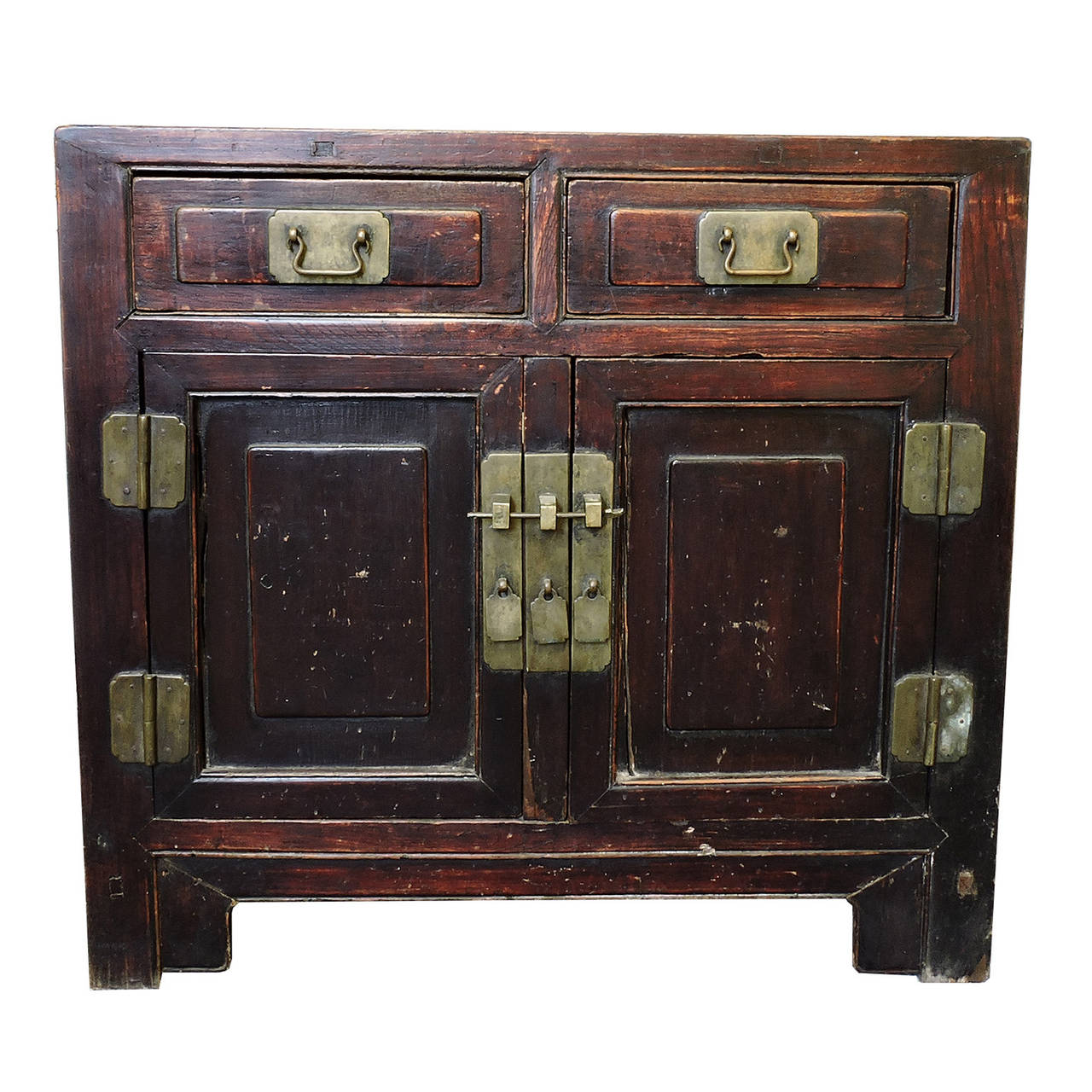
Chinese Elmwood Two-Drawer Chest, Early 19th Century
Located in Concord, MA
Chinese elmwood chest, with two drawers over double cabinet doors and brass hardware, early 19th
Antique Chinese Hand-Carved Camphor Chest Trunk
Located in Potters Bar, Herts
Gorgeous antique Chinese camphor wood trunk or luggage chest Very intricately hand-carved with a
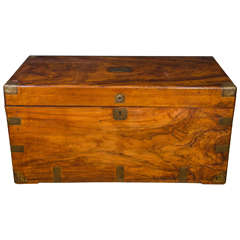
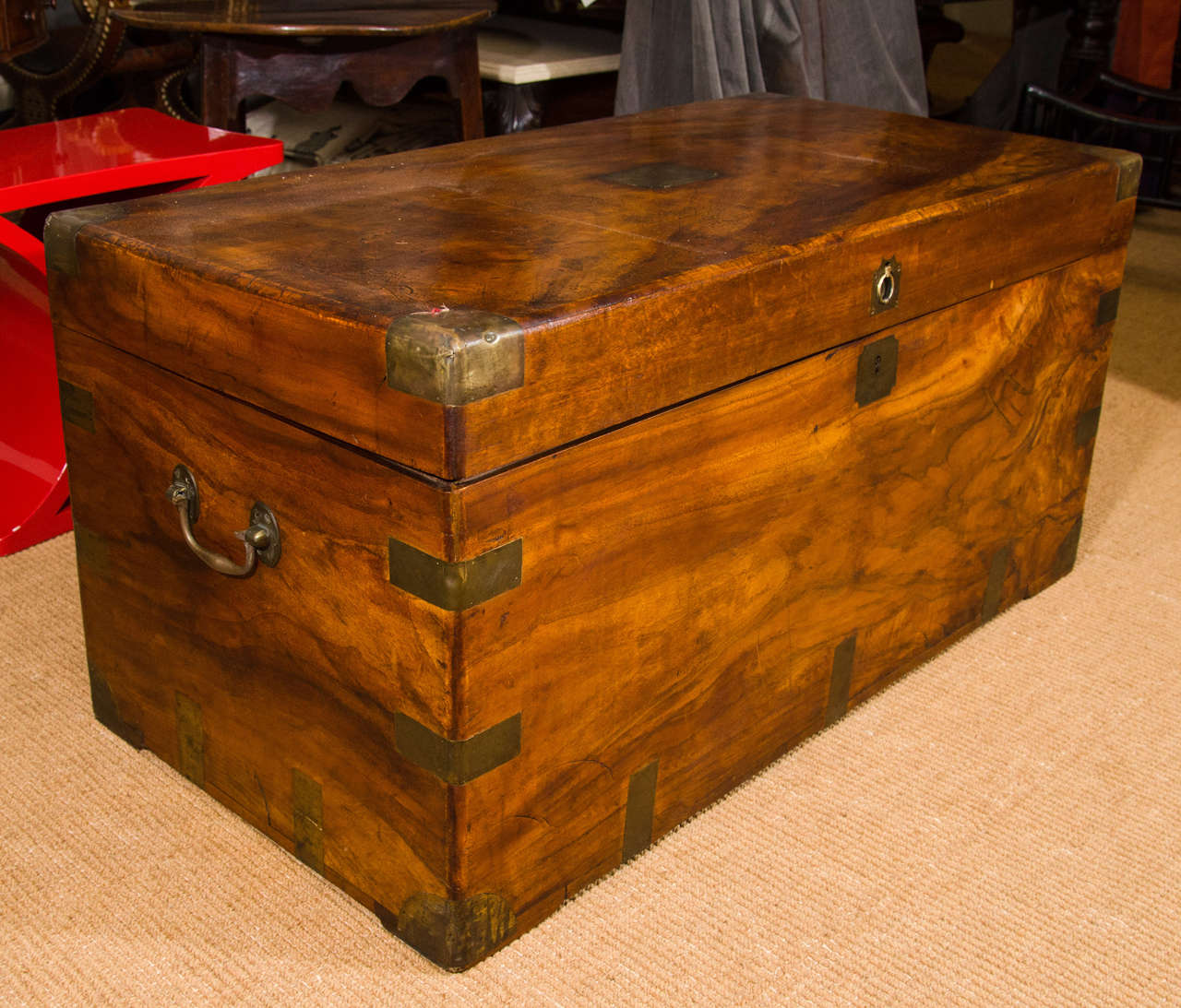
A Large Chinese Export Camphorwod Sea Chest or Campaign Trunk
Located in Long Island City, NY
The rectangular lidded top with brass-mounted edges and sides with brass pull handle and lock, brass side handles
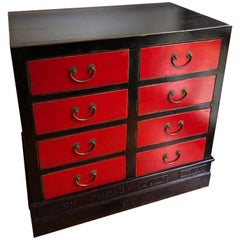
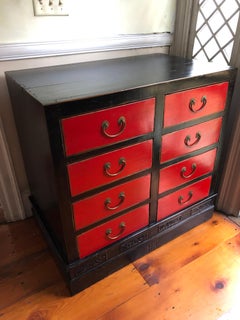
Chinese Provincial Red and Black Lacquered 8-Drawer Chest
Located in Hudson, NY
8-drawer Chinese provincial red and black lacquer chest of drawers. Brass drawer pulls. Each drawer
Wood
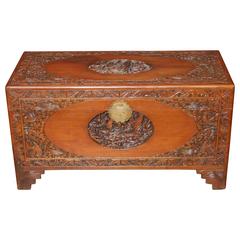
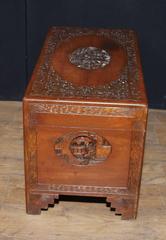
Antique Chinese Carved Camphor Wood Chest Luggage Trunk Table
Located in Potters Bar, Herts
Gorgeous antique Chinese camphor wood luggage trunk or box. Very intricately cast, very well

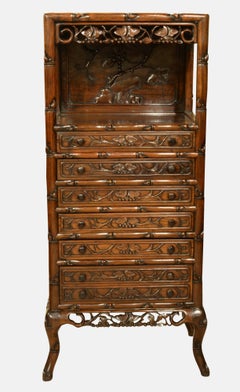
Early 19th Century Chinese Hardwood Tall Chest
Located in Salisbury, GB
An early 19th century Chinese hardwood 7 drawer tall chest. With display stand at top and heavily
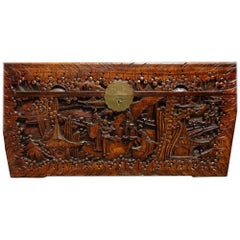
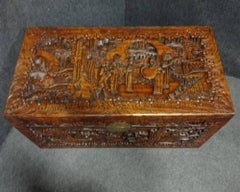
Unavailable
H 20 in W 41 in D 20 in
Carved Oriental Camphor Wood Chest, Ottoman, Coffer, Blanket Chest
Located in Applyby Magna, Staffordshire
A very good carved Chinese camphor wood chest, carved on all sides, very good color and condition
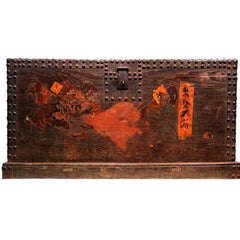
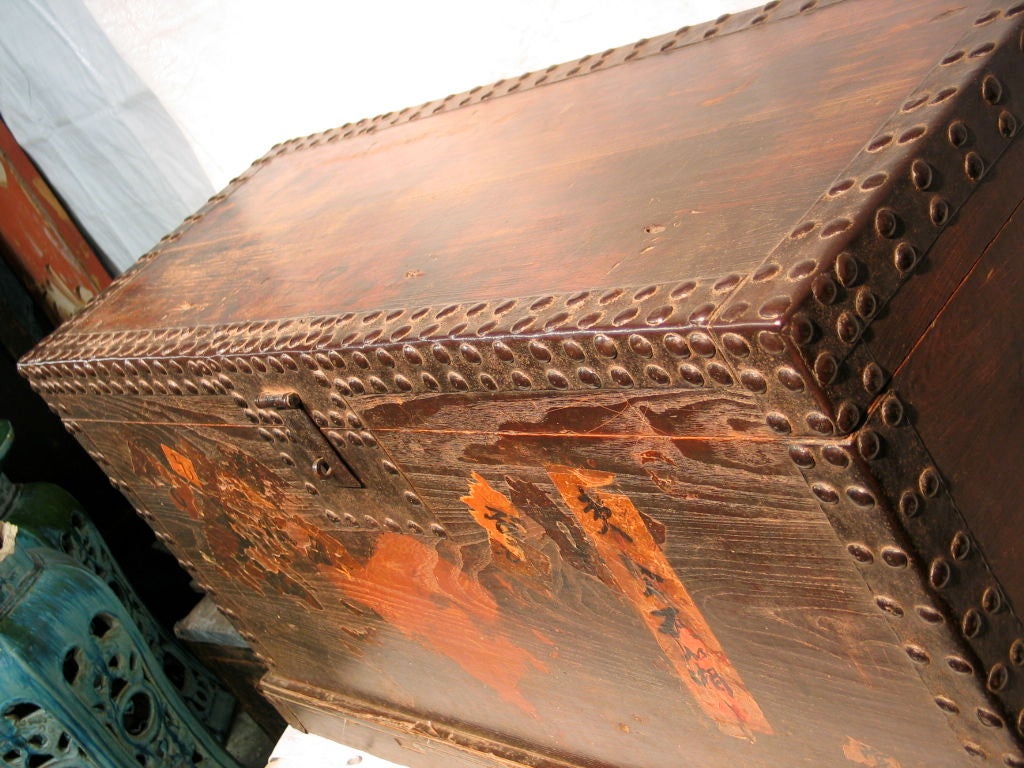
Large Temple Chest
Located in Westport, CT
A large, well-made, studded temple chest in exceptional condition. See photos.


19th Century Blanket Chest
Located in Morristown, NJ
19th century Chinese storage chest of Poplar wood.
Poplar
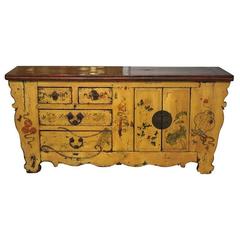
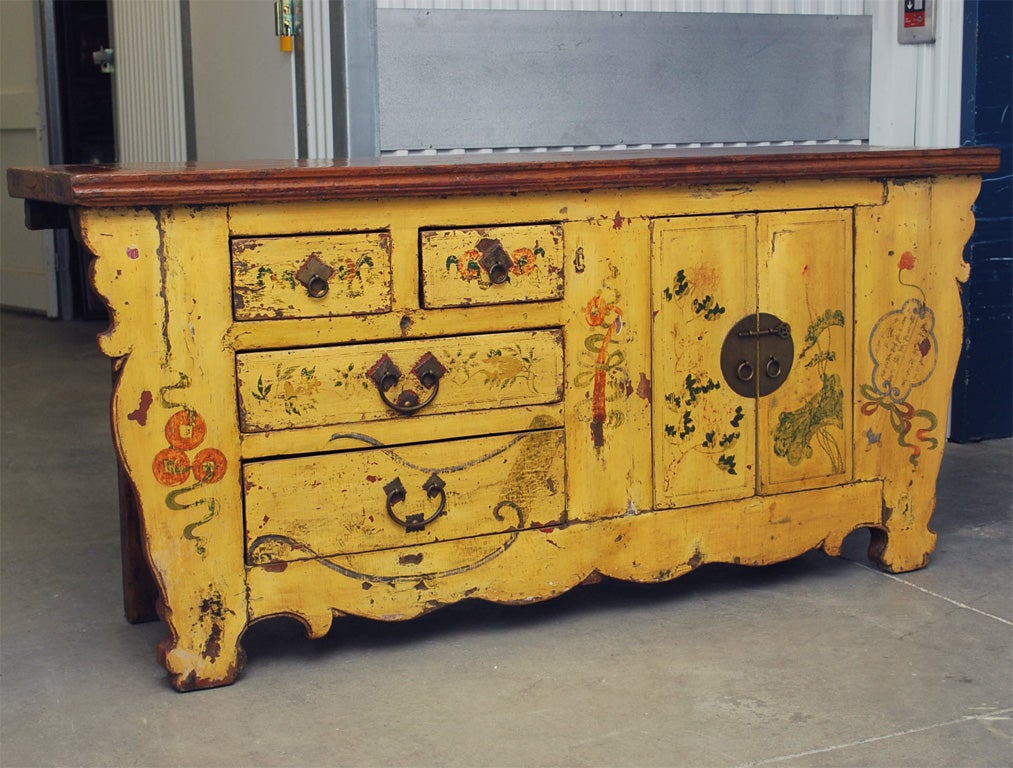
Chest
Located in East Hampton, NY
Mid-late 19th century Q'ing Dynasty golden painted Shandong chest.
Brass

Ming Chest
Located in New York, NY
Ming Elm Chest with restored drawers.
Unavailable
H 11 in W 13 in D 6 in
Pair of Chinese Antique Bamboo Chest Drawers Mini Travelling Samples, 1880
Located in Potters Bar, Herts
Gorgeous pair of Chinese antique mini chests of drawers crafted from bamboo. Wonderful pair of
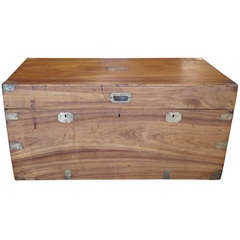
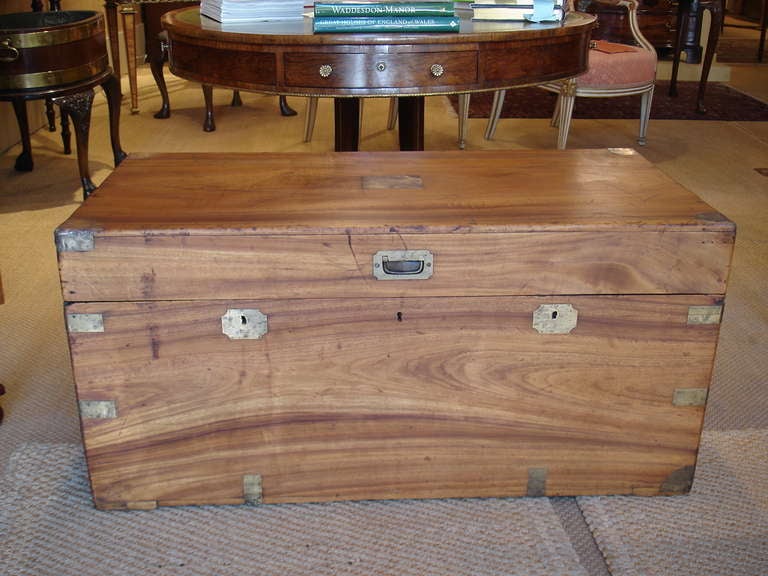
Export Camphor Brass-Mounted Chest of Large Size
Located in Fresno, CA
A camphorwood brass-mounted storage chest of large size. The solid plank exterior of wonderful
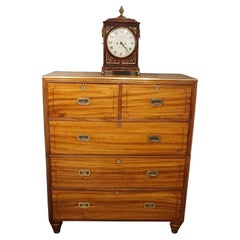
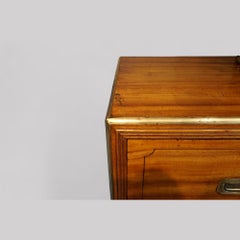
Victorian camphorwood military chest
Located in Salisbury, GB
Victorian camphorwood military chest This Victorian camphorwood military chest was made circa 1890
Hardwood
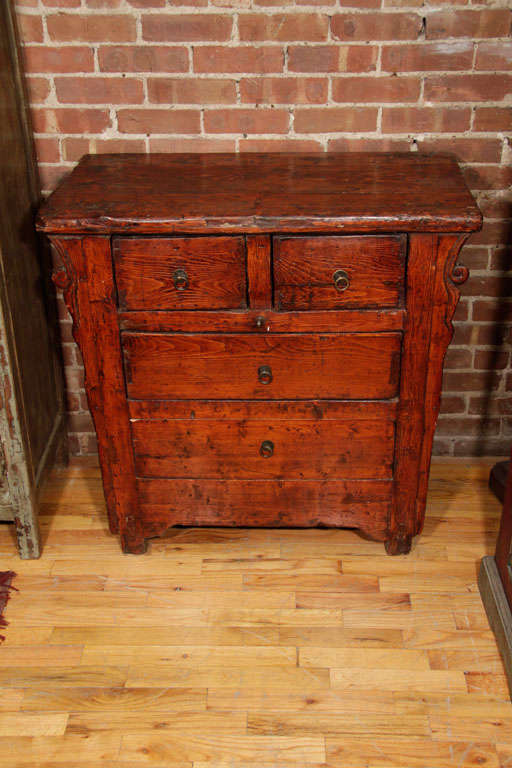
Elmwood Chest of Drawers
Located in New York, NY
Rustic Elmwood Chest of Drawers
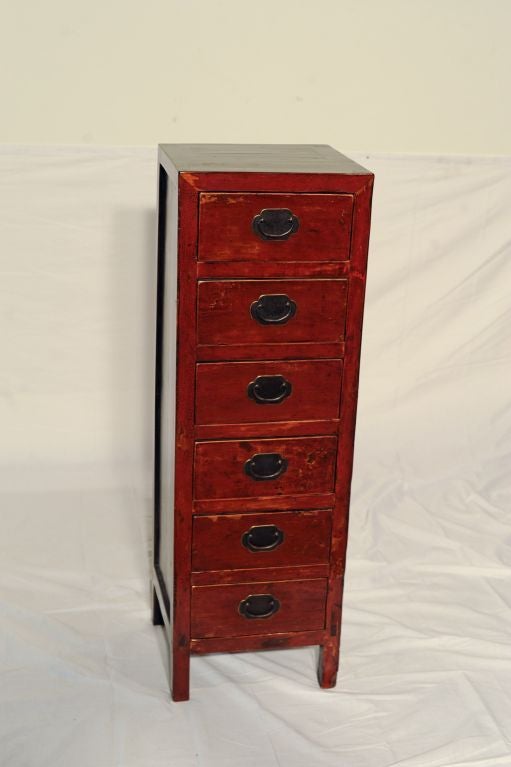
Oriental Chest of Drawers
Located in Morristown, NJ
Oriental chest of drawers
Elm
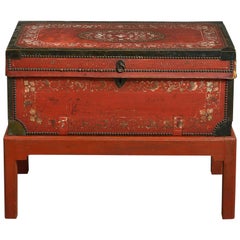
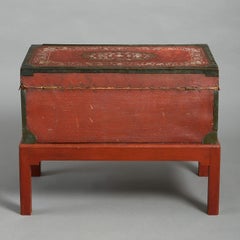
18th Century Chinese Export Painted Leather Trunk
Located in London, GB
Camphor-lined and with brass borders and nailing, painted with floral panels and borders on a sealing-wax red ground; on a later conforming, red-painted stand.
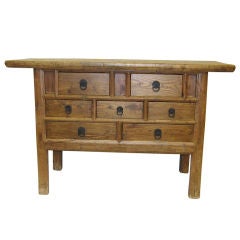
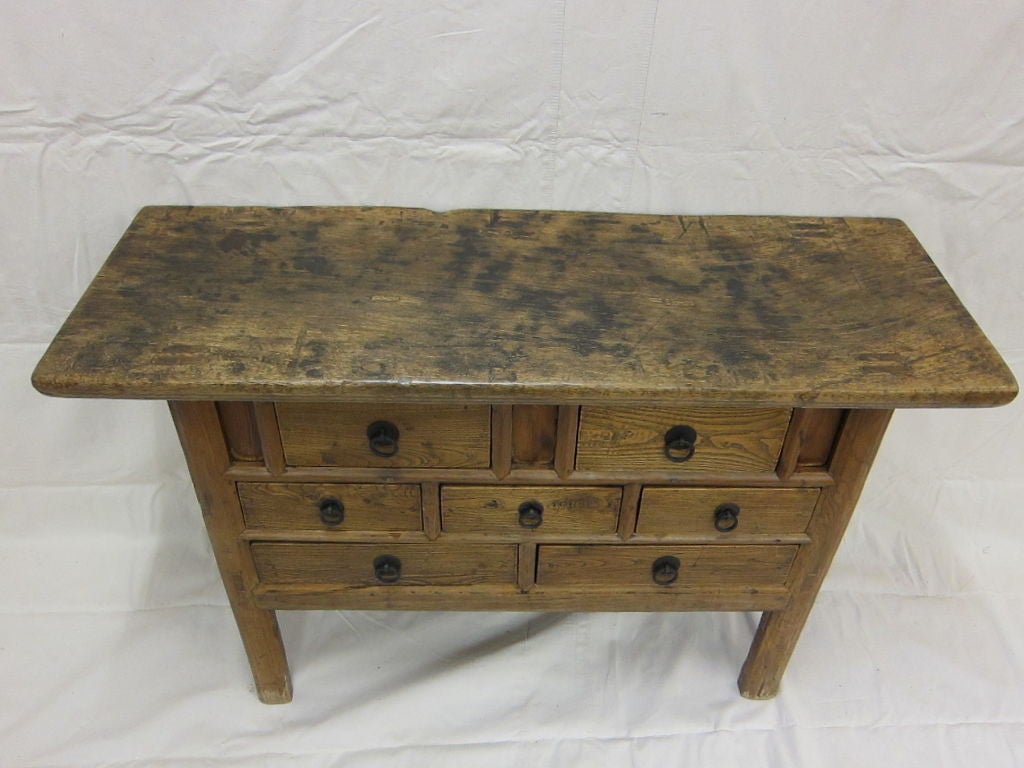
Chinese Provincial Seven Drawer table
Located in Morristown, NJ
19th century Provincial Elm Wood seven drawer table. Chinese table.
Elm
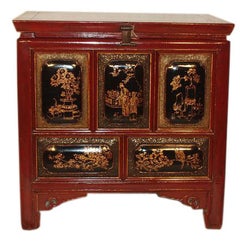
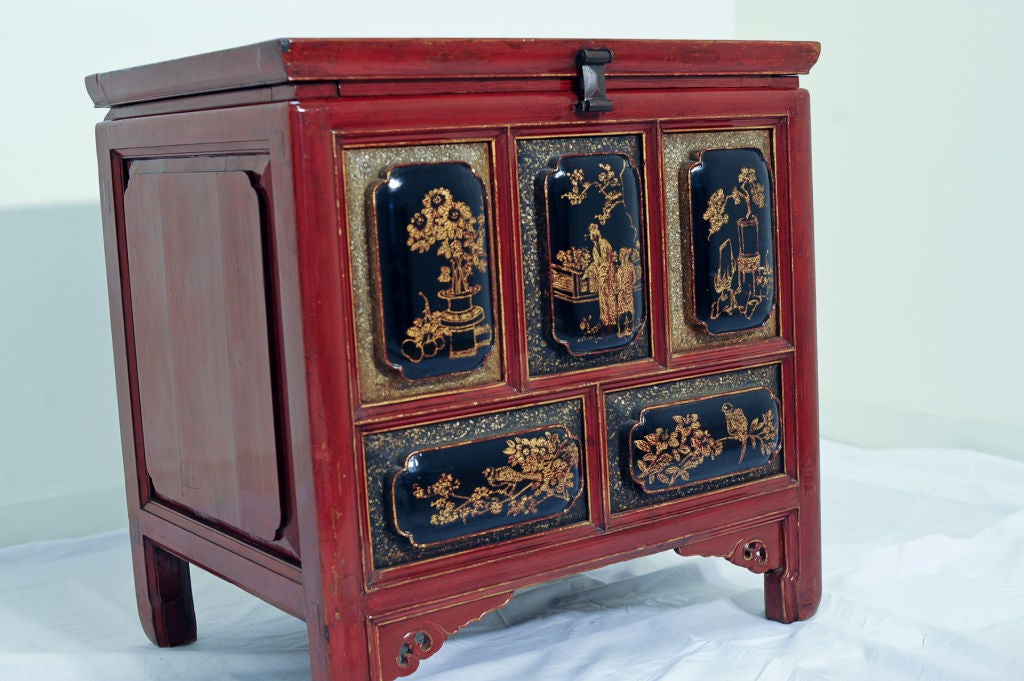
Antique 19th Century Lacquered And Carved Chest
Located in Morristown, NJ
Antique 19th Century Lacquered And Carved Chest
Elm
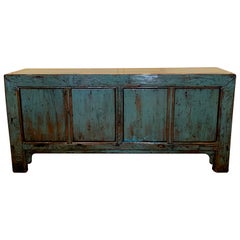
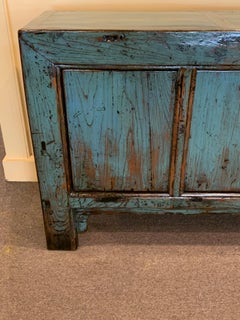
Antique Chinese Blue Lacquer Side Cabinet
Located in New Orleans, LA
Antique Chinese blue lacquer side cabinet from the Shandong Province.
Wood
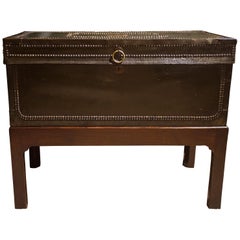
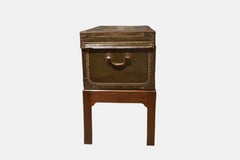
19th Century Chinese Export Leather and Brass Coffer
Located in Salisbury, GB
An early 19th century export leather and brass bound coffer/trunk with original lining paper, now raised on an oak stand.
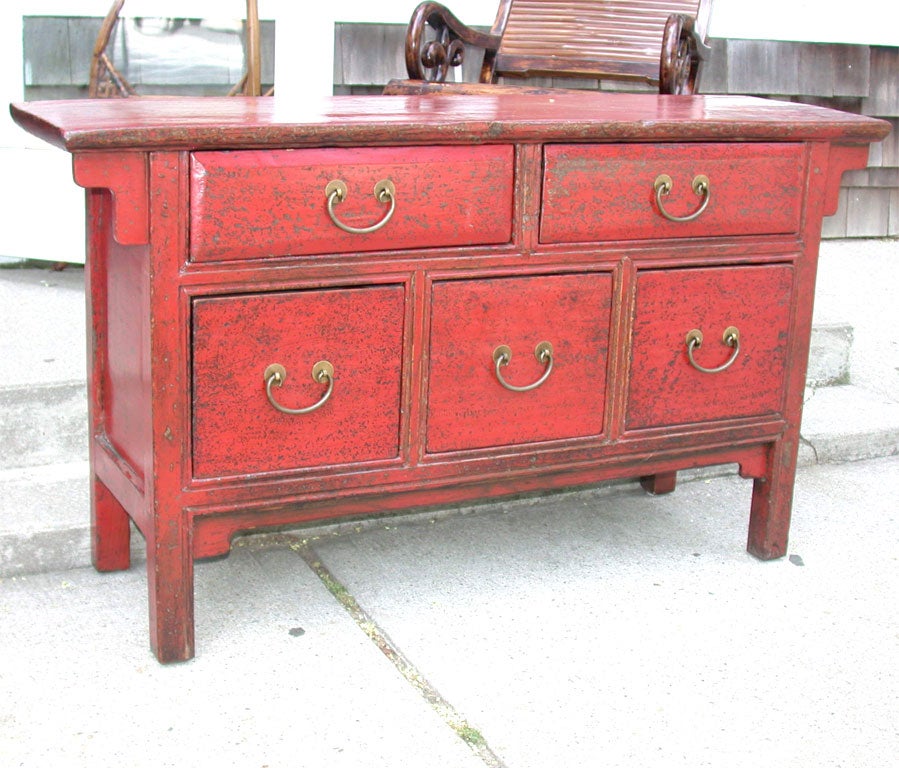
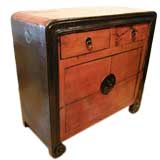
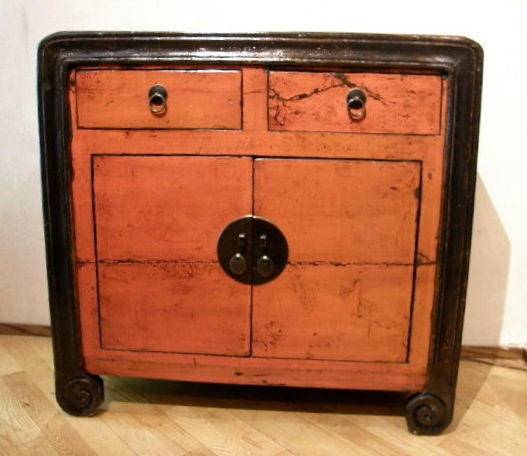
Late 19thC. Q'ing Dynasty Shanxi Red Lacquered 5 Drawer Chest
Located in East Hampton, NY
Late 19th century Qing dynasty Shanxi five drawer chest of drawers with brass pulls.
Elm
Unavailable
H 33.5 in W 35 in D 17 in
Pair Chinese 19th Cent. Shanxi lacquer Bed Side or Sofa Cabinets
Located in New York, NY
Pair of Chinese ca 1840-50 Shanxi lacquer water fall cabinets with its original red & black lacquer
Wood
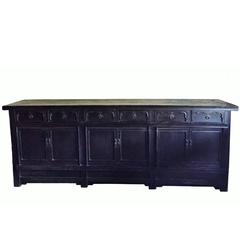

Monumental Chinese Antique Chest
Located in SOMIS, CA
Substantial, extra long chest from Northern China from the 19th century. Commanding at 9'8" wide
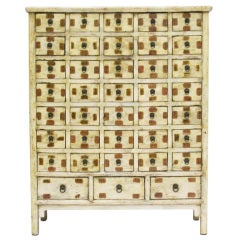
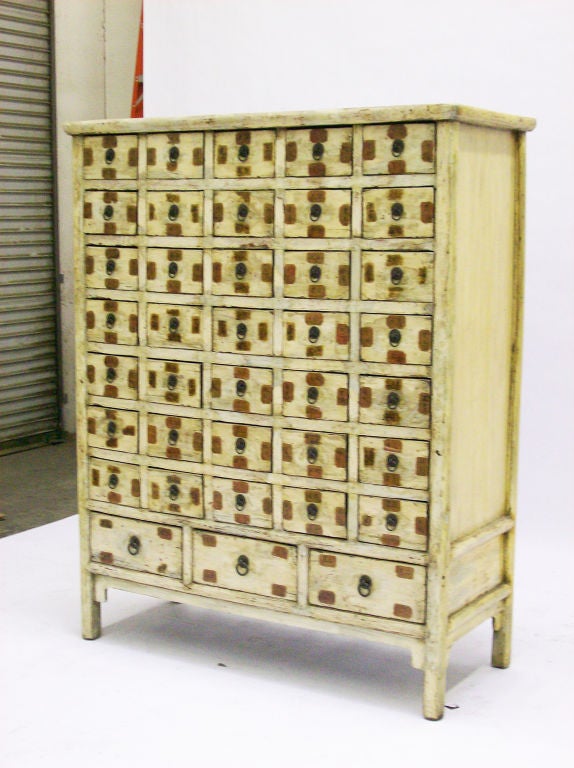
Lacquered Chinese Apothecary Chest
Located in Plainville, KS
Light Lacquered Apothecary Chest with 38 drawers from Shanxi, China c. 1850. Elm construction with
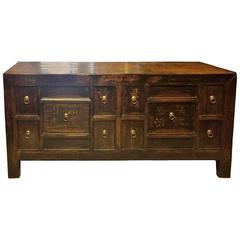

Antique Chinese Harvest Chest
Located in SOMIS, CA
make the drawer pulls. Such a chest is typical of Chinese Northern style. It was often used to
Wood
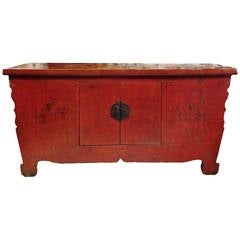
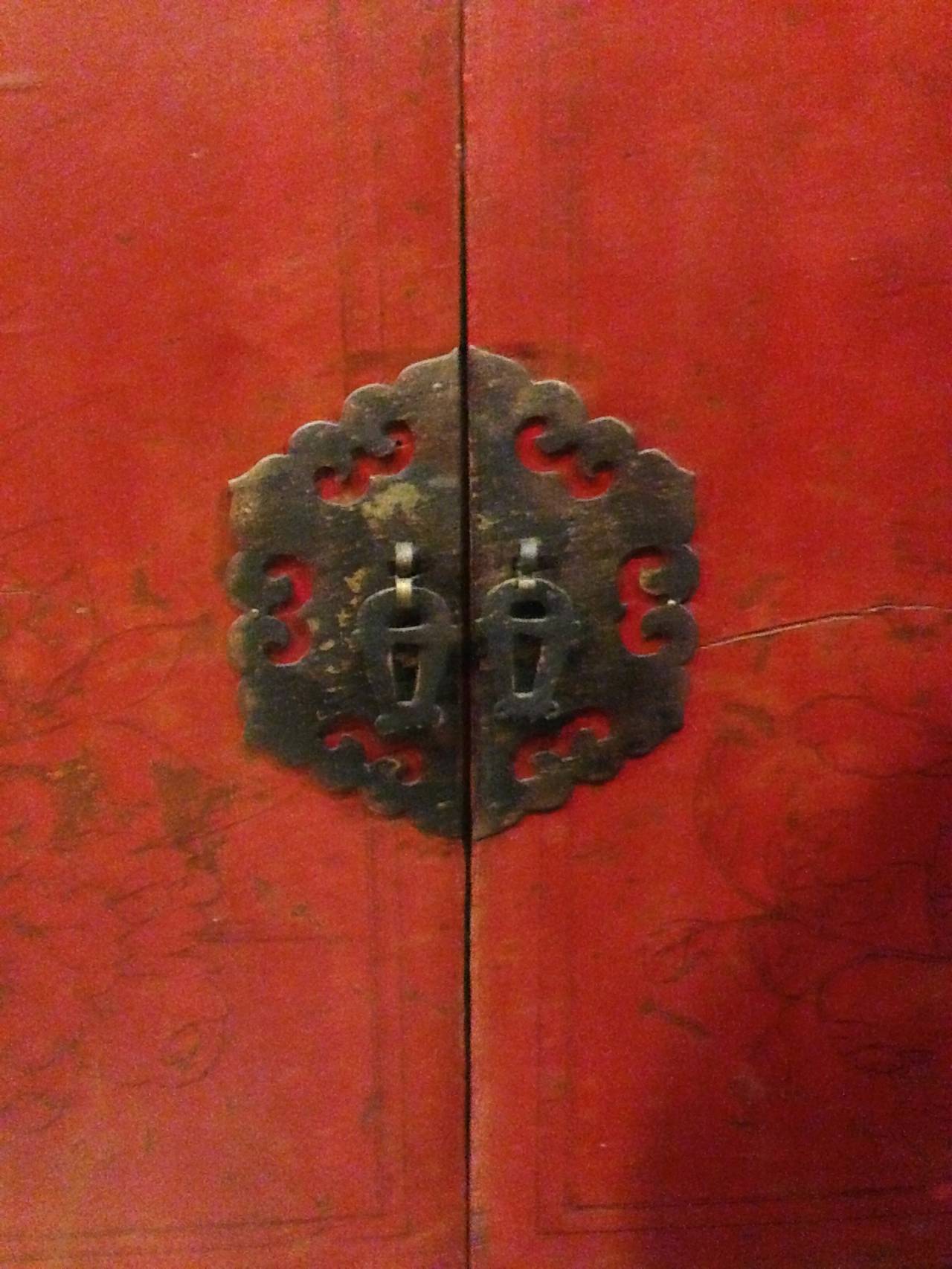
Chinese Antique Cinnabar Chest
Located in SOMIS, CA
This gorgeous cinnabar lacquered chest is so named for the Chinese Harmony God featured on its
Wood
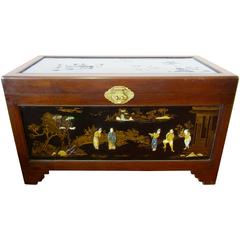
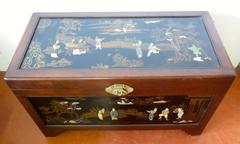
Chinese Camphor Wood Chest
Located in Fossano, IT
A Camphor wood chest. Black lacquered with Chinese landscape and inlaid with soapstone, mother-of
Soapstone, Brass
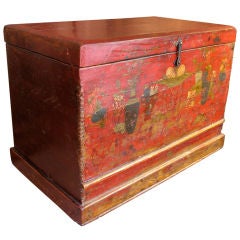
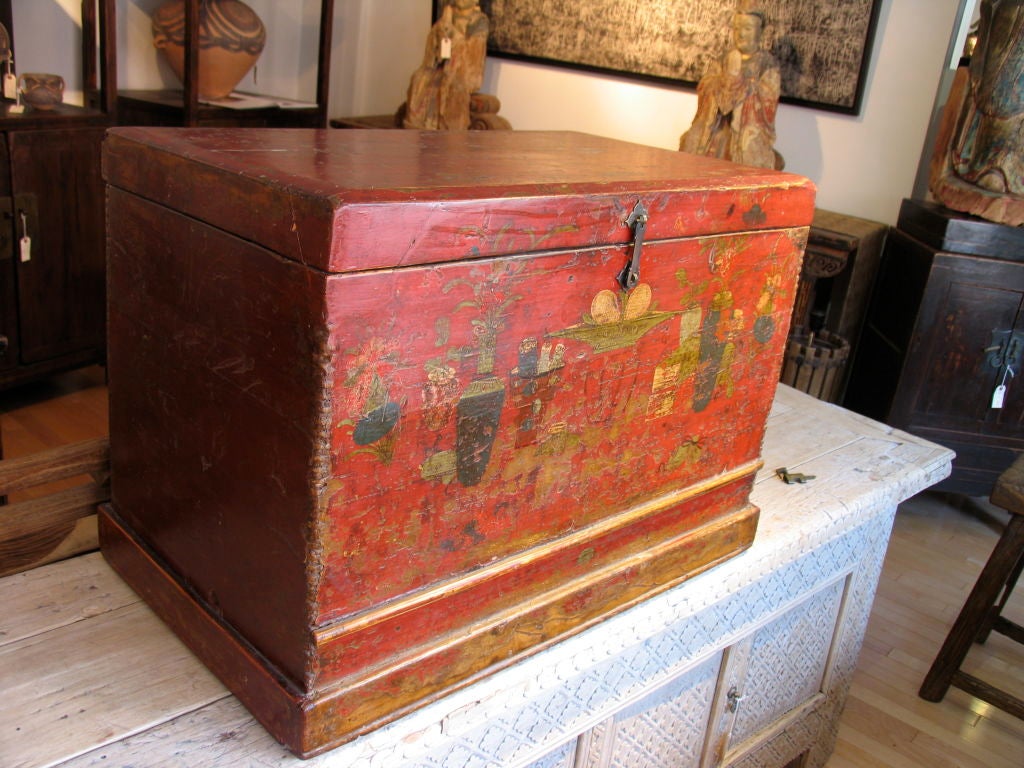
Painted wooden trunk
Located in Westport, CT
A beautifully painted wooden trunk from Northern China with a "build-in platform" design.
Pine
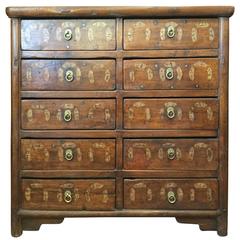
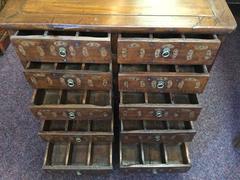
19th Century Chinese Apothecary Chest
Located in Santa Fe, NM
With ten drawers this well preserved chest is a unique example. Unlike most apothacary chests this
Elm
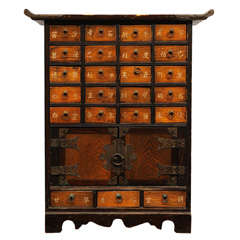
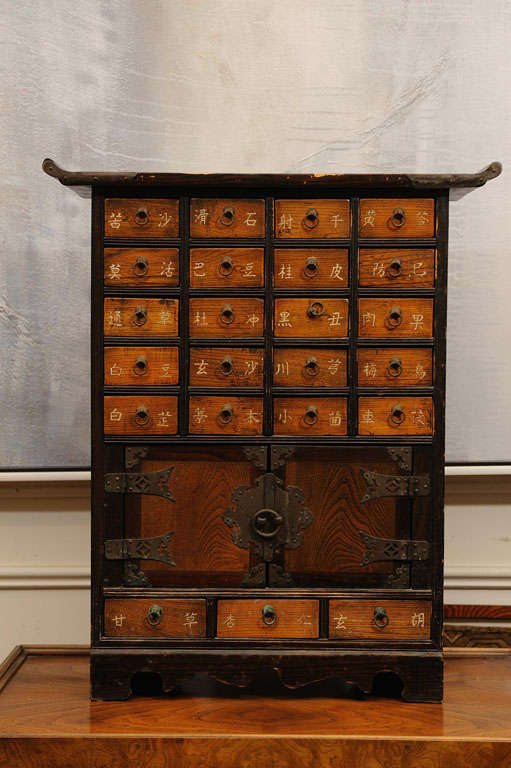
Small Chest / Chinese Medicine Cabinet
Located in Toronto, ON
Adorable Small Chest with 23 little drawers and cupboard. The interior of the cupboard's
Metal
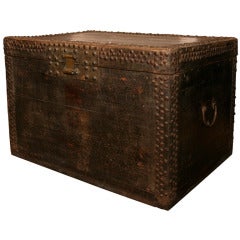
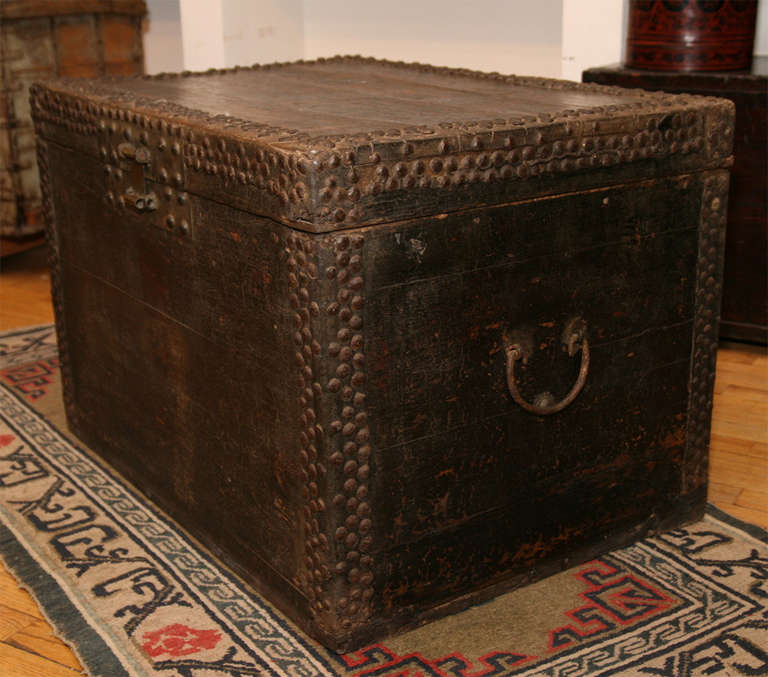
Elmwood Trunk with Iron Fittings
Located in Brooklyn, NY
Elmwood trunk with original iron studding and fittings. For more photos, contact dealer.
Iron
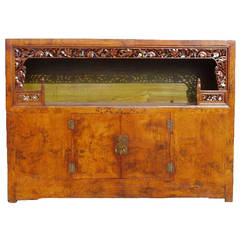
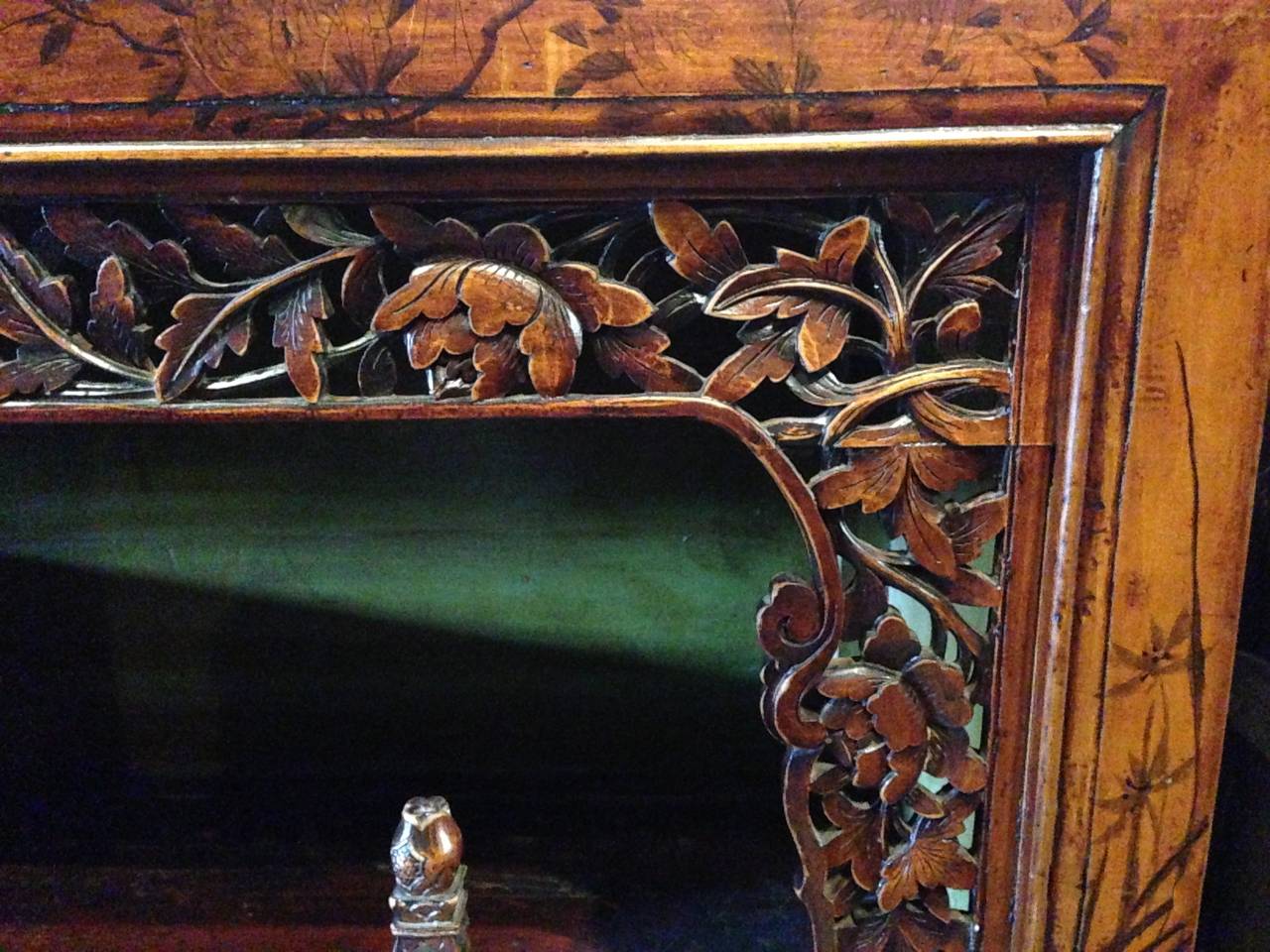
Chinese Antique Scholar's Chest, Bookcase
Located in SOMIS, CA
otherwise heavy chest with a sense of airiness. Carved, multidimensional peonies are the focal point of this
Wood
Unavailable
H 88.98 in W 44.49 in D 26.78 in
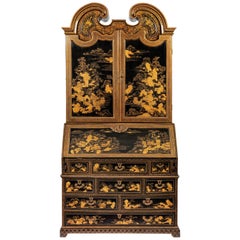
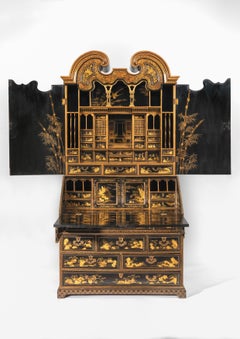
Very Fine and Rare Chinese Export Black and Gold Bureau Cabinet
Located in London, Middlesex
was described in an inventory as a black lacquered Chinese chest of drawers with a secretary desk and
Lacquer
Chinese Ice Chest on Stand
Located in Los Angeles, CA
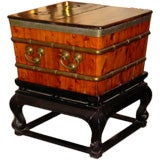
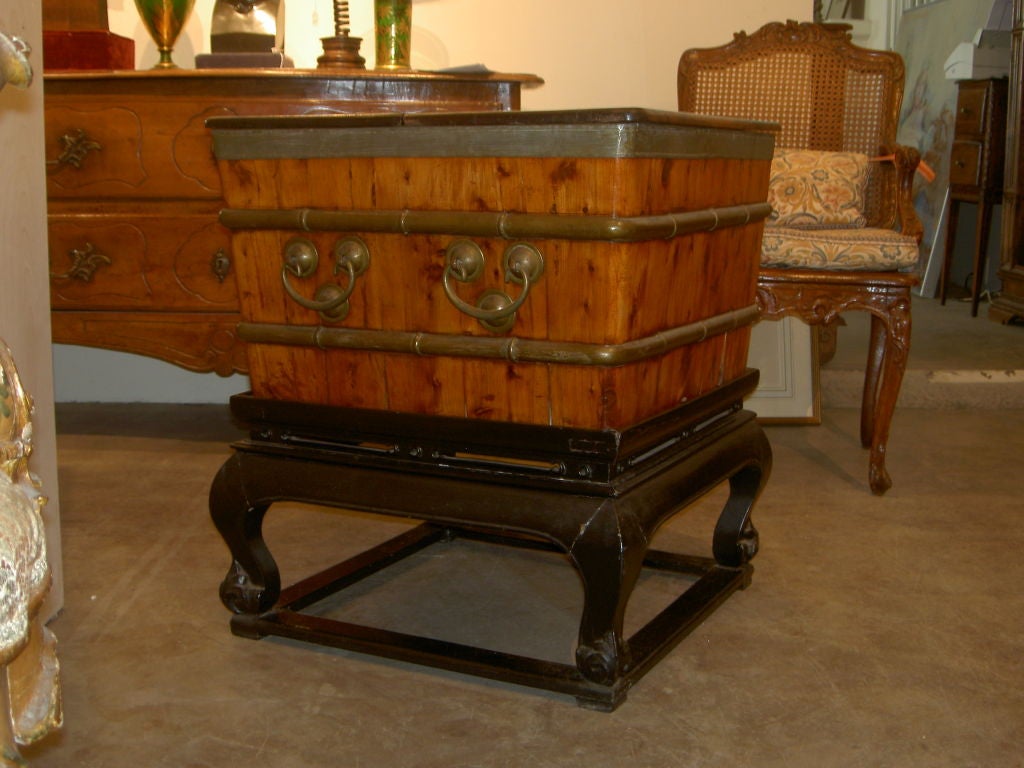
In the Ming style, brass mounted with open carry handles, the pewter lined interior covered by two planks, one with open ventilation holes, the black lacquered stand with short legs ...
Pewter
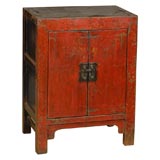
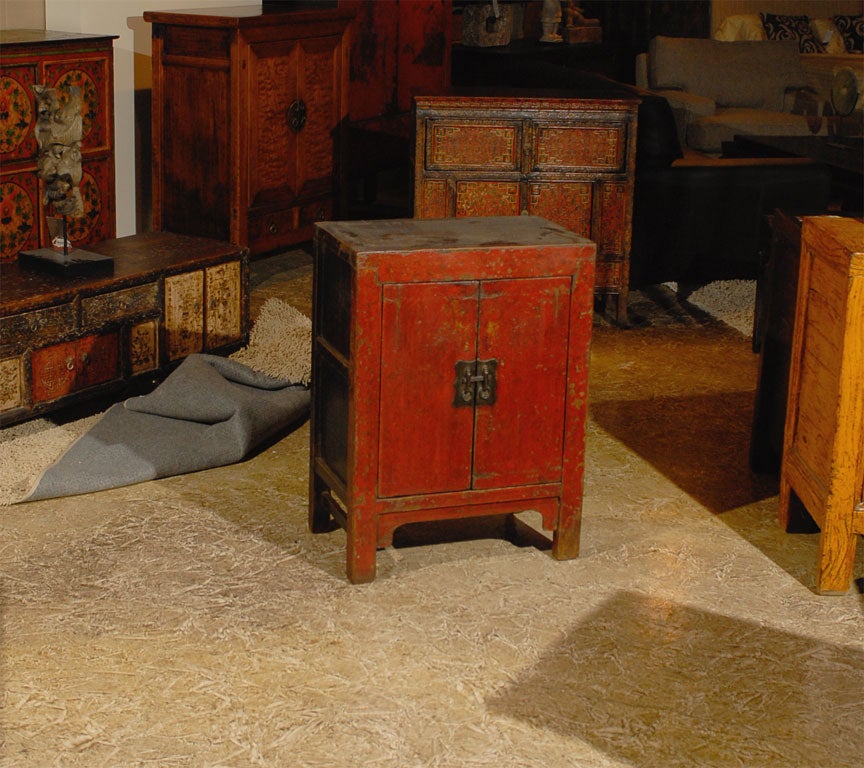
Small red chest from Shanxi, China
Located in Atlanta, GA
This smallish red Shanxi chest is gorgeous. Only the hardware is not original. Notice the patina
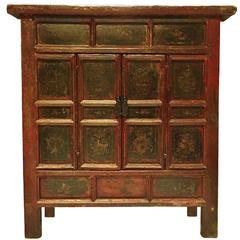
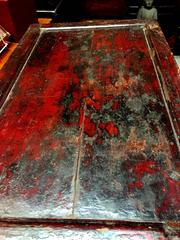
18th Century Treasure Chest, Northern China
Located in SOMIS, CA
This beautiful chest features 18 painted panels. Each of the panel depicts an auspicious symbol
Bronze
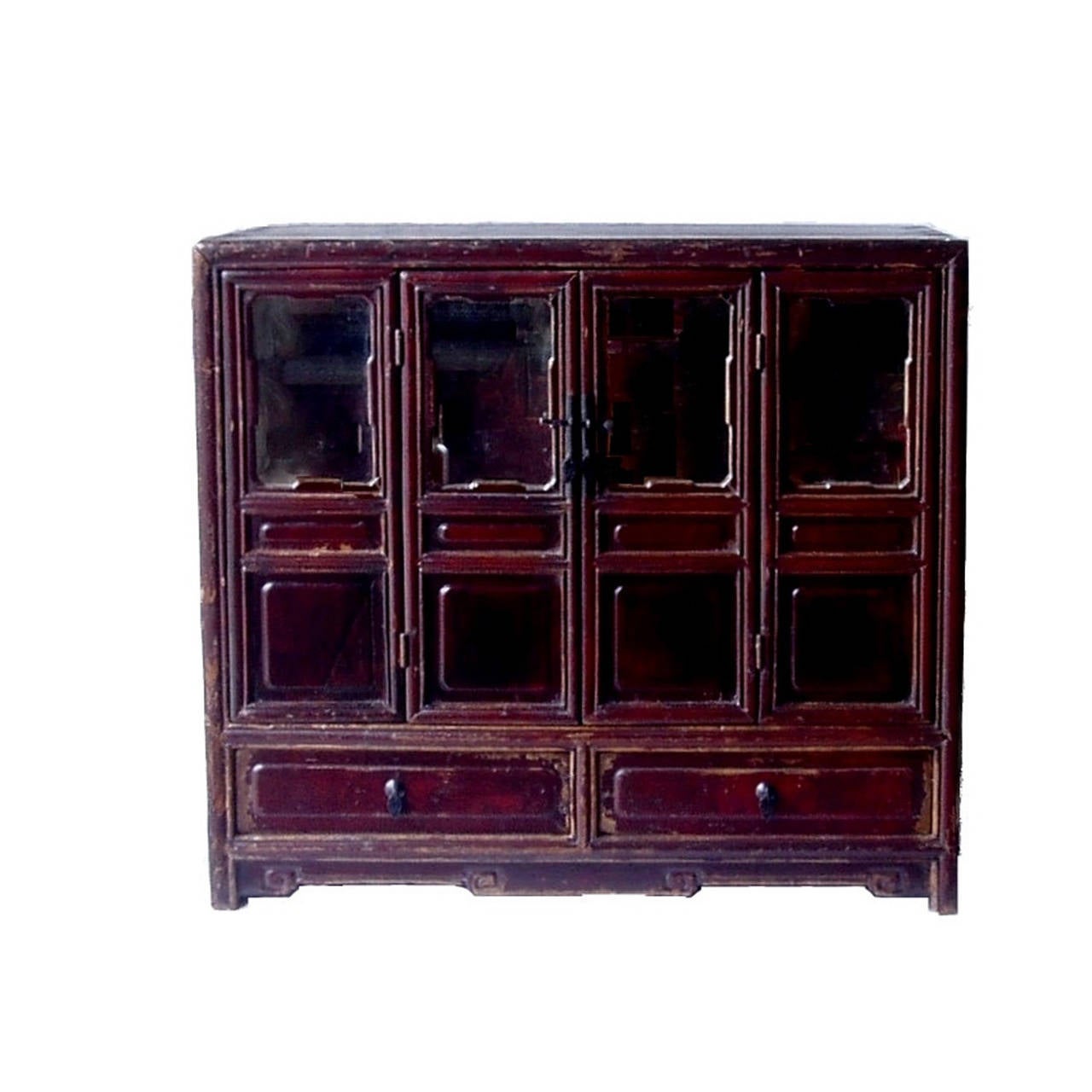
Chinese Antique Kang Treasure Chest with Mirrors
Located in SOMIS, CA
In Northern China, a brick and clay platform bed named "Kang" is the most important interior
Wood
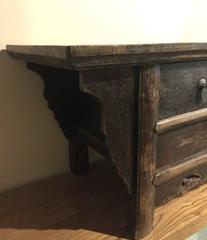
Chinese Antique Low Meditation Table or Chest
Located in SOMIS, CA
This wonderful low chest is the perfect table for your meditation room, excellent as a stand for a
Wood
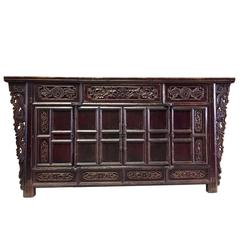
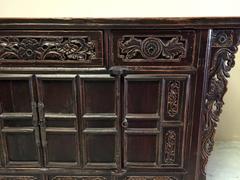
Carved Chinese Antique Chest, Shan Xi Province
Located in SOMIS, CA
This extraordinary chest feature elaborate carvings of dragon and flowers. Its oversize scale
Wood
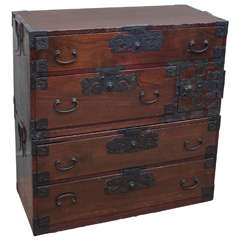
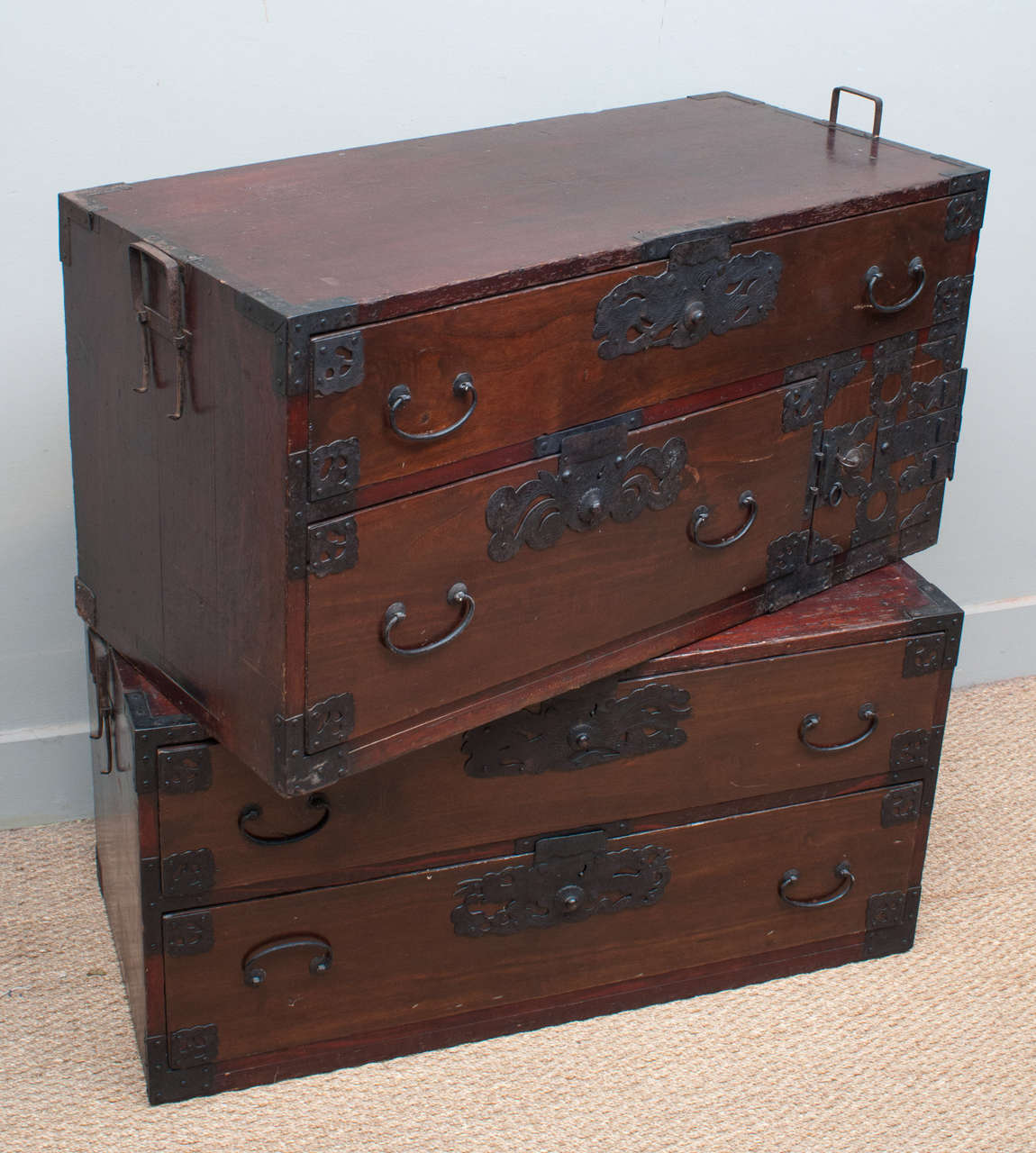
19th Century Japanese Kimono Tansu
By Japanese Studio
Located in Washington, DC
Striking two section, kiri wood tansu with hand forged iron and bronze decorative hardware. chest
Bronze, Iron
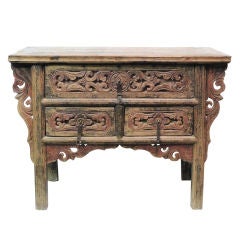
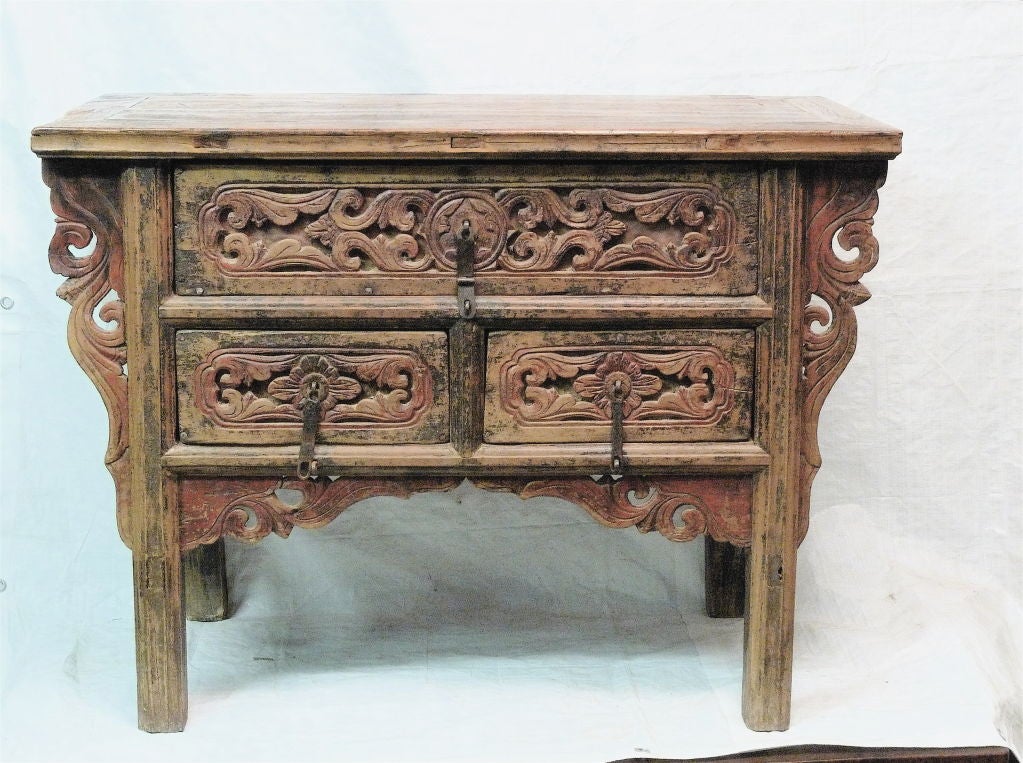
18th Century Coffer table in excellent condition.
Located in Westport, CT
Exceedingly rare old table cabinet from Northern China. Excellent condition. Elm wood construction
Elm
$9,800
H 4 in W 11 in D 15 in
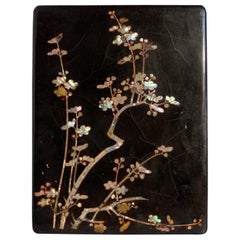
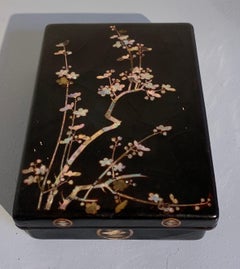
Japanese Momoyama Period Black Lacquer and Mother of Pearl Box, 16th Century
Located in Austin, TX
A fine and unusual Japanese black lacquer and mother of pearl inlaid box, Momoyama Period, 16th century, Japan. The large box and cover featuring a design of blossoming plum bran...
Lacquer, Abalone
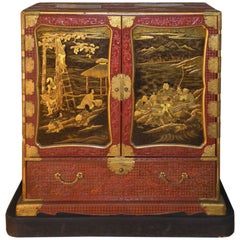
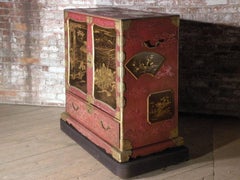
Chinese Money Chest in Black Lacquer and Gilt Decoration
Located in Dallas, TX
A Chinese black lacqured chest with gilt decoration was originally used to hold gold coins. This highly decorative cabinet is beautiflly decorated with multible children in various s...
Wood
$385,000
H 38 in W 36 in D 21 in
Japanese Lacquer and Cinnabar "Samurai" Cabinet, Inaba Family, Edo Period
Located in Troy, NY
Exceptionally large and rare lacquer cabinet. According to the heraldry, visible on the headgear in one of the panels, it was made for the Inaba family, a high ranking Daimyo family,...
Bronze
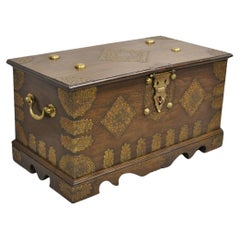
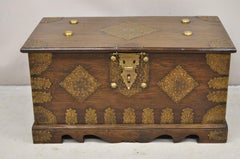
$2,650
H 18 in W 35.5 in D 18.5 in
Antique Oak Wood & Brass Mounted Damascus Coffer Blanket Chest Trunk
Located in Philadelphia, PA
Antique Oak (possibly walnut) Wood & Brass Mounted Damascus Coffer Blanket Chest Trunk. Item features solid wood construction, beautiful wood grain, copper and brass decorative mount...
Brass
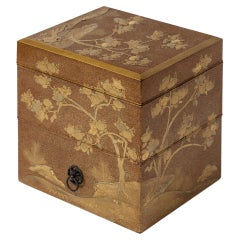
Japanese Lacquered Tebako 'Box'
Located in PARIS, FR
Tebako box with three compartments in golden and nashi-ji lacquer, decorated with golden, red, and kirigane lacquer, golden persimmon tree leaves, among rocks. The compartments are o...
Lacquer
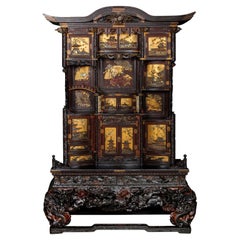
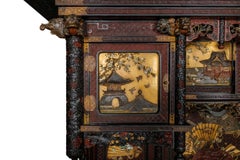
$574,500
H 84 in W 56 in D 20 in
An Imperial Japanese Meiji Shibayama Tea Cabinet by The Tokugawa Samurai Clan
Located in Long Island City, NY, NY
An Imperial Japanese Meiji Shibayama Tea Ceremony Cabinet by The Tokugawa Samurai Clan. This extraordinary Meiji-period shibayama cabinet, attributed to the Tokugawa samurai clan, s...
Mother-of-Pearl, Wood, Lacquer
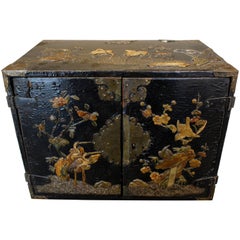
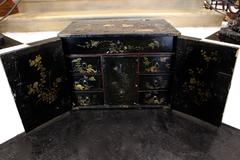
$4,800
H 11 in W 15 in D 10 in
Small Chinese Black Lacquered Wood Cabinet with Raised Traditional Scenery
Located in Palm Desert, CA
A late 18th century small Chinese black lacquered wood cabinet decorated with a raised animal scenery in a traditional landscape design. This cabinet of rectangular shape is elaborat...
Brass
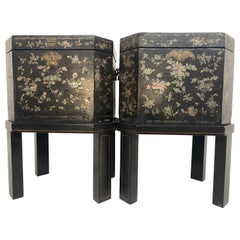
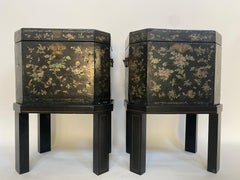
$28,000 / set
H 21 in W 14.5 in D 10.5 in
19th Century Unique Pair of Shell Inlaid Black Lacquer Big Chinese Tea Caddies
Located in Brea, CA
19th century unique pair of shell Inlaid black lacquer big Chinese tea caddies with Bail handles two sides ,each with hinged lid reversing to a mother-of-pearl inlaid decoration and ...
Lacquer
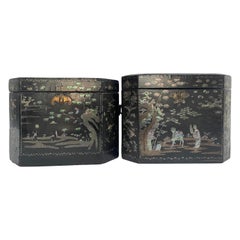
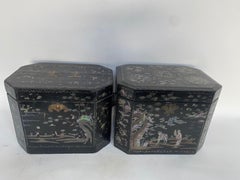
$8,880 / set
H 11.5 in W 14.5 in D 10.5 in
19th Century Two Shell Inlaid Black Lacquer Big Chinese Storage Boxes
Located in Brea, CA
19th century pair of shell Inlaid black lacquer big Chinese storage boxes with bail handles two sides, each with hinged lid reversing to a mother of pearl inlaid decoration, each tea...
Lacquer
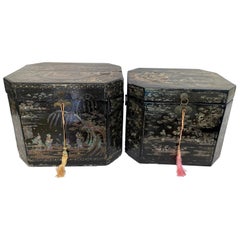
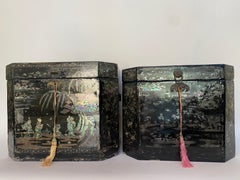
$41,880 / set
H 16.5 in W 20 in D 14.5 in
Antique Unique Large Two of Shell Inlaid Black Lacquer Chinese Book Boxes
Located in Brea, CA
Antique unique Qing dynasty very large 20” pair of shell inlaid black lacquer big Chinese book boxes with bail handles two sides, with keys, each with hinged lid reversing to a mothe...
Lacquer
Simple or sophisticated, equipped with console, cart or custom cabinetry, these stylish bar areas deserve a toast.
Whether you’re just moving in or ready to give your home a makeover, our guide will give you pointers on tables that are fitting for every room, nook and hallway.
The furniture equivalent of a Swiss Army knife, it's the multifunctional piece you didn't know you needed.
Italian studio DimoreMilano mustered great ingenuity when crafting these sculptural shelves, which are built without any screws.
Leaping into a design project, whether it's refreshing the bedroom or redoing the whole house, can be overwhelming. Luckily, we know more than a few interior designers. You asked questions on Instagram, and now they're answering.
Introduced nearly 500 years ago, curiosity cabinets are finding new fans among today's collectors and designers.
In the hands of New York Heartwoods cofounder Megan Offner, unwanted local trees become works of design art.
From Brooklyn townhouses to Maine campgrounds, Trattie Davies and Jonathan Toews relish a challenge, like transforming a former warehouse space into the new 1stdibs Gallery.