Antique German Pottery

to
12
34
25

Use search to find more

32
29
29
20
10
9
4
4
3
3
1
1
1
1
1
1
15
4
1
1
1

Use search to find more

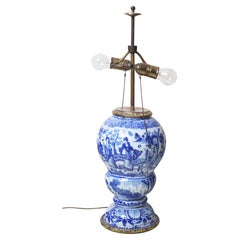
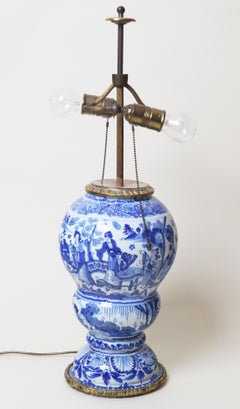
Table Lamp From the Early 18th Century Asian Chino Style  Gerhard Wolbeer Berlin

Table Lamp From the Early 18th Century Asian Chino Style Gerhard Wolbeer Berlin

Located in Hannover, DE

Here's a special chance to bring home a unique, top-quality table lamp from the 18th century. The Gerhart Wolbeer brand, which was based in Berlin way back in the 17th century, was k...

Category

Early 18th Century German Chinoiserie Antique German Pottery

Materials

Brass

Rare Bauhaus Ceramic Original Drawing

Rare Bauhaus Ceramic Original Drawing

Located in Sharon, CT

An original and rare pastel drawing design for the decoration of a German Weimar Republic pottery plate by a Bauhaus or Bauhaus influenced student.

Category

1920s German Bauhaus Antique German Pottery

Materials

Paper

Villeroy & Boch Mettlach Jugendstil Stoneware Plate, Model 4516, c. 1900

Villeroy & Boch Mettlach Jugendstil Stoneware Plate, Model 4516, c. 1900

By Villeroy & Boch, Mettlach

Located in MAASTRICHT, LI

The plate works particularly well as a display piece or wall-mounted decorative object and is a strong example of early 20th-century German art pottery from the Mettlach workshops. ...

Category

Early 20th Century German Jugendstil Antique German Pottery

Materials

Stoneware

Antique Pair of Glazed Stoneware Jardinieres

Antique Pair of Glazed Stoneware Jardinieres

Located in Wormelow, Herefordshire

Dating from circa 1900, this spectacular pair of towering urns are a prime example of German Westerwald salt glazed pottery. The striking cobalt blue over an off-white base showcase...

Category

Early 20th Century German Neoclassical Antique German Pottery

Materials

Ceramic, Stoneware

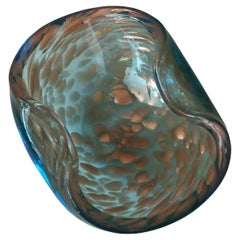
Murano Italian. Attributed to Archimide Seguso, Barovier, Avventurine technique

Murano Italian. Attributed to Archimide Seguso, Barovier, Avventurine technique

By Barovier Seguso & Ferro

Located in Ciudad Autónoma Buenos Aires, C

In 1946 a large retail location is opened at the Piazza Diaz in Milan where in addition to the art glass, German porcelain and Italian pottery is offered.

Category

1920s Italian Art Deco Antique German Pottery

Materials

Gold

  • 1
Get Updated with New Arrivals
Save "Antique German Pottery", and we’ll notify you when there are new listings in this category.

Antique German Pottery For Sale on 1stDibs

Find many varieties of an authentic piece of antique German pottery available at 1stDibs. Frequently made of ceramic, pottery and metal, every item from our selection of antique German pottery was constructed with great care. You’ve searched high and low for the perfect choice in our collection of antique German pottery — we have versions that date back to the 18th Century alongside those produced as recently as the 20th Century are available. An object in our assortment of antique German pottery is a generally popular piece of furniture, but those created in Art Nouveau, Folk Art and Art Deco styles are sought with frequency. A well-made option in this array of antique German pottery has long been a part of the offerings for many furniture designers and manufacturers, but those produced by Villeroy & Boch, Royal Bonn and Dresden Porcelain are consistently popular.

How Much is a Antique German Pottery?

Prices for a piece of antique German pottery start at $55 and top out at $30,600 with the average selling for $781.

Questions About Antique German Pottery

  • 1stDibs ExpertOctober 24, 2024
    To tell German pottery, look on the bottom or inside for a maker's marking. Using trusted online resources, you can then research the marking and identify both the maker and the country in which it operates or operated. Some well-known makers of German pottery include Villeroy & Boch, Meissen, Dresdner Porzellan, Königliche Porzellan Manufaktur, Rosenthal, Fuerstenberg, Nymphenburg, Wallendorfer, Scheurich and ES Keramik. Explore a large collection of German pottery on 1stDibs.
  • 1stDibs ExpertNovember 4, 2024
    To identify German pottery, look over the base or interior for the maker's markings. Many pieces will bear some type of stamp, sticker or other marking, which you can research using trusted online resources to learn who made them. From there, you can read about the maker to determine if the company or artisan is German. Some well-known German makers include Hutschenreuther, Meissen, Arzberg, Fürstenberg, Nymphenburg, Gmundner Keramik, Royal Porcelain Manufacture Berlin, Kahla and Königliche Porzellan-Manufaktur. If you can't find any maker's markings, consider having a certified appraiser or experienced antique dealer help you. Find a wide variety of German pottery on 1stDibs.
  • 1stDibs ExpertAugust 20, 2024
    What German pottery is called depends on its style. Pieces with embossed surfaces and thick, chunky glaze produced in West Germany are nicknamed "Fat Lava." Hard-paste porcelain produced in Germany is sometimes referred to as Meissen or Dresden porcelain, depending on its manufacturer. Early 20th-century pieces that show off naturalistic motifs inspired by the Art Nouveau movement may be called Jugendstil pottery. Shop a large collection of German pottery on 1stDibs.
  • 1stDibs ExpertSeptember 23, 2024
    To identify West German pottery, look on the bottom or interior for markings. Many pieces will have markings with the words "West Germany.” Others may instead or also have markings with the maker's name. By researching the maker's mark, you can determine whether the manufacturer was a West German company. Well-known West German pottery manufacturers include Scheurich, ES Keramik, Ceramano and Ruscha. Some pottery also has an item or piece number on it; this can be used to learn more about your piece's age, style or line name and other characteristics. If you can't find any markings on your piece, you may wish to have a certified appraiser or knowledgeable antique dealer help you with identifying it. On 1stDibs, shop a large collection of West German pottery.
  • 1stDibs ExpertApril 16, 2024
    The markings on West German pottery vary. Nearly all pieces will include the words "West Germany," indicating the place of origin. Some also feature a piece or style number and/or a company logo or marking. You can compare the markings on your pottery to images posted on trusted online resources to identify pieces. On 1stDibs, explore a selection of West German pottery.
  • 1stDibs ExpertFebruary 21, 2024
    A number of brands are West German pottery. Among them are Scheurich, Bay, Carstens, Otto, Ceramano and Dumler and Breiden. Basically, any pottery company that operated in western Germany between 1949 and 1990 can be categorized as West German. On 1stDibs, explore an assortment of pottery from some of the world's top sellers.
  • 1stDibs ExpertOctober 30, 2024
    Yes, some West German pottery is worth something. Fat Lava-style pieces are particularly popular among some collectors, and there is often a demand for pottery produced by specific West German makers, such as Scheurich, ES Keramik, Ceramano and Ruscha. Generally, the age, style, type and condition will influence how much a particular piece may be worth. To get an estimated value for a particular item, consult a certified appraiser or experienced antique dealer. On 1stDibs, shop a selection of West German pottery.
  • 1stDibs ExpertApril 5, 2024
    What the numbers mean on West German pottery varies. In some cases, the numbers represent the date of production. More often, the numbers represent the piece number — indicating what order it was produced in — or the style of the pottery. On 1stDibs, explore a range of West German pottery.
  • 1stDibs ExpertApril 5, 2022
    To tell if pottery is antique, first look for any identifying marks. Usually, you will notice them on the bottom of the piece. If you locate one, you can use an authoritative resource to determine the maker. Then, you can research the pattern and shape to determine an approximate date. Pottery made over 100 years ago is generally considered an antique. Find a range of expertly vetted antique pottery on 1stDibs.
  • 1stDibs ExpertAugust 8, 2024
    To tell if your Japanese pottery is antique, look for markings, which usually appear on the bottoms of pieces. If you see the word "Nippon," your piece was likely produced between 1891 and 1921, making it an antique. Pieces marked with the words "made in occupied Japan" originated between 1945 and 1952 and are vintage, based on their age. A "made in Japan" marking may indicate a vintage or contemporary piece. If you don't see any of these markings, consult trusted online resources to get a rough idea of when your pottery was produced. Any piece that dates back 100 years or more is antique. Should you encounter difficulty with the dating process, a certified appraiser or knowledgeable antique dealer can assist you. On 1stDibs, shop a variety of Japanese pottery.
  • 1stDibs ExpertAugust 29, 2024
    To tell an antique Italian pottery apart from other pieces, do some research using trusted online resources. First, identify the maker by looking for marks on the bottom or interior. Once you know who produced your pottery, you can then explore the styles and types of pieces they produced over the years and use this information to estimate your piece's age. For pottery to be antique, it must be at least 100 years old. If you'd like assistance with the dating process, talk to a certified appraiser or knowledgeable antique dealer. Shop a collection of antique Italian pottery on 1stDibs.