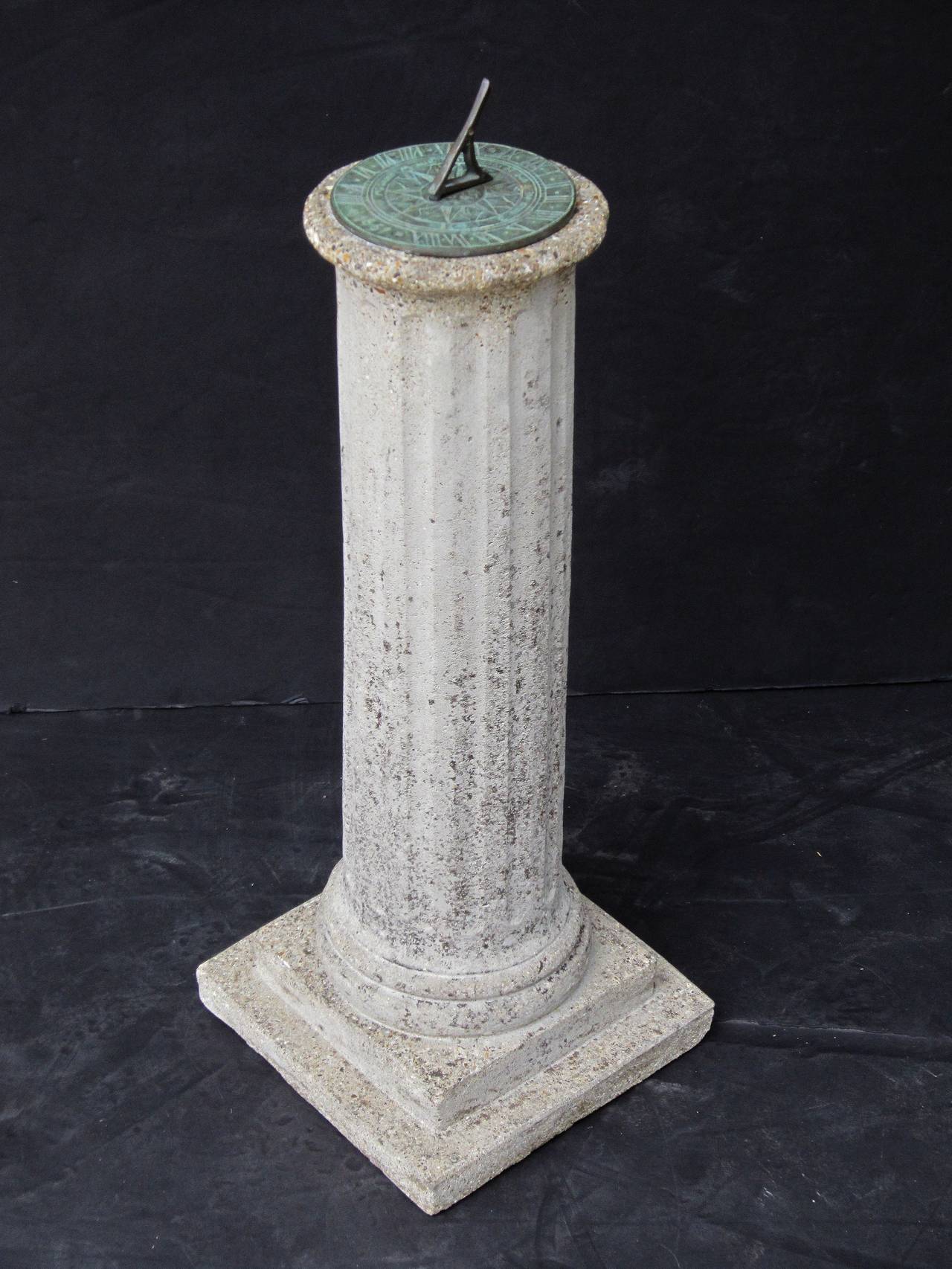
English Garden Column Sun Dial
Located in Austin, TX
A Fine English garden column sundial of composition or garden stone featuring a bronze dial
Category
Early 20th Century English Sundials
Materials
Cast Stone, Bronze
English Garden Column Sun Dial
Located in Austin, TX
A Fine English garden column sundial of composition or garden stone featuring a bronze dial
Cast Stone, Bronze
Sold
H 31.5 in Dm 12.5 in
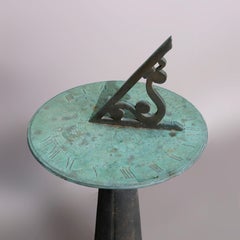
Antique English Bronze Richard Glynne Fecit Cast Iron Garden Sun Dial circa 1920
Located in Big Flats, NY
An antique English garden sun dial signed Richard Glynne offers bronze dial surmounting flared and
Bronze, Iron
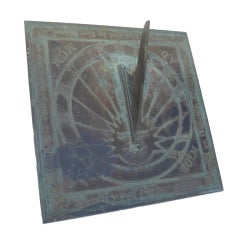
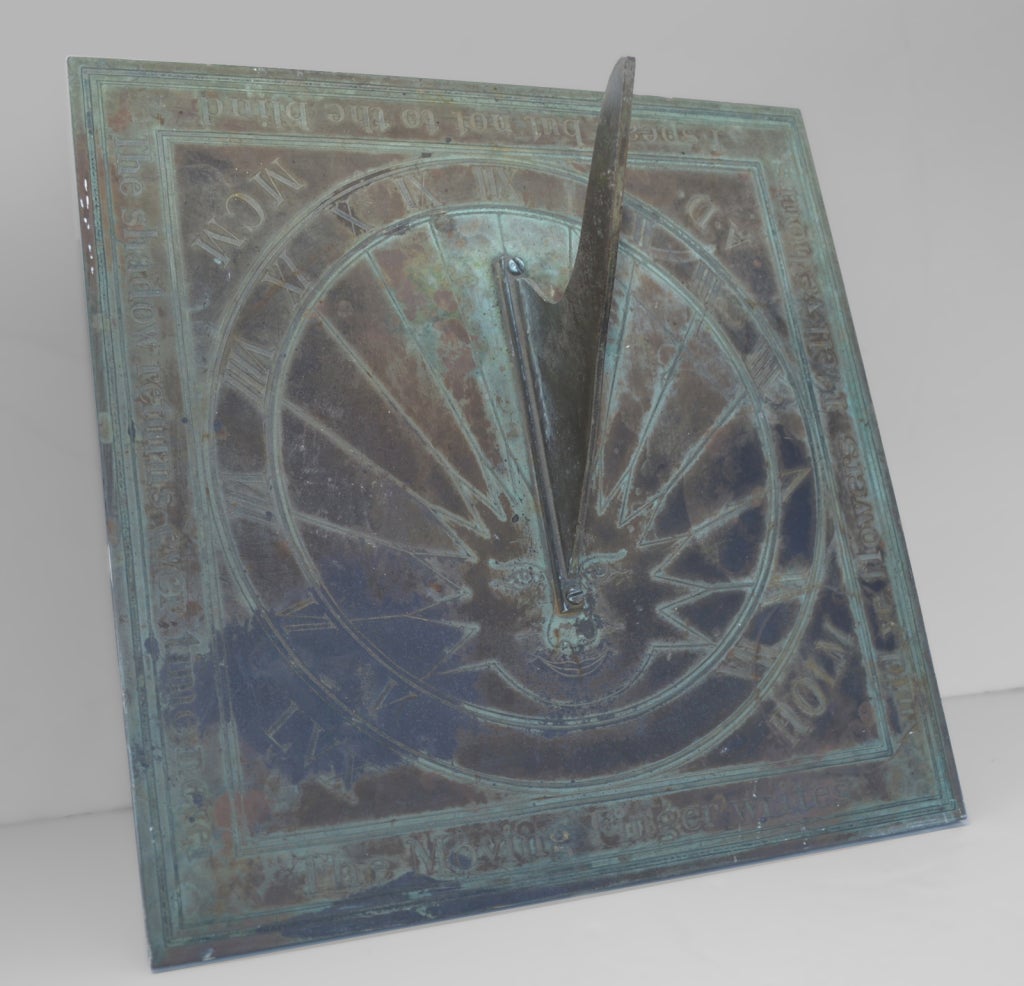
19th Century Bronze Sun Dial with solid gnomon
Located in Ferndale, MI
19th Century Bronze Sun Dial with solid gnomon
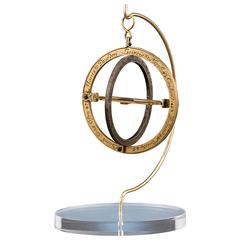
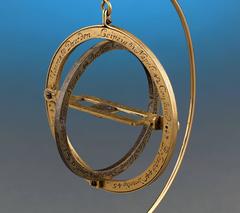
Early Equatorial Sun Ring Dial
Located in New Orleans, LA
A unique and beautiful melding of science and art, this early equatorial sun ring dial is a
Brass, Bronze
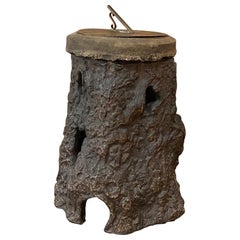
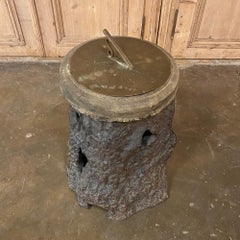
Antique 19th Century English Bronze and Faux Bois Sun Dial
Located in Dallas, TX
Antique 19th century English bronze and faux bois sun dial features an inscribed sun dial in bronze
Bronze
Although typically decorative, antique and vintage sundials transport a guest in your home to a different era, their simple function a tether to the ancient world.
Humans have tracked time since the dawn of civilization. Before the invention of precise mechanical clocks, various materials including water and incense were used to mark the passage of time. The sundial was one of the earliest of these timekeeping devices.
The oldest known sundial dates back to 1,500 B.C. in Egypt. The very first sundials were simple stone blocks with markings and a vertical needle of wood or metal to indicate the hours with its shadow. Later Greek sundials had a gnomon parallel to the axis of the Earth. Some flat sundials from the Islamic world were directional objects for pointing the way to Mecca.
Mechanical clocks use a series of gears and springs to track time precisely; sundials rely on light and shadow. As sunlight crosses over a sundial, it casts a shadow that moves across the face of the dial as the Earth rotates.
There are now more accurate, easier and probably cooler ways to tell time, yet the sundial persists. It is not uncommon to find flat stone sundials among an assemblage of decorative elements in colorful gardens and standing sundials in expertly appointed outdoor spaces.
While garden sundials are among the most popular sundials today, sundials made of metal, stone, bronze and more can be found on 1stDibs to match any taste or setting. The collection also includes sundials of Scandinavian, British and North American origins.
As the days grow colder, the desire to gather around the fire grows stronger. Take a peek at these well-appointed rooms featuring extraordinary sculptural and historic hearths.
It's hard to resist the allure of a beautiful pool. So, go ahead and daydream about whiling away your summer in paradise.
The exceptionally crafted mantel was saved despite the home’s regrettable demise.
The Qing dynasty beasts honored the dead and warned off malicious spirits.
The dramatic piece transforms a daily scrub into an act of communion with the elements.
Anne and Will Massie apply the lessons of the past to create alfresco pieces as timeless as the traditions that inspire them.
Eating meals alfresco is one of the great pleasures of warm weather, and a beautifully appointed space only heightens the experience. Get inspired by these delectable dining areas as you think about creating your own outdoor oasis.
Through potted plants, garden furniture, nature-inspired art and architectural apertures, designers are bringing the outside in.