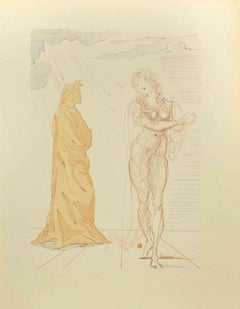
Virgil Comforts Dante - Woodcut - 1963
By Salvador Dalí
Located in Roma, IT
Virgil Comforts Dante - Hell, Plate-2- Divine Comedy is a woodcut print realized in 1963 for a
Category
1960s Surrealist Figurative Prints
Materials
Woodcut
Virgil Comforts Dante - Woodcut - 1963
By Salvador Dalí
Located in Roma, IT
Virgil Comforts Dante - Hell, Plate-2- Divine Comedy is a woodcut print realized in 1963 for a
Woodcut
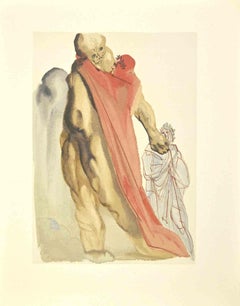
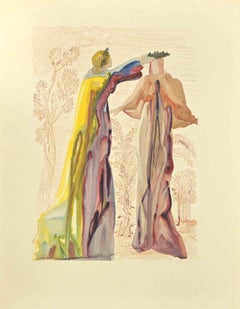
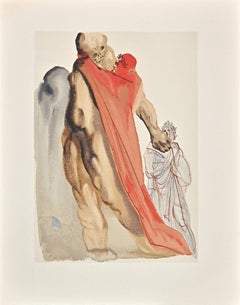
The Reproaches of Virgil - Woodcut - 1963
By Salvador Dalí
Located in Roma, IT
The Reproaches of Virgil is a woodcut print realized in 1963 for a series illustrating the Medieval
Woodcut
Virgil's Last Words - Woodcut - 1963
By Salvador Dalí
Located in Roma, IT
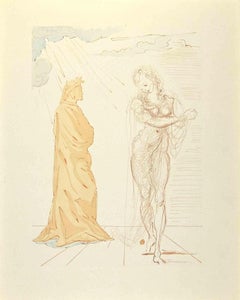
Virgil's Last Words is a woodcut print realized in 1963 for a series illustrating the Medieval poem
Woodcut
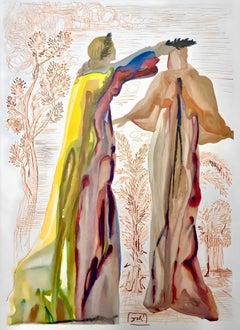
Virgil Comforts Dante - Woodcut print - 1963
By Salvador Dalí
Located in Roma, IT
Virgil Comforts Dante is a woodcut print realized in 1963 for a series illustrating the Medieval
Woodcut

Sold
H 13 in W 10.25 in
Salvador Dalí, Virgil’s last words (M/L.1039-1138; F.189-200)
By Salvador Dalí
Located in Fairfield, CT
Artist: Salvador Dali (1904-1989) Suite: Göttliche Komödie (The Divine Comedy) Year: 1974 Medium
Engraving

Sold
H 13 in W 10.24 in D 0.04 in
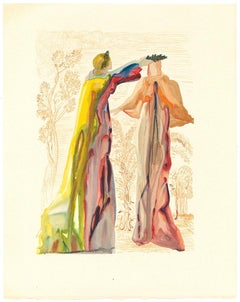
Virgil's Admonishment - Original Woodcut attr. to Salvador Dalì - 1963
By Salvador Dalí
Located in Roma, IT
Virgil's Admonishment, from the Series "The Divine Comedy" by Dante Alighieri, is a woodcut print
Woodcut
Sold
H 13 in W 10.24 in D 0.04 in
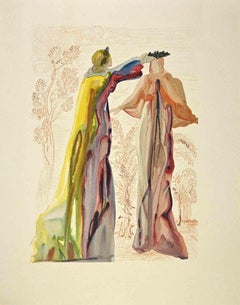
Virgil's Last Words - Original Woodcut Print by Salvador Dalì - 1963
By Salvador Dalí
Located in Roma, IT
Virgil's Last Words, from the Series "The Divine Comedy" by Dante Alighieri, is an original woodcut
Woodcut
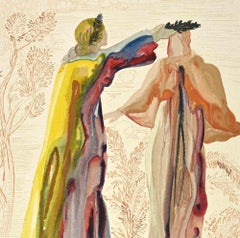
The Last Words of Virgil - Woodcut - 1963
By Salvador Dalí
Located in Roma, IT
The Last Words of Virgil - "The Divine Comedy" - Song 27 - Purgatory is a woodcut print realized
Woodcut


Hell 2 - Virgil consoles Dante - Original woodcut - 1963
By Salvador Dalí
Located in Paris, IDF
Salvador Dali (1904-1989) Hell 2 - Virgil consoles Dante Original woodcut On paper Vélin BFK
Woodcut
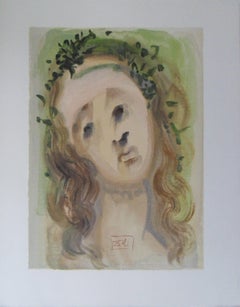
Purgatory 10 - The Face of Virgil - woodcut - 1963
By Salvador Dalí
Located in Paris, IDF
Salvador Dali (1904-1989) Purgatory 10 - The Face of Virgil From the "Divine Comedy" Wood
Woodcut
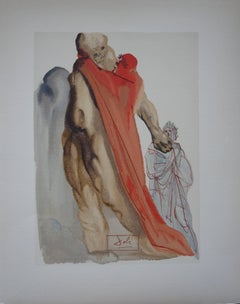

Purgatory 5 - The reproaches of Virgil - Woodcut - 1963
By Salvador Dalí
Located in Paris, IDF
Salvador Dali (1904-1989) Purgatory 5 - The reproaches of Virgil Color woodcut Signature printed
Woodcut
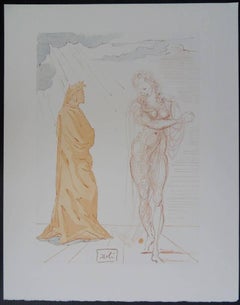

Hell 2 - Virgil consoles Dante - Original woodcut - 1963
By Salvador Dalí
Located in Paris, IDF
Salvador Dali (1904-1989) Hell 2 - Virgil consoles Dante Original woodcut Signature printed in the
Woodcut
Sold
H 13 in W 10 in
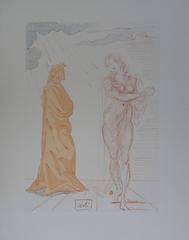
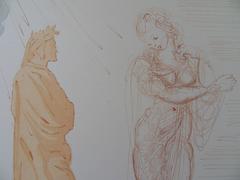
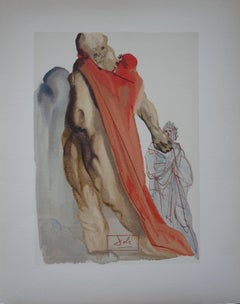
Hell 2 - Virgil consoles Dante - Original signed woodcut - 1963
By Salvador Dalí
Located in Paris, IDF
Salvador Dali (1904-1989) Hell 2 - Virgil consoles Dante Original woodcut Plate signed 1960/63
Woodcut

Sold
H 13 in W 10 in
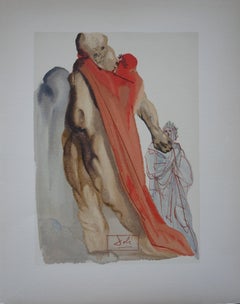
Purgatory 5 - The reproaches of Virgil - Color Woodcut - 1963
By Salvador Dalí
Located in Paris, IDF
Salvador Dali (1904-1989) Purgatory 5 - The reproaches of Virgil Color woodcut Signature printed
Woodcut

Sold
H 13 in W 10 in
Purgatory 5 - The reproaches of Virgil - Color Woodcut - 1963
By Salvador Dalí
Located in Paris, IDF
Salvador Dali (1904-1989) Purgatory 5 - The reproaches of Virgil Color woodcut Signature printed
Woodcut
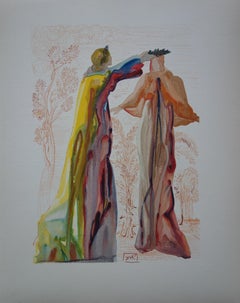

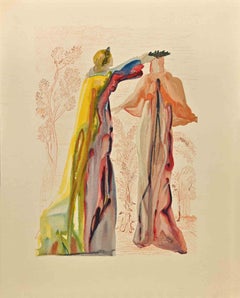
Purgatory 27 - The Last Words of Virgil - Woodcut - 1963
By Salvador Dalí
Located in Paris, IDF
Salvador Dali (1904-1989) Purgatory 27 - The Last Words of Virgil From the Divine Comedy (Dante
Woodcut

Sold
H 13 in W 10.24 in D 0.04 in
Virgil's Words from The Series "The Divine Comedy" - Woodcut Print - 1963
By Salvador Dalí
Located in Roma, IT
Virgil's Last Words from the Series "The Divine Comedy" - Purgatory tav. 27 is a woodcut print
Woodcut
In the wake of World War I’s ravaging of Europe, artists delved into the unconscious mind to confront and grapple with this reality. Poet and critic André Breton, a leader of the Surrealist movement who authored the 1924 Surrealist Manifesto, called this approach “a violent reaction against the impoverishment and sterility of thought processes that resulted from centuries of rationalism.” Surrealist art emerged in the 1920s with dreamlike and uncanny imagery guided by a variety of techniques such as automatic drawing, which can be likened to a stream of consciousness, to channel psychological experiences.
Although Surrealism was a groundbreaking approach for European art, its practitioners were inspired by Indigenous art and ancient mysticism for reenvisioning how sculptures, paintings, prints, performance art and more could respond to the unsettled world around them.
Surrealist artists were also informed by the Dada movement, which originated in 1916 Zurich and embraced absurdity over the logic that had propelled modernity into violence. Some of the Surrealists had witnessed this firsthand, such as Max Ernst, who served in the trenches during World War I, and Salvador Dalí, whose otherworldly paintings and other work responded to the dawning civil war in Spain.
Other key artists associated with the revolutionary art and literary movement included Man Ray, Joan Miró, René Magritte, Yves Tanguy, Frida Kahlo and Meret Oppenheim, all of whom had a distinct perspective on reimagining reality and freeing the unconscious mind from the conventions and restrictions of rational thought. Pablo Picasso showed some of his works in “La Peinture Surréaliste” — the first collective exhibition of Surrealist painting — which opened at Paris’s Galerie Pierre in November of 1925. (Although Magritte is best known as one of the visual Surrealist movement’s most talented practitioners, his famous 1943 painting, The Fifth Season, can be interpreted as a formal break from Surrealism.)
The outbreak of World War II led many in the movement to flee Europe for the Americas, further spreading Surrealism abroad. Generations of modern and contemporary artists were subsequently influenced by the richly symbolic and unearthly imagery of Surrealism, from Joseph Cornell to Arshile Gorky.
Find a collection of original Surrealist paintings, sculptures, prints and multiples and more art on 1stDibs.
Bring energy and an array of welcome colors and textures into your space by decorating with figurative fine-art prints and works on paper.
Figurative art stands in contrast to abstract art, which is more expressive than representational. The oldest-known work of figurative art is a figurative painting — specifically, a rock painting of an animal made over 40,000 years ago in Borneo. This remnant of a remote past has long faded, but its depiction of a cattle-like creature in elegant ocher markings endures.
Since then, figurative art has evolved significantly as it continues to represent the world, including a breadth of works on paper, including printmaking. This includes woodcuts, which are a type of relief print with perennial popularity among collectors. The artist carves into a block and applies ink to the raised surface, which is then pressed onto paper. There are also planographic prints, which use metal plates, stones or other flat surfaces as their base. The artist will often draw on the surface with grease crayon and then apply ink to those markings. Lithographs are a common version of planographic prints.
Figurative art printmaking was especially popular during the height of the Pop art movement, and this kind of work can be seen in artist Andy Warhol’s extensive use of photographic silkscreen printing. Everyday objects, logos and scenes were given a unique twist, whether in the style of a comic strip or in the use of neon colors.
Explore an impressive collection of figurative art prints for sale on 1stDibs and read about how to arrange your wall art.