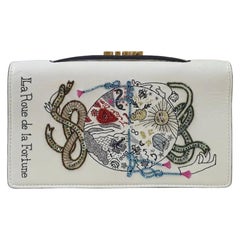

Christian Dior Tarot La Roue De La Fortune Clutch
By Christian Dior
Located in Krakow, PL
From the 2017 Collection. Ivory leather Christian Dior Tarot La Roue De La Fortune Clutch with gold
Category
Christian Dior Tarot La Roue De La Fortune Clutch
By Christian Dior
Located in Krakow, PL
From the 2017 Collection. Ivory leather Christian Dior Tarot La Roue De La Fortune Clutch with gold
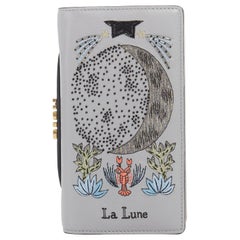

CHRISTIAN DIOR SS17 La Lune Tarot embroidered grey leather mini clutch pouch bag
Located in Hong Kong, NT
CHRISTIAN DIOR SS17 La Lune Tarot embroidered grey leather mini clutch pouch bag CHRISTIAN DIOR BY
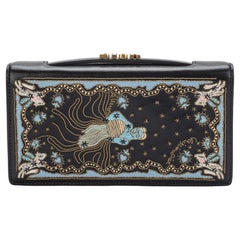
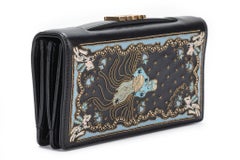
Christian New Dior Tarot Clutch
By MARIA GRAZIA CHIURI, Christian Dior
Located in West Hollywood, CA
Christian Dior Tarot Pouch with Embroidered Leather. It is from the brand's Spring/Summer 2017
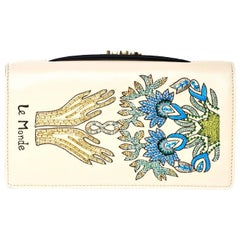
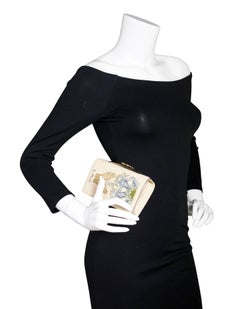
Christian Dior 2017 Nude Embroided Le Monde Tarot Pouch Clutch with DB
By Christian Dior
Located in New York, NY
Christian Dior Nude Embroided Le Monde Tarot Pouch Clutch Features intricate beading and embroidery
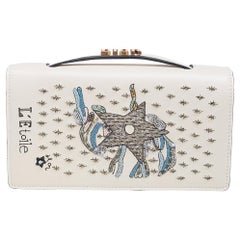

Dior White Leather Embroidered Star Tarot Clutch
By Christian Dior
Located in Dubai, Al Qouz 2
Whether going out for drinks or a casual outing, Dior's Tarot clutch is the perfect way to add a
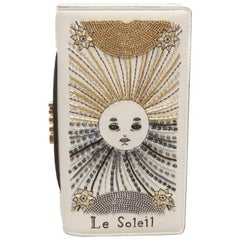

Dior "Le Soleil" Tarot Pouch Clutch
By Christian Dior
Located in Melbourne, Victoria
'Le Soleil' Tarot Pouch from the Dior Summer 2017 collection. Crafted from just off-white lambskin
When Christian Dior launched his couture house, in 1946, he wanted nothing less than to make “an elegant woman more beautiful and a beautiful woman more elegant.” He succeeded, and in doing so the visionary designer altered the landscape of 20th century fashion. Vintage Dior bags, shoes, evening dresses, shirts and other garments and accessories are known today for their feminine and sophisticated sensibility.
Dior was born in Granville, on the Normandy coast, in 1905. His prosperous haute bourgeois parents wanted him to become a diplomat despite his interest in art and architecture. However, they agreed to bankroll an art gallery, which Dior opened in 1928 in Paris with a friend.
This was the start of Dior’s rise in the city’s creative milieu, where he befriended Pablo Picasso and Jean Cocteau. After seven years as an art dealer, Dior retrained as a fashion illustrator, eventually landing a job as a fashion designer for Robert Piguet, and in 1941, following a year of military service, he joined the house of Lucien Lelong. Just five years later, with the backing of industrialist Marcel Boussac, the ascendant Dior established his own fashion house, at 30 avenue Montaigne in Paris.
Just two years after the end of World War II, the fashion crowd and the moribund haute couture industry were yearning, comme tout Paris, for security and prosperity, desperate to discard the drab, sexless, utilitarian garb imposed by wartime deprivation. They needed to dream anew.
And Dior delivered: He designed a collection for a bright, optimistic future. “It’s quite a revolution, dear Christian!” exclaimed Carmel Snow, the prescient American editor-in-chief of Harper’s Bazaar, famously proclaiming, “Your dresses have such a new look.” The press ran with the description, christening Dior’s debut Spring/Summer haute couture collection the New Look. “God help those who bought before they saw Dior,” said Snow. “This changes everything.”
Dior’s collection definitively declared that opulence, luxury and femininity were in. His skirts could have 40-meter-circumference hems, and outfits could weigh up to 60 pounds. They were cut and shaped like architecture, on strong foundations that molded women and “freed them from nature,” Dior said. Rather than rationing, his ladies wanted reams of fabric and 19-inch waists enforced by wire corsets, and the fashion world concurred. The debut got a standing ovation.
In the subsequent decade, Paris ruled as the undisputed fashion capital of the world, and Christian Dior reigned as its king. With the luxuriously full skirts of his New Look, suits and his drop-dead gorgeous couture dresses and ball gowns worthy of any princess, Dior gave women the gift of glamour they’d lost in the miserable years of war.
On 1stDibs, find an exquisite range of vintage Christian Dior clothing, jewelry, handbags and other items.
Vintage and designer clutches are the perfect size to hold exactly what you need. While they’re typically small purses, Chanel clutches, Gucci clutches and other kinds of clutches can make a big impact on an outfit. They also have a fascinating history.
Clutches are handbags without handles that are carried by hand. One of the oldest known clutches was made in Mosul, Iraq, in the 14th century. It was made of brass and inlaid with gold and silver in geometric patterns. Although the loops on the side indicate it likely had handles to wear as a shoulder bag, manuscripts show a similar example being carried by hand.
Fashion designers often made clutches to reflect the wealth of the holder. In Medieval Europe, men and women securely carried items in small bags hidden inside their clothing as tie-on pockets. Women carried their possessions, scented and secreted, in the folds of their voluminous skirts. Pockets eventually became integral to garment design, but bigger sacks were needed to carry books and documents. When women’s clothing became lighter, consisting of fewer layers, it could no longer easily hide their handbags or pockets.
Changes in fashion led to handbags becoming a popular fashion accessory, and today, even as we’re overwhelmed by options from a variety of high-end brands, iconic luxury handbags still rule. The highly decorative bags of the 19th century faded from popularity when women entered the workforce and the clutch became the dominant business accessory. Flappers in the 1920s, clad in the dazzling Art Deco jewelry of the era, also loved the freedom of carrying clutches as they didn’t get in the way of dancing.
The simplicity of the clutch remains stylish today. Once made to be carried on special occasions, they are now an accessory for everyday use. Find a collection of vintage and designer clutches from Dior, Hermès, Louis Vuitton and more on 1stDibs.