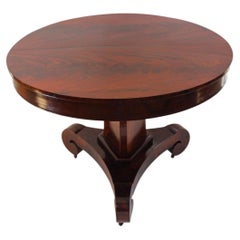
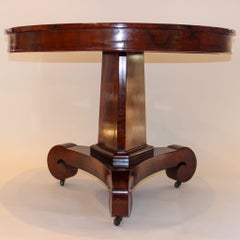
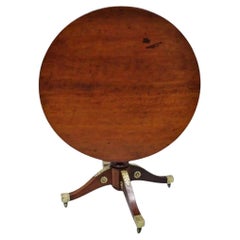
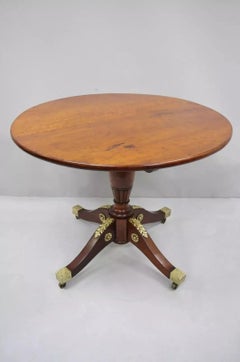
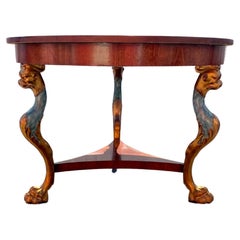
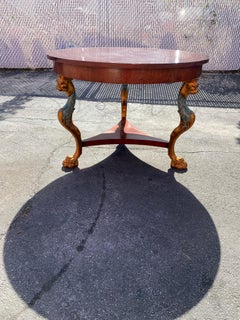
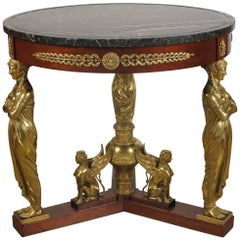
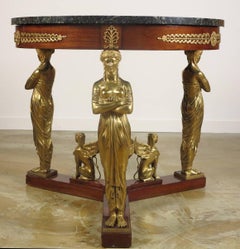
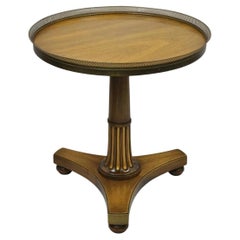
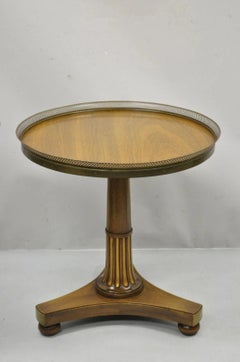
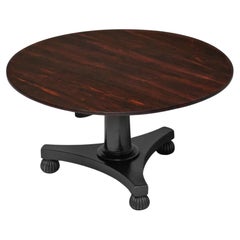
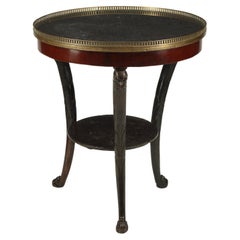
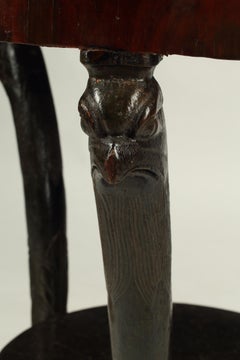
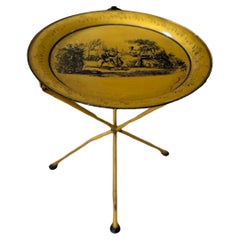
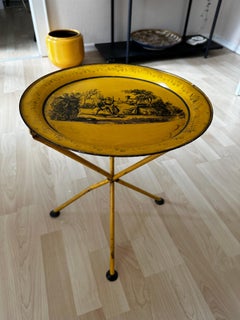
At 1stDibs, there are many versions of the ideal empire style center table for your home. Frequently made of
wood,
mahogany and
stone, every empire style center table was constructed with great care. Find 99 options for an antique or vintage empire style center table now, or shop our selection of 1 modern versions for a more contemporary example of this long-cherished piece. You’ve searched high and low for the perfect empire style center table — we have versions that date back to the 19th Century alongside those produced as recently as the 21st Century are available. An empire style center table, designed in the
Empire or
Victorian style, is generally a popular piece of furniture. Many designers have produced at least one well-made empire style center table over the years, but those crafted by
Baker Furniture Company,
John Widdicomb and
Zwiener Jansen Successeur are often thought to be among the most beautiful.
Prices for an empire style center table can differ depending upon size, time period and other attributes — at 1stDibs, they begin at $600 and can go as high as $78,046, while the average can fetch as much as $4,380.
An alluring sitting area doesn’t have to be in the exact center of the room, but an antique or vintage center table is a great tool to partition off such an area.
By definition, a center table is a piece of furniture that is placed in the center of a room. Initially these appeared in the foyer or entryway before making their way into the living room. While one might keep seating furniture such as sofas against the walls to avoid limiting movement and closing off space, a center table in the living room can fill this central space without restricting the flow of the room.
One of the purposes of a center table is to anchor the rest of the furniture. It draws the eye to a specific area and invites guests to sit down. When thinking about how you’ll arrange your furniture, a good rule of thumb is to set tables an arm’s length away from seating. For instance, place a coffee table about 18 inches from a sofa so that it is within reach but not too close. In more modern layouts, tables are sometimes placed to the side to leave a large open area for foot traffic.
Because of its central position, a center table is one of the first things people will notice when entering a room. It’s important to consider how a center table can add to a room, as it’s a crucial element for defining the feel and theme of a room. Some center tables are mainly for decor, while others can be a great place to sit around over cocktails and hors d’oeuvres. Center tables are perfect for displaying decorative objects, floral arrangements, books or a cluster of prized antique vases given the prominent position of your table and the attention it will get.
The clean lines and organic forms that we typically associate with mid-century modern center tables means that they will bring a dose of sophistication to a space, and examples from the era can be found in square and round shapes. Wood tables were popular with furniture makers of the period, but versions in glass and marble are also widely available. Because Art Deco designers frequently incorporated ornamental embellishments such as exotic animal hides and veneers in their seating, case pieces and other furniture, your Art Deco center table will likely make a strong statement in any room. Alternatively, if you’re searching for something small and unassuming, Regency tables could be an option for your space.
Find a growing collection of antique and vintage center tables on 1stDibs today.