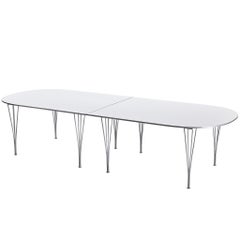
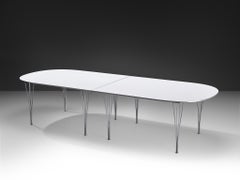
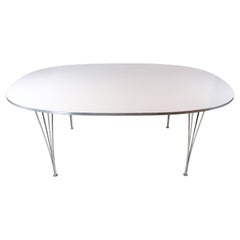
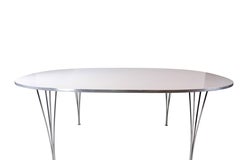
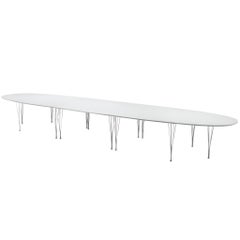
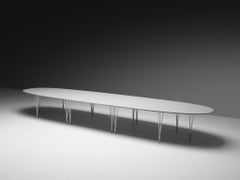
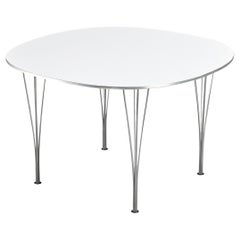
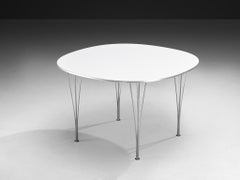
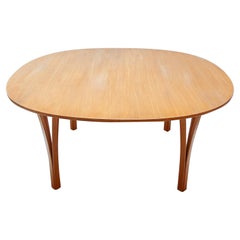
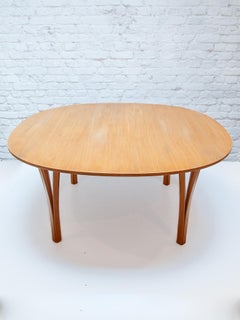
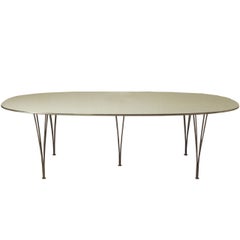
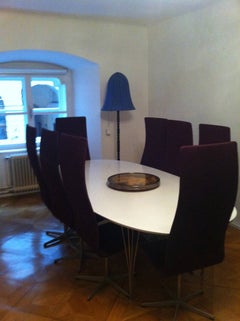
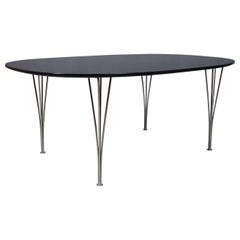
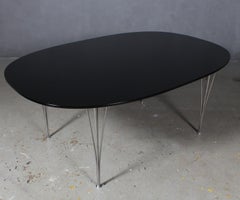
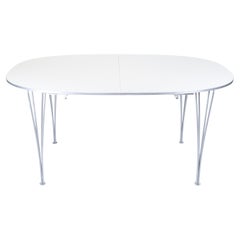
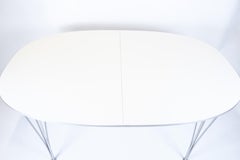
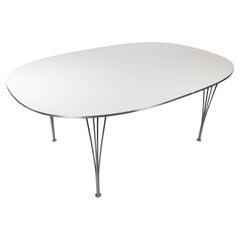
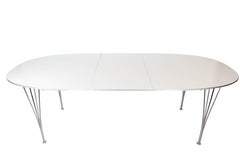
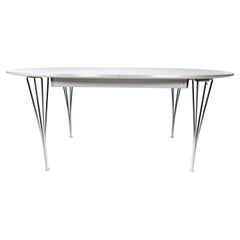
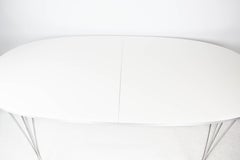
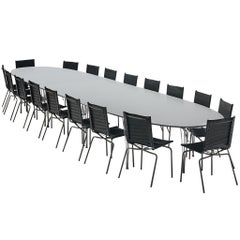
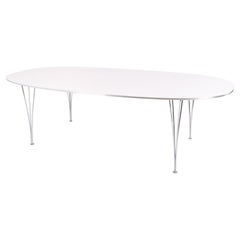
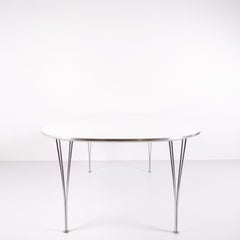
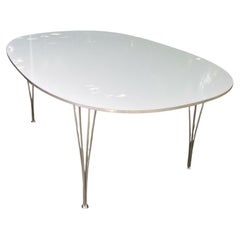
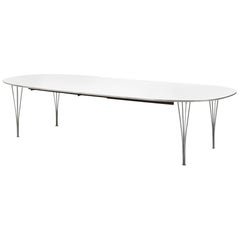
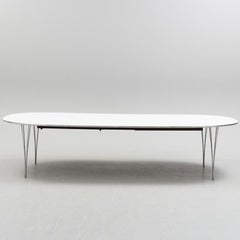
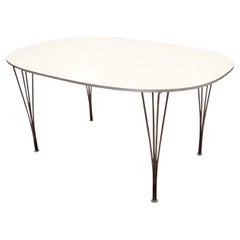
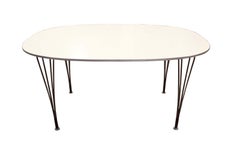
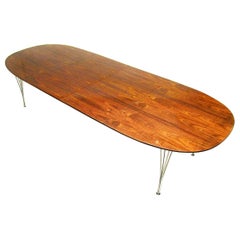
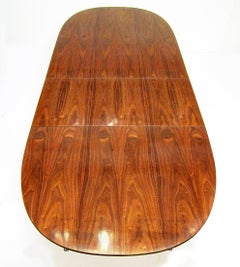
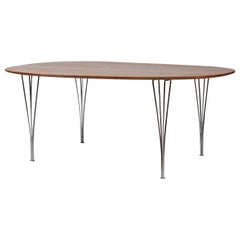
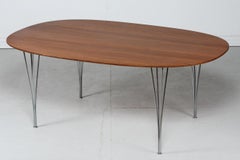
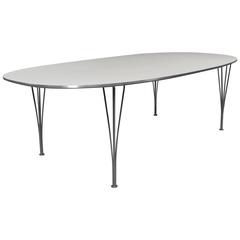
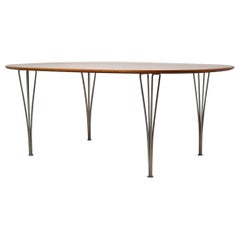
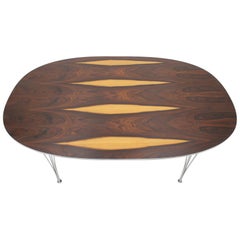
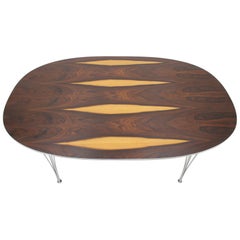
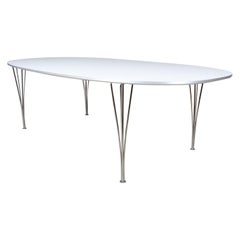
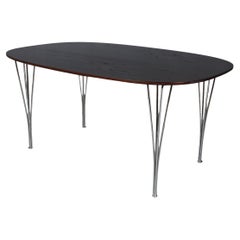
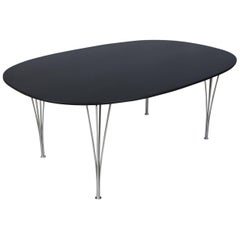
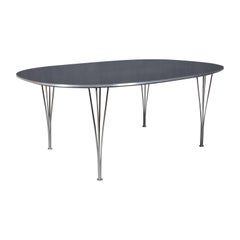
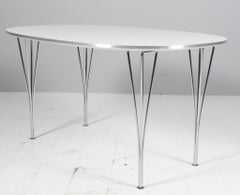
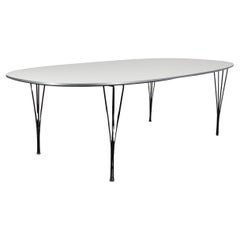
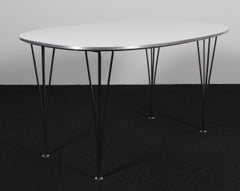
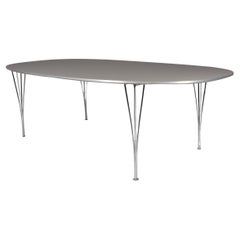
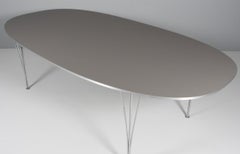
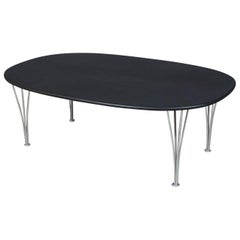
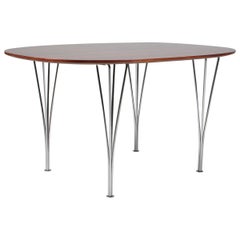
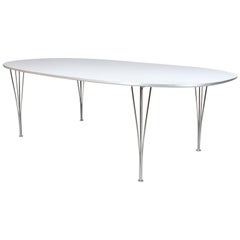
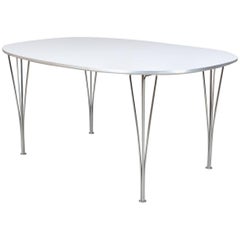
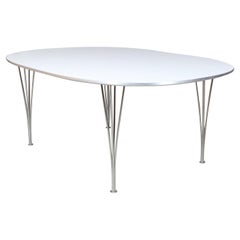
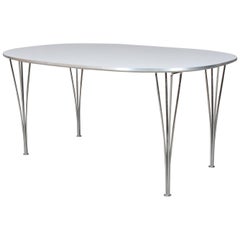
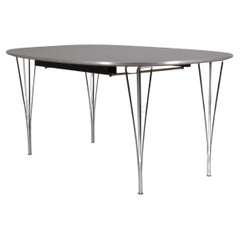
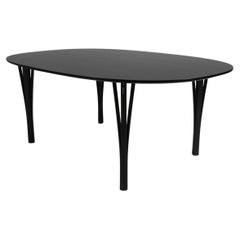
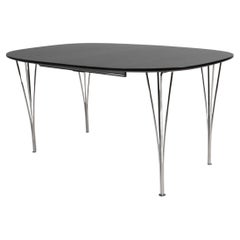
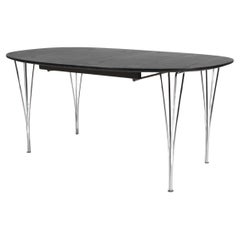
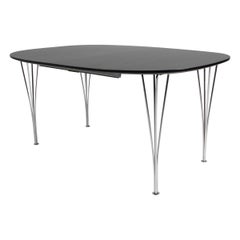
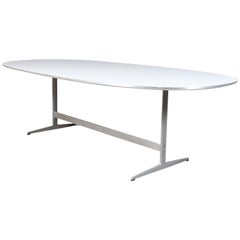
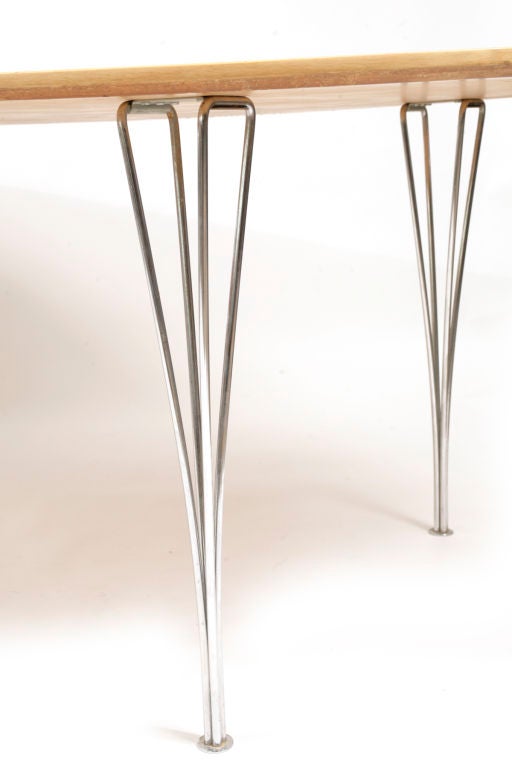
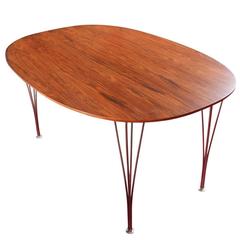
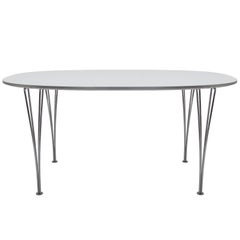
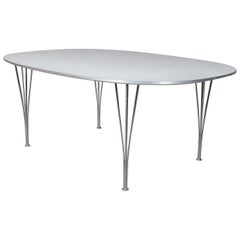
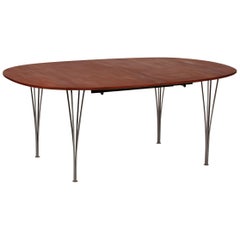
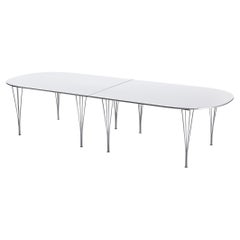
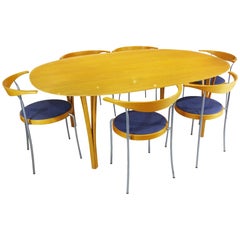
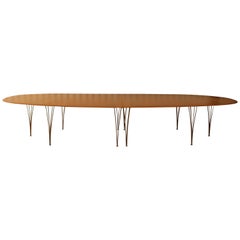
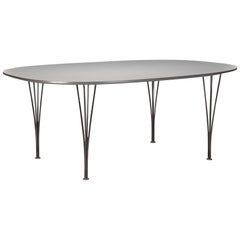
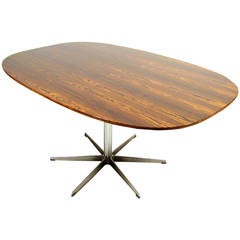
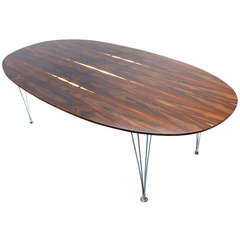
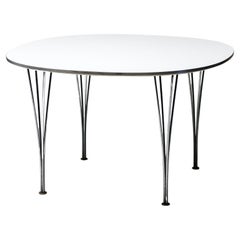
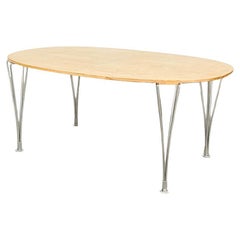
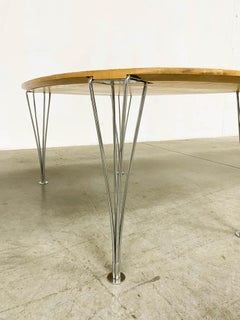
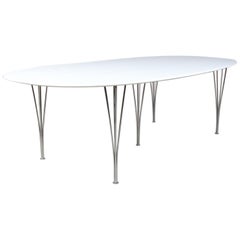
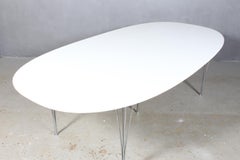
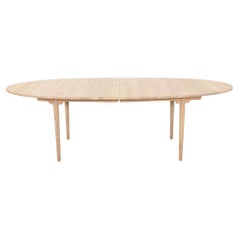
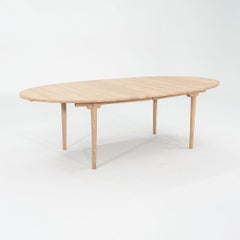
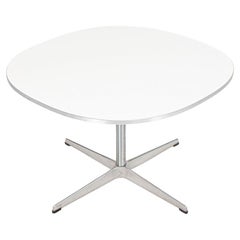
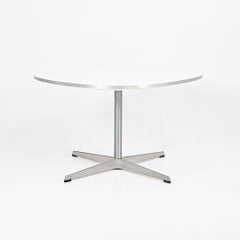
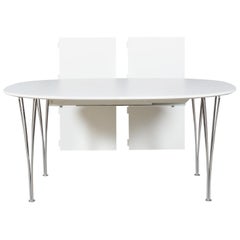
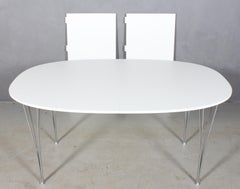
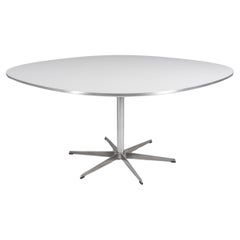
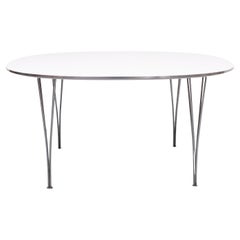
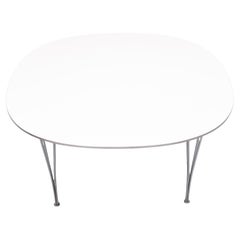
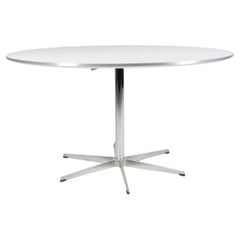
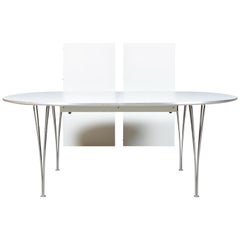
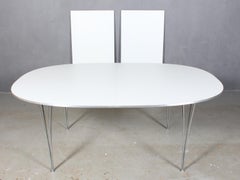
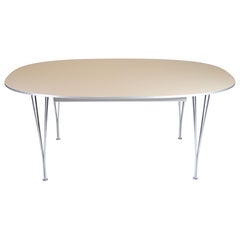
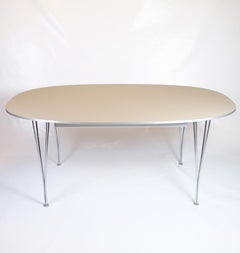
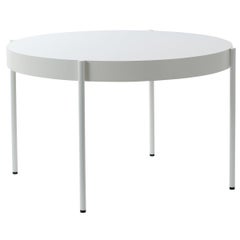
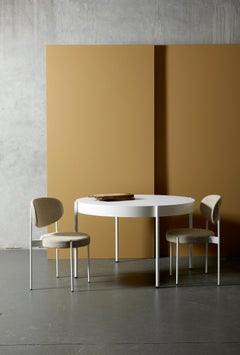
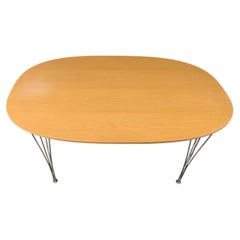
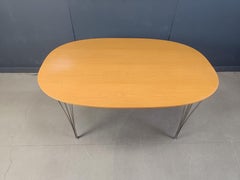
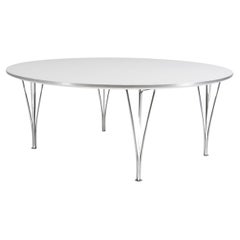
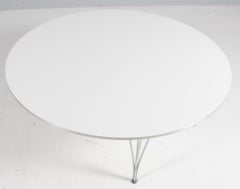
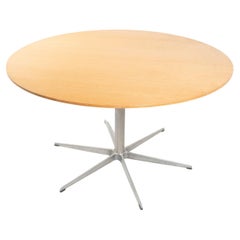
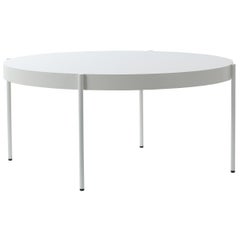
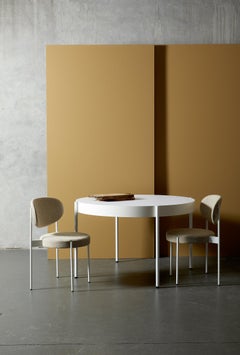
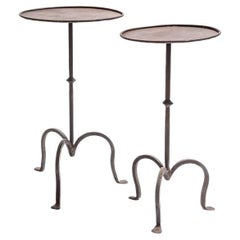
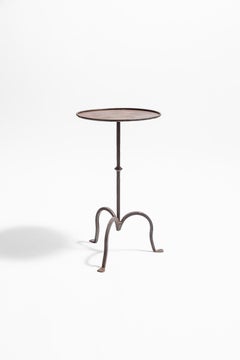
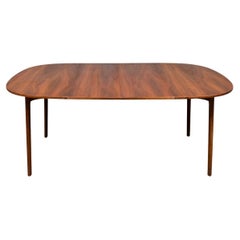
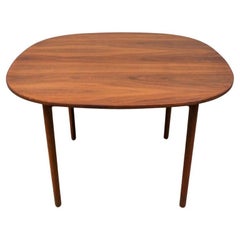
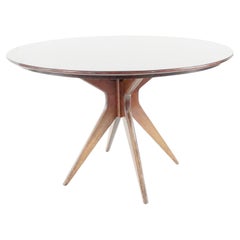
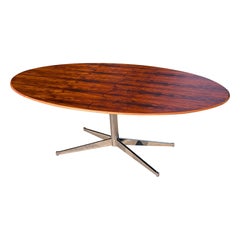
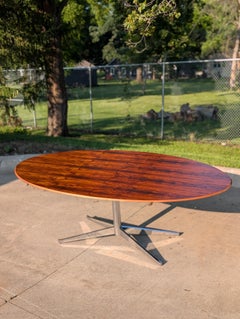
Find many varieties of an authentic fritz hansen ellipse table available at 1stDibs. A fritz hansen ellipse table — often made from
metal,
chrome and
laminate — can elevate any home. You’ve searched high and low for the perfect fritz hansen ellipse table — we have versions that date back to the 20th Century alongside those produced as recently as the 21st Century are available. A fritz hansen ellipse table is a generally popular piece of furniture, but those created in
Scandinavian Modern and
Mid-Century Modern styles are sought with frequency.
A fritz hansen ellipse table can differ in price owing to various characteristics — the average selling price 1stDibs is $2,831, while the lowest priced sells for $1,581 and the highest can go for as much as $10,510.
When the Copenhagen-based furniture maker Fritz Hansen opened for business more than 140 years ago, the company — which today styles itself The Republic of Fritz Hansen — adhered to the traditional, time-honored Danish values of craftsmanship in woodworking and joinery. Yet thanks to the postwar innovations of Arne Jacobsen and others, Fritz Hansen would become the country’s leader in Scandinavian modern design using new, forward-looking materials and methods.
Fritz Hansen started his company in 1872, specializing in the manufacture of small furniture parts. In 1915, the firm became the first in Denmark to make chairs using steam-bent wood (a technique most familiar from birch used in the ubiquitous café chairs by Austrian maker Thonet). At the time, Fritz Hansen was best known for seating that featured curved legs and curlicue splats and referenced 18th-century Chippendale designs.
In the next few decades, the company promoted simple, plain chairs with slatted backs and cane or rush seats designed by such proto-modernist masters as Kaare Klint and Søren Hansen. Still, the most aesthetically striking piece Fritz Hansen produced in the first half of the 20th century was arguably the China chair of 1944 by Hans Wegner — and that piece, with its yoke-shaped bentwood back- and armrest, was based on seating manufactured in China during the Ming dynasty. (Wegner was moved by portraits he’d seen of Danish merchants in the Chinese chairs.)
Everything changed in 1952 with Arne Jacobsen’s Ant chair. The collaboration between the architect and Fritz Hansen officially originated in 1934 — that year, Jacobsen created his inaugural piece for the manufacturer, the solid beechwood Bellevue chair for a restaurant commission. The Ant chair, however, was the breakthrough.
With assistance from his then-apprentice Verner Panton, Jacobsen designed the Ant chair for the cafeteria of a Danish healthcare company called Novo Nordisk. The chair was composed of a seat and backrest formed from a single piece of molded plywood attached, in its original iteration, to three tubular metal legs. Its silhouette suggests the shape of the insect’s body, and the lightweight, stackable chair and its biomorphic form became an international hit.
Jacobsen followed with more plywood successes, such as the Grand Prix chair of 1957. The following year he designed the SAS Royal Hotel in Copenhagen and its furnishings, including the Egg chair and the Swan chair. Those two upholstered pieces, with their lush, organic frames made of fiberglass-reinforced polyurethane, have become the two chairs most emblematic of mid-20th-century cool. Moreover, the Egg and Swan led Fritz Hansen to fully embrace new man-made materials, like foam, plastic and steel wire used to realize the avant-garde creations of later generations of designers with whom the firm collaborated, such as Piet Hein, Jørn Utzon (the architect of the Sydney Opera House) and Verner Panton. If the Fritz Hansen of 1872 would not now recognize his company, today’s connoisseurs certainly do.
Find a collection of vintage Fritz Hansen tables, lounge chairs, sofas and other furniture on 1stDibs.
Antique and vintage dining room tables have long been the anchor of the home's most social room. The round pedestal and long banquet forms most collected today trace back to the 18th and 19th centuries, when the dining room itself first came into fashion.
Styles to Know
Round and oval tables suit smaller or open-plan rooms, while rectangular pedestal and trestle tables remain the standard for larger, more formal spaces. A credenza adds extra serving storage nearby, and a vintage wall mirror overhead opens up the room. For layout ideas, browse 20 dining rooms arranged for entertaining.
How to Choose the Right Vintage Dining Table
A dining table is usually the largest piece in the room, which makes delivery details worth confirming: White Glove service, disassembly options, and the table's full length, leaves included, measured against the space you have. Every table comes from a vetted 1stDibs seller, with era, designer and condition detailed, backed by the 1stDibs Promise.