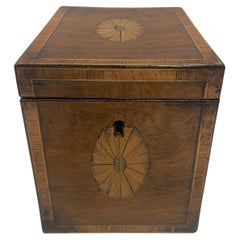
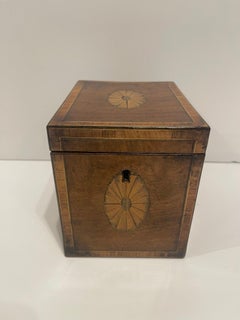
English Regency Tea Caddy with Inlay and Interior Lid, 19th Century
Located in Savannah, GA
English Regency Tea Caddy with Inlay and Interior Lid, 19th Century
Category
Antique 19th Century English Regency Tea Caddies
Materials
Mahogany
English Regency Tea Caddy with Inlay and Interior Lid, 19th Century
Located in Savannah, GA
English Regency Tea Caddy with Inlay and Interior Lid, 19th Century
Mahogany
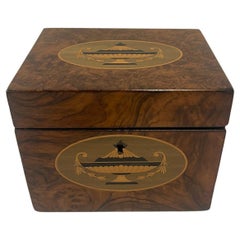
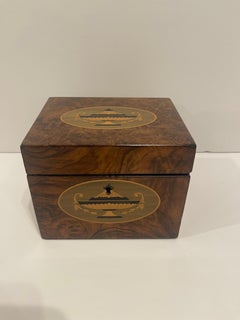
English Georgian Tea Caddy with Inlay and Interior Lid, 19th Century
Located in Savannah, GA
English Georgian Tea Caddy with Inlay and Interior Lid, 19th Century
Wood
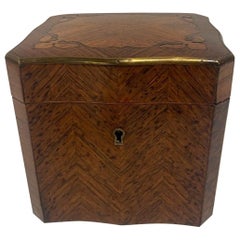
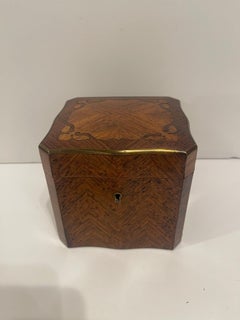
$650
H 4.25 in W 4.5 in D 4.5 in
English Square Burl Tea Caddy Brass Stringing and Interior Lid, 19th Century
Located in Savannah, GA
English Square Burl Tea Caddy with Brass Stringing and Interior Lid, 19th Century
Burl
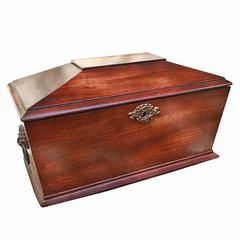
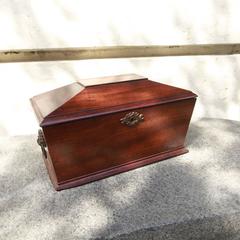
Three Section Mahogany Tea Caddy in a Sarcophagus, 19th Century
Located in Savannah, GA
A large three section mahogany tea caddy in a sarcophagus form that opens to reveal three tin
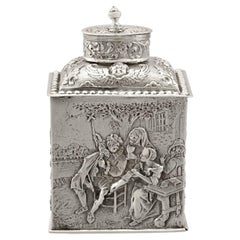
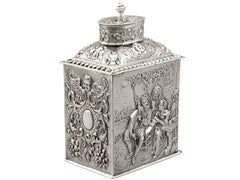
Sterling Silver Tea Caddy, Antique George V, '1925'
By Adolph Barsach Davis
Located in Jesmond, Newcastle Upon Tyne
An exceptional, fine and impressive antique English George V sterling silver tea caddy; an addition
Silver, Sterling Silver
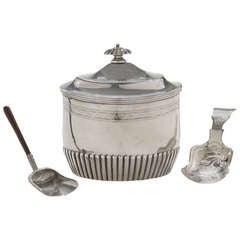

Circa 1883 English Silver Tea Caddy with Two Shovels
Located in Savannah, GA
Circa 1883 English Silver Tea Caddy with Shovels, oval with shaped sides, stop fluted sides, hinged
Silver
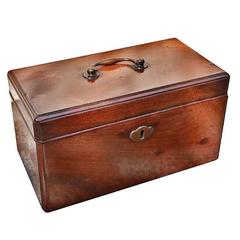

English Mahogany Document Box with Thumb Carved Edges, 18th Century
Located in Savannah, GA
believe that it started life as a tea caddy and was repurposed for use as a deed or document box as was
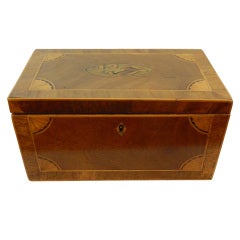

George III Marquetry Decorated Tea Caddy, 19th Century
Located in Savannah, GA
19th century George III marquetry decorated tea caddy of rectangular hinged form, with stylized
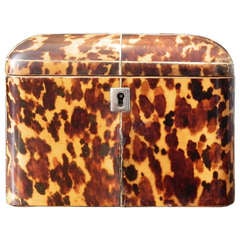

European Tortoiseshell Tea Caddy, circa 1860
Located in Savannah, GA
European tortoiseshell tea caddy on a conforming base with brass keyhole and ball feet, circa 1860.
Brass
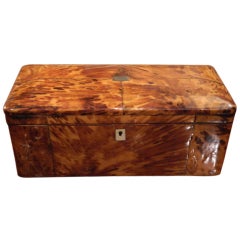

English Tortoise Shell Tea Caddy of Rectangular Form, 19th Century
Located in Savannah, GA
English tortoise shell tea caddy of rectangular form with hinged lid opening to two lidded interior
Ivory, Shell
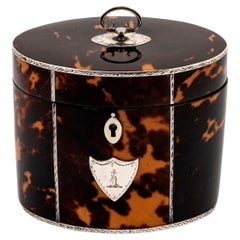
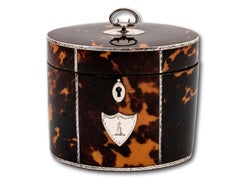
Georgian Tortoiseshell Tea Caddy
Located in Northampton, GB
Oval Tea Caddy with Silver Mounts From our Tea Caddy collection, we are delighted to offer this Georgian Silver and Tortoiseshell Tea Caddy. The Tea Caddy is of oval shape with a To...
Silver
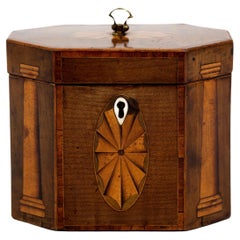
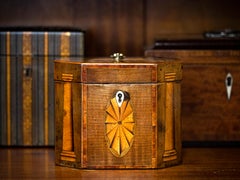
Georgian Harewood Tea Caddy
Located in Northampton, GB
With Tuscan Columns & Fan Inlay. From our Tea Caddy collection, we are pleased to offer this Georgian Harewood Tea Caddy. The Tea Caddy of octagonal shape with a Harewood veneer...
Boxwood, Harewood
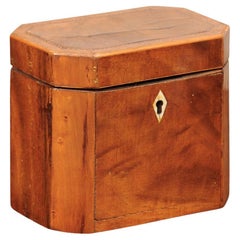
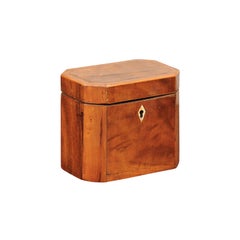
George III Mahogany Tea Caddy with Inlay & Burled Crossbanding
Located in Atlanta, GA
George III Mahogany Tea Caddy with Inlay & Burled Crossbanding, ca. 1790
Mahogany
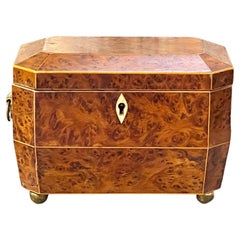
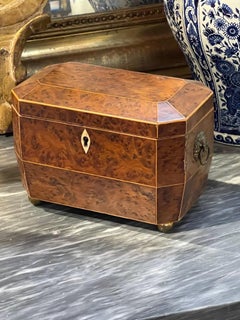
19th Century English Regency Burl Walnut Tea Caddy
Located in Dallas, TX
Beautiful 19th century English Regency burl walnut tea caddy. Lovely shape and pretty details including decorative handles on the sides. Makes an elegant statement!
Brass
There are lots of uses for your vintage, new or antique tea caddies, but they can certainly serve their original intended purpose if needed.
When tea first gained popularity during the 1800s, and teatime became commonplace in homes all over England, it was an expensive commodity owing to excessive taxation. (This, of course, inevitably yielded a black market for tea leaves.) Tea drinkers hoarded their precious goods, which began to arrive in London ports from China during the 17th century, under lock and key. In luxury homes, tea leaves were stowed away in a decorative jar or canister called a tea caddy that was fitted with a lock, or, alternatively, the container was kept in a secured chest or storage cabinet.
Tea was thought to be not just a delicious drink but also to have medicinal benefits. The Chinese had been praising the healthy properties of tea, and wealthy Europeans were eager to discover its benefits for themselves during their ritual afternoon tea. The idea of “teatime” wasn’t a social event in upper-class British homes until the 1830s or 1840s. During Queen Victoria’s reign, small baked treats might be served with your beverage, and teakettles and coffeepots were part of tea services that could include teacups, saucers, a milk pot and other accessories.
When tea cultivation was relegated to British colonies such as India, and the British East India Company could no longer hold onto its trade monopoly with China, tea was no longer a ritual confined to the wealthy. Today, antique and vintage tea caddies are collector’s items all over the world.
Tea caddies weren’t unique to Europeans. The earliest pieces originated in China. Surviving hand-painted examples from China or elsewhere in Asia made of porcelain might feature enameled landscapes or other designs. At the Taft Museum of Art, there are striking enameled 18th-century-era tea caddies of copper that were given to the institution in 2014. Wooden tea caddies materialized over time and were seen as sturdier than their ceramic counterparts.
Today, there are all kinds of ways to use a vintage tea caddy if you’re passing on tea. They’re a welcome decorative flourish on the mantel in your living room, for example. A metal tea caddy, lined with a plastic bag, can be used to cultivate an herb garden on your kitchen windowsill. An old wooden tea caddy can help keep your paper clips or pushpins organized on your desk too. If you’re always on the go, a tea tin is good for packing earbuds, hand sanitizer, gum or whatever else that might get easily lost in a roomy crossbody messenger bag or other shoulder bag.
Teatime or not, find antique and vintage mid-century modern tea caddies, tortoiseshell caddies and more on 1stDibs.
After synthetic dyes changed fashion, home goods and printed matter, it was only a matter of time till glass caught up.
The brilliantly simple design turns a modest bouquet into a major statement.
The Greek tragedian is said to have been handsome in his day.
Even for those who don’t indulge, elegant smoking accessories and audacious art portraying cigar enthusiasts hold a nostalgic allure.
It’s an excellent example of the sought-after ceramics coming out of South Africa’s KwaZulu-Natal province.
Thanks to its new leadership, the Spanish maker of figurines, busts and lighting is on a mission to update the art of porcelain for the 21st century.
The free-form stoneware piece is inspired by the magnolia tree and its associations with home.
The pair behind the Instagram account @houseplantclub share their tips for making any room of the house gloriously green.