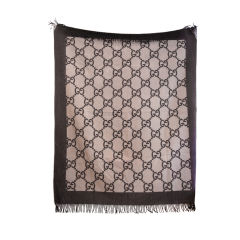
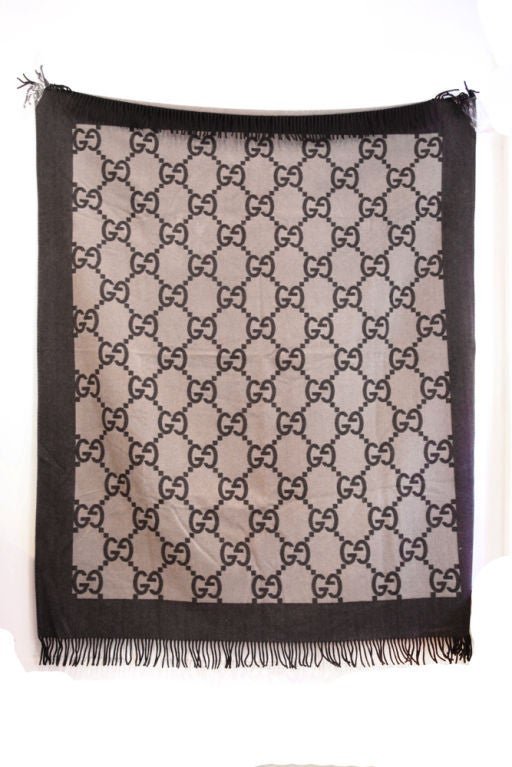
GUCCI BROWN/BEIGE MONOGRAM CASHMERE THROW BLANKET
By Gucci
Located in New York, NY
This Gucci Monogram Brown/Beige Cashmere Throw Blanket is a must-have.
Category
GUCCI BROWN/BEIGE MONOGRAM CASHMERE THROW BLANKET
By Gucci
Located in New York, NY
This Gucci Monogram Brown/Beige Cashmere Throw Blanket is a must-have.
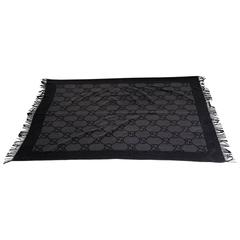
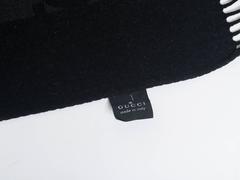
Gucci Throw Blanket
By Gucci
Located in Tarrytown, NY
Gucci throw blanket 90% wool, 10% cashmere, made it Italy.
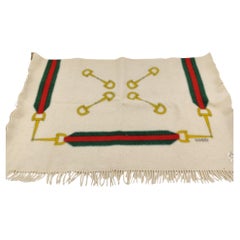
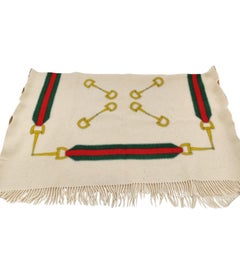
Gucci horsebit throw blanket
By Gucci
Located in Milano, IT
Gucci throw blanket Cream color with red green stripes and horsebits Wool blend Measurements: 90x120 cm 35.5x47 in Good condition Some stiffness and color bleeding
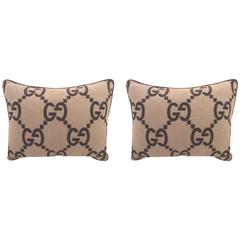
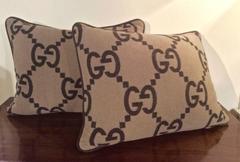
One Gucci Cashmere Throw Pillow
By Gucci
Located in Stamford, CT
Single rectangular lumbar Cashmere Gucci throw pillow, made from a authentic cashmere Gucci throw blanket.
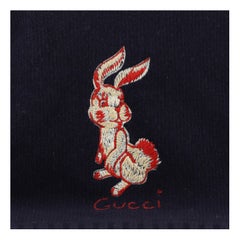

Gucci Kid's Throw Blanket Printed Wool with Applique Blue
By Gucci
Located in Irvine, CA
Gucci Kid's Throw Blanket Printed Wool with Applique Blue Print Wool Condition Details: Minor piling on blanket. 44788MSC Height 31", Width 31", Depth ", Strap Drop None
Long before trend-bucking creative director Alessandro Michele brought his hallucinatory “Utopian Fantasy” campaign to Gucci, it was a modest Italian leather shop. Today, it’s an internationally renowned luxury house with an iconic logo, and vintage Gucci clothing, handbags and shoes are among high fashion's most covetable goods.
Guccio Gucci (1881–1953) admired the stylish suitcases he saw wealthy guests arrive with at the Savoy Hotel in London, where he worked as a bellhop. So, in 1921, after a stint at Franzi, a luggage company in his hometown of Florence, he opened a leather goods shop of his own.
At first, Gucci’s Florence business specialized in equestrian accessories. But as its reputation flourished, particularly among the English aristocracy, so too did its footprint. In 1938, he brought three of his sons — Aldo, Vasco and Rodolfo — into the business and expanded it to Rome and later Milan. In the mid-1930s, a League of Nations embargo against Italy pushed Gucci to experiment with alternatives to imported leather. Its woven hemp fabric from Naples, adorned with the brand’s signature diamond print, was a hit, especially among A-list celebrities. The material was first used on suitcases before finding enduring popularity on handbags. (No list of revered designer purses would be complete without Gucci.)
In the 1950s, Elizabeth Taylor carried one of Gucci’s bamboo-handled tote bags, another adaptation to material rationing. After Jackie Kennedy was seen sporting a slouchy Gucci tote in 1961, it was renamed for the First Lady. Then Grace Kelly, on a visit to the boutique in Milan, inspired Rodolfo Gucci to work with Italian illustrator and Gucci textile designer Vittorio Accornero on the Flora print in 1966. Taking cues from Sandro Botticelli’s Primavera, with its pattern of flora and insects, it was painted entirely by hand and featured no fewer than 37 colors.
In 1953, just 15 days after opening his first store on New York’s 5th Avenue, Guccio passed away at 72. The early 1970s saw store openings in Tokyo and Hong Kong, but by the late 1980s, Gucci was floundering. Rodolfo Gucci took charge in 1982, but family drama and lawsuits ensued. In 1993, Rodolfo’s son, Maurizio, transferred his shares in the company to Investcorp, ending the family’s involvement in Gucci. Dawn Mello, then-president of Bergdorf Goodman, joined as creative director in 1989. But it was Tom Ford, who took over as creative director in 1994, who ultimately revived the brand.
Ford’s racy ads, shot by photographers such as Mario Testino, stirred controversy. And his potent vision of sexed-up femininity — with “jewel-toned satin shirts unbuttoned to there,” as Vogue described his breakthrough 1995 runway show — was wildly successful. The new millennium brought new ownership — Pinault Printemps Redoute in 2004 — and a more toned-down vision from Frida Giannini, who became sole creative director in 2006. Alessandro Michele was named creative director in 2015, and the storied brand took a giant leap forward.
Find vintage Gucci clothing and accessories on 1stDibs.
Created during Alessandro Michele's tenure at the brand, this sparkling, whimsical minaudière feels just right for a night out.
The iconic Italian label’s traveling exhibition has just arrived in London.
From Chanel to YSL, the logos of some legacy fashion houses spark instant brand recognition and have come to symbolize a kind of luxury that feels at once aspirational and attainable.
When the name of a bag is as well-known as its brand, you know it's a classic.
Makeup and astrology expert Linda Mason dispenses fashion advice for every zodiac sign. Does your wardrobe match your horoscope?