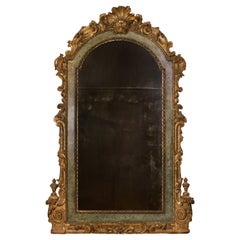
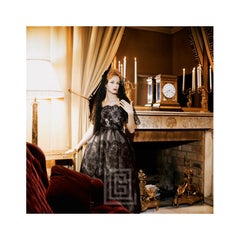
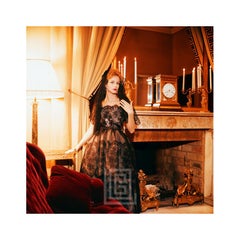
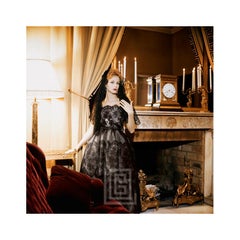
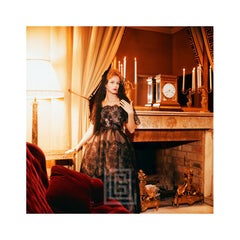
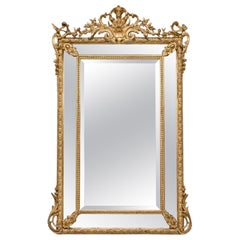
On 1stDibs, you can find the most appropriate guinness mirror for your needs in our varied inventory. If you’re looking for a guinness mirror from a specific time period, our collection is diverse and broad-ranging, and you’ll find at least one that dates back to the 18th Century while another version may have been produced as recently as the 20th Century. If you’re looking to add a guinness mirror to create new energy in an otherwise neutral space in your home, you can find a work on 1stDibs that features elements of
black,
brown and more. These artworks were handmade with extraordinary care, with artists most often working in
digital print,
giclée print and
inkjet print.
A guinness mirror can differ in price owing to various characteristics — the average selling price for items in our inventory is $4,800, while the lowest priced sells for $60 and the highest can go for as much as $182,820.
The first decades of the 20th century were a period of artistic upheaval, with modern art movements including Cubism, Surrealism, Futurism and Dadaism questioning centuries of traditional views of what art should be. Using abstraction, experimental forms and interdisciplinary techniques, painters, sculptors, photographers, printmakers and performance artists all pushed the boundaries of creative expression.
Major exhibitions, like the 1913 Armory Show in New York City — also known as the “International Exhibition of Modern Art,” in which works like the radically angular Nude Descending a Staircase by Marcel Duchamp caused a sensation — challenged the perspective of viewers and critics and heralded the arrival of modern art in the United States. But the movement’s revolutionary spirit took shape in the 19th century.
The Industrial Revolution, which ushered in new technology and cultural conditions across the world, transformed art from something mostly commissioned by the wealthy or the church to work that responded to personal experiences. The Impressionist style emerged in 1860s France with artists like Claude Monet, Paul Cézanne and Edgar Degas quickly painting works that captured moments of light and urban life. Around the same time in England, the Pre-Raphaelites, like Edward Burne-Jones and Dante Gabriel Rossetti, borrowed from late medieval and early Renaissance art to imbue their art with symbolism and modern ideas of beauty.
Emerging from this disruption of the artistic status quo, modern art went further in rejecting conventions and embracing innovation. The bold legacy of leading modern artists Georges Braque, Pablo Picasso, Frida Kahlo, Salvador Dalí, Henri Matisse, Joan Miró, Marc Chagall, Piet Mondrian and many others continues to inform visual culture today.
Find a collection of modern paintings, sculptures, prints and other fine art on 1stDibs.
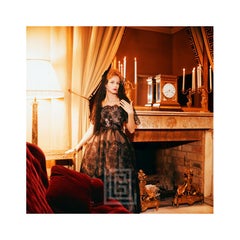
Color photography evokes emotion that can bring a viewer into the scene. It can transport one to faraway places or back into the past.
The first color photograph, taken in 1861, was more of an exercise in science than art. Photographer Thomas Sutton and physicist James Clerk Maxwell used three separate exposures of a tartan ribbon — filtered through red, green and blue — and composited them into a single image, resulting in the first multicolor representation of an object.
Before this innovation, photographs were often tinted by hand. By the 1890s, color photography processes were introduced based on that 1860s experiment. In the early 20th century, autochromes brought color photography to a commercial audience.
Now color photography is widely available, with these historic photographs documenting moments and scenes that are still vivid generations later. Photographers in the 20th and 21st centuries have offered new perspectives in the evolving field of modern color photography with gripping portraiture, snow-capped landscapes, stunning architecture and lots more.
In the voluminous collection of photography on 1stDibs, find vibrant full-color images by Slim Aarons, Helen Levitt, Gordon Parks, Stefanie Schneider, Steve McCurry and other artists. Bring visual interest to any corner of your home with color photography — introduce a salon-style gallery hang or another arrangement that best fits your space.