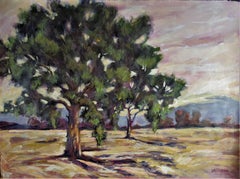
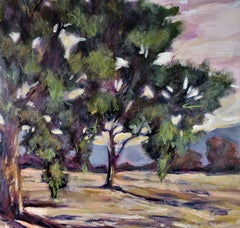
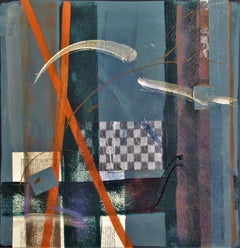
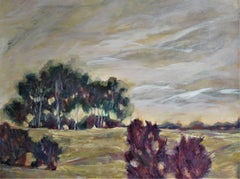
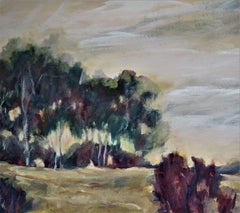
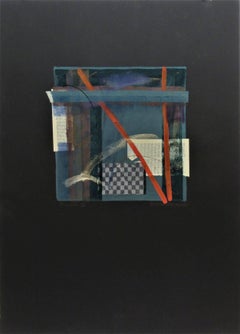
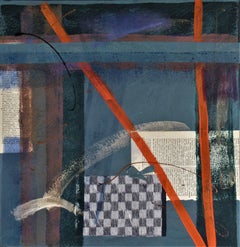
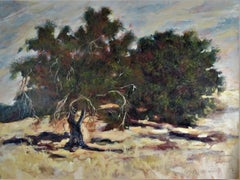
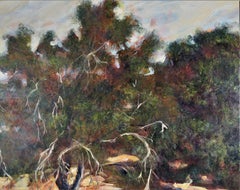
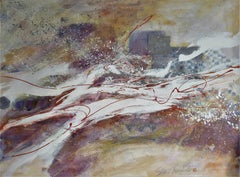
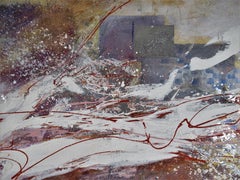
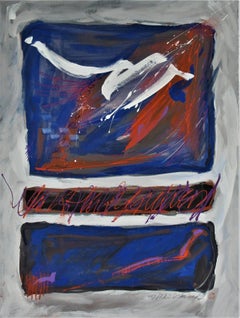
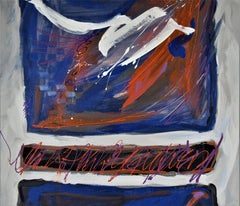
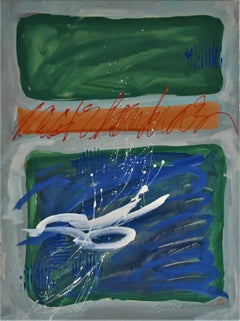
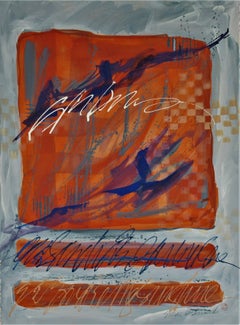
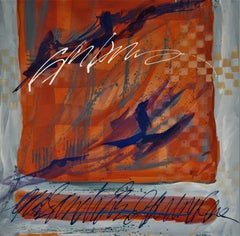
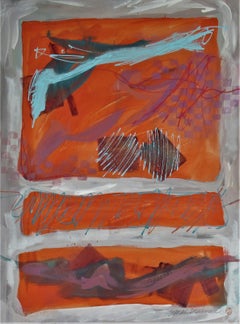
Surely you’ll find the exact piece of harvey dinnerstein art you’re seeking on 1stDibs — we’ve got a vast assortment for sale. In our selection of items, you can find
abstract examples as well as a
contemporary version. Finding the perfect item from our selection of harvey dinnerstein art may mean sifting through those created during different time periods — you can find an early version that dates to the 20th Century and a newer variation that were made as recently as the 21st Century. When looking for the right choice in our collection of harvey dinnerstein art for your space, you can search on 1stDibs by color — popular works were created in bold and neutral palettes with elements of
gray,
black,
brown and
blue. There have been many interesting object in our assortment of harvey dinnerstein art examples over the years, but those made by
Sandra Phipps MacDiarmid,
Andrew S. Conklin and
Gerald Lopato are often thought to be among the most thought-provoking. Artworks like these of any era or style can make for thoughtful decor in any space, but a selection from our variety of those made in
paint,
acrylic paint and
synthetic resin paint can add an especially memorable touch.
A piece of harvey dinnerstein art can differ in price owing to various characteristics — the average selling price for items in our inventory is $2,000, while the lowest priced sells for $1,100 and the highest can go for as much as $7,200.
Beginning in the early 20th century, abstract art became a leading style of modernism. Rather than portray the world in a way that represented reality, as had been the dominating style of Western art in the previous centuries, abstract paintings, prints and sculptures are marked by a shift to geometric forms, gestural shapes and experimentation with color to express ideas, subject matter and scenes.
Although abstract art flourished in the early 1900s, propelled by movements like Fauvism and Cubism, it was rooted in the 19th century. In the 1840s, J.M.W. Turner emphasized light and motion for atmospheric paintings in which concrete details were blurred, and Paul Cézanne challenged traditional expectations of perspective in the 1890s.
Some of the earliest abstract artists — Wassily Kandinsky and Hilma af Klint — expanded on these breakthroughs while using vivid colors and forms to channel spiritual concepts. Painter Piet Mondrian, a Dutch pioneer of the art movement, explored geometric abstraction partly owing to his belief in Theosophy, which is grounded in a search for higher spiritual truths and embraces philosophers of the Renaissance period and medieval mystics. Black Square, a daringly simple 1913 work by Russian artist Kazimir Malevich, was a watershed statement on creating art that was free “from the dead weight of the real world,” as he later wrote.
Surrealism in the 1920s, led by artists such as Salvador Dalí, Meret Oppenheim and others, saw painters creating abstract pieces in order to connect to the subconscious. When Abstract Expressionism emerged in New York during the mid-20th century, it similarly centered on the process of creation, in which Helen Frankenthaler’s expressive “soak-stain” technique, Jackson Pollock’s drips of paint, and Mark Rothko’s planes of color were a radical new type of abstraction.
Conceptual art, Pop art, Hard-Edge painting and many other movements offered fresh approaches to abstraction that continued into the 21st century, with major contemporary artists now exploring it, including Anish Kapoor, Mark Bradford, El Anatsui and Julie Mehretu.
Find original abstract paintings, sculptures, prints and other art on 1stDibs.
Revitalize your interiors — introduce drawings and watercolor paintings to your home to evoke emotions, stir conversation and show off your personality and elevated taste.
Drawing is often considered one of the world’s oldest art forms, with historians pointing to cave art as evidence. In fact, a cave in South Africa, home to Stone Age–era artists, houses artwork that is believed to be around 73,000 years old. It has indeed been argued that cave walls were the canvases for early watercolorists as well as for landscape painters in general, who endeavor to depict and elevate natural scenery through their works of art. The supplies and methods used by artists and illustrators to create drawings and paintings have evolved over the years, and so too have the intentions. Artists can use their drawing and painting talents to observe and capture a moment, to explore or communicate ideas and convey or evoke emotion. No matter if an artist is working in charcoal or in watercolor and has chosen to portray the marvels of the pure human form, to create realistic depictions of animals in their natural habitats or perhaps to forge a new path that references the long history of abstract visual art, adding a drawing or watercolor painting to your living room or dining room that speaks to you will in turn speak to your guests and conjure stimulating energy in your space.
When you introduce a new piece of art into a common area of your home — a figurative painting by Italian watercolorist Mino Maccari or a colorful still life, such as a detailed botanical work by Deborah Eddy — you’re bringing in textures that can add visual weight to your interior design. You’ll also be creating a much-needed focal point that can instantly guide an eye toward a designated space, particularly in a room that sees a lot of foot traffic.
When you’re shopping for new visual art, whether it’s for your apartment or weekend house, remember to choose something that resonates. It doesn’t always need to make you happy, but you should at least enjoy its energy. On 1stDibs, browse a wide-ranging collection of drawings and watercolor paintings and find out how to arrange wall art when you’re ready to hang your new works.