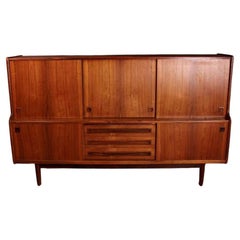
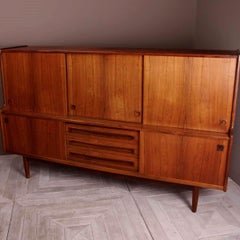
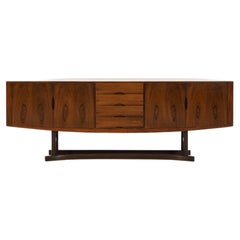
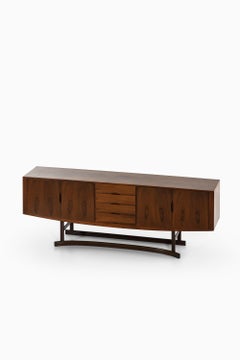
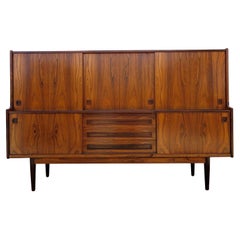
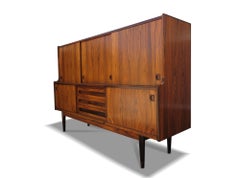
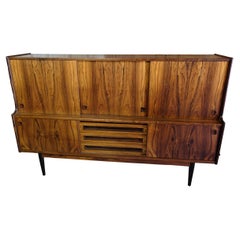
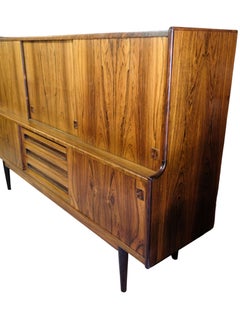
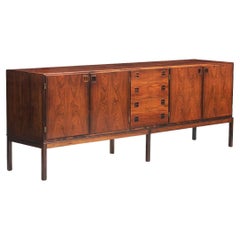
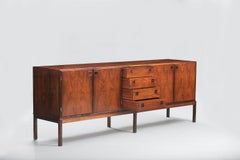
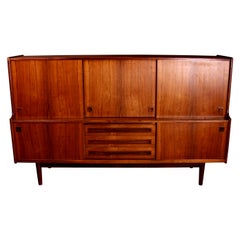
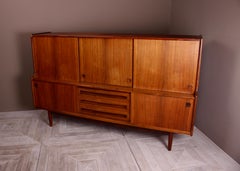
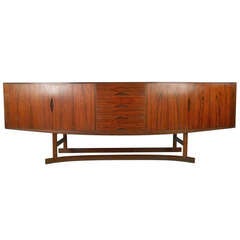
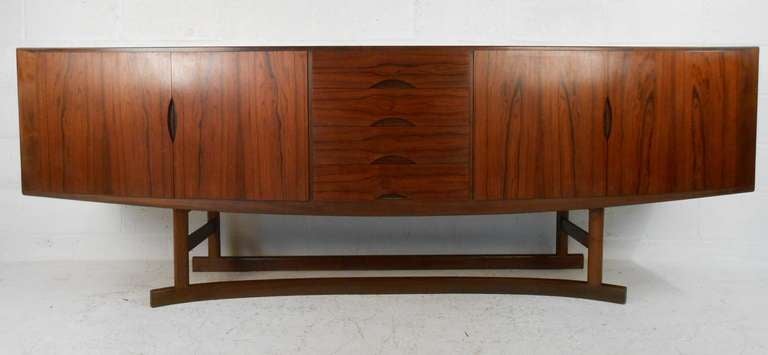
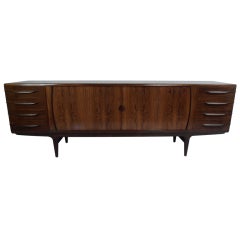
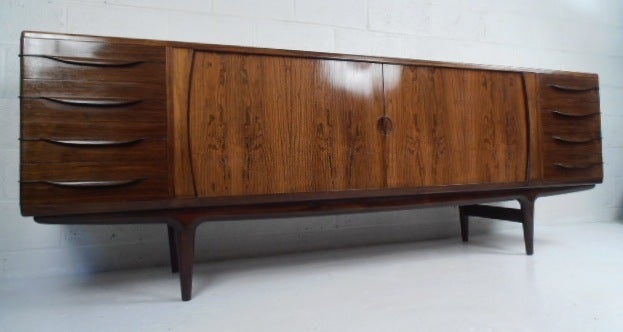
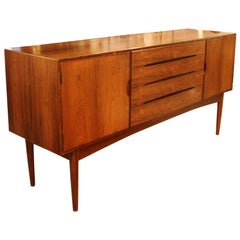
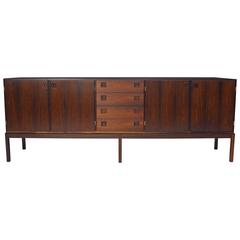
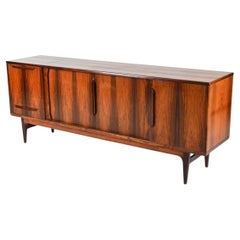
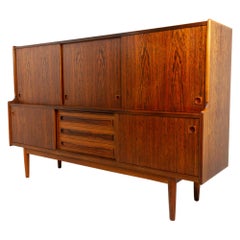
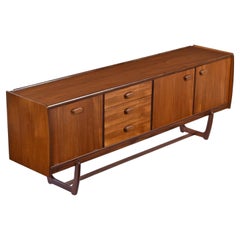
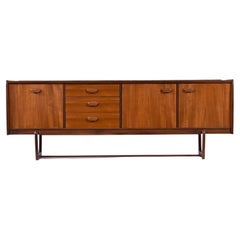
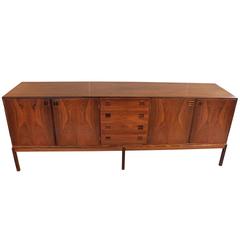
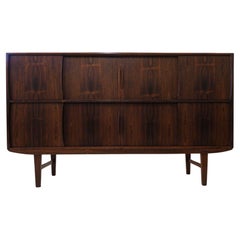
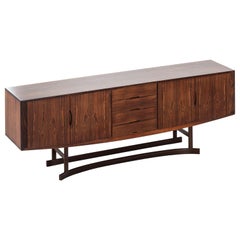
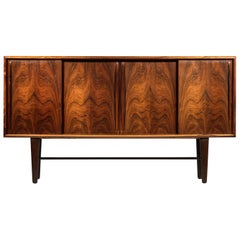
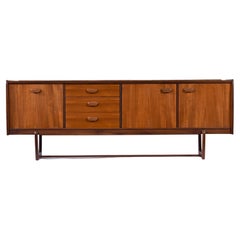
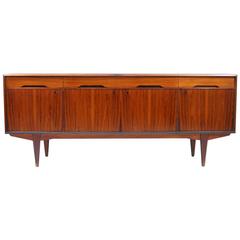
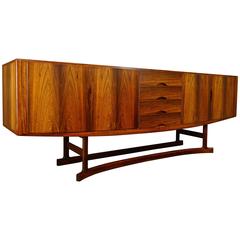
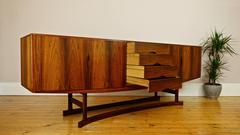
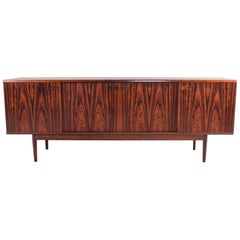
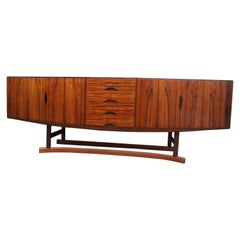
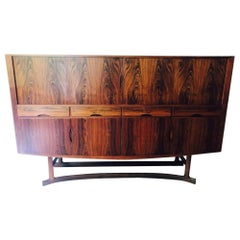
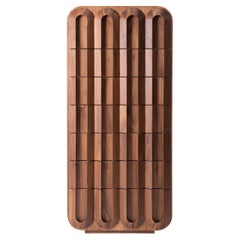
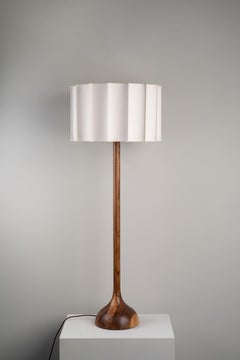
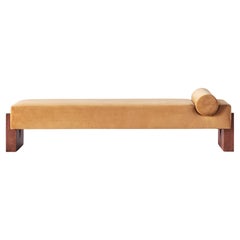
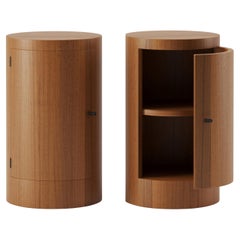
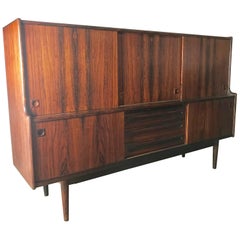
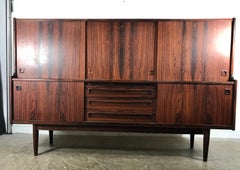
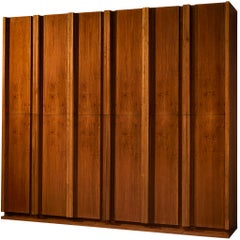
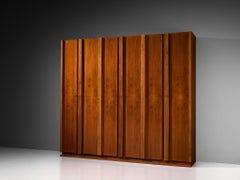
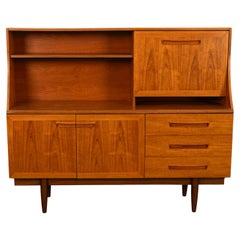
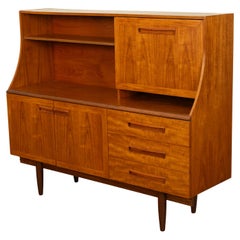
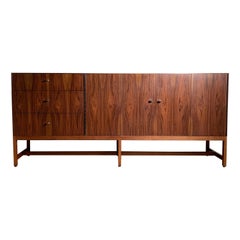
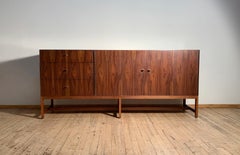
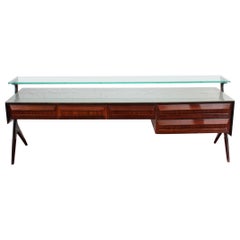
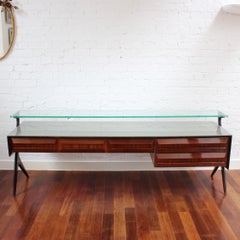
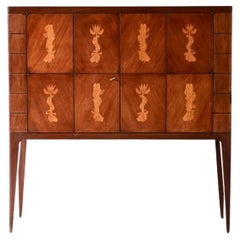
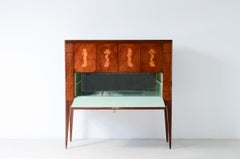
With a vast inventory of beautiful furniture at 1stDibs, we’ve got just the johannes andersen rosewood sideboard you’re looking for. Frequently made of
wood,
rosewood and
oak, every johannes andersen rosewood sideboard was constructed with great care. Whether you’re looking for an older or newer johannes andersen rosewood sideboard, there are earlier versions available from the 20th Century and newer variations made as recently as the 20th Century. A johannes andersen rosewood sideboard made by
Scandinavian Modern designers — as well as those associated with
Mid-Century Modern — is very popular.
Prices for a johannes andersen rosewood sideboard can differ depending upon size, time period and other attributes — at 1stDibs, they begin at $2,027 and can go as high as $18,424, while the average can fetch as much as $7,892.
Denmark has a long tradition of producing some of the most acclaimed furniture designers of the 20th century. Johannes Andersen is no exception — his name is synonymous with mid-century modern design. He elevated Scandinavian modernism’s prioritization of practicality and space conservation to new heights and worked with luxurious woods like teak, mahogany and rosewood for a range of designs that merged grace and function.
After completing his cabinetmaker apprenticeship in his early 20s, Andersen began to design for several furniture makers, including CFC Silkeborg and Trensum. A few years later, he opened his own workshop and enjoyed success from the outset. Free of the constraints of working under another studio, Andersen quickly developed his own, distinctive style that drew on Danish functionalism and human-centered design.
After the end of World War II, Andersen noticed the worldwide postwar consumption boom and the burgeoning interest in Scandinavian modern design. He took full advantage of this and began to sell his shapely and eye-pleasing tables, chairs and sideboards to markets outside of Denmark. Other Scandinavian manufacturers took notice of Andersen’s work, which led to many successful, career-long collaborations for the furniture maker.
Like Finn Juhl and Alvar Aalto, Andersen was deeply drawn to organic shapes and flowing lines. He transformed furniture’s traditionally square or rectangular panels and surfaces — like the tops of coffee tables and seat-backs of dining room chairs — into imaginative half-moons with rounded corners, beveled edges and fluid contours. His unexpected use of curves is the highlight of his sleek Capri line for Trensum and can be found in his comfortable saddle-shaped Allegra bar stool and playful but elegant Smile coffee table, which sports an anthropomorphic grin in the slot intended to hold magazines.
Andersen wanted his furniture to be compact — he experimented with reducing the footprints of bulky furniture, and his simple, iconic credenzas, sideboards and folding bar cabinets were born. These and other vintage Johannes Andersen furnishings are in high demand today by collectors and mid-century modern enthusiasts all over the world.
On 1stDibs, find a wide range of Johannes Andersen tables, seating, cabinets and other furniture.
An antique or vintage sideboard today is a sophisticated and stylish component in sumptuous dining rooms of every shape, size and decor scheme, as well as a statement of its own, showcased in art galleries and museums.
Once simply boards made of wood that were used to support ceremonial dining, sideboards have taken on much greater importance as case pieces since their modest first appearance. In Italy, the sideboard was basically a credenza, a solid furnishing with cabinet doors. It was initially intended as an integral piece of any dining room where the wealthy gathered for meals in the southern European country.
Later, in England and France, sideboards retained their utilitarian purpose — a place to keep hot water for rinsing silverware and from which to serve cold drinking water — but would evolve into double-bodied structures that allowed for the display of serveware and utensils on open shelves. We would likely call these buffets, as they’re taller than a sideboard. (Trust us — there is an order to all of this!)
The sideboard is often deemed a buffet in the United States, from the French buffet à deux corps, which referred to a storage and display case. However, a buffet technically possesses a tiered or shelved superstructure for displaying attractive kitchenware and certainly makes more sense in the context of buffet dining — abundant meals served for crowds of people.
Every imaginable iteration of the sideboard has taken shape over the years. Furniture maker and artist Paul Evans, whose work has been the subject of various celebrated museum exhibitions, created ornamented, welded and patinated sideboards for Directional Furniture, collections such as the Cityscape series that speak to his place in revolutionary brutalist furniture design as much as they echo the origins of these sturdy, functional structures centuries ago.
If mid-century modern sideboards or vintage Danish sideboards are more to your liking than an 18th-century mahogany sideboard with decorative inlays in the Hepplewhite style, the particularly elegant pieces crafted by designers Hans Wegner, Edward Wormley or Florence Knoll are often sought by today’s collectors.
Whether you have a specific era or style in mind or you’re open to browsing a vast collection to find the right fit, 1stDibs has a variety of antique and vintage sideboards to choose from.