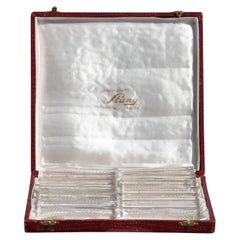
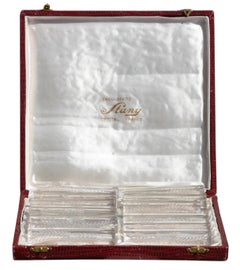
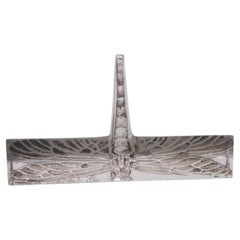
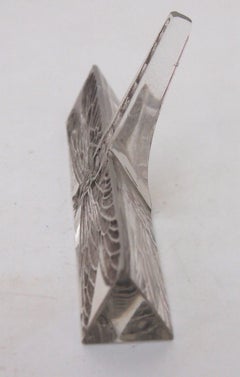
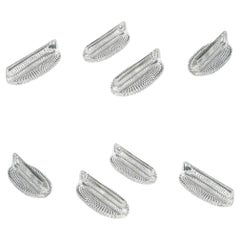
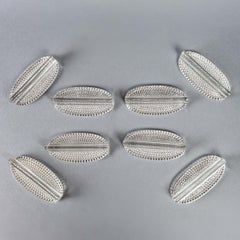
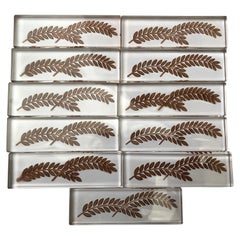
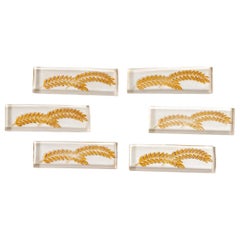
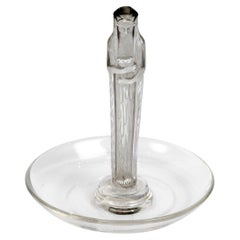
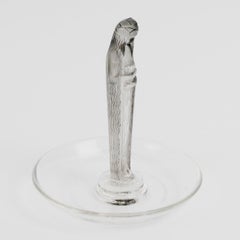
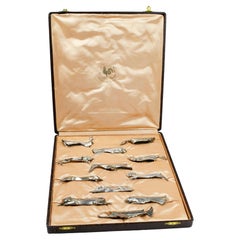
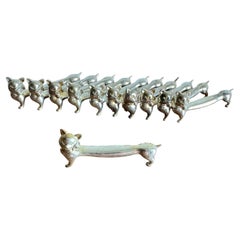
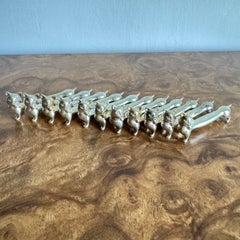
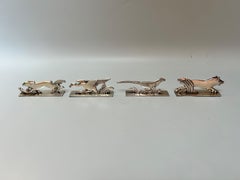
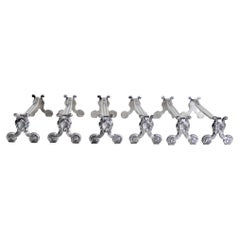
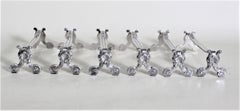
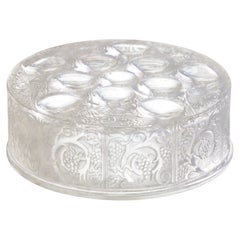
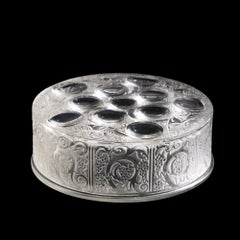
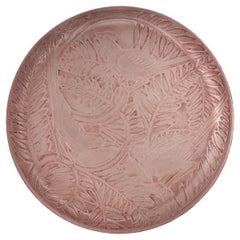
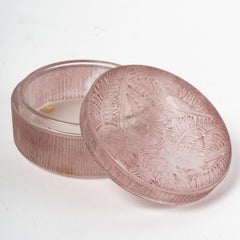
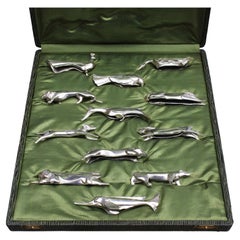
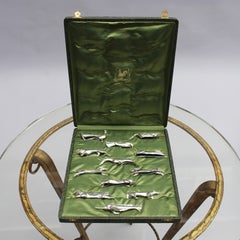
René Lalique “Hortense” Knife Rests
By René Lalique
Located in West Palm Beach, FL
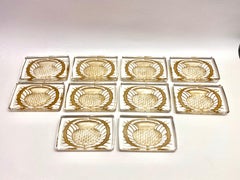
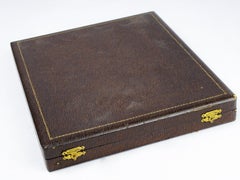
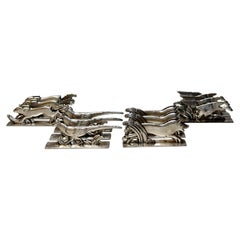
René Lalique “Hortense” Knife Rests, circa 1942 — Set of 20 in Original Box A beautifully
20th Century Serving Pieces
Glass
René Lalique “Hortense” Knife Rests
By René Lalique
Located in West Palm Beach, FL
René Lalique “Hortense” Knife Rests, circa 1942 — Set of 20 in Original Box A beautifully
Glass
$1,028
H 2.17 in W 3.86 in D 0.79 in
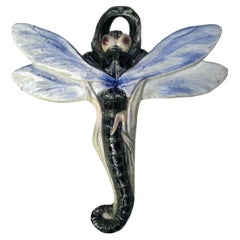
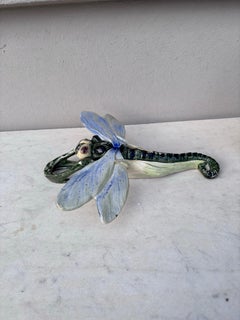
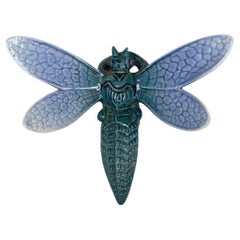
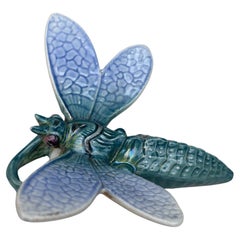
French Art Nouveau Rene Lalique Grey Stained Dragonfly Knife Rest c1919
By René Lalique
Located in Worcester Park, GB
Lalique 'Libellule' knife rest -depicting a dragonfly in flight, dating from 1919 (See Marcilhac ref
Art Glass
$2,072 / set
H 0.99 in W 1.78 in D 3.55 in
1932 René Lalique Set of 8 Nippon Knife Rests Glass Water Pearls
By René Lalique
Located in Boulogne Billancourt, FR
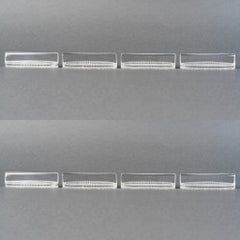
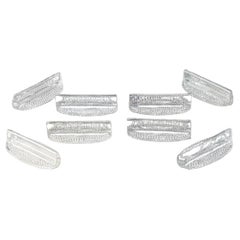
Set of 8 "Nippon" knife rests made in clear glass by René Lalique in 1932. Stamped signature on
Glass
$1,400 / set
H 0.4 in W 3.94 in D 1.19 in
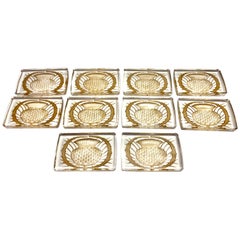
René Lalique (1860-1945), set of ten knife rests. Model "Hortense".
Located in København, Copenhagen
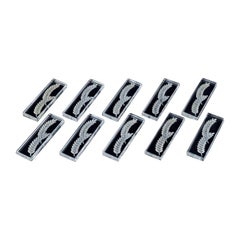
René Lalique (1860-1945), a set of ten knife rests. 1942 Model "Hortense". Early mark/ingraving: R
Art Glass
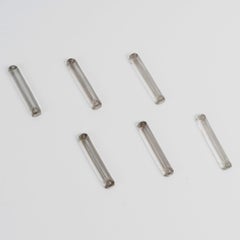
1924 René Lalique Set of 6 Scarabees Scarabs Knife Rests Glass
By René Lalique
Located in Boulogne Billancourt, FR
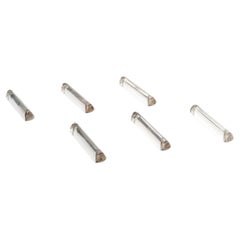
Set of 6 "Scarabees" (Scarabs) knife rests made in clear glass with grey patina by René Lalique in
Glass
Sold
H 1.97 in W 0.48 in D 3.31 in
1950s Lalique France Chardons Set of 10 Knife Rests Crystal with Sepia Stain
By René Lalique
Located in Boulogne Billancourt, FR
Set of 10 (ten) knife rests made in clear crystal with sepia stain by René Lalique in 1950s. Model
Crystal
1932 René Lalique Set of 6 Nippon Knife Rests Clear Glass Water Pearls
By René Lalique
Located in Boulogne Billancourt, FR
Set of 6 (six) knife rests made in clear glass with sepia stain by René Lalique in 1942. Model is
Glass
Sold
H 1.19 in W 0.16 in D 3.94 in
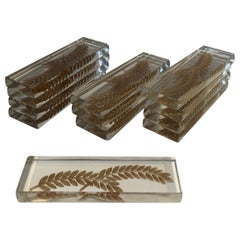
1942 Rene Lalique Hortense Set of 12 Knife Rests Clear Glass Sepia Stain Leaves
By René Lalique
Located in Boulogne Billancourt, FR
Set of 12 knife rest made in clear glass with sepia stain by René Lalique in 1942. Model is named
Glass
Sold
H 1.19 in W 0.16 in D 3.94 in
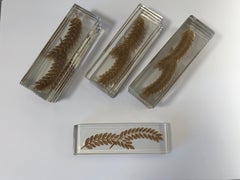
1942 René Lalique Hortense Set of 11 Knife Rests Clear Glass Sepia Stain Leaves
By René Lalique
Located in Boulogne Billancourt, FR
Set of 11 (eleven) knife rests made in clear glass with sepia stain by René Lalique in 1942. Model
Glass
Sold
H 1.19 in W 0.16 in D 3.94 in
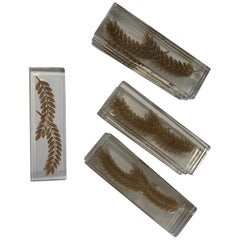
1942 Rene Lalique Hortense Set of 10 Knife Rests Clear Glass Sepia Stain Leaves
By René Lalique
Located in Boulogne Billancourt, FR
Set of 10 (ten) knife rest made in clear glass with sepia stain by René Lalique in 1942. Model is
Glass
Sold
H 3.94 in W 0.16 in L 3.94 in
1942 René Lalique Hortense Set of 6 Knife Rests Clear Glass Sepia Patina Leaves
By René Lalique
Located in Boulogne Billancourt, FR
Set of 6 (six) knife rests made in clear glass with sepia stain by René Lalique in 1942. Model is
Glass
Art Deco Palisander Sofa Of Scroll Shape
Located in Altrincham, GB
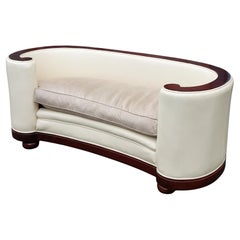
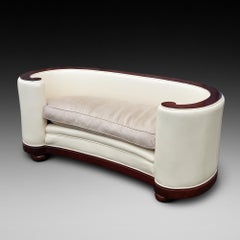
Art Deco Palisander Sofa Of Scroll Shape Form with Leather and Suede Upholstery on Bun Feet - 65"w x 25"d x 28"h (21" to the seat)
Leather, Suede, Palisander
French Majolica Cache Pot Jérôme Massier Circa 1890
By Jerome Massier
Located in Austin, TX
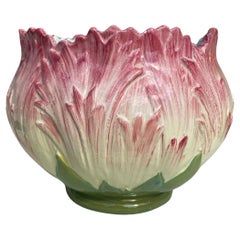
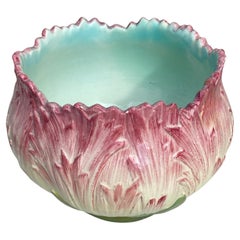
Large French Majolica tulip Cache Pot Jérôme Massier Circa 1890 Height / 7 inches. Diameter / 10 inches.
Ceramic
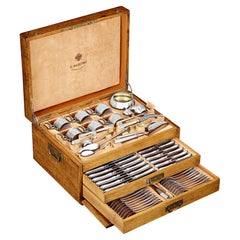
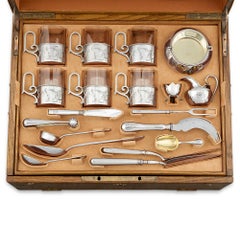
Fabergé Silver Service
By Fabergé
Located in New Orleans, LA
This extraordinary 128-piece service by Fabergé is a rare treasure in more ways than one. Enclosed in its original oak chest, the exquisite service remains complete and in pristine c...
Silver
$13,498
H 18.9 in W 30.71 in D 20.08 in
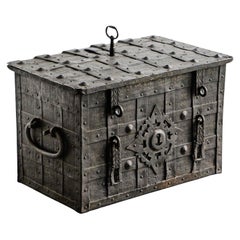
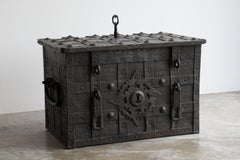
Very Rare Antique Armada Box or Strongbox in Iron Early 17th Century
Located in Meer, VAN
Very Rare Antique Armada Box or Strongbox in Iron Early 17th Century A truly wonderful 400 year old museum worthy ‘strongbox’ or ‘armada box’. Most probably German, around 1600-1620...
Iron
Rare Butterfly Porcelain China Figure by Ens Antique German 1920s
Located in Nuernberg, DE
A rare butterfly made by famous porcelain manufactory Ens, Volkstedt Germany. It is made of china porcelain and very delicate, this would be a great addition for your collection. It ...
Porcelain
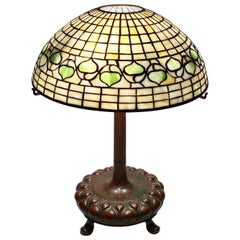
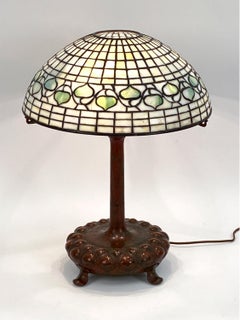
Antique Tiffany Studios 'Acorn' Table Lamp C. 1910
By Tiffany Studios
Located in Norwalk, CT
This lamp is a elegant testament to the classic Tiffany Studios design. Crafted in early 20th century, this lamp is evocative of the Art Nouveau style that Tiffany lamps are known fo...
Bronze
Palme koenig vase around 1908
Located in Wien, AT
Palme koenig vase around 1908 in the 2nd picture you can see that part of the decoration is chipped. but there is no crack and no danger of breaking the vase
Glass
Italian Venetian Grotto Seashell Settee
By Pauly et Cie
Located in Queens, NY
Italian Venetian Grotto (19th cent.) silver gilt settee with triple seashell seat and dolphin & seahorse motif (att: Pauly et Cie, Venice)
Silver Leaf
French 19th Century Silver Plated Casket
Located in London, GB
The whole casket is richly decorated. Standing on lions paw feet adorned with baroque motifs the scene on top depicts cupid stood beside two lovers (possibly) Daphne and Apollo. The ...
Silver Plate
$18,945
H 71.66 in W 82.68 in D 25.6 in
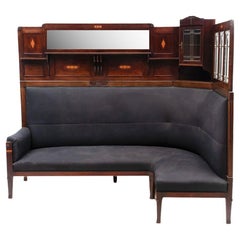
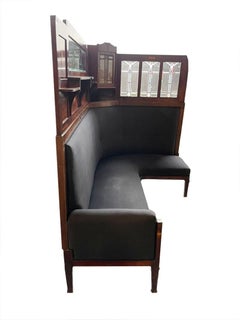
A corner sofa by J.M. Middelraad for H. Pander & Zn, circa 1900, The Netherlands
By H.Pander & Zonen
Located in Delft, NL
A corner sofa by J.M. Middelraad for H. Pander & Zn A corner sofa with fabric upholstery. The beautiful hand-carved details in Art Nouveau patterns and dragonflies, as well as on th...
Fabric, Palmwood
$5,849
H 0.95 in W 2.29 in D 4.06 in
Cigarette Case light blue cabochon sapphire and hand-engraved finishing Salimben
By Salimbeni, Giorgio Salimbeni
Located in Firenze, FI
Handbag cigarette case in 925/1000 sterling silver with black fire enamel. Opening with spring button. Size cm. 6.3 x 9.7 x 1.5. Weight gr. 215. Created in Art Deco style for Cartie...
Sterling Silver, Enamel
circa 1920 Art Deco Lighted Oak Display Counter
Located in Dekalb, IL
c. 1920s; Grand Rapids Store Equipment Co. - Grand Rapids, MI Antique wooden display counter with large viewing windows. This display counter features shelved, front-facing storage...
Glass, Oak
$138,700
H 1.5 in W 3.3 in D 2.5 in
An Imperial Mughal Gold Jade Box Set With Diamonds and Semi Precious Stones
Located in Long Island City, NY, NY
An Exquisite Masterpiece of Mughal Splendor: A Rare Gold-Mounted Jade Box with Diamonds and Semi-Precious Stones Introduction to a Regal Artifact: This exceptional jade box, hailin...
Jade, Gold
Tiffany Studios New York "Greek Key" Table Lamp
By Tiffany Studios, Louis Comfort Tiffany
Located in New York, NY
An alluring and visually rewarding example of Tiffany Studios New York's great "Greek Key" table lamp. Mottled glass in hues of warm amber and bright sunshine yellow soften the wonde...
Bronze
Black Cigarette Case for Handbag Sterling Silver Enamel Salimbeni
By Salimbeni, Giorgio Salimbeni
Located in Firenze, FI
Cigarette case for handbag in 925/1000 sterling silver with black fired enamel. Opening with spring button.. Measure cm. 6.3 x 9.7 x 1.5. Weight gr.210. Created in the Art Deco style...
Sterling Silver, Enamel
$260,000
H 6.75 in W 17.5 in D 12.25 in
19th C. Gold, Damascene, Etched Steel Casket Box/Safe with Noble Coat of Arms
Located in New York, NY
An Incredible 19th Century Royal Casket Box/Safe with Coat of Arms, Made of Gold, Damascene, and Etched Steel. Charles Le Hon, a Belgian politician, lawyer and industrialist, served...
Gold, Steel
The career of the famed jewelry designer, glassmaker and decorative artist René Lalique spanned decades and artistic styles. Best known today for his works in glass, Lalique first won recognition for his jewelry. He was described as the inventor of modern jewelry by the French artist and designer Émile Gallé, and his luxurious naturalistic designs helped define the Art Nouveau movement. Later as a glassmaker in the 1920s and ‘30s, Lalique designed vases, clocks, chandeliers and even car hood ornaments that were the essence of Art Deco chic. Even now, the name Lalique continues to be a byword for a graceful, gracious and distinctively French brand of sophistication.
Born in 1860 in the Marne region of France, Lalique began his career as a jewelry designer in the last decades of the 19th century. His work employed now-classic Art Nouveau themes and motifs: flowing, organic lines; forms based on animals, insects and flowers — all rendered in luxurious materials such as ivory, enamel, gold and semi-precious stones. By 1905, Lalique had begun creating works in glass, and his style began to shift to a cleaner, sharper, smoother, more modern approach suited to his new medium. His Paris shop’s proximity to perfumer François Coty’s led him to experiment with beautiful perfume bottles. He offered the first customized scent bottles, transforming the perfume industry. By the end of the First World War, the artist had fully embraced Art Deco modernity, devoting himself to new industrial techniques of glass production and designs that manifest the sweeping lines and the forms suggestive of speed and movement characteristic of the style. Lalique’s work looked both backward and forward in time: embracing ancient mythological themes even as it celebrated modern progress.
Late in his career, Lalique took on high profile luxury interior design projects in Paris, Tokyo and elsewhere. He designed decorative fixtures and lighting for the interior of the luxury liner Normandie in 1935, and decorated the salons of well-known fashion designer Madeleine Vionnet. Today, Lalique’s influence is as relevant as it was when he opened his first jewelry shop in 1890. In a modern or even a traditional décor, as you will see from the objects offered on these pages, the work of René Lalique provides the stamp of savoir-faire.
While it isn’t always top of mind for some, antique and vintage tableware can enhance even the most informal meal. It has been an intimate part of how we’ve interacted with our food for millennia.
Tableware has played a basic but important role in everyday life. Ancient Egyptians used spoons (which are classified as flatware) made of ivory and wood, while Greeks and Romans, who gathered for banquets involving big meals and entertainment, ate with forks and knives. At the beginning of the 17th century, however, forks were still uncommon in American homes. Over time, tableware has thankfully evolved and today includes increasingly valuable implements.
Tableware refers to the tools people use to set the table, including serving pieces, dinner plates and more. It encompasses everything from the intricate and elaborate to the austere and functional, yet are all what industrial product designer Jasper Morrison might call “Super Normal” — anonymous objects that are too useful to be considered banal.
There are four general categories of tableware — serveware, dinnerware, drinkware and, lastly, flatware, which is commonly referred to as silverware or cutlery. Serveware includes serving bowls, platters, gravy boats, casserole pans and ladles. Most tableware is practical, but it can also be decorative. And decorative objects count as tableware too. Even though they don’t fit squarely into one of the four categories, vases, statues and floral arrangements are traditional centerpieces.
Drinkware appropriately refers to the vessels we use for our beverages — mugs, cups and glasses. There is a good deal of variety that falls under this broad term. For example, your cheerful home bar or mid-century modern bar cart might be outfitted with a full range of vintage barware, which might include pilsner glasses and tumblers. Specialty cocktails are often served in these custom glasses, but they’re still a type of drinkware.
Every meal should be special — even if you’re using earthenware or stoneware for a casual lunch — but perhaps you’re hosting a dinner party to mark a specific event. The right high-quality tableware can bring a touch of luxury to your cuisine. Young couples, for example, traditionally add “fine china,” or porcelain, to their wedding registry as a commemoration of their union and likely wouldn’t turn down exquisite silver made by Tiffany & Co. or Georg Jensen.
It’s important to remember, however, that when you’re setting the dining room table to have fun with it. Just as you might mix and match your dining chairs, don’t be afraid to mix new and old or high and low with your tableware. On 1stDibs, find an extraordinary range of vintage and antique tableware to help elevate your meal as well as the mood and atmosphere of your entire dining room.