Meissen Painted Plaque

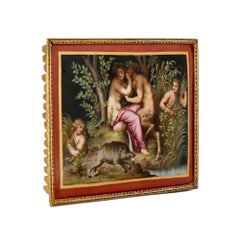
19th Century German Meissen painted porcelain plaque

19th Century German Meissen painted porcelain plaque

By Meissen Porcelain

Located in London, GB

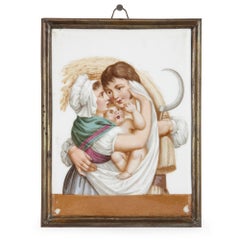
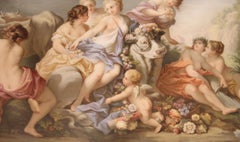
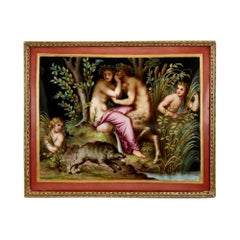
19th Century German Meissen painted porcelain plaque German, 19th Century Height 11cm, width 13.5cm, depth 1cm This charming painted porcelain plaque depicts a nymph and a faun embr...

Category

Antique 19th Century German Neoclassical Paintings

Materials

Metal

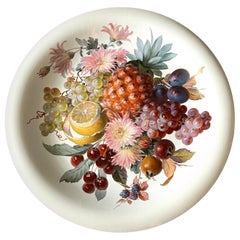
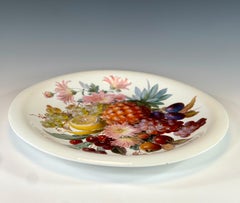
Superb 19th C Meissen Hand Painted Porcelain Plaque 18.75" Fruit Subjects

Superb 19th C Meissen Hand Painted Porcelain Plaque 18.75" Fruit Subjects

By Meissen Porcelain

Located in Great Barrington, MA

The best of the best, this extraordinary Meissen 19th c. plaque is hand painted with fruit subjects on 18 3/4" diameter porcelain, ready to hang on your wall for all to enjoy.

Category

Antique 1890s German Belle Époque Porcelain

Materials

Porcelain

Antique Meissen Porcelain Plaque after Correggio

Antique Meissen Porcelain Plaque after Correggio

By Meissen Porcelain

Located in London, GB

Antique Meissen porcelain plaque after Correggio German, 19th Century Measures: Frame: Height 43cm, width 50cm, depth 10cm Plaque: Height 24cm, width 31cm, depth 0.5cm This bea...

Category

Antique 19th Century German Renaissance Porcelain

Materials

Porcelain, Giltwood

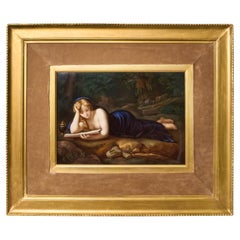
Antique German Porcelain Meissen Plaque Religious Mary Magdalene

Antique German Porcelain Meissen Plaque Religious Mary Magdalene

By Meissen Porcelain

Located in London, GB

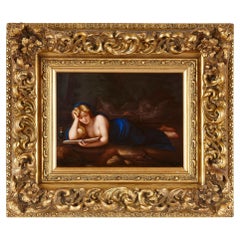
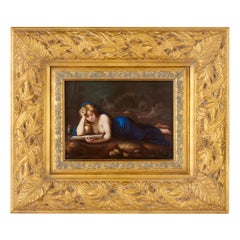
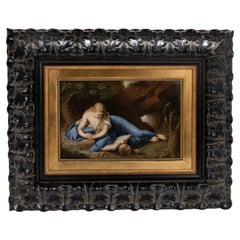
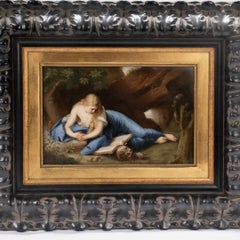
Antique German Porcelain Meissen Plaque Religious Mary Magdalene German, 19th Century Plaque: Height 18cm, width 25cm Frame: Height 43cm, width 50cm, depth 7cm This superb Meisse...

Category

Antique 19th Century German Paintings

Materials

Porcelain, Giltwood

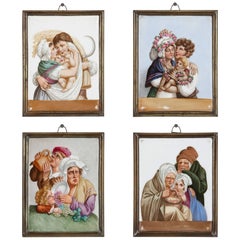
Four Meissen Porcelain Plaques Depicting the Four Seasons

Four Meissen Porcelain Plaques Depicting the Four Seasons

By Meissen Porcelain

Located in London, GB

This delicately detailed set of four allegorical porcelain plaques portrays family scenes within the theme of the four seasons: Spring, Summer, Autumn and Winter. Spring can be ide...

Category

Antique Early 19th Century German Folk Art Paintings

Materials

Metal

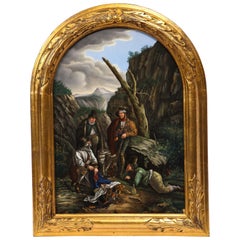
Meissen Plaque Depicting Four Royals Hunting in the Woods with a Dog and Rifles

Meissen Plaque Depicting Four Royals Hunting in the Woods with a Dog and Rifles

By Meissen Porcelain

Located in New York, NY

An exceptionally fine and quite larege Meissen hand-painted porcelain plaque depicting four royals hunting in the woods with a hunting dog and rifles.

Category

Antique Mid-19th Century German Louis XVI Paintings

Materials

Porcelain, Wood

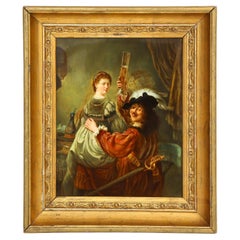
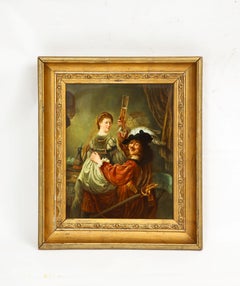
19th C. Meissen Porcelain Plaque Depicting Rembrandt and Saskia in the Tavern

19th C. Meissen Porcelain Plaque Depicting Rembrandt and Saskia in the Tavern

By Meissen Porcelain, Rembrandt van Rijn

Located in New York, NY

The plaque is hand-painted by the best artists in the Meissen Porcelain Manufacturer in the "Golden Age" of Meissen creation.

Category

Antique 1860s German Baroque Porcelain

Materials

Porcelain

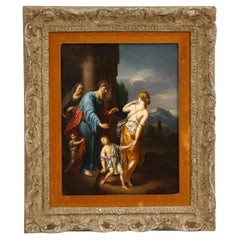
19th C. Meissen Porcelain Plaque of 'the Banishment of Ishmael and Hager'

19th C. Meissen Porcelain Plaque of 'the Banishment of Ishmael and Hager'

By Adriaen van der Werff, Meissen Porcelain

Located in New York, NY

A 19th Century Meissen Porcelain Plaque of 'The Banishment of Ishmael and Hager', in its Original Frame.

Category

Antique 1870s German Baroque Paintings

Materials

Porcelain

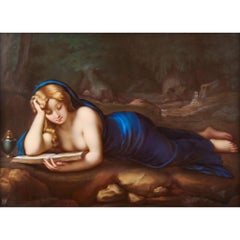
Antique Porcelain Plaque of the Reclining Mary Magdalene Reading after Batoni

Antique Porcelain Plaque of the Reclining Mary Magdalene Reading after Batoni

By Royal Vienna Porcelain, Königliche Porzellan-Manufaktur (KPM), Meissen Porcelain

Located in Philadelphia, PA

A fine antique German hand painted porcelain plaque. In the Royal Berlin (KPM) or Royal Vienna style. Depicting the Reclining Mary Magdalene Reading In the Wilderness after Pompeo ...

Category

Early 20th Century German Rococo Paintings

Materials

Porcelain

Recent Sales

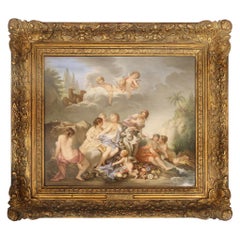
19th Century Meissen Porcelain Plaque “Rape of Europa” after François Boucher

19th Century Meissen Porcelain Plaque “Rape of Europa” after François Boucher

By Meissen Porcelain

Located in Long Island City, NY

Late 19th century large Meissen Porcelain Plaque Entitled “Rape of Europa” after François Boucher Ovid’s ‘Metamorphoses’ (II, 835–875) tells of the abduction of Europa by Jupiter,...

Category

Antique Late 19th Century German Belle Époque Paintings

Materials

Giltwood, Porcelain

Meissen Porcelain Plaque with Hand Painted Flower Bouquet or Streublumen

Meissen Porcelain Plaque with Hand Painted Flower Bouquet or Streublumen

By Meissen Porcelain

Located in Philadelphia, PA

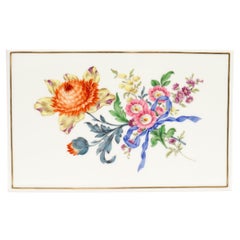
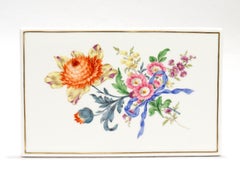
A fine German porcelain plaque. By Meissen. Of rectangular form with a hand painted depiction of floral bouquet tied with a blue ribbon to the center.

Category

20th Century German Porcelain

Materials

Porcelain

Antique Meissen Porcelain Plaque of the Sistine Madonna after Raphael

Antique Meissen Porcelain Plaque of the Sistine Madonna after Raphael

By Meissen Porcelain, (after) Raphael (Raffaello Sanzio da Urbino)

Located in London, GB

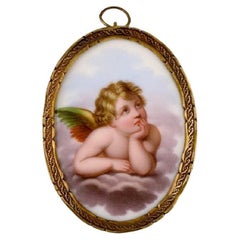
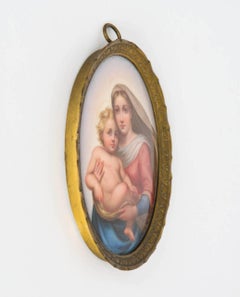
This charming miniature porcelain plaque depicts the Sistine Madonna after Raphael's famous Renaissance masterpiece of 1513. The oval plaque is set in a gilt frame, and bears the Mei...

Category

Antique 19th Century German Renaissance Paintings

Materials

Porcelain

People Also Browsed

19th Century Meissen clock depicting the four seasons.

19th Century Meissen clock depicting the four seasons.

$11,442

H 22.84 in W 16.54 in D 7.88 in

19th Century Meissen clock depicting the four seasons.

By Meissen Porcelain

Located in Brighton, Sussex

A fine quality late 19th Century German, Meissen porcelain clock on stand, having wonderful bold traditional colours, the figures representing the four seasons. The clock striking on...

Category

Antique 19th Century German Mantel Clocks

Materials

Porcelain

Pair of Meissen Porcelain Chinoiserie Figural Sweetmeat Dishes, J.J. Kandler

Pair of Meissen Porcelain Chinoiserie Figural Sweetmeat Dishes, J.J. Kandler

By Meissen Porcelain

Located in New York, NY

A fine pair of Meissen porcelain chinoiserie figural sweetmeat dishes, after a model by J.J. Kandler Each with a Malabar chinoiserie figure seated on a sea-shell and holding a bowl ...

Category

Mid-20th Century German Rococo Porcelain

Materials

Porcelain

12 Val St. Lambert Cobalt Cut to Clear Goblets "Cathedrale Napolean" Pattern

12 Val St. Lambert Cobalt Cut to Clear Goblets "Cathedrale Napolean" Pattern

By Val Saint Lambert

Located in Great Barrington, MA

One of Val Saint Lambert's most sought after patterns, this set of 12 water or wine goblets is hand blown crystal with cobalt blue overlay and cut to clear in the "Cathedral Napoleon...

Category

Vintage 1920s Belgian Glass

Materials

Crystal

Rare Antique 102 piece Meissen „Flower Bouqet” Dinner Service, Germany 1840

Rare Antique 102 piece Meissen „Flower Bouqet” Dinner Service, Germany 1840

By Meissen Porcelain

Located in Rome, IT

Extensive 102 Piece Rare Meissen Dinner Service "Flower Bouqett", 1815 – 1860 , colorful, richly decorated gold rim, consisting of: 45 dinner plates (Ø 24 cm,) 24 deep plates (Ø 23 ...

Category

Antique 19th Century Italian Neoclassical Dinner Plates

Materials

Porcelain

Exquisite Rotunda Structure Kiosk Copper & Carved Stone Bench Seating Columns

Exquisite Rotunda Structure Kiosk Copper & Carved Stone Bench Seating Columns

Located in West Hollywood, CA

Exquisite Rotunda Structure Kiosk Copper & Carved Stone Bench Seating Columns . Monumental Exquisite refined work King Charles X Period Rotunda rotundus building structure with a...

Category

Antique Early 19th Century French Charles X Architectural Elements

Materials

Stone, Copper

Magnificent and large ormolu and hardstone Regency period ebonized wooden casket

Magnificent and large ormolu and hardstone Regency period ebonized wooden casket

Located in London, GB

Magnificent and large ormolu and hardstone mounted ebonized wooden casket English, 19th Century Height 41cm, width 72cm, depth 52cm Exceptionally fine and richly adorned, this beau...

Category

Antique Early 19th Century English Regency Decorative Boxes

Materials

Lapis Lazuli, Malachite, Ormolu

Fabergé Silver Flatware Service

Fabergé Silver Flatware Service

$198,500 / set

H 10 in W 22.5 in D 12 in

Fabergé Silver Flatware Service

By Fabergé

Located in New Orleans, LA

This exceptional 77-piece complete service by Fabergé is a rare treasure from the world-renowned firm. Enclosed in its original oak chest, the exquisite service remains complete and ...

Category

Antique 19th Century Russian Tableware

Materials

Silver

Russian Imperial Silver Punch Set From Czar Alexander III

Russian Imperial Silver Punch Set From Czar Alexander III

Located in New Orleans, LA

A monumental piece of history, this exquisite silver punch set was made for Czar Alexander III as a gift to British Captain Joseph Wiggins. Heavily decorated with rich engravings and...

Category

Antique 19th Century Russian Other Serving Pieces

Materials

Silver

2 Antique Meissen German Porcelain Lidded Chocolate Tea Cups & Saucers on Stands

2 Antique Meissen German Porcelain Lidded Chocolate Tea Cups & Saucers on Stands

By Meissen Porcelain

Located in Dayton, OH

Pair of exquisite antique 19th century Meissen porcelain demitasse chocolate cups with lids and saucers, decorated with pink and gold borders and landscapes with stone buildings. Bot...

Category

Antique Late 19th Century Victorian Porcelain

Materials

Porcelain, Hardwood

Meissen Porcelain Mirror

Meissen Porcelain Mirror

$74,500

H 65.25 in W 41 in D 5.63 in

Meissen Porcelain Mirror

By Meissen Porcelain

Located in New Orleans, LA

Lavish Meissen porcelain serves as the extraordinary frame for this mirror. Exquisitely hand-painted in polychrome with gilt accents, the bountiful frame is adorned with all manner o...

Category

Antique 19th Century German Rococo Wall Mirrors

Materials

Porcelain, Mirror

A 20th century Meissen porcelain set, Germany

A 20th century Meissen porcelain set, Germany

By Meissen Porcelain

Located in Delft, NL

A 20th century Meissen porcelain set, Germany A porcelain set, manufactured by Meissen in Germany. The set painted with bright colors, red, blue, yellow and green in floral pattern....

Category

20th Century German Porcelain

Materials

Porcelain

Meissen Rococo Porcelain Box

Meissen Rococo Porcelain Box

$6,450

H 2 in W 3 in D 2.5 in

Meissen Rococo Porcelain Box

By Meissen Porcelain

Located in New Orleans, LA

Incredible hand-painted scenes inspired by Rococo master Antoine Watteau cover this magnificent Meissen porcelain box. Displaying romantic courtship scenes on each side, the casket i...

Category

Antique 18th Century German Rococo Decorative Boxes

Materials

Porcelain

Antique French Marquetry, Ormolu and Jasperware Bureau du Roi by Beurdeley

Antique French Marquetry, Ormolu and Jasperware Bureau du Roi by Beurdeley

By Emmanuel-Alfred Beurdeley

Located in London, GB

Antique French marquetry, ormolu and jasperware Bureau du Roi by Beurdeley French, c. 1890 Height 151cm, width 190cm, depth 100cm The Bureau du Roi, also known as the secrétaire à ...

Category

Antique Late 19th Century French Louis XV Desks and Writing Tables

Materials

Ormolu

Very Rare 19th C. Cobalt Blue Ground Sevres Porcelain Jewelry Box

Very Rare 19th C. Cobalt Blue Ground Sevres Porcelain Jewelry Box

By Manufacture Nationale de Sèvres

Located in New York, NY

A very large and unusual 19th century French Louis XVI style dore bronze mounted Sevres cobalt blue ground box signed Sarat. This box is truly a masterpiece. Sevres boxes, such as th...

Category

Antique 1860s French Louis XVI Decorative Boxes

Materials

Bronze

Steuben Amethyst Hand Blown Optic Rib Plates & Stemware Service for 12

Steuben Amethyst Hand Blown Optic Rib Plates & Stemware Service for 12

By Steuben Glass

Located in Great Barrington, MA

What an amazing collection of Steuben's hand blown amethyst crystal dinner service for 12! All hand blown in the more desirable form of optic ribbing that gives each piece a special ...

Category

Vintage 1920s American Glass

Materials

Crystal

Antique French Louis XVI Style Ormolu-Mounted Commode after Benneman

Antique French Louis XVI Style Ormolu-Mounted Commode after Benneman

Located in London, GB

Antique French Louis XVI style ormolu-mounted commode after Benneman French, Early 20th Century Height 93cm, width 179cm, depth 69cm This outstanding commode à vanteaux is after a ...

Category

Early 20th Century French Louis XVI Commodes and Chests of Drawers

Materials

Marble, Ormolu

Get Updated with New Arrivals
Save "Meissen Painted Plaque", and we’ll notify you when there are new listings in this category.

Meissen Painted Plaque For Sale on 1stDibs

Choose from an assortment of styles, material and more with respect to the meissen painted plaque you’re looking for at 1stDibs. Frequently made of ceramic, porcelain and metal, every meissen painted plaque was constructed with great care. There are many kinds of the meissen painted plaque you’re looking for, from those produced as long ago as the 18th Century to those made as recently as the 19th Century. Each meissen painted plaque bearing Baroque, Victorian or folk art hallmarks is very popular. Meissen Porcelain each produced at least one beautiful meissen painted plaque that is worth considering.

How Much is a Meissen Painted Plaque?

A meissen painted plaque can differ in price owing to various characteristics — the average selling price 1stDibs is $9,849, while the lowest priced sells for $1,294 and the highest can go for as much as $257,500.

Meissen Porcelain for sale on 1stDibs

Meissen Porcelain (Staatliche Porzellan-Manufaktur Meissen) is one of the preeminent porcelain factories in Europe and was the first to produce true porcelain outside of Asia. It was established in 1710 under the auspices of King Augustus II “the Strong” of Saxony-Poland (1670–1733), a keen collector of Asian ceramics, particularly Ming porcelain.

In pursuing his passion, which he termed his “maladie de porcelaine,” Augustus spent vast sums, amassing some 20,000 pieces of Japanese and Chinese ceramics. These, along with examples of early Meissen, comprise the Porzellansammlung, or porcelain collection, of the Zwinger Palace, in Dresden.

The king was determined, however, to free the European market from its dependence on Asian imports and to give European artisans the freedom to create their own porcelain designs. To this end, he charged the scientist Ehrenfried Walther von Tschirnhaus and aspiring alchemist Johann Friedrich Böttger with the task of using local materials to produce true, hard-paste porcelain (as opposed to the soft-paste variety European ceramists in the Netherlands, Germany, France, Italy and Spain had been producing since the late Renaissance). In 1709, the pair succeeded in doing just that, employing kaolin, or “china clay.” A year later, the Meissen factory was born.

In its first decades, Meissen mostly looked to Asian models, producing wares based on Japanese Kakiemon ceramics and pieces with Chinese-inflected decorations called chinoiserie. During the 1720s its painters drew inspiration from the works of Watteau, and the scenes of courtly life, fruits and flowers that adorned fashionable textiles and wallpaper. It was in this period that Meissen introduced its famous cobalt-blue crossed swords logo — derived from the arms of the Elector of Saxony as Arch-Marshal of the Holy Roman Empire — to distinguish its products from those of competing factories that were beginning to spring up around Europe.

By the 1730s, Meissen’s modelers and decorators had mastered the style of Asian ceramics, and Augustus encouraged them to develop a new, original aesthetic. The factory’s director, Count Heinrich von Brühl, used Johann Wilhelm Weinmann’s botanical drawings as the basis for a new line of wares with European-style surface decoration. The Blue Onion pattern (Zwiebelmuster), first produced in 1739, melded Asian and European influences, closely following patterns used in Chinese underglaze-blue porcelain, but replacing exotic flora and fruits with Western varieties (likely peaches and pomegranates, not onions) along with peonies and asters.

During the same period, head modeler Joachim Kändler (1706–75) began crafting delicate porcelain figures derived from the Italian commedia dell’arte. Often used as centerpieces on banquet tables and decorated to reflect the latest fashions in courtly dress for men and women, these figurines were popular in their day, and are still considered among Meissen’s most iconic creations. Kändler also created the Swan Service, which, with its complex low-relief surface design and minimal decoration is considered a masterpiece of Baroque ceramics.

The rise of Neoclassicism in the latter half of the 18th century forced Meissen to change artistic direction and begin producing monumental vases, clocks, chandeliers and candelabra. In the 20th century, Meissen added to its 18th-century repertoire decidedly modern designs, including ones in the Art Nouveau style. The 1920s saw the introduction of numerous animal figures, such as the popular sea otter (Fischotter), which graced an East German postage stamp in the 1960s. Starting in 1933, artistic freedom was limited at the factory under the Nazi regime, and after World War II, when the region became part of East Germany, it struggled to reconcile its elite past with the values of the Communist government. In 1969, however, new artistic director Karl Petermann reintroduced the early designs and fostered a new degree of artistic license. Meissen became one of the few companies to prosper in East Germany.

Owned by the State of Saxony since reunification, in 1990, Meissen continues to produce its classic designs together with new ones developed collaboratively with artists from all over the world. In addition, through its artCAMPUS program, the factory has invited distinguished ceramic artists, such as Chris Antemann and Arlene Shechet, to work in its studios in collaboration with its skilled modelers and painters. The resulting works of contemporary sculpture are inspired by Meissen’s rich and complex legacy.

Find a collection of authentic Meissen Porcelain on 1stDibs.
Finding the Right Porcelain for You

Today you’re likely to bring out your antique and vintage porcelain in order to dress up your dining table for a special meal.

Porcelain, a durable and nonporous kind of pottery made from clay and stone, was first made in China and spread across the world owing to the trade routes to the Far East established by Dutch and Portuguese merchants. Given its origin, English speakers called porcelain “fine china,” an expression you still might hear today. "Fine" indeed — for over a thousand years, it has been a highly sought-after material.

Meissen Porcelain, one of the first factories to create real porcelain outside Asia, popularized figurine centerpieces during the 18th century in Germany, while works by Capodimonte, a porcelain factory in Italy, are synonymous with flowers and notoriously hard to come by. Modern porcelain houses such as Maison Fragile of Limoges, France — long a hub of private porcelain manufacturing — keep the city’s long tradition alive while collaborating with venturesome contemporary artists such as illustrator Jean-Michel Tixier.

Porcelain is not totally clumsy-guest-proof, but it is surprisingly durable and easy to clean. Its low permeability and hardness have rendered porcelain wares a staple in kitchens and dining rooms as well as a common material for bathroom sinks and dental veneers. While it is tempting to store your porcelain behind closed glass cabinet doors and reserve it only for display, your porcelain dinner plates and serving platters can safely weather the “dangers” of the dining room and be used during meals.

Add different textures and colors to your table with dinner plates and pitchers of ceramic and silver or a porcelain lidded tureen, a serving dish with side handles that is often used for soups. Although porcelain and ceramic are both made in a kiln, porcelain is made with more refined clay and is stronger than ceramic because it is denser. 

On 1stDibs, browse an expansive collection of antique and vintage porcelain made in a variety of styles, including Regency, Scandinavian modern and other examples produced during the mid-century era, plus Rococo, which found its inspiration in nature and saw potters crafting animal figurines and integrating organic motifs such as floral patterns in their work.