Reticulated Silver Plate

to
9
141
35
92
75
48
45
30
18
16
15
9
9
7
5
5
4
4
3
3
3
2
2
2
2
2
2
1
1
24
19
10
5
5
Sort By
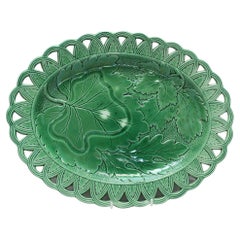
Oval Majolica Plate with Reticulated Rim

Oval Majolica Plate with Reticulated Rim

Located in East Geelong, VIC

This centre of this attractive oval majolica plate is decorated with a moulded decoration of

Category

Antique 1880s English Late Victorian Platters and Serveware

Materials

Earthenware

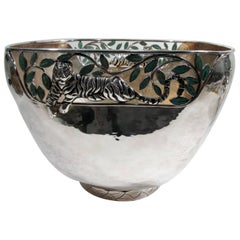
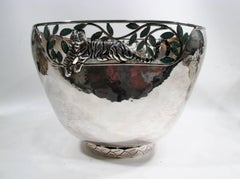
Emilia Castillo Taxco Silver Tiger Malachite Inlay Reticulated Salad Bowl

Emilia Castillo Taxco Silver Tiger Malachite Inlay Reticulated Salad Bowl

By Emilia Castillo

Located in Denver, CO

silver plate on copper with reticulated rim including her iconic tiger motif and malachite inlay leaves

Category

Late 20th Century Mexican Modern Serving Bowls

Materials

Stone, Silver Plate

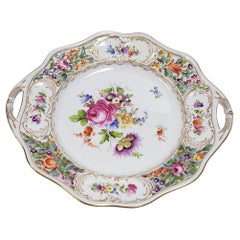
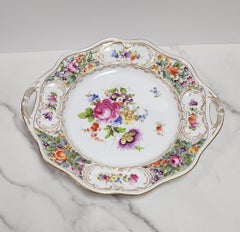
Antique German Dresden Carl Thiem Reticulated Cake Plate

Antique German Dresden Carl Thiem Reticulated Cake Plate

By Carl Thieme, Dresden Porcelain

Located in Frederick, MD

This beautiful antique porcelain cake plate is by Carl Thieme for Dresden China. The intricate

Category

Antique Early 1900s German Platters and Serveware

Materials

Porcelain

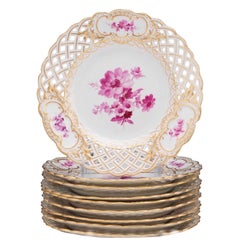
Eight Meissen Reticulated Painted Floral Motif Plates, in a Rose Palette

Eight Meissen Reticulated Painted Floral Motif Plates, in a Rose Palette

By Meissen Porcelain

Located in Atlanta, GA

Eight Meissen reticulated painted floral motif dessert or second course plates, in a vibrant

Category

Early 20th Century German Tableware

Materials

Porcelain

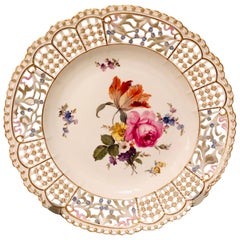
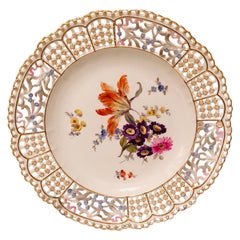
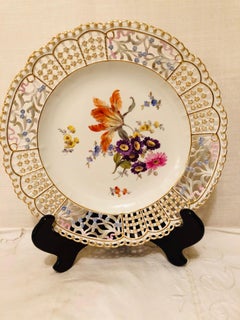
Meissen Reticulated Cabinet Plate with Large Bouquet and Raised Forget Me Nots

Meissen Reticulated Cabinet Plate with Large Bouquet and Raised Forget Me Nots

By Meissen Porcelain

Located in Boston, MA

large tulip and other flowers. The Meissen plate has very intricate reticulated or open work border

Category

Antique 1890s German Romantic Porcelain

Materials

Porcelain

  • 1
Get Updated with New Arrivals
Save "Reticulated Silver Plate", and we’ll notify you when there are new listings in this category.

Reticulated Silver Plate For Sale on 1stDibs

Choose from an assortment of styles, material and more with respect to the reticulated silver plate you’re looking for at 1stDibs. Frequently made of ceramic, porcelain and metal, every reticulated silver plate was constructed with great care. Whether you’re looking for an older or newer reticulated silver plate, there are earlier versions available from the 18th Century and newer variations made as recently as the 20th Century. A reticulated silver plate, designed in the Victorian, neoclassical or Art Nouveau style, is generally a popular piece of furniture. A well-made reticulated silver plate has long been a part of the offerings for many furniture designers and manufacturers, but those produced by Meissen Porcelain, Wedgwood and Royal Copenhagen are consistently popular.

How Much is a Reticulated Silver Plate?

A reticulated silver plate can differ in price owing to various characteristics — the average selling price 1stDibs is $1,043, while the lowest priced sells for $70 and the highest can go for as much as $378,500.

Finding the Right Dining-entertaining for You

Your dining room table is a place where stories are shared and personalities shine — why not treat yourself and your guests to the finest antique and vintage glass, silver, ceramics and serveware for your meals?

Just like the people who sit around your table, your serveware has its own stories and will help you create new memories with your friends and loved ones. From ceramic pottery to glass vases, set your table with serving pieces that add even more personality, color and texture to your dining experience.

Invite serveware from around the world to join your table settings. For special occasions, dress up your plates with a striking Imari charger from 19th-century Japan or incorporate Richard Ginori’s Italian porcelain plates into your dining experience. Celebrate the English ritual of afternoon tea with a Japanese tea set and an antique Victorian kettle. No matter how big or small your dining area is, there is room for the stories of many cultures and varied histories, and there are plenty of ways to add pizzazz to your meals.

Add different textures and colors to your table with dinner plates and pitchers of ceramic and silver or a porcelain lidded tureen, a serving dish with side handles that is often used for soups. Although porcelain and ceramic are both made in a kiln, porcelain is made with more refined clay and is more durable than ceramic because it is denser. The latter is ideal for statement pieces — your tall mid-century modern ceramic vase is a guaranteed conversation starter. And while your earthenware or stoneware is maybe better suited to everyday lunches as opposed to the fine bone china you’ve reserved for a holiday meal, handcrafted studio pottery coffee mugs can still be a rich expression of your personal style.

“My motto is ‘Have fun with it,’” says author and celebrated hostess Stephanie Booth Shafran. “It’s yin and yang, high and low, Crate & Barrel with Christofle silver. I like to mix it up — sometimes in the dining room, sometimes on the kitchen banquette, sometimes in the loggia. It transports your guests and makes them feel more comfortable and relaxed.”

Introduce elegance at supper with silver, such as a platter from celebrated Massachusetts silversmith manufacturer Reed and Barton or a regal copper-finish flatware set designed by International Silver Company, another New England company that was incorporated in Meriden, Connecticut, in 1898. By then, Meriden had already earned the nickname “Silver City” for its position as a major hub of silver manufacturing.

At the bar, try a vintage wine cooler to keep bottles cool before serving or an Art Deco decanter and whiskey set for after-dinner drinks — there are many possibilities and no wrong answers for tableware, barware and serveware. Explore an expansive collection of antique and vintage glass, ceramics, silver and serveware today on 1stDibs.
Questions About Reticulated Silver Plate
  • 1stDibs ExpertFebruary 27, 2024
    To tell silver from silver plating, try holding a strong magnet near the item. If the magnet is attracted to the piece, it is most likely silver-plated, as solid silver is unlikely to be magnetic. You can also check the hallmarks. Markings that say silver plate, EP, EPNS, EPBM or BP indicate plating. Alternatively, you can have a certified appraiser or knowledgeable antiques dealer evaluate the piece. Explore a large selection of silver jewelry, tableware and decorative objects on 1stDibs.
  • 1stDibs ExpertApril 5, 2022
    Silver-plating refers to the process of applying a thin layer of silver overtop of a base metal, such as copper, nickel or pewter. An antique silver-plated item would have gone through this same process. Shop a collection of expertly vetted antique silver plate items from some of the world’s top sellers on 1stDibs.
    1stDibs ExpertApril 5, 2022
    Antique silver plates are antique plates made from either pure silver or have been silver-plated. Silver is a timeless material that’s been popular for centuries, and antique silver is always highly regarded. Shop a collection of antique silver plates from some of the world’s top sellers on 1stDibs.
  • 1stDibs ExpertApril 16, 2024
    The mark for silver plating varies. In the U.S., the most common markings are EP, EPNS, A1 and B1. A UK silver plate may feature a wide range of markings. You can find pictures of these identifying marks on trusted online resources and use them to determine if a particular piece is silver-plated. Alternatively, a certified appraiser or knowledgeable dealer can assist with identification. On 1stDibs, shop a collection of silver wares.
  • 1stDibs ExpertApril 5, 2022
    The hallmark for silver plate depends on the manufacturer. Most often, companies do not place hallmarks on silver plate. This differs from sterling silver, which usually bears a 925 mark. In some cases, companies may stamp "plated" or a similar term, but this is uncommon. On 1stDibs, find a range of silver plate serveware and decorative objects.
  • 1stDibs ExpertApril 5, 2022
    The silver plate commonly used during the 18th century is Sheffield plate. It is a combination of silver and copper. By the mid 19th century, most silver plate pieces featured electroplating. Find a collection of Sheffield plate silver ware on 1stDibs.
  • 1stDibs ExpertFebruary 1, 2024
    Triple-plated silver is silverware manufactured with a certain technique. Specifically, the manufacturer has applied three layers of silver plating to the base metal during the production process to ensure its durability. You will sometimes see triple-plating described as "Treble Plate." Find a large selection of silverware from some of the world's top sellers on 1stDibs.
  • 1stDibs ExpertApril 5, 2022
    Sheffield silver plate usually refers to electroplated silverware produced in Sheffield, England. Prior to electroplating, Sheffield silver was associated with a particular process of layered construction which consisted of copper and silver. Today, this older form of silver is usually referred to by collectors as “Old Sheffield Silver Plate.” Shop a collection of Sheffield silver from some of the world’s top sellers on 1stDibs.
  • 1stDibs ExpertMarch 22, 2022
    Antique silver plating is a thin layer of genuine silver applied over top of a base metal. Depending on the piece, the main metal may be copper, brass or nickel. You'll find a range of antique silver-plated decorative objects on 1stDibs.
  • 1stDibs ExpertNovember 20, 2024
    The difference between a silver plate and a Sheffield plate is that one item is a type of the other. Silverplate, which is sometimes spelled silver-plate or silver plate, is the general name for any silver wares made predominantly of a base metal finished with a thin layer of pure silver.

    Developed in the 1700s by Thomas Boulsover in Sheffield, England, Sheffield silverplate is a specific type of silverplate created by fusing silver with copper. This new material felt like silver but was substantially cheaper. It was then used to produce a variety of serveware, candlesticks, buttons, tea sets and more.

    Find antique Sheffield silverplate and other silverplate objects for sale on 1stDibs.
  • 1stDibs ExpertApril 5, 2022
    To tell if your teapot is silver or silver plated, look for markings. Sterling silver teapots often show some type of markings, while silver plate pieces rarely have hallmarks. An expert licensed appraiser can assist with identification. On 1stDibs, shop a selection of expertly vetted silver teapots.
  • 1stDibs ExpertAugust 26, 2024
    To tell if a silver plate is real silver, first try holding a magnet close to it. If the magnet sticks, the piece may be silver-plated, meaning that it is primarily a base metal with a thin layer of pure silver over top. Alternatively, a magnetic plate may be crafted out of an entirely different material that simply has a silver-tone appearance. You can also research any hallmarks on the plate using trusted online resources or ask a certified appraiser or knowledgeable antique dealer to give their expert opinion on the material. On 1stDibs, shop a selection of silver plates.
  • 1stDibs ExpertMay 5, 2023
    Whether antique silverplate has any value depends on a variety of factors. The design of the piece, who made it and decoration are among the biggest determiners of value. Generally, rarer pieces that remain in good condition will be worth the most. Today, just as pewter collectibles and sterling silver are popular with collectors at neighborhood flea markets, antique Sheffield silverplate housewares are sought after for their appearance and rich history. Consider having the piece evaluated by a knowledgeable antiques dealer or certified appraiser to get an accurate estimate of how much it's worth. On 1stDibs, find antique silverplate from some of the world's top sellers.
  • 1stDibs ExpertApril 12, 2024
    How you read silver plate hallmarks depends on the origin of the piece. Makers in different countries utilize varying systems for hallmarking their silver plate pieces, and these systems have evolved over time. For example, some British makers indicated the highest quality of silver plate with an A1 hallmark and the second highest with an A. Since there is so much variation, the best way to interpret hallmarks on a particular piece is to consult trusted online resources, a certified appraiser or a knowledgeable antiques dealer. On 1stDibs, shop a range of silver plate pieces.
  • 1stDibs ExpertSeptember 25, 2019

    Set the silver-plated item line glass bowl lined with aluminum foil. Mix boiling water with baking soda and pour over the item. After 5 to 10 minutes, remove the item, rinse under warm water, and dry.

  • 1stDibs ExpertSeptember 25, 2019

    Silver-plated flatware does tarnish.

  • 1stDibs ExpertApril 5, 2022
    No, silver-plated items will not have a hallmark or ‘925’ stamp. Silver-plated refers to when an item, usually brass, has been coated in a thin layer of silver. You can shop a collection of authentic silver-plated items from some of the world’s top dealers on 1stDibs.
  • 1stDibs ExpertMay 30, 2024
    Yes, some silver-plate silverware is valuable. However, the maker, age and style of silver-plated silverware are usually what make it valuable. From a material standpoint, silver plate contains very little pure silver, so the metal on its own is not very valuable. Find a wide range of silverware on 1stDibs.
  • 1stDibs ExpertSeptember 23, 2024
    To identify silver plate marks, first explore trusted online resources for some of the most frequently used examples. Most silver plate pieces will feature a purity marking, such as “EPNS” or “A1,” and markings corresponding to the maker. Photographing the maker's mark and performing a reverse image search may lead to a quick identification. If your search doesn't yield any results, try entering a description of the mark into the search engine or examining reference guides shared by trusted online resources to determine who produced your piece. From there, you can conduct further research to learn about your piece's age, pattern and other features. Another option is to have a certified appraiser or experienced antique dealer help you with the identification process. On 1stDibs, shop a collection of silver wares.
  • 1stDibs ExpertNovember 4, 2024
    To identify silver plate hallmarks, try snapping a photo with your smartphone or tablet and then performing a reverse image. Often, this approach will allow you to determine who produced a particular piece. If your search yields no results, try typing a description of the marking into a search engine or browsing image galleries of maker's marks published on trusted online resources. If you run into any difficulty, a certified appraiser or experienced antique dealer can be of assistance. Shop a large selection of silver deocrative objects on 1stDibs.
  • 1stDibs ExpertFebruary 22, 2021
    While antique silver plate can be worth something, it is not usually as valuable compared with contemporary pieces or similar sterling silver antiques.