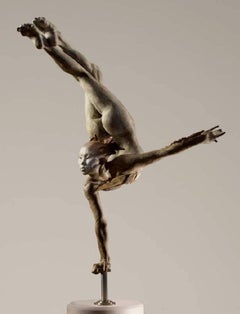
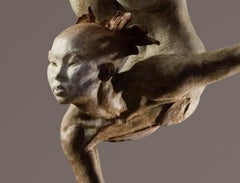
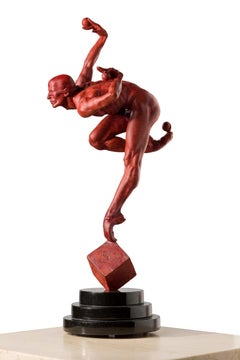
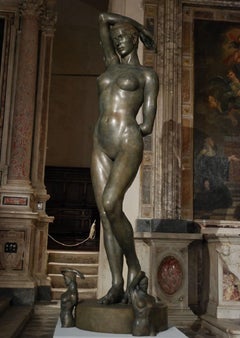
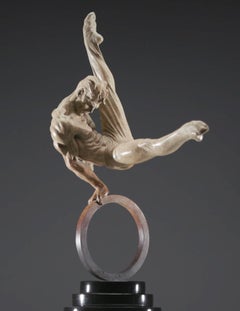
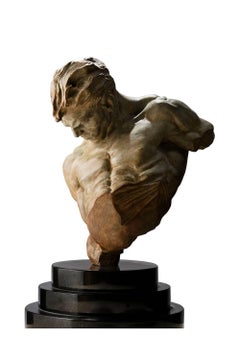
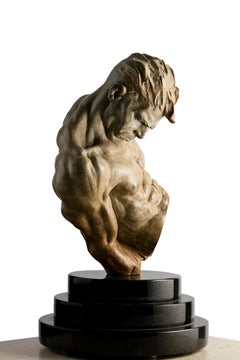
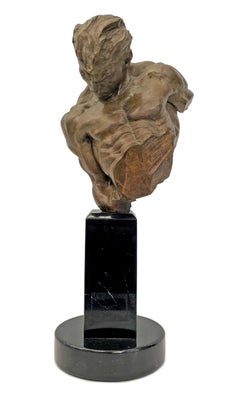
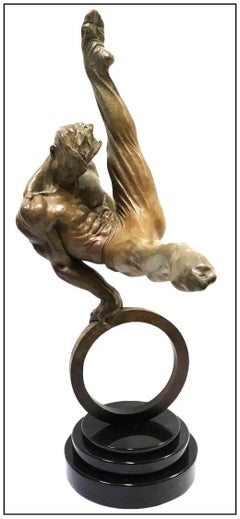
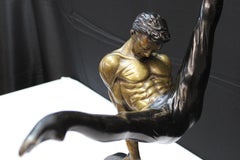
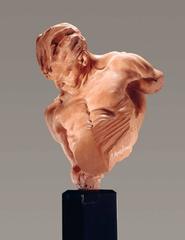
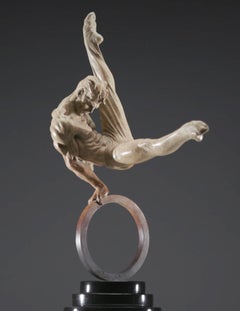
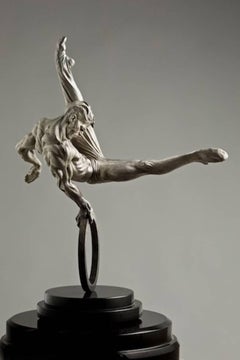
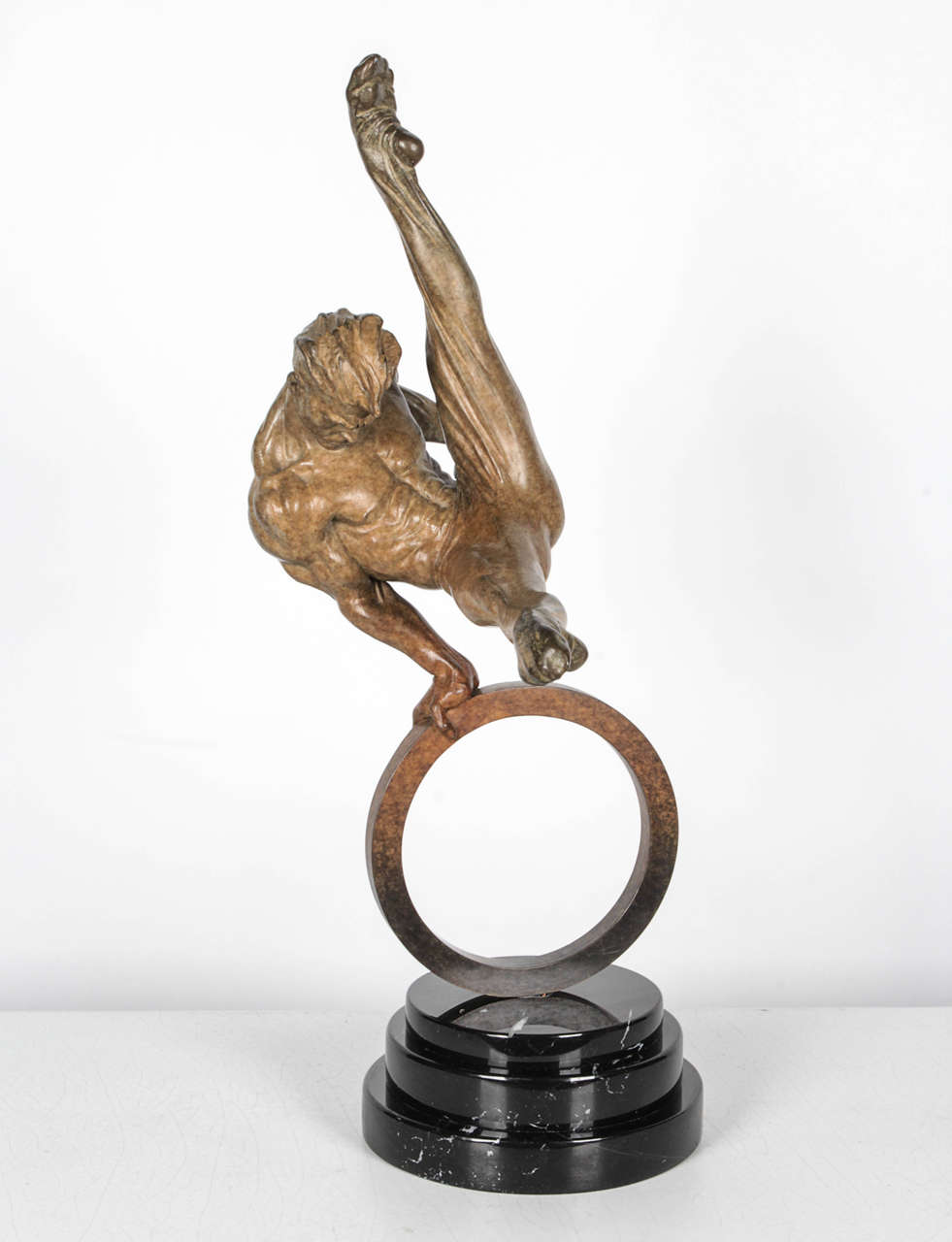
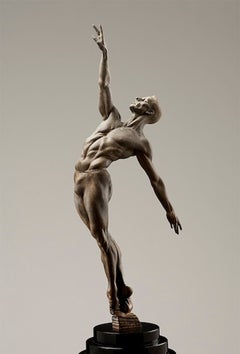
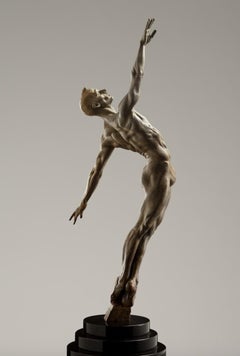
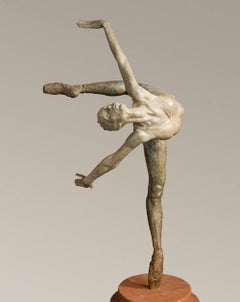
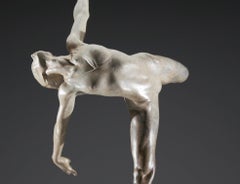
Surely you’ll find the exact richard macdonald gymnast you’re seeking on 1stDibs — we’ve got a vast assortment for sale. Making the right choice when shopping for a richard macdonald gymnast may mean carefully reviewing examples of this item dating from different eras — you can find an early iteration of this piece from the 20th Century and a newer version made as recently as the 21st Century. When looking for the right richard macdonald gymnast for your space, you can search on 1stDibs by color — popular works were created in bold and neutral palettes with elements of
gold and
gray. A richard macdonald gymnast from
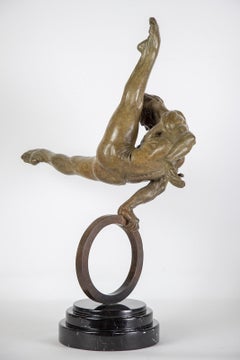
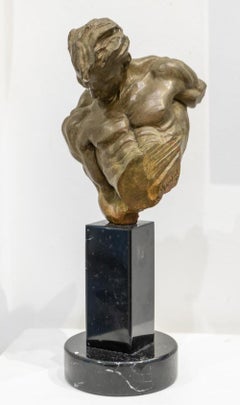
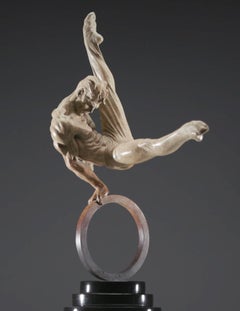
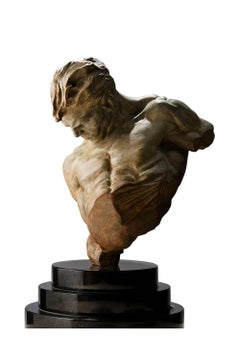
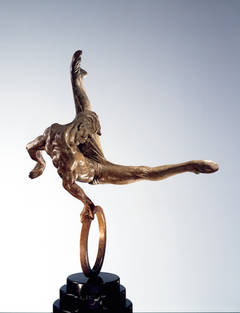
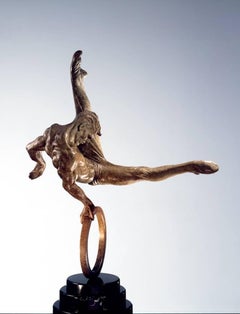
Richard MacDonald — each of whom created distinctive versions of this kind of work — is worth considering. These artworks were handmade with extraordinary care, with artists most often working in
bronze,
metal and
ceramic.
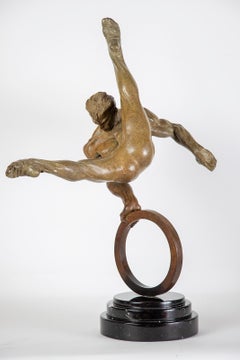
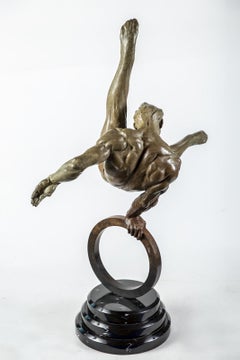
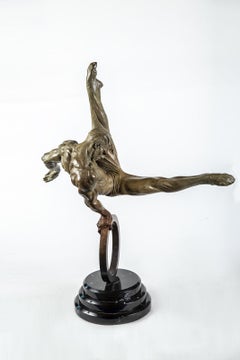
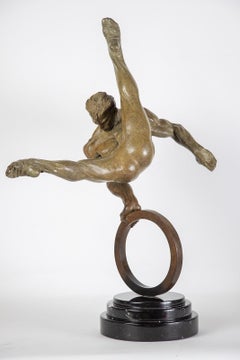
There are artists and there are masters. Richard MacDonald will go down in the history of sculpture as Picasso did painting, as an unequivocal master of the art.
Only a number of people can master craftsmanship, far fewer, the art of the human form. Figurative sculpture is a language MacDonald speaks with astounding fluency, and as with any language, MacDonald’s creative drive is formed from a need to share the universal dialect of the human figure with those who understand it; this is the unique privilege the artist affords his viewers.
MacDonald captures the beauty, romance and essence of the human spirit in motion. Influenced by the expressiveness in the figures of Renaissance master Donatello, the emotional intensity of works by 19th century French sculptor Auguste Rodin, and the power of Michelangelo’s sculptures, MacDonald’s inspirational, sensitive works are precisely of the moment, yet profoundly historic by reference. And they dance rhythmically for all to see — in the leap and grace of the dancer, the power of the athlete, the gesture and passion of lovers, the spirit rises, and MacDonald captures it.
Find a collection of authentic Richard MacDonald sculptures and other art on 1stDibs.
Figurative sculptures mix reality and imagination, with the most common muse being the human body. Animals are also inspirations for these sculptures, along with forms found in nature.
While figurative sculpture dates back over 35,000 years, the term came into popularity in the 20th century to distinguish it from abstract art. It was aligned with the Expressionist movement in that many of its artists portrayed reality but in a nonnaturalistic and emotional way. In the 1940s, Alberto Giacometti — a Swiss-born artist who was interested in African art, Cubism and Surrealism — created now-iconic representational sculptures of the human figure, and after World War II, figurative sculpture as a movement continued to flourish in Europe.
Lucian Freud and Francis Bacon were some of the leading figurative artists during this period. Artists like Jeff Koons and Maurizio Cattelan propelled the evolution of figurative sculpture into the 21st century.
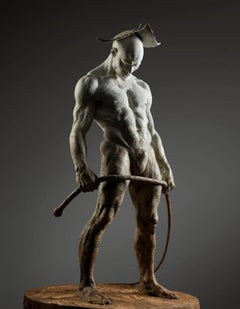
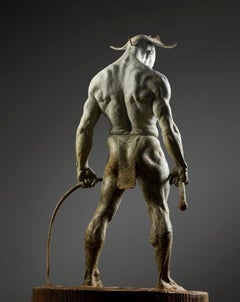
Figurative sculptures can be whimsical, uncanny and beautiful. Their materials range from stone and wood to metal and delicate ceramics. Even in smaller sizes, the sculptures make bold statements. A bronze sculpture by Salvador Dalí enhances a room; a statuesque bull by Jacques Owczarek depicts strength with its broad chest while its thin legs speak of fragility. Figurative sculptures allow viewers to see what is possible when life is reimagined.
Browse 1stDibs for an extensive collection of figurative sculptures and find the next addition to your collection.

















![[Bruce Sargeant (1898-1938)] Statue of an Athlete](https://a.1stdibscdn.com/mark-beard-sculptures-bruce-sargeant-1898-1938-statue-of-an-athlete-for-sale-picture-2/a_9323/a_35855421542990089601/Statue_of_an_Athlete_installation_crop_artnet_master.jpg?width=240)
![[Bruce Sargeant (1898-1938)] Statue of an Athlete](https://a.1stdibscdn.com/mark-beard-sculptures-bruce-sargeant-1898-1938-statue-of-an-athlete-for-sale/a_9323/a_35855421542990079678/Statue_of_an_Athlete_artnet_master.jpg?width=240)