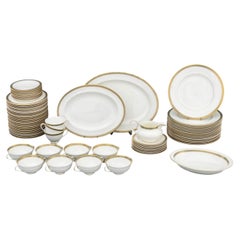
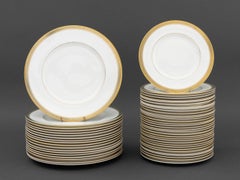
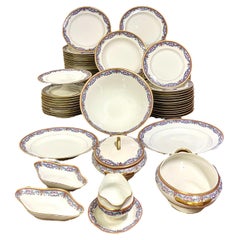
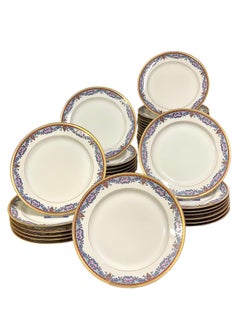
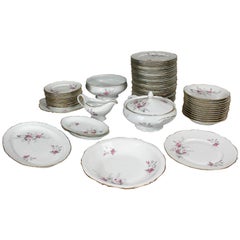
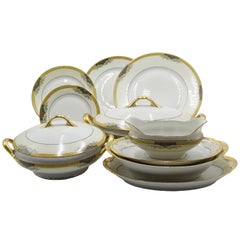
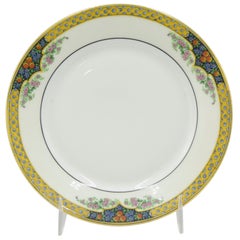
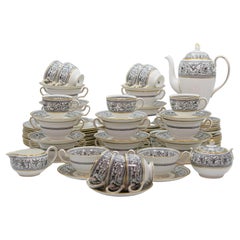
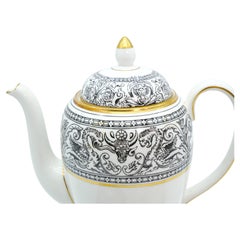
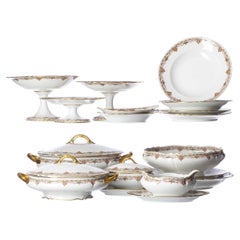
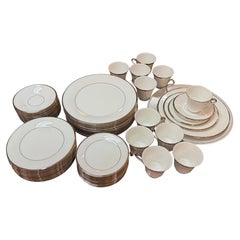
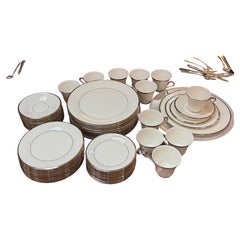
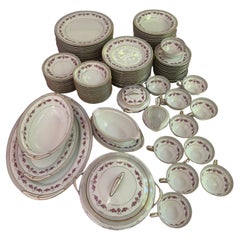
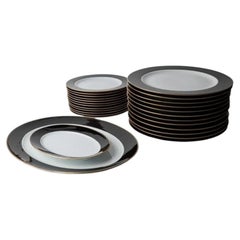
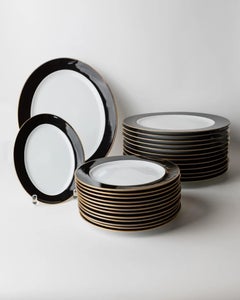
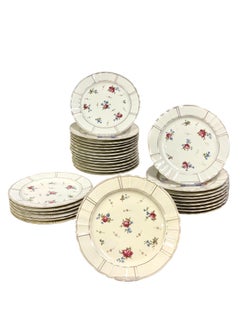
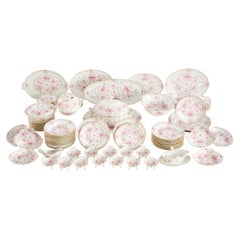
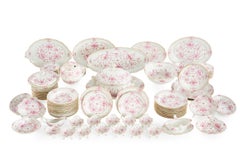
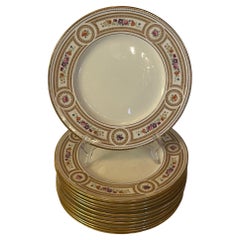
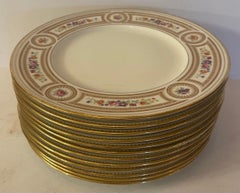
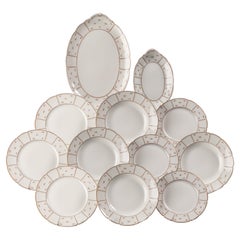
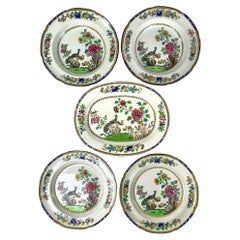
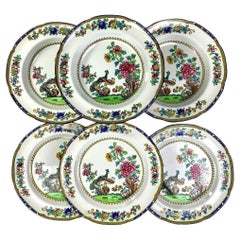
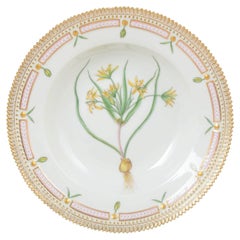
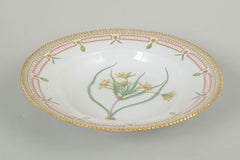
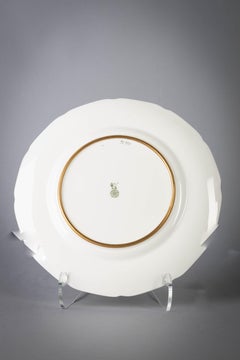
Find many varieties of an authentic piece of royal doulton dinnerware available at 1stDibs. Frequently made of
ceramic and
porcelain, every item from our selection of royal doulton dinnerware was constructed with great care. Whether you’re looking for newer or older items, there are earlier versions available from the 20th Century and newer variations made as recently as the 21st Century. Many designers have produced at least one well-made choice in our collection of royal doulton dinnerware over the years, but those crafted by
Royal Doulton are often thought to be among the most beautiful.
The redoubtable British ceramics maker Royal Doulton has long embraced popular tastes and enjoys a devoted following among aficionados of English pottery. Some are drawn to the company’s intricately decorated bone china dinner services; others are passionate collectors of Royal Doulton’s artfully hand-painted figurines, vases and bowls.
When founded by John Doulton, Martha Jones and John Watts in 1815, in the Lambeth section of suburban London, the manufacturer produced bottles and other storage containers and even sewer pipes in stoneware, a cheap but durable cousin of porcelain. Amid the Victorian era’s rising concern for hygiene, food safety and sanitation, the company flourished. During the late 1850s — having rebranded as Doulton & Watts and then Doulton and Co. — the firm was colloquially referred to as Doulton Ware. And in the late 1870s, it expanded its business into the applied arts.
The firm took over a factory in Staffordshire, in northern England — the traditional home of British ceramics manufacturing — to produce tableware. Around the same time, Doulton opened an art pottery studio in Lambeth, where vases, urns and other forms were decorated with painted scenic images, flowers or historical motifs.
Taking a cue from the venerable Meissen porcelain workshops in Germany, Doulton artisans began crafting figurines modeled on characters from literature and theater. The firm also helped popularize Toby Jugs and other “character mugs” — handled cups shaped as the heads of figures from folklore and popular culture. Doulton purchased a factory in Burslem in 1882, and King Edward VII granted the factory his Royal Warrant in 1901.
Royal Doulton china will always make an elegant yet not-too-formal appearance in a traditional table setting. Prices for dinner services vary according to size, age and condition, but generally range from $2,000 to $15,000.
Authentic Royal Doulton art pottery might be used by some as a bright decorative note; others collect the company’s figurines with the same interest and dedication as stamp and coin enthusiasts. A typical Toby Jug might fetch $50, while very rare figurines can sell for $7,000. Most of the finest Royal Doulton art pottery pieces sell for around $500.
As you will see on these pages, few decorative-arts companies are as aesthetically and stylistically diverse as Royal Doulton. The firm truly offers something for everyone.
Find Royal Doulton figurines, plates, vases and other collectibles for sale on 1stDibs.
While it isn’t always top of mind for some, antique and vintage tableware can enhance even the most informal meal. It has been an intimate part of how we’ve interacted with our food for millennia.
Tableware has played a basic but important role in everyday life. Ancient Egyptians used spoons (which are classified as flatware) made of ivory and wood, while Greeks and Romans, who gathered for banquets involving big meals and entertainment, ate with forks and knives. At the beginning of the 17th century, however, forks were still uncommon in American homes. Over time, tableware has thankfully evolved and today includes increasingly valuable implements.
Tableware refers to the tools people use to set the table, including serving pieces, dinner plates and more. It encompasses everything from the intricate and elaborate to the austere and functional, yet are all what industrial product designer Jasper Morrison might call “Super Normal” — anonymous objects that are too useful to be considered banal.
There are four general categories of tableware — serveware, dinnerware, drinkware and, lastly, flatware, which is commonly referred to as silverware or cutlery. Serveware includes serving bowls, platters, gravy boats, casserole pans and ladles. Most tableware is practical, but it can also be decorative. And decorative objects count as tableware too. Even though they don’t fit squarely into one of the four categories, vases, statues and floral arrangements are traditional centerpieces.
Drinkware appropriately refers to the vessels we use for our beverages — mugs, cups and glasses. There is a good deal of variety that falls under this broad term. For example, your cheerful home bar or mid-century modern bar cart might be outfitted with a full range of vintage barware, which might include pilsner glasses and tumblers. Specialty cocktails are often served in these custom glasses, but they’re still a type of drinkware.
Every meal should be special — even if you’re using earthenware or stoneware for a casual lunch — but perhaps you’re hosting a dinner party to mark a specific event. The right high-quality tableware can bring a touch of luxury to your cuisine. Young couples, for example, traditionally add “fine china,” or porcelain, to their wedding registry as a commemoration of their union and likely wouldn’t turn down exquisite silver made by Tiffany & Co. or Georg Jensen.
It’s important to remember, however, that when you’re setting the dining room table to have fun with it. Just as you might mix and match your dining chairs, don’t be afraid to mix new and old or high and low with your tableware. On 1stDibs, find an extraordinary range of vintage and antique tableware to help elevate your meal as well as the mood and atmosphere of your entire dining room.