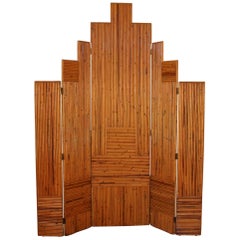
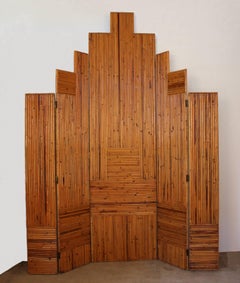
Art Deco furniture is characterized by its celebration of modern life. More than its emphasis on natural wood grains and focus on traditional craftsmanship, vintage Art Deco dining chairs, tables, desks, cabinets and other furniture — which typically refers to pieces produced during the 1920s and 1930s — is an ode to the glamour of the “Roaring Twenties.”
ORIGINS OF ART DECO FURNITURE DESIGN
CHARACTERISTICS OF ART DECO FURNITURE DESIGN
- Bold geometric lines and forms, floral motifs
- Use of expensive materials such as shagreen or marble as well as exotic woods such as mahogany, ebony and zebra wood
- Metal accents, shimmering mirrored finishes
- Embellishments made from exotic animal hides, inlays of mother-of-pearl or ivory
ART DECO FURNITURE DESIGNERS TO KNOW
VINTAGE ART DECO FURNITURE ON 1STDIBS
Few design styles are as universally recognized and appreciated as Art Deco. The term alone conjures visions of the Roaring Twenties, Machine Age metropolises, vast ocean liners, sleek typography and Prohibition-era hedonism. The iconic movement made an indelible mark on all fields of design throughout the 1920s and ’30s, celebrating society’s growing industrialization with refined elegance and stunning craftsmanship.
Widely known designers associated with the Art Deco style include Émile-Jacques Ruhlmann, Eileen Gray, Maurice Dufrêne, Paul Follot and Jules Leleu.
The term Art Deco derives from the name of a large decorative arts exhibition held in Paris in 1925. “Art Deco design” is often used broadly, to describe the work of creators in associated or ancillary styles. This is particularly true of American Art Deco, which is also called Streamline Moderne or Machine Age design. (Streamline Moderne, sometimes known as Art Moderne, was a phenomenon largely of the 1930s, post–Art Nouveau.)
Art Deco textile designers employed dazzling floral motifs and vivid colors, and while Art Deco furniture makers respected the dark woods and modern metals with which they worked, they frequently incorporated decorative embellishments such as exotic animal hides as well as veneers in their seating, case pieces, living room sets and bedroom furniture.
From mother-of-pearl inlaid vitrines to chrome aviator chairs, bold and inventive works in the Art Deco style include chaise longues (also known as chaise lounges) and curved armchairs. Today, the style is still favored by interior designers looking to infuse a home with an air of luxury and sophistication.
The vintage Art Deco furniture for sale on 1stDibs includes dressers, coffee tables, decorative objects and more.
Whether they are implemented as decorative accents or makeshift partitions to ensure privacy, antique and vintage folding screens and room dividers easily introduce sophistication and depth to any space in your home.
The earliest examples of folding screens are said to have originated in China and go back at least as far as the Han dynasty. Screens of the era were heavy structures made of wood and had hinges of cloth or leather. They were adorned with elaborate landscape paintings that were typically created on silk or paper canvases and applied directly to the screen’s panels afterward. Just as they had been in the 20th century and today, the folding screens then were recognized for both their practical and purely decorative properties.
Japanese room-divider screens were also decorated with paintings but constructed to be lightweight and mobile. They took on considerable event-based importance when the structures gained popularity in the East Asian country, as the folding screens were used in performing arts such as concerts, tea ceremonies and more. Later, artists elsewhere warmed to folding screens and sought to create their own.
In European countries such as France, where they were known as paravent, folding screens began to materialize in apartments in Paris, gaining favor with the likes of pioneering couturier Gabrielle “Coco” Chanel, who is said to have accrued more than 30 and used them as a precursor to what we now know as wallpaper.
On 1stDibs, find a wide range of antique and vintage folding screens and room dividers, which, given their history, may do a better job of bringing people and cultures together in your home than sectioning off a space. Search by material to find options in metal, fabric or wood, or browse by style for mid-century modern designs and examples from the Art Deco era.