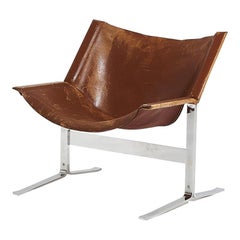
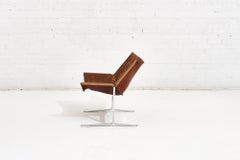
Sling Chair Model 248 by Clement Meadmore, circa 1970
By Clement Meadmore
Located in Chicago, IL
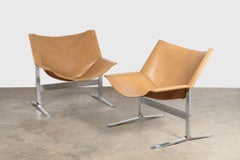
Sling chair model 248 by Clement Meadmore, circa 1970.
Category
Late 20th Century American Modern Lounge Chairs
Materials
Chrome
Sling Chair Model 248 by Clement Meadmore, circa 1970
By Clement Meadmore
Located in Chicago, IL
Sling chair model 248 by Clement Meadmore, circa 1970.
Chrome
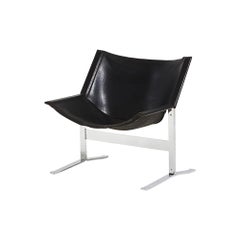

Sling Chair Model 248 by Clement Meadmore, circa 1970
By Clement Meadmore
Located in Chicago, IL
Sling chair model 248 by Clement Meadmore, circa 1970.
Chrome
Sold
H 28.25 in W 28.5 in D 24 in
Sling Chairs by Sculptor Clement Meadmore in Cognac Leather and Steel 1960s
By Clement Meadmore
Located in Dallas, TX
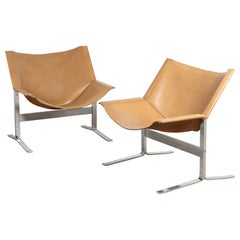
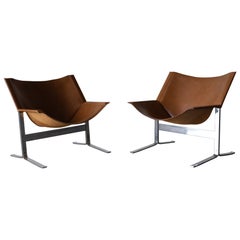
Pair of sling chairs model 248 designed by sculptor Clement Meadmore, 1963 for Leif Wessman Associates, New York.
Leather
Sling Leather Chairs by Clement Meadmore, 1963
By Clement Meadmore, Leif Wessman Associates
Located in New York, NY
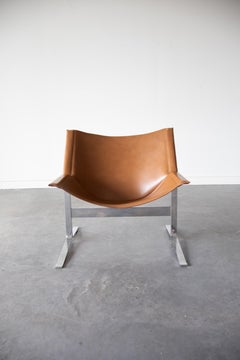
Pair of sling chairs model 248 designed by sculptor Clement Meadmore in 1963 for Leif Wessman Associates, New York.
Steel, Chrome
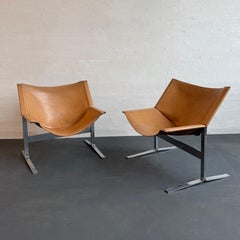
Pair Of Mid-Century Modern Sling Chairs By Clement Meadmore
By Clement Meadmore, Leif Wessman Associates
Located in Brooklyn, NY
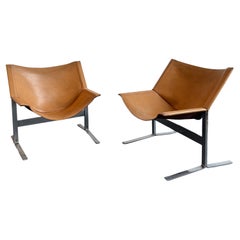
This pair of Mid-Century Modern 'Sling' chairs, model '248' was designed by Australian-American designer and sculptor Clement Meadmore in 1963 for Leif Wessman Associates, New York.
Steel
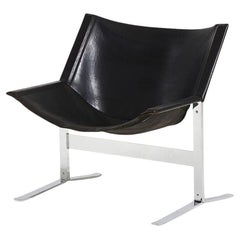

Sling Chair Model 248 by Clement Meadmore, circa 1970
By Clement Meadmore
Located in Chicago, IL
Sling chair model 248 by Clement Meadmore, circa 1970.
Chrome
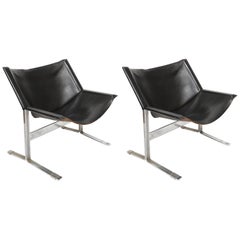
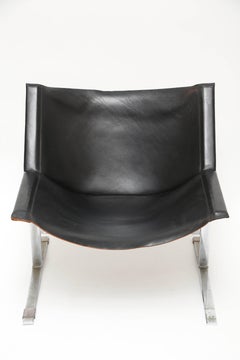
Pair of Clement Meadmore Leather Sling Lounge Chairs
By Alessandro Albrizzi
Located in West Palm Beach, FL
Meadmore chairs model #280 C. 1970
Leather
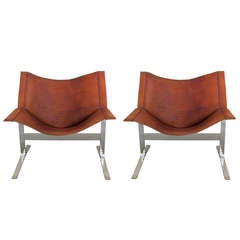

Pair of Clement Meadmore Saddle Leather Sling Chairs
By Clement Meadmore
Located in Los Angeles, CA
Pair of Clement Meadmore Saddle Leather Sling Chairs. # 248, Australia 1960s .
Chrome, Steel
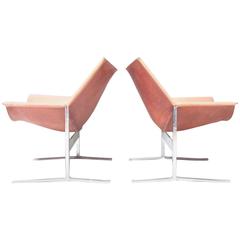

Leather Sling Chairs by Clement Meadmore
By Clement Meadmore, Leif Wessman Associates
Located in Brooklyn, NY
Classic 1963 leather sling chairs by the world famous sculpture artist Clement Meadmore.
Chrome
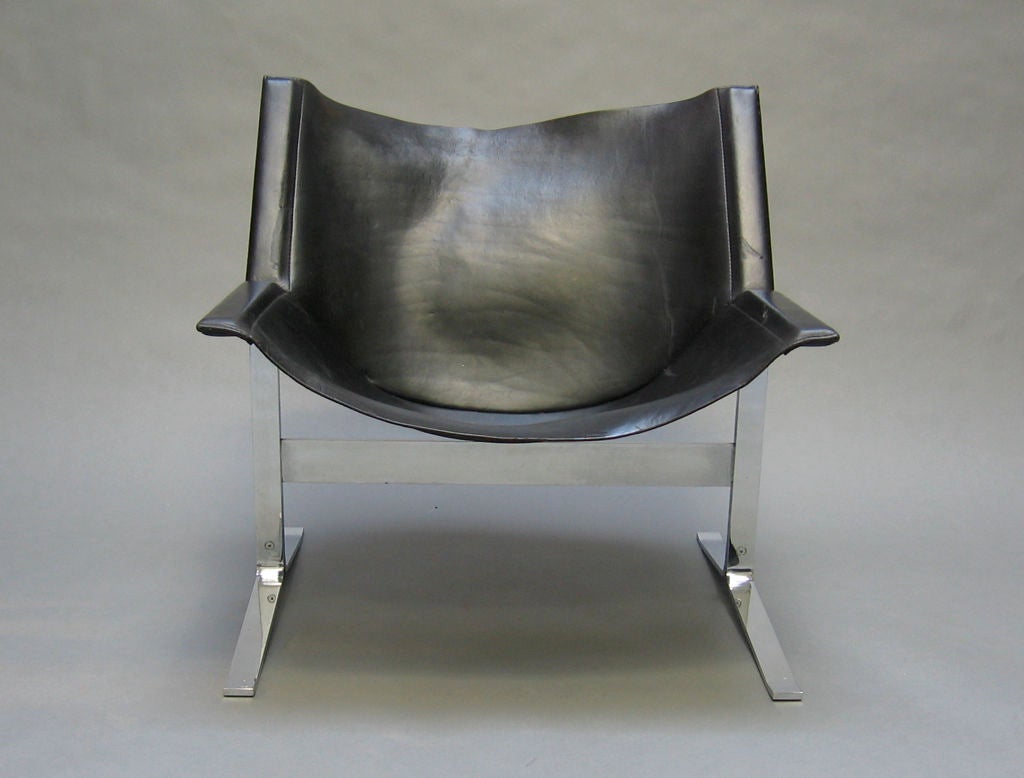
Pair Sling Chairs by Clement Meadmore
Located in Treasure Island, CA
Pair of steel and leather sling chairs designed by Clement Meadmore
Steel
Clement Meadmore was an American minimalist abstract artist, born in 1929, in Melbourne, Australia. He originally studied aeronautical engineering at the Royal Melbourne Institute of Technology, in Australia. After graduating in 1949, he designed furniture until 1953, when his first sculpture of welded steel was offered for sale. While still young, his work was highly regarded and he was awarded a number of exhibitions, including several one-person shows in Melbourne and Sydney, where he had lived since 1960.
Clement moved to New York, USA, in 1963, at the age of 34 years and later, became a United States citizen. With the exception of a year spent in Australia, as photo editor for Vogue magazine, he lived and worked in New York, for the remainder of his career. He passed away in April 2005, leaving behind an important legacy of elegant, gravity-defying sculptures, in many prestigious venues in the US, Japan and Mexico. The Meadmore Estate continues to have the open editions of his works in all size ranges, fabricated in the same way as he did, while he was alive.
While this specific seating is known to all for its comfort and familiar form, the history of how your favorite antique or vintage lounge chair came to be is slightly more ambiguous.
Although there are rare armchairs dating back as far as the 17th century, some believe that the origins of the first official “lounge chair” are tied to Hungarian modernist designer-architect Marcel Breuer. Sure, Breuer wasn’t exactly reinventing the wheel when he introduced the Wassily lounge chair in 1925, but his seat was indeed revolutionary for its integration of bent tubular steel.
Officially, a lounge chair is simply defined as a “comfortable armchair,” which allows for the shape and material of the furnishings to be extremely diverse. Whether or not chaise longues make the cut for this category is a matter of frequent debate.
The Eames lounge chair, on the other hand, has come to define somewhat of a universal perception of what a lounge chair can be. Introduced in 1956, the Eames lounger (and its partner in cozy, the ottoman) quickly became staples in television shows, prestigious office buildings and sumptuous living rooms. Venerable American mid-century modern designers Charles and Ray Eames intended for it to be the peak of luxury, which they knew meant taking furniture to the next level of style and comfort. Their chair inspired many modern interpretations of the lounge — as well as numerous copies.
On 1stDibs, find a broad range of unique lounge chairs that includes everything from antique Victorian-era seating to vintage mid-century modern lounge chairs by craftspersons such as Hans Wegner to contemporary choices from today’s innovative designers.