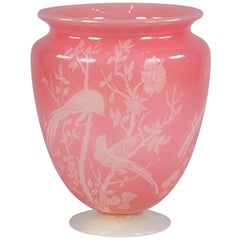
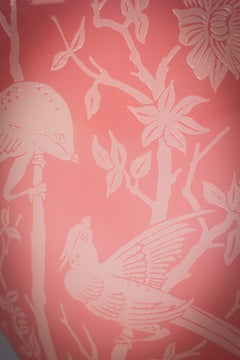
American Cut Glass Vase, Steuben, 20th Century
Located in New York, NY
Rosaline to alabaster with birds amongst branches.
Category
Early 20th Century American Vases
Materials
Cut Glass
American Cut Glass Vase, Steuben, 20th Century
Located in New York, NY
Rosaline to alabaster with birds amongst branches.
Cut Glass
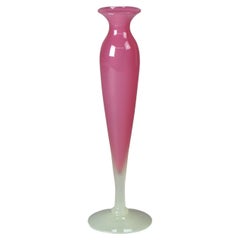
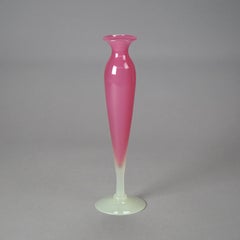
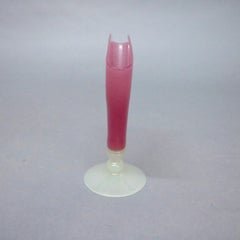
Antique Steuben Rosaline Pink and Alabaster Art Glass Bud Vase C1920
By Steuben Glass
Located in Big Flats, NY
An antique Steuben footed bud vase offers Rosaline Pink and Alabaster art glass construction, c1920 Measures - 12.25"h x 3.75"diam.
Art Glass
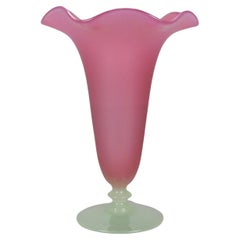
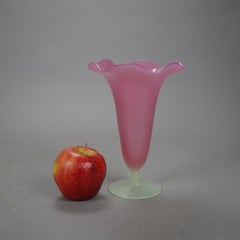
Antique Steuben Rosaline & Alabaster Fluted Vase circa 1920
By Steuben Glass
Located in Big Flats, NY
An antique vase by Steuben offers rosaline and alabaster art glass construction with fluted form having ruffled rim and footed, c1920 Measures- 8.25''H x 5.75''W x 5.75''D. Catalog...
Art Glass
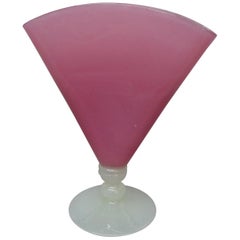
Steuben Rosaline and Opalescent Art Glass Fan Vase, circa 1930
By Steuben Glass
Located in Big Flats, NY
Steuben vase features rosaline bowl in fan form seated on opalescent footed ball shaft, circa 1930. Measures: 8.5" H x 7" W x 1" D.
Art Glass
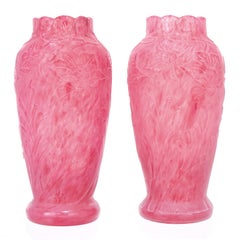
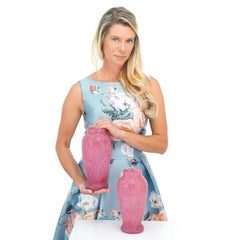
Pair of Frederick Carder for Steuben Acid Cut Art Deco Vases
By Steuben Glass, Frederick Carder
Located in Litchfield, CT
Steuben, American. This pair of stunning and rare Steuben cameo glass vases features a floral and foliate motif, circa 1920s-1930s. The rich rose quartz glass is a sublime color, giv...
Crystal
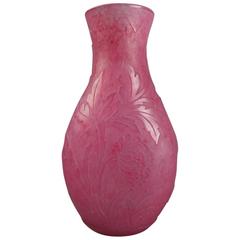
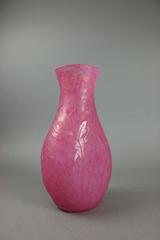
Rare Steuben Acid Cut Art Glass Vase Mum Pattern Signed Frederick Carter
By Steuben Glass
Located in Big Flats, NY
A Steuben sculptured glass vase in the Mum pattern, circa 1925, signed Frederick Carder, Corning, New York, the rose quartz vase from a line called "Sculpted" (actually was acid-etch...
Art Glass
Steuben Glass Works is the most illustrious name in American art glass. Its vividly colored Art Nouveau and Asian-style wares produced in the early 20th century as well as later modernist works rendered in flawlessly clear crystal are objects of striking beauty and delicacy.
The Steuben Glass Works was cofounded in 1903 in the town of Corning, New York, by Frederick Carder, an alum of celebrated British glassmaker Stevens & Williams and a self-taught English chemist and glassmaker. Carder was a restless experimenter, constantly creating new color formulas that resulted in a wide array of hues, from milky jades to his iridescent Aurene shades. A favorite Carder technique was to acid-etch decorative patterns into pieces made of glass layered in different colors. The forms of his vessels were relatively conservative. Most are based on classic Chinese pottery; many display the flowing, naturalistic lines of the Art Nouveau period.
The larger local firm Corning Glass acquired Steuben in 1918. The company’s approach to art glass changed radically in the early 1930s, when Corning chemists devised a new type of crystal known as 10M, with perfect clarity and brilliant refractive powers. Corning decided that, henceforth, all Steuben decorative objects, vases, sculptures and other wares would be made from the crystal.
Art glass was made in two formats: molded and polished abstract sculptures and figurines, or pieces for which artists used Steuben crystal as a sort of canvas. The first such artwork was sculptor Stanley Waugh’s 1935 Gazelle Bowl, a vessel etched with brawny Art Deco animal forms. In later years, Steuben would invite artists that included Henri Matisse, Georgia O’Keeffe and Isamu Noguchi to “paint” in the firm’s crystal.
Steuben glass comes in myriad forms and is available in a broad range of price points. Jewel-toned glasses and tableware from the Carder era include candlesticks marked at $300 and full dinner services for more than $10,000. Small crystal figurines bring around $1,000, while larger sculptures are priced in the neighborhood of $7,000.
Steuben glass, with its impeccable artistry and timeless grace, deserves a place in any collection.
Find antique Steuben glass and other furniture on 1stDibs.
Whether it’s a Chinese Han dynasty glazed ceramic wine vessel, a work of Murano glass or a hand-painted Scandinavian modern stoneware piece, a fine vase brings a piece of history into your space as much as it adds a sophisticated dynamic.
Like sculptures or paintings, antique and vintage vases are considered works of fine art. Once offered as tributes to ancient rulers, vases continue to be gifted to heads of state today. Over time, decorative porcelain vases have become family heirlooms to be displayed prominently in our homes — loved pieces treasured from generation to generation.
The functional value of vases is well known. They were traditionally utilized as vessels for carrying dry goods or liquids, so some have handles and feature an opening at the top (where they flare back out). While artists have explored wildly sculptural alternatives over time, the most conventional vase shape is characterized by a bulbous base and a body with shoulders where the form curves inward.
Owing to their intrinsic functionality, vases are quite possibly versatile in ways few other art forms can match. They’re typically taller than they are wide. Some have a neck that offers height and is ideal for the stems of cut flowers. To pair with your mid-century modern decor, the right vase will be an elegant receptacle for leafy snake plants on your teak dining table, or, in the case of welcoming guests on your doorstep, a large ceramic floor vase for long tree branches or sticks — perhaps one crafted in the Art Nouveau style — works wonders.
Interior designers include vases of every type, size and style in their projects — be the canvas indoors or outdoors — often introducing a splash of color and a range of textures to an entryway or merely calling attention to nature’s asymmetries by bringing more organically shaped decorative objects into a home.
On 1stDibs, you can browse our collection of vases by material, including ceramic, glass, porcelain and more. Sizes range from tiny bud vases to massive statement pieces and every size in between.