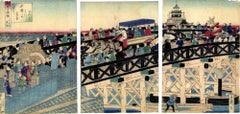
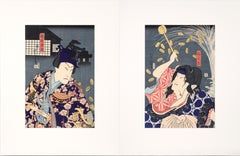
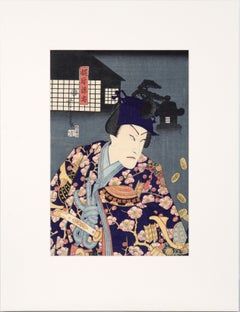
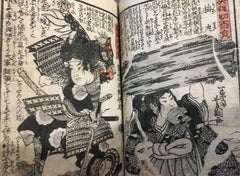
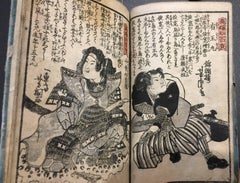
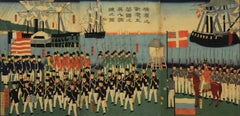
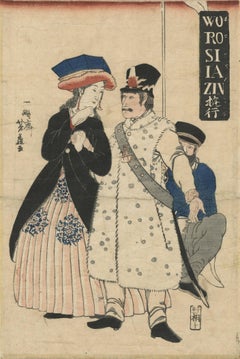
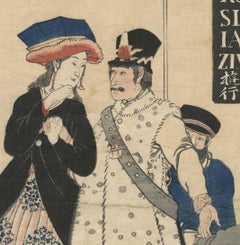
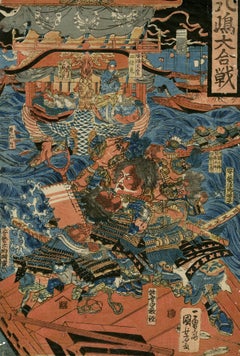
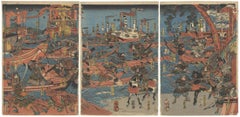
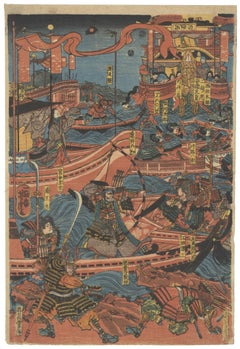
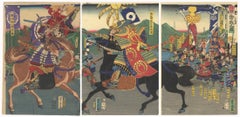
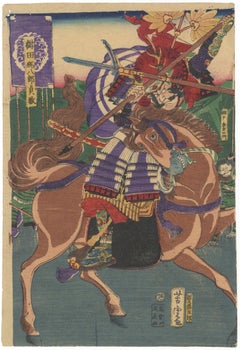
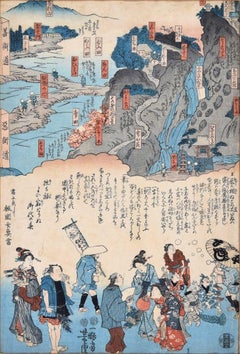
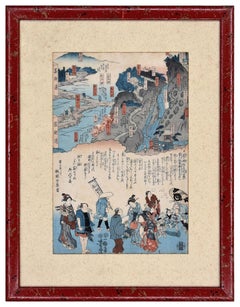
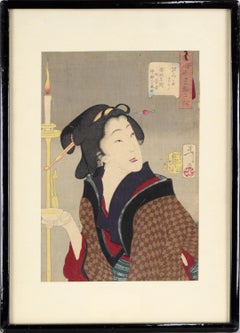
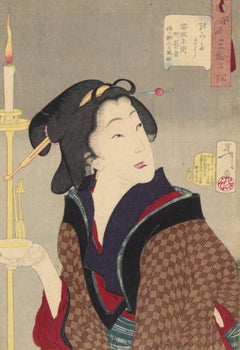
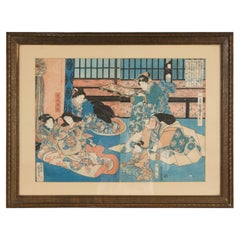
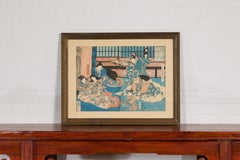
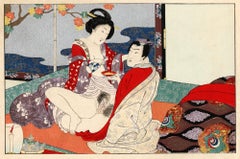
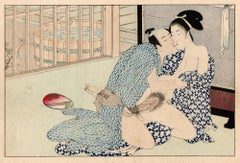
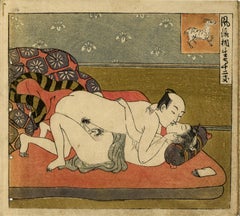
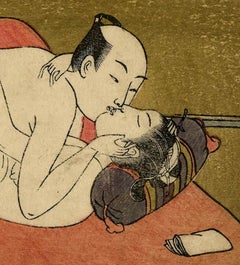
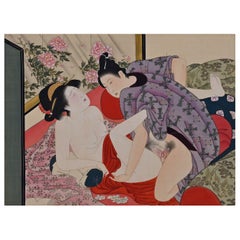
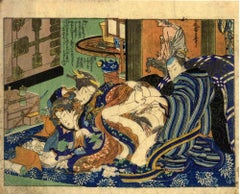
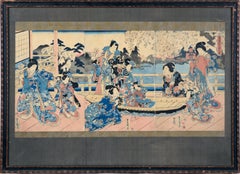
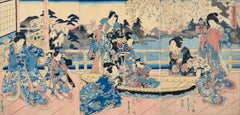
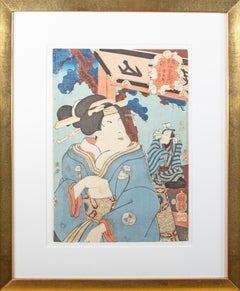
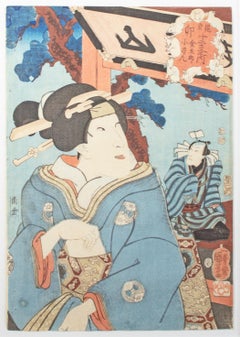
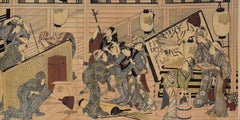
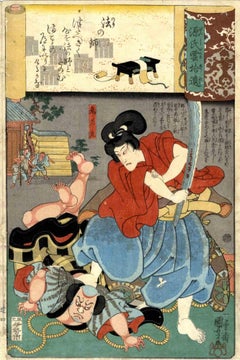
Utagawa Yoshitora (Japanese, active c. 1840-1880) was a designer of ukiyo-e Japanese woodblock prints and an illustrator of books and newspapers who was active from about 1840 to about 1880. He was born in Edo (modern Tokyo), but neither his date of birth nor date of death is known. However, he was the oldest pupil of Utagawa Kuniyoshi who excelled in prints of warriors, kabuki actors, beautiful women, and foreigners (Yokohama-e). He may not have seen any of the foreign scenes he depicted.
Yoshitora was prolific: he produced over 60 print series and illustrated over 100 books. In 1849 he produced an irreverent print called Dōke musha: Miyo no wakamochi ("Funny Warriors—Our Ruler's New Year's Rice Cakes"), which depicts Oda Nobunaga, Akechi Mitsuhide, and Toyotomi Hideyoshi making mochi rice cakes for the shōgun Tokugawa Ieyasu. A poem by Sawaya Kōkichi accompanies it, reading "Kimi ga yo wo tsuki katametari haru no mochi" ("Tamping down the reign firm and solid like spring rice cakes"). Censors interpreted the print as a criticism of authority and had Yoshitora manacled for fifty days. Soon after Yoshitora was expelled from Kuniyoshi's studio, possibly due to the print, but he continued to produce illustrations prolifically.
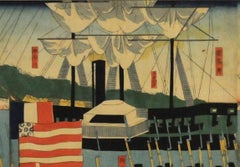
From the 1860s Yoshitora produced Yokohama-e pictures of foreigners amid rapid modernization that came to Japan after the country was opened to trade. He collaborated on a number of landscape series, and in the Meiji period that began in 1868 he also worked in newspapers. The last of his known works appeared in 1882.
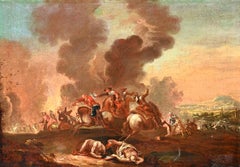
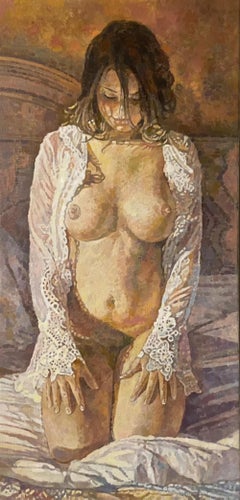
Bring energy and an array of welcome colors and textures into your space by decorating with figurative fine-art prints and works on paper.
Figurative art stands in contrast to abstract art, which is more expressive than representational. The oldest-known work of figurative art is a figurative painting — specifically, a rock painting of an animal made over 40,000 years ago in Borneo. This remnant of a remote past has long faded, but its depiction of a cattle-like creature in elegant ocher markings endures.
Since then, figurative art has evolved significantly as it continues to represent the world, including a breadth of works on paper, including printmaking. This includes woodcuts, which are a type of relief print with perennial popularity among collectors. The artist carves into a block and applies ink to the raised surface, which is then pressed onto paper. There are also planographic prints, which use metal plates, stones or other flat surfaces as their base. The artist will often draw on the surface with grease crayon and then apply ink to those markings. Lithographs are a common version of planographic prints.
Figurative art printmaking was especially popular during the height of the Pop art movement, and this kind of work can be seen in artist Andy Warhol’s extensive use of photographic silkscreen printing. Everyday objects, logos and scenes were given a unique twist, whether in the style of a comic strip or in the use of neon colors.
Explore an impressive collection of figurative art prints for sale on 1stDibs and read about how to arrange your wall art.