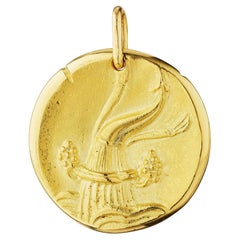
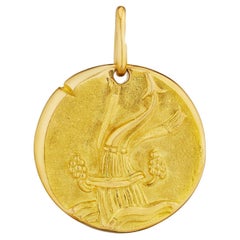
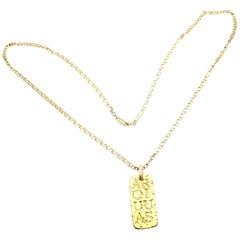
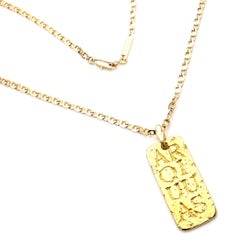
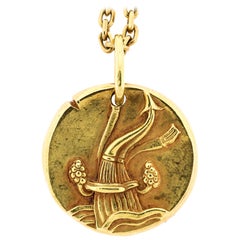
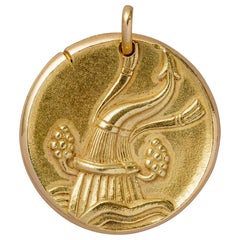
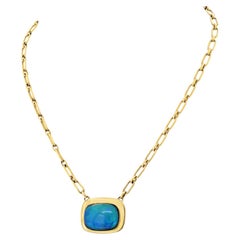
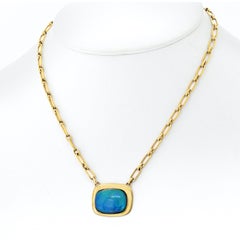
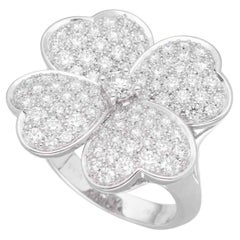
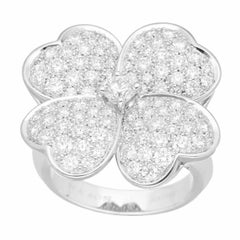
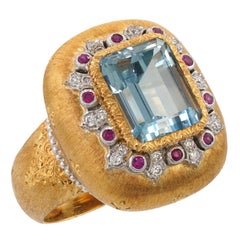
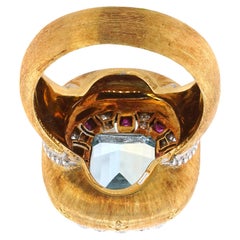
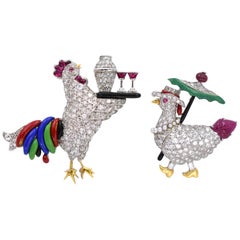
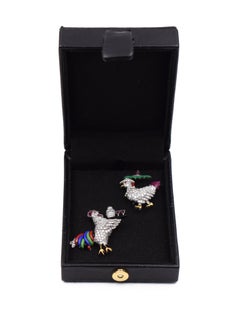
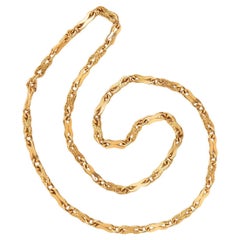
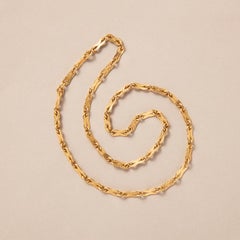
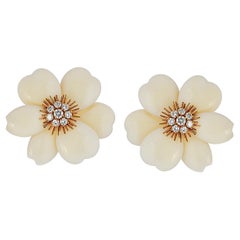
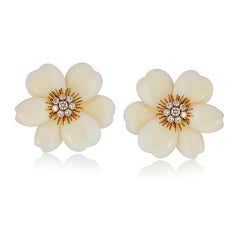
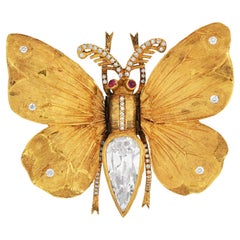
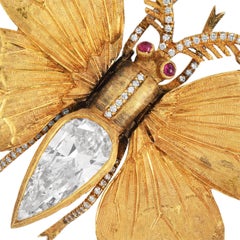
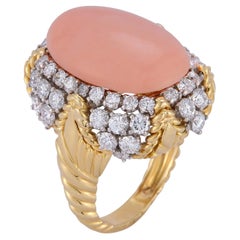
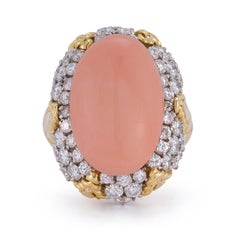
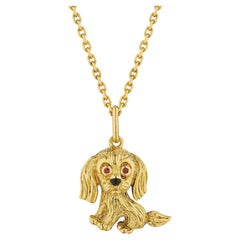
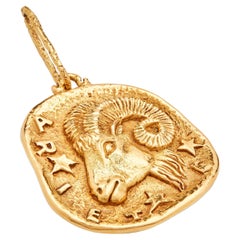
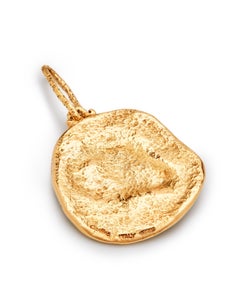
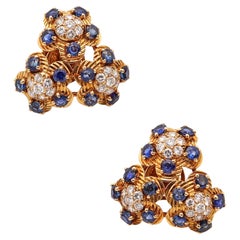
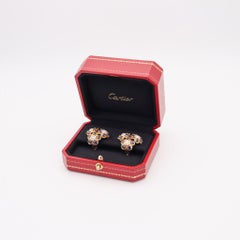
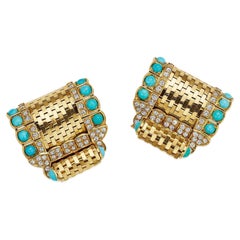
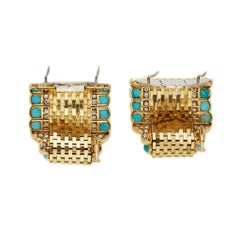
One of the world’s foremost jewelry houses, Van Cleef & Arpels is particularly noted for a focus on technical virtuosity, craftsmanship and artistry, evident since its beginning. Rather than create earrings, bracelets, necklaces and other adornments primarily for the aim of displaying of wealth and opulence, Van Cleef & Arpels sought to produce jewelry that projected the wearer’s taste and style.
The company was formed a year after the 1895 marriage of Alfred Van Cleef, the son of a gem cutter, to Estelle Arpels, daughter of precious-stones dealer Salomon Arpels. Ten years later, Van Cleef & Arpels opened its first boutique on the Place Vendôme in Paris, setting the march on a square now crowded with dealers in bijouterie. (The company still occupies the New York flagship store opened in 1939 at Fifth Avenue and 57th Street.)
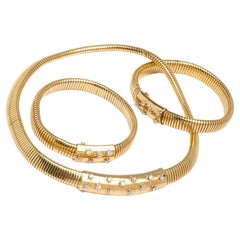
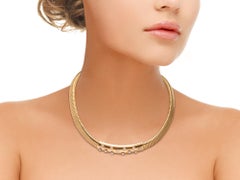
Born from a union of expertise in both jewelry making and gem selection, Van Cleef & Arpels distinguished itself with both the consistency of the color and clarity of its stones and the creativity of its designs. In doing so, the house would win a roster of dedicated, fashion-conscious clients that included the Duchess of Windsor, Marlene Dietrich, Barbara Hutton, Jacqueline Onassis and Elizabeth Taylor. In 1933, Van Cleef & Arpels patented its trademark Mystery Setting — a technique by which gems are fitted into an intricate matrix of slots and “drawers” that keep the setting hidden. Another signal innovation was the Zip necklace, introduced in 1951, which can be worn either around the neck or, with the zipper closed, as a bracelet.
But as much as to the firm’s craftsmanship, clients have been drawn by the insouciance and playfulness of Van Cleef & Arpels designers, as well as their attunement to the cultural climate. After the discovery of Tutankhamun’s tomb in 1922, the company produced several lavish pieces featuring hieroglyphics and other Egyptian motifs to go along with the geometric Art Deco jewelry of that decade and the next. Following World War II, as symbols of freedom and rebirth, the firm focused on naturalistic forms such as birds, flowers, fruit and flying insects. High society’s 1960s fascination with the Near East and India prompted such pieces as the best-selling Alhambra necklace, popularized by Princess Grace.
Lately, attention among collectors and connoisseurs has centered on Van Cleef & Arpels’s quality of workmanship as much as its glamour. The firm was the subject of a 2012 show at the Cooper-Hewitt, Smithsonian Design Museum, as well as exhibitions at the Bowers Museum in Santa Ana, California, in 2013 and at the Musée des Arts Décoratifs in Paris in 2014.
Find an exquisite collection of Van Cleef & Arpels jewelry on 1stDibs.
Whether you’re layering multiple jewelry pieces or opting for a single strand, vintage pendant necklaces are versatile accessories that can elevate your casual wear as easily as they can add a creative flourish to your formal attire.
The earliest jewelry was less about accessorizing than it was about wearers arming themselves with amulets. In Ancient Egypt, some amulets featured a loop so that they could be strung around one’s neck. While rubies have long been one of the few gemstones that can give diamonds a run for their money, members of some ancient civilizations valued the stones from the get-go, donning ruby pendants as well as other stones with the belief that these adornments would bring protection, healing powers or strength. Today, we still wear our charm bracelets and charm pendants around our necks for good luck.
Later, pendant necklaces, like most fine jewelry, were worn strictly by royalty or the upper class and conferred wealth and prestige. This changed over time, thankfully, as wearing jewelry became more widespread, a democratized means of personal expression.
During the 18th and 19th centuries, pendant necklaces evolved from their status as spiritual amulets, but the jewels still carried deep personal significance. Victorian pendants, in particular, were part of the “mourning jewelry” tradition. Wearers would embed their pendants with locks of hair from a deceased loved one as a way of grieving in the wake of a loss. In the case of cameo jewelry, some pendants were even decorated with miniature hand-carved portraits in a detailed raised relief. Today, portraiture is still a characteristic of many of the hand-carved pendant necklaces offered by Italian jewelry house Scala Gioielli.
Luxury fine jewelry brands such as Cartier, BVLGARI and David Yurman offer their own unique interpretations of the cherished accessory, embellishing platinum or gold pendant necklaces with diamonds, sapphires and other stones.
On 1stDibs, find an extraordinary range of vintage pendant necklaces and other necklaces today.