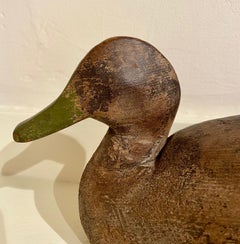
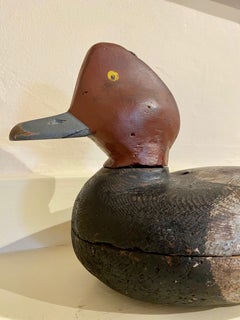
Early Ward Brothers Widgeon Decoy, circa 1920
By The Ward Brothers
Located in Nantucket, MA
Antique Ward Brothers Widgeon Decoy, Early Period, circa 1920, having a hand whittled solid body in
Vintage 1920s American Folk Art Decoys
Cedar
Early Ward Brothers Widgeon Decoy, circa 1920
By The Ward Brothers
Located in Nantucket, MA
Antique Ward Brothers Widgeon Decoy, Early Period, circa 1920, having a hand whittled solid body in
Cedar
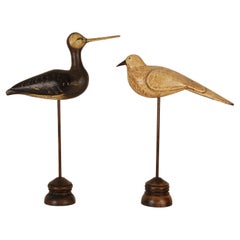
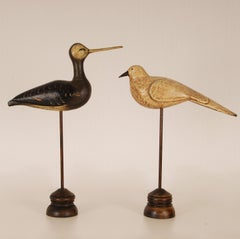
Vintage Decoy Shore Bird and Dove French Carved Wood Bird Figures
By Joseph Lincoln, Charles Perdew, The Ward Brothers
Located in Wommelgem, VAN
Vintage pair French hand carved Decoy birds Depicting a shore bird and a dove Style: Mid century
Pearwood
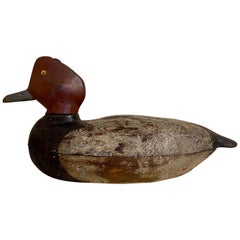
Early Ward Brothers Red Head Drake Decoy, circa 1930
By The Ward Brothers
Located in Nantucket, MA
Antique Ward Brothers red head drake decoy, early period, circa 1930, having a hand carved hollow
Pine
Vintage, new and antique decoys have become fashionable decor in modern homes.
The history of decoy ducks, shorebirds, geese and other waterfowl as part of the folk art tradition stretches back thousands of years. Tule duck decoys made between 400 B.C. and 100 A.D. by Indigenous people for use in hunting have been found in Nevada that are similar to decoys still in use today.
Waterfowl decoys are now often made of plastic and foam, but vintage duck decoys from the mid-19th to early 20th century were frequently made of wood. Canvas duck decoys were popularized from the 1920s to ’40s as a lightweight alternative. These folk art pieces feature hand-painted feathers and long, flat bodies, lending themselves well to display in living rooms on shelves and in cabinets.
One of the fascinating aspects of handcrafted waterfowl decoys is their regional variation to match the local birds. For example, German decoys are regularly decorated with green and gray paints, making them look like mallard ducks. Scandinavian decoys are typically black and white, resembling the common eider.
Either option could be a rustic treasure for one’s home, adding a touch of eclectic art to any room. Browse antique, new and vintage decoys on 1stDibs today.
At Waddesdon Manor, artist Joana Vasconcelos has installed a three-tiered patisserie inspired by the narrative tile work of her homeland. We take a look at the cake sculpture and how Portuguese tiles have been used in architecture from the 17th century to today.
The streets of fin-de-siècle Paris were set aglow with colorful poster ads, thanks to the printing techniques invented by Jules Chéret. Now, the Milwaukee Art Museum is celebrating this undersung talent in America's first solo show dedicated his exuberant works.
Expert Jeff Bridgman explains the history and meaning behind the twinkling constellations that have graced Old Glory.
The iconoclastic style setter displayed African and Oceanic art, as well as works by indigenous peoples of the Americas, alongside pieces by such major modernists as Pablo Picasso and Jackson Pollock.
Perfect for July 4th weekend, a new show at Philadelphia's Museum of the American Revolution displays an array of antique red, white and blue flags.
Designers are beginning to see this enigmatic form of folk art in a whole new light.