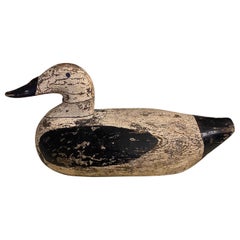
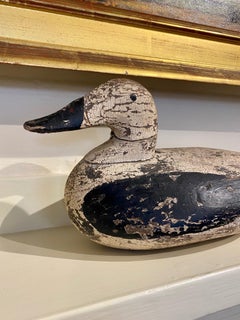
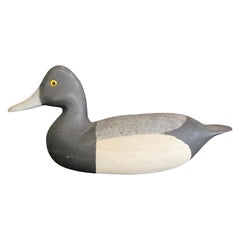
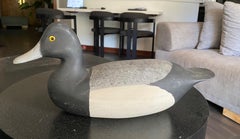
Classic Maine Eider Drake Decoy, circa 1920s
Located in Nantucket, MA
Classic antique Maine Eider Drake Decoy, circa 1920s, with head tucked back in contented posture.
Category
Vintage 1920s American Folk Art Decoys
Materials
Wood
Classic Maine Eider Drake Decoy, circa 1920s
Located in Nantucket, MA
Classic antique Maine Eider Drake Decoy, circa 1920s, with head tucked back in contented posture.
Wood
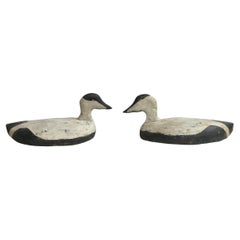
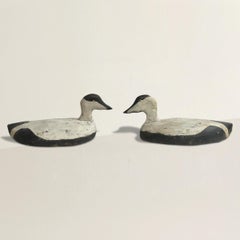
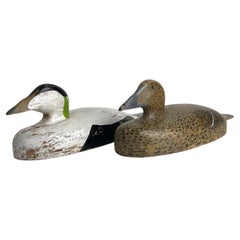
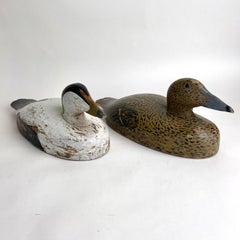
Pair of Early 20th Century American Eider Duck Decoys
Located in Chicago, IL
A special and whimsical pair of early 20th century American hands-carved wood Eider Duck decoys with black and white painted bodies and eyes.
Wood
Sold
H 5.52 in W 5.91 in D 16.54 in
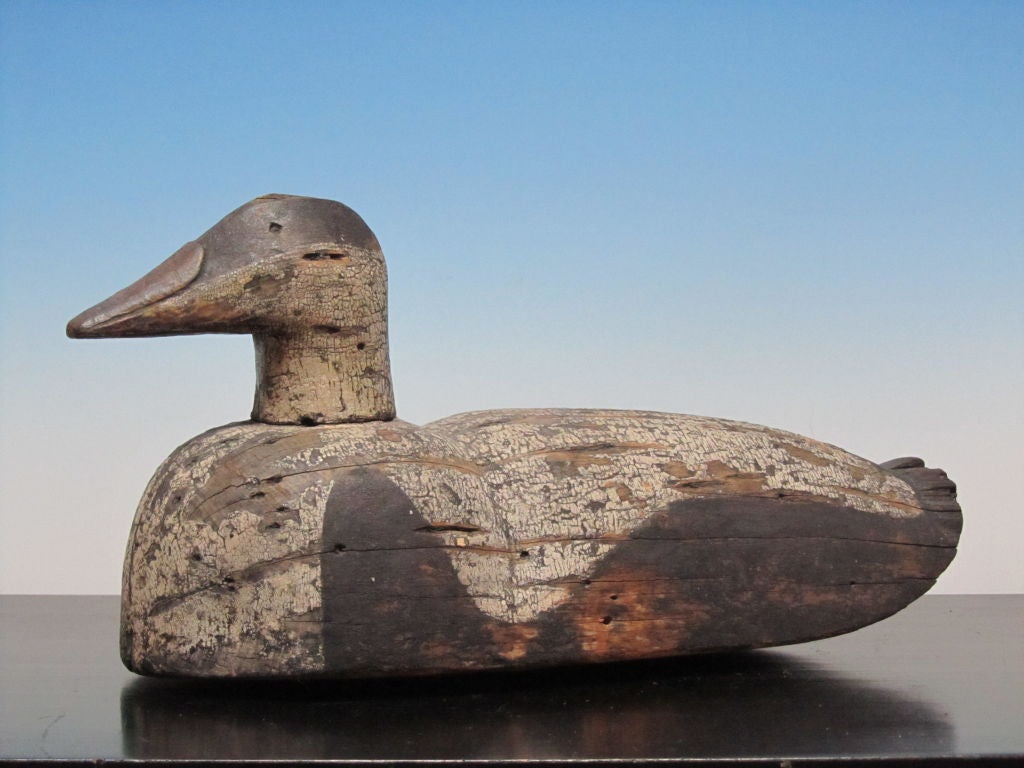
Charming Set of Two Duck Decoys, so-called Eider/Cuddy's Ducks Early 20th C.
Located in Knivsta, SE
A Charming Set of Wooden Two Duck Decoys, made to resemble the genus Eider, also known as Saint Cuthbert's Duck or Cuddy's Duck.
Wood
Eider Decoy
Located in New York, NY
Early Maine decoy with original graphic paint.
Wood, Paint
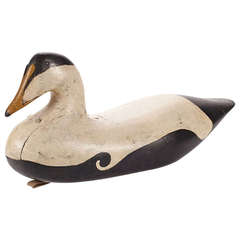
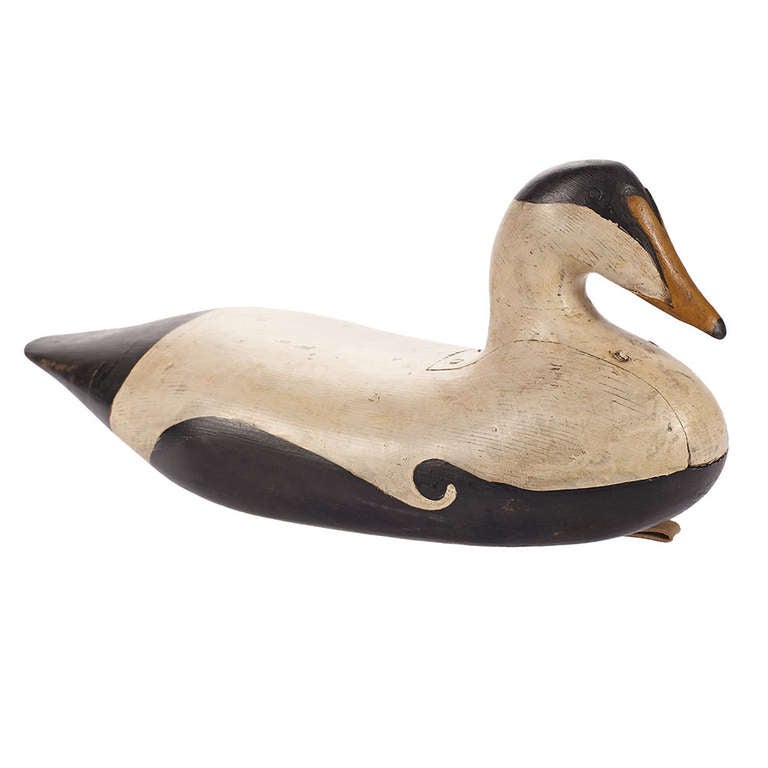
Black and White Eider Duck Decoy
Located in New York City, NY
A gorgeous black and white Eider duck decoy. Signed to the bottom 'Bob Biddle'.
Wood
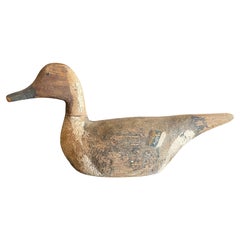
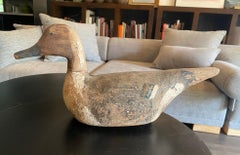
$395
H 8 in W 17 in D 5.5 in L 8 in
Hand Carved Large Vintage Antique Wood Duck Decoy Sculpture, Early 20th Century
Located in Studio City, CA
A fantastic early to Mid-20th Century hand-carved and painted wood duck or mallard decoy. This piece has an wonderful color and texture. From an impressive Los Angeles vintage du...
Wood, Paint
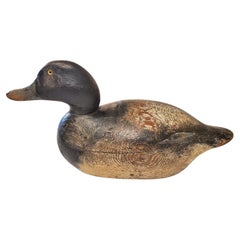
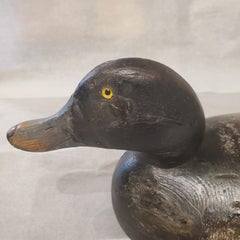
Mason Premier Grade Bluebill Drake, circa 1920
Located in Nantucket, MA
Antique Mason Premier Grade Bluebill Drake Decoy, circa 1920, having head with glass eyes and carved mandible, nares and nail on bill, attached to hollow carved two part body (seam i...
Wood
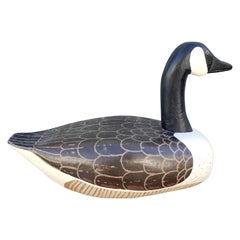
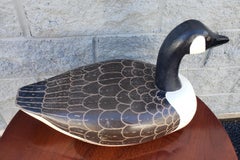
Mid-Century Hand-Crafted and Hand-Painted Hardwood American Duck Decoy
Located in Germantown, MD
An Mid Century, large, Hand-crafted and Hand-Painted American life size Duck Decoy measuring 20" in width, 9" in depth and 13" in height.
Hardwood, Paint
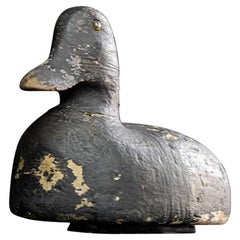
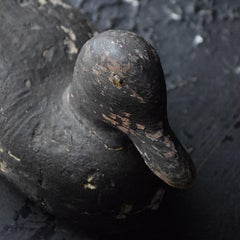
Early 20th Century English Folk Art Decoy Duck Form
Located in London, GB
Early 20th century English Folk Art decoy duck form A working example of an early 20th century English Folk Art decoy. Hand carved from wood, with lead weight still in place at the ...
Pine
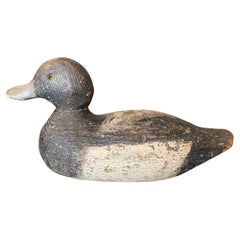
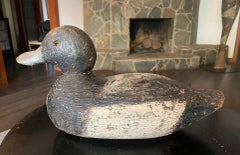
$395
H 7 in W 13.5 in D 5.25 in
Hand Carved Vintage Antique Wood Duck Mallard Decoy Sculpture Early 20th Century
Located in Studio City, CA
A fantastic early to Mid-20th Century hand-carved and painted antique wood duck or mallard decoy. This piece has an wonderful color (notice the white side patch against dark body) an...
Wood, Paint
$579Sale Price / set|50% Off
H 6.11 in W 12.6 in D 4.34 in
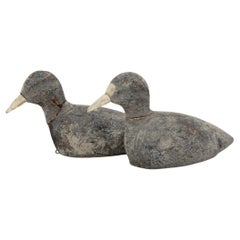
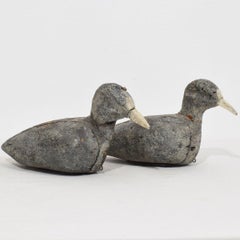
Antique French Folk Art Cork Coot Decoys, Circa 1880
Located in Buisson, FR
Lovely pair of French folk art decoys. Two Coots made out of cork and with wooden beaks. On the bottom you can see lead weights to keep them on place on the water. Very decorative an...
Cork
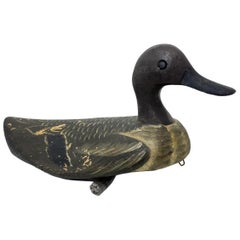
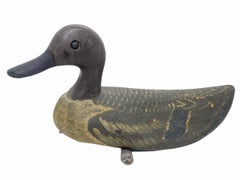
Early 20th Century Hand Painted Duck Decoy Antique German
Located in Nuernberg, DE
Found in Germany at an estate sale, this hand carved and hand painted duck decoy is perfect for the collector. Well used by a previous hunter the paint has faded through time althoug...
Wood, Paint
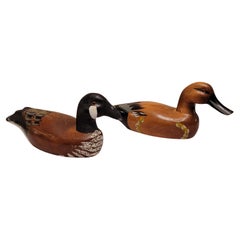
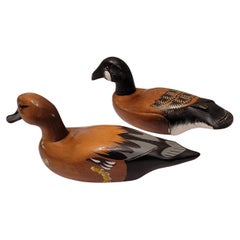
Pair of Vintage American Handmade and Painted Duck Decoys
Located in Germantown, MD
Elegant pair of Vintage American Handmade and Hand Painted Duck Decoys in good vintage condition, measuring 15" in width, 4" in depth and 5.5"in height for one, 13" in width , 4 inch...
Wood, Paint
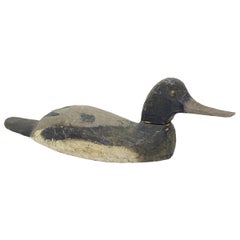
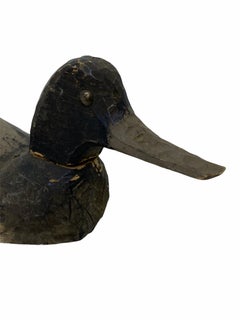
$640
H 4.25 in W 15.5 in D 4.5 in
Late 19th Century Hand Painted Bluebill Rochester Duck Decoy Antique
Located in Nuernberg, DE
Found in Germany at an estate sale, this hand carved and hand painted duck decoy is perfect for the collector. Well used by a previous hunter the paint has faded through time althoug...
Wood, Paint
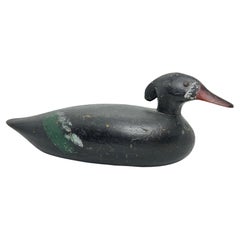
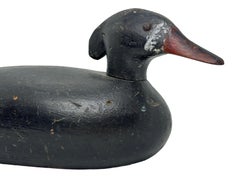
$1,136Sale Price|20% Off
H 4.63 in W 12 in D 3.75 in
Early 20th Century Hand Painted Duck Decoy Antique, USA owned by Bob Tillbutt
Located in Nuernberg, DE
Found in Germany at an estate sale, this hand carved and hand painted duck decoy is perfect for the collector. Well used by a previous hunter the paint has faded through time althoug...
Wood, Paint
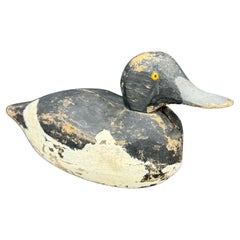
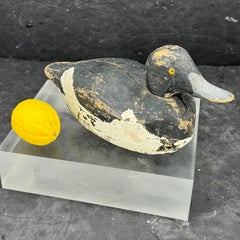
$225
H 6.25 in W 13 in D 5.25 in
European Hand-Carved Folk Art Duck Decoy, Wood and Paint, Mid-20th Century
Located in Haddonfield, NJ
Charming Hand-Carved Folk Art Duck Decoy. The duck features wonderful patina throughout including paint and glass eye. Wonderful collectable piece to add to a grouping. We think this...
Wood, Paint
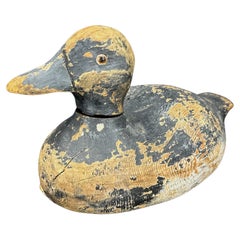
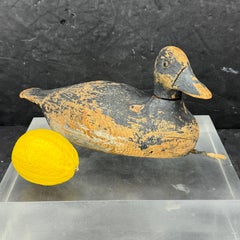
Harry V. Shourds Signed Vintage Antique Wood Duck Decoy Sculpture
Located in Studio City, CA
A fantastic hand-carved and painted wood duck decoy (possibly a New Jersey Bluebill) by Harry V. Shourds. The piece is signed/branded on the underside. Would be a great additio...
Wood, Paint
$225
H 5.5 in W 11.25 in D 5.5 in
European Hand-Carved Folk Art Duck Decoy, Wood & Paint, Mid-20th Century
Located in Haddonfield, NJ
Charming Hand-Carved Folk Art Duck Decoy. The duck features wonderful patina throughout including paint and glass eye. Wonderful collectable piece to add to a grouping. We think this...
Wood, Paint
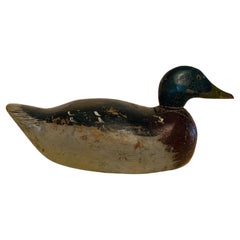
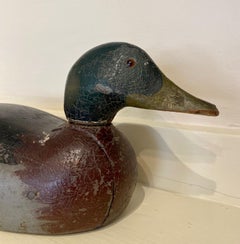
Early 20th Century Hand Crafted Mechanical Mallard Decoy
Located in Nantucket, MA
Rare Early 20th Century Hand Crafted Mechanical Mallard Duck Decoy, circa 1920s, by an unknown "factory" decoy maker. The decoy bears a close resemblance to the Evans Standard Grade ...
Wood

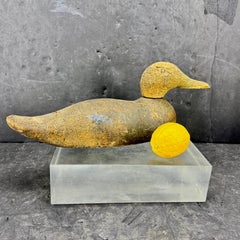
Early 20th Century French Hand-Carved Wood Folk Art Duck Decoy
Located in Haddonfield, NJ
Early 20th Century Hand-Carved Folk Art Duck Decoy. The duck 's head is movable and the body features wonderful patina throughout including traces of the original paint. Wonderful co...
Wood, Paint
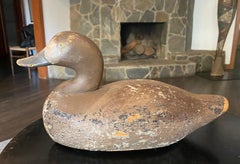
$395
H 7 in W 13 in D 5.5 in
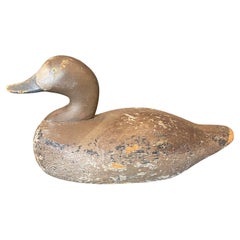
Hand Carved Vintage Antique Wood Duck Mallard Decoy Sculpture Early 20th Century
Located in Studio City, CA
A fantastic early to Mid-20th Century hand-carved and painted antique wood duck or mallard decoy. This piece has an wonderful color and texture. Would be a great addition to any dec...
Wood, Paint
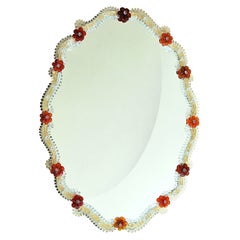
Rosso Glass Wall Mirror
By Specchi Veneziani
Located in Milan, IT
Crafted in the finest Murano tradition, this exquisite Venetian mirror is a true work of art. Assembled with crystal and gold elements, and adorned with red glass flowers, each piece...
Glass
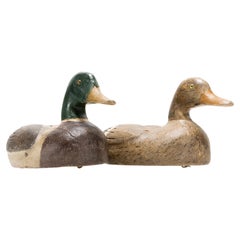
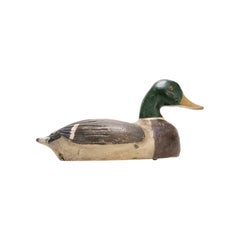
Roger Litski 1950s Pair of Mallard Decoys
Located in Coeur d'Alene, ID
Mallard pair of hand carved by Roger Litski. Original paint still showing. Glass eyes. Each marked on the bottom "R.L." Oversized for big water. Period: circa 1950 Origin: Green Bay...
Wood
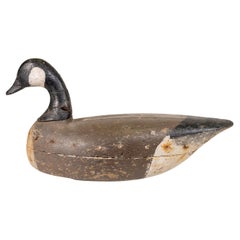
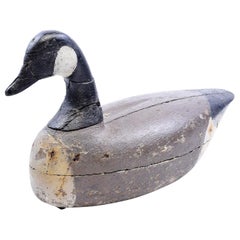
Ira Hudson Canada Goose Decoy
Located in Coeur d'Alene, ID
Hollow Canada goose decoy, attributed to Ira Hudson, of Chincoteague, VA. Hollow, with original paint - in as found condition. Chip shots and age to spare. Period: First quarter of ...
Wood
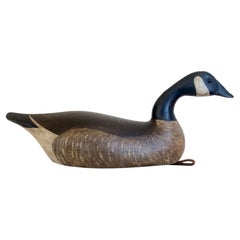
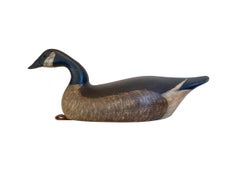
Carved Canada Goose by Frank Finney
By Frank Finney
Located in Nantucket, MA
Canada swimming goose, hollow carved with glass eyes and lead plate Signed/incised and titled on the bottom, "The Swimmer, Frank S Finney" circa 1980.
Wood
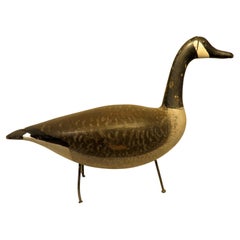
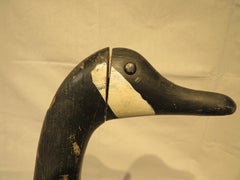
Vintage Canada Goose Decoy
Located in Nantucket, MA
Vintage Canada standing Goose Decoy on bent nail legs, by carver of birds and working decoys William "Roy" Mill (1902-1982), Kensington, Prince Edward Island.
Iron
$490
H 6 in W 17 in D 7 in
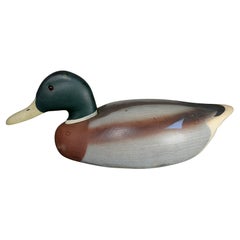
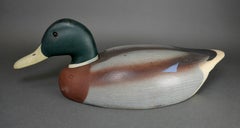
Abercrombie & Fitch Hand Carved and Painted Mallard Drake Duck Hunting Decoy
By Abercrombie & Fitch
Located in San Juan Capistrano, CA
Abercrombie & Fitch Mallard Drake Duck Decoy. Shows some wear from light use.
Wood
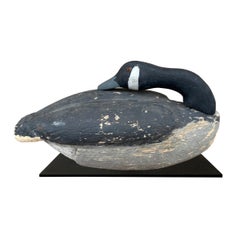
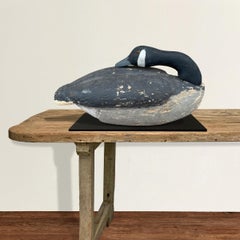
20th Century Sleeping Canada Goose Decoy
Located in Chicago, IL
A beautiful 20th century American life-size sleeping Canada Goose decoy with its original paint, a removable head and neck, and glass eyes, on a custom steel mount.
Wood
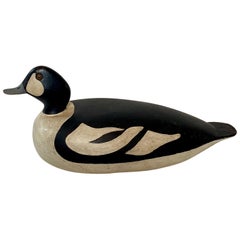
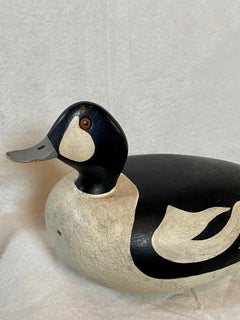
Barrow's Goldeneye Drake Decoy
Located in Nantucket, MA
Scarce vintage Barrow's Goldeneye Drake Decoy, signed RAS '76. The Barrow's Goldeneye is a very unusual, rare species to see as a decoy. This is a real gunning decoy made in the Mass...
Pine
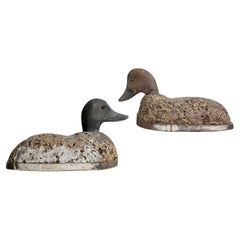
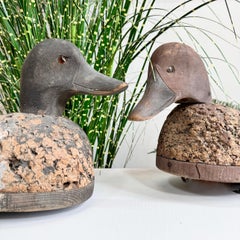
Pair Of Early 20th Century Folk Art Decoy Ducks
Located in Hastings, GB
Great pair of circa 1910-1920 folk art decoy ducks, hand crafted in cork and wood, each with an old iron bracket to the base, probably used to pull them along in the water. Each of t...
Wood, Cork
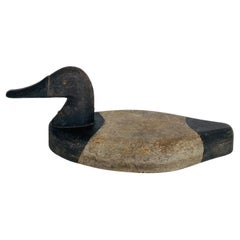
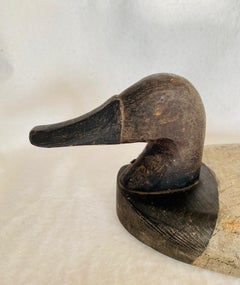
Chesapeake Bay Scaup Drake Sink Box Wing Decoy, circa 1940
Located in Nantucket, MA
Early Chesapeake Bay Scaup Drake Sink Box Wing Decoy, circa 1940, a very shallow flat bodied decoy in original condition, original black and white paint on head and body, and painted...
Wood
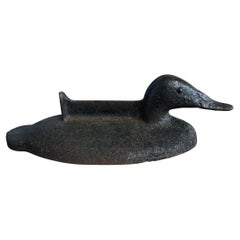
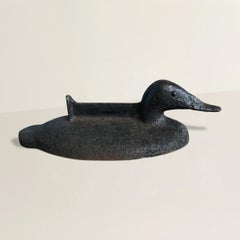
Early 20th Century American Iron Duck Boot Scrape
Located in Chicago, IL
This early 20th-century American solid cast iron mallard duck boot scrape is a multifunctional piece that encapsulates both practicality and rustic charm. Initially designed as a boo...
Iron
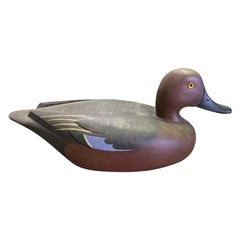
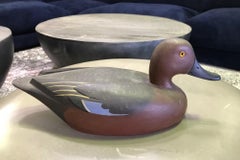
D.W. Nichol Signed Hand Carved Wood Duck Decoy, Male Cinnamon Teal
Located in Studio City, CA
A wonderful work, a male cinnamon teal, hand carved and painted by renowned duck decoy artist D W Nichol. Beautifully crafted and decorated. The work is signed "Male Cinnamon Teal...
Wood, Paint
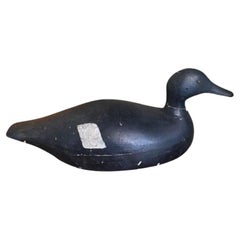
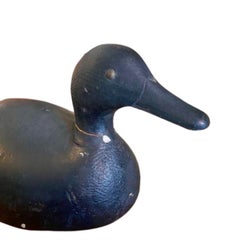
White Winged Scoter Decoy by Elmer Crowell, circa 1910
Located in Nantucket, MA
Early White Winged Scoter Decoy by Elmer Crowell (East Harwich: 1862-1952), circa 1910, a hand carved and painted large decoy in the simple paint of a white winged scoter. This is an...
Cedar
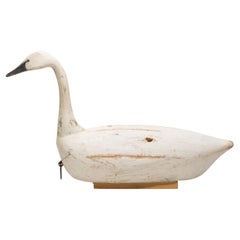
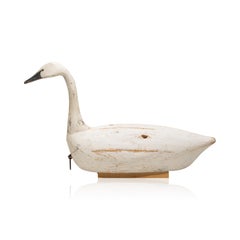
Life Size Swan Decoy by Reggie Birch
Located in Coeur d'Alene, ID
Full size whistling swan decoy by Reggie Birch, Chincoteague, Virginia. "R. Birch" carved in underside. A large railroad spike is attached as a balise. Two oak boards have been glued...
Wood
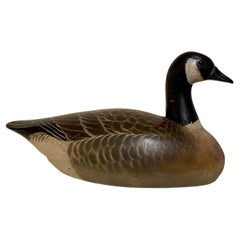
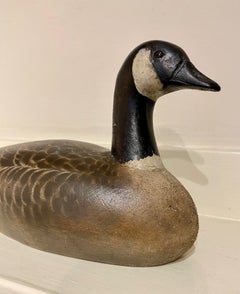
Elmer Crowell Quarter Sized Canada Goose Decoy, circa 1930s
Located in Nantucket, MA
Antique Quarter Sized Canada Goose Decoy, by J.Elmer Crowell, East Harwich, MA (1862 - 1952), circa 1928 - 1943, a hand carved and painted diminutive Canada Goose goose decoy signed ...
Cedar
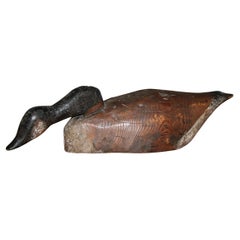
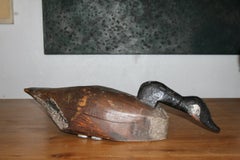
Wood duck sculpture
Located in grand Lancy, CH
Wood duck sculpture
Wood
Vintage, new and antique decoys have become fashionable decor in modern homes.
The history of decoy ducks, shorebirds, geese and other waterfowl as part of the folk art tradition stretches back thousands of years. Tule duck decoys made between 400 B.C. and 100 A.D. by Indigenous people for use in hunting have been found in Nevada that are similar to decoys still in use today.
Waterfowl decoys are now often made of plastic and foam, but vintage duck decoys from the mid-19th to early 20th century were frequently made of wood. Canvas duck decoys were popularized from the 1920s to ’40s as a lightweight alternative. These folk art pieces feature hand-painted feathers and long, flat bodies, lending themselves well to display in living rooms on shelves and in cabinets.
One of the fascinating aspects of handcrafted waterfowl decoys is their regional variation to match the local birds. For example, German decoys are regularly decorated with green and gray paints, making them look like mallard ducks. Scandinavian decoys are typically black and white, resembling the common eider.
Either option could be a rustic treasure for one’s home, adding a touch of eclectic art to any room. Browse antique, new and vintage decoys on 1stDibs today.
At Waddesdon Manor, artist Joana Vasconcelos has installed a three-tiered patisserie inspired by the narrative tile work of her homeland. We take a look at the cake sculpture and how Portuguese tiles have been used in architecture from the 17th century to today.
The streets of fin-de-siècle Paris were set aglow with colorful poster ads, thanks to the printing techniques invented by Jules Chéret. Now, the Milwaukee Art Museum is celebrating this undersung talent in America's first solo show dedicated his exuberant works.
Expert Jeff Bridgman explains the history and meaning behind the twinkling constellations that have graced Old Glory.
The iconoclastic style setter displayed African and Oceanic art, as well as works by indigenous peoples of the Americas, alongside pieces by such major modernists as Pablo Picasso and Jackson Pollock.
Perfect for July 4th weekend, a new show at Philadelphia's Museum of the American Revolution displays an array of antique red, white and blue flags.
Designers are beginning to see this enigmatic form of folk art in a whole new light.