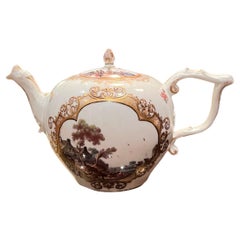
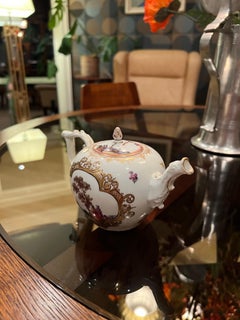
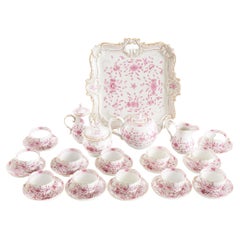
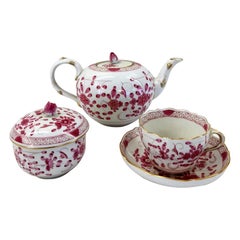
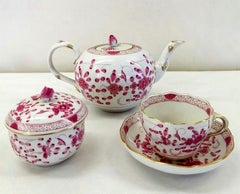
Meissen Porcelain Service Tea Purple Indian Pattern No. 343410 '12 Cups'
By Meissen Porcelain
Located in Prato, Tuscany
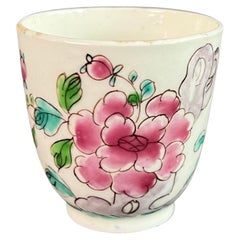
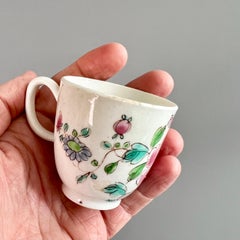
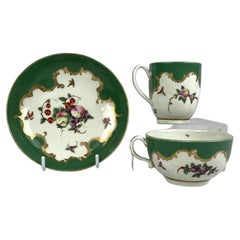
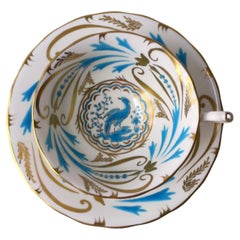
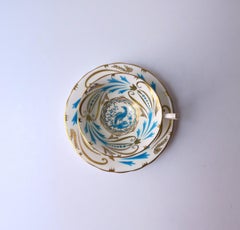
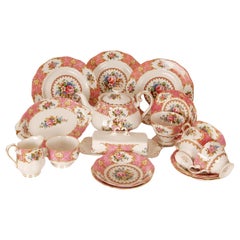
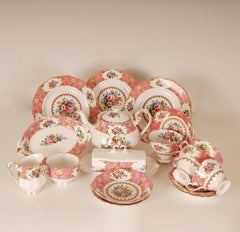
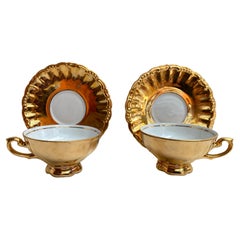
Meissen porcelain tea set; the set consists of a teapot, a sugar bowl, and twelve cups with plate; the various pieces are made of fine hard white porcelain painted with the "Purple Indian Pattern", the most prestigious, important, and expensive decoration of Meissen tableware, in fact, the items with this decoration, much more particular and detailed than others, were fired three times, while those with white and blue decorations (such as the "Blue Onion") only twice; Moreover, the execution of this ornamental motif with delicate and graceful flowers was entrusted only to the most experienced and skilled painters, those in possession of the prestigious diploma obtained at the "School of Drawing of Meissen" established since 1764. Moreover, the execution of this ornamental motif with delicate and graceful flowers was entrusted only to the most experienced and skilled painters, those in possession of the prestigious diploma obtained at the "School of Drawing of Meissen" established in 1764. The knobs of the teapot and sugar bowl represent two harmonious and graceful rosebuds, also handmade; the edges of the cups and saucers are scalloped and finished with pure gold as well as the other decorations of the teapot and sugar bowl. All pieces bear the original Meissen trademark (two crossed swords) and from the enclosed list it can be stated with certainty that our service was produced between 1934 and 1944; moreover, on the objects the model is handwritten (343410), this wording makes the artifacts even more precious and appreciated as they preserve all the characteristics of the author's calligraphy. Meissen porcelain was created in the castle of Albrechtsburg, in Meissen, a small town in Saxony near Dresden, in 1710, at the behest of Augustus the Strong (1670-1733), Prince-Elector of Saxony and King of Poland, who wanted to start production after the studies and experiments of his alchemist Bottger. Bottger discovered the formula for porcelain, in fact at that time, only the Chinese and Japanese had the recipe to create this wonderful material; Meissen was, therefore, the first porcelain produced in Europe! Bottger never revealed his formula to anyone, only a certain stage was known to the workers; we do not know, even today, in what proportions the different components are mixed; this is the great secret that allowed the famous brand to be considered the best in the world, Meissen porcelain is given the nickname of "white gold"! Through the years, Meissen has perfected its hard-paste products with high-temperature firing during its glazing. Meissen's porcelain patterns have been copied by many other manufacturers around the world such as Royal Copenhagen, Dresden, Herend, and many others, but Meissen's porcelain glaze maintains its quality over time and is superior to all (plates will not scratch with prolonged use of cutlery!). This is why even old Meissen porcelain looks so new and retains its excellent condition, while other porcelain grains and ages, losing their brightness and color. The perfect and accurate painting on Meissen porcelain far exceeds any other porcelain in the world. Our Meissen tea...
Category
Mid-20th Century German Rococo Tea Sets