String Asian Art and Furniture

to
12
2
12
2
5
5
1
3
3
1
166
6,460
5,583
5,503
3,091
12
12
12
12
12
12
11
11
Material: String
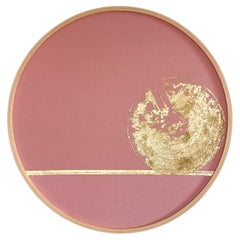
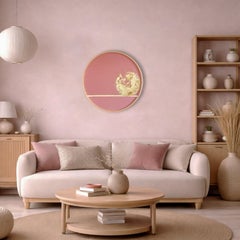
Vintage kimono textile art "Moonlight sakura ~Transience~ IV" by ikasu Japan

Vintage kimono textile art "Moonlight sakura ~Transience~ IV" by ikasu Japan

By Kimono ikasu, Lena Okamoto

Located in Setagaya City, JP

Certified Kimono Meister work / Certificate of Authenticity included One-of-a-kind Japanese textile art made from vintage kimono fabrics. Sustainable artwork for modern interiors, c...

Category

Mid-20th Century Japanese Arts and Crafts String Asian Art and Furniture

Materials

Gold Leaf

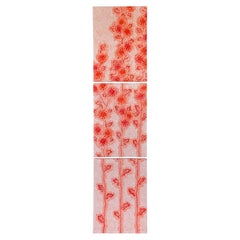
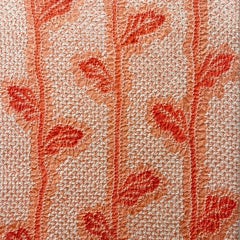
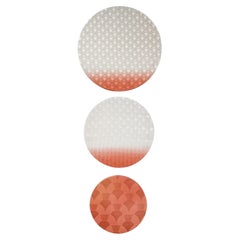
Mid 20th Century kimono textile art " Growing ~ Longevity ~" by ikasu Pink Japan

Mid 20th Century kimono textile art " Growing ~ Longevity ~" by ikasu Pink Japan

By Kimono ikasu, Lena Okamoto

Located in Setagaya City, JP

Certified Kimono Meister work / Certificate of Authenticity included. One-of-a-kind Japanese textile art made from vintage kimono fabrics. Sustainable artwork for modern interiors, collectors, boutique hotels, and lovers of Japanese aesthetics. [About this canvas] This set is a depiction of a tall chrysanthemum stem, entirely dyed in a traditional shibori technique. [Period / Story] The haori featured in this canvas was created and used during the late Showa period (1960-80ies). [Explanation and meaning of pattern and colors] A charming chrysanthemum flowers all around a stem seem to reach the heavens. The chrysanthemum flower, which retains its vitality long after being cut, symbolizes longevity, purification from malevolent spirits, and good fortune. In ancient times, during the Kamakura period (1185-1333), emperors loved the chrysanthemum pattern, and it remains the most prestigious flower and the emblem of the Japanese imperial family...

Category

1970s Japanese Showa Vintage String Asian Art and Furniture

Materials

Canvas, Silk, Fabric, Textile, String, Thread, Yarn

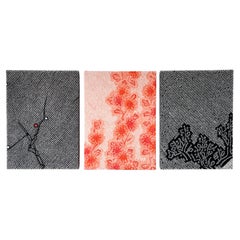
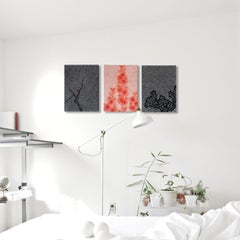
Vintage kimono textile art " Flowers ~ Life Circle ~" by ikasu Pink Black Japan

Vintage kimono textile art " Flowers ~ Life Circle ~" by ikasu Pink Black Japan

By Lena Okamoto, Kimono ikasu

Located in Setagaya City, JP

Certified Kimono Meister work / Certificate of Authenticity included. One-of-a-kind Japanese textile art made from vintage kimono fabrics. Sustainable artwork for modern interiors, ...

Category

1970s Japanese Japonisme Vintage String Asian Art and Furniture

Materials

Canvas, Silk, Fabric, Textile, String, Thread, Yarn

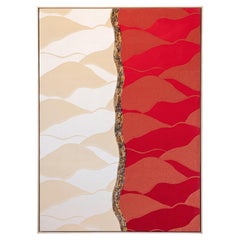
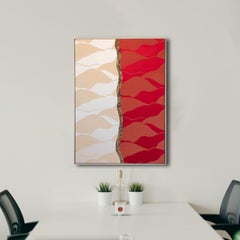
Vintage obi textile art "Under the Sun ~ Serendipity ~" by ikasu Red Beige Japan

Vintage obi textile art "Under the Sun ~ Serendipity ~" by ikasu Red Beige Japan

By Kimono ikasu, Lena Okamoto

Located in Setagaya City, JP

Certified Kimono Meister work / Certificate of Authenticity included. One-of-a-kind Japanese textile art made from vintage obi fabrics. Sustainable artwork for modern interiors, collectors, boutique hotels, and lovers of Japanese aesthetics. [Size] 73cm x 53cm x 5cm [Materials] silk (outside-layer) , wooden frame (under-layer), bark (pine, oak, sawtooth oak, etc.) [Story behind the work] This artwork creatively uses tree bark to evoke the imagery of woods and mountains during both the morning and nighttime on left and right. It is elegantly framed with paulownia wood, a tree closely connected to kimono culture, and is filled with storytelling and sense of luxury. By incorporating both the front and back sides of the same obi fabric woven in different colors, the play of light and shadow on the mountains is depicted through the contrasting appearances of these surfaces. The intention behind this piece is to convey the exquisite beauty of Japanese mountains and the lush forests that inhabit them. To achieve this, traditional elements of Japanese culture, such as obi textiles and craftsmanship involving wood, were used. The outer and inner linings of the same obi, no longer suitable for clothing, along with bark material that would normally be discarded, have been repurposed to create this exceptional upcycle artwork. The fusion of Japanese natural materials – silk, paulownia wood, and pine bark for the central decoration – along with the so-called "Tozan" pattern, a unique Japanese natural design showing mountains from far-away point, captures the magnificent beauty of Japanese nature from various perspectives. The central bark decoration stands out as a distinctive feature of this work. Pine, oak, and other tree barks are interwoven among the mountains woven into the obi, creating a tangible and authentic natural atmosphere. [Period / Story] The obi used in this piece was originally crafted during the late Showa period (1960-80ies). [Explanation and meaning of pattern and colors] This upcycle artwork uses an obi with a tozan pattern woven in two colors. The design is inspired by a distant mountain range, a motif that has been used in paintings and crafts since ancient times. However, in this particular design, the mountains are depicted not as distant peaks but as graceful semicircles giving it a mild atmosphere. [Characteristics of the fabric] This upcycled Fukuro-obi (two-side oni) showcases a festive color pattern of mountains intricately woven with gold threads against a beige front and red on the back. The way this obi interacts with light allows it to shift in expression, much like a mountain revealing different facets over time. It can transform from deep shades of color to the appearance of gold shimmering against bright hues, depending on the lighting and viewing angle. [About the frame] Kiritansu - chest-of-drawers for kimono, is traditionally made from paulownia wood, a uniquely Japanese material closely tied to the world of kimonos. Paulownia wood is known as the lightest wood in Japan, prased for its natural luster, resistance to moisture, and resilience against cracking. Since ancient times, it has been used in crafting furniture, chests, and musical instruments. During the Edo period, it became customary to store cherished kimonos in paulownia chests...

Category

Late 20th Century Japanese Arts and Crafts String Asian Art and Furniture

Materials

Gold Leaf, Silver Leaf

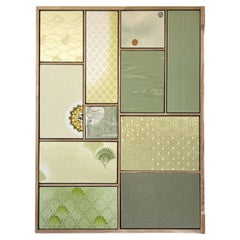
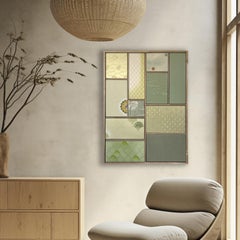
Antique kimono textile art " Kobachi ~ Green Collection ~" by ikasu Japan

Antique kimono textile art " Kobachi ~ Green Collection ~" by ikasu Japan

By Lena Okamoto, Kimono ikasu

Located in Setagaya City, JP

Certified Kimono Meister work / Certificate of Authenticity included. One-of-a-kind Japanese textile art made from vintage obi fabrics. Sustainable artwork for modern interiors, col...

Category

1920s Japanese Japonisme Vintage String Asian Art and Furniture

Materials

Silk, Wood, Fabric, Textile, String, Thread, Yarn, Reclaimed Wood, Compo...

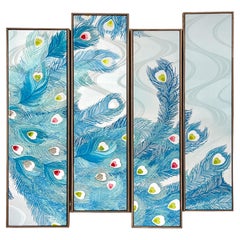
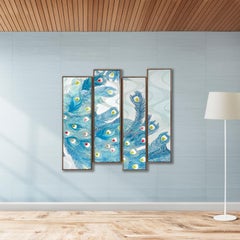
Antique kimono textile art " Peacock Feathers ~ Royalty ~" by ikasu Blue Japan

Antique kimono textile art " Peacock Feathers ~ Royalty ~" by ikasu Blue Japan

By Lena Okamoto, Kimono ikasu

Located in Setagaya City, JP

Certified Kimono Meister work / Certificate of Authenticity included. One-of-a-kind Japanese textile art made from vintage obi fabrics. Sustainable artwork for modern interiors, col...

Category

Early 20th Century Japanese Japonisme String Asian Art and Furniture

Materials

Gold Leaf, Silver Leaf
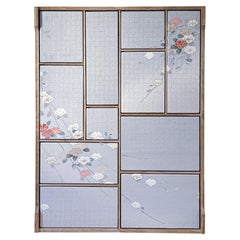
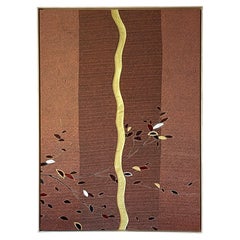
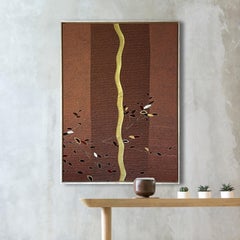
Vintage kimono textile art " Autumn branches ~ Kintsugi ~" by ikasu Brown Japan

Vintage kimono textile art " Autumn branches ~ Kintsugi ~" by ikasu Brown Japan

By Kimono ikasu, Lena Okamoto

Located in Setagaya City, JP

Certified Kimono Meister work / Certificate of Authenticity included. One-of-a-kind Japanese textile art made from vintage obi fabrics. Sustainable artwork for modern interiors, col...

Category

1960s Japanese Japonisme Vintage String Asian Art and Furniture

Materials

Silk, Wood, Paper, Fabric, Textile, String, Thread, Yarn, Reclaimed Wood...

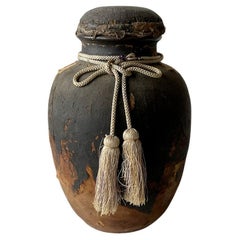
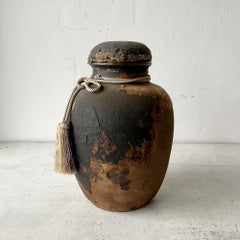
Early Showa-period Japanese Shuko Pottery Sake Jar

Early Showa-period Japanese Shuko Pottery Sake Jar

Located in Chiba, JP

Pottery sake jar with wooden lid, covered with old used papers, tied string, Early Showa period, Japan, H 26 x D 17 cm (10.23 x 6.69in).

Category

Mid-20th Century Japanese Japonisme String Asian Art and Furniture

Materials

Ceramic, String, Wood, Paper

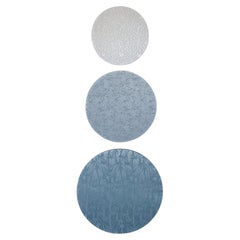
Vintage kimono textile art " Turquoise Forest ~ Strength ~ " by ikasu Blue Japan

Vintage kimono textile art " Turquoise Forest ~ Strength ~ " by ikasu Blue Japan

By Kimono ikasu, Lena Okamoto

Located in Setagaya City, JP

Certified Kimono Meister work / Certificate of Authenticity included. One-of-a-kind Japanese textile art made from vintage kimono fabrics. Sustainable artwork for modern interiors, collectors, boutique hotels, and lovers of Japanese aesthetics. Fabrics featuring iconic Japanese plants like chrysanthemum, maple, and bamboo were gathered from various long underwear and kimono pieces to create a set of canvases (diameter 30, 25 and 20cm) showcasing exquisite gradations. The top canvas, in pristine white, originates from long under-kimono, while the middle and bottom canvases are skillfully upcycled from kimono fabrics. [Period / Story] The long under-kimono and kimono fabrics used in these canvases were originally crafted and worn during the late Showa period (1960-80ies). [Explanation and meaning of pattern and colors] The pattern on the top canvas features a chrysanthemum, an auspicious emblem symbolizing longevity. It is affectionately referred to as the "raccoon dog chrysanthemum" due to the large, overlapping petals resembling the fur of a muzina, a creature similar to a raccoon dog or badger. This motif is highly popular in various plant-inspired designs and frequently seen in Edo komon, katazome, and jimon textiles. The top canvas naga-juban under-kimono, being entirely white and devoid of any additional dyes, suggests its use as formal wear. Its pristine white hue accentuates the silk's luster when exposed to light and highlights the beauty of the woven patterns. The fabric used here is rinzu, a type of fabric thinner than crepe de chine, characterized by its soft, smooth texture and subtle sheen. This particular lintel distinguishes itself with the way its ground pattern emerges and also incorporates a woven chrysanthemum pattern. The central canvas showcases a maple tree, symbolizing longevity, which changes its colors with the seasons, bringing joy and happiness to people's lives. The bamboo featured on the lower canvas has been regarded as a symbol of good fortune since ancient times, given its straight and vigorous growth, along with the Chinese legend that a phoenix consumes its fruit. It embodies concepts such as "immortality," "longevity," and "strength" because it remains green even in winter. The hollow stem also signifies "innocence," suggesting that there are no hidden agendas. All three canvases are adorned with ground patterns that, when viewed from a distance, appear as modern works of art, yet upon closer inspection, they reveal a distinct Japanese ambiance. [Characteristics of the fabric] All three canvases are made of fabrics with jimon. The unique and high level of Japanese weaving...

Category

1970s Japanese Japonisme Vintage String Asian Art and Furniture

Materials

Yarn, Thread, String, Textile, Fabric, Silk, Canvas

Vintage obi textile art " Camellia ~ Serendipity ~" by ikasu Blue Japan

Vintage obi textile art " Camellia ~ Serendipity ~" by ikasu Blue Japan

By Kimono ikasu, Lena Okamoto

Located in Setagaya City, JP

Certified Kimono Meister work / Certificate of Authenticity included. One-of-a-kind Japanese textile art made from vintage obi fabrics. Sustainable artwork for modern interiors, collectors, boutique hotels, and lovers of Japanese aesthetics. [Story behind the work] This work is inspired by traditional Japanese nature motifs symbolism, and is framed in paulownia wood originally used for a kimono chest-of-drawers. It is elegantly framed with paulownia wood originally used for kimono chest-of-drawers, and is filled with storytelling and sense of luxury. In this artwork, the aim was to capture the the auspicious symbol of camellia used in antique kimono. Traditional Japanese culture, represented by the kimono, and wood, an integral element of Japanese craftsmanship, were used to bring this vision to life. I used pieces of kimono that could no longer be used as clothing and kiritansu chest-of-drawers that would normally be discarded to create the ultimate upcycled piece. [Explanation and meaning of pattern and colors] This delicate piece features hand-drawn camellia motifs flowing gracefully on a softly brightened grayish background. Camellias, native to Japan, bloom from winter to early spring. As an evergreen tree with green leaves throughout the year, it symbolizes the anticipation of spring and is considered an auspicious plant. Due to its seasonal significance and auspicious meanings, camellias have been used as motifs symbolizing good fortune. Additionally, they were highly valued for their use in oil, cosmetics, and medicine, representing nobility. Believed to possess the power to ward off misfortune, camellias also carry the meaning of "protection from calamity" and have strong ties to traditional ceremonies. In this artwork, camellias are delicately depicted alongside flowing branches, subtly representing good fortune with their pale pink and white hues. "Sora-iro nezumi 空色鼠" refers to a light grayish color with a hint of blue, reminiscent of the slightly brightened sky on a lightly cloudy day. Popular during the late Edo period (19th cent.), it elegantly captures the slightly brighter sky pattern seen on lightly overcast days. Notably, the term "nezumi-iro" (mouse gray), popular during the late Edo period, was paired with brown tones, collectively known as "Forty-eight Teas and a Hundred Mice 四十八茶百鼠." Colors within the "nezumi" (gray) spectrum, particularly "sora-iro nezumi," were favored by young people for their cool and sophisticated appeal. [Characteristics of the fabric] The fabric features intricately woven patterns that reveal subtle gradations through dyeing, creating a grid pattern that transforms depending on the light conditions. Originally, this fabric was part of a formal kimono known as a "hōmongi 訪問着," featuring motifs along the hem, shoulders, and sleeves. These motifs have been carefully selected and combined to create a unified piece of artwork. [About the frame] Kiritansu - chest-of-drawers for kimono, is traditionally made from paulownia wood, a uniquely Japanese material closely tied to the world of kimonos. Paulownia wood is known as the lightest wood in Japan, prased for its natural luster, resistance to moisture, and resilience against cracking. Since ancient times, it has been used in crafting furniture, chests, and musical instruments. During the Edo period, it became customary to store cherished kimonos in paulownia chests...

Category

1960s Japanese Japonisme Vintage String Asian Art and Furniture

Materials

Gold Leaf, Silver Leaf
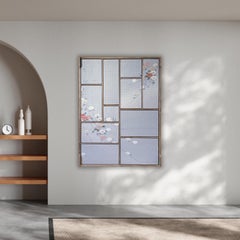
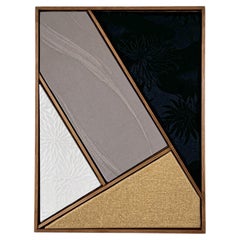
Vintage kimono textile art " Monochrome Geometry " by ikasu Gold Grey Japan

Vintage kimono textile art " Monochrome Geometry " by ikasu Gold Grey Japan

By Kimono ikasu, Lena Okamoto

Located in Setagaya City, JP

Certified Kimono Meister work / Certificate of Authenticity included. One-of-a-kind Japanese textile art made from vintage obi fabrics. Sustainable artwork for modern interiors, col...

Category

1960s Japanese Japonisme Vintage String Asian Art and Furniture

Materials

Silk, Wood, Fabric, Textile, String, Thread, Yarn, Reclaimed Wood, Compo...

Vintage kimono textile art " Plum Gradation " by ikasu Pink White Japan

Vintage kimono textile art " Plum Gradation " by ikasu Pink White Japan

By Lena Okamoto, Kimono ikasu

Located in Setagaya City, JP

Certified Kimono Meister work / Certificate of Authenticity included. One-of-a-kind Japanese textile art made from vintage kimono fabrics. Sustainable artwork for modern interiors, ...

Category

1980s Japanese Japonisme Vintage String Asian Art and Furniture

Materials

Canvas, Silk, Fabric, Textile, String, Thread, Yarn

Related Items
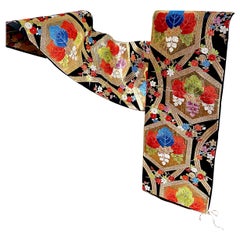
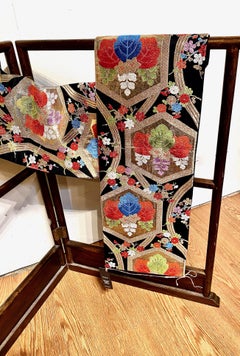
Vintage Japanese Obi Textile, Woven Floral Design, Silk, Circa 1970s

Vintage Japanese Obi Textile, Woven Floral Design, Silk, Circa 1970s

Located in Pasadena, CA

Superb example of a c. 1970s Obi. The obi is beautifully woven with multi-colored florals reserves and interlaced cherry blossoms. The reserves are delineated by woven metallic silve...

Category

Late 20th Century Japanese Other String Asian Art and Furniture

Materials

Silk

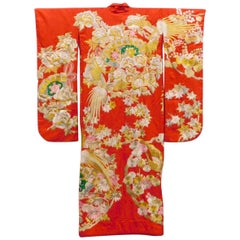
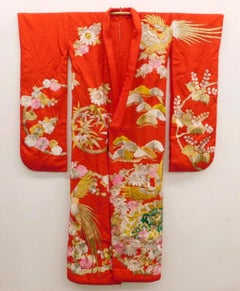
Exceptional Embroidered Japanese Ceremonial Kimono

Exceptional Embroidered Japanese Ceremonial Kimono

Located in Atlanta, GA

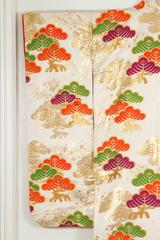
A visually striking antique Uchikake Wedding Kimono/Robe for ceremonial occasion, circa end of Meiji to Taisho period 1910s-1930s. This bridal outer garment is of a bright red color ...

Category

20th Century Japanese Japonisme String Asian Art and Furniture

Materials

Brocade, Silk

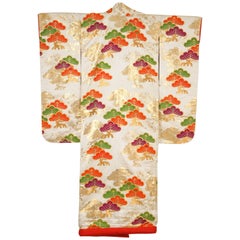
Vintage Kimono Silk Brocade Japanese Ceremonial 1970

Vintage Kimono Silk Brocade Japanese Ceremonial 1970

Located in Moreno Valley, CA

A vintage Mid-Century ivory color silk brocade collectable Japanese ceremonial kimono. One of a kind. Fabulous museum quality ceremonial kimono in pure silk with intricate detailed h...

Category

20th Century Japanese Japonisme String Asian Art and Furniture

Materials

Silk

Lovely 20th Horii Ko Scroll Painting Japan Artist Flowers Painted

Lovely 20th Horii Ko Scroll Painting Japan Artist Flowers Painted

Located in Amsterdam, Noord Holland

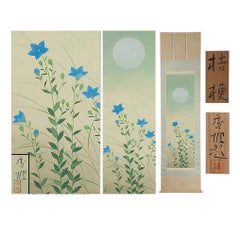
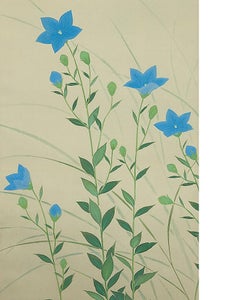
Horii Ko? 1897 to 1990 Kyoto people real name: Kiyotaro Horii issue: Ko? nurses: Kikuchi Chigiritsuki Kyoto School of Arts & Crafts, Kyoto painting...

Category

Mid-20th Century Japanese Showa String Asian Art and Furniture

Materials

Silk

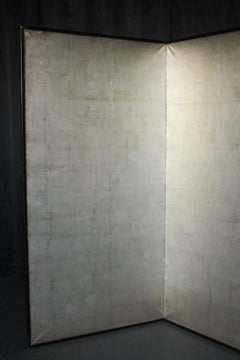
B88 Japanese Antiques Art, silver background Screen Byobu

B88 Japanese Antiques Art, silver background Screen Byobu

Located in Niiza, JP

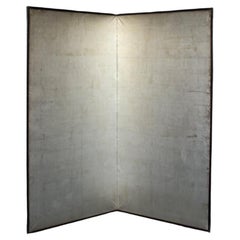
Material: Silver Paper, wooden frame One piece: W870×H1730mm×D17mm, Unfolded size: W1740mm Folded size: W870×H1730×D35mm, 5kg Estimate packing size: (sandwiched with 5-10mm plywood)...

Category

20th Century Japanese String Asian Art and Furniture

Materials

Paper

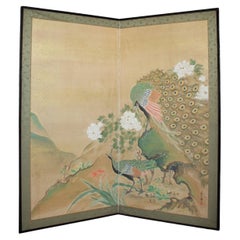
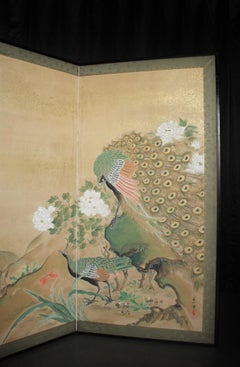
B50 Old Japanese Antiques a folding screen, Byobu 2panel, Peacock

B50 Old Japanese Antiques a folding screen, Byobu 2panel, Peacock

Located in Niiza, JP

Unfolded size: 1700 x 1720 x 18 mm Foldable: 855 x 1720 x 36 mm, 6kg Estimated size after packaging (sandwiched between 9 mm plywood): 8 cm x 92 cm x 180 cm Weight 25KG This paint...

Category

19th Century Japanese Antique String Asian Art and Furniture

Materials

Wood, Paper

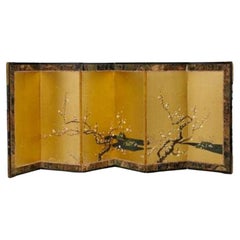
Early 20th Century Japanese 6-Panel Gouache and Gold Leaf Painted Table Screen
Early 20th Century Japanese 6-Panel Gouache and Gold Leaf Painted Table Screen
Located in Morristown, NJ

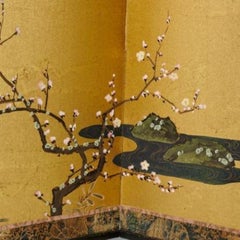
20th c., Showa period gouache and gold leaf Japanese screen. Depicting plum tree blossoms on a riverbank across 6 panels. Plum blossoms are often mentioned in Japanese poetry as a symbol of spring...
Category

20th Century Japanese Showa String Asian Art and Furniture

Materials

Gold Leaf

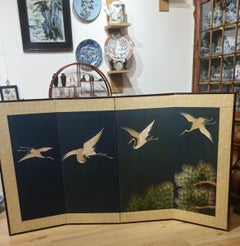
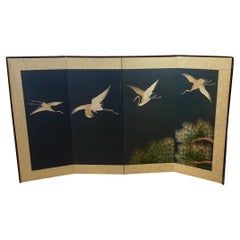
Antique Japanese Folding Chamber Screen / Paravent 20th century Japan Cranes

Antique Japanese Folding Chamber Screen / Paravent 20th century Japan Cranes

Located in Amsterdam, Noord Holland

A super nice Meiji period 19th c Japanese Chamber Screen. Also usuable as wall mounted screen. Stunning piece!

Category

20th Century Japanese Meiji String Asian Art and Furniture

Materials

Bronze

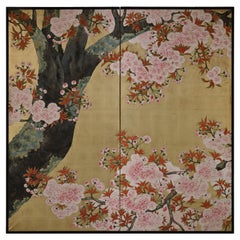
Early 20th Century Japanese Cherry Blossom Screen by Kano Sanrakuki

Early 20th Century Japanese Cherry Blossom Screen by Kano Sanrakuki

Located in Kyoto, JP

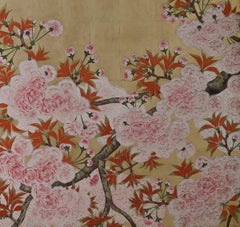
Cherry Blossoms Kano Sanrakuki (1898-1981) Showa period, circa 1930 2-panel Japanese Screen Color, gofun and gold leaf on paper Against a backdrop of gold-leafed ground, the lichen covered trunk and branches of the life-sized cherry blossom tree reach out and beyond the confines of the pictorial surface. The overall composition has a feeling of flatness which draws emphasis to the surface and the three-dimensionality of the cherry blossoms. Painstakingly built-up layers of thickly applied shell-white gofun detail the voluminous blossoms and cover large areas of this tour-de-force of Japanese Nihonga painting. By simplifying the background, minimizing the number of colors and depicting the blossoms with such heavy relief, the artist has emphasized the stunning presence of the cherry tree. The type of tree depicted is the Yae-Zakura; a double-layered type of cherry blossom famed for its beauty and strength. When we think of Japanese cherry blossoms, the first thing that comes to mind is Somei Yoshino variety, which has a single flower with five almost white petals. This type is fragile and easily blown away by strong wind or rain. Most of the double-flowered cherry blossoms begin to bloom when the Somei-Yoshino falls, and the flowering period lasts longer than that of the Somei-Yoshino. Kano Sanrakuki originally studied painting at the Kyoto City Arts and Crafts School under the tutelage of Yamamoto Shunkyo...

Category

Early 20th Century Japanese Showa String Asian Art and Furniture

Materials

Gold Leaf

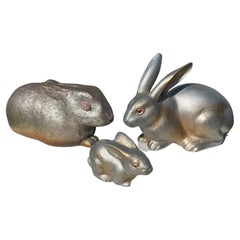
Japanese Hand-Crafted Bronze Rabbit Family Trio, Mid-20th Century

Japanese Hand-Crafted Bronze Rabbit Family Trio, Mid-20th Century

$280Sale Price / set|62% Off

H 3.5 in W 7 in D 3.25 in

Japanese Hand-Crafted Bronze Rabbit Family Trio, Mid-20th Century

Located in South Burlington, VT

From our recent Japanese acquisitions and coming from a Japanese collector of rabbit usagi sculptures Rabbit family trio (3) seated rabbit sculptures hand cast and hand painted This is an unusual Japanese one-of-a-kind group in both large and small scale Quality: Hand cast with carved ears...

Category

Mid-20th Century Japanese Showa String Asian Art and Furniture

Materials

Bronze, Iron

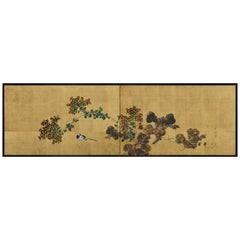
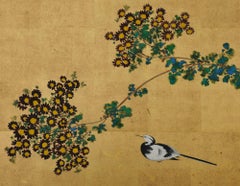
Japanese Screen, Early 20th Century Wagtail & Chrysanthemum by Ishizaki Koyo

Japanese Screen, Early 20th Century Wagtail & Chrysanthemum by Ishizaki Koyo

Located in Kyoto, JP

Ishizaki Koyo (1884-1947) Wagtail & Chrysanthemum Early 20th century Folding screen in two-panels. Ink, pigments and gofun on gold leaf. Sign: Koyo Seal: Koyo This ...

Category

Early 20th Century Japanese Taisho String Asian Art and Furniture

Materials

Gold Leaf

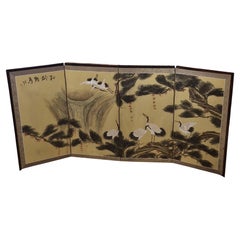
Antique Japanese Folding Chamber Screen /Paravent Early 20th century Japan Crane

Antique Japanese Folding Chamber Screen /Paravent Early 20th century Japan Crane

Located in Amsterdam, Noord Holland

A super nice Japanese Chamber screen. Also suitable for wall mounting. Good condition and lovely colors

Category

20th Century Japanese Meiji String Asian Art and Furniture

Materials

Bronze