By Makuzu Kozan
Located in Atlanta, GA
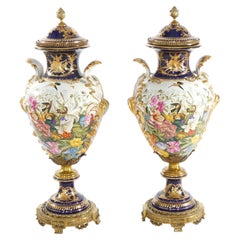
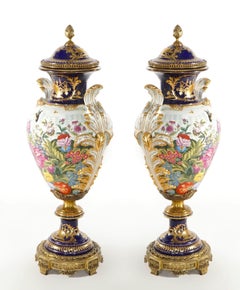
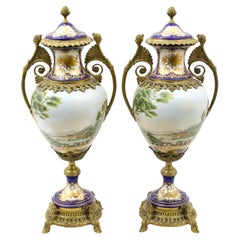
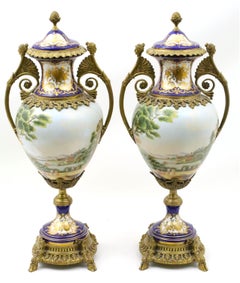
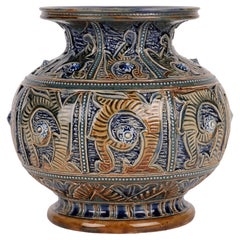
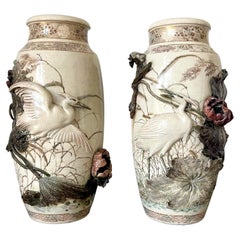
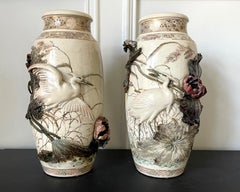
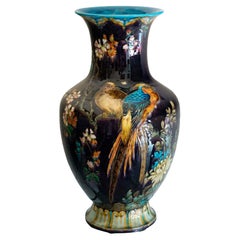
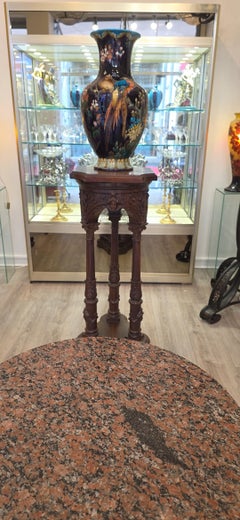
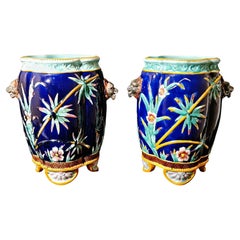
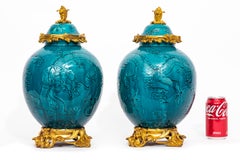
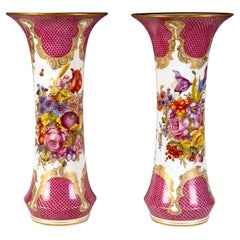
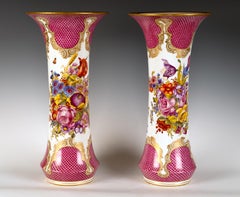
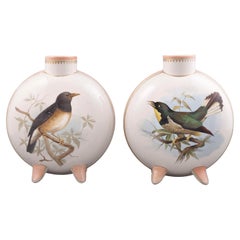
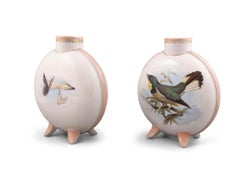
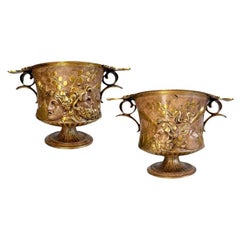
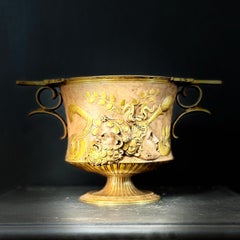
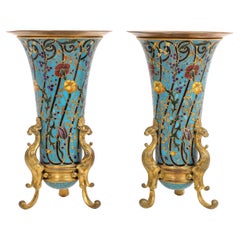
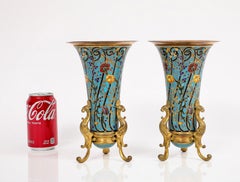
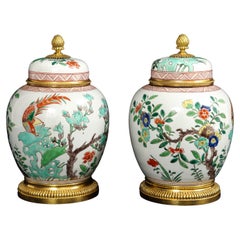
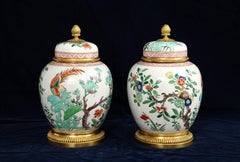
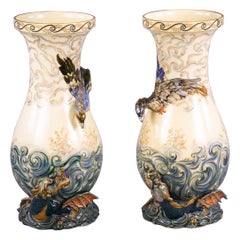
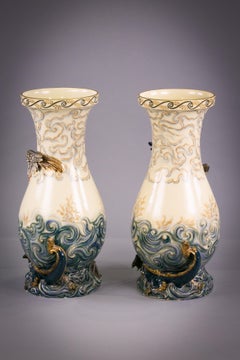
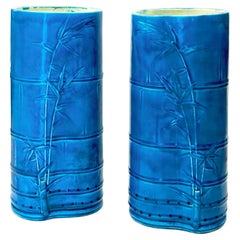
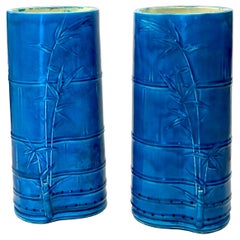
A stunning pair of ceramic vases with gilt, paint and high-relief decoration by imperial artist Makuzu Kozan (1842-1916, also known as Miyagawa Kozan) circa 1876-81 (late Meiji period). These vases belong to early period (1876-1881) of Kozan's repertoire, during which time the high relief sculpturing (known as Takauki ware) was used as a distinguished technique on top of the traditional gilt and paint ornaments of satsuma ware. Due to the relatively limited production and the fragile nature of these wares, not a large quantity of the examples remained in the first place, not mentioning a fine matching signed pair in such impressive sizes.
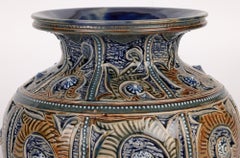
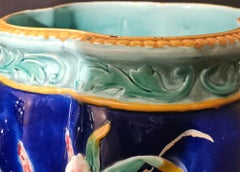
Not only a rarity, this pair of vases is also superb in workmanship, thus the fine example of the work from that short and unique period of the artist's career before he switched to the underglaze period. In a conceptually mirrored fashion, the surface is richly decorated with flying cranes among large lotus leaves and flower, like an idyllic aqua scenery of pure poetry on a circular scroll. The high-relief appliques were rendered and composed in realistic fashion but with a dramatic touch. They are literally about to break the surface free, alive and in motion. The dark colors of the glaze were used to set a moody tone. The approach to create this type of ornamentations is more akin to sculpturing an ink painting in three-dimension than ceramic making. It is not hard to imagine the demand of both the artistry and the technique.
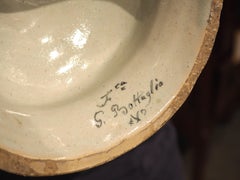
Both vases were signed as "Makuzu Kozan Kiln" and each further with another name and seal, which are most likely the individual artist involved in the making process. Similar signatures can be seen in the reference book below.
For similarly Takauki vases, see Miyagawa Kozan Makuzu...
Category
Japanese Japonisme Antique 1870s Vases and Vessels