Located in West Hollywood, CA
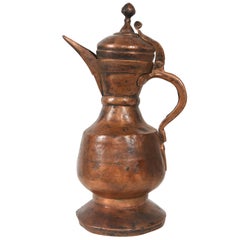
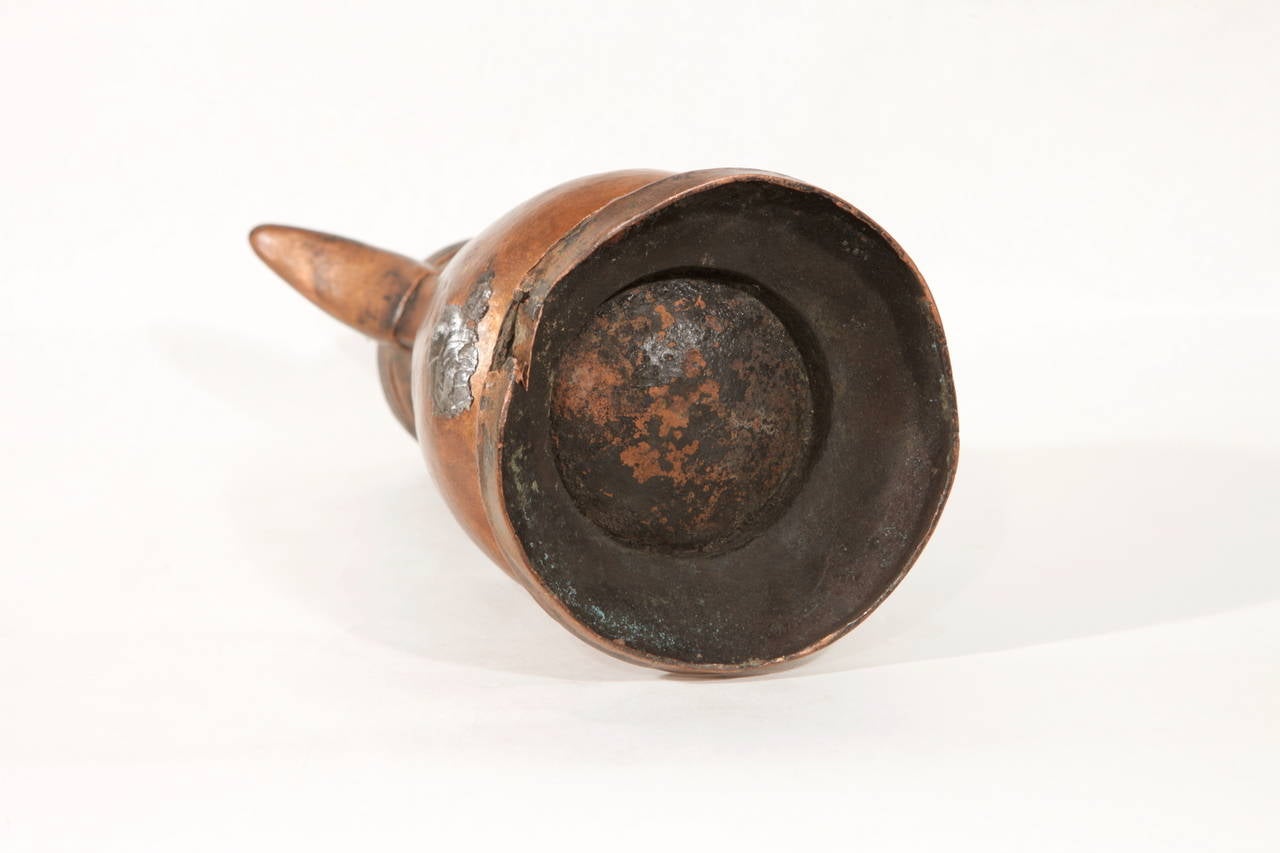
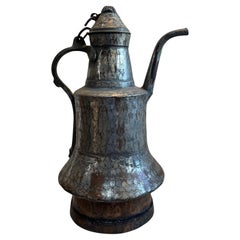
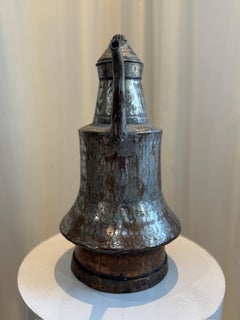
This authentic antique Middle Eastern Dallah coffee pot is a beautifully preserved example of traditional Arabian metalwork, hand-hammered from copper and likely tin-lined for functional use. The vessel features the classic Dallah silhouette: a gently flared base, rounded midsection, and tapered neck crowned with a domed, hinged lid secured by a delicate chain. Its long, elegantly curved spout and tall, arched handle create a refined and instantly recognizable profile associated with centuries of Arabic coffee ceremonies.
The surface displays a richly textured hammered finish, now enhanced by a deep, naturally developed patina with areas of oxidation and tonal variation. Subtle traces of its original tin lining are visible, speaking to its utilitarian origins while adding to its historical authenticity. The forged handle and hand-formed spout demonstrate skilled craftsmanship, with each hammer strike contributing to the vessel’s organic character. Traditionally used for serving gahwa (Arabic coffee) as a symbol of hospitality and cultural ritual, the Dallah holds strong significance throughout the Middle East. Today, this piece serves as both a collectible artifact and a striking decorative object. It can be styled in a curated global interior, displayed among antique metalware, or even repurposed as a distinctive watering vessel or sculptural accent.
A timeless representation of heritage, craftsmanship, and functional beauty, this antique Dallah...
Category
Early 20th Century Rustic Asian Serveware, Ceramics, Silver and Glass