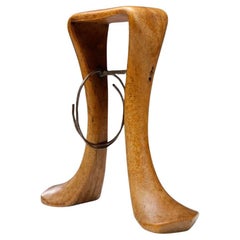
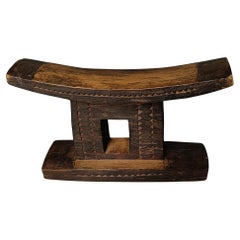
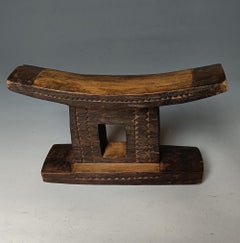
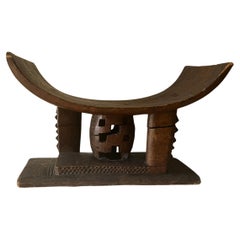
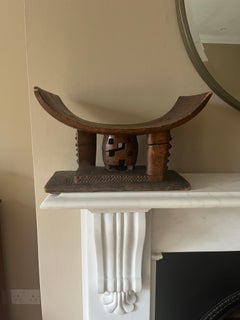
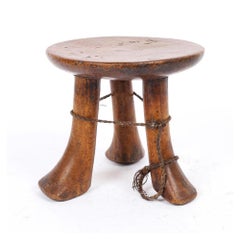
Fine Headrest. Karamojong, Uganda
Located in London, GB
A beautifully formed headrest from the Karamojong in Northern Uganda. Estimated Period: Mid-20th Century (Or Before) Ex Private Collection, UK
Mid-20th Century Tribal Ugandan Folk Art
Wood
Fine Headrest. Karamojong, Uganda
Located in London, GB
A beautifully formed headrest from the Karamojong in Northern Uganda. Estimated Period: Mid-20th Century (Or Before) Ex Private Collection, UK
Wood
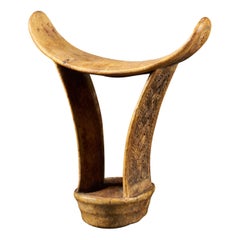
Wooden Neckrest - Karamojong People, Uganda.
Located in Leuven , BE
A wonderful headrest from the Karamojong People of Uganda in eastern Africa. It is made out of one piece of wood with the legs having a nice bend shape, supporting on a circular bloc...
Wood
$950
H 7.63 in W 4.25 in D 2 in
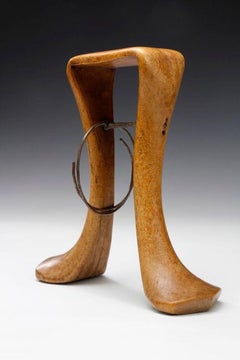
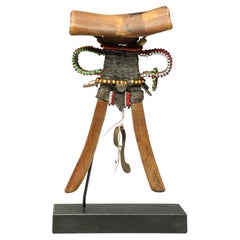
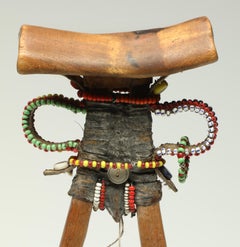
Turkana Tribal Wood Headrest, Stylized Human Form, African Beaded Attachments
Located in Point Richmond, CA
Turkana or Pokot people's tribal carved wood headrest, stylized human form, early 20th century, Kenya, African. Headrest from Kenya with attached leather, beads, buttons and a metal finger knife. Great sculpture...
Wood
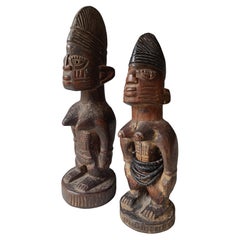
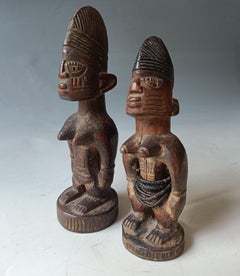
Fine Yoruba Ibeji Female Pair African Tribal Art
Located in London, GB
Good of female Yoruba Ibeji Figures Finely carved in dense wood with linear decoration to the body Nigeria Period Early 20th century Size: 27 and 25 cm Condition: Good Fine...
Hardwood
African Tribal Art Fine Zulu Neck Rest Head Rest South Africa
Located in London, GB
A fine Zulu head rest neck rest South Africa Raised on central pillars with geometric lozenge shaped carving all over. Measures: 22 x 14 x 5 cm approx. Period Early 20th century Ex U...
Wood
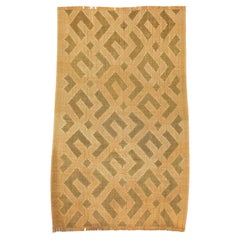
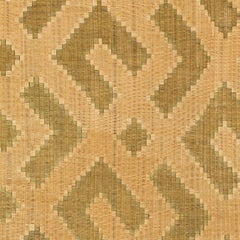
Woven Mat, Kuba People
Located in Point Richmond, CA
A Kuba mat from the Kasai region of the D.R.Congo These were used on the ground, there are photos showing the Kuba King seated on similar ones. Raffia cord is wrapped around the thic...
Raffia, Palmwood
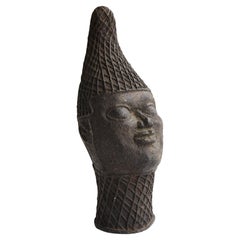
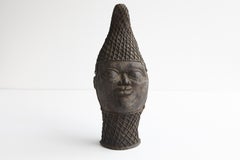
Bronze Head of an Oba, Yoruba People, 1950s
By Yoruba People
Located in Aramits, Nouvelle-Aquitaine
A Benin bronze of an Oba. Oba means ruler in the Yoruba language. Wearing a lattice-pattern cap with strands of beads suspended around the head. The neck is bound with a lattice-patt...
Bronze
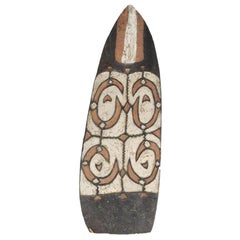
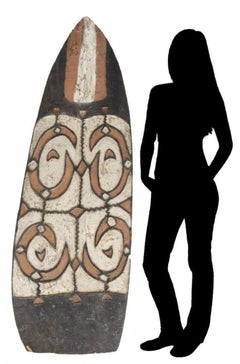
Monumental Oceanic Asmat People Carved Painted Wooden War Shield
Located in Forney, TX
A monumental, rare and important Oceanic Papuan Asmat People tribal carved war shield from the first half of the 20th century, collected from the coast of the headhunting tribe in Papua New Guinea, a Provincial Indonesian island in the mid 20th century. Among the Asmat, war shields are the most powerful symbolic element of a warrior's equipment, and have many layers of meaning. Traditionally, they were functional items used to protect warriors in battle by deflecting an enemy's spears and arrows. The carved and painted images on the surface of the shields were also intended to frighten the enemy and symbolize the power of the ancestors. Ancestral imagery appears on multiple forms of Asmat art...
Wood
African Big Bongo Peoples Stone Female Sculpture
Located in South Burlington, VT
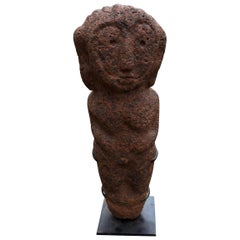
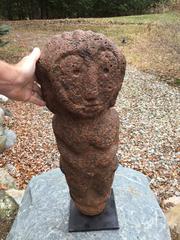
Africa, Bongo Peoples, stone female commemorative figure from Southern Sudan. A fine specimen in naturally weathered condition; hand carved from a porous orange-black stone, 20th century. Similar funerary stone sculptures in various sizes were likely crafted over many centuries. Original patina from appropriate age. A nice custom base included. Dimensions: 30 inches high and 9.5 inches wide and 8 inches deep mounted on a custom iron base. Provenance: Old Brussels, Belgium collection acquired in 1998. History: The Bongo are an ethnic group living in South Sudan, mostly in the Tonj District. They speak the Bongo language, one of the Bongo-Baka languages. Unlike the Dinka and other Nilotic groups, the Bongo are not a cattle herding people and do not use cows for bride price. Subsistence farming is the primary source of food, though money is obtained by working in forestry, building, selling honey, and other various means. For similar examples see Barakat Gallery...
Stone
Bis Pole Sculpture by Asmat People
Located in Atlanta, GA
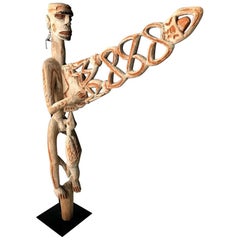
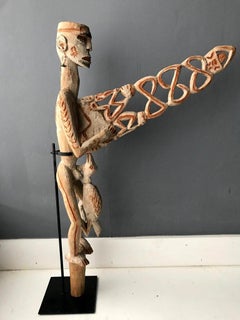
A ritual artifact from the tribe of the Asmat poeple, an ethnic group of New Guinea living in the Papua province of Indonesia and South-western regions of Papua New Guinea, bis or bisj pole is carved out of a wild Mangrove tree and can reach a stunning height Their carvings depict stacked human and animal figures standing and on top always phallic symbols, in the shape of a canoe prow. Bis poles...
Wood
Small Ashanti tribal headrest stool
By Akan Ashanti
Located in London, GB
A wonderful small early 20th century Ashanti tribal stool, headrest. Carved from a single piece of wood. Well worn and genuine tribal stool or headrest.
Wood
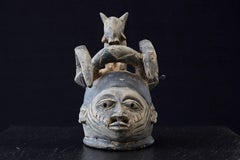
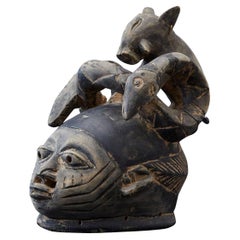
Gelede Headdress, Yoruba People, Nigeria, circa 1920s
By Yoruba People
Located in Aramits, Nouvelle-Aquitaine
Gelede festivals honor the creative and dangerous power of women elders, female ancestors and goddesses known as "our mothers". The Gelede headdress often consists of two parts, a lo...
Wood
$754
H 4.73 in W 14.97 in D 1.97 in
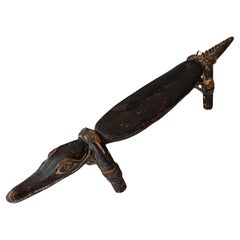
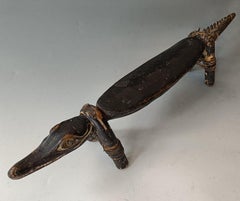
Oceanic Ramu River Sepik Papua Crocodile headrest Tribal Art Interior Design
Located in London, GB
A superbly executed carved and painted Crocodile Headrest from the Sepik region of Papua new Guinea The crocodile image finely carved in linear form with serrated tail with the cane Legs, the crocodile is revered and is a important part of the mythology of the Sepik region and features heavily in Sepik art...
Hardwood
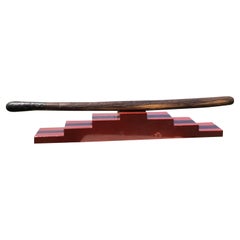
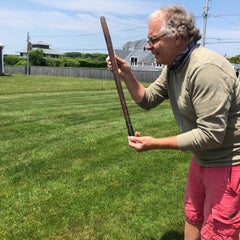
Old Australian Aboriginal Peoples Throwing Club
Located in South Burlington, VT
A monumental Australian aboriginal throwing club, crafted from a very hard wood and it dates to the early 20th century. Incised longitudinal fluted design with a pitch coated handle. Condition: Very good condition. Display base not included. Dimensions: 26.5 inches in length. Lifetime guarantee of authenticity: All of our works of art come with our lifetime authenticity guarantee. Red base not included. History: The throwing stick...
Wood
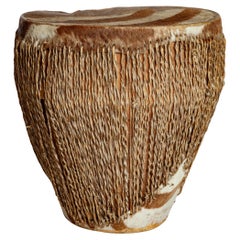
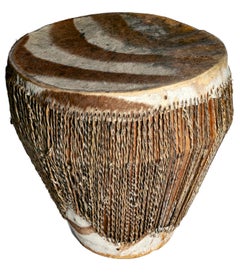
Authentic African Zebra Skin Drum
Located in Malibu, CA
Drum, African Tamtam Engoma from Uganda. The 50's 20th century African tribal drum. Made using a zebra skin, the drum has great sound. A multifunctional piece can also be used as an ...
Zebra Hide, Hardwood
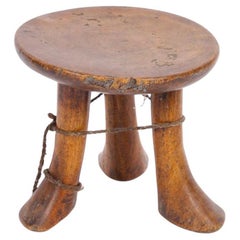
Stool - neck support Karamojong - Uganda
Located in PARIS, FR
Small stool - neck support from East Africa, from the Karamojong tribe in Uganda. It has the 3 zoomorphic legs characteristic of these East African objects (Uganda, Kenya), a lovely ...
Rope, Wood
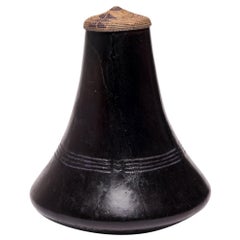
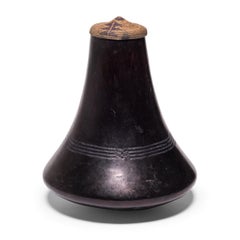
Early 20th Century Ugandan Milk Vessel
Located in Chicago, IL
This unusual, tapered vessel is a milk-pot of the Bantu peoples of eastern Africa, and would have been used for storing and churning cow's milk. Carved from a single block of wood an...
Reed, Wood
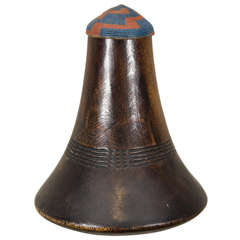
20th Century Hima Tribal Lidded Milk Jug, Uganda
Located in New York, NY
A beautiful Hima wood milk jug with finely woven lid. The Hima are said to be the descendants of pastoralists who migrated into the region from the northeast. These wooden contain...
Wood
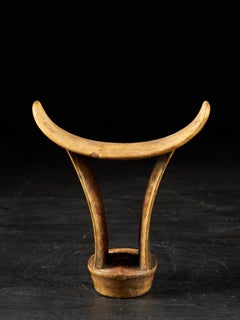
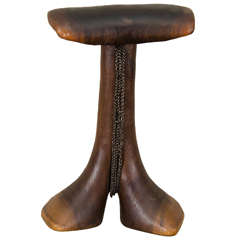
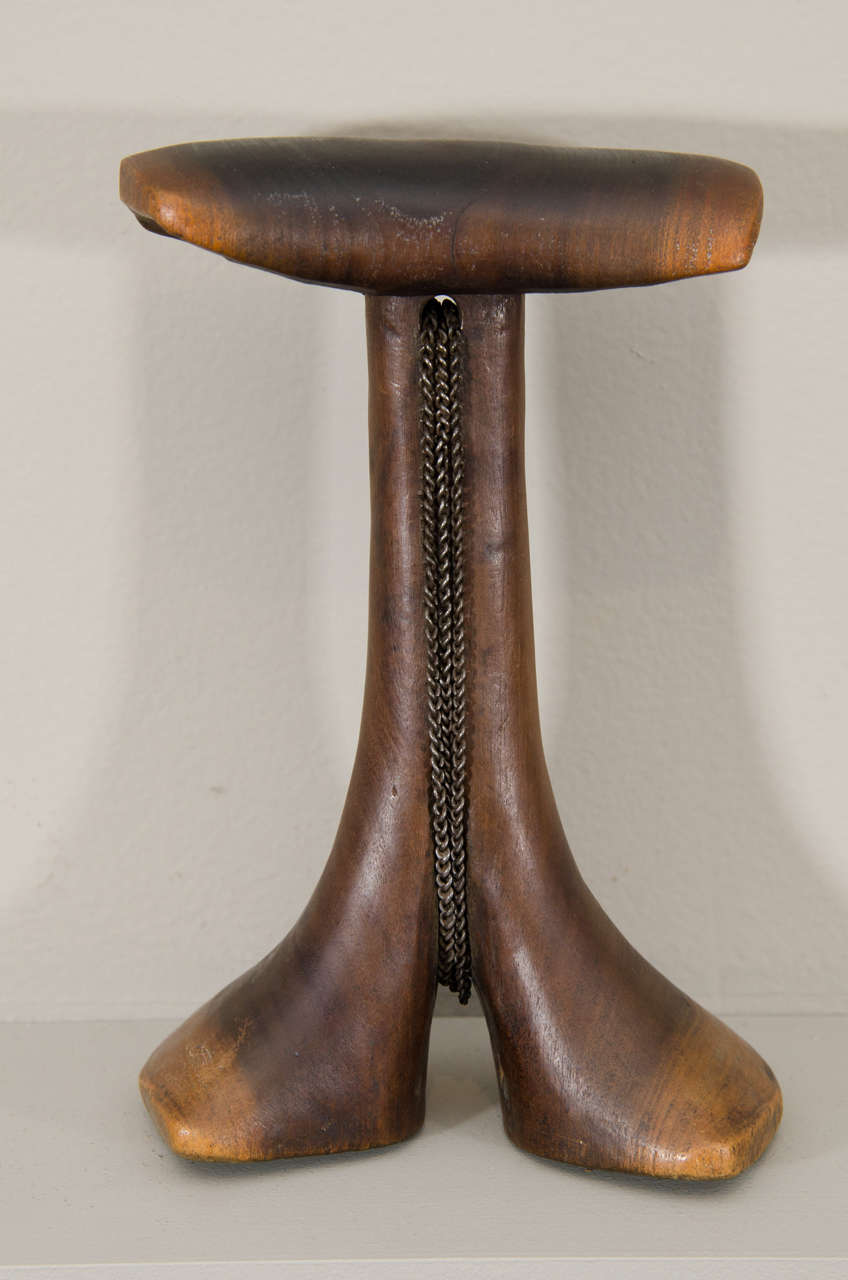
Early 20th Century Tribal Karamojong Wooden Neck Rest, Uganda
Located in New York, NY
An elegant headrest with chain-link carrying strap from Uganda. Headrests are used by the nomadic tribes in the Karamoja Savannah and come in various forms. They range from the si...
Wood
At Waddesdon Manor, artist Joana Vasconcelos has installed a three-tiered patisserie inspired by the narrative tile work of her homeland. We take a look at the cake sculpture and how Portuguese tiles have been used in architecture from the 17th century to today.
The streets of fin-de-siècle Paris were set aglow with colorful poster ads, thanks to the printing techniques invented by Jules Chéret. Now, the Milwaukee Art Museum is celebrating this undersung talent in America's first solo show dedicated his exuberant works.
Expert Jeff Bridgman explains the history and meaning behind the twinkling constellations that have graced Old Glory.
The iconoclastic style setter displayed African and Oceanic art, as well as works by indigenous peoples of the Americas, alongside pieces by such major modernists as Pablo Picasso and Jackson Pollock.
Perfect for July 4th weekend, a new show at Philadelphia's Museum of the American Revolution displays an array of antique red, white and blue flags.
Designers are beginning to see this enigmatic form of folk art in a whole new light.