Located in Clifton Springs, NY
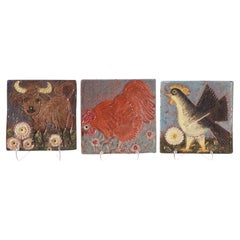
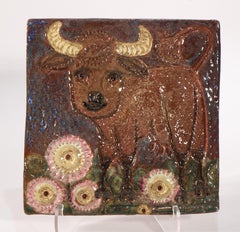
The charming vintage set of decorative tiles or wall plaques depicts Modernist, artistic interpretations of traditional Folk Art and Country decor subjects - farm animals. Black and white chicken, red cockerel, and brown bull are wandering though stylized gardens filled with flowers and grasses; the animals and larger flowers are done in relief with sgraffito elements, adding tactile element to the plaques. The moody, complex blue backgrounds visually unify the set, adding a common element to each tile with just enough variation to emphasize the color palettes of individual animals.
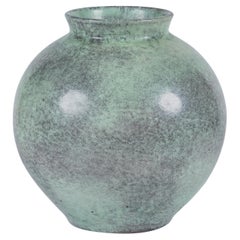
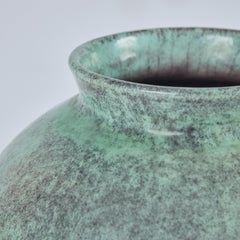
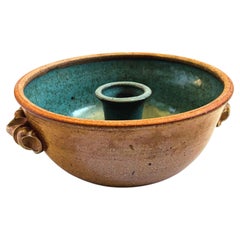
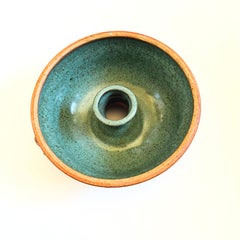
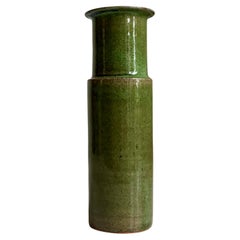
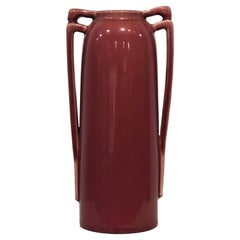
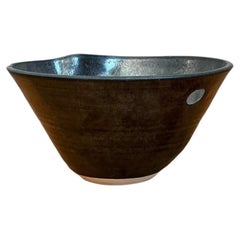
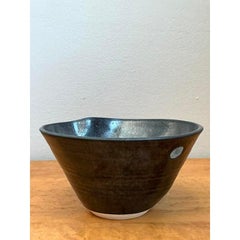
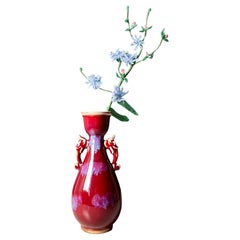
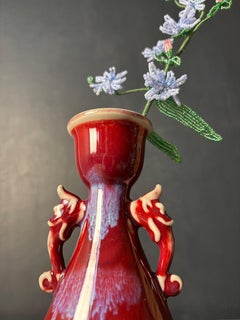
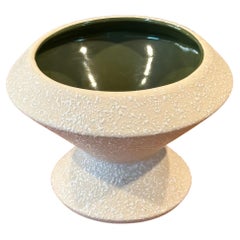
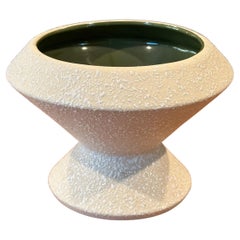
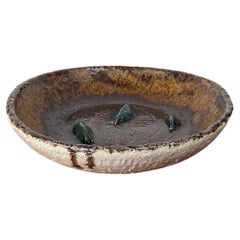
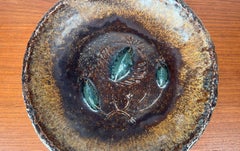
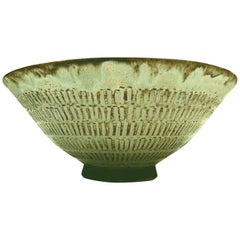
The tiles are clearly marked on the reverse, dating from 1986 to 1990; all 3 tiles are equipped with their original mounting hardware. We are offering a large ceramic decorative bowl, created by Phelan in 1950s-1960s, and his vase, a great example of Phelan's early work (1932), in separate listings.
Linn Lovejoy Phelan (1906-1992) was a renowned American ceramic artist, who operated famous Rowantrees and Linwood Pottery in Maine. He studied art in Bevier School of Art of the Rochester Athenaeum and Mechanics Institute (now Rochester Institute of Technology) in Rochester, New York, in 1928, and received his BFA in Ceramic Art in Ohio State University, Columbus, Ohio, in 1932. While attending Ohio State University, Phelan took "Ceramic Art: Survey of the Field" class, taught by Arthur Baggs. After Phelan left the school, he corresponded with Baggs, and in late 1930s Phelan wrote to Baggs of his experiences in helping to start up what becomes Rowantrees Pottery of Blue Hill, Maine. Arthur E. Baggs (1886-1947) studied at Alfred University in 1903-1905 and 1910-1911 with Dr. Charles F. Binns, who was considered "the father of American ceramic art"; Baggs worked at Marblehead Pottery...
Category
20th Century American Folk Art Pottery Furniture
MaterialsCeramic, Pottery