Renaissance Case Pieces and Storage Cabinets

RENAISSANCE STYLE

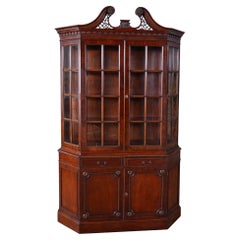
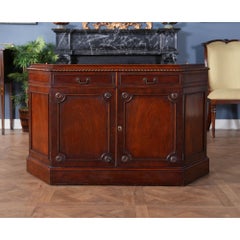
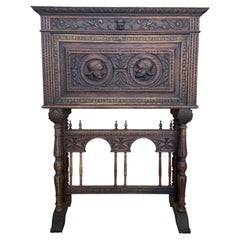
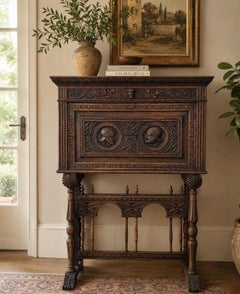
Spanning an era of cultural rebirth in Europe that harkened back to antiquity, the Renaissance was a time of change in design. From the late 1400s to the early 1600s, Rome, Venice and Florence emerged as artistic centers through the expansion of global trade and a humanist belief in the arts being central to society. Antique Renaissance furniture was ornately carved from sturdy woods like walnut, its details standing out against the tapestries and stained glass adorning the walls.

Renaissance chests, which were frequently commissioned for marriages, were often decorated with gilding or painted elements. Those that were known as cassoni were crafted in shapes based on classical sarcophagi. As opposed to the medieval era, when furniture was pared down to the necessities, a wide range of Renaissance chairs, tables and cabinets were created for the home, and the designs regularly referenced ancient Rome.

Large torchères of the Renaissance era that were used as floor lamps were inspired by classical candelabras, while marble surfaces evoked frescoes. The inlaid boxes being imported from the Middle East informed the intarsia technique, which involved varying hues of wood in mosaic-like patterns, such as those by architect Giuliano da Maiano in the Florence Cathedral.

Tapestry-woven cushion covers accented the variety of Renaissance seating — from conversation to study chairs — while bookcases for secular use reflected the migration of culture and knowledge from the church into the home. The aesthetics of the Italian Renaissance later spread to France through the publishing of work by renowned designers, including Hugues Sambin and Jacques Androuet du Cerceau. Centuries later, the 19th-century Renaissance Revival would see a return to this influential style.

Find a collection of antique Renaissance case pieces, decorative objects and other furniture on 1stDibs.

to
54
Height
to
Width
to
Depth
to
206
173
360
25
1
11,450
4,674
2,770
1,948
1,791
1,645
1,501
1,378
905
857
741
586
569
533
468
349
349
225
214
101
45
26
11
5
23
1
1
1
2
12
5
378
159
82
61
42
307
104
98
26
19
386
377
377
1
1
1
1
1
Style: Renaissance
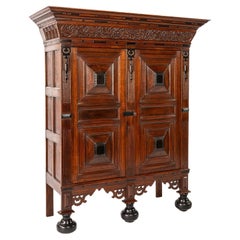
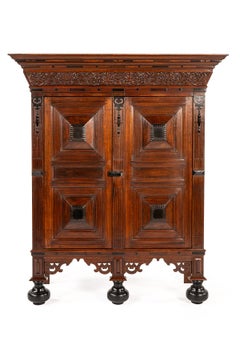
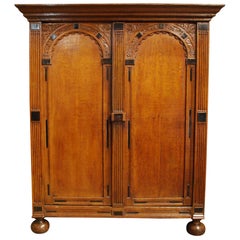
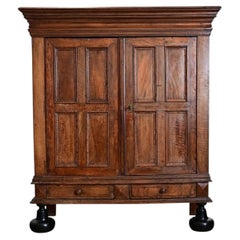
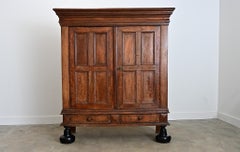
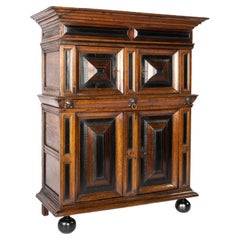
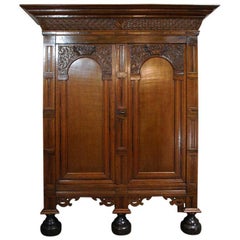
Dutch 18th Century Oak Kussenkast Armoire

Dutch 18th Century Oak Kussenkast Armoire

Located in Baton Rouge, LA

An extraordinary Dutch wardrobe made in the late Renaissance period, 18th century. This substantial antique work of storage furniture is all hand-crafted of solid oak, some panels wi...

Category

18th Century Dutch Antique Renaissance Case Pieces and Storage Cabinets

Materials

Iron

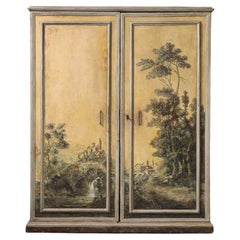
Italian 18th Century Painted Buffet

Italian 18th Century Painted Buffet

Located in Baton Rouge, LA

An endearing 18th century Italian hand-painted buffet that departs from the strong visual codes of the Baroque period adopting the relaxed manner of Louis XV and Gustavian polychrome...

Category

18th Century Italian Antique Renaissance Case Pieces and Storage Cabinets

Materials

Metal

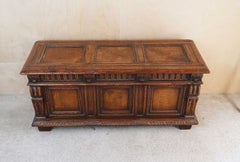
Antique 17th century Italian Renaissance Solid Walnut handcarved Cassone Chest

Antique 17th century Italian Renaissance Solid Walnut handcarved Cassone Chest

Located in Casteren, NL

This richly carved wooden chest is a fine example of an Italian cassone from the 17th century. The cassone, also known as a bridal chest, was an essential piece of furniture in the h...

Category

Early 17th Century Italian Antique Renaissance Case Pieces and Storage Cabinets

Materials

Iron

Late 19th Century French Henri II Renaissance Style Walnut Enfilade or Sideboard

Late 19th Century French Henri II Renaissance Style Walnut Enfilade or Sideboard

Located in Fayetteville, AR

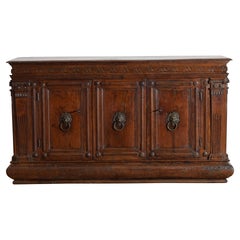
This late nineteenth century French Henri II style walnut enfilade or sideboard features four fluted half columns with scrolling capitals and a beveled walnut top. Three drawers of d...

Category

Late 19th Century French Antique Renaissance Case Pieces and Storage Cabinets

Materials

Walnut

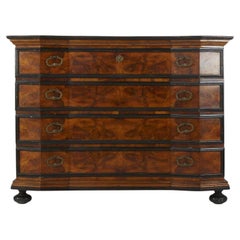
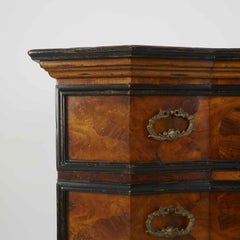
Italian Walnut Chest of Drawers 17th Century Style Four Drawers 1980s

Italian Walnut Chest of Drawers 17th Century Style Four Drawers 1980s

Located in Milano, MI

Italian chest of drawers in walnut burl and Solid walnut, handcrafted in 1980 in the 17th-century Lombard style, with four wide, deep drawers defined by ebonized, projecting frames....

Category

Late 20th Century Italian Renaissance Case Pieces and Storage Cabinets

Materials

Walnut, Hardwood

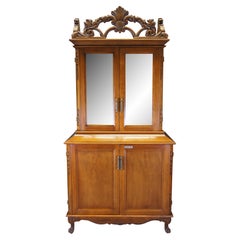
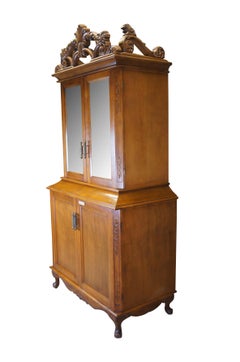
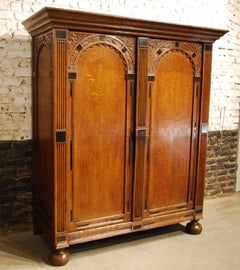
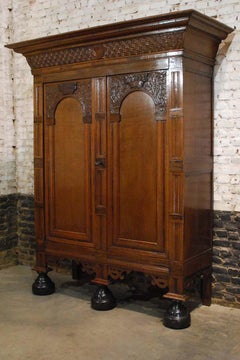
Antique mid 18th century Dutch Renaissance two door warm oak cabinet or Kussenka

Antique mid 18th century Dutch Renaissance two door warm oak cabinet or Kussenka

Located in Casteren, NL

This impressive Dutch Renaissance cabinet, known as a Gelderse kussenkast, was crafted around 1750 and stands firmly in the tradition of Dutch cabinetmaking. The piece is made entire...

Category

Mid-18th Century Dutch Antique Renaissance Case Pieces and Storage Cabinets

Materials

Oak

Antique French Renaissance Revival Walnut Buffet Cabinet Cupboard Hutch 94"

Antique French Renaissance Revival Walnut Buffet Cabinet Cupboard Hutch 94"

Located in Dayton, OH

Antique French Renaissance / Henry II style walnut buffet a deux corps / vaisselier / cupboard / cabinet / hutch featuring Neoclassical carved figural / acanthus / floral theme. The...

Category

Late 19th Century Antique Renaissance Case Pieces and Storage Cabinets

Materials

Walnut

Unique Antique 19th Century Spanish Renaissance Bargueño in Solid Chestnut Wood

Unique Antique 19th Century Spanish Renaissance Bargueño in Solid Chestnut Wood

Located in Casteren, NL

On offer here is an exceptional Spanish Renaissance bargueño, crafted in the mid 19th century, from solid chestnut wood. This masterpiece, with its warm brown color, exudes timeless ...

Category

Mid-19th Century Spanish Antique Renaissance Case Pieces and Storage Cabinets

Materials

Brass

16th Century Period Renaissance Tuscan Walnut Credenzino

16th Century Period Renaissance Tuscan Walnut Credenzino

Located in Vero Beach, FL

16th Century Period Renaissance Tuscan Walnut Credenzino Italian 16th/17th century Renaissance walnut small Credenza with a rectangular top above a single drawer centered over a s...

Category

16th Century Italian Antique Renaissance Case Pieces and Storage Cabinets

Materials

Walnut

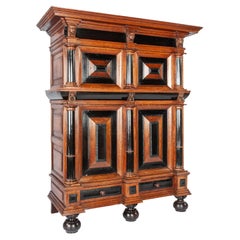
Antique 17th Century Oak Dutch Renaissance Cabinet with Ebony and Mahogany

Antique 17th Century Oak Dutch Renaissance Cabinet with Ebony and Mahogany

Located in Casteren, NL

On offer here is an antique four-door cupboard, in Dutch, named “Kussenkast”, that was made in the Northern Netherlands in the late 17th century. This cupboard takes its name from th...

Category

Late 17th Century Dutch Antique Renaissance Case Pieces and Storage Cabinets

Materials

Brass, Steel

Antique 17th Century Dutch Renaissance Dresser of Buffet in Oak and Walnut

Antique 17th Century Dutch Renaissance Dresser of Buffet in Oak and Walnut

Located in Casteren, NL

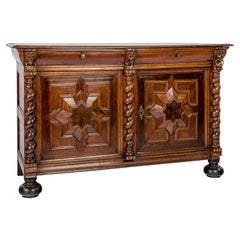
This rare and rich decorated Renaissance dresser was made during the Dutch Golden age in the southern part of the Netherlands currently Belgium. It was made around 1670 and most likely in Antwerp. The dresser was made in the finest quality watered European oak and decorated geometric-shaped walnut veneer panels. The cabinet has two wide doors and two drawers above. The drawers are flanked by carved lion heads with brass rings. The right drawer is equipped with an authentic working lock and key. The doors are decorated with geometrical star-like walnut inlaid raised panels. The doors are flanked by large twisted Solomonic columns decorated with brass nails. The righthand door features its authentic lock and key with a brass ajour cut keyplate. The dresser has a wax finish with a great patina built up over 350 years. This piece of furniture was made by highly skilled craftsmen by the use of the best materials available. It is among the best furniture that was produced during the golden age and even now its craftsmanship is unprecedented. The dresser is highly original and in perfect shape for a piece of furniture over 350 years old. It was gently cleaned in our atelier and a new protective wax coat was applied. The Dutch golden age the 17th century was an important century for the Netherlands. The region separated from the Spanish Empire and formed its republic. Dutch merchants...

Category

Mid-17th Century Dutch Antique Renaissance Case Pieces and Storage Cabinets

Materials

Brass

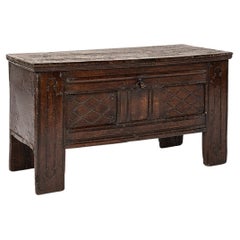
Antique late 17th century English honey color chest or trunk with rich carvings

Antique late 17th century English honey color chest or trunk with rich carvings

Located in Casteren, NL

This antique oak chest, dating from the early 17th century, is a remarkable example of early European craftsmanship, combining strength with refined decorative detail. Made entirely ...

Category

Late 17th Century Antique Renaissance Case Pieces and Storage Cabinets

Materials

Oak

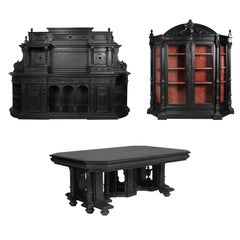
18th Century Renaissance Palladio Dining Room Set in blackening wood of walnut

18th Century Renaissance Palladio Dining Room Set in blackening wood of walnut

By Andrea Palladio

Located in Vigonza, Padua

Monumental and important Renaissance Palladio dining room set all in solid hand-carved walnut from a Palladian Palace in Vicenza of a Venetian patrician family. The back of the showcase was rebuilt again at the end of the 800 first 900 with the application of damask fabric The table can be extended up to 4-6 meters The large sideboard and the display cabinet are in the process of conservative restoration and have therefore been disassembled, as seen from the last photos. Measures in cm: Sideboard H 240 x L 315 x D 70 Display cabinet H 240 x L 230 x D 60 Table H 78 L x 230 x D 140 Extendable to 4-6 meters Notes: The architectural design of Andrea Palladio...

Category

Late 18th Century Italian Antique Renaissance Case Pieces and Storage Cabinets

Materials

Glass, Pine, Walnut

17th Century Italian Milano Renaissance Period Bone Ivory Ebony Tabletop Cabinet

17th Century Italian Milano Renaissance Period Bone Ivory Ebony Tabletop Cabinet

Located in Forney, TX

A scarce nearly 400 year old fine quality Italian Lombard ebony rosewood bone and ivory tabletop curiosity cabinet with warm rich beautifully aged patina and interesting provenance. ...

Category

17th Century Italian Antique Renaissance Case Pieces and Storage Cabinets

Materials

Brass, Bronze

French Renaissance Walnut Cloth Cabinet or Wardrobe late 16th Century

French Renaissance Walnut Cloth Cabinet or Wardrobe late 16th Century

Located in London, GB

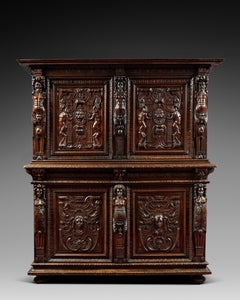
RENAISSANCE CABINET in walnut molded with pyramidal frames. The front opens with four leaves and four drawers in the waistband. The cornice and drawer frames are adorned with carved ...

Category

16th Century French Antique Renaissance Case Pieces and Storage Cabinets

Materials

Walnut

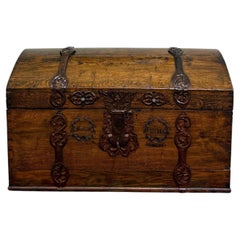
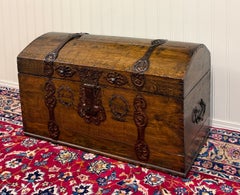
Antique early 18th century Dutch or German Solid blacked oak chest or trunk

Antique early 18th century Dutch or German Solid blacked oak chest or trunk

Located in Casteren, NL

This is a blackened oak chest with paneled sides and richly carved geometric decoration across the front. The piece was crafted in Northern Europe—likely the Low Countries or the Wes...

Category

Early 18th Century Dutch Antique Renaissance Case Pieces and Storage Cabinets

Materials

Oak

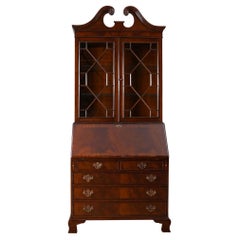
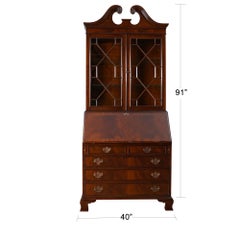
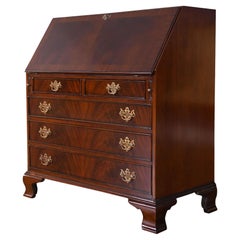
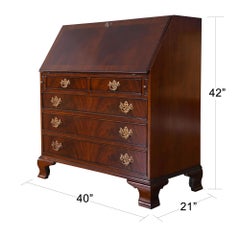
Mahogany Secretary Desk

Mahogany Secretary Desk

Located in Annville, PA

This Mahogany Secretary Desk from Niagara Furniture has all the outstanding qualities of an antique original. Made of select mahogany solids and maho...

Category

2010s Renaissance Case Pieces and Storage Cabinets

Materials

Mahogany

Late 19th Century French Henri II Style Hand Carved Walnut Enfilade or Sideboard

Late 19th Century French Henri II Style Hand Carved Walnut Enfilade or Sideboard

Located in Fayetteville, AR

This late nineteenth century French Henri II style walnut enfilade or sideboard features columns at the corners with fluted bases and a beveled walnut top. Three drawers of dovetail ...

Category

Late 19th Century French Antique Renaissance Case Pieces and Storage Cabinets

Materials

Walnut

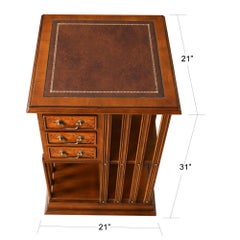
Country Estate Revolving Bookcase

Country Estate Revolving Bookcase

Located in Annville, PA

A Country Estate Revolving Bookcase from Niagara Furniture with full grain leather top with a shaped molding surround, over top three dovetailed drawers and numerous supported storag...

Category

2010s Renaissance Case Pieces and Storage Cabinets

Materials

Wood

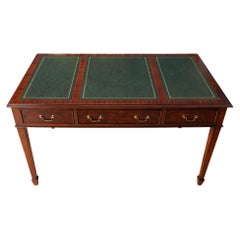
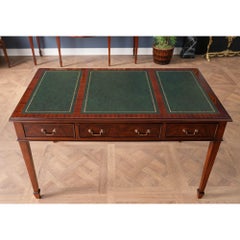
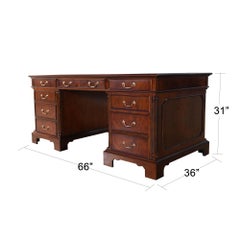
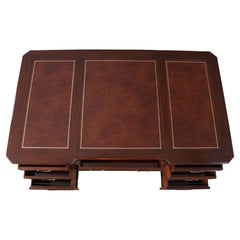
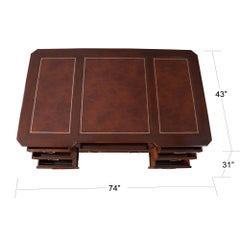
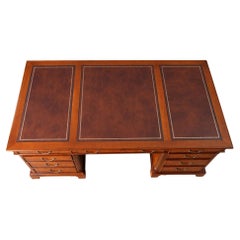
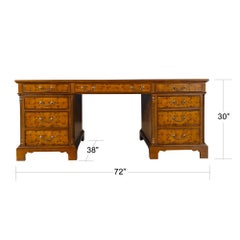
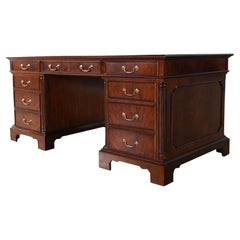
Mahogany Executive Desk

Mahogany Executive Desk

Located in Annville, PA

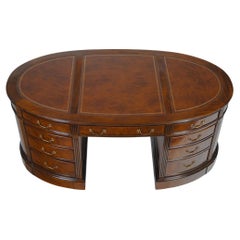
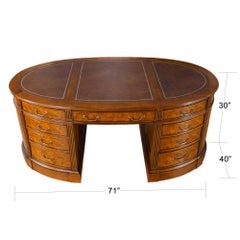
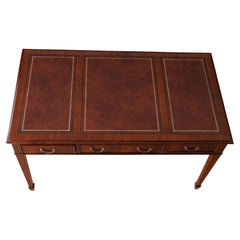
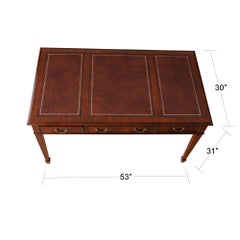
Ideal for use either at work or in a home office the Niagara Furniture Mahogany Executive Desk with a tooled leather top is both beautiful and functional. Built in three sections for...

Category

2010s Renaissance Case Pieces and Storage Cabinets

Materials

Mahogany

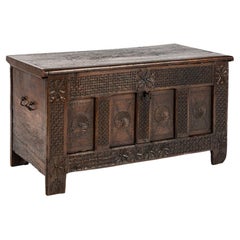
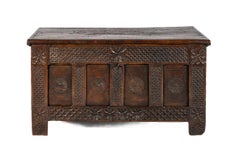
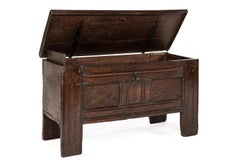
Antique 17th century English warm brown chest with rich geometric carvings

Antique 17th century English warm brown chest with rich geometric carvings

Located in Casteren, NL

This antique oak chest from the 17th century is a fine example of the rich woodcarving traditions practiced in England and the Low Countries during that era. Built with a solid const...

Category

Mid-17th Century British Antique Renaissance Case Pieces and Storage Cabinets

Materials

Oak

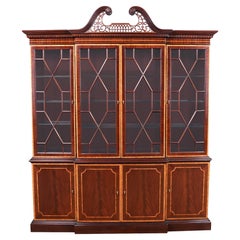
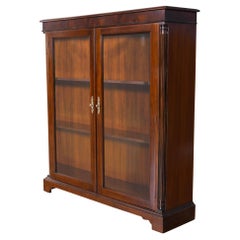
Mahogany Two Door Bookcase

Mahogany Two Door Bookcase

Located in Annville, PA

This Mahogany Two Door Bookcase from Niagara Furniture can be used to display your most valued collectables. This bookcase is a perfect size to fit i...

Category

2010s Renaissance Case Pieces and Storage Cabinets

Materials

Glass, Mahogany

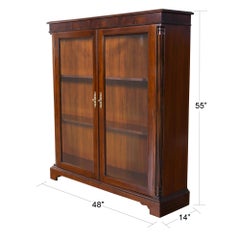
Small Bookcase
Small Bookcase

Small Bookcase

$1,040 / item

Small Bookcase

Located in Annville, PA

This petite sized Small Bookcase from Niagara Furniture features good vertical storage in a narrow space. The simple yet elegant design makes it useful...

Category

2010s Renaissance Case Pieces and Storage Cabinets

Materials

Mahogany

NVIN0583 Vintage Mahogany Councill Secretary Desk

NVIN0583 Vintage Mahogany Councill Secretary Desk

Located in Annville, PA

A Vintage Mahogany Councill Secretary Desk brought to you by Niagara Furniture. This item has all of the bells and whistles of an antique original. Made of select mahogany solids, th...

Category

1990s Renaissance Case Pieces and Storage Cabinets

Materials

Mahogany

Amazing Italian cabinet circa 1860, attributed to Ferdinando Pogliani

Amazing Italian cabinet circa 1860, attributed to Ferdinando Pogliani

By Ferdinando Pogliani

Located in Madrid, ES

Italian cabinet circa 1860, attributed to Ferdinando Pogliani Made of wood veneer and richly inlaid with bone, decorated with putti, an ancient woman, trophies, foliage, arabesques,...

Category

19th Century Italian Antique Renaissance Case Pieces and Storage Cabinets

Materials

Bone, Wood

Henkel Harris Bachelors Chest of Drawers

Henkel Harris Bachelors Chest of Drawers

Located in Annville, PA

From Niagara Furniture a vintage Henkel Harris Bachelors Chest of Drawers in very good condition. Simple yet sophisticated this beautiful...

Category

1980s North American Vintage Renaissance Case Pieces and Storage Cabinets

Materials

Mahogany

Important 19th Century Renaissance-style Walnut Castle Sideboard

Important 19th Century Renaissance-style Walnut Castle Sideboard

Located in Charmes, FR

Important molded and richly carved walnut sideboard with console-style upper supports formed by chimeras, a central faun motif. Five drawers. Beautiful ornamentation including grimac...

Category

Mid-19th Century French Antique Renaissance Case Pieces and Storage Cabinets

Materials

Wood

Renaissance Cabinet from Burgundy or Lyon Region

Renaissance Cabinet from Burgundy or Lyon Region

Located in Saint-Ouen, FR

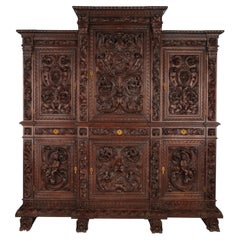
Renaissance cabinet from Burgundy Or Lyon Region Origin : Burgundy Or Lyon, France Period : Second Half 16th Century, C. 1580 Height : 209cm Length : 184cm Depth : 71cm Good condition Walnut wood, original keys and keyholes Around the middle of the 16th century the conception and ornamentation of French furniture evolves. The start of major building projects, such as the castle of Fontainebleau, gives artists a new impulse. Inventive and rich formulas are developed there, before spreading to all of Europe thanks to engravings and printed leaflets. Furthermore, Italian artists working on such construction sites bring French artists and patrons a renewed taste for the Antique. Regarding the art of furnitures, the most complex scenes and figures are drawn from illustrated books, ornament and emblem compendiums and engraving compilations. Rather than copying those images the artisans feed their inspiration and decline the motifs in numerous variations. The ornamental grammar marks a return to the Antique : palm leaf, acanthus, egg-and-dart, greek, scroll, fluted pilaster… It is in Primaticcio’s and Il Rosso’s stuccos made around 1540-1550 that we have to look for the origin of leather cut-outs, masks, chimaeras, harpies, sheathed figures, fruit and flower garlands that soon enrich every pieces of French furniture. The structure of the pieces of furniture also evolve thanks to the re discovery of Antique architectures, rigorously used as a model. This cabinet presents an imposing structure and a rich and original decor exemplifying the production of the late 16th century, infused with Italian, Antique and Fontainebleau influences. It stands on a moulded base ornate with palm leaves. It opens with four door-leaves and two drawers in the belt. Six whimsical terms divide the facade. The lower body is horizontally divided by three sheathed female terms. The two standing on the lateral posts are topped with fruits while the body is covered by acanthus leaves carved with precision, belted at the waist. The term standing on the central door-jamb is crowned with laurel leaves and is draped in the Antique fashion. A wincing mask hides the key hole. The two door-leaves are centred by a beautiful mask carved in a strong relief. They wear stylised feathered headdress and are set on draperies. Straps, leather scrolls, acanthus leaves and a shell are spread around the masks. The recessed panels are secured in frames ornate with acanthus leaves. The belt is flanked by two large mouldings enriched with variations of acanthus leaves. The drawers are carved with choux bourguignons and palm leaf motifs minutely executed. The consoles between each drawer bear tormented wincing masks, showing horns as if they were fauns or imps. The upper body is framed by two male terms characterised by a strong and nervous musculature, their manhood hidden by drapes secured thanks to a winged lion head. The term on the left appears to be younger and is wincing while the one on the right has a beard. The central female term brings contrast with her youth and sensuality. As it is the case on the lower body, the key hole is hidden behind the mouth of a faun’s mask placed on the drapes barely covering the intimacy of the caryatid. The panels of the upper body present an idealised architecture comprising pilasters and sinuous broken pediments. The pilasters are flanked by two satyrs with goat legs. In the centre appears an important lion mask. The terms of the upper body support the cornice. The entablature carries palm leaves and roses alternating as well as an egg-and-dart frieze. The cornice is adorned with acanthus motifs. On the sides, the carving is executed flat. A central rose is surrounded by scrolls, flowers and choux bourguignons. We can admire the variety of the elements employed. The artist vary with great genius many different ornamental motifs : palm leaf, egg-and-dart, laurel leaf, roses, scrolls … But the artist went even further as each profile and each face is individualised and presents different features. You can take a look at the faces of the satyrs flanking the upper body’s panels. The talent of the artist is undeniable. It makes no doubt the patron who commissioned this cabinet was an aesthete looking for the greatest quality. The artist who authored this cabinet had a great mastery of composition both in the general design and in the individual panels. They probably drew inspiration from engravings and drawings made especially for the making of this piece of furniture or not. They seem to be familiar with the style of Jacques Androuet du Cerceau. Indeed, we can find in Du Cerceau’s engravings the same juxtapositions of leather cut-outs, masks and fruits. The terms and caryatids used on the facade could very well be inspired by his work as well. The cabinet-maker was also undoubtedly observant of Hugues Sambin, the most famous cabinet-maker and sculptor in the Burgundy of the time. Like Du Cerceau, Sambin left an important ensemble of models particularly useful for the design of cabinets. His publication De l’Oeuvre de la diversité des termes dont on use en architecture (1572) was an essential book for every artisan. All the motifs testify of the artisan’s high knowledge of forms as well as the precision of their tools : super imposition of ornamental elements, foliages, architectural cut-outs, flat and high reliefs alternating, palm leaves inscribed in circular spaces, wincing faces. It is also a testimony of the artisan’s familiarity with Italian and Fontainebleau productions. Because of the proficiency of the cabinet-maker in so many different models, this cabinet truly is a master-piece authored by the hand of an authentic master. The generous carvings executed with great rigour and virtuosity evoke an origin close to Burgundy and Lyon workshops. This cabinet was made by a master of the region during the Second French Renaissance. Literature BOCCADOR Jacqueline, Le mobilier français du Moyen-Âge à la Renaissance, Édition d’art Morelle Mayot, 1996 BOS Agnès (dir.), Mobilier du Moyen âge et de la Renaissance, La collection du musée du Louvre, Louvre éditions...

Category

16th Century Antique Renaissance Case Pieces and Storage Cabinets
Materials

Walnut

16th Century Italy Ligurian Carved Oak and Chestnut Credenza Bambocci Sideboard

16th Century Italy Ligurian Carved Oak and Chestnut Credenza Bambocci Sideboard

Located in Vigonza, Padua

Valuable ancient noble 16th century, Italy Ligurian carved oak and chestnut credenza Bambocci, sideboard with display cabinet. All original with exception ...

Category

16th Century Italian Antique Renaissance Case Pieces and Storage Cabinets
Materials

Chestnut, Oak

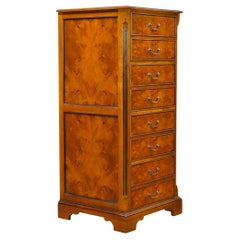
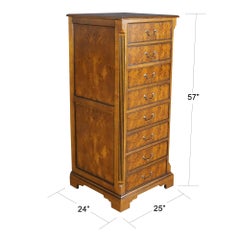
Country Estate Four Drawer File Tall

Country Estate Four Drawer File Tall

Located in Annville, PA

A superb piece of craftsmanship this high quality Country Estate Four Drawer File from Niagara Furniture is made with figured burled wood. The edge of the top is a lovely shaped soli...

Category

2010s Renaissance Case Pieces and Storage Cabinets
Materials

Leather, Wood

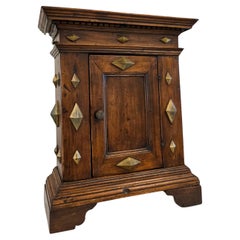
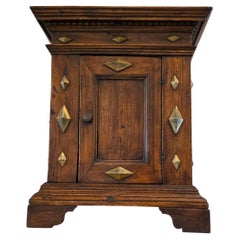
Antique Italian Renaissance Era Brass Mounted Walnut Table Cabinet Wall Cupboard

Antique Italian Renaissance Era Brass Mounted Walnut Table Cabinet Wall Cupboard

Located in Forney, TX

A rare and unusual antique Italian walnut table-top cabinet (now also wall hanging cupboard), 17th century and later elements, with handsome warm rich dark patina and interesting pro...

Category

17th Century Italian Antique Renaissance Case Pieces and Storage Cabinets
Materials

Brass, Iron

Sheraton Showcase
Sheraton Showcase

Sheraton Showcase

$1,160 / item

Sheraton Showcase

Located in Annville, PA

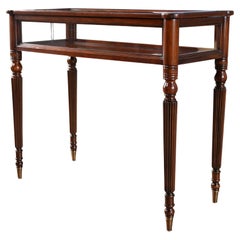
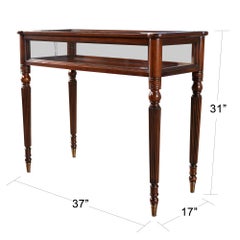
A most useful and decorative item, the mahogany Sheraton Showcase is produced using select solid mahogany and clear, thick glass, allowing visibility into the cabinet from all sides as well as from the top. Great quality construction is visible in the hand carved details which distinguish this glass and wood display cabinet...

Category

2010s Renaissance Case Pieces and Storage Cabinets
Materials

Glass, Mahogany

18th Century French Renaissance Style Carved Walnut Blanket Chest

18th Century French Renaissance Style Carved Walnut Blanket Chest

Located in Astoria, NY

Magnificent 18th-century French carved chest coffer sourced from Provence, France. Beautifully hand-crafted from solid walnut, it features an intricately hand-carved linenfold compos...

Category

Late 18th Century French Antique Renaissance Case Pieces and Storage Cabinets
Materials

Walnut

Grand Antique French Renaissance Walnut Bookcase

Grand Antique French Renaissance Walnut Bookcase

Located in Dallas, TX

Grand Antique French Renaissance Walnut Bookcase will make a stunning statement in your favorite room! Hand-carved from fine walnut, it features a bold neoclassical architecture tha...

Category

Early 20th Century French Renaissance Case Pieces and Storage Cabinets
Materials

Walnut

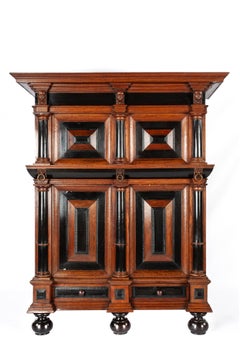
Antique 17th Century Dutch Renaissance Solid Oak with Ebony Veneer Cupboard

Antique 17th Century Dutch Renaissance Solid Oak with Ebony Veneer Cupboard

Located in Casteren, NL

This beautiful and friendly-sized cupboard is made of the finest watered oak in the tradition of the Dutch Renaissance during the “Dutch golden age” It is a two-story four-door cabin...

Category

17th Century Dutch Antique Renaissance Case Pieces and Storage Cabinets
Materials

Ebony, Oak

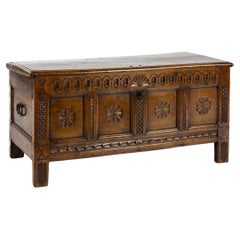
Mahogany Secretary Desk

Mahogany Secretary Desk

Located in Annville, PA

The Mahogany Secretary Desk from Niagara Furniture. This reproduction slant front writing desk has all the outstanding qualities of an antique origina...

Category

2010s Renaissance Case Pieces and Storage Cabinets
Materials

Glass, Mahogany

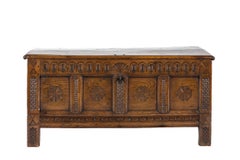
18th C. Italian Renaissance Walnut "Studiolo" Cabinet with 38 Drawers & Secrets

18th C. Italian Renaissance Walnut "Studiolo" Cabinet with 38 Drawers & Secrets

Located in Dallas, TX

Crafted in Italy circa 1760, this rare walnut “studiolo” cabinet — also known as a Cabinet of Curiosities — represents the height of 18th century craftsmanship, inspired by the Renai...

Category

Mid-18th Century Italian Antique Renaissance Case Pieces and Storage Cabinets
Materials

Walnut

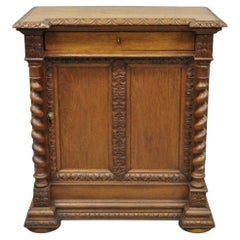
Genoese Cabinet Called Stipo From The Renaissance Period In Walnut - 16th Centur

Genoese Cabinet Called Stipo From The Renaissance Period In Walnut - 16th Centur

Located in Brussels, Brussels

Exceptional Genoese cabinet called stipo "a bambocci" from the Italian Renaissance in walnut from the end of the 16th century with its original base Museum quality piece Provenance:...

Category

16th Century Italian Antique Renaissance Case Pieces and Storage Cabinets
Materials

Walnut

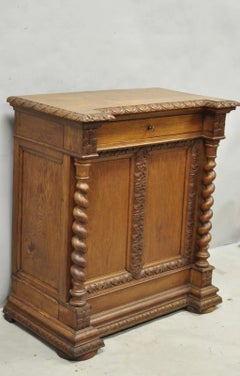
Antique 18th century Dutch Renaissancewarm brown oak two door cabinet

Antique 18th century Dutch Renaissancewarm brown oak two door cabinet

Located in Casteren, NL

This antique Dutch Renaissance cabinet was crafted in the southern Netherlands at the end of the 18th century, around 1780. It serves as a quintessential example of the furniture cra...

Category

Late 18th Century Dutch Antique Renaissance Case Pieces and Storage Cabinets
Materials

Oak

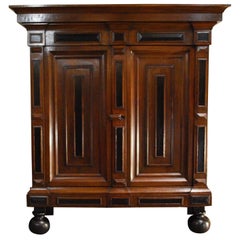
Display cabinet, France, circa 1870.

Display cabinet, France, circa 1870.

Located in Chorzów, PL

Display cabinet, France, circa 1870. Very good condition, after professional renovation. Wood: walnut dimensions: height 175 cm width 125 cm depth 48 cm

Category

1870s French Antique Renaissance Case Pieces and Storage Cabinets
Materials

Walnut

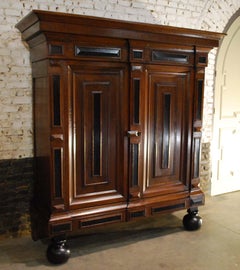
Antique French Renaissance Ornate Carved Walnut Bookcase Cabinet, Circa 1900

Antique French Renaissance Ornate Carved Walnut Bookcase Cabinet, Circa 1900

By R.J. Horner & Co.

Located in South Bend, IN

An exceptional monumental antique French Renaissance bookcase cabinet In the manner of R.J. Horner & Co. France, Circa 1900 Ornate carved walnut with female busts, faces, and foli...

Category

Early 20th Century French Renaissance Case Pieces and Storage Cabinets
Materials

Glass, Walnut

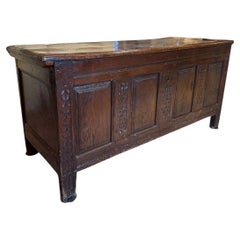
16th Century French Renaissance Chest in Carved Oak

16th Century French Renaissance Chest in Carved Oak

Located in Dallas, TX

Whereas many pieces of furniture during the Italian Renaissance were heavily painted or inlaid with decorative motifs, French examples utilized hand-sculpted elements as the predomin...

Category

16th Century French Antique Renaissance Case Pieces and Storage Cabinets
Materials

Wood, Oak

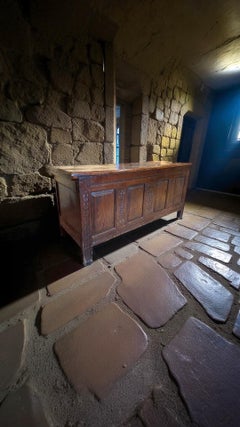
Rare and Important Renaissance "Judaica" Carved Oak Wood Cabinet

Rare and Important Renaissance "Judaica" Carved Oak Wood Cabinet

Located in Long Island City, NY, NY

A Rare and Important Renaissance "Judaica" Carved Oak Wood Cabinet, circa 1680 We are pleased to present a rare and important Renaissance Judaica c...

Category

17th Century German Antique Renaissance Case Pieces and Storage Cabinets
Materials

Mother-of-Pearl, Oak

French Richly Carved Sideboard Buffet - Renaissance- circa 1580 France

French Richly Carved Sideboard Buffet - Renaissance- circa 1580 France

Located in Beuzevillette, FR

Beautiful Renaissance two-body buffet with four doors and six drawers. On the upper part of the buffet, who hide two secrets drawers, an alternating band of three masks, represents a mythological scene: Zeus changed into a swan seduces Leda on the banks of the Eurotas. The sides of the buffet are decorated with foliage and vines. The doors cornices...

Category

16th Century French Antique Renaissance Case Pieces and Storage Cabinets
Materials

Walnut

Important Renaissance Cabinet from Lyon 'France' with a Decor of Perspectives

Important Renaissance Cabinet from Lyon 'France' with a Decor of Perspectives

Located in Saint-Ouen, FR

As soon as 1540 France's second Renaissance is in the making, intimately linked to the rediscovery of the Antique world. The development of the printing and engraving industry allows the spread of artworks and models in many cities and countries. The Italian influence can be perceived in every artistic field. While the French king entrust the most talented Italian artists with major projects such as Il Rosso or Primaticcio in Fontainebleau, French artists also travel to Italy to form themselves to this new style. In Italy they get acquainted with the work of Leo Battista Alberti the first to theorize perspective (De Pictura, 1435-36) and architecture (De re oedificatoria, 1541). Those two publications would have a revolutionary impact on arts. Furniture is marked by the work of the most famous Italian architects of the time as well as French architects. Indeed Philibert de l'Orme competes with Alberti and by the end of his life publishes several treaties including one devoted to a theory of architecture (1567). Unfortunately he would not live to complete the second volume. In this treaty he expresses his interest for mathematical norms applied to architecture, copied from the Antique. His journeys in Italy allowed him to accumulate the most sophisticated references. Jean Bullant, another architect of great talent also theorizes his practice. He establishes rules characterizing Greco-Roman art staying faithful to Vitruvius. Following this new inspiration the structure of furniture evolves. From then on appear columns, capitals, cornices, friezes and architraves. The ornamentation uses this inspiration as well with egg-and-dart, palm leaf and rose adorning the most beautiful pieces. In Lyon, crossroad where meet merchants from everywhere those new experiments are welcomed. Lyon florishing printing industry allows the spreading of models and treaties essential to the artist's work. Thus the first publication of Vitruvius' De Architectura in France would be printed in Lyon in 1532. Artists from Lyon rediscover and familiarize themselves with the Antique knowledge very early. They adopt those new ideas and use them in their own creations. Lyon cabinet-makers re interpret Antique architecture and Italian Renaissance palaces to give their pieces a pure and harmonious architectural structure. Grooved pilasters are particularly favored. They are topped by capitals of diverse orders always respecting the sequencing with simpler ones for the lower levels and the richest ones on the higher levels. As for the ornamentation, one of the great distinctiveness of Lyon workshops remains the architectural perspective illusions, drawing inspiration from Tuscany. True masterpiece of the Second French Renaissance this important cabinet illustrates Lyon workshops' taste for fine Italian architecture inspired by Antiquity. An architectural perspective of great quality is treated in symmetry on each panel. This two-bodied cabinet without recess stands on four rectangular feet. The base comprises a molding, a palm leaf frieze and is bordered by a braid. The lower body is divided by three grooved pilasters with Tuscan capitals framing two door-leaves. The two panels are encircled by a moudled frame with palm leaves. They are finely carved with a decor of fantasized architecture depicting an Italian Renaissance palace erected symmetrically on each side of a grooved pilaster. On the ground floor a door opens through a stilted arch while the stories are opened with mullioned windows, dormers and occuli. Two large pegged-boss cladded pillars support the entablature enriched by a palm leaf frieze upon which stands an arch whose coffered intrados is centred by a rose. Behind this arch a pyramid appears, standing in front of a second facade with a window topped by a broken curvilinear pediment under a cul-de-four with a shell. The checker flooring gives depth to the low-reliefs creating vanishing points structuring the panels and guiding the eye of the observer. A thin laurel braid highlights the belt of the cabinet where are located two drawers. Their facades are adorned by palm leaves in hoops. The upper body is encircled with palm leaves. The same ternary division as in the lower body appears. However, the pilasters are topped by Ionic capitals with volutes and egg-and-dart. The door-leaves are framed with flowers. On the panels the artist has designed another architectural decor. On the foreground open two arches on top of grooved pilasters with rectangular capitals adorned with palm leaves. The arches are enriched with braids and the coffered intrados bears a decor of roses. The spandrels also bear a flower decor. In the background another arcature hosts a fluted grooved column topped with double basket acanthus capital, characteristic of Corinthian order. The triangular pediment is interrupted by a choux bourguignon. A large cornice crowns the cabinet. It stands on pilasters and forms an entablature comprising a palm leaf frieze and an egg-and-dart, triglyph and palm leaf cornice. The cabinet's sides have also been carefully considered. The lower body's panels are enriched with an arch rising above a broken pediment portico hosting a twisted column. Flowers garnish the spandrels. An architectural facade completes the decor. The upper body's panels present two arches supported by a facade opened with dormers and mullioned windows as well as cartouches (one bears the inscription 1580 dating the cabinet) suggesting the interior of an Italian Renaissance palace, confirmed by the chandeliers. The flooring leads our gaze to a second arch with a broken curvilinear pediment where stands a flower vase. This arch opens onto a perspective of another facade along a road. Inside the cabinet, on the lower body door-leaves appear two designs. On the right door is depicted a Crucifixion. Saint Mary and Saint John flank the Christ on the cross. In the bottom part is inscribed « Dure uiator abis nihil haec spectacula curas / Pendenti cum sis unica cura Deo. / Tota suo moriente dolet natura Magistro. / Nil qui solus eras caussa dolenda doles. ». The signature [Christoff Swartz Monachiensis pinx[it] / Ioa[nnes] Sadeler sculp[it]] tells us it was made by Johan Sadeler I (1550-1600) after Christoph Schwartz (1548-1592). This engraving belongs to an ensemble depicting the Passion of Christ Johan Sadeler executed in 1589 after an altar piece painted by Christoph Schwartz for the private chapel of Renée of Loraine, wife of Duke William V of Bavaria. This altar piece made of nine copper panels has been destroyed during the 19th century. The Crucifixion panel once in the centre of the altar piece is the only one that survived and is today kept in Munich's Alte Pinakothek. On the left door appears Saint Francis receiving the stigmata. The inscription says : « Signastidomine Servum Tuum. Franciscum. Signis Redemptionis Nostrae ». This Renaissance cabinet with an architectural decor appearing as much in the structure faithful to Antique rules...

Category

16th Century European Antique Renaissance Case Pieces and Storage Cabinets
Materials

Walnut

Florentine Renaissance Cassone with decor of vines and grape clusters

Florentine Renaissance Cassone with decor of vines and grape clusters

Located in Saint-Ouen, FR

ORIGIN : ITALY, TUSCANY PERIOD : 16th CENTURY DIMENSIONS : Height : 73 cm Length : 180 cm Depth: 57 cm Good condition Walnut wood This significant Florentine cassone in the shape of a sarcophagus features a beautiful front panel flanked at the corners by two mascarons surrounded by voluted acanthus leaves. It rests on two lion's paw feet at the front. The decoration includes a beautiful frieze of scales at the bottom, which continues on the sides. Above this, in the center, a scrollwork cartouche once bore coats of arms. On either side, there is an abundant vegetal decor with vine branches and sumptuous grape clusters. The domed top lid is adorned around its edge with a wide frieze featuring a scale motif, harmoniously matching the lower cornice. This beautiful cassone is interesting for several reasons. The choice of ornamentation is not random. Grapes have numerous meanings and are often associated with fertility, especially when represented on a wedding cassone...

Category

16th Century Italian Antique Renaissance Case Pieces and Storage Cabinets
Materials

Wood, Walnut

Burgundian Renaissance Cabinet Depicting the Four Evangelists

Burgundian Renaissance Cabinet Depicting the Four Evangelists

Located in Saint-Ouen, FR

The cabinet’s upper body, slightly recessed is topped by an overlapping entablature and cornice supported both in the front and the rear by four fluted columns. The lower body stands on four squared feet and a moulded base. Each door-leaf’s panel is centred by a low-relief carving presenting one of the four evangelists...

Category

16th Century French Antique Renaissance Case Pieces and Storage Cabinets
Materials

Walnut

French Renaissance Armoire

French Renaissance Armoire

Located in Saint-Ouen, FR

Original lock and key This piece of furniture shows no recess on its upper part. It opens with four folding-doors and two drawers within the belt. The key bears the date 1524 above cross motifs. Burgundy and Lyon regions subordinated themselves to architecture in a different manner than the other french schools. Rather than using particularly columns and pediments pieces of furniture from Lyon borrow architecture’s organization principles and rigorous designs. On the upper body a strong feeling of balance and symmetry appears with the folding doors reliefs. Swags of flowers and fruits held with knot cloth centered by a man seating on his arms. Here profiles, masks and chou de Bourgogne mingle with the structuring scrolls. The two lateral terms wear draperies and the goddess Diana in the center wears a belt of fruits similar to Hugue Sambin’s designs (Termes de Diane et de Venus, 1554, BNF). The two palm-leaves enriched drawers and the alternating scrolls belt balance the weight of the cornice with its alternatings consoles and tops. The lower body is also adorned by three terms with a feminine one in the center, all three are wearing fruits on their heads. The folding doors are centered upon a motif of cut cuirs by a mask in high relief. Wearing a feathered tiara...

Category

16th Century French Antique Renaissance Case Pieces and Storage Cabinets
Materials

Walnut

Exceptionel Bookcase Forming Desk, by G. Grohé, France, Circa 1860

Exceptionel Bookcase Forming Desk, by G. Grohé, France, Circa 1860

By Guillaume Grohe

Located in PARIS, FR

Exceptional neo Renaissance bookcase forming desk. This monumental piece consists in a lower part forming drop-front desk supported by two pillars with drawers. The lateral parts each open with a moulded door. The bookcase occupies the upper part, opening by four windows...

Category

1860s French Antique Renaissance Case Pieces and Storage Cabinets
Materials

Wood

Antique French Double Door Cabinet Cupboard Carved Honey Oak Drawer early 20th

Antique French Double Door Cabinet Cupboard Carved Honey Oak Drawer early 20th

Located in Tyler, TX

ELEGANTLY Carved Antique French Honey Oak Cabinet with Double Doors and Drawer~~c. early 20th century Beautiful, canted corners and carved double doors with full length upp...

Category

Early 20th Century French Renaissance Case Pieces and Storage Cabinets
Materials

Oak

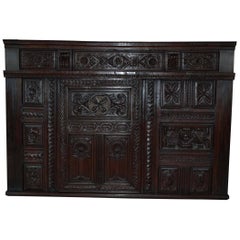
Italian Renaissance Walnut Cassone

Italian Renaissance Walnut Cassone

Located in Essex, MA

With flat hinged top opening to a open compartment. The curved case carved with a crest and figures and various designs. Bracket feet with trefoil form apro...

Category

Early 1600s Italian Antique Renaissance Case Pieces and Storage Cabinets
Materials

Walnut

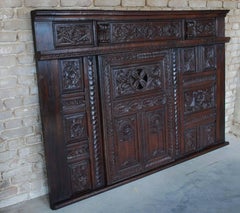
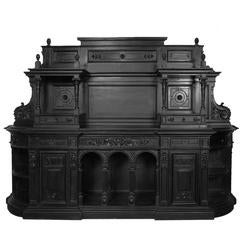
16th Century Italian Renaissance Cabinet in walnut with rich carvings

16th Century Italian Renaissance Cabinet in walnut with rich carvings

Located in Meulebeke, BE

Italy / 16th Century / Cabinet / walnut / Renaissance / Antique Rare 16th Century Italian Renaissance cabinet in walnut with hand carved decorations of 3 heads and floral patterns f...

Category

16th Century Italian Antique Renaissance Case Pieces and Storage Cabinets
Materials

Walnut

19th Century French Renaissance Barley Twist Armoire

19th Century French Renaissance Barley Twist Armoire

Located in Dallas, TX

19th Century French Renaissance Barley Twist Armoire was crafted by master artisans from solid, old-growth indigenous oak during the late Napoleon III Period, and features a heraldic...

Category

1870s French Antique Renaissance Case Pieces and Storage Cabinets
Materials

Mirror, Oak

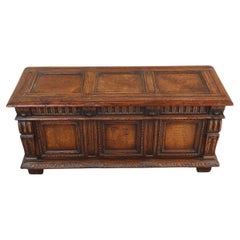
Italian Renaissance Wedding Cassone

Italian Renaissance Wedding Cassone

Located in Saint-Ouen, FR

Italian Renaissance wedding cassone Origin : Northern Italy, Between Milan And Bologne Period : 15th Century Height : 55 cm Width : 156.5 cm D...

Category

15th Century and Earlier Antique Renaissance Case Pieces and Storage Cabinets
Materials

Walnut

Renaissance case pieces and storage cabinets for sale on 1stDibs.
Find a broad range of unique Renaissance case pieces and storage cabinets for sale on 1stDibs. Many of these items were first offered in the 21st Century and Contemporary, but contemporary artisans have continued to produce works inspired by this style. If you’re looking to add vintage case pieces and storage cabinets created in this style to your space, the works available on 1stDibs include case pieces and storage cabinets, tables, more furniture and collectibles and other home furnishings, frequently crafted with wood, walnut and other materials. If you’re shopping for used Renaissance case pieces and storage cabinets made in a specific country, there are Europe, France, and Italy pieces for sale on 1stDibs. While there are many designers and brands associated with original case pieces and storage cabinets, popular names associated with this style include Europa Antiques, Arte Veneziana, Edouard Lievre, and Paul Sormani. It’s true that these talented designers have at times inspired knockoffs, but our experienced specialists have partnered with only top vetted sellers to offer authentic pieces that come with a buyer protection guarantee. Prices for case pieces and storage cabinets differ depending upon multiple factors, including designer, materials, construction methods, condition and provenance. On 1stDibs, the price for these items starts at $875 and tops out at $934,066 while the average work can sell for $6,065.