Gothic Furniture

1,051 Results
GOTHIC STYLE

The Gothic Revival movement (also called Victorian Gothic or Neo-Gothic) emerged in Britain in the 1740s, and reached its height in the late-19th century. The style is characterized by such decorative flourishes as pointed arches, floral details, finials, heraldic motifs and linenfold carving. The movement was rooted in religious and social conservatism. Its proponents, who included Charles Barry and A.W.N. Pugin, the architects of London’s Houses of Parliament (designed in 1840), believed that the art and architecture of the Middle Ages were authentically spiritual and inherently moral.

In the United States, the Gothic Revival movement shaped both public buildings and private houses. Numerous American schools were built in the early-19th century in a style now called Collegiate Gothic. Many builders and craftsmen were inspired by Andrew Jackson Downing’s widely read 1850 book Architecture for Country Houses, which posited that a family’s home should exemplify their values — and that the Gothic Revival style was particularly well-suited to scholars and clergymen. Furniture with detailing that mirrored that of Gothic Revival buildings appeared in the same period. Such pieces typically feature dark, intricately carved wood, and upholstery in velvet or leather.

Much like the castle or cathedral that inspired it, a Gothic Revival chair makes a bold design statement. And while you probably don’t have to cross a moat or raise a portcullis to get through your front door, a Gothic Revival piece might make a statement that your home is indeed your castle.

to
61
1,024
19
8
719
323

Use search to find more

204,208
119,865
47,146
35,633
17,258
13,289
11,919
11,189
10,343
9,014
7,790
7,234
7,012
6,837
6,806
6,108
4,908
3,809
342
377
305
27
101
93
35
12
2
13
10
24
10
12
4
5
2
559
401
344
207
174

Use search to find more

5
5
3
3
2

Use search to find more

Style: Gothic
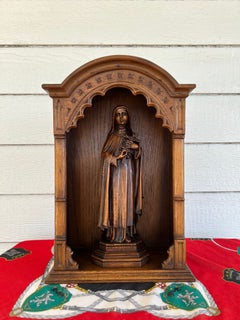
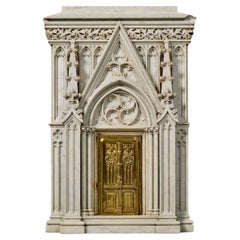
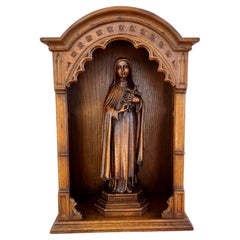
Antique French Carved Oak Statue Niche St. Thérèse Gothic Shrine c1930

Antique French Carved Oak Statue Niche St. Thérèse Gothic Shrine c1930

Located in Choudrant, LA

Antique French Carved Oak Statue Niche St. Thérèse Gothic Shrine c1930. Direct from France, a remarkable antique carved oak Gothic shrine featuring St. Thérèse of Lisieux, her beaut...

Category

1930s French Vintage Gothic Furniture

Materials

Oak

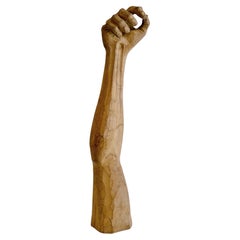
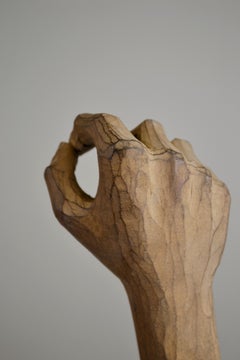
Early 20th Century French Sculptural Arm from a Religious Carving Workshop

Early 20th Century French Sculptural Arm from a Religious Carving Workshop

Located in SOTTEVILLE-LÈS-ROUEN, FR

A striking early 20th-century French sculptural fragment, carved in solid boxwood and depicting a raised arm and hand. The piece comes from a French workshop known for the productio...

Category

Early 20th Century French Gothic Furniture

Materials

Boxwood

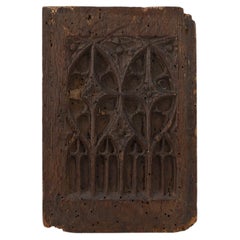
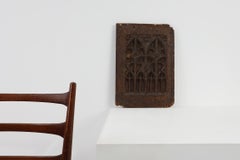
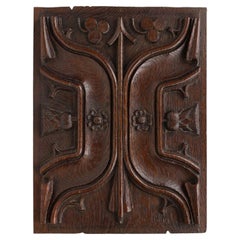
Late Gothic carved oak relief panel, France 15th century

Late Gothic carved oak relief panel, France 15th century

Located in Meulebeke, BE

A rare fragment of late Gothic craftsmanship from 15th‑century France, this carved oak panel reveals the architectural poetry of medieval tracery. The design features intersecting po...

Category

15th Century and Earlier French Antique Gothic Furniture

Materials

Oak

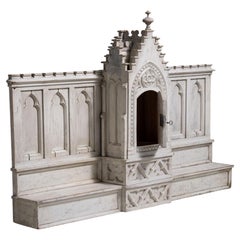
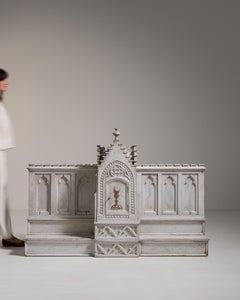
19th Century Gothic Altar in Warm Brown Wood, French Design, Antique

19th Century Gothic Altar in Warm Brown Wood, French Design, Antique

Located in High Point, NC

This 19th century Gothic religious item from France is worked in warm brown wood. Its design carries the Gothic idiom through in its proportions and detailing. As a religious item, i...

Category

19th Century French Antique Gothic Furniture

Materials

Wood

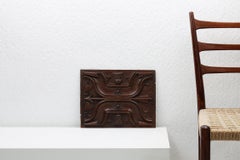
Gothic sculpted panel in oak from the 16th century, Belgium

Gothic sculpted panel in oak from the 16th century, Belgium

Located in Meulebeke, BE

This finely carved wooden panel from Belgium, dating to the 16th century, exemplifies the restrained geometry and rustic elegance of Gothic domestic ornamentation. Hewn from solid oa...

Category

16th Century Belgian Antique Gothic Furniture

Materials

Oak

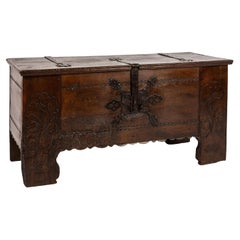
Antique early 17th century rare German or Austrian Stollentruhe or trunk

Antique early 17th century rare German or Austrian Stollentruhe or trunk

Located in Casteren, NL

This is an antique Stollentruhe (stile-and-panel chest) made of solid oak, originating from Southern Germany, most likely Bavaria, Upper Austria, or Tyrol, and dating to the early 17th century (circa 1600–1630). It is an early and exceptional example of the traditional stollen construction, recognizable by its tall, continuous corner stiles, heavy front panel, and strongly regional carved ornamentation. The chest is fitted with an outstanding and completely original chest lock...

Category

17th Century German Antique Gothic Furniture

Materials

Steel

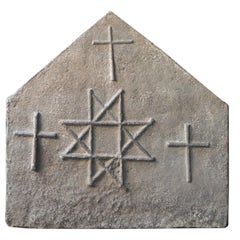
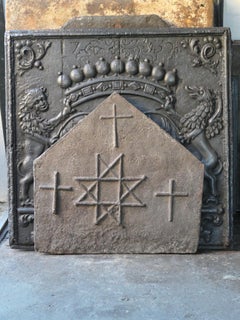
Gothic Fireback, France, 15th/16th Century

Gothic Fireback, France, 15th/16th Century

Located in Amerongen, Amerongen

French cast iron fireback of the 15th/16th century. From the early days of casting iron: a heavy gothic plate, four centimetres thick and over a hundred kilos, with finely cut detail...

Category

16th Century French Antique Gothic Furniture

Materials

Iron, Cast Iron

Edward F. Caldwell Gothic Style Jeweled Champleve Enamel Antique Folio Cover

Edward F. Caldwell Gothic Style Jeweled Champleve Enamel Antique Folio Cover

By Edward F. Caldwell & Co.

Located in New York, NY

A very rare, fine large Edward F. Caldwell jeweled champleve enamel folio cover in the High Gothic Style. The central panel depicting a King on a white horse holding a large orb with a snake symbol, surrounded by exquisitely detailed Gothic heraldic elements and jeweled embellishments. Burgundy velvet lined interior, retaining original leather backing and spine, wear commensurate with age, ideal for a museum or private collection. Measurements: 13.63 inches high, 11 inches wide, 1 inch deep Condition: the enamel panel is in excellent condition, age appropriate wear to velvet, leather and interior pages. Please note, the enamel panel may be removed and mounted on a modern folio if desired. This piece may be framed or displayed as a decorative panel on a stand Edward F. Caldwell & Co was established in 1895 in New York City at 31 East 17th Street and quickly became one of the premier designers and manufacturers of fine lighting and decorative objects. Their commissions included J.P. Morgan's residence, Saint Patrick's Cathedral, Vanderbilt Mansion, Henry Clay Frick residence, Harvard Club...

Category

Early 20th Century American Gothic Furniture

Materials

Enamel

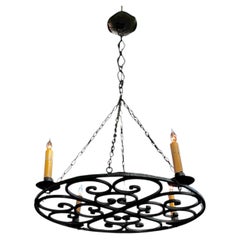
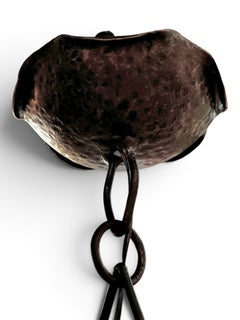
Antique French Gothic Hand-Forged Wrought Iron Corona Four Light Chandelier

Antique French Gothic Hand-Forged Wrought Iron Corona Four Light Chandelier

Located in New Orleans, LA

An antique French gothic-style hand-forged wrought iron "corona" (or ring-style) candle chandelier. The heavy scrollwork integrated within a flat circular ring (wheel frame), suspen...

Category

Early 1900s French Antique Gothic Furniture

Materials

Wrought Iron

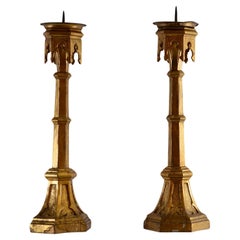
Original Gothic Style 1860 Candlesticks 19th Century Emperor of House Habsburg

Original Gothic Style 1860 Candlesticks 19th Century Emperor of House Habsburg

By Woka Lamps

Located in Vienna, AT

Gothic style of Laxenburg so called after the "Laxenburg Castle", the favoured summer-residence of the Austrian Emperor of the house of Habsburg. Material used is carved wood, gilded.

Category

Mid-19th Century Austrian Antique Gothic Furniture

Materials

Wood

French Gothic Style Fire Grate, Fireplace Grate

French Gothic Style Fire Grate, Fireplace Grate

Located in Amerongen, Amerongen

20th century French Gothic Style fireplace basket - fire basket made of wrought iron and cast iron. The basket is in good condition and is fully functional. The total width of the fr...

Category

20th Century French Gothic Furniture

Materials

Iron, Wrought Iron

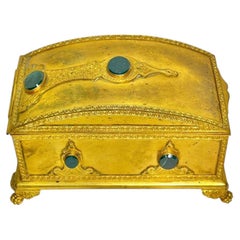
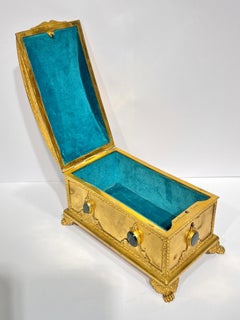
19th Century French Ormolu Bronze Jewelry Casket From Alphonse Giroux

19th Century French Ormolu Bronze Jewelry Casket From Alphonse Giroux

Located in New York, NY

Antique (19th century) French ormolu bronze jewelry casket from the Gothic Revival period, inlaid with oval green stones with lined interior, retailed by the revered Parisian tableti...

Category

19th Century French Antique Gothic Furniture

Materials

Bronze

Rare Early 18th Century English Carved Oak Hugh Castle Cabinet Chest Bookcase

Rare Early 18th Century English Carved Oak Hugh Castle Cabinet Chest Bookcase

Located in Dayton, OH

A rare and impressive English Gothic Medieval style Cabinet, Circa 1714. Built during the reign of King George I in honor of Hugh Lupus the First Earl of Chester and his castle. Hu...

Category

Early 18th Century English Antique Gothic Furniture

Materials

Glass, Oak

4 Lights Gothic Style Wrought Iron Chandelier

4 Lights Gothic Style Wrought Iron Chandelier

Located in Marcq-en-Barœul, Hauts-de-France

This nice gothic style chandelier is made of wrought iron with 4 lights. This is a French work. Circa 1940

Category

1940s French Vintage Gothic Furniture

Materials

Iron

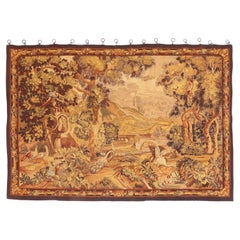
Late 19th Century French Aubusson Verdure Tapestry with Louis XVI Revival Style

Late 19th Century French Aubusson Verdure Tapestry with Louis XVI Revival Style

Located in Dallas, TX

79208 Late 19th Century Antique French Aubusson Tapestry, 06'00 x 08'10. A sanctuary of woven splendor and poetic artistry, this handwoven wool and silk French Aubusson tapestry from...

Category

Late 19th Century French Antique Gothic Furniture

Materials

Wool, Silk

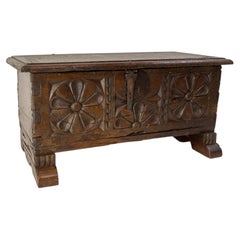
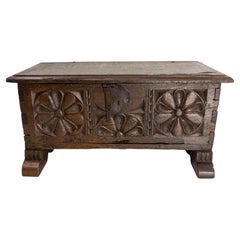
1900 Little Rustic Chest or Coffer Gothic Carved Oak & Wrought Iron, French

1900 Little Rustic Chest or Coffer Gothic Carved Oak & Wrought Iron, French

Located in Labrit, Landes

French coffer or chest made circa 1900. Decorated with carved flowers style. The design of this chest is deliberately rustic. The interior is lined with fabric. Very decorative and ...

Category

Early 20th Century French Gothic Furniture

Materials

Wrought Iron

Italian Situla 18th Century brass and zinc holy water bucket

Italian Situla 18th Century brass and zinc holy water bucket

By Jan van Mekeren

Located in Wommelgem, VAN

Italian Situla, holly water bucket. The handle holds by 2 lion haeds. The situla depicting 5 columns connected with an arcade of 5 arches. Above the arches we see a band of scrolli...

Category

Late 18th Century Italian Antique Gothic Furniture

Materials

Brass, Zinc

Gothic Style Bronze & Iron Bat Motif Lantern

Gothic Style Bronze & Iron Bat Motif Lantern

Located in West Palm Beach, FL

Gothic Style Bronze and Iron Bat Motif Lantern Gothic style bronze and iron bat motif lantern, with a total of 45" drop, chain can be removed or added. For sale are two exceptional Gothic-style bronze and iron bat motif lanterns, sold individually, offering a rare and unique addition to any space. Each lantern has a finely cast bronze bat...

Category

20th Century Gothic Furniture

Materials

Metal, Bronze, Wrought Iron

Rare Late Gothic Carved Oak Bench Coffer (Stollentruhe) Ca.1480

Rare Late Gothic Carved Oak Bench Coffer (Stollentruhe) Ca.1480

Located in Doha, QA

A remarkable and exceptionally sculptural Late Gothic carved oak bench coffer (Stollentruhe) dating from the late 15th to the early 16th century, most likely originating from Austria...

Category

16th Century Austrian Antique Gothic Furniture

Materials

Iron

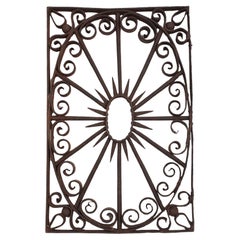
Fence Door Pediment / Wall Decoration in Wrought Iron, Spain 1930s

Fence Door Pediment / Wall Decoration in Wrought Iron, Spain 1930s

Located in Barcelona, ES

Antique spanish door fence pediment / crest in iron, hand forged, Spain, Early 20th century. This eye-catching wall fence was entirely made by hand in forged iron. A master work of t...

Category

Early 20th Century Spanish Gothic Furniture

Materials

Iron, Wrought Iron

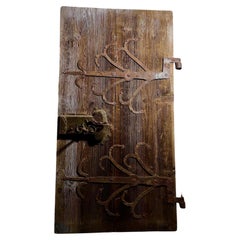
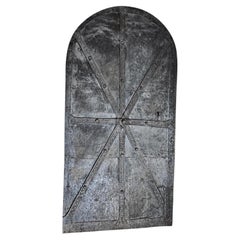
Extraordinary Rare Gothic Castle Door with Original Forged Ironwork, 15th C.

Extraordinary Rare Gothic Castle Door with Original Forged Ironwork, 15th C.

Located in Doha, QA

A monumental and exceptionally rare Gothic castle door of the 14th- 15th century, preserving its original hand-forged wrought iron strap hinges, monumental lock, decorative iron fitt...

Category

15th Century and Earlier French Antique Gothic Furniture

Materials

Wrought Iron

French 17th Century Solid Oak Extending Dining Table

French 17th Century Solid Oak Extending Dining Table

Located in Baton Rouge, LA

A robust, solid oak extending dining table hand-crafted in 17th century France circa 1680. Gnarled knots, beautiful grain, and an incredible range of textures give the thick tabletop...

Category

17th Century French Antique Gothic Furniture

Materials

Wood, Oak

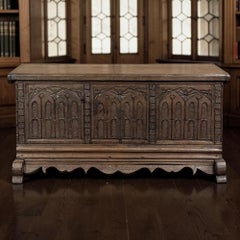
Antique French Medieval Gothic Carved Oak Chest Coffer 17th Century Panels 1679

Antique French Medieval Gothic Carved Oak Chest Coffer 17th Century Panels 1679

Located in Portland, OR

A fine antique 17th century French Gothic carved oak lidded chest or coffer, dated 1679. The chest was assembled in the mid 19th century with original carved panels from the 1600s. ...

Category

17th Century French Antique Gothic Furniture

Materials

Oak

French 17th Century Gothic Andirons or Firedogs

French 17th Century Gothic Andirons or Firedogs

Located in Amerongen, Amerongen

17th century French gothic andirons - fire dogs made of wrought iron. They have spit hooks to grill meat or poultry.

Category

17th Century French Antique Gothic Furniture

Materials

Wrought Iron

Monumental Rare Antique Renaissance Revival Gothic Walnut Fireplace Mantel 11 FT

Monumental Rare Antique Renaissance Revival Gothic Walnut Fireplace Mantel 11 FT

Located in Dayton, OH

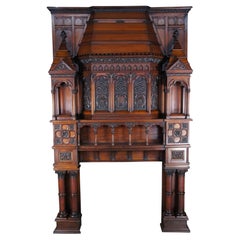
Very large and exceedingly rare English Renaissance Revival fireplace mantel, circa 1860s. Made of hand carved walnut featuring a gothic cathedral design. The fireplace portion is ...

Category

Mid-19th Century Antique Gothic Furniture

Materials

Walnut

Pair of Plaster Gothic Crocketed Finials

Pair of Plaster Gothic Crocketed Finials

Located in Chicago, IL

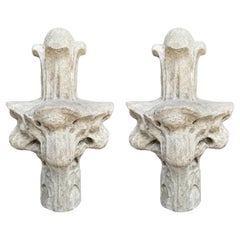
This pair of cast plaster Gothic finials exudes the elegance and intricacy of Gothic architectural design. Each finial is adorned with floral form crockets, meticulously crafted to r...

Category

21st Century and Contemporary French Gothic Furniture

Materials

Plaster

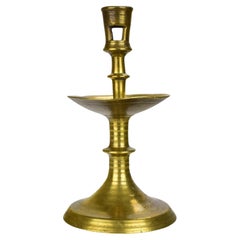
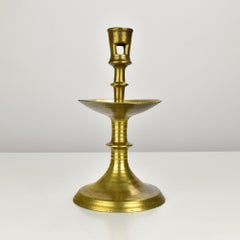
Antique Dutch Brass Mid-Drip Heemskerk Candlestick circa 1525

Antique Dutch Brass Mid-Drip Heemskerk Candlestick circa 1525

Located in Bad Säckingen, DE

A rare and historically significant Dutch brass candlestick of the Heemskerk type, dating to around 1525. This early 16th-century example features a pronounced mid-drip pan with slig...

Category

16th Century Dutch Antique Gothic Furniture

Materials

Brass, Bronze

Exceptionally Rare Medieval Castle Door with Protective Horseshoes, 14th-15th C.

Exceptionally Rare Medieval Castle Door with Protective Horseshoes, 14th-15th C.

Located in Doha, QA

An extraordinary and exceptionally rare medieval castle door, traditionally attributed to the 14th century, preserved within a medieval castle of 13th–14th century origin. Retaining ...

Category

15th Century and Earlier French Antique Gothic Furniture

Materials

Iron

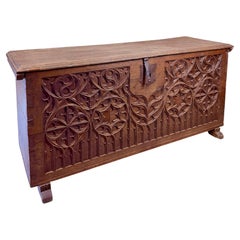
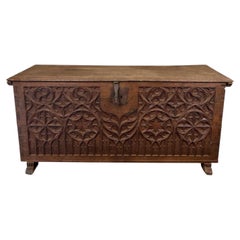
Late 19th Century Spanish Carved Wood Chest with Gothic Decoration

Late 19th Century Spanish Carved Wood Chest with Gothic Decoration

Located in BÉTERA, ES

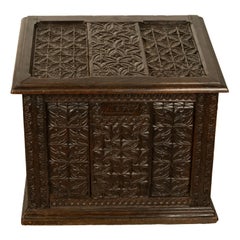
Impressive Spanish wooden chest dating from the late 19th century, featuring richly carved geometric and architectural decoration across the front. The elaborate carved panels displ...

Category

1880s Spanish Antique Gothic Furniture

Materials

Wrought Iron

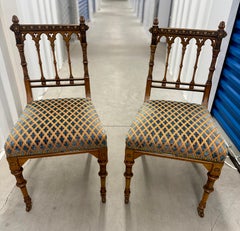
Pair of Gothic Revival Inlaid & Fine Cut Velvet Side Chairs, English, c. 1870

Pair of Gothic Revival Inlaid & Fine Cut Velvet Side Chairs, English, c. 1870

By Charles Bevan, Bruce James Talbert

Located in Atlanta, GA

A richly detailed pair of English Gothic Revival walnut side chairs, dating to around 1870, distinguished by their intricately carved tracery backs, architectural arcade motifs, and ...

Category

Late 19th Century English Antique Gothic Furniture

Materials

Upholstery, Ebony, Walnut

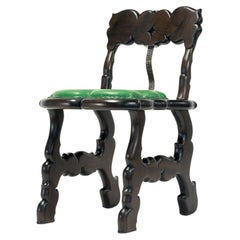
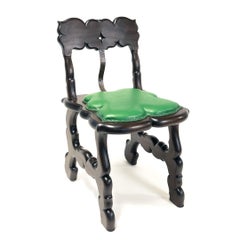
Witch's Chair – Handmade Carved Dark Wood Gothic Side Chair w/ Leather Seat

Witch's Chair – Handmade Carved Dark Wood Gothic Side Chair w/ Leather Seat

By Realm

Located in Philadelphia, PA

Considering what furniture design might look like in other realities, the Witch's Chair was conceived as a relic plucked from a portal or a monstrosity mutated from a potion. Existin...

Category

2010s American Gothic Furniture

Materials

Copper, Steel

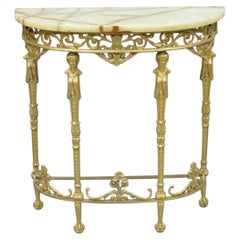
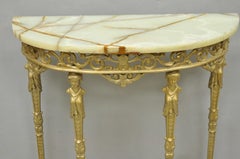
Antique Gothic Revival Oscar Bach Style Figural Bronze & Onyx Gold Console Table

Antique Gothic Revival Oscar Bach Style Figural Bronze & Onyx Gold Console Table

Located in Philadelphia, PA

Please message us with your zip code to request a more reasonable domestic U.S. shipping quote. Antique Gothic Revival Oscar Bach Style Figural Bronze & Onyx Gold Painted Small ...

Category

Early 20th Century Gothic Furniture

Materials

Onyx, Wrought Iron

Gothic wrought iron candelabra style floor lamp

Gothic wrought iron candelabra style floor lamp

Located in Tarrytown, NY

Gothic wrought iron candelabra style floor lamp.

Category

1940s Spanish Vintage Gothic Furniture

Materials

Wrought Iron

18th Century English Rustic Gothic Style Oak Console ~ Sofa Table

18th Century English Rustic Gothic Style Oak Console ~ Sofa Table

Located in Dallas, TX

An 18th century English console table hand carved from solid oak, with a rich, time-softened patina and wonderful depth of surface. The narrow form gives the piece an elegant presenc...

Category

Late 18th Century English Antique Gothic Furniture

Materials

Oak

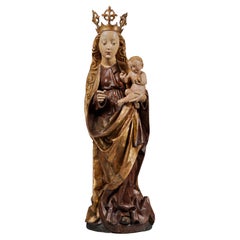
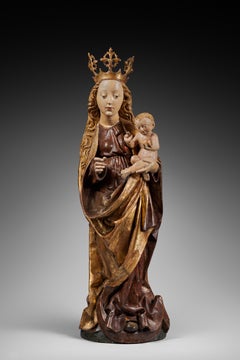
Polychrome carved wood Virgin and Child from the 15th Century

Polychrome carved wood Virgin and Child from the 15th Century

Located in Saint-Ouen, FR

POLYCHROME CARVED WOOD VIRGIN AND CHILD FROM THE 15TH CENTURY   ORIGIN: SOUTH GERMANY, SWABIA, NUREMBERG REGION PERIOD: 15th CENTURY   Height: 94,6cm Width : 28 cm Depth : 18 cm   Lime wood Original Polychromy Good state of conservation     From 1430 onwards, sculpture underwent a profound stylistic renewal which continued until 1530, the so-called late Gothic period. In the Germanic countries, original sculptures flourished in an expressive and sensitive vein.
This renewal was inspired by the art of Nicholas of Leiden, who was active in Strasbourg in the 1460's. His style broke with the refined and delicate art of the international Gothic style in force throughout Europe around 1400. The figures became more authentic and realistic. The bodies became denser. Clothes are animated by deep, broken folds, the fabrics are heavy and have a great decorative value. In addition, the polychromy is intended to be illusionistic. The painting makes it possible to restore the texture of the materials, the richness of the textiles and the natural skin tone of the characters.   The dissemination of images through engraving and the great mobility of the artists led to the success of this style, which conquered the Upper Rhine, Swabian, Tyrolean and Franconian regions, contributing to the formation of a common stylistic identity in these regions. The economic boom in the flourishing German cities was conducive to the development of original production. Attracted by this prosperity, numerous workshops were set up in order to meet the orders of religious communities, the Church and the laity, including a clientele of middle-class rockers.      This precious Virgin and Child is depicted standing on a crescent moon, her head encircled by a crown of tall flowers. Her long wavy hair spreads over her shoulders, framing her beautiful oval face. Under fine eyebrows drawn with a brushstroke, her almond-shaped, slightly drooping eyes look at the Child with infinite softness. She is dressed in a long red dress with a rounded neckline, belted under the chest. The heavy fabric of her dress spreads out in broken folds at her feet. On her shoulders she wears a golden cloak. The drapery has deep folds. She holds out her right hand while she holds the Christ Child with her left.   Christ, with his well-defined hair, is naked. His cheeks are highlighted with red, he holds an apple in his left hand and with the other hand makes a sign of blessing towards the faithful.   Virgins with Child on a crescent moon were very popular in the second half of the 15th century, especially as the central subject of altarpieces in southern Germany and Austria. The crescent moon on which Mary is standing is reminiscent of the Woman of the Apocalypse. Often equated with the Virgin Mary.    This episode is taken from the Book of Revelation (12:1-6)   1 Then a great sign appeared in heaven: a woman clothed with the sun, with the moon under her feet and a crown of twelve stars on her head. ; 2 She was pregnant, and she cried out because she was in labor, in pain from giving birth. ; 3 Then another sign appeared in heaven: it was a great fiery red dragon, with seven heads and ten horns, and seven royal crowns on his heads. ; 4 His tail swept down a third of heaven's stars and threw them to the earth. The dragon stood in front of the woman who was about to give birth so that when she gave birth, he might devour her child. ; 5 She gave birth to a son, a male child who is to rule all the nations with an iron rod. Her child was snatched up to God and his throne. ; 6 Then the woman fled into the desert, where God has prepared a place for her. There she will be taken care of for one thousand two hundred sixty days.   Some theologians see in this woman a reference to the Virgin Mary and in the child, Jesus.    
This remarkable work is a very fine example of sculpture from Swabian workshops in the last decades of the 15th century. It presents all the characteristic stylistic elements: a highly girdled silhouette, an abundant drapery with angular folds, but also a great physical presence accentuated by the polychromy that restores the anatomical details. This group is made of a wooden log. The deep folds of the drapery highlight the movement of the Virgin holding the child.       Bibliography :   Sophie Guillot de Suduiraut, Dévotion et Séduction, Sculptures souabes des musées de France, vers 1460-1530, Paris musée du Louvre-Éditions somogy, 2015   “Revelation 12 -   Common English Bible...

Category

15th Century and Earlier German Antique Gothic Furniture
Materials

Wood

Pair of Wrought Iron Dragon Andirons

Pair of Wrought Iron Dragon Andirons

Located in Marcq-en-Barœul, Hauts-de-France

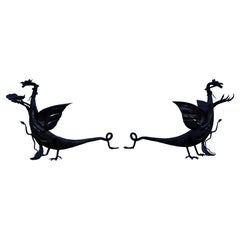
This nice and unusual pair of andirons representing dragons are made of wrought iron. This is a French work. Circa 1940

Category

1940s French Vintage Gothic Furniture

Materials

Wrought Iron

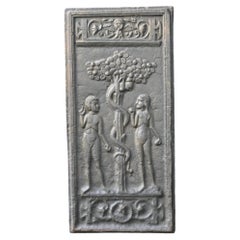
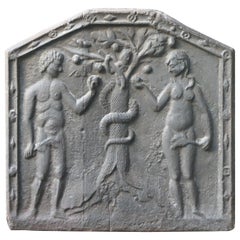
Adam and Eve Fireback, Germany, 16th/17th Century

Adam and Eve Fireback, Germany, 16th/17th Century

Located in Amerongen, Amerongen

German cast iron fireback of the 16th/17th century. Adam and Eve cast in Germany in the late sixteenth or early seventeenth century, in the gothic idiom of the early German foundries...

Category

17th Century German Antique Gothic Furniture
Materials

Iron, Cast Iron

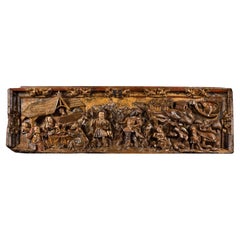
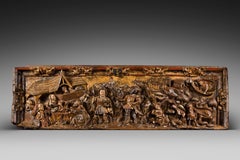
15th Century Burgundian Low-Relief Depicting Scenes of the Nativity

15th Century Burgundian Low-Relief Depicting Scenes of the Nativity

Located in Saint-Ouen, FR

Provenance : In the same private collection for several generations, Burgundy. The canonical Gospels describe briefly the episode of the Nativity. It comprises three parts : • The Preludes : the Journey to Bethlehem, the Census • The Nativity • The Announce to the Shepherds and the Adoration of the Magi Only the Gospel according to Matthew (2, 1-12) speaks about the Adoration of the Magi. Staying vague about their number it does say they brought the newborn gold, incense and myrrh. The apocryphals, the fathers of the Church and many other authors have filled in the gaps of the evangelic tale. The sobriety and symbolic of the story have been a huge inspiration to artists. Although one of the oldest depictions of the Adoration of the Magi dates from the 2nd century the theme became very popular in Christian art during the late 14th century. One of the reasons explaining this success is that it celebrates both the Virgin and Christ at the same time. This important walnut panel is carved in a strong relief and depicts the different steps of the story of Jesus’ birth. On the left, the donkey and ox that have accompanied Mary and Joseph from Bethlehem are depicted behind a trough. On the thatch roof appears the star that would guide the magi to the place of birth of Jesus. Mary is wearing a veil and is seating on a bed. She holds her baby at arm’s length to present him to the magi. Saint Joseph is by her side. The old man is holding a cane in his left hand while from the right hand he seems to uncover himself to greet the visitors. A woman assists to the scene. In front of the holy family the three magi stand behind one another to pay their homage to the newborn. The first magi has a pointed beard. He is already kneeling out of deference and has placed his crown to his feet. He gives the baby a hanap filled with gold coins. This is Melchior as the legend describes him with white hair and a long beard. Caspar, the second magi bears a cup of incense. He is looking at the third magi and with his right hand he points to the star that has guided them there. He has a short beard and wears crakow shoes, breeches and a wide sleeved doublet. Finally Balthazar, the elegant last magi proceeds proudly towards the holy family with his one hand on the saber’s hilt and the other holding a cup. He brings the divine child the myrrh. He probably just dismounted as the horse can be seen behind him. The scene is set in a very detailed and narrative decor. In the right part of the panel the shepherd receive the announce of Jesus’ birth. An angel comes down from heaven with a scroll bearing the good news in his hands. The herding dog sleeps peacefully while sheeps graze. At the top of the cliff we notice the gilded sheeps enclosure. The panel’s moulded frame is carved with a foliated decor. In it’s centre appears a coat-of-arms. It is the alliance of the three magi’s arms. Indeed as it was common for legendary figures the three of them received imaginaries coat-of-arms. Thus, on a field of azure stands a star for Melchior, a crescent for Caspar and a pennon for Balthazar. This high-relief panel is undeniably the work of a very skilled and imaginative artist. This key moment in the New Testament is transposed to a contemporary environment thanks to the figures’ clothing and the rural daily life scene. This way the universal dimension of the episode is highlighted allowing a better understanding for the contemporaries. The sculptor has represented the episodes of the Adoration of the Magi and the Announce to the Shepherd with great talent and numerous details giving life to a picturesque and narrative scene. The important traces of polychromy give those already very animated scenes a stronger pictorial power and a rich dynamism. Because of the picturesque and familiar realism so dear to the artists of the late Medieval era, of the didactic function of this type of panel as well as the quality of the sculpture this piece is an astounding example of Burgundian art of the 15th century. Literature Louis Réau, Iconographie de l’Art chrétien...

Category

15th Century and Earlier French Antique Gothic Furniture

Materials

Walnut

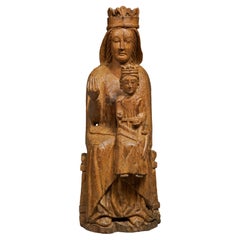
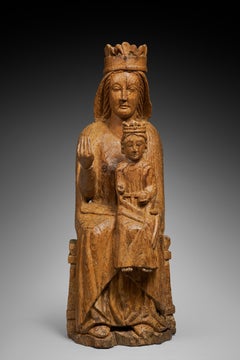
13th Century Virgin and Child from Catalonia

13th Century Virgin and Child from Catalonia

Located in Saint-Ouen, FR

Seating on a bench-like throne the Virgin carries her child on her left knee. She bears an important crown high on her head .The Virgin has an ovoid face with bulging eyes, straight long nose and thin lips. The hair parts in the middle and are carved as thick horizontals parallel hair strands...

Category

15th Century and Earlier Spanish Antique Gothic Furniture

Materials

Oak

Gothic front gallery chest, Westphalia around 1500 - 1550, oak

Gothic front gallery chest, Westphalia around 1500 - 1550, oak

Located in Münster, DE

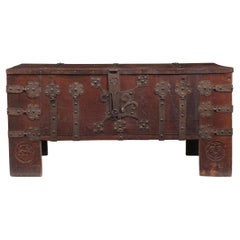
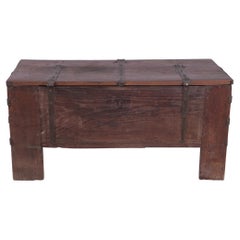
Gothic front gallery chest, Westphalia around 1500 - 1550, wrought iron bands, boxy oak body, partially carved. Monumental star-shaped key plate with original key, feet on the front ...

Category

16th Century German Antique Gothic Furniture
Materials

Oak

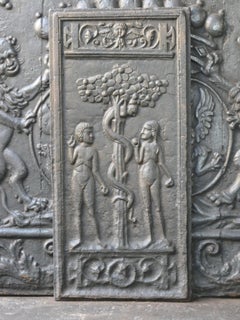
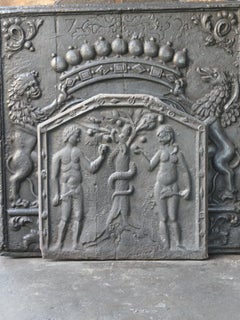
Adam and Eve Fireback, Germany, 16th/17th Century

Adam and Eve Fireback, Germany, 16th/17th Century

Located in Amerongen, Amerongen

German cast iron fireback of the 16th/17th century. Adam and Eve at the tree, cast in Germany in the gothic manner of the early foundries. A heavy plate, over four centimetres thick....

Category

17th Century German Antique Gothic Furniture
Materials

Iron

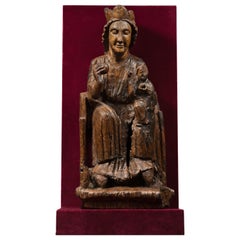
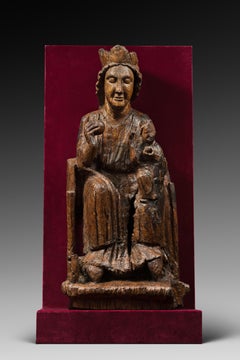
Virgin and Child in Majesty, also known as "Sedes Sapientae"

Virgin and Child in Majesty, also known as "Sedes Sapientae"

Located in Saint-Ouen, FR

VIRGIN AND CHILD IN MAJESTY, ALSO KNOWN AS "SEDES SAPIENTIAE"   ORIGIN : SPAIN, CATALOGNE PERIOD: EARLY 13th CENTURY   Height :  95 cm Width : 32 cm Depth : 28 cm   Softwood No polychromy     In the middle of the 12th century, the Virgin took her place in churches, seated in Majesty, serving as a throne for her son Jesus. She is then called Sedes Sapientiae, meaning the Throne of Wisdom. At that time, she is not represented for herself and only exists because she has been designated as Theotokos, the mother of God, at the Council of Ephesus in 431, where the divine nature of Christ was proclaimed from his birth.   The upright and perfectly hieratic bust of this Virgin and Child in Majesty is seated on a throne-bench. She is dressed in a tunic with a rounded neckline and covered with a fine mantle placed on her narrow shoulders. The supple and natural drapery follows the lines of the body.   Large curls frame her face with delicate and regular features, a long straight nose, almond-shaped eyes, and small lips.   She supports the Infant Jesus with her left hand. Like his mother, he is dressed in a long tunic, and his little feet are visible in the folds. He holds a small sphere in his left hand, while with his right hand, he gestures in blessing. The face of Christ bears a strong resemblance to his mother’s one, and he gives a slight smile.   The position of the Child is no longer as hieratic, nor frontal or central as in the early 12th century, but his face still turns towards the faithful.   The 13th century indeed emerges as a period of transition in the artistic domain. The statuary, while retaining certain characteristics still belonging to the habits of the previous century, also develops new formal solutions.   As a result, Mary maintains a hieratic and frontal position, while her son shifts to place himself well to the left on her knee. Similarly, while the Virgin seems perfectly still, Jesus, on the other hand, appears much more animated, especially in the positioning of his hands. His left hand holds the orb, and judging by the raised right arm directed towards the faithful, one can easily imagine that he was making a gesture of blessing.   The influence of the Sedes Sapientiae from previous centuries still seems particularly prevalent in this work.   These few characteristics allow dating this Spanish Virgin...

Category

15th Century and Earlier Spanish Antique Gothic Furniture

Materials

Softwood

Antique Gothic Bronze Wall Hanging Altar Door Tabernacle with Chalice (B)

Antique Gothic Bronze Wall Hanging Altar Door Tabernacle with Chalice (B)

Located in Philadelphia, PA

Antique Gothic Bronze Wall Hanging Altar Door Tabernacle with Chalice (B). Item features heavy solid brass/bronze construction, chalice and rays of light cast design, very nice vinta...

Category

Late 19th Century Antique Gothic Furniture

Materials

Bronze

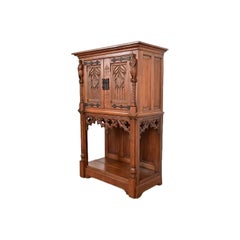
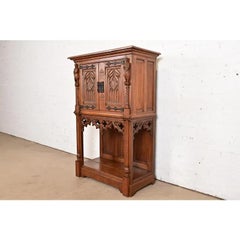
Antique Belgian Gothic Revival Carved Oak Bar Cabinet, Circa 1880s

Antique Belgian Gothic Revival Carved Oak Bar Cabinet, Circa 1880s

Located in South Bend, IN

A gorgeous antique Gothic or Renaissance Revival bar cabinet Belgium, Circa 1880s Oak, with ornate carvings including shields and knight figures, and original iron hardware. Measu...

Category

Late 19th Century Belgian Antique Gothic Furniture

Materials

Iron

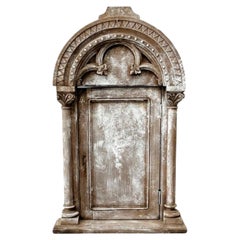
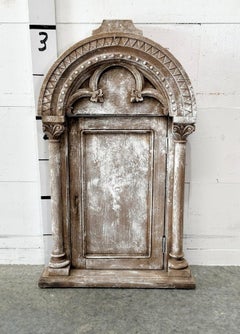
Antique Early Romanesque Gothic Architectural Tabernacle Niche Door

Antique Early Romanesque Gothic Architectural Tabernacle Niche Door

Located in Forney, TX

A scarce antique ecclesiastical architectural hand carved and painted wooden church - cathederal tabernacle door. 18th century or earlier, early Medieval European Romanesque Gothic style, facade with elaborate arched header atop partial quartfoil, hinged tabernacle door panel which would have opened to important religious niche...

Category

18th Century European Antique Gothic Furniture

Materials

Wood

Rare Monumental Italian Carved Carrara Marble Model of a Cathedral

Rare Monumental Italian Carved Carrara Marble Model of a Cathedral

Located in Long Island City, NY, NY

A Rare and Monumental Italian Carved Carrara Marble Model of a Cathedral, Rome, 19th century, circa 1840. Possibly a representation of Cathedral of Santa Maria del Fiore in Florence Italy. The Italian Renaissance is renowned for its magnificent works of art and architecture, which are admired to this day for their grandeur and intricate details. Among the most impressive examples of this era are the rare and monumental carved Carrara marble models of cathedrals...

Category

19th Century Italian Antique Gothic Furniture

Materials

Carrara Marble

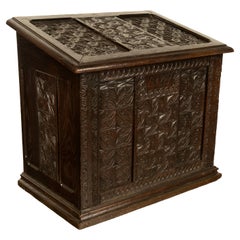
Rare Large Gothic 16th century carved solid oak chest, France

Rare Large Gothic 16th century carved solid oak chest, France

Located in Meulebeke, BE

France / 16th century / bridal or blanket chest / oak / Gothic This impressive chest was hand-carved in solid oak in the 16th century in France. The construction is typical of very...

Category

16th Century French Antique Gothic Furniture

Materials

Oak

Ornate Gothic Style Gilded Mirror with Cherub and Masks

Ornate Gothic Style Gilded Mirror with Cherub and Masks

Located in Hopewell, NJ

Dramatic Gothic style aged mirror having central cherub at the top, ornate frame and two mask like faces on each side. Mirror has natural spiderwebs and mercury with fabulous moody ...

Category

1930s American Vintage Gothic Furniture

Materials

Gesso, Wood

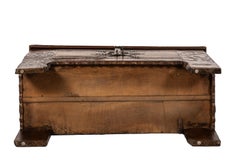
19th Century Gothic Revival Carved Oak Trunk with Hand-Forged Ironwork

19th Century Gothic Revival Carved Oak Trunk with Hand-Forged Ironwork

Located in Dallas, TX

Evoking the carved chests once placed within medieval halls, ecclesiastical interiors, and great country houses, this 19th century oak trunk captures the enduring romance of the Goth...

Category

Late 19th Century Dutch Antique Gothic Furniture

Materials

Wrought Iron

1890 French Big Winged Standing Dragon Wrought Iron Sconces

1890 French Big Winged Standing Dragon Wrought Iron Sconces

Located in Firenze, Toscana

Housing one light each. These will be newly rewired with certified US UL sockets for the USA and appropriate sockets for all other countries. Standing winged dragons with lots of det...

Category

1890s French Antique Gothic Furniture

Materials

Wrought Iron

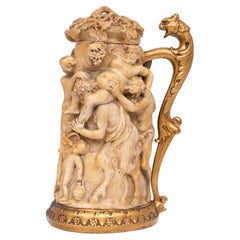
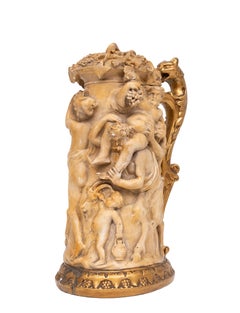
antique tankard The ''Triumph of Silenus'' by Gérard van Opstal Flemish

antique tankard The ''Triumph of Silenus'' by Gérard van Opstal Flemish

Located in Den Haag, NL

Unique 19th Century plaster remake from a A tankard with a bulbous body decorated with nine figures; the handle is shaped like a panther's head. The base mount is made of chased, gil...

Category

1880s Antique Gothic Furniture

Materials

Plaster

19th Century Hand-Carved Gothic Oak Confiturier Cabinet, France, 1870s

19th Century Hand-Carved Gothic Oak Confiturier Cabinet, France, 1870s

Located in Dallas, TX

19th Century Gothic Oak Confiturier ~ Cabinet is a commanding example of Gothic Revival craftsmanship, carved in solid oak and presenting a strong architectural presence in a compact...

Category

1870s French Antique Gothic Furniture

Materials

Steel

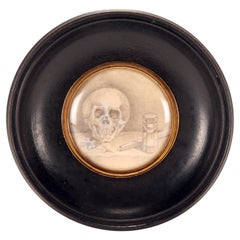
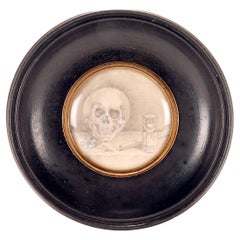
Miniature painted in pencil on paper, depicting a Vanitas, Germany circa 1850.

Miniature painted in pencil on paper, depicting a Vanitas, Germany circa 1850.

Located in Milan, IT

Miniature depicting a Vanitas Memento Mori painted in pencil on paper. The frame, made of ebonized fruitwood and finished with black wax, is round with a circleinside, bordered by a ...

Category

Mid-19th Century German Antique Gothic Furniture
Materials

Brass

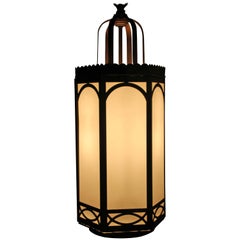
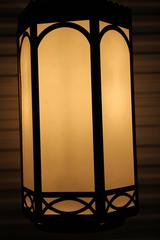
Gothic Cathedral Style Hanging Lamp

Gothic Cathedral Style Hanging Lamp

Located in Palm Springs, CA

In true Gothic fashion, these lamps illustrate the style of light common to many cathedrals of the time yet devoid of any religious symbols. Lights are of grand scale consisting of s...

Category

1940s American Vintage Gothic Furniture

Materials

Steel

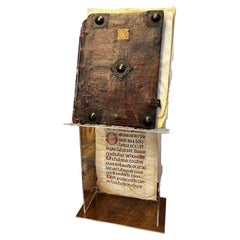
Antique Extremely Rare Large 1301 Antiphonal Abbey Book Binding, C14 Certified

Antique Extremely Rare Large 1301 Antiphonal Abbey Book Binding, C14 Certified

Located in Doha, QA

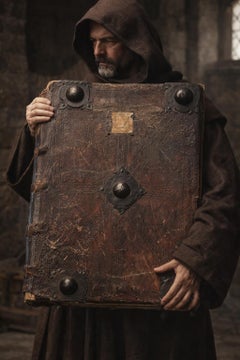
Monumental Medieval Antiphonal Book Binding with Illuminated Leaves Austria, 1300s- possible St.Peter Abbey, Salzburg Austria, oldest monastery in the German speaking world (founded ...

Category

15th Century and Earlier Austrian Antique Gothic Furniture
Materials

Iron

1950's Italian Gothic Dragon Andirons

1950's Italian Gothic Dragon Andirons

Located in New York, NY

Unique pair of large 1960's Italian Gothic Dragons andirons, in vintage original condition with minor wear and patina due to age and use, amazing craft...

Category

1960s Italian Vintage Gothic Furniture

Materials

Iron

Antique Gothic Rare Illuminated Antiphonal Leaves on Vellum, Italy 14th-15th C.

Antique Gothic Rare Illuminated Antiphonal Leaves on Vellum, Italy 14th-15th C.

Located in Doha, QA

A refined and visually compelling collection of two large-format illuminated from both sides manuscript leaves on vellum, originating from Italian choir books of the late 14th to early 15th century. These leaves, once part of monumental liturgical codices used for communal singing, exemplify the artistry and devotional culture of the medieval church. Each leaf is executed in bold Gothic script with square Gregorian notation on red staves, designed for legibility at a distance. The collection includes examples from a Psalter and Antiphonal, encompassing both textual and musical elements of the liturgy. The group is distinguished by its range of illumination, from finely ornamented initials in red and blue with delicate penwork flourishing, to a more elaborate historiated composition depicting the Adoration of the Magi, rendered in vivid pigments with gold accents and intricate vine borders. This figurative leaf reflects a higher level of artistic sophistication and devotional narrative, typical of important ecclesiastical commissions. Texts include passages from the Psalms (notably Psalm 26, “Dominus illuminatio mea”) and chants associated with major liturgical moments such as Epiphany and the Office of the Dead. The musical leaves preserve the rhythmic structure of Gregorian chant, with neumatic notation carefully aligned to the text. Executed on fine animal (sheep) skin (vellum), the leaves display the natural undulation and patina characteristic of medieval parchment...

Category

15th Century and Earlier Italian Antique Gothic Furniture
Materials

Animal Skin

1970s Stanley Arch Gothic Armoire Wood Iron Wardrobe Cabinet

1970s Stanley Arch Gothic Armoire Wood Iron Wardrobe Cabinet

By Stanley

Located in Fort Lauderdale, FL

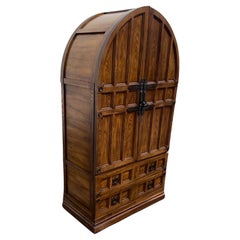
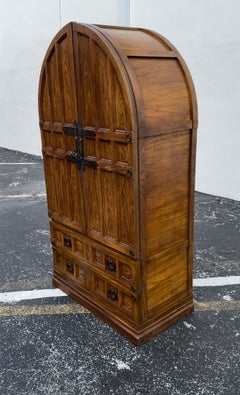
Transport yourself back to the sleek and sophisticated 1970s with this exquisite arch gothic armoire cabinet with interior mirror. The ultra rare cabinet exudes an air of luxury and ...

Category

1980s American Vintage Gothic Furniture

Materials

Iron

Gothic furniture for sale on 1stDibs.
Find a broad range of unique Gothic furniture for sale on 1stDibs. Many of these items were first offered in the 21st Century and Contemporary, but contemporary artisans have continued to produce works inspired by this style. If you’re looking to add vintage furniture created in this style to your space, the works available on 1stDibs include building and garden elements, decorative objects, lighting and other home furnishings, frequently crafted with metal, iron and other materials. If you’re shopping for used Gothic furniture made in a specific country, there are Europe, France, and United Kingdom pieces for sale on 1stDibs. While there are many designers and brands associated with original furniture, popular names associated with this style include Europa Antiques, Edward F. Caldwell & Co., Maitland Smith, and Aeterna Furniture. It’s true that these talented designers have at times inspired knockoffs, but our experienced specialists have partnered with only top vetted sellers to offer authentic pieces that come with a buyer protection guarantee. Prices for furniture differ depending upon multiple factors, including designer, materials, construction methods, condition and provenance. On 1stDibs, the price for these items starts at $30 and tops out at $275,000 while the average work can sell for $2,408.