Lusitanorum Regum Icones – Complete Kings of Portugal Table, Rome c.1700
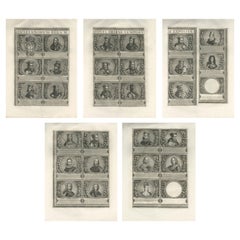
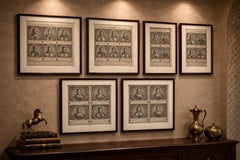
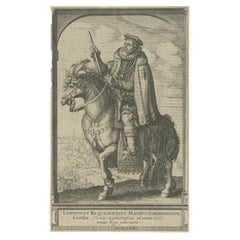
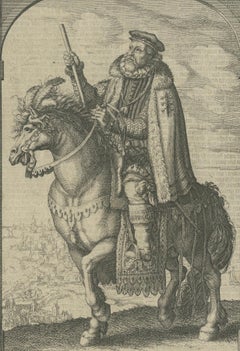
This complete multi-sheet engraved series titled “Lusitanorum Regum Icones, Ordine Temporum Expositae” presents a learned dynastic overview of the Kings of Portugal, conceived as a single monumental historical table rather than as individual portrait prints. Engraved in Rome around 1700, the sheets were designed to be assembled into a large rectangular composition, following a consistent architectural framework of laurel-wreathed medallions, crowned rulers, and extensive Latin historical texts.
The series traces the Portuguese monarchy from its early medieval origins through successive dynasties to the reigning rulers of the late seventeenth and early eighteenth centuries. Each portrait is accompanied by a concise Latin account of the ruler’s reign, situating the individual within a continuous historical narrative. As with other contemporary dynastic tables, several medallions are intentionally left blank, an original feature indicating that the work was conceived as an open-ended genealogy, allowing space for future sovereigns to be added. These blank medallions are integral to the original design and confirm the set’s completeness as issued.
The engravings are executed in refined Roman burin technique, with dense concentric background lines, carefully modeled facial features, and rich ornamental foliage framing each portrait. The overall composition belongs to the European scholarly tradition of comparative royal genealogies, produced for an educated international audience interested in history, legitimacy, and the continuity of royal power. Closely related in conception and execution to contemporary tables of emperors and foreign dynasties, this Portuguese series reflects the same intellectual ambition and visual authority.
When assembled as intended, the sheets form a visually commanding rectangular wall table, particularly suited to a library, study, or institutional interior. Complete surviving sets are uncommon; most examples encountered today are fragmentary or dispersed. Offered here is a full, intact set as issued, making it an important and decorative historical object for collectors of Iberian history, early modern genealogy, or large-scale engraved wall works.
Condition report:
Complete multi-sheet set. Overall good condition with light age toning and occasional staining, primarily in the margins. Plates well printed with clear impressions. No losses to engraved image areas. Blank medallions original to the design.
Framing tips:
Can be framed as a single reconstructed rectangular composition for strong visual impact, or as aligned sheets in a grid. Particularly effective with wide light mounts and a dark or gilt wood frame in a classical library or study setting.
Technique: Copper engraving
Maker: Nicolas Dorigny, Rome, circa 1700–1705
Keywords:
Portugal history, Kings of Portugal, Lusitanian monarchy, Portuguese royalty, dynastic table, genealogical chart, royal portraits, early modern history, Roman engraving...
Category
Early 18th Century Italian Antique Engraved Furniture