Phoenix

to
21
983,871
751,637
554
292
163
121
72
65
52
49
40
39
37
34
33
23
18
16
9
4
2
1
1
1
1
1
1
1
1
67
32
7
6
6
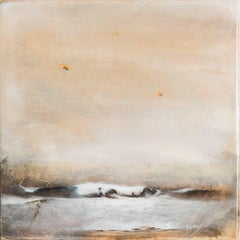
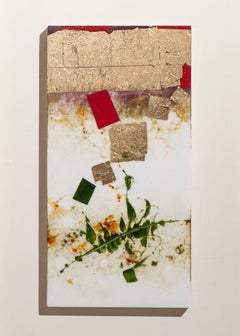
#5094

#5094

By Hiro Yokose

Located in Phoenix, AZ

oil and wax on layered canvas signature, date, title, on verso Hiro Yokose was born in Nagasaki, Japan in 1951 and moved to Manhattan as a young man, where he lived and worked for t...

Category

Early 2000s Minimalist Phoenix

Materials

Canvas, Wax, Oil, Wood Panel

Loretta Holtkamp Rookwood Floral Pattern Vase, 1946

Loretta Holtkamp Rookwood Floral Pattern Vase, 1946

By Rookwood Pottery Co.

Located in Phoenix, AZ

Beautiful flare top Rookwood Pottery vase, 1946. In excellent condition. Measures: 7 1/8" H x 7 1/4" W. Beautiful 1946 Rookwood pottery vase, signed and decorated by Loretta Hol...

Category

Mid-20th Century Phoenix

Materials

Clay

9.77
9.77

9.77

By Mala Breuer

Located in Phoenix, AZ

Mala Breuer grew up attending classes in painting and drawing from a young age at the California College of Arts and Crafts. After high school she attended the, now, San Francisco A...

Category

1970s Color-Field Phoenix

Materials

Canvas, Acrylic

Berber Wedding XXVI #B

Berber Wedding XXVI #B

By Robert Kelly

Located in Phoenix, AZ

oil and mixed media on canvas signature, title, year, medium, dimensions, and arrow on verso b. 1956, Santa Fe, NM Drawing on his extensive travels, Robert Kelly’s painted collages...

Category

Early 2000s Abstract Expressionist Phoenix

Materials

Canvas, Mixed Media, Oil

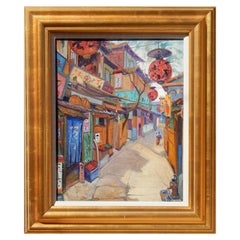
Carl Brandien New York National Academy Artist Painting, 1930, Old Kyoto

Carl Brandien New York National Academy Artist Painting, 1930, Old Kyoto

Located in Phoenix, AZ

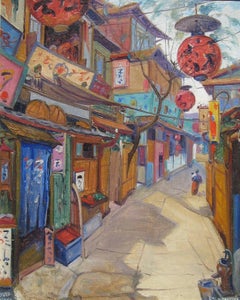
Oil on board by Carl Brandien (1886-1965) - Street in Kyoto with red lanterns. Titled on the verso: “Street in Old Kyoto, Japan” Signed lower right and titled lower left “Kyoto” Mea...

Category

Mid-20th Century Abstract Impressionist Phoenix

Materials

Paint

Stow Wengenroth Original Dry Brush Drawing, 1966, "The Little Owl"

Stow Wengenroth Original Dry Brush Drawing, 1966, "The Little Owl"

By Stow Wengenroth

Located in Phoenix, AZ

Stow Wengenroth (1906-1978) original dry brush drawing, 1966 This work is a preparatory drawing for his lithograph “The Little Owl” Signed lower right, “Stow Wengenroth” Image measur...

Category

Mid-20th Century Phoenix

Materials

Paper

Iron Slat Bench from France in Blue Suede, 1950's

Iron Slat Bench from France in Blue Suede, 1950's

Located in Phoenix, AZ

One iron and suede slat bench from France, circa mid-1950s. This example has a powder coated iron frame and has been newly upholstered in bright blue suede. Price listed is per bench. We have one single bench...

Category

1950s French Mid-Century Modern Vintage Phoenix

Materials

Iron

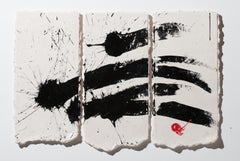
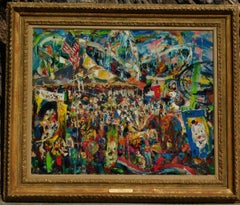
7.10.83 (Olympics)
7.10.83 (Olympics)

7.10.83 (Olympics)

By Mala Breuer

Located in Phoenix, AZ

oil and wax on canvas Mala Breuer grew up attending classes in painting and drawing from a young age at the California College of Arts and Crafts. After high school she attended ...

Category

1980s Abstract Phoenix

Materials

Canvas, Wax, Oil

Original Pencil Signed Stencil Print, 1974 - Noah's Ark

Original Pencil Signed Stencil Print, 1974 - Noah's Ark

By Sadao Watanabe

Located in Phoenix, AZ

Original Stencil Print by Sadao Watanabe (1913-1996) on hand-made washi paper. The image is from the Old Testament - Noah’s Ark. Artist’s chop mark and pencil signature are seen lowe...

Category

Mid-20th Century Phoenix

Materials

Paper, Ink

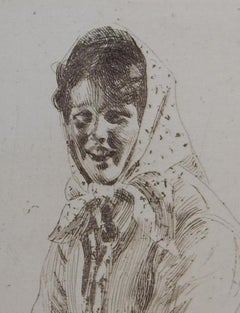
Hyman Katz Original Etching “The Seamstress”

Hyman Katz Original Etching “The Seamstress”

Located in Phoenix, AZ

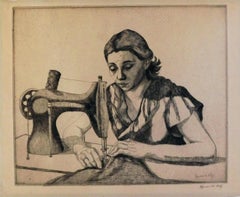
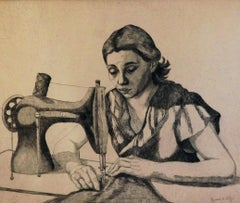
Beautiful contemplative image by Polish New York artist Hyman Katz (1899-1970). The etching measures 9 5/8 x 11 3/4. It rests in a 16 x 20 inch museum mat and is unframed. The work i...

Category

Mid-20th Century Phoenix

Materials

Etching

Karpen of California Striped Wool Lounge Chairs

Karpen of California Striped Wool Lounge Chairs

By Karpen of California

Located in Phoenix, AZ

These sculptural, space-age 1960's lounge chairs by Karpen of California have been newly reupholstered in an elegant gray striped wool and the solid walnut legs have been expertly re...

Category

1960s American Mid-Century Modern Vintage Phoenix

Materials

Wool, Walnut

#5063
#5063

#5063

By Hiro Yokose

Located in Phoenix, AZ

encaustic on canvas Neoromantic painter Hiro Yokose fuses multiple layers of wax and oil paint to create mysterious, veiled landscapes illuminated with flashes of light in the sky a...

Category

Early 2000s Minimalist Phoenix

Materials

Canvas, Encaustic

Brushstroke on Celadon

Brushstroke on Celadon

Located in Phoenix, AZ

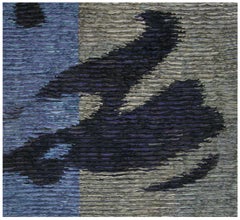
Cut and Dyed Silk After working in painting and photography, Tim Harding became intrigued with the intimacy of fiber and textiles: their textural, tactile richness, the inherent gri...

Category

Early 2000s Abstract Phoenix

Materials

Silk, Dye

Salvatore Pinto Original Aquatint and Etching “Beach Houses”

Salvatore Pinto Original Aquatint and Etching “Beach Houses”

Located in Phoenix, AZ

Charming etching by Italian/Pennsylvania artist Salvatore Pinto (1905-1966). The work is titled in pencil lower left “Beach Houses.” Created 1935. Signed in pencil lower right “Salv...

Category

Mid-20th Century Phoenix

Materials

Etching, Aquatint

#5061
#5061

#5061

By Hiro Yokose

Located in Phoenix, AZ

encaustic on canvas Neoromantic painter Hiro Yokose fuses multiple layers of wax and oil paint to create mysterious, veiled landscapes illuminated with flashes of light in the sky a...

Category

Early 2000s Minimalist Phoenix

Materials

Canvas, Encaustic

1980s-1990s post modern swivel side table or display stand

1980s-1990s post modern swivel side table or display stand

Located in Phoenix, AZ

1980s-1990s post modern swivel side table or display stand. Wood with chrome, black, purple and turquoise laminate. The laminate tops swivel 360 degr...

Category

1980s Unknown Post-Modern Vintage Phoenix

Materials

Chrome

4.84
4.84

4.84

By Mala Breuer

Located in Phoenix, AZ

oil and wax on canvas 1927 - 2017 Mala Breuer grew up attending classes in painting and drawing from a young age at the California College of Arts and Crafts. After high school sh...

Category

1980s Abstract Phoenix

Materials

Canvas, Wax, Oil

#5295
#5295

#5295

By Hiro Yokose

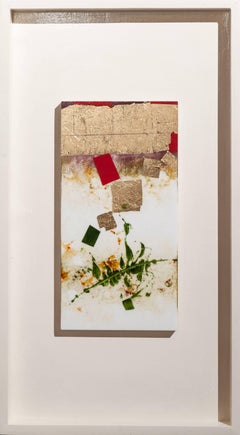
Located in Phoenix, AZ

oil and gold leaf on porcelain tile Neoromantic painter Hiro Yokose fuses multiple layers of wax and oil paint to create mysterious, veiled landscapes illuminated with flashes of li...

Category

2010s Abstract Phoenix

Materials

Gold, Gold Leaf

#5064
#5064

#5064

By Hiro Yokose

Located in Phoenix, AZ

encaustic on canvas Neo-romantic painter Hiro Yokose fuses multiple layers of wax and oil paint to create mysterious, veiled landscapes illuminated with flashes of light in the sky...

Category

Early 2000s Minimalist Phoenix

Materials

Canvas, Cotton Canvas, Encaustic

4.20.07
4.20.07

4.20.07

By Mala Breuer

Located in Phoenix, AZ

oil and wax on canvas Mala Breuer grew up attending classes in painting and drawing from a young age at the California College of Arts and Crafts. After high school she attended t...

Category

Early 2000s Abstract Phoenix

Materials

Canvas, Wax, Oil

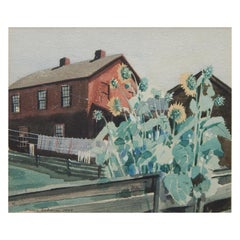
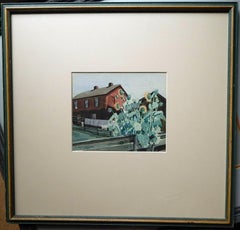
Stevan Dohanos Original Watercolor, 1934 - Farmhouse and Sunflowers

Stevan Dohanos Original Watercolor, 1934 - Farmhouse and Sunflowers

By Stevan Dohanos

Located in Phoenix, AZ

Bucolic watercolor by Saturday Evening Post illustrator, Stevan Dohanos, (1907-1994). The painting measures: 7" H x 8" W. Frame size is approximately 18" H x 18 3/4" W. It is in exce...

Category

Mid-20th Century Phoenix

Materials

Paper

Berber Wedding XXVI #A

Berber Wedding XXVI #A

By Robert Kelly

Located in Phoenix, AZ

oil and mixed media on canvas b. 1956, Santa Fe, NM Drawing on his extensive travels, Robert Kelly’s painted collages contain found print and material from around the world. Kelly...

Category

Early 2000s Abstract Expressionist Phoenix

Materials

Mixed Media, Oil

Peter Voulkos Studio Vase

Peter Voulkos Studio Vase

By Peter Voulkos

Located in Phoenix, AZ

Peter Voulkos (1924-2002) - Black Studio pot, circa 1953-1955. Signed “Voulkos” on the base. Voulkos, an American artist of Greek descent, was known for his Abstract Expressionist ceramic...

Category

1950s American Modern Vintage Phoenix

Materials

Clay

Dan Namingha Acrylic on Paper, 1991 - “Butterfly Maiden”

Dan Namingha Acrylic on Paper, 1991 - “Butterfly Maiden”

By Dan Namingha

Located in Phoenix, AZ

Acrylic on paper by well known Hopi-Tewa artist Dan Namingha (b. 1950). The work is a wonderful example of Namingha’s iconic style. It was created 1991 and is signed “Namingha” lowe...

Category

1990s Phoenix

Materials

Paint

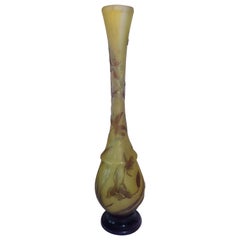
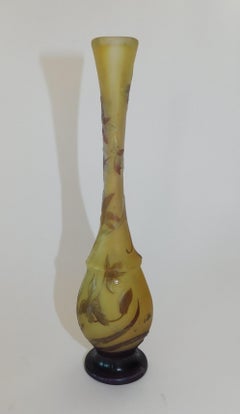
Gallé Art Nouveau French Cameo Glass Vase

Gallé Art Nouveau French Cameo Glass Vase

By Émile Gallé

Located in Phoenix, AZ

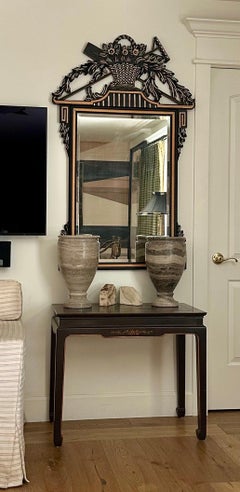
Beautiful Galle French cameo vase with trailing leaves and flowers. The vase features a mauve floral design on a golden umber background. Signed "...

Category

Early 20th Century French Phoenix

Materials

Glass

6.20.95
6.20.95

6.20.95

By Mala Breuer

Located in Phoenix, AZ

oil and wax on canvas Mala Breuer grew up attending classes in painting and drawing from a young age at the California College of Arts and Crafts. After high school she attended ...

Category

1990s Abstract Phoenix

Materials

Canvas, Wax, Oil

Georg Jensen Sterling Carving Set, Bernadotte Pattern

Georg Jensen Sterling Carving Set, Bernadotte Pattern

By Georg Jensen

Located in Phoenix, AZ

Georg Jensen sterling carving set, large, Bernadotte pattern. Designed by: Sigvard Bernadotte (1907-2002) in 1939. Sterling silver handles with ...

Category

Mid-20th Century Danish Phoenix

Materials

Silver

Robert Garret Thew American Sculptor Rare Art Deco Bronze Cigar Stand, Penguin

Robert Garret Thew American Sculptor Rare Art Deco Bronze Cigar Stand, Penguin

Located in Phoenix, AZ

Fabulous deco penguin design- bronze cigar stand by Connecticut sculptor Robert Garret Thew, (1892-1964). Signed on the base "G.Thew" and dated 1929. In excellent condition with a be...

Category

Early 20th Century Art Deco Phoenix

Materials

Bronze

Luzi Girl  Papago The North American Indian, Edward S. Curtis, Photogravure, 190

Luzi Girl Papago The North American Indian, Edward S. Curtis, Photogravure, 190

By Edward Curtis

Located in Phoenix, AZ

LUZI GIRL PAPAGO, 1907 Portfolio 2, Plate 53 THE NORTH AMERICAN INDIAN BY EDWARD S. CURTIS Image size 15.5 x 10 1/4 inches, Excellent condition. This is an original photogravur...

Category

Early 20th Century Academic Phoenix

Materials

Photogravure

Untitled 1 of 2
Untitled 1 of 2

Untitled 1 of 2

By Ricardo Mazal

Located in Phoenix, AZ

charcoal and graphite on paper and canvas

Category

1990s Minimalist Phoenix

Materials

Canvas, Paper, Charcoal, Graphite

Vintage Italian Glass Double Fish Sculpture with Gold Fleck

Vintage Italian Glass Double Fish Sculpture with Gold Fleck

By Alfredo Barbini

Located in Phoenix, AZ

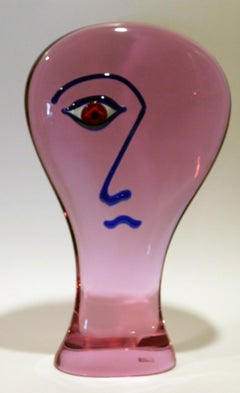
Large handblown double fish form on a single base with gold fleck throughout. Pink, purple, blue and grey tones are seen. Created in the manner of Barbini and Seguso. Measures: 11 ...

Category

Mid-20th Century Phoenix

Materials

Glass

Gary Erbe Trompe L'Oeil Bat Subject Oil on Canvas, "All Creatures"

Gary Erbe Trompe L'Oeil Bat Subject Oil on Canvas, "All Creatures"

By Gary Erbe

Located in Phoenix, AZ

Gary Erbe (b. 1944) New York/New Jersey painter - Oil on canvas titled "All Creatures." The painting is in excellent condition and presents in a great frame. Signed G. Erbe lower lef...

Category

Late 20th Century Phoenix

Materials

Paint

John Sloan Original Etching, 1917, "Sidewalk"

John Sloan Original Etching, 1917, "Sidewalk"

By John Sloan

Located in Phoenix, AZ

Original etching by John Sloan (1871-1951) In good condition, framed. Depicts a mother helping her child pee in the street, 1917. Image measures approx. 3 1/4" H x 6 1/2" W Frame si...

Category

Early 20th Century Phoenix

Materials

Paper

The Sheepherder by Lon Megargee

The Sheepherder by Lon Megargee

By Lon Megargee 1

Located in Phoenix, AZ

Lon Megargee 1883-1960 "The Sheepherder" Wood block print Signed in plate, lower right Image size: 10 x 10 inches Frame size 22 x 22 inches Creator of Stetson's hat logo "Last Drop from his Hat" Lon Megargee 1883 - 1960 At age 13, Lon Megargee came to Phoenix in 1896 following the death of his father in Philadelphia. For several years he resided with relatives while working at an uncle’s dairy farm and at odd jobs. He returned to Philadelphia in 1898 – 1899 in order to attend drawing classes at the Pennsylvania Academy of the Fine Arts. Back in Phoenix in 1899, he decided at the age of 16 to try to make his living as a cowboy. Lon moved to the cow country of Wickenburg, Arizona where he was hired by Tex Singleton’s Bull Ranch. He later joined the Three Bar R. . . and after a few years, was offered a job by Billy Cook of the T.T. Ranch near New River. By 1906, Megargee had learned his trade well enough to be made foreman of Cook’s outfit. Never shy about taking risks, Lon soon left Cook to try his own hand at ranching. He partnered with a cowpuncher buddy, Tom Cavness, to start the El Rancho Cinco Uno at New River. Unfortunately, the young partners could not foresee a three-year drought that would parch Arizona, costing them their stock and then their hard-earned ranch. Breaking with his romantic vision of cowboy life, Megargee finally turned to art full time. He again enrolled at the Pennsylvania Academy of Art and then the Los Angeles School of Art and Design during 1909 – 1910. The now well-trained student took his first trip to paint “en plein air” (outdoors) to the land of Hopi and Navajo peoples in northern Arizona. After entering paintings from this trip in the annual Territorial Fair at Phoenix, in 1911, he surprisingly sold his first oil painting to a major enterprise – the Santa Fe Railroad . . . Lon received $50 for “Navajos Watching the Santa Fe Train.” He soon sold the SFRR ten paintings over the next two years. For forty years the railroad was his most important client, purchasing its last painting from him in 1953. In a major stroke of good fortune during his early plein-air period, Megargee had the opportunity to paint with premier artist, William R. Leigh (1866 – 1955). Leigh furnished needed tutoring and counseling, and his bright, impressionistic palette served to enhance the junior artist’s sense of color and paint application. In a remarkable display of unabashed confidence and personable salesmanship, Lon Megargee, at age 30, forever linked his name with Arizona art history. Despite the possibility of competition from better known and more senior artists, he persuaded Governor George Hunt and the Legislature in 1913 to approve 15 large, historic and iconic murals for the State Capitol Building in Phoenix. After completing the murals in 1914, he was paid the then princely sum of roughly $4000. His Arizona statehood commission would launch Lon to considerable prominence at a very early point in his art career. Following a few years of art schooling in Los Angeles, and several stints as an art director with movie studios, including Paramount, Megargee turned in part to cover illustrations for popular Western story magazines in the 1920s. In the 1920s, as well, Lon began making black and white prints of Western types and of genre scenes from woodblocks. These prints he generally signed and sold singly. In 1933, he published a limited edition, signed and hard-cover book (about 250 copies and today rare)containing a group of 28 woodblock images. Titled “The Cowboy Builds a Loop,” the prints are noteworthy for strong design, excellent draftsmanship, humanistic and narrative content, and quality. Subjects include Southwest Indians and cowboys, Hispanic men and women, cattle, horses, burros, pioneers, trappers, sheepherders, horse traders, squaw men and ranch polo players. Megargee had a very advanced design sense for simplicity and boldness which he demonstrated in how he used line and form. His strengths included outstanding gestural (action) art and strong figurative work. He was superb in design, originality and drawing, as a study of his prints in the Hays collection reveals. In 1944, he published a second group of Western prints under the same title as the first. Reduced to 16 images from the original 28 subjects, and slightly smaller, Lon produced these prints in brown ink on a heavy, cream-colored stock. He designed a sturdy cardboard folio to hold each set. For the remainder of his life, Lon had success selling these portfolios to museum stores, art fairs and shows, and to the few galleries then selling Western art. Drawing on real working and life experiences, Lon Megargee had a comprehensive knowledge, understanding and sensitivity for Southwestern subject matter. Noted American modernist, Lew Davis...

Category

Early 20th Century American Impressionist Phoenix

Materials

Woodcut

Upsala Ekeby Porcelain Art Deco Vase by Mari Simmulson with Foil Label

Upsala Ekeby Porcelain Art Deco Vase by Mari Simmulson with Foil Label

By Mari Simmulson

Located in Phoenix, AZ

Mari Simmulson designed Swedish mid-century ceramic vase. Decorated in a geometric figural pattern. Maker: Upsala-Ekeby. Height:10 3/8 in., Diameter: 7 1/4 in. Very good vintage con...

Category

Mid-20th Century Phoenix

Materials

Ceramic

Gudrun Baudisch Ceramic, 1925 for Wiener Werkstatte, Man Lifting Bowl

Gudrun Baudisch Ceramic, 1925 for Wiener Werkstatte, Man Lifting Bowl

By Gudrun Baudisch

Located in Phoenix, AZ

Excellent ceramic designed by well known Wiener Werkstatte artist Gudrun Baudisch. Executed by the Wiener Werkstatte, 1925. Man holding a bowl. The ceramic work measures: 4" height...

Category

1920s Vintage Phoenix

Materials

Ceramic

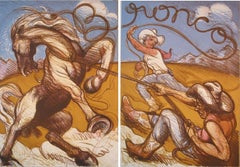
Bronco
Bronco

Bronco

By Luis Alfonso Jimenez

Located in Phoenix, AZ

SHIPPING FEES INCLUDE SHIPPING CHARGE, PACKAGING & **INSURANCE** Luis Alfonso Jimenez Born, 1940, El Paso, Texas, died 2006, Hondo, New Mexico. Statement: Luis Jimenez, in his work, celebrates the vitality of life. . . . Jimenez es un hijo de la frontera; he knows its people and the landscape. It is the transformation of these people into art that is his most important contribution to the art of this vast region which stretches between Mexico and the United States. His subject matter utilizes the popular images of the cultura del norte, and a large part of it is depicted and transformed in the rough and tumble world of la frontera. He is also a son of el norte, and so he uses its materials and explores its emerging, popular myths. The tension and attraction of Jimnez’s work is that he always creates within the space of his two worlds, the Mexicano and the Americano. He constantly shows us the irony of the two forces which repel, while showing us glimpses of the synthesis he seeks. What a gift it has been to us for this talented artist to reflect on the soul of our region. He gives meaning to our existence and history. Rudolfo Anaya (passage chosen by the artist), A View from La Frontera, Man on Fire: Luis Jimnez, pp. 1, 3, 6Biography: Luis Jimnez was born in Texas to parents who had emigrated from Mexico to the United States; he would later dedicate his 1989 sculpture Border Crossing to his father, who had entered the country illegally. The elder Jimnez was a neon sign designer in El Paso, and Luis worked with him as a youth. His experience working in the neon shop and his fascination with U.S. car culture would both become major influences on his art career. Jimenez studied architecture at the University of Texas, Austin (UTA), and also took art courses in which he first created sculptures with wood, steel, and fiberglass, choosing the latter because of its association with U.S. popular culture. He subsequently became one of the artists who made fiberglass an acceptable medium in the 1960s. In 1964 Jimenez received his B.S. in art from UTA, and he continued his studies at the Universidad Nacional Autnoma de Mexico in Mexico City. In 1966 he moved to New York City and worked as an assistant to sculptor Seymour Lipton. Jimnez began to exhibit his art while in New York and in 1972 moved to New Mexico to focus on creating public sculptures, even as he maintained his diverse output of drawings, prints, and lithographs. Drawing on his early experiences, Jimnez creates works that come from a border perspective, one that draws upon the hybridity bred by culture clashes. Often socially and politically informed, his works speak not only in regional terms, those germane to the southwestern United States, but to broader, more global issues as well. They exhibit a profoundly Chicano aesthetic and sensibility, one that is informed by Mexican and Mexican American traditions, North American popular culture, Chicano cultural icons, and images and themes unique to the Southwest. Death, sexuality, and the struggle of the common people are frequent themes. Inspired by authors who write in an autobiographical style, Jimnez creates works that function as personal narrative yet are also able to make statements about culture in more global terms. His use of bold colors and lines, a legacy from his fathers work as a neon sign maker, lends a dynamic sensuality to his work, one that is particularly evident in his monumental fiberglass and acrylic urethane sculptural works Many of Jimnezs works correspond to scholar Toms Ybarra-Fraustos definition of the Chicano aesthetic of rasquachismo, a lowbrow sensibility that appeals to the working class in that it applies to objects that subvert expressions of the mainstream or dominant culture. Creating art that speaks to the people, Jimnez is able to transform regional and culturally specific myths and symbols into globally recognized and relevant icons. Exhibitions: In addition to his personal work, Jimnez has been commissioned for numerous public art projects. In 1999 his sculpture Southwest Piet was designated a National Treasure by First Lady Hillary Clinton. The many exhibitions featuring his work have included Human Concern/Personal Torment (Whitney Museum of American Art, New York, 1969). The First International Motorcycle Art Show (Phoenix Art Museum, Phoenix, AZ, 1973). Three Texas Artists (Centre Cultural Americaine, USIS, Paris, 1977), Recent Trends in Collecting (Smithsonian Institution, Washington, DC, 1982). Committed to Print (Museum of Modern Art, New York, 1989) Printmaking in Texas: The 1980s (Modern Art Museum, Fort Worth, TX. Laguna Gloria Art Museum, Austin, 1990. The Whitney Biennial (Whitney Museum of American Art, New York, 1991) Man On Fire: Luis Jimnez (Albuquerque Museum of Art, NM, 1994-95). 47th Annual Purchase Exhibition (American Academy of Arts and Letters, New York, 1995). Traveling solo exhibition, Working Class Heroes: Images from the Popular Culture (1997-2000). Jiménez Collier Gallery has been in continuous operation for over 40 years. Originally located just off Main Street in downtown Scottsdale, Arizona, we have moved to Phoenix to accommodate and showcase our large inventory including: • Original works by Maynard Dixon, Lon Megargee, Ed Mell, Fritz Scholder, Bill Schenck, Bill Lesch, Luis Jimenez, Greg Singley, Dan Budnik, and other 20th century Western, WPA and Contemporary Southwestern artists. • The Fine Art Estate of Lon Megargee • Vintage rodeo...

Category

1970s Contemporary Phoenix
Materials

Lithograph

Sand & Sea
Sand & Sea

Sand & Sea

By Michael David

Located in Phoenix, AZ

encaustic on panel b. 1954, Reno Nevada Michael David is best known for his use of encaustic on large abstract paintings. A practitioner of Abstract Expressionism, David layers bees...

Category

2010s Color-Field Phoenix

Materials

Wood, Wax, Encaustic, Oil

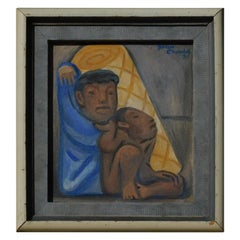
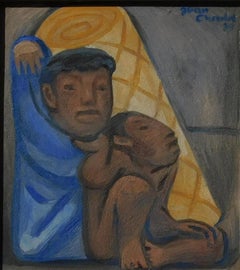
Emilio Amero Original Lithograph, 1950, Harmonica Blues

Emilio Amero Original Lithograph, 1950, Harmonica Blues

By Emilio Amero

Located in Phoenix, AZ

Original lithograph by Mexican artist Emilio Amero (1901 -1976) created 1950. Titled: “Harmonica Blues.” Edition size is 3 of 25. Signed in pencil lower right. In excellent condition. Presents in a 4-ply museum mat. Image size: 9 5/8"h x 12 1/4"w. Born in the village of Ixtlahuaca, in the state of Mexico, Emilio Amero counts Spaniards and Otomi Indians among his ancestors. Shortly after his birth, the family moved to Mexico City. In 1911 he began his studies in art at the Academy of San Carlos. He also studied drawing privately with Antonio Gomez, a family friend and well-known newspaper artist. At the academy in 1917, he became acquainted with Diaz de Leon, Rufino Tamayo, Ramon Alva de la Canal, Enrique Ugarte, and Leopoldo Mendez-all students there at the time. Later he joined the open air school in Coyoacan, founded and directed by Alfredo Ramos Martinez...

Category

Mid-20th Century Phoenix

Materials

Paper

9.22.98
9.22.98

9.22.98

By Mala Breuer

Located in Phoenix, AZ

oil and wax on canvas Mala Breuer grew up attending classes in painting and drawing from a young age at the California College of Arts and Crafts. After high school she attended ...

Category

1990s Abstract Phoenix

Materials

Canvas, Wax, Oil

WOP 2 - 00666
WOP 2 - 00666

WOP 2 - 00666

By Hiro Yokose

Located in Phoenix, AZ

mixed media on paper; unframed signed lower right Neoromantic painter Hiro Yokose fuses multiple layers of wax and oil paint to create mysterious, veiled landscapes illuminated wi...

Category

2010s Minimalist Phoenix

Materials

Paint, Paper, Mixed Media, Archival Paper

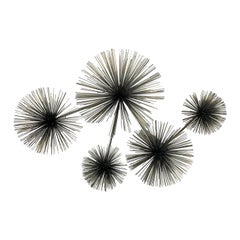
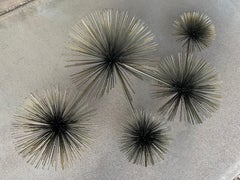
C. Jeré brass and chrome kinetic sculpture wall art

C. Jeré brass and chrome kinetic sculpture wall art

By Artisan House, Curtis Jeré, C. Jeré Artisan House

Located in Phoenix, AZ

C. Jeré uncommon kinetic brass and chrome wall sculpture. It’s made of a brass frame with two separate parts that connect or can be displayed separately. It can also be positioned offset (not pictured). Polished brass and chrome bent diamonds hang on hooks. These can slightly move under a fan or if touched, providing movement and an op art sparkling...

Category

1980s American Post-Modern Vintage Phoenix

Materials

Brass, Chrome

Hopi by Lon Megargee, Original Signed Block Print ca. 1920s

Hopi by Lon Megargee, Original Signed Block Print ca. 1920s

By Lon Megargee 1

Located in Phoenix, AZ

Title: Hopi ca. 1920s Artist: Lon Megargee Medium: Block Print Size: 11 x 11 inches (Sight Measurement) SHIPPING CHARGES INCLUDE SHIPPING, PACKAGING & INSURANCE Creator of Stetson's hat logo "Last Drop from his Hat" Image of Lon Megargee not included in purchase. Lon Megargee 1883 - 1960 At age 13, Lon Megargee came to Phoenix in 1896 following the death of his father in Philadelphia. For several years he resided with relatives while working at an uncle’s dairy farm and at odd jobs. He returned to Philadelphia in 1898 – 1899 in order to attend drawing classes at the Pennsylvania Academy of the Fine Arts. Back in Phoenix in 1899, he decided at the age of 16 to try to make his living as a cowboy. Lon moved to the cow country of Wickenburg, Arizona where he was hired by Tex Singleton’s Bull Ranch. He later joined the Three Bar R. . . and after a few years, was offered a job by Billy Cook of the T.T. Ranch near New River. By 1906, Megargee had learned his trade well enough to be made foreman of Cook’s outfit. Never shy about taking risks, Lon soon left Cook to try his own hand at ranching. He partnered with a cowpuncher buddy, Tom Cavness, to start the El Rancho Cinco Uno at New River. Unfortunately, the young partners could not foresee a three-year drought that would parch Arizona, costing them their stock and then their hard-earned ranch. Breaking with his romantic vision of cowboy life, Megargee finally turned to art full time. He again enrolled at the Pennsylvania Academy of Art and then the Los Angeles School of Art and Design during 1909 – 1910. The now well-trained student took his first trip to paint “en plein air” (outdoors) to the land of Hopi and Navajo peoples in northern Arizona. After entering paintings from this trip in the annual Territorial Fair at Phoenix, in 1911, he surprisingly sold his first oil painting to a major enterprise – the Santa Fe Railroad . . . Lon received $50 for “Navajos Watching the Santa Fe Train.” He soon sold the SFRR ten paintings over the next two years. For forty years the railroad was his most important client, purchasing its last painting from him in 1953. In a major stroke of good fortune during his early plein-air period, Megargee had the opportunity to paint with premier artist, William R. Leigh (1866 – 1955). Leigh furnished needed tutoring and counseling, and his bright, impressionistic palette served to enhance the junior artist’s sense of color and paint application. In a remarkable display of unabashed confidence and personable salesmanship, Lon Megargee, at age 30, forever linked his name with Arizona art history. Despite the possibility of competition from better known and more senior artists, he persuaded Governor George Hunt and the Legislature in 1913 to approve 15 large, historic and iconic murals for the State Capitol Building in Phoenix. After completing the murals in 1914, he was paid the then princely sum of roughly $4000. His Arizona statehood commission would launch Lon to considerable prominence at a very early point in his art career. Following a few years of art schooling in Los Angeles, and several stints as an art director with movie studios, including Paramount, Megargee turned in part to cover illustrations for popular Western story magazines in the 1920s. In the 1920s, as well, Lon began making black and white prints of Western types and of genre scenes from woodblocks. These prints he generally signed and sold singly. In 1933, he published a limited edition, signed and hard-cover book (about 250 copies and today rare)containing a group of 28 woodblock images. Titled “The Cowboy Builds a Loop,” the prints are noteworthy for strong design, excellent draftsmanship, humanistic and narrative content, and quality. Subjects include Southwest Indians and cowboys, Hispanic men and women, cattle, horses, burros, pioneers, trappers, sheepherders, horse traders, squaw men and ranch polo players. Megargee had a very advanced design sense for simplicity and boldness which he demonstrated in how he used line and form. His strengths included outstanding gestural (action) art and strong figurative work. He was superb in design, originality and drawing, as a study of his prints in the Hays collection reveals. In 1944, he published a second group of Western prints under the same title as the first. Reduced to 16 images from the original 28 subjects, and slightly smaller, Lon produced these prints in brown ink on a heavy, cream-colored stock. He designed a sturdy cardboard folio to hold each set. For the remainder of his life, Lon had success selling these portfolios to museum stores, art fairs and shows, and to the few galleries then selling Western art. Drawing on real working and life experiences, Lon Megargee had a comprehensive knowledge, understanding and sensitivity for Southwestern subject matter. Noted American modernist, Lew Davis...

Category

1920s American Impressionist Phoenix

Materials

Woodcut

Water Street (7.79)
Water Street (7.79)

Water Street (7.79)

By Mala Breuer

Located in Phoenix, AZ

oil and wax on canvas 1927 - 2017 Mala Breuer grew up attending classes in painting and drawing from a young age at the California College of Arts and Crafts. After high school she...

Category

1970s Color-Field Phoenix

Materials

Canvas, Wax, Oil

Vintage Porcelain Figurines in Rococo Style - Set of (2)

Vintage Porcelain Figurines in Rococo Style - Set of (2)

Located in Phoenix, AZ

Rococo style porcelain figurines. Made in Japan between 1940-1950. Hand-painted. Each figurine is 10.5" tall and and about 6" in diameter, has no cracks, chips or any other damages.

Category

Mid-20th Century Rococo Phoenix

Materials

Porcelain

R. Lalique "Raisins" or Grapes with Vines Glass Vase, 1928

R. Lalique "Raisins" or Grapes with Vines Glass Vase, 1928

By René Lalique

Located in Phoenix, AZ

This beautiful heavy molded R. Lalique vase is in mint condition. Created 1928. Model no. 1032. Etched signature: "R. Lalique, France" Features overall design of grapes and vines. ...

Category

Early 20th Century French Modern Phoenix

Materials

Glass

20th Century (Early) Pair English Royal Crown Derby Covered Urns Tiffany & CO.

20th Century (Early) Pair English Royal Crown Derby Covered Urns Tiffany & CO.

Located in Scottsdale, AZ

20th Century (Early) Pair English Royal Crown Derby Covered Urns Tiffany & CO. Beautiful pair purchased in France. Age appropriate wear, see detailed photos or message us with questi...

Category

20th Century French Georgian Phoenix

Materials

Porcelain

Down to the Valley by Bill Schenck

Down to the Valley by Bill Schenck

By Bill Schenck

Located in Phoenix, AZ

Down in the Valley 1992 Bill Schenck Serigraph 46/50 Edition of 50 Image size: 25 x 29 inches Paper size: 31 x 35 inches SHIPPING CHARGES INCLUDE SHIPPING, PACKAGING & INSURANC...

Category

1990s Contemporary Phoenix
Materials

Screen

Silla con un Brazo de Mas

Silla con un Brazo de Mas

By Alonso Mateo

Located in Phoenix, AZ

gilded wood with gold leaf and fabric For over a decade Mateo has focused his work on the analysis of the rites and symbols of power, the high classes, aristocracy, and royalty. H...

Category

21st Century and Contemporary Phoenix
Materials

Gold Leaf

Frederick Becker Soft Ground Etching, 1951, “Jam Session ll”

Frederick Becker Soft Ground Etching, 1951, “Jam Session ll”

By Frederick W. Becker

Located in Phoenix, AZ

Wonderful abstract original etching in sepia ink by Frederick Becker (1913-2004). The image measures 19 3/4" H x 23 ½” W and was created in 1951. The print is in excellent condition...

Category

Mid-20th Century Phoenix
Materials

Paper

#5300
#5300

#5300

By Hiro Yokose

Located in Phoenix, AZ

oil and gold leaf on porcelain tile Neoromantic painter Hiro Yokose fuses multiple layers of wax and oil paint to create mysterious, veiled landscapes illuminated with flashes of li...

Category

2010s Abstract Phoenix
Materials

Gold, Gold Leaf

Mid-Century Modern Boomerang or Kidney Shaped Wood Coffee or Cocktail Table

Mid-Century Modern Boomerang or Kidney Shaped Wood Coffee or Cocktail Table

By Paul Frankl

Located in Phoenix, AZ

Mid-Century Modern boomerang or kidney-shaped coffee table with sculptural wood legs, 1950s-1960s, unsure of maker, but this table is one that is truly rare. This table was completel...

Category

1950s Unknown Mid-Century Modern Vintage Phoenix
Materials

Mahogany, Oak, Walnut