Recognized Dealers Portrait Paintings

to
20
127
114
92
56
111
Overall Width
to
Overall Height
to
11
31
201
258
4
12
16
15
10
11
16
12
4
2
7
165
64
25
22
17
14
11
10
3
2
2
1
345
109
38
414
231
193
168
146
110
73
62
50
33
31
22
21
20
18
15
12
12
11
11
474
304
224
210
149
24
24
17
17
16
247
1
314
91
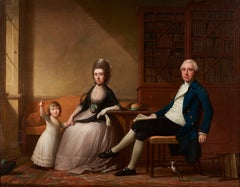
The Maitland Family Portrait

The Maitland Family Portrait

By Mason Chamberlin

Located in Stoke, Hampshire

Mason Chamberlin R.A. (London 1727-1787) Ebenezer Maitland Senior (1752–1834) and his wife Mary Winter (c. 1752–1835) with their son Ebenezer Fuller Maitland (1780–1858) in an interi...

Category

18th Century Old Masters Portrait Paintings

Materials

Oil

Celestine
Celestine

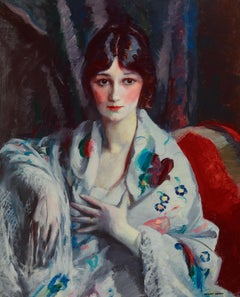
Celestine

By Robert Henri

Located in Bryn Mawr, PA

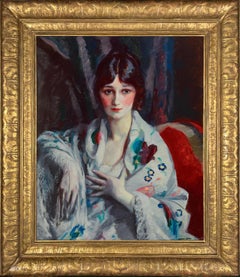
Celestine, 1920 Oil on canvas, 32 x 26 inches (81.3 x 66 cm) Framed dimensions: 41 x 35 inches Signed lower right: Robert Henri Inscribed on verso: 26 / L Robert Henri / Celestine P...

Category

1920s Ashcan School Portrait Paintings

Materials

Canvas, Oil

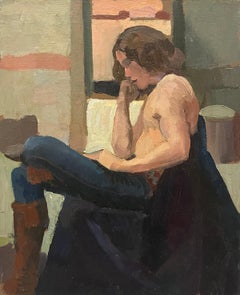
A Striking, Post-War Modern Studio Portrait of a Seated Young Male Model

A Striking, Post-War Modern Studio Portrait of a Seated Young Male Model

By Walter Burt Adams

Located in Chicago, IL

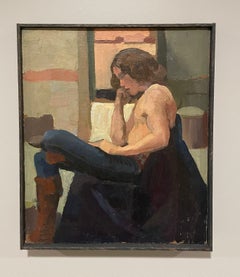
A Striking, Colorful Post-War Studio Portrait of a Seated Young Male Model by Notable Chicago Modern Artist, Walter Burt Adams (Am. 1903-1990). The painting a is well executed, inti...

Category

Mid-20th Century American Modern Figurative Paintings

Materials

Canvas, Oil

An equestrian portrait of Field Marshal Sir John Ligonier, 1st Earl of Ligonier

An equestrian portrait of Field Marshal Sir John Ligonier, 1st Earl of Ligonier

By David Morier

Located in Stoke, Hampshire

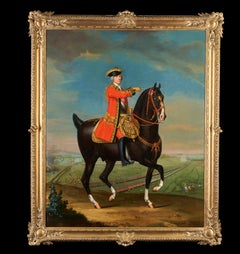
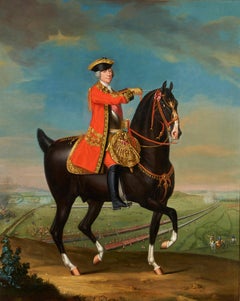
David Morier (c.1705–1770 London) An equestrian portrait of Field Marshal Sir John Ligonier, 1st Earl of Ligonier (1680–1770) Oil on canvas Canvas size - 40 x 50 in Framed size - 48 ...

Category

18th Century Old Masters Portrait Paintings

Materials

Oil

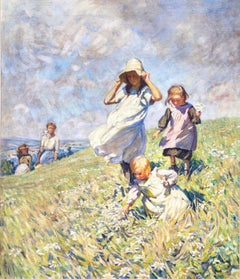
Breezy Day Above St Ives, Cornwall

Breezy Day Above St Ives, Cornwall

By Dorothea Sharp

Located in Belgravia, London, London

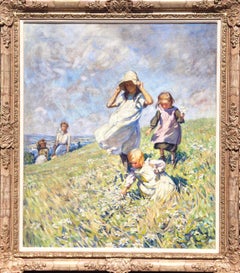
Oil on canvas Canvas size: 42 x 36 inches Framed size: 49.5 x 43.5 inches

Category

20th Century Impressionist Landscape Paintings

Materials

Canvas, Oil

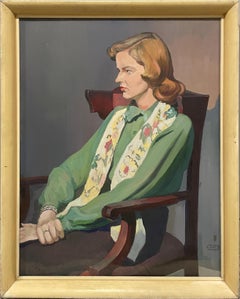
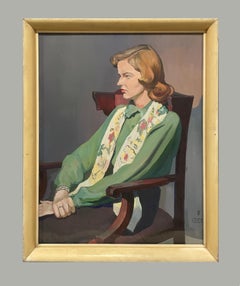
A Large, Striking 1940s Modern Portrait of a Seated Young Woman in Green Blouse

A Large, Striking 1940s Modern Portrait of a Seated Young Woman in Green Blouse

By Walter Burt Adams

Located in Chicago, IL

A Striking 1940s Modern Portrait of a Young Woman by Notable Chicago Artist, Walter Burt Adams (Am. 1903-1990). A large, well executed, figurative work by the artist, depicting a young woman fashionably dressed in a green blouse anddpatterned scarf seated in profile in a muted studio interior. Titled "Portrait of Ms. Anderson, Student at Northwestern U." the painting exemplifies the artist's adept and practiced skill at portraiture, and was completed at the painting class of the artist's friend and instructor, Arnold Turtle, in Evanston, Illinois Artwork size: 30 x 23 inches, oil on canvas, accompanied with the original Modernist frame (Framed size: 33 1/2 x 26 1/2 inches). Signed "Walter Burt Adams" and dated "46" lower right. Provenance: Estate of the artist. Walter Burt Adams was a dedicated painter of the American Scene and a singular personality among his peers in the Chicago Modern Art community. His no-nonsense manner, devotion to his craft and sardonic sense of humor characterize a man whose paintings capture life in and around Chicago between the early 1920s and the late 1970s. Born in Kenosha, Wisconsin just after the turn of the last century, Walter Burt Adams spent his childhood in Fargo, North Dakota and began his artistic education there through a correspondence cartooning class as a boy. After finishing high school in Fargo, Adams moved to Chicago in 1922 in order to enroll at the school of the Art Institute of Chicago. Adams’ instruction at the school with artists such as George Oberteuffer, Frederick V. Poole, Charles Wilimovsky...

Category

1940s American Modern Figurative Paintings

Materials

Canvas, Oil

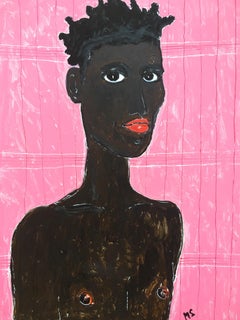
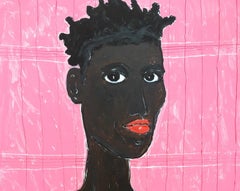
Pink Africa, Painting

Pink Africa, Painting

By Manuel Santelices

Located in Miami Beach, FL

Movies, TV and magazines are constant source of inspiration. Fame, as fleckring and shallow it can be sometimes, is very intriguing to him. The worlds of fashion, society and pop cu...

Category

21st Century and Contemporary Contemporary Portrait Paintings

Materials

Acrylic, Wood Panel

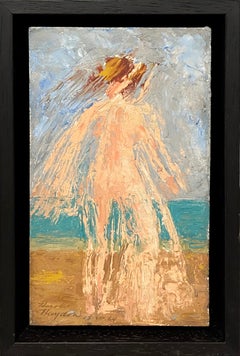
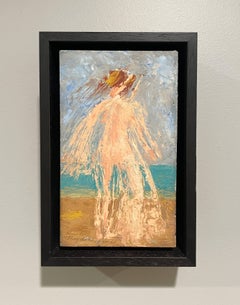
A Unique, Surrealist 1950s Mid-Century Modern Beach Scene Oil Painting- Bather

A Unique, Surrealist 1950s Mid-Century Modern Beach Scene Oil Painting- Bather

By Harold Haydon

Located in Chicago, IL

A Unique, Visually Striking, 1950s Surrealist Mid-Century Modern Abstract Beach Scene by Notable Chicago Artist, Harold Haydon (Am. 1909-1994). Depicting an abstracted female nude b...

Category

Mid-20th Century Surrealist Figurative Paintings

Materials

Masonite, Oil

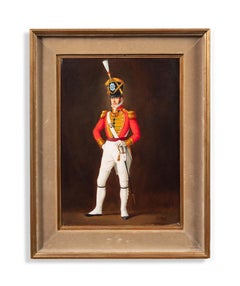
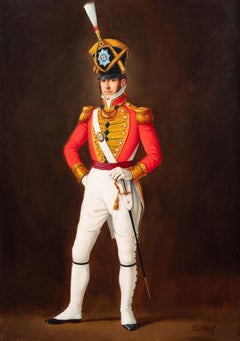
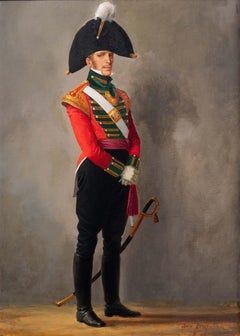
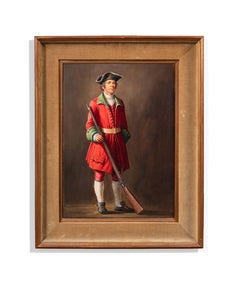
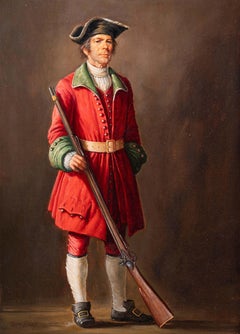
An Officer, Battalion Co., Cold Stream Guards, Circa 1821

An Officer, Battalion Co., Cold Stream Guards, Circa 1821

Located in Stoke, Hampshire

John Leslie Berry (1920–2009) An Officer, Battalion Co., Cold Stream Guards, Circa 1821 Oil on canvas Signed lower right Canvas size - 14 x 10 in Framed size - 18 1/2 x 14 1/2 in o...

Category

20th Century Modern Portrait Paintings

Materials

Oil

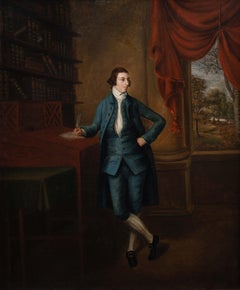
Portrait of a gentleman, standing full length, wearing a blue jacket, waistcoat

Portrait of a gentleman, standing full length, wearing a blue jacket, waistcoat

By Arthur Devis

Located in Stoke, Hampshire

Circle of Arthur Devis (1712-1787) Portrait of a gentleman, standing full length, wearing a blue jacket, waistcoat and breeches, at a desk in a library Oil on canvas Signed lower cen...

Category

18th Century Old Masters Portrait Paintings

Materials

Canvas, Oil

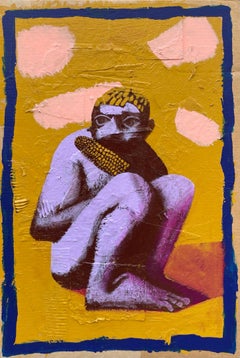
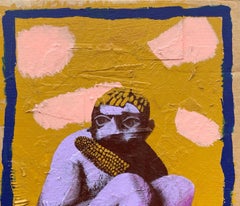
Summer Gold and Corn - Contemporary Art, Figurative, Yellow

Summer Gold and Corn - Contemporary Art, Figurative, Yellow

By Alexandru Rădvan

Located in Baden-Baden, DE

Summer Gold and Corn, 2021 acrylic on cardboard 119 H x 79 W cm 46 27/32 H x 31 7/64 W cm The series of painted cardboards by Alexandru Rădvan is about our moments of 'respiro' abo...

Category

2010s Contemporary Figurative Paintings

Materials

Acrylic, Cardboard

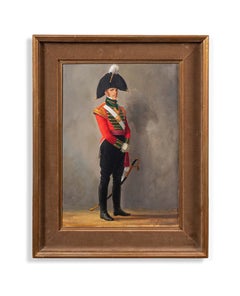
An Officer, Grenadier Co. 19th Foot, circa 1819

An Officer, Grenadier Co. 19th Foot, circa 1819

Located in Stoke, Hampshire

John Leslie Berry (1920–2009) An Officer, Grenadier Co. 19th Foot, circa 1819 Oil on canvas Signed lower right Canvas size - 14 x 10 in Framed size - 18 1/2 x 14 1/2 in ohn Leslie ...

Category

20th Century Modern Portrait Paintings

Materials

Oil

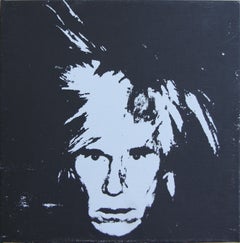
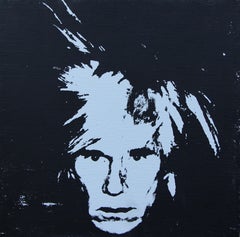
Denied Andy Warhol Fright Wig Self Portrait (Grey)  Painting / Charles Lutz

Denied Andy Warhol Fright Wig Self Portrait (Grey) Painting / Charles Lutz

By Charles Lutz

Located in Brooklyn, NY

Denied Warhol Grey Self Portrait Fright Wig Painting by Charles Lutz Silkscreen and acrylic on linen with Denied stamp of the Andy Warhol Art Authentication Board. 12 x 12" inches 20...

Category

Early 2000s Pop Art Portrait Paintings

Materials

Linen, Acrylic

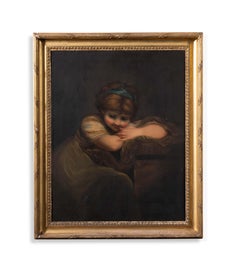
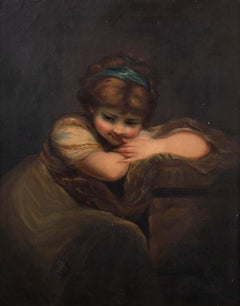
Girl leaning on a pedestal

Girl leaning on a pedestal

By Joshua Reynolds

Located in Stoke, Hampshire

After Joshua Reynolds Girl leaning on a pedestal Oil on canvas Canvas Size - 26 x 33 in Framed Size - 39 x 32 in Sir Joshua Reynolds was the leading portrait painter of 18th-century...

Category

19th Century Old Masters Figurative Paintings

Materials

Oil

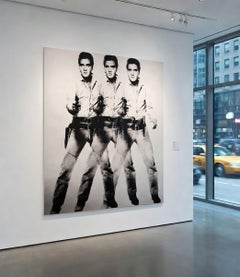
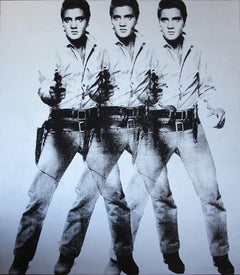
"Triple Elvis" Denied Andy Warhol Silver Black Pop Art Painting by Charles Lutz

"Triple Elvis" Denied Andy Warhol Silver Black Pop Art Painting by Charles Lutz

By Charles Lutz

Located in Brooklyn, NY

"Triple Elvis" (Denied) Silkscreen Painting by Charles Lutz Silkscreen and silver enamel paint on canvas with Artist's Denied stamp of the Andy Warhol Art Authentication Board. 82 x 72" inches 2010 This important example was shown alongside works by Warhol in a two-person show "Warhol Revisited (Charles Lutz / Andy Warhol)" at UAB Abroms-Engel Institute for the Visual Arts in 2024. Lutz's 2007 ''Warhol Denied'' series gained international attention by calling into question the importance of originality or lack thereof in the work of Andy Warhol. The authentication/denial process of the [[Andy Warhol Art Authentication Board]] was used to create value by submitting recreations of Warhol works for judgment with the full intention for the works to be formally marked "DENIED". The final product of the conceptual project being "officially denied" "Warhol" paintings authored by Lutz. Based on the full-length Elvis Presley paintings by Pop Artist Andy Warhol in 1964, this is likely one of his most iconic images, next to Campbell's Soup Cans and portraits of Jackie Kennedy, Marilyn Monroe, Liz Taylor, and Marlon Brando. This is the rarest of the Elvis works from the series, as Lutz sourced a vintage roll of 1960's primed artist linen which was used for this one Elvis. The silkscreen, like Warhol's embraced imperfections, like the slight double image printing of the Elvis image. Lutz received his BFA in Painting and Art History from Pratt Institute and studied Human Dissection and Anatomy at Columbia University, New York. Lutz's work deals with perceptions and value structures, specifically the idea of the transference of values. Lutz's most recently presented an installation of new sculptures dealing with consumerism at Frank Lloyd Wright's Fallingwater House in 2022. Lutz's 2007 Warhol Denied series received international attention calling into question the importance of originality in a work of art. The valuation process (authentication or denial) of the Andy Warhol Art Authentication Board was used by the artist to create value by submitting recreations of Warhol works for judgment, with the full intention for the works to be formally marked "DENIED" of their authenticity. The final product of this conceptual project is "Officially DENIED" "Warhol" paintings authored by Lutz. Later in 2013, Lutz went on to do one of his largest public installations to date. At the 100th Anniversary of Marcel Duchamp's groundbreaking and controversial Armory Show, Lutz was asked by the curator of Armory Focus: USA and former Director of The Andy Warhol Museum, Eric Shiner to create a site-specific installation representing the US. The installation "Babel" (based on Pieter Bruegel's famous painting) consisted of 1500 cardboard replicas of Warhol's Brillo Box (Stockholm Type) stacked 20 ft tall. All 1500 boxes were then given to the public freely, debasing the Brillo Box as an art commodity by removing its value, in addition to debasing its willing consumers. Elvis was "the greatest cultural force in the Twentieth Century. He introduced the beat to everything, and he changed everything - music, language, clothes, it's a whole new social revolution." Leonard Bernstein in: Exh. Cat., Boston, The Institute of Contemporary Art and traveling, Elvis + Marilyn 2 x Immortal, 1994-97, p. 9. Andy Warhol "quite simply changed how we all see the world around us." Kynaston McShine in: Exh. Cat., New York, Museum of Modern Art (and traveling), Andy Warhol: Retrospective, 1996, p. 13. In the summer of 1963 Elvis Presley was just twenty-eight years old but already a legend of his time. During the preceding seven years - since Heartbreak Hotel became the biggest-selling record of 1956 - he had recorded seventeen number-one singles and seven number-one albums; starred in eleven films, countless national TV appearances, tours, and live performances; earned tens of millions of dollars; and was instantly recognized across the globe. The undisputed King of Rock and Roll, Elvis was the biggest star alive: a cultural phenomenon of mythic proportions apparently no longer confined to the man alone. As the eminent composer Leonard Bernstein put it, Elvis was "the greatest cultural force in the Twentieth Century. He introduced the beat to everything, and he changed everything - music, language, clothes, it's a whole new social revolution." (Exh. Cat., Boston, The Institute of Contemporary Art (and traveling), Elvis + Marilyn 2 x Immortal, 1994, p. 9). In the summer of 1963 Andy Warhol was thirty-four years old and transforming the parameters of visual culture in America. The focus of his signature silkscreen was leveled at subjects he brilliantly perceived as the most important concerns of day to day contemporary life. By appropriating the visual vernacular of consumer culture and multiplying readymade images gleaned from newspapers, magazines and advertising, he turned a mirror onto the contradictions behind quotidian existence. Above all else he was obsessed with themes of celebrity and death, executing intensely multifaceted and complex works in series that continue to resound with universal relevance. His unprecedented practice re-presented how society viewed itself, simultaneously reinforcing and radically undermining the collective psychology of popular culture. He epitomized the tide of change that swept through the 1960s and, as Kynaston McShine has concisely stated, "He quite simply changed how we all see the world around us." (Exh. Cat., New York, Museum of Modern Art (and traveling), Andy Warhol: Retrospective, 1996, p. 13). Thus in the summer of 1963 there could not have been a more perfect alignment of artist and subject than Warhol and Elvis. Perhaps the most famous depiction of the biggest superstar by the original superstar artist, Double Elvis is a historic paradigm of Pop Art from a breath-taking moment in Art History. With devastating immediacy and efficiency, Warhol's canvas seduces our view with a stunning aesthetic and confronts our experience with a sophisticated array of thematic content. Not only is there all of Elvis, man and legend, but we are also presented with the specter of death, staring at us down the barrel of a gun; and the lone cowboy, confronting the great frontier and the American dream. The spray painted silver screen denotes the glamour and glory of cinema, the artificiality of fantasy, and the idea of a mirror that reveals our own reality back to us. At the same time, Warhol's replication of Elvis' image as a double stands as metaphor for the means and effects of mass-media and its inherent potential to manipulate and condition. These thematic strata function in simultaneous concert to deliver a work of phenomenal conceptual brilliance. The portrait of a man, the portrait of a country, and the portrait of a time, Double Elvis is an indisputable icon for our age. The source image was a publicity still for the movie Flaming Star, starring Presley as the character Pacer Burton and directed by Don Siegel in 1960. The film was originally intended as a vehicle for Marlon Brando and produced by David Weisbart, who had made James Dean's Rebel Without a Cause in 1955. It was the first of two Twentieth Century Fox productions Presley was contracted to by his manager Colonel Tom Parker, determined to make the singer a movie star. For the compulsive movie-fan Warhol, the sheer power of Elvis wielding a revolver as the reluctant gunslinger presented the zenith of subject matter: ultimate celebrity invested with the ultimate power to issue death. Warhol's Elvis is physically larger than life and wears the expression that catapulted him into a million hearts: inexplicably and all at once fearful and resolute; vulnerable and predatory; innocent and explicit. It is the look of David Halberstam's observation that "Elvis Presley was an American original, the rebel as mother's boy, alternately sweet and sullen, ready on demand to be either respectable or rebellious." (Exh. Cat., Boston, Op. Cit.). Indeed, amidst Warhol's art there is only one other subject whose character so ethereally defies categorization and who so acutely conflated total fame with the inevitability of mortality. In Warhol's work, only Elvis and Marilyn harness a pictorial magnetism of mythic proportions. With Marilyn Monroe, whom Warhol depicted immediately after her premature death in August 1962, he discovered a memento mori to unite the obsessions driving his career: glamour, beauty, fame, and death. As a star of the silver screen and the definitive international sex symbol, Marilyn epitomized the unattainable essence of superstardom that Warhol craved. Just as there was no question in 1963, there remains still none today that the male equivalent to Marilyn is Elvis. However, despite his famous 1968 adage, "If you want to know all about Andy Warhol, just look at the surface of my paintings" Warhol's fascination held purpose far beyond mere idolization. As Rainer Crone explained in 1970, Warhol was interested in movie stars above all else because they were "people who could justifiably be seen as the nearest thing to representatives of mass culture." (Rainer Crone, Andy Warhol, New York, 1970, p. 22). Warhol was singularly drawn to the idols of Elvis and Marilyn, as he was to Marlon Brando and Liz Taylor, because he implicitly understood the concurrence between the projection of their image and the projection of their brand. Some years after the present work he wrote, "In the early days of film, fans used to idolize a whole star - they would take one star and love everything about that star...So you should always have a product that's not just 'you.' An actress should count up her plays and movies and a model should count up her photographs and a writer should count up his words and an artist should count up his pictures so you always know exactly what you're worth, and you don't get stuck thinking your product is you and your fame, and your aura." (Andy Warhol, The Philosophy of Andy Warhol (From A to B and Back Again), San Diego, New York and London, 1977, p. 86). The film stars of the late 1950s and early 1960s that most obsessed Warhol embodied tectonic shifts in wider cultural and societal values. In 1971 John Coplans argued that Warhol was transfixed by the subject of Elvis, and to a lesser degree by Marlon Brando and James Dean, because they were "authentically creative, and not merely products of Hollywood's fantasy or commercialism. All three had originative lives, and therefore are strong personalities; all three raised - at one level or another - important questions as to the quality of life in America and the nature of its freedoms. Implicit in their attitude is a condemnation of society and its ways; they project an image of the necessity for the individual to search for his own future, not passively, but aggressively, with commitment and passion." (John Coplans, "Andy Warhol and Elvis Presley," Studio International, vol. 181, no. 930, February 1971, pp. 51-52). However, while Warhol unquestionably adored these idols as transformative heralds, the suggestion that his paintings of Elvis...

Category

21st Century and Contemporary Pop Art Figurative Paintings

Materials

Enamel

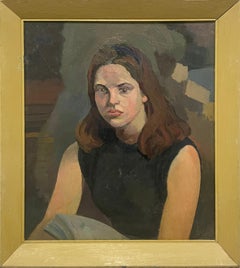
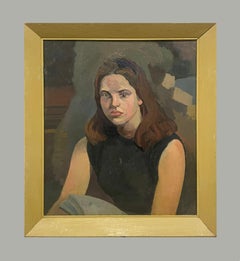
A Striking Mid-Century Modern Studio Portrait of a Seated Young Woman

A Striking Mid-Century Modern Studio Portrait of a Seated Young Woman

By Walter Burt Adams

Located in Chicago, IL

A Striking Mid-Century Modern Portrait of a Young Woman by Notable Chicago Artist, Walter Burt Adams (Am. 1903-1990). A well executed figurative work by the artist, depicting a young woman stylishly dressed in a black sleeveless top seated in a muted studio interior. The painting exemplifies the artist's adept and practiced skill at portraiture, and was likely completed at the artist's studio in Evanston, Illinois. Artwork size: 24 x 20 inches, oil on canvas, accompanied with the original painted Mid-Century frame (framed size: 27 3/4 x 23 3/4 inches). Provenance: Estate of the artist. Walter Burt Adams was a dedicated painter of the American Scene and a singular personality among his peers in the Chicago Modern Art community. His no-nonsense manner, devotion to his craft and sardonic sense of humor characterize a man whose paintings capture life in and around Chicago between the early 1920s and the late 1970s. Born in Kenosha, Wisconsin just after the turn of the last century, Walter Burt Adams spent his childhood in Fargo, North Dakota and began his artistic education there through a correspondence cartooning class as a boy. After finishing high school in Fargo, Adams moved to Chicago in 1922 in order to enroll at the school of the Art Institute of Chicago. Adams’ instruction at the school with artists such as George Oberteuffer, Frederick V. Poole, Charles Wilimovsky...

Category

1960s American Modern Figurative Paintings

Materials

Canvas, Oil

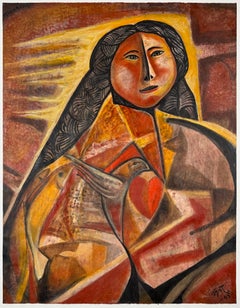
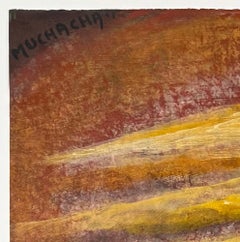
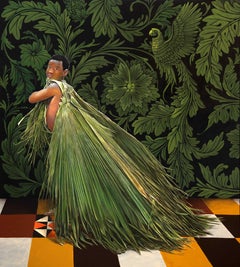
Muchacha
Muchacha

Muchacha

Located in Palm Springs, CA

Muchacha presents a stylized female figure rendered with earthy tones and a composition that interweaves natural motifs such as fish and a bird. The fish might suggest themes of fert...

Category

Early 2000s Contemporary Figurative Paintings

Materials

Oil

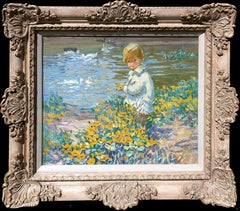
Gathering Flowers
Gathering Flowers

Gathering Flowers

By Dorothea Sharp

Located in Belgravia, London, London

Oil on Canvas Canvas size: 15 x 18 inches Framed size: 21 x 24 inches Signed lower left

Category

20th Century Impressionist Portrait Paintings

Materials

Canvas, Oil

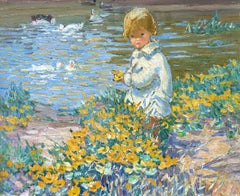
Summer Shade
Summer Shade

Summer Shade

Located in Belgravia, London, London

Oil on canvas Canvas size: 12 x 10 inches Framed size: 17 x 15 inches Signed lower left

Category

21st Century and Contemporary Impressionist Portrait Paintings

Materials

Canvas, Oil

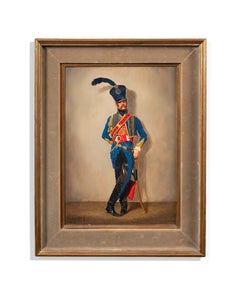
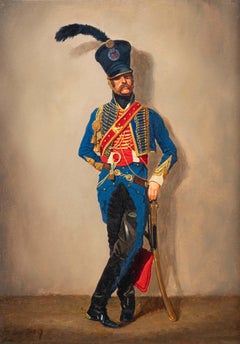
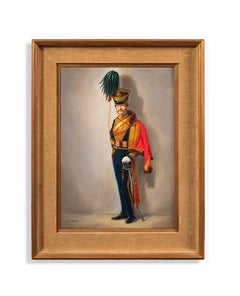
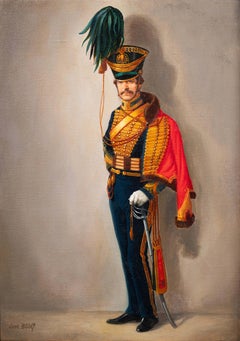
An Officer, Grande Armée, Hussars, Circa 1815

An Officer, Grande Armée, Hussars, Circa 1815

Located in Stoke, Hampshire

John Leslie Berry (1920–2009) An Officer, Grande Armée, Hussars, Circa 1815 Oil on canvas Signed lower left Canvas size - 14 x 10 in Framed size - 18 1/2 x 14 1/2 in ohn Leslie Ber...

Category

20th Century Modern Portrait Paintings

Materials

Oil

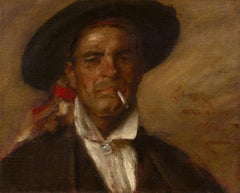
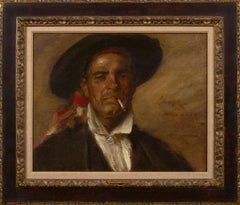
Head of a Spaniard
Head of a Spaniard

Head of a Spaniard

By William Merritt Chase

Located in New York, NY

William Merritt Chase is perhaps best known for his portraits, capturing the likenesses of individuals in a style imbued with impressionist tendencies and a dark, somber palette adop...

Category

19th Century Portrait Paintings

Materials

Oil

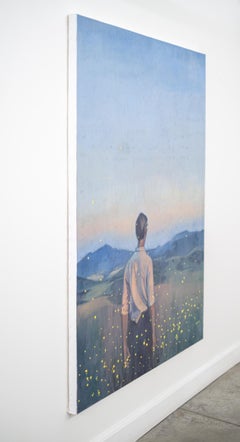
Fireflies II - contemporary, figurative, portrait, oil on canvas

Fireflies II - contemporary, figurative, portrait, oil on canvas

By Daniel Hughes

Located in Bloomfield, ON

This realistic oil portrait of a young man is by Daniel Hughes. In a field surrounded by the magical glow of dozens of fireflies, a young man stands alone, looking towards hills in ...

Category

2010s Realist Portrait Paintings

Materials

Canvas, Oil

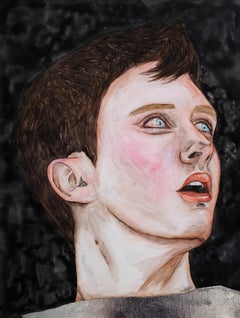
Jeremy Abbott, Portrait Painting

Jeremy Abbott, Portrait Painting

By Ramonn Vieitez de Lima

Located in Miami Beach, FL

Ramonn Vieitez is a self-taught Brazilian artist who primarily utilizes painting as a field of creative possibility exploring themes such as identity, memory, and nature, compulsivel...

Category

2010s Contemporary Figurative Paintings

Materials

Canvas, Watercolor, Gouache

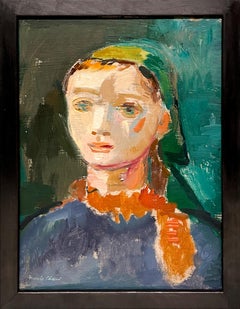
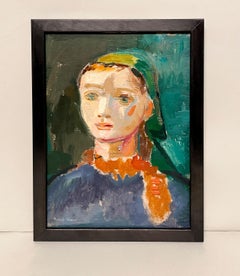
A Captivating 1930s Modern Portrait of a Young Woman by Francis Chapin

A Captivating 1930s Modern Portrait of a Young Woman by Francis Chapin

By Francis Chapin

Located in Chicago, IL

A captivating, 1930s portrait painting of a young woman by famed Chicago artist, Francis Chapin (Am. 1899-1965). A sensitive, skilled portrait of a young female model, most likely h...

Category

1930s American Modern Portrait Paintings

Materials

Masonite, Oil

La Guadalupe
La Guadalupe

La Guadalupe

By Jose Bedia

Located in Mexico City, CDMX

José Bedia (Havana, Cuba, 1959) Lives and works in Miami, FL José Bedia is the most solid representative of post-1959 revolution Cuban art. He was part of the now mythical group s...

Category

2010s Contemporary Figurative Paintings

Materials

Acrylic

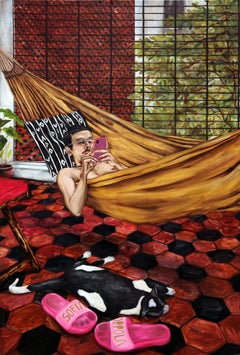
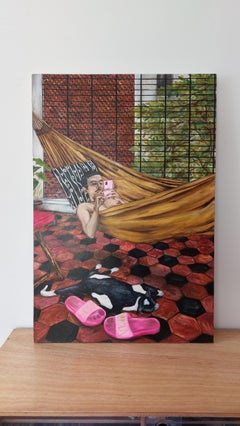
Sunday in Recife, Figurative Painting

Sunday in Recife, Figurative Painting

By Ramonn Vieitez de Lima

Located in Miami Beach, FL

Ramonn Vieitez is a self-taught Brazilian artist who primarily utilizes painting as a field of creative possibility exploring themes such as identity, memory, and nature, compulsivel...

Category

2010s Contemporary Figurative Paintings

Materials

Canvas, Oil, Acrylic

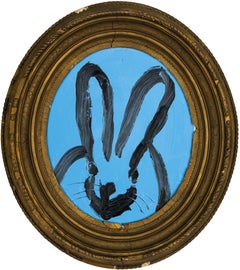
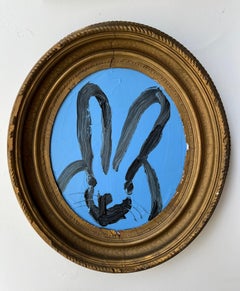
Hunt Slonem "Sky Light" Blue Oval Bunny

Hunt Slonem "Sky Light" Blue Oval Bunny

By Hunt Slonem

Located in Houston, TX

Hunt Slonem "Sky Light" Blue Oval Bunny A single rabbit gestured in black on a light blue background in a vintage frame Unframed: 12 x 10 inches Framed: 17.5 x 15.5 inches *Painting...

Category

21st Century and Contemporary Neo-Expressionist Animal Paintings

Materials

Oil, Panel

Grand Armee - Officer of Hussars

Grand Armee - Officer of Hussars

Located in Stoke, Hampshire

John Leslie Berry (1920–2009) Grand Armee - Officer of Hussars Oil on canvas Signed lower right Canvas size - 14 x 10 in Framed size - 18 1/2 x 14 1/2 in ohn Leslie Berry was a Bri...

Category

20th Century Modern Portrait Paintings

Materials

Oil

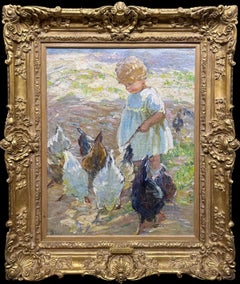
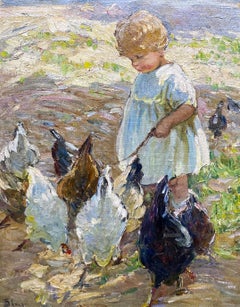
Feeding the Chickens

Feeding the Chickens

By Dorothea Sharp

Located in Belgravia, London, London

Oil on canvas Canvas size: 20.25 x 16 inches Framed size: 28 x 23.5 inches Signed lower left

Category

20th Century Impressionist Portrait Paintings

Materials

Canvas, Oil

An Officer, 8th Kings Royal Hussars, circa 1833

An Officer, 8th Kings Royal Hussars, circa 1833

Located in Stoke, Hampshire

John Leslie Berry (1920–2009) An Officer, 8th Kings Royal Hussars, circa 1833 Oil on canvas Signed lower left Canvas size - 14 x 10 in Framed size - 18 1/2 x 14 1/2 in ohn Leslie B...

Category

20th Century Modern Portrait Paintings

Materials

Oil

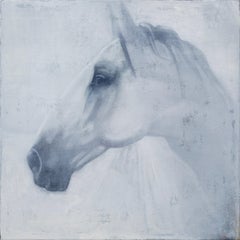
White Horse - contemporary, figurative, animal, portrait, oil on canvas

White Horse - contemporary, figurative, animal, portrait, oil on canvas

By Daniel Hughes

Located in Bloomfield, ON

This figurative oil painting of a white horse is by Daniel Hughes. The masterful work of Daniel Hughes is highly regarded internationally. Known for his exceptionally detailed, real...

Category

2010s Realist Portrait Paintings

Materials

Canvas, Oil

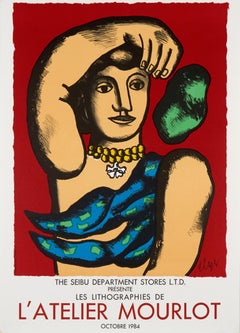
L'Atelier Mourlot by Fernand Leger

L'Atelier Mourlot by Fernand Leger

By (after) Fernand Léger

Located in New York, NY

This colorful lithographic poster was printed in 1982 at the Atelier Mourlot in Paris was printed for an exhibition of Atelier Mourlot prints in Tokyo at Seibu Department Stores, 198...

Category

1980s Modern Portrait Paintings

Materials

Lithograph

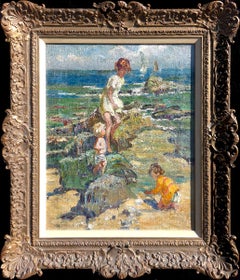
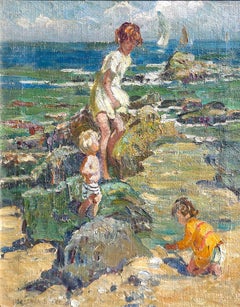
Playing Amongst the Rocks, St Ives

Playing Amongst the Rocks, St Ives

By Dorothea Sharp

Located in Belgravia, London, London

Oil on canvas Canvas size: 20.75 x 16 inches Framed size: 26 x 22.5 inches Signed lower left

Category

20th Century Impressionist Landscape Paintings

Materials

Canvas, Oil

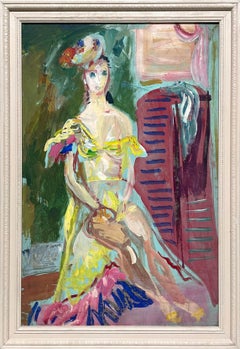
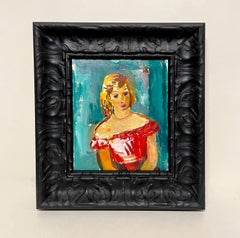
A Fabulous 1950s Mid-Century Modern Portrait of a Seated Woman, "Southern Belle"

A Fabulous 1950s Mid-Century Modern Portrait of a Seated Woman, "Southern Belle"

By Francis Chapin

Located in Chicago, IL

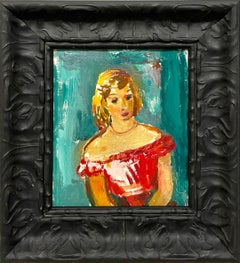
A Fabulous 1950s Mid-Century Modern Portrait of a Seated Woman, "Southern Belle" by Noted Chicago Artist, Francis Chapin (Am. 1899-1965). A colorful Southern painting depicting a ...

Category

Mid-20th Century American Modern Figurative Paintings

Materials

Masonite, Oil

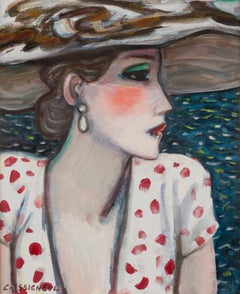
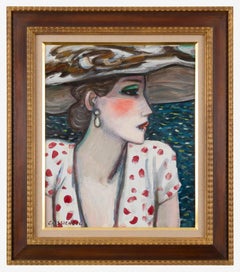
Profil à la Robe à Pois Rouge by Jean-Pierre Cassigneul - Portrait, oil painting

Profil à la Robe à Pois Rouge by Jean-Pierre Cassigneul - Portrait, oil painting

By Jean-Pierre Cassigneul

Located in London, GB

*PLEASE NOTE UK BUYERS WILL ONLY PAY 5% VAT ON THIS PURCHASE. Once an order is placed we will arrange the VAT of 20% to be reduced to 5% Profil à la Robe à Pois Rouge by Jean-Pierre...

Category

1990s Modern Portrait Paintings

Materials

Canvas, Oil

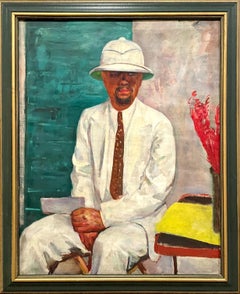
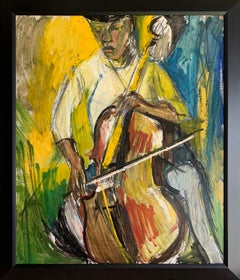
A Large, Captivating 1930s Modern Portrait of a Jamaican Man in a Linen Suit

A Large, Captivating 1930s Modern Portrait of a Jamaican Man in a Linen Suit

By Francis Chapin

Located in Chicago, IL

A Large, Captivating 1930s Modern Portrait of a Jamaican Man in a Linen Suit by famed Chicago artist, Francis Chapin (Am. 1899-1965). A skilled and colorful portrait of a black man seated in a white linen suit, most likely completed during Chapin's trip to Kingston, Jamaica in the 1930s. Chapin exhibited examples of his Jamaican paintings...

Category

1930s American Modern Portrait Paintings

Materials

Oil, Canvas

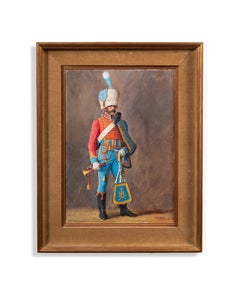
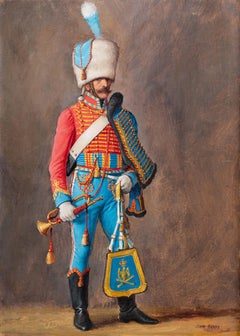
A Trumpeter, Horse Artillery, Imperial Guard France, Circa 1820

A Trumpeter, Horse Artillery, Imperial Guard France, Circa 1820

Located in Stoke, Hampshire

John Leslie Berry (1920–2009) A Trumpeter, Horse Artillery, Imperial Guard France, Circa 1820 Oil on canvas Signed lower right Canvas size - 14 x 10 in Framed size - 18 1/2 x 14 1/2 ...

Category

20th Century Modern Portrait Paintings

Materials

Oil

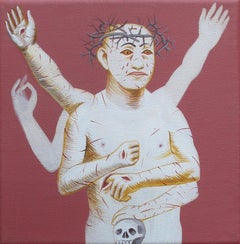
Small Christ 4 - 21st Century, Contemporary Art, Painting, Figurative, Skull

Small Christ 4 - 21st Century, Contemporary Art, Painting, Figurative, Skull

By Alexandru Rădvan

Located in Baden-Baden, DE

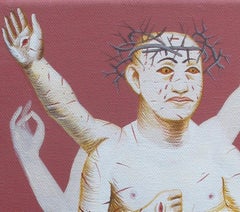
Small Christ 4, 2010 Acrylic on canvas (Signed on reverse) 7 9/10 H × 7 9/10 W in. 20 H × 20 W cm In the series of works "Small Christ", Alexandru Rădvan questions the human dimensi...

Category

2010s Contemporary Figurative Paintings

Materials

Canvas, Acrylic

The Petit Thinker
The Petit Thinker

The Petit Thinker

By Timoleon Marie Lobrichon

Located in New York, NY

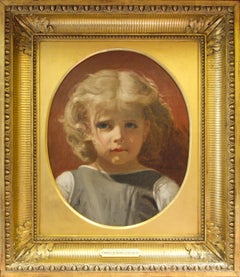
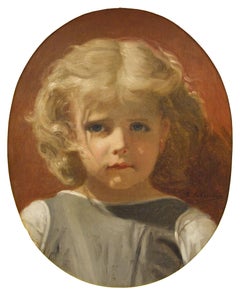
A student of the great French academic Bouguereau, Lobrichon has done a moving and entrancing depiction of a young girl mid-gaze. Beautifully painted and done in a circular format t...

Category

1860s Barbizon School Figurative Paintings

Materials

Canvas, Oil

An Elegant 1940s Modernist Portrait of a Young Woman in Red Dress

An Elegant 1940s Modernist Portrait of a Young Woman in Red Dress

By Francis Chapin

Located in Chicago, IL

An Elegant 1940s Modernist Portrait of a Young Woman a Red Dress by Noted Chicago Artist, Francis Chapin (Am. 1899-1965). A beautifully executed studio portrait, the painting is oil...

Category

Mid-20th Century American Modern Figurative Paintings

Materials

Masonite, Oil

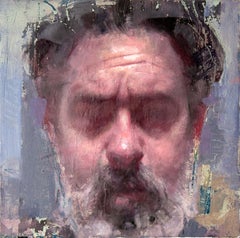
Self Portrait - cool, expressive, male, figurative, oil and collage on canvas

Self Portrait - cool, expressive, male, figurative, oil and collage on canvas

By Daniel Hughes

Located in Bloomfield, ON

In a closely cropped self-portrait, with snowy beard and hair awry, Dan Hughes explores the theme of observational realism. A moment of emotional tension is amplified by blurred feat...

Category

2010s Realist Portrait Paintings

Materials

Canvas, Oil

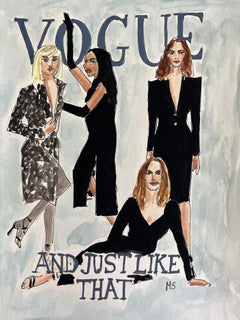
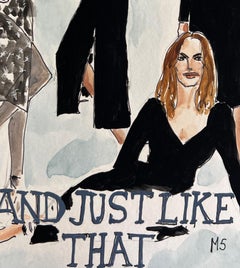
Supermodels in Vogue, Watercolor Fashion Painting

Supermodels in Vogue, Watercolor Fashion Painting

By Manuel Santelices

Located in Miami Beach, FL

The artist has covered New York collections for over 16 years and has interviewed, as a journalist, several fashion designers and personalities for different publications. He loves t...

Category

21st Century and Contemporary Contemporary Figurative Drawings and Water...

Materials

Paper, Ink, Watercolor, Gouache

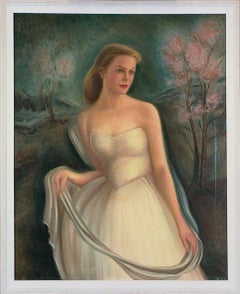
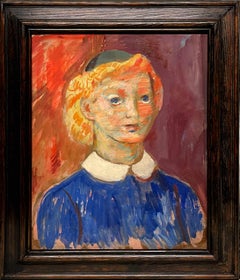
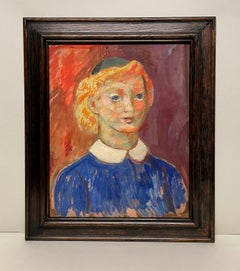
Portrait of Gretchen Grauer

Portrait of Gretchen Grauer

By Natalie Eynon Grauer

Located in Fairlawn, OH

Signed by the artist's daughter The painting hung in the home of the artist and her husband William Grauer over their fireplace. This has never previously been offered for sale...

Category

Early 20th Century Portrait Paintings

Materials

Oil

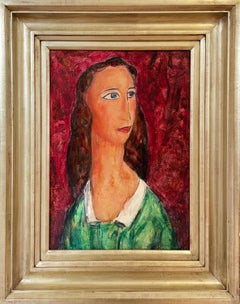
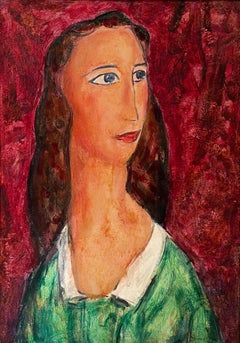
An Ideal Head of a Woman

An Ideal Head of a Woman

By Alfred Henry Maurer

Located in New York, NY

In the tradition of Modigliani, Maurer's depictions of women are expressive and lively. America had very few modernists who painted in this manner but Maurer is famous for exactly t...

Category

1920s American Modern Figurative Paintings

Materials

Gesso, Oil, Board

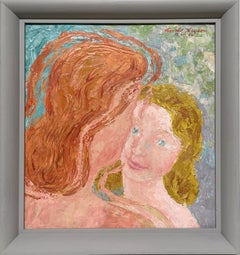
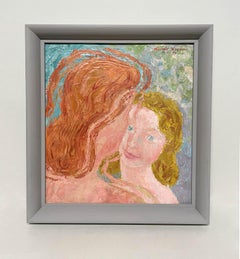
A Charming, Surrealist 1950s Mid-Century Modern Painting, Mother & Child

A Charming, Surrealist 1950s Mid-Century Modern Painting, Mother & Child

By Harold Haydon

Located in Chicago, IL

A Striking Surrealist Abstract 1950s Mid-Century Modern Painting "Mother & Child" by Notable Chicago Artist, Harold Haydon (Am. 1909-1994). Oil on Masonite, dating from 1952. E...

Category

Mid-20th Century Surrealist Figurative Paintings

Materials

Masonite, Oil

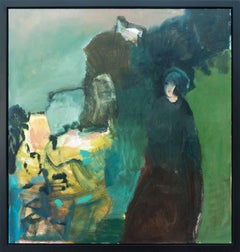
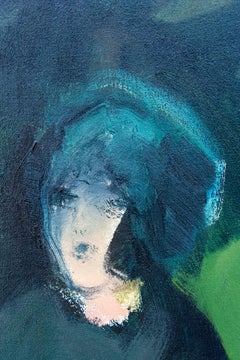
Green Dusks - large green, blue, yellow, woman figurative still life oil

Green Dusks - large green, blue, yellow, woman figurative still life oil

By Jennifer Hornyak

Located in Bloomfield, ON

A twilight figure is balanced with forms of yellow, green and prussian blue in this sophisticated composition by Jennifer Hornyak who titles the work in French 'Crepiscules verts', ...

Category

2010s Contemporary Figurative Paintings

Materials

Canvas, Oil

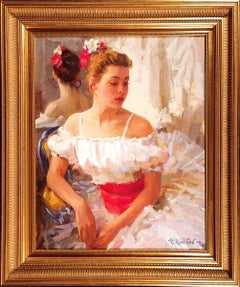
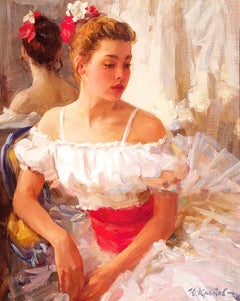
Prima Ballerina
Prima Ballerina

Prima Ballerina

By Yuri Krotov

Located in Belgravia, London, London

Oil on canvas Canvas size: 23 x 19.25 inches Framed size: 30 x 26 inches Signed lower right

Category

20th Century Impressionist Portrait Paintings

Materials

Canvas, Oil

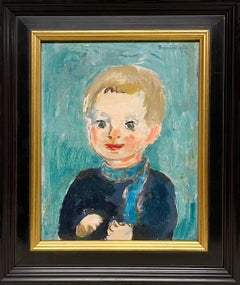
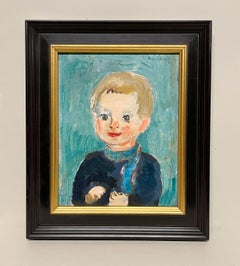
A Delightful, 1950s Mid-Century Modern Portrait of a Young Boy in Blue Scarf

A Delightful, 1950s Mid-Century Modern Portrait of a Young Boy in Blue Scarf

By Francis Chapin

Located in Chicago, IL

A Delightful, 1950s Mid-Century Modern Portrait, "Boy in Blue Scarf" by Notable Chicago Artist, Francis Chapin (Am. 1899-1965). Artwork Size: 11 3/4 x 9 1/4 inches (Framed size: 1...

Category

Mid-20th Century American Modern Figurative Paintings

Materials

Masonite, Oil

A Charming 1950s Modern Portrait of a Young Woman by Francis Chapin

A Charming 1950s Modern Portrait of a Young Woman by Francis Chapin

By Francis Chapin

Located in Chicago, IL

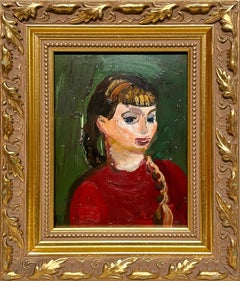
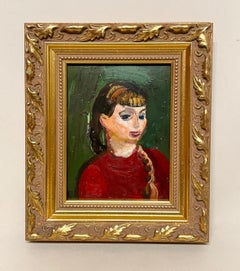
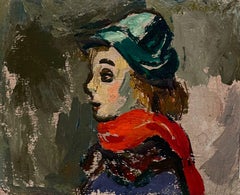
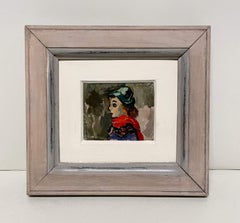
A Charming, 1950s Modern Portrait of a Young Woman in a Red Sweater by Famed Chicago Artist, Francis Chapin (Am. 1899-1965). Artwork size: 8 x 6 inches, oil on Masonite (Framed siz...

Category

Mid-20th Century American Modern Figurative Paintings

Materials

Masonite, Oil

The Writer
The Writer

The Writer

By Edmund Quincy

Located in New York, NY

Signed (lower right): Quincy

Category

20th Century American Realist Portrait Paintings

Materials

Canvas, Oil

"Elvis", Denied Andy Warhol Silver & Black Pop Art Painting by Charles Lutz

"Elvis", Denied Andy Warhol Silver & Black Pop Art Painting by Charles Lutz

By Charles Lutz

Located in Brooklyn, NY

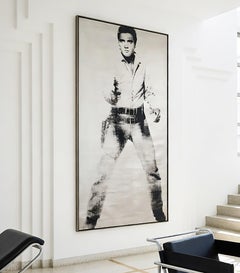
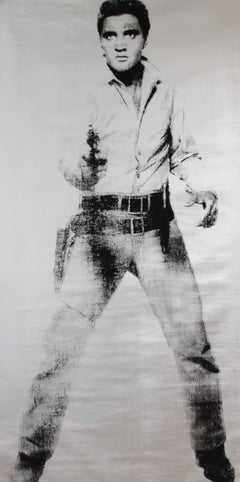
Elvis, Metallic Silver and Black Full Length Silkscreen Painting by Charles Lutz Silkscreen and silver enamel painted on vintage 1960's era linen with Artist's Denied stamp of the Andy Warhol Art Authentication Board. 82" x 40" inches 2010 Lutz's 2007 ''Warhol Denied'' series gained international attention by calling into question the importance of originality or lack thereof in the work of Andy Warhol. The authentication/denial process of the [[Andy Warhol Art Authentication Board]] was used to create value by submitting recreations of Warhol works for judgment with the full intention for the works to be formally marked "DENIED". The final product of the conceptual project being "officially denied" "Warhol" paintings authored by Lutz. Based on the full-length Elvis Presley paintings by Pop Artist Andy Warhol in 1964, this is likely one of his most iconic images, next to Campbell's Soup Cans and portraits of Jackie Kennedy, Marilyn Monroe, Liz Taylor, and Marlon Brando. This is the rarest of the Elvis works from the series, as Lutz sourced a vintage roll of 1960's primed artist linen which was used for this one Elvis. The silkscreen, like Warhol's embraced imperfections, like the slight double image printing of the Elvis image. Lutz received his BFA in Painting and Art History from Pratt Institute and studied Human Dissection and Anatomy at Columbia University, New York. Lutz's work deals with perceptions and value structures, specifically the idea of the transference of values. Lutz's most recently presented an installation of new sculptures dealing with consumerism at Frank Lloyd Wright's Fallingwater House in 2022. Lutz's 2007 Warhol Denied series received international attention calling into question the importance of originality in a work of art. The valuation process (authentication or denial) of the Andy Warhol Art Authentication Board was used by the artist to create value by submitting recreations of Warhol works for judgment, with the full intention for the works to be formally marked "DENIED" of their authenticity. The final product of this conceptual project is "Officially DENIED" "Warhol" paintings authored by Lutz. Later in 2013, Lutz went on to do one of his largest public installations to date. At the 100th Anniversary of Marcel Duchamp's groundbreaking and controversial Armory Show, Lutz was asked by the curator of Armory Focus: USA and former Director of The Andy Warhol Museum, Eric Shiner to create a site-specific installation representing the US. The installation "Babel" (based on Pieter Bruegel's famous painting) consisted of 1500 cardboard replicas of Warhol's Brillo Box (Stockholm Type) stacked 20 ft tall. All 1500 boxes were then given to the public freely, debasing the Brillo Box as an art commodity by removing its value, in addition to debasing its willing consumers. Elvis was "the greatest cultural force in the Twentieth Century. He introduced the beat to everything, and he changed everything - music, language, clothes, it's a whole new social revolution." Leonard Bernstein in: Exh. Cat., Boston, The Institute of Contemporary Art and traveling, Elvis + Marilyn 2 x Immortal, 1994-97, p. 9. Andy Warhol "quite simply changed how we all see the world around us." Kynaston McShine in: Exh. Cat., New York, Museum of Modern Art (and traveling), Andy Warhol: Retrospective, 1996, p. 13. In the summer of 1963 Elvis Presley was just twenty-eight years old but already a legend of his time. During the preceding seven years - since Heartbreak Hotel became the biggest-selling record of 1956 - he had recorded seventeen number-one singles and seven number-one albums; starred in eleven films, countless national TV appearances, tours, and live performances; earned tens of millions of dollars; and was instantly recognized across the globe. The undisputed King of Rock and Roll, Elvis was the biggest star alive: a cultural phenomenon of mythic proportions apparently no longer confined to the man alone. As the eminent composer Leonard Bernstein put it, Elvis was "the greatest cultural force in the Twentieth Century. He introduced the beat to everything, and he changed everything - music, language, clothes, it's a whole new social revolution." (Exh. Cat., Boston, The Institute of Contemporary Art (and traveling), Elvis + Marilyn 2 x Immortal, 1994, p. 9). In the summer of 1963 Andy Warhol was thirty-four years old and transforming the parameters of visual culture in America. The focus of his signature silkscreen was leveled at subjects he brilliantly perceived as the most important concerns of day to day contemporary life. By appropriating the visual vernacular of consumer culture and multiplying readymade images gleaned from newspapers, magazines and advertising, he turned a mirror onto the contradictions behind quotidian existence. Above all else he was obsessed with themes of celebrity and death, executing intensely multifaceted and complex works in series that continue to resound with universal relevance. His unprecedented practice re-presented how society viewed itself, simultaneously reinforcing and radically undermining the collective psychology of popular culture. He epitomized the tide of change that swept through the 1960s and, as Kynaston McShine has concisely stated, "He quite simply changed how we all see the world around us." (Exh. Cat., New York, Museum of Modern Art (and traveling), Andy Warhol: Retrospective, 1996, p. 13). Thus in the summer of 1963 there could not have been a more perfect alignment of artist and subject than Warhol and Elvis. Perhaps the most famous depiction of the biggest superstar by the original superstar artist, Double Elvis is a historic paradigm of Pop Art from a breath-taking moment in Art History. With devastating immediacy and efficiency, Warhol's canvas seduces our view with a stunning aesthetic and confronts our experience with a sophisticated array of thematic content. Not only is there all of Elvis, man and legend, but we are also presented with the specter of death, staring at us down the barrel of a gun; and the lone cowboy, confronting the great frontier and the American dream. The spray painted silver screen denotes the glamour and glory of cinema, the artificiality of fantasy, and the idea of a mirror that reveals our own reality back to us. At the same time, Warhol's replication of Elvis' image as a double stands as metaphor for the means and effects of mass-media and its inherent potential to manipulate and condition. These thematic strata function in simultaneous concert to deliver a work of phenomenal conceptual brilliance. The portrait of a man, the portrait of a country, and the portrait of a time, Double Elvis is an indisputable icon for our age. The source image was a publicity still for the movie Flaming Star, starring Presley as the character Pacer Burton and directed by Don Siegel in 1960. The film was originally intended as a vehicle for Marlon Brando and produced by David Weisbart, who had made James Dean's Rebel Without a Cause in 1955. It was the first of two Twentieth Century Fox productions Presley was contracted to by his manager Colonel Tom Parker, determined to make the singer a movie star. For the compulsive movie-fan Warhol, the sheer power of Elvis wielding a revolver as the reluctant gunslinger presented the zenith of subject matter: ultimate celebrity invested with the ultimate power to issue death. Warhol's Elvis is physically larger than life and wears the expression that catapulted him into a million hearts: inexplicably and all at once fearful and resolute; vulnerable and predatory; innocent and explicit. It is the look of David Halberstam's observation that "Elvis Presley was an American original, the rebel as mother's boy, alternately sweet and sullen, ready on demand to be either respectable or rebellious." (Exh. Cat., Boston, Op. Cit.). Indeed, amidst Warhol's art there is only one other subject whose character so ethereally defies categorization and who so acutely conflated total fame with the inevitability of mortality. In Warhol's work, only Elvis and Marilyn harness a pictorial magnetism of mythic proportions. With Marilyn Monroe, whom Warhol depicted immediately after her premature death in August 1962, he discovered a memento mori to unite the obsessions driving his career: glamour, beauty, fame, and death. As a star of the silver screen and the definitive international sex symbol, Marilyn epitomized the unattainable essence of superstardom that Warhol craved. Just as there was no question in 1963, there remains still none today that the male equivalent to Marilyn is Elvis. However, despite his famous 1968 adage, "If you want to know all about Andy Warhol, just look at the surface of my paintings" Warhol's fascination held purpose far beyond mere idolization. As Rainer Crone explained in 1970, Warhol was interested in movie stars above all else because they were "people who could justifiably be seen as the nearest thing to representatives of mass culture." (Rainer Crone, Andy Warhol, New York, 1970, p. 22). Warhol was singularly drawn to the idols of Elvis and Marilyn, as he was to Marlon Brando and Liz Taylor, because he implicitly understood the concurrence between the projection of their image and the projection of their brand. Some years after the present work he wrote, "In the early days of film, fans used to idolize a whole star - they would take one star and love everything about that star...So you should always have a product that's not just 'you.' An actress should count up her plays and movies and a model should count up her photographs and a writer should count up his words and an artist should count up his pictures so you always know exactly what you're worth, and you don't get stuck thinking your product is you and your fame, and your aura." (Andy Warhol, The Philosophy of Andy Warhol (From A to B and Back Again), San Diego, New York and London, 1977, p. 86). The film stars of the late 1950s and early 1960s that most obsessed Warhol embodied tectonic shifts in wider cultural and societal values. In 1971 John Coplans argued that Warhol was transfixed by the subject of Elvis, and to a lesser degree by Marlon Brando and James Dean, because they were "authentically creative, and not merely products of Hollywood's fantasy or commercialism. All three had originative lives, and therefore are strong personalities; all three raised - at one level or another - important questions as to the quality of life in America and the nature of its freedoms. Implicit in their attitude is a condemnation of society and its ways; they project an image of the necessity for the individual to search for his own future, not passively, but aggressively, with commitment and passion." (John Coplans, "Andy Warhol and Elvis Presley," Studio International, vol. 181, no. 930, February 1971, pp. 51-52). However, while Warhol unquestionably adored these idols as transformative heralds, the suggestion that his paintings of Elvis are uncritical of a generated public image issued for mass consumption fails to appreciate the acuity of his specific re-presentation of the King. As with Marilyn, Liz and Marlon, Warhol instinctively understood the Elvis brand as an industrialized construct, designed for mass consumption like a Coca-Cola bottle or Campbell's Soup Can, and radically revealed it as a precisely composed non-reality. Of course Elvis offered Warhol the biggest brand of all, and he accentuates this by choosing a manifestly contrived version of Elvis-the-film-star, rather than the raw genius of Elvis as performing Rock n' Roll pioneer. A few months prior to the present work he had silkscreened Elvis' brooding visage in a small cycle of works based on a simple headshot, including Red Elvis, but the absence of context in these works minimizes the critical potency that is so present in Double Elvis. With Double Elvis we are confronted by a figure so familiar to us, yet playing a role relating to violence and death that is entirely at odds with the associations entrenched with the singer's renowned love songs. Although we may think this version of Elvis makes sense, it is the overwhelming power of the totemic cipher of the Elvis legend that means we might not even question why he is pointing a gun rather than a guitar. Thus Warhol interrogates the limits of the popular visual vernacular, posing vital questions of collective perception and cognition in contemporary society. The notion that this self-determinedly iconic painting shows an artificial paradigm is compounded by Warhol's enlistment of a reflective metallic surface, a treatment he reserved for his most important portraits of Elvis, Marilyn, Marlon and Liz. Here the synthetic chemical silver paint becomes allegory for the manufacture of the Elvis product, and directly anticipates the artist's 1968 statement: "Everything is sort of artificial. I don't know where the artificial stops and the real starts. The artificial fascinates me, the bright and shiny..." (Artist quoted in Exh. Cat., Stockholm, Moderna Museet and traveling, Andy Warhol, 1968, n.p.). At the same time, the shiny silver paint of Double Elvis unquestionably denotes the glamour of the silver screen and the attractive fantasies of cinema. At exactly this time in the summer of 1963 Warhol bought his first movie camera and produced his first films such as Sleep, Kiss and Tarzan and Jane Regained. Although the absence of plot or narrative convention in these movies was a purposely anti-Hollywood gesture, the unattainability of classic movie stardom still held profound allure and resonance for Warhol. He remained a celebrity and film fanatic, and it was exactly this addiction that so qualifies his sensational critique of the industry machinations behind the stars he adored. Double Elvis was executed less than eighteen months after he had created 32 Campbell's Soup Cans for his immortal show at the Ferus Gallery, Los Angeles in July and August 1962, and which is famously housed in the Museum of Modern Art, New York. In the intervening period he had produced the series Dollar Bills, Coca-Cola Bottles, Suicides, Disasters, and Silver Electric Chairs, all in addition to the portrait cycles of Marilyn and Liz. This explosive outpouring of astonishing artistic invention stands as definitive testament to Warhol's aptitude to seize the most potent images of his time. He recognized that not only the product itself, but also the means of consumption - in this case society's abandoned deification of Elvis - was symptomatic of a new mode of existence. As Heiner Bastian has precisely summated: "the aura of utterly affirmative idolization already stands as a stereotype of a 'consumer-goods style' expression of an American way of life and of the mass-media culture of a nation." (Exh. Cat., Berlin, Neue Nationalgalerie (and traveling), Andy Warhol: Retrospective, 2001, p. 28). For Warhol, the act of image replication and multiplication anaesthetized the effect of the subject, and while he had undermined the potency of wealth in 200 One Dollar Bills, and cheated the terror of death by electric chair in Silver Disaster # 6, the proliferation of Elvis here emasculates a prefabricated version of character authenticity. Here the cinematic quality of variety within unity is apparent in the degrees to which Presley's arm and gun become less visible to the left of the canvas. The sense of movement is further enhanced by a sense of receding depth as the viewer is presented with the ghost like repetition of the figure in the left of the canvas, a 'jump effect' in the screening process that would be replicated in the multiple Elvis paintings. The seriality of the image heightens the sense of a moving image, displayed for us like the unwinding of a reel of film. Elvis was central to Warhol's legendary solo exhibition organized by Irving Blum at the Ferus Gallery in the Fall of 1963 - the show having been conceived around the Elvis paintings since at least May of that year. A well-known installation photograph shows the present work prominently presented among the constant reel of canvases, designed to fill the space as a filmic diorama. While the Elvis canvases...

Category

21st Century and Contemporary Pop Art Figurative Paintings
Materials

Enamel

(Untitled)
(Untitled)

(Untitled)

Located in Fort Washington, PA

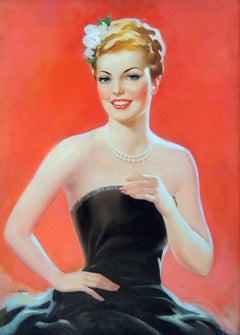
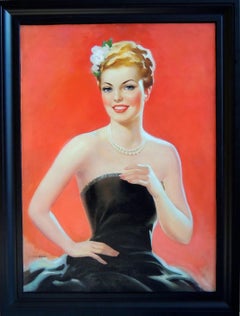
Medium: Oil on Canvas Signature: Signed Lower Left Possibly illustrated for Glamour of Fashion Magazine

Category

1930s Portrait Paintings

Materials

Canvas, Oil

An Introspective 1930s Modern Portrait, "Acolyte" by Famed Artist Francis Chapin

An Introspective 1930s Modern Portrait, "Acolyte" by Famed Artist Francis Chapin

By Francis Chapin

Located in Chicago, IL

An Introspective 1930s Modern Portrait, "Acolyte" by Notable Chicago Artist, Francis Chapin (Am. 1899-1965). Dry watercolor on board. Artwork size: 15 x 12 inches (Framed size: 1...

Category

1930s American Modern Figurative Paintings
Materials

Watercolor, Board

RECYCLER No. 1 BOTANICA PERSONAL

RECYCLER No. 1 BOTANICA PERSONAL

By Pedro Ruiz

Located in New York, NY

Ruiz's Displacements series poignantly alludes to the tragedy of warfare and forced displacement in Colombia. By juxtaposing serene images of a man transporting his homeland in a can...

Category

21st Century and Contemporary Portrait Paintings

Materials

Acrylic

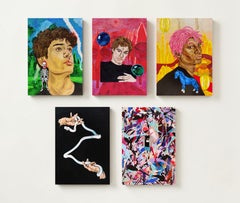
Set of 5 paintings, Figurative Painting

Set of 5 paintings, Figurative Painting

By Ramonn Vieitez de Lima

Located in Miami Beach, FL

Ramonn Vieitez is a self-taught Brazilian artist who primarily utilizes painting as a field of creative possibility exploring themes such as identity, memory, and nature, compulsivel...

Category

2010s Contemporary Figurative Paintings
Materials
Canvas, Oil, Latex, Acrylic