Art by Medium: Lithograph

to
7,190
15,735
6,175
9,423
3,569
1,825
Overall Width
to
Overall Height
to
66
5,811
28,450
2,426
365
397
991
1,184
1,478
3,502
4,935
6,375
3,534
1,454
43
10,279
4,463
3,475
2,499
1,535
863
839
612
520
121
105
92
56
52
24,489
11,575
584
15,740
8,478
5,487
5,293
4,635
3,654
3,421
2,409
2,197
2,129
1,924
1,340
1,303
1,291
1,180
1,020
1,018
877
871
747
36,755
181,540
96,605
79,049
77,855
793
758
336
329
272
3,810
12,116
19,551
13,585
Medium: Lithograph
Red, green and blue composition 76

Red, green and blue composition 76

By Serge Poliakoff

Located in Paris, FR

Lithograph, 1969 Handsigned by the artist in pencil and numbered 26/80 Publisher : Galerie Im Erker (Saint-Gallen) Printer : Erker-Press (Saint-Gallen) Catalog : [Schneider 76] 87....

Category

1960s Abstract Art by Medium: Lithograph

Materials

Lithograph

Inspiration, Modern Art Lithograph by Marc Chagall

Inspiration, Modern Art Lithograph by Marc Chagall

By Marc Chagall

Located in Long Island City, NY

"Inspiration" is an original lithograph by Marc Chagall published in the "Lithographs of Marc Chagall vol. II". The book was published in a limited edition of 6000. Size: 12.5 x 9.5...

Category

1960s Modern Art by Medium: Lithograph

Materials

Lithograph

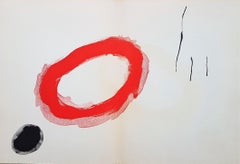
Cartones
Cartones

Joan MiróCartones, 1984

$960Sale Price|20% Off

Cartones

By Joan Miró

Located in Wilton, CT

numbered 64/180. Published by Atlantis Art Verlag Freiburg

Category

1980s Surrealist Art by Medium: Lithograph

Materials

Lithograph

Circa 1930 original tourism poster attributed to Atelier Prof. Kirnig - Austria

Circa 1930 original tourism poster attributed to Atelier Prof. Kirnig - Austria

By Atelier Prof. Kirnig

Located in PARIS, FR

This elegant circa 1930 original tourism poster attributed to Atelier Prof. Kirnig was produced to promote travel to Austria, highlighting the country’s spectacular Alpine landscapes...

Category

1930s Art Deco Art by Medium: Lithograph

Materials

Linen, Paper, Lithograph

original lithograph

original lithograph

Located in Henderson, NV

Medium: original lithograph. Printed in Paris in 1967 at the atelier of Clot, Bramsen et Georges and published in an edition of 2500 for "Les Temps Situationistes" (The Situationist ...

Category

1960s Art by Medium: Lithograph

Materials

Lithograph

HORSE FRIGHTENED BY LIGHTNING - Proof imp - One of Sheet's Most Important Prints

HORSE FRIGHTENED BY LIGHTNING - Proof imp - One of Sheet's Most Important Prints

By Millard Sheets

Located in Santa Monica, CA

MILLARD SHEETS (1987 – 1989) HORSE FRIGHTENED BY LIGHTNING, 1939 Lithograph signed in pencil, annotated “TRIAL PROOF”. The published edition is 75. Image, 17 x 22”. Sheet 19 ½” x 2...

Category

1930s American Modern Art by Medium: Lithograph

Materials

Lithograph

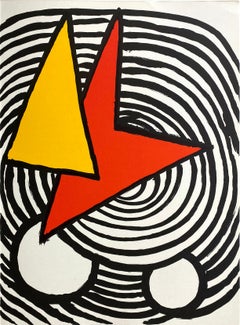
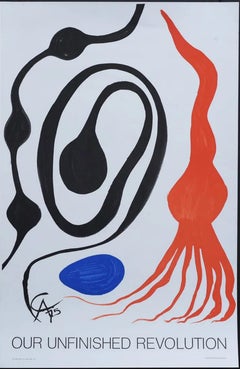
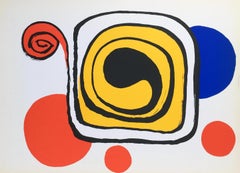
Boomerang, 1974
Boomerang, 1974

Alexander CalderBoomerang, 1974, 1974

$16,000Sale Price|20% Off

Boomerang, 1974

By Alexander Calder

Located in Miami, FL

Boomerang, 1974 Lithograph in colors on Arches paper Published by Transworld Art, New York, printed by Mourlot, Paris 29.5 x 43.3 inches Signed in pencil, "A.P." apart from the edit...

Category

1970s Art by Medium: Lithograph

Materials

Lithograph

"Tribe of Zebulun" lithograph

"Tribe of Zebulun" lithograph

By (after) Marc Chagall

Located in Henderson, NV

Medium: lithograph (after the gouache). Printed in 1962 at the Mourlot atelier for "Jerusalem Windows". This piece was executed by Chagall in preparation for his famous stained-glass...

Category

1960s Art by Medium: Lithograph

Materials

Lithograph

Dusk in August
Dusk in August

Dusk in August

By Louise Nevelson

Located in Indianapolis, IN

Louise Nevelson (1899-1988) Dusk in August (1967) Lithograph with embossing Size: 17 x 22.25 in (43 x 56.4 cm) Frame size: 21.75 x 26.75 in (55.25 x 67.95 cm) Edition of 100, this i...

Category

20th Century Abstract Expressionist Art by Medium: Lithograph

Materials

Lithograph

"Terres de Grand Feu" lithograph poster

"Terres de Grand Feu" lithograph poster

By (after) Joan Miró

Located in Henderson, NV

Medium: lithograph (after the original lithograph poster). During the late 1940's and throughout the 1950's, Miro created a series of posters at the atelier of Mourlot Freres. The li...

Category

1950s Art by Medium: Lithograph

Materials

Lithograph

THE DOOR OF JUSTICE Hand Signed Lithograph, Lawyer and Clients, Civil Rights

THE DOOR OF JUSTICE Hand Signed Lithograph, Lawyer and Clients, Civil Rights

By Elizabeth Catlett

Located in Union City, NJ

THE DOOR OF JUSTICE is an original, hand drawn, limited edition lithograph by the highly acclaimed African-American woman artist Elizabeth Catlett, master printmaker and sculptor bes...

Category

Early 2000s Contemporary Art by Medium: Lithograph

Materials

Lithograph

Paul Klee, Winter Journey, from 12 Watercolors, 1964 (after)

Paul Klee, Winter Journey, from 12 Watercolors, 1964 (after)

By Paul Klee

Located in Southampton, NY

This exquisite lithograph and pochoir after Paul Klee (1879–1940), titled Winterreise (Winter Journey), from the folio Paul Klee, 12 aquarelles (Paul Klee, Twelve Watercolors), origi...

Category

1960s Modern Art by Medium: Lithograph

Materials

Lithograph, Stencil

Untitled (SF-297)
Untitled (SF-297)

Untitled (SF-297)

By Sam Francis

Located in New York, NY

A very good impression of this color lithograph on Rives. Signed and numbered 4/50 in pencil by Francis. Printed and published by The Litho Shop, Inc., Santa Monica, with the blind s...

Category

1980s Abstract Expressionist Art by Medium: Lithograph

Materials

Color, Lithograph

Pierre Soulages, Lithograph No 28, from XXe Siecle, 1970

Pierre Soulages, Lithograph No 28, from XXe Siecle, 1970

By Pierre Soulages

Located in Southampton, NY

This exquisite lithograph by Pierre Soulages (1919–2022), titled Lithographie No 28 (Lithograph No 28), from the album XXe Siecle, XXXIIe Annee, Nouvelle serie No. 34, Juin 1970, ori...

Category

1970s Modern Art by Medium: Lithograph

Materials

Lithograph

Flower Blossom Lady (framed unique mixed media on paper)

Flower Blossom Lady (framed unique mixed media on paper)

By Peter Max

Located in Aventura, FL

Mixed media with acrylic painting and color lithography on paper with original sketch by Peter Max. A unique variation. Hand signed on front by Peter Max. Artwork size: 24 x 30 in...

Category

2010s Pop Art Art by Medium: Lithograph

Materials

Paper, Mixed Media, Acrylic, Lithograph, Permanent Marker

Sarah and Abimelech - Lithograph by Marc Chagall - 1960

Sarah and Abimelech - Lithograph by Marc Chagall - 1960

By Marc Chagall

Located in Roma, IT

Color lithograph realized by Marc Chagall in 1960 to illustrate "The Bible".  Edition of 6500, published by Tériade in no. 33 and 34 of the Art Magazine Verve. Printed by Mourlot a...

Category

1960s Surrealist Art by Medium: Lithograph

Materials

Lithograph

"Sicilienne" original lithograph

"Sicilienne" original lithograph

By Andre Minaux

Located in Henderson, NV

Medium: original lithograph. Printed on Arches paper in 1974 at the Mourlot Freres atelier. Size: 12 1/2 x 9 1/4 inches (318 x 235 mm). Not signed.

Category

1970s Art by Medium: Lithograph

Materials

Lithograph

Large Abstract Expressionist Lithograph by Louisa Chase

Large Abstract Expressionist Lithograph by Louisa Chase

By Louisa Chase

Located in Long Island City, NY

Artist: Louisa Chase, American (1951 - 2016) Title: Untitled (Spooks) Year: 1987 Medium: Lithograph, signed and numbered in pencil Edition: 30 Paper Size: 30 x 44.5 Inches (76.2 x 1...

Category

1980s Abstract Expressionist Art by Medium: Lithograph

Materials

Lithograph

pochoir

pochoir

By (after) Edgar Degas

Located in Henderson, NV

Medium: pochoir (after the painting). A soft and delicate impression, printed in Paris in 1948 and published in an edition of 1200 by Braun et Cie. Size: 6 1/2 x 4 1/2 inches (164 x ...

Category

1940s Impressionist Art by Medium: Lithograph

Materials

Lithograph, Stencil

André Brasilier -- AUTOMNE FINLANDAIS

André Brasilier -- AUTOMNE FINLANDAIS

By André Brasilier

Located in BRUCE, ACT

ANDRÉ BRASILIER (1908-1992) AUTOMNE FINLANDAIS, 1977 Lithograph on wove paper Annotated "épreuve d'artiste" low left Singed low right Image 46 x 64 cm Frame 76 x 92 x3 cm Y. Le Pi...

Category

1970s Art by Medium: Lithograph

Materials

Lithograph

Protection, Lithograph by Hoi Lebadang

Protection, Lithograph by Hoi Lebadang

By Hoi Lebadang

Located in Long Island City, NY

Lebadang (aka Hoi), Vietnamese (1922 - 2015) - Protection. Medium: Lithograph on Rives BFK, signed "Hoi" and numbered in pencil, Edition: E.A., Image Size: 18 x 12.5 inches, Size: 2...

Category

1970s Abstract Art by Medium: Lithograph

Materials

Lithograph

original lithograph

original lithograph

By Paul Guiramand

Located in Henderson, NV

Medium: original lithograph. Printed on Arjomari paper in 1969 at the Mourlot Freres atelier and published by Editions Richelieu in a limited edition of 2400 for the L'Odyssee portfo...

Category

1960s Art by Medium: Lithograph

Materials

Lithograph

Henry Moore, Reclining Figure, from San Lazzaro et ses Amis, 1975

Henry Moore, Reclining Figure, from San Lazzaro et ses Amis, 1975

By Henry Moore

Located in Southampton, NY

This exquisite lithograph by Henry Moore (1898–1986), titled Reclining Figure, from the album San Lazzaro et ses Amis, Hommage au fondateur de la revue XXe siecle (San Lazzaro and His Friends, Tribute to the Founder of the Journal XXe Siecle), originates from the 1975 edition published by XXe siecle, Paris, and printed by Curwen Studio, London, October 1975. Reclining Figure embodies Moore’s lifelong fascination with the human form in repose—a theme that became central to his sculptural and graphic work. Through elegant contours and balanced abstraction, the composition captures the harmony between body, landscape, and spirit that defined Moore’s artistic vision. Executed as a lithograph on velin d'Arches paper, this work measures 10.5 x 14 inches (26.67 x 35.56 cm). Unsigned and unnumbered as issued. The edition exemplifies the exceptional craftsmanship of the Curwen Studio in London, a distinguished atelier celebrated for its collaborations with the leading modern artists of the postwar period. Artwork Details: Artist: Henry Moore (1898–1986) Title: Reclining Figure, from San Lazzaro et ses Amis, Hommage au fondateur de la revue XXe siecle, 1975 Medium: Lithograph on velin d'Arches paper Dimensions: 10.5 x 14 inches (26.67 x 35.56 cm) Inscription: Unsigned and unnumbered as issued Date: 1975 Publisher: XXe siecle, Paris Printer: Curwen Studio, London Catalogue raisonne references: Moore, Henry, et al. Henry Moore, Catalogue of Graphic Work. Gerald Cramer, 1986, illustration 366. Condition: Well preserved, consistent with age and medium Provenance: From the album San Lazzaro et ses Amis, Hommage au fondateur de la revue XXe siecle, published by XXe siecle, Paris, October 1975 Notes: Excerpted from the folio (translated from French), Finished printing in Paris in October 1975. This album has been printed on velin d'Arches in DLXXV numbered examples. The LXXV original examples include a series of VIII original lithographs, signed and numbered by the artists. In addition, LV examples were printed for artists, authors, friends and collaborators of XXe siecle. The typography is from l'Imprimerie Union in Paris; the lithographs of Max Bill, Marc Chagall, Hans Hartung, Braque, Fontana, Magnelli, Picasso, Magritte and Poliakoff were printed by Fernand Mourlot in Paris; those of Alexander Calder and Joan Miro by l'imprimerie Arte in Paris; that of Max Ernst by Pierre Chave in Vence; that of Zao Wou-Ki by ateliers Bellin in Paris; and that of Henry Moore by the Curwen Studio in London. About the Publication: San Lazzaro et ses Amis, Hommage au fondateur de la revue XXe siecle (San Lazzaro and His Friends, Tribute to the Founder of the Journal XXe Siecle), published in 1975 by XXe siecle, Paris, represents one of the most significant collaborative tributes in modern art publishing. Created in honor of Gualtieri di San Lazzaro, the visionary editor and founder of the journal XXe Siecle, the folio unites original lithographs by the greatest modern masters—Picasso, Chagall, Miro, Calder, Hartung, Moore, and others. Printed by premier ateliers such as Mourlot, Arte, Bellin, and Curwen, the portfolio celebrates the spirit of artistic collaboration and innovation that defined mid-20th-century modernism. About the Artist: Henry Moore (1898–1986) was a British sculptor, draftsman, and modernist pioneer whose monumental bronzes and organic abstractions revolutionized 20th-century sculpture and made him one of the most influential artists of his time. Renowned for his reclining figures, mother-and-child compositions, and pierced biomorphic forms inspired by nature, Moore transformed traditional carving into a universal language of rhythm, balance, and humanity. Born in Castleford, Yorkshire, he studied at the Leeds School of Art and the Royal College of Art in London, absorbing the influences of classical sculpture, African and Pre-Columbian art, and the radical innovations of the European avant-garde. Inspired by Pablo Picasso’s Cubist fragmentation of form, Joan Miro’s lyrical biomorphism, Wassily Kandinsky’s spiritual abstraction, and Constantin Brancusi’s purity of shape, Moore developed a style rooted in the harmony between mass and void, structure and space. During the interwar years, he became part of an international circle that included Alexander Calder, Alberto Giacometti, Salvador Dali, Marcel Duchamp, and Man Ray—artists who, like Moore, expanded art’s boundaries through abstraction, surrealism, and conceptual experimentation. Like Calder, Moore explored balance and movement; like Giacometti, he sought the spiritual essence of humanity; and like Dali and Duchamp, he challenged perception and redefined modern form. His sculptures, carved in stone or cast in bronze, evoke both ancient and modern sensibilities—forms that appear to breathe with natural vitality while engaging directly with their surrounding landscapes. Moore’s “Shelter Drawings” (1940–41), created during the London Blitz, revealed his deep empathy for the human condition, marking a pivotal moment in his exploration of resilience and vulnerability. By the mid-20th century, Moore’s monumental bronzes had become landmarks around the world, from the Lincoln Center in New York to the UNESCO headquarters in Paris, embodying timeless symbols of endurance, renewal, and unity. His synthesis of organic abstraction and humanism influenced generations of sculptors including Barbara Hepworth, Isamu Noguchi, Eduardo Paolozzi, Antony Gormley, Anish Kapoor, and Rachel Whiteread. Like Kandinsky and Miro, he believed abstraction could transcend culture and time, while like Duchamp and Man Ray, he embraced experimentation as a pathway to new truths. Moore’s works, housed in major collections including the Museum of Modern Art in New York, the Tate in London, the Guggenheim Museum, and the Art Institute of Chicago, continue to define the landscape of modern sculpture for their elegance, power, and emotional depth. Standing alongside Pablo Picasso, Alexander Calder, Alberto Giacometti, Salvador Dali, Joan Miro, Wassily Kandinsky, Marcel Duchamp, and Man Ray, Henry Moore remains a cornerstone of modern art—a sculptor whose vision united nature, form, and spirit into a universal language of beauty and meaning. His highest auction record was achieved by Reclining Figure: Festival (1951), which sold for $33.1 million USD at Christie’s, London, on June 30, 2016, reaffirming Henry Moore’s enduring legacy as one of the most visionary, influential, and collectible sculptors in the history of modern art. Henry Moore Reclining Figure...

Category

1970s Surrealist Art by Medium: Lithograph

Materials

Lithograph

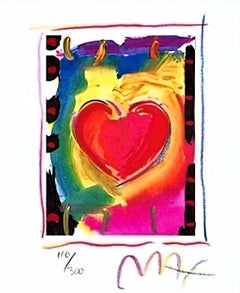
United We Stand, Peter Max

United We Stand, Peter Max

By Peter Max

Located in Fairfield, CT

Artist: Peter Max (1937) Title: United We Stand Year: 2002 Edition: 107/300, plus proofs Medium: Lithograph on Lustro Saxony paper Size: 12.5 x 9 inches Condition: Excellent Inscript...

Category

Early 2000s Pop Art Art by Medium: Lithograph

Materials

Lithograph

Marc Chagall, Untitled, from The Lithographs of Chagall, 1969

Marc Chagall, Untitled, from The Lithographs of Chagall, 1969

By Marc Chagall

Located in Southampton, NY

This exquisite lithograph by Marc Chagall (1887–1985), titled Sans titre (Untitled), from the album The Lithographs of Chagall, Volume III, originates from the 1969 edition published...

Category

1960s Expressionist Art by Medium: Lithograph

Materials

Lithograph

Marc Chagall - Original Lithograph

Marc Chagall - Original Lithograph

By Marc Chagall

Located in Collonge Bellerive, Geneve, CH

Marc Chagall Original Lithograph 1963 Dimensions: 32 x 24 cm Reference: Chagall Lithographe 1957-1962. VOLUME II. Condition : Excellent Marc Chagall (born in 1887) Marc Chagall was born in Belarus in 1887 and developed an early interest in art. After studying painting, in 1907 he left Russia for Paris, where he lived in an artist colony on the city’s outskirts. Fusing his own personal, dreamlike imagery with hints of the fauvism and cubism popular in France at the time, Chagall created his most lasting work—including I and the Village (1911)—some of which would be featured in the Salon des Indépendants exhibitions. After returning to Vitebsk for a visit in 1914, the outbreak of WWI trapped Chagall in Russia. He returned to France in 1923 but was forced to flee the country and Nazi persecution during WWII. Finding asylum in the U.S., Chagall became involved in set and costume design before returning to France in 1948. In his later years, he experimented with new art forms and was commissioned to produce numerous large-scale works. Chagall died in St.-Paul-de-Vence in 1985. The Village Marc Chagall was born in a small Hassidic community on the outskirts of Vitebsk, Belarus, on July 7, 1887. His father was a fishmonger, and his mother ran a small sundries shop in the village. As a child, Chagall attended the Jewish elementary school, where he studied Hebrew and the Bible, before later attending the Russian public school. He began to learn the fundamentals of drawing during this time, but perhaps more importantly, he absorbed the world around him, storing away the imagery and themes that would feature largely in most of his later work. At age 19 Chagall enrolled at a private, all-Jewish art school and began his formal education in painting, studying briefly with portrait artist Yehuda Pen. However, he left the school after several months, moving to St. Petersburg in 1907 to study at the Imperial Society for the Protection of Fine Arts. The following year, he enrolled at the Svanseva School, studying with set designer Léon Bakst, whose work had been featured in Sergei Diaghilev's Ballets Russes. This early experience would prove important to Chagall’s later career as well. Despite this formal instruction, and the widespread popularity of realism in Russia at the time, Chagall was already establishing his own personal style, which featured a more dreamlike unreality and the people, places and imagery that were close to his heart. Some examples from this period are his Window Vitebsk (1908) and My Fianceé with Black Gloves (1909), which pictured Bella Rosenfeld, to whom he had recently become engaged. The Beehive Despite his romance with Bella, in 1911 an allowance from Russian parliament member and art patron Maxim Binaver enabled Chagall to move to Paris, France. After settling briefly in the Montparnasse neighborhood, Chagall moved further afield to an artist colony known as La Ruche (“The Beehive”), where he began to work side by side with abstract painters such as Amedeo Modigliani and Fernand Léger as well as the avant-garde poet Guillaume Apollinaire. At their urging, and under the influence of the wildly popular fauvism and cubism, Chagall lightened his palette and pushed his style ever further from reality. I and the Village (1911) and Homage to Apollinaire (1912) are among his early Parisian works, widely considered to be his most successful and representative period. Though his work stood stylistically apart from his cubist contemporaries, from 1912 to 1914 Chagall exhibited several paintings at the annual Salon des Indépendants exhibition, where works by the likes of Juan Gris, Marcel Duchamp and Robert Delaunay were causing a stir in the Paris art world. Chagall’s popularity began to spread beyond La Ruche, and in May 1914 he traveled to Berlin to help organize his first solo exhibition, at Der Sturm Gallery. Chagall remained in the city until the highly acclaimed show opened that June. He then returned to Vitebsk, unaware of the fateful events to come. War, Peace and Revolution In August 1914 the outbreak of World War I precluded Chagall’s plans to return to Paris. The conflict did little to stem the flow of his creative output, however, instead merely giving him direct access to the childhood scenes so essential to his work, as seen in paintings such as Jew in Green (1914) and Over Vitebsk (1914). His paintings from this period also occasionally featured images of the war’s impact on the region, as with Wounded Soldier (1914) and Marching (1915). But despite the hardships of life during wartime, this would also prove to be a joyful period for Chagall. In July 1915 he married Bella, and she gave birth to a daughter, Ida, the following year. Their appearance in works such as Birthday (1915), Bella and Ida by the Window (1917) and several of his “Lovers” paintings give a glimpse of the island of domestic bliss that was Chagall’s amidst the chaos. To avoid military service and stay with his new family, Chagall took a position as a clerk in the Ministry of War Economy in St. Petersburg. While there he began work on his autobiography and also immersed himself in the local art scene, befriending novelist Boris Pasternak, among others. He also exhibited his work in the city and soon gained considerable recognition. That notoriety would prove important in the aftermath of the 1917 Russian Revolution when he was appointed as the Commissar of Fine Arts in Vitebsk. In his new post, Chagall undertook various projects in the region, including the 1919 founding of the Academy of the Arts. Despite these endeavors, differences among his colleagues eventually disillusioned Chagall. In 1920 he relinquished his position and moved his family to Moscow, the post-revolution capital of Russia. In Moscow, Chagall was soon commissioned to create sets and costumes for various productions at the Moscow State Yiddish Theater...

Category

1960s Surrealist Art by Medium: Lithograph

Materials

Lithograph

"Judy Garland" Legendary Film and Recording Star. Gay Icon. 20th Century Litho

"Judy Garland" Legendary Film and Recording Star. Gay Icon. 20th Century Litho

By Albert Al Hirschfeld

Located in New York, NY

"Judy Garland" Legendary Film and Recording Star. Gay Icon. 20th Century Litho Al Hirschfeld (1903-2003) Judy - All Star Variety - Garland at at the Palace Sight: 15 1/2 x 12 inches...

Category

1970s Performance Art by Medium: Lithograph

Materials

Lithograph

Locomotion paradisiaque intra-utérine (Michler/Löpsinger 822-831; Field 75-13)

Locomotion paradisiaque intra-utérine (Michler/Löpsinger 822-831; Field 75-13)

By Salvador Dalí­

Located in Fairfield, CT

Artist: Salvador Dali (1904-1989) Title: Locomotion paradisiaque intra-utérine (Michler/Löpsinger 822-831; Field 75-13), Imaginations et Objets du Futur (Paradise intrauterine locomo...

Category

1970s Surrealist Art by Medium: Lithograph

Materials

Mixed Media, Drypoint, Lithograph, Screen

Salvador Dalí Whoever Takes Carmen (Salvador Dalí­ prints Salvador Dalí Carmen)

Salvador Dalí Whoever Takes Carmen (Salvador Dalí­ prints Salvador Dalí Carmen)

By Salvador Dalí­

Located in NEW YORK, NY

Salvador Dalí Whoever Takes Carmen Away Must Pay with His Life 1970 (from Carmen): Lithograph in colors on Arches paper. 25.5 x 19.8 inches (64.8 x 50.5 cm). Good overall vintage ...

Category

1970s Pop Art Art by Medium: Lithograph

Materials

Paper, Lithograph

original lithograph

original lithograph

By Sabina Teichman

Located in Henderson, NV

Medium: original lithograph. This lithograph is from the rare 1953 "Improvisations" portfolio, published by the Artists Equity Association of New York on the occasion of the 1953 Spr...

Category

1950s Art by Medium: Lithograph

Materials

Lithograph

Hommage a Rene Char after Pablo Picasso

Hommage a Rene Char after Pablo Picasso

By Pablo Picasso

Located in New York, NY

This colorful lithograph after Pablo Picasso was printed by the Atelier Mourlot in Paris in 1964 and is unsigned*. This image is taken from a drawing in pencil and colored chalk enti...

Category

1960s Modern Art by Medium: Lithograph

Materials

Lithograph

Untitled

Untitled

By Bram Van Velde

Located in Paris, FR

Lithograph, 1970 Handsigned by the artist in pencil and annotated EA - Artist Proof Edition : 300 Printer : Clot, Bramsen et Georges (Paris) Catalog : [Mason Putman 58] 65.50 cm. x 4...

Category

1970s Abstract Art by Medium: Lithograph

Materials

Lithograph

Nice Soleil Fleurs (La Baie des Anges), Modern Lithograph Poster by Marc Chagall

Nice Soleil Fleurs (La Baie des Anges), Modern Lithograph Poster by Marc Chagall

By Marc Chagall

Located in Long Island City, NY

Marc Chagall, After, Russian (1887 - 1985) - Nice Soleil Fleurs (La Baie des Anges). Year: circa 1970, Medium: Offset Lithograph Poster, Size: 38 x 25.5 in. (96.52 x 64.77 cm), Prin...

Category

1970s Modern Art by Medium: Lithograph

Materials

Lithograph

Miró Sculptures Exposition

Miró Sculptures Exposition

By Joan Miró

Located in Naples, Florida

This lithograph was created in 1971 in connection with a sculpture exhibition by Joan Miró. Issued as a limited edition, the sheet measures 33 3/4 × 28 5/8 inches and documents Miró’...

Category

1970s Abstract Art by Medium: Lithograph

Materials

Paper, Lithograph

Untitled 1, Abstract Print by Robert Kuszek

Untitled 1, Abstract Print by Robert Kuszek

By Robert Kuszek

Located in Long Island City, NY

Artist: Robert Kuszek Title: Untitled 1 Year: circa 1990 Medium: Lithograph and Woodcut, Signed and numbered in Pencil Edition: 35 Paper Size: 30 x 22 inches (76.2 x 55.88 cm)

Category

1990s Abstract Art by Medium: Lithograph

Materials

Lithograph, Woodcut

Star Chart. Antique Astronomy celestial print

Star Chart. Antique Astronomy celestial print

Located in Melbourne, Victoria

Colour lithograph, 1890. 210mm by 285mm (sheet). From W Peck's 'A Handbook and Atlas of Astronomy', 1890. Sir William Peck FRSE FRAS (1862 – 1925) was a Scottish astronomer and scien...

Category

Late 19th Century Victorian Art by Medium: Lithograph

Materials

Lithograph

Man on His Back, Nude

Man on His Back, Nude

By George Wesley Bellows

Located in Fairlawn, OH

Man on His Back, Nude Lithograph, c. 1916 Signed by the artist lower right: Geo Bellows (see photo) Annotated bottom left: No. 3 by the artist (see photo) An unredorded trial proof b...

Category

1910s Ashcan School Art by Medium: Lithograph

Materials

Lithograph

Henry Moore, Reclining Figure Interior Setting I, from XXe siecle, 1977

Henry Moore, Reclining Figure Interior Setting I, from XXe siecle, 1977

By Henry Moore

Located in Southampton, NY

This exquisite lithograph by Henry Moore (1898–1986), titled Reclining Figure Interior Setting I, from the album XXe siecle, Nouvelle serie, XXXIXe Annee, No. 49, Decembre 1977, originates from the 1977 edition published by Societe Internationale d'Art XXe siecle, Paris, and printed by Curwen Prints Ltd, London, 1977. Reclining Figure Interior Setting I reflects Moore’s masterful synthesis of form and space, capturing his lifelong exploration of the reclining human figure as a symbol of harmony between nature, body, and landscape. Executed as a lithograph on velin paper, this work measures 9.75 x 12.5 inches (24.77 x 31.75 cm). Unsigned and unnumbered, as issued. The edition exemplifies the superb craftsmanship of Curwen Prints Ltd, London. Artwork Details: Artist: Henry Moore (1898–1986) Title: Reclining Figure Interior Setting I, from the album XXe siecle, Nouvelle serie, XXXIXe Annee, No. 49, Decembre 1977 Medium: Lithograph on velin paper Dimensions: 9.75 x 12.5 inches (24.77 x 31.75 cm) Inscription: Unsigned and unnumbered, as issued Date: 1977 Publisher: Societe Internationale d'Art XXe siecle, Paris Printer: Curwen Prints Ltd, London Catalogue raisonne reference: Moore, Henry, et al. Henry Moore, Catalogue of Graphic Work. Gerald Cramer, 1986, illustration 458 Condition: Well preserved, consistent with age and medium Provenance: From the album XXe siecle, Nouvelle serie, XXXIXe Annee, No. 49, Decembre 1977, published by Societe Internationale d'Art XXe siecle, Paris About the Publication: Gualtieri di San Lazzaro's XXe Siecle (Twentieth Century) was one of the most influential art journals of the modern era, founded in Paris in 1938 as a platform for the greatest painters, sculptors, and writers of the 20th century. San Lazzaro, a visionary editor, critic, and champion of modernism, believed that art and literature should coexist as expressions of a shared human imagination. Under his direction, XXe Siecle became a cultural bridge between Europe and the wider world, publishing special issues devoted to leading figures such as Picasso, Matisse, Chagall, Braque, Calder, Miro, Kandinsky, and Leger. Each edition combined essays by renowned critics and poets with original lithographs printed by the foremost ateliers of Paris and London, including Mourlot, Arte, and Curwen, creating a uniquely rich dialogue between text and image. Through XXe Siecle, San Lazzaro preserved the creative spirit of the avant-garde during and after World War II, championing freedom of expression and the evolution of abstraction, Surrealism, and modern thought. Over nearly four decades, the journal shaped international taste and defined the intellectual landscape of postwar art publishing. Today, XXe Siecle remains celebrated for its extraordinary synthesis of art, literature, and design, an enduring testament to Gualtieri di San Lazzaro's belief that the visual arts are the soul of the modern age. About the Artist: Henry Moore (1898–1986) was a British sculptor, draftsman, and modernist pioneer whose monumental bronzes and organic abstractions revolutionized 20th-century sculpture and made him one of the most influential artists of his time. Renowned for his reclining figures, mother-and-child compositions, and pierced biomorphic forms inspired by nature, Moore transformed traditional carving into a universal language of rhythm, balance, and humanity. Born in Castleford, Yorkshire, he studied at the Leeds School of Art and the Royal College of Art in London, absorbing the influences of classical sculpture, African and Pre-Columbian art, and the radical innovations of the European avant-garde. Inspired by Pablo Picasso’s Cubist fragmentation of form, Joan Miro’s lyrical biomorphism, Wassily Kandinsky’s spiritual abstraction, and Constantin Brancusi’s purity of shape, Moore developed a style rooted in the harmony between mass and void, structure and space. During the interwar years, he became part of an international circle that included Alexander Calder, Alberto Giacometti, Salvador Dali, Marcel Duchamp, and Man Ray—artists who, like Moore, expanded art’s boundaries through abstraction, surrealism, and conceptual experimentation. Like Calder, Moore explored balance and movement; like Giacometti, he sought the spiritual essence of humanity; and like Dali and Duchamp, he challenged perception and redefined modern form. His sculptures, carved in stone or cast in bronze, evoke both ancient and modern sensibilities—forms that appear to breathe with natural vitality while engaging directly with their surrounding landscapes. Moore’s “Shelter Drawings” (1940–41), created during the London Blitz, revealed his deep empathy for the human condition, marking a pivotal moment in his exploration of resilience and vulnerability. By the mid-20th century, Moore’s monumental bronzes had become landmarks around the world, from the Lincoln Center in New York to the UNESCO headquarters in Paris, embodying timeless symbols of endurance, renewal, and unity. His synthesis of organic abstraction and humanism influenced generations of sculptors including Barbara Hepworth, Isamu Noguchi, Eduardo Paolozzi, Antony Gormley, Anish Kapoor, and Rachel Whiteread. Like Kandinsky and Miro, he believed abstraction could transcend culture and time, while like Duchamp and Man Ray, he embraced experimentation as a pathway to new truths. Moore’s works, housed in major collections including the Museum of Modern Art in New York, the Tate in London, the Guggenheim Museum, and the Art Institute of Chicago, continue to define the landscape of modern sculpture for their elegance, power, and emotional depth. Standing alongside Pablo Picasso, Alexander Calder, Alberto Giacometti, Salvador Dali, Joan Miro, Wassily Kandinsky, Marcel Duchamp, and Man Ray, Henry Moore remains a cornerstone of modern art—a sculptor whose vision united nature, form, and spirit into a universal language of beauty and meaning. His highest auction record was achieved by Reclining Figure: Festival (1951), which sold for $33.1 million USD at Christie’s, London, on June 30, 2016, reaffirming Henry Moore’s enduring legacy as one of the most visionary, influential, and collectible sculptors in the history of modern art. Henry Moore Reclining Figure...

Category

1970s Modern Art by Medium: Lithograph

Materials

Lithograph

original lithograph

original lithograph

By Antoni Tàpies

Located in Henderson, NV

Medium: original lithograph. Printed in 1967 for the art revue Derriere le Miroir (issue number 168) and published in Paris by Maeght. Size: 15 x 11 inches (380 x 277 mm). There is p...

Category

1960s Art by Medium: Lithograph

Materials

Lithograph

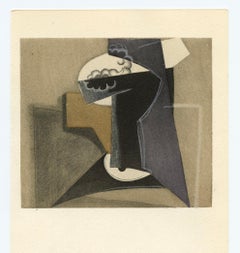
Roger de La Fresnaye, Face, 1968 (after)

Roger de La Fresnaye, Face, 1968 (after)

By Roger de la Fresnaye

Located in Southampton, NY

This exquisite lithograph after Roger de La Fresnaye (1885–1925), titled Visage (Face), from the album Roger de la Fresnaye, III, Collection Pierre Levy, 1968, originates from the ed...

Category

1960s Cubist Art by Medium: Lithograph

Materials

Lithograph

Lithograph art for sale on 1stDibs.

Find a wide variety of authentic Lithograph art available on 1stDibs. While artists have worked in this medium across a range of time periods, art made with this material during the 21st Century is especially popular. If you’re looking to add art created with this material to introduce a provocative pop of color and texture to an otherwise neutral space in your home, the works available on 1stDibs include elements of blue, orange, yellow, red and other colors. There are many well-known artists whose body of work includes ceramic sculptures. Popular artists on 1stDibs associated with pieces like this include Joan Miró, Marc Chagall, Peter Max, and Alexander Calder. Frequently made by artists working in the Modern, Contemporary, all of these pieces for sale are unique and many will draw the attention of guests in your home. Not every interior allows for large Lithograph art, so small editions measuring 0.01 inches across are also available