Romantic Paintings

ROMANTIC STYLE

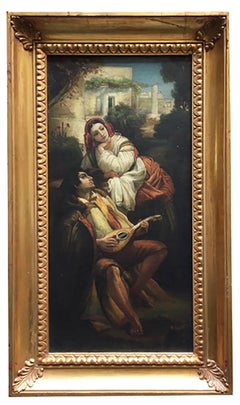
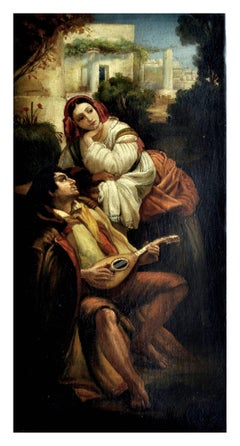
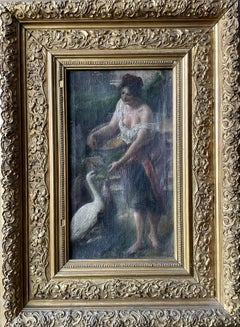
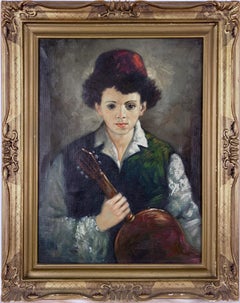
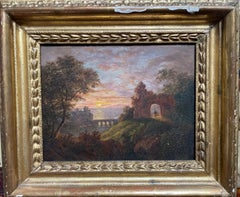
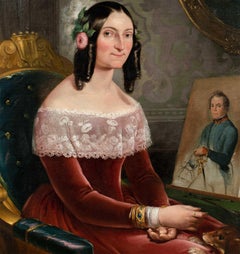
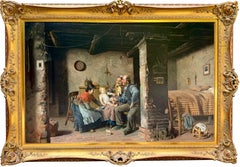
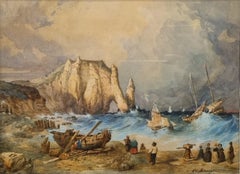
In emphasizing emotion and imagination, romantic art shifted away from the restraint of classicism and neoclassicism that had dominated art in Europe since the Renaissance. Romanticism achieved its greatest popularity in art, literature, music and philosophy between 1780 and 1830, although its expression of individual experiences ranging from awe to passion informed culture in the decades after.

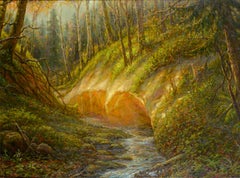
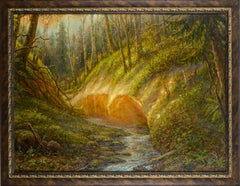
Landscape painting was especially popular during the romantic period, as were nature studies of wild animals and fantasies of exotic lands. Romanticism varied across Europe as it reacted to the rise of industrialization, a more personal relationship with faith that was distanced from the church and the rationalist thinking of the Enlightenment.

British painters such as John Constable and J.M.W. Turner responded dramatically to the light and atmosphere of the natural world, while William Blake conveyed humanity’s connection to the divine in his visionary art. In Germany, the late-18th-century Sturm und Drang, or Storm and Drive, movement, with its probing of the unconscious, inspired a sense of mystery in work by romantic artists such as Caspar David Friedrich and Philipp Otto Runge. In France, where the French Revolution had turned tradition upside down, Théodore Géricault and Eugène Delacroix used lush brushwork to paint monumental canvases with tumultuous scenes of nature and history.

The romantic movement and its subject matter were a significant influence on the Pre-Raphaelites, Symbolists and the American painters of the Hudson River School, as well as on other cultural movements in the 19th and 20th centuries that saw artists build on this perspective in which art was guided by emotion rather than reason.

Find a collection of romantic paintings, sculptures, prints and multiples and more art on 1stDibs.

to
131
175
123
116
74
78
Overall Width
to
Overall Height
to
13
273
155
125
7
4
11
3
10
6
10
13
20
12
42,314
38,395
23,289
8,549
4,818
3,519
3,177
2,692
1,235
1,161
921
905
404
273
309
237
19
363
217
88
88
82
72
64
59
37
30
26
26
22
21
20
18
16
16
14
14
541
458
282
268
50
21
8
7
6
372
47
363
194
Style: Romantic
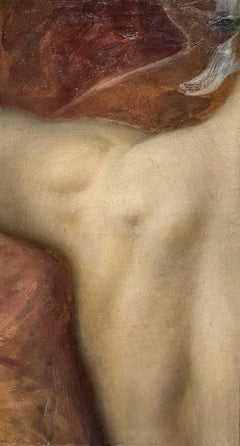
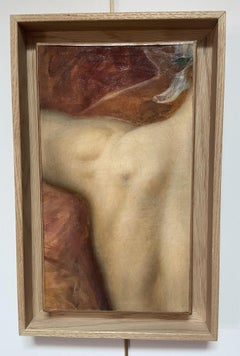
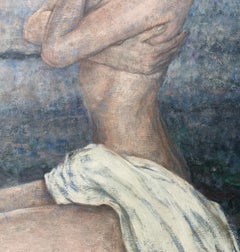
J J A Lecomte du Nouÿ (1842-1923) A shoulder and back study, oil painting

J J A Lecomte du Nouÿ (1842-1923) A shoulder and back study, oil painting

Jean-Jules-Antoine Lecomte du Nouÿ (1842-1923) A shoulder and back study, oil study oil on canvas 34 x 19.5 cm In good condition, a few small inpaintings visible under UV lights Stamp of the Estate sale in Toulouse on the stretcher In a modern frame : 40 x 25 cm Provenance : Estate of the artist and family of the artist by descent Estate sale in Toulouse 22 June 1999 This very interesting oil study was part of a set kept by the artist. He had studied fragments of anatomy both to use them as models in large compositions but probably also because he represented so many fragments. It is clear that this fragment of anatomy has a power of suggestion and serves as a relay to the imagination of the viewer, who is led to imagine the rest of the body taken as a model. We can speak of metonymy in painting and it is clear that the artist had this in mind when he kept such studies with him. Jean-Jules-Antoine Lecomte du Nouÿ was born on 10 June 1842 in Paris. Originally of a Piedmontese origin, his family had been settled in France since the fourteenth century and by the time of his birth had reached the status of nobility He was an Orientalist French painter and sculptor. He was strongly influenced by the works and teachings of Charles Gleyre and Jean-Léon Gérôme. Lecomte du Nouÿ found inspiration for his art through extensive travels to Greece, Turkey, Egypt, Romania and Italy. The thematic content of Lecomte du Nouÿ's work was mainly figural, but also spanned over a vast range of imagery throughout his career, including classical, historical and religious. Lecomte du Nouÿ is known for remaining faithful to his detailed, realistic style throughout the extent of his career, despite the onset of the Impressionist, Fauvist and Constructivist artistic movements during his lifetime. His work is said to have contributed significantly to the establishment of an iconic repertoire representing the Orient in the nineteenth century.A Parisian street was named after him in 1932.  Lecomte du Nouÿ showed a strong attachment to visual art from a young age and was reported to have painted portraits of his father and uncle by the age of 6. In 1861, at 19 years of age, the artistic talents of young Jean-Jules-Antoine Lecomte du Nouÿ prompted him to become a pupil at the atelier of Swiss artist, Charles Gleyre. Under Gleyre's guidance Jean-Jules-Antoine learned the significance of individualistic style and gained the foundations of creative visual presentation. Later, Lecomte du Nouy further perfected his knowledge of the artistic form under the mentorship of Jean-Léon Gérôme, who was a renowned painter of the Academicism movement. It was at this time that Jean-Jules-Antoine learned the precision required to depict "la belle nature" —a style of illustration that aims to create the most beautiful representations of the natural form. This later became one of the main techniques employed in Lecomte du Nouÿ's signature artwork. In 1865, Du Nouÿ accompanied fellow artist, Félix Auguste Clément...

Category

1890s Romantic Paintings

Materials

Oil

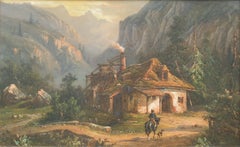
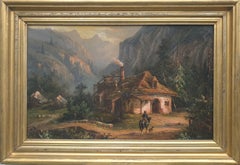
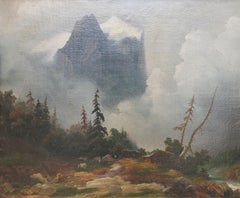
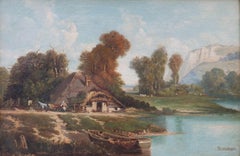
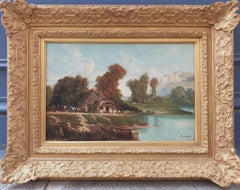
BADER valley CHARMEY Switzerland landscape mountain Swiss painter 19th

BADER valley CHARMEY Switzerland landscape mountain Swiss painter 19th

Located in PARIS, FR

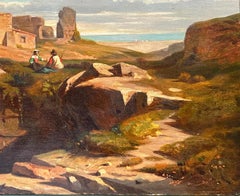
Augustin BADER (active between 1830 and 1860) Oil on canvas 38 x 46 cm (51.5 x 59.5 cm with the frame) Signed lower left "Bader" Old stamp on the verso "Par Augustin Bader / à Fribur...

Category

Mid-19th Century Romantic Paintings

Materials

Oil

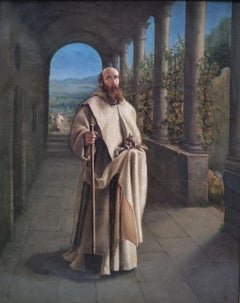
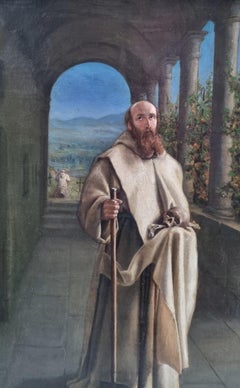
French Troubadour Religious Painting Monks Relics 19th

French Troubadour Religious Painting Monks Relics 19th

Located in PARIS, FR

French school of the 19th century Monks excavate and find ancient relics Oil on canvas Not signed 56 x 46.5 cm (68 x 57.5 cm with the frame) Beautiful period frame in gilded wood Goo...

Category

Mid-19th Century Romantic Paintings

Materials

Oil

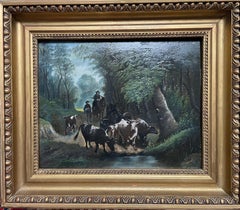
“Forest landscape with herd of cattle”

“Forest landscape with herd of cattle”

Located in Edinburgh, GB

Attributed to Friedrich Voltz (1817–1886) – Bucolic Cattle Scene Artist: Attributed to Friedrich Voltz Period: 19th Century Medium: Oil on Canvas Dimensions: Framed: 35 x 40 cm Artw...

Category

19th Century Romantic Paintings

Materials

Canvas, Oil

Nostalgy. Contemporary Figurative Oil Painting, Subtle Female, Polish artist

Nostalgy. Contemporary Figurative Oil Painting, Subtle Female, Polish artist

By Katarzyna Szydlowska

Located in Warsaw, PL

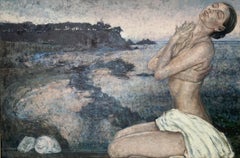
Contemporary figurative oil on canvas painting by Polish artist Katarzyna Szydlowska. Painting pictures female in nude. She is sitting on the beach, there is sea and cliff behind her...

Category

21st Century and Contemporary Romantic Paintings

Materials

Oil, Canvas

Still Life Italian School 19th Century Paint Oil on canvas Italy Art Quality

Still Life Italian School 19th Century Paint Oil on canvas Italy Art Quality

Located in Riva del Garda, IT

Still life with vase of flowers Italian School of the nineteenth century Oil on canvas cm. 74 x 92,5 frame 97 x 112 Beautiful painting representing a rich still life, of great deco...

Category

Mid-19th Century Romantic Paintings

Materials

Oil

Jorge Mateo Serrano (XIX-XX) - Óleo sobre tela - La jardinera andaluza

Jorge Mateo Serrano (XIX-XX) - Óleo sobre tela - La jardinera andaluza

Located in Sant Celoni, ES

Firmado en la parte inferior, dedicado y fechado del año 1940 Se presenta enmarcada la pintura (el marco presenta algunas faltas) El estado de la pintura es aceptable Medidas obra...

Category

1920s Romantic Paintings

Materials

Oil

Figures in a Landscape, Oil Painting 1799 by Adolf Harper

Figures in a Landscape, Oil Painting 1799 by Adolf Harper

By Adolf Friedrich Harper

Located in Long Island City, NY

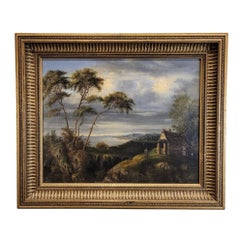
An oil painting by Adolf Friedrich Harper from 1799. A rare antique painting from the romanticism era. Framed in ornate gold wood frame, signed in lower left corner. Artist: Adol...

Category

18th Century Romantic Paintings

Materials

Oil, Canvas

Romantic Portraits, Herman Richir, Brussels 1866 – 1942, Belgian Painter

Romantic Portraits, Herman Richir, Brussels 1866 – 1942, Belgian Painter

Located in Knokke, BE

Romantic Portraits Richir Herman Brussels 1866 – 1942 Belgian Painter Signature: Attributed to Richir Herman Medium: Oil on canvas Dimensions: Image size 67,50 x 62,50 cm, frame size 69,50 x 64,50 cm Biography: Richir Herman Jean Joseph was born in Ixelles (Brussels), on November 4, 1866. He was a Belgian painter of portraits, still lifes, genre paintings, nudes and landscapes. He made decorative paintings to fit into private homes. Richir mainly painted portraits. His clients usually belonged to the higher circles. He portrayed amongst others King Albert and Queen Elisabeth, Cardinal Mercier and Countess d’Oultremont. Less known are the landscape paintings he made Limburg and Kempen, where he regularly stayed with befriended artist Emile Van Doren (1865 – 1949). Herman Richir first studied at the Sint-Joost-ten-Node Academy with Gustave Biot and Charles Hermans, continued his education at the Royal Academy of Fine Arts in Brussels (1884-1889) with the master teacher and artist Jean-Francois Portaels (1818 – 1895). In 1886, during his studies, he won second Prize of Rome for Painting. Richir lived in Schaarbeek. In 1900 he became a teacher of drawing and in 1905 first teacher of painting after nature at the Brussels Academy. He was director there several times 1906-1907, 1910, 1911, 1915-1919, 1925-1927. He was retired in 1927. His pupils included Albert Alleman (1892 – 1933), Éliane de Meuse (1899 – 1993), Paul Hagemans (1884 – 1959), Maurice Mareels (1893 – 1976), Guy Onkelinx (1879 – 1935), Georges Rogy (1897 – 1981), José Storie (1899 – 1961), Charles Swyncop (1895 – 1970), Maurice Schelck...

Category

20th Century Romantic Paintings

Materials

Canvas, Oil

Charlotte Shore Daughter Of The Governor General Of India Painted In India 1790s

Charlotte Shore Daughter Of The Governor General Of India Painted In India 1790s

By Arthur William Devis

Located in Sutton Poyntz, Dorset

Arthur William Devis. English ( b.1762 - d.1822 ). Portrait Of Charlotte Shore, Daughter Of The Governor General Of India, The 1st Lord Teignmouth. Oil On Canvas. Oval Image size 26.2 inches x 20.5 inches ( 66.5cm x 62cm ). Frame size 34.6 inches x 28.7 inches ( 88cm x 73cm ). Available for sale; this original oil painting is by Arthur William Devis and dates from around 1792 to 1795. This painting was created when the sitter and the artist were both in India, the sitter's father being the Governor General of India from 1793 to 1798. The painting is presented and supplied in a 19th century decorative frame. The painted surfaces and the frame have benefitted from some restoration, cleaning and conservation, which was performed on our instruction, supervision and approval. The canvas is lined. This antique painting is in very good condition, commensurate with its age. It wants for nothing and is supplied ready to hang and display. Provenance: By descent in the family of the sitter. Exhibited: Preston, Harris Museum and Art Gallery, 2000, Arthur William Devis, no.52. Charlotte was the eldest child of the first Baron Teignmouth, a title that was created in 1798 for Sir John Shore. The title became extinct in 1981 on the death of the seventh Baron. This portrait was almost certainly painted by Devis in India at a time when the sitter’s father was Governor General. As such, this is a historically significant piece. John Shore was an anti-slavery campaigner, born in London but brought up in Romford. In 1769 he went to work in Bengal where he was one of the first to learn a number of local languages. In 1785 he returned to England and on 14 February 1786 he married Charlotte, the only daughter of James Cornish, a medical practitioner at Teignmouth. The couple’s first child, Charlotte, the subject of this painting, was born the following year, on January 26, 1787. The family quickly returned to India, where John Shore served as Governor from 1793 to 1798. John and his wife had three sons and six daughters over the following fifteen years. Sir John Shore left Calcutta for the final time in March 1798, sailing back to England with his wife and young family. The family settled in Clapham and Sir John became the first president of the British and Foreign Bible Society. He was involved with the Clapham Sect and their anti-slavery campaign. This adorable original oil on canvas depicts Charlotte, the eldest child and first daughter of the first Lord Teignmouth, aged around five to seven years old. (On the basis that the family returned to England in 1798 when Charlotte would have been 11 years old, this painting was almost certainly created in India, during the time when her father was the Governor General of India. We also know that the artist was painting portraits in India the decade up to 1795, when he returned to England.) Charlotte is an attractive child, with thick dark brown curly hair framing her beautiful angelic features. She has fair skin, rosy cheeks and rosebud lips. Her dark eyes are wide and engaging. She has the sweetest expression on her face and we feel that she is kind and good natured. She is wearing a simple white gown, typical of the day, with a low neckline and three- quarter length sleeves and a pale blue sash around her waist. Arthur William Devis was one of the major English artists of the early nineteenth century, noted particularly for his portraits. His life was dynamic and engaging and he produced some of the definitive images of his generation. Devis was born in London on 10 August 1763, the nineteenth child of the artist Arthur Devis and his wife Elizabeth Faulkner. There were several artists in the family and Devis showed an early genius for art. He received some artistic training from his father and then studied at the Royal Academy Schools where he received a Silver Medal, and the good opinion of Sir Joshua Reynolds. Devis became extremely well-travelled, and even circumnavigated the world; when he was about twenty, he was appointed draughtsman on the British East India Company's ship Antelope in a voyage to the East Indies, under Captain Henry Wilson. The vessel was wrecked off the Pelew Islands, on which the crew took refuge. The island was uninhabited, but the sailors formed a friendly alliance with neighboroughing islanders and took part in the wars of the natives. The crew then built themselves a small vessel and sailed for Macao. During this voyage Devis received two wounds from arrows shot from the coast, one in his body, the other in his check, which caused a permanent injury to his jaw. Devis left the rest of the crew at Macao, spent a year in China, then proceeded to Bengal. He settled in India for ten years, establishing a modestly successful practice and receiving several lucrative commissions from British colonialists, of which this painting of young Charlotte is likely to be one. In 1795 he returned to England and worked with great zeal, earning himself a reputation as a serious artist. He painted a number of important historical pieces, including “The Conspiracy of Babington in the reign of Queen Elizabeth” and “Cardinal Langton and the Barons forcing King John to sign Magna”. He soon became established as one of the most talented British artists of his day. It is known that Devis created other portraits of the Shore family between 1797 and 1817. Devis is particularly noted for being involved in the creation of the posthumous cult of Horatio Nelson. After the battle of Trafalgar, he went out to meet the Victory, and painted the acclaimed piece ‘The Death of Vice-Admiral Lord Viscount Nelson, K.B., in the cockpit of H.M.S. Victory, 21 Oct. 1805.’ For this work Devis made various sketches on board HMS Victory, including of Nelson’s body during the autopsy by Dr. Beatty, the ship’s surgeon. The completed picture has become the definitive image of Nelson’s heroic end; it was engraved by W. Bromley (1812), and presented by the Right Hon. Lord Bexley to the gallery of Greenwich Hospital in 1825. At 8 feet 7 inches by 6 feet 4 inches it is of stunning proportions. Devis’ large oil sketch for the piece was purchased by Queen Victoria, December 1852 Devis was also commissioned by Dr. Beatty to produce a half-length painting of Nelson as Vice Admiral, which was lent to Emma Hamilton, who later lost it whilst travelling. Either the original or a copy of this portrait was exhibited at the Royal Academy two years after the Battle and many copies were made of it, including one in the National Maritime Museum. Devis exhibited a total of sixty-five pictures at the Royal Academy between 1779 and 1821. His equestrian portrait of ‘Alexander Sinclair Gordon, Esq.’, was engraved by Anthony Cardon in 1805; ‘The Battle of Waterloo,’ engraved by John Burnet in 1819; ‘An Indian Interior,’ by P. W. Tomkins in 1797; ‘The Little Mountaineer,’ by E. Scriven in 1809, who also engraved Devis's illustrations to J. J. Howard's translation of the ‘Metamorphoses of Ovid,’ London, 1807. Thus images of Devis’ work have become well known through the years. Today there is a portrait of Arra Kovger by Devis in the British Museum, and a portrait of Governor Herbert (painted in Calcutta in 1791) in the National Portrait Museum. Despite his artistic talent, Devis was seemingly completely incapable of managing his financial affairs. He therefore failed to maintain the status in society that his talent deserved. Where money was concerned, he was generous beyond his means and was sadly declared bankrupt in 1800. In 1804 he was imprisoned for debt. Between 1802 and 1810 he received continual assistance from John Biddulph of Ledbury, but these well-intentioned interventions did not produce the results hoped for, and Devis continued to be hopelessly unreliable. Towards the end of his career he at last began to receive Royal patronage, but it came too late. When he died suddenly from apoplexy in 1822 he left his second wife and young children penniless. He was buried in St. Giles’s churchyard. Works by Arthur Devis are now very much in demand; his depiction of Bengali weavers made an eyecatching £130,000 in a UK auction...

Category

Early 19th Century Romantic Paintings

Materials

Canvas, Oil

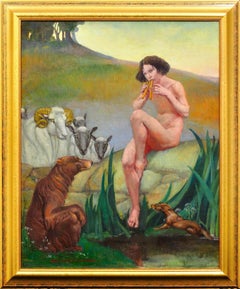
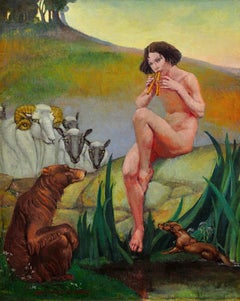
Pan God of Nature Playing Panpipes 1930s Mythological Nude Oil Painting

Pan God of Nature Playing Panpipes 1930s Mythological Nude Oil Painting

By Margaret Maitland Howard

Located in Sutton Poyntz, Dorset

Margaret Maitland Howard. English ( b.1898 - d.1983 ). Pan, God Of Nature, Playing Panpipes. Oil On Canvas. Signed Lower Left. Image size 22.6 inches x 18.1 inches ( 57.5cm x 46cm ). Frame size 26.8 inches x 22.2 inches ( 68cm x 56.5cm ). Available for sale; this original oil painting is by the English artist Margaret Maitland Howard and dates from the 1930s. The painting is presented and supplied in a sympathetic contemporary frame (which is shown in these photographs), mounted with new fixtures. The canvas has been lined and mounted on a newly constructed custom made stretcher. The painted surface has benefitted from cleaning and conservation, all of which was performed on our instruction, supervision and approval. This vintage painting is now in very good condition. It wants for nothing and is supplied ready to hang and display. The painting is signed lower left. Margaret Maitland Howard was an accomplished and versatile English artist whose works spanned the early to mid-20th century. Known for her evocative and often mythologically inspired oil paintings, Howard’s work reflects a deep engagement with classical themes and her knowledge of nature, and the human form. She was also proficient working in watercolours and pastels and an accomplished sculptor. Margaret, who was always known as “Marjorie” was born in Friern, Barnet, London on 31 July 1898, the daughter of artist and civil servant Henry James Howard. She grew up at Sutton, Surrey, where she spent most of her life. She spent many years living and working from St. Katherine’s, Malgrave Road, Sutton, Surrey. She was educated privately, at the Byam Shaw and then attended the Vicat Cole School of Art, completing her studies at the Royal Academy Schools, where she won five silver medals and other awards. She was also the recipient of a British Institute scholarship and extension and won the 1926 prize for her portrait work at the National Welsh Eisteddfod in Swansea. She exhibited paintings at the Royal Academy, showing at least ten works of classical and biblical themes at Summer Exhibitions between 1923 and 1935. She was one of the early group of women who painted nudes, a practice which was considered somewhat risqué and vulgar in the early twentieth century. She also exhibited at other leading galleries and in the provinces and consistently pursued her art despite the challenges posed by the societal norms of the time. Howard had a significant professional career for a woman of her generation. Just after World War II she was appointed draughtsman to the Institute of Archaeology at London University where she worked from 1948 to 1960. This is now part of University College, London. Here, she worked as an illustrator and sculptor, creating models for Professor Frederick Zeuner to use in his lectures. She also illustrated one of his important books (Zeuner, F.E. Dating the Past, London: Methuen). She also created the bust of Gordon Childe, now in the Institute’s Library. After her retirement from the Institute of Archaeology she collaborated with Ian Wolfran Cornwall on his series of books about the prehistoric world. In 1956, whilst working for the British Institute for the Study of Iraq, she moved to Balawat and supervised the archaeological work at the site of an ancient Assyrian city in northern Mesopotamia. She subsequently prepared drawings of the Balawat Gates, which was significant and technical work. In addition to illustrating various books on ancient history and anthropology, Howard was also known as an illustrator of fictional books, producing an illustrated edition of the Fables of Aesop that was published by John Lane at The Bodley Head in 1926. She also illustrated Elizabeth Ward...

Category

Mid-20th Century Romantic Paintings

Materials

Canvas, Oil

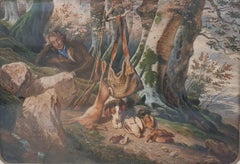
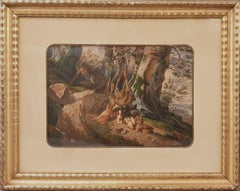
Watercolor French school mid 18th romantic Hunt dog hunter game forest

Watercolor French school mid 18th romantic Hunt dog hunter game forest

Located in PARIS, FR

A. GUILLAUME (Active in the 1830s) Watercolor on paper 32.5 x 47 cm (60 x 74.5 cm with frame) Signed and dated lower left (on the rock) “A. Guill. / 1838 » Beautiful 19th century fra...

Category

1830s Romantic Paintings

Materials

Watercolor

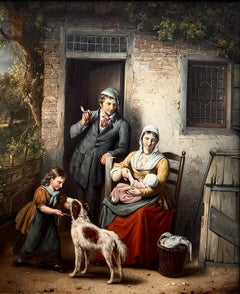
"Romantic Genre Scene"

"Romantic Genre Scene"

Located in Edinburgh, GB

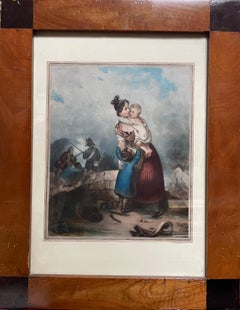
Karl Schindler (1821–1842) – Romantic Genre Scene Artist: Karl Schindler Period: Early 19th Century Medium: Watercolor on Paper Dimensions: Framed: 35 x 28 cm Artwork: 21 x 16 cm St...
Category

Early 19th Century Romantic Paintings

Materials

Paper, Watercolor

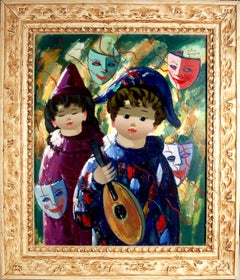
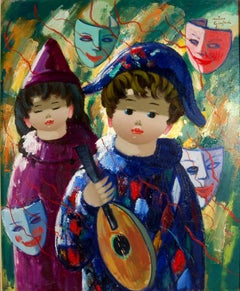
Arlequin et Pierrette au Carnaval

Arlequin et Pierrette au Carnaval

By Nino Guiffrida

Located in San Francisco, CA

Artist: Nino Guiffrida (Italian, born 1924) Title: Arlequin et Pierrette au Carnaval Year: 1985 Medium: Oil on canvas Canvas size: 24 x 19.75 inches Signature: signed upper right...

Category

Late 20th Century Romantic Paintings

Materials

Oil

Chrysanthemums. Canvas, oil, 81.6x65.5 cm

Chrysanthemums. Canvas, oil, 81.6x65.5 cm

Located in Riga, LV

HILDA VIKA (married EGLITE) (1879 – 1963) She was born at Riga; her father was a worker at liqueur factory. Her first drawing teacher was a German artist Gerhard Fon Rozen, at Riga ...

Category

1920s Romantic Paintings

Materials

Canvas, Oil

Painting french school romantic 19th century oil on canvas Interior of a bakery

Painting french school romantic 19th century oil on canvas Interior of a bakery

Located in PARIS, FR

French school of the first half of the 19th century Oil on canvas 45.5 x 60 cm (59.5 x 74 cm with frame) Beautiful 19th century carved and gilded wooden frame Good condition (a few r...

Category

19th Century Romantic Paintings

Materials

Oil

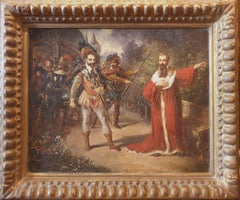
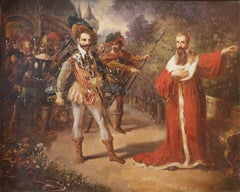
French school 19th romantic Historical scene Duke GUISE DURANTI Oil Sketch

French school 19th romantic Historical scene Duke GUISE DURANTI Oil Sketch

Located in PARIS, FR

19th century French school Oil on canvas 33 x 41 cm (53 x 45 cm with the frame) Original canvas with the stamp of the merchant "Vallé & Bourniche / Successeurs de Bellot" active in P...

Category

1830s Romantic Paintings

Materials

Oil

"Winter Wonderland"
"Winter Wonderland"

"Winter Wonderland"

Located in Edinburgh, GB

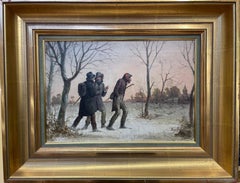
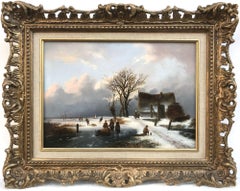
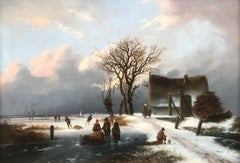
Unidentified Artist (19th Century) "Winter Wonderland" (1885) This charming 19th-century oil painting captures a winter landscape, depicting three figures trudging through the snow, engaged in animated conversation. The scene is set against a serene rural backdrop, where bare trees and a distant village silhouette convey the stark beauty of winter. The soft glow of the sky, transitioning from warm hues to cool whites, enhances the tranquil yet brisk atmosphere of a cold winter’s day. Plot & Interpretation The three travelers appear to be peasants or laborers, possibly returning home or embarking on a journey. Their layered winter clothing, fur hats, and backpacks suggest they are seasoned wanderers or workers, braving the elements. The gesturing figure in the middle seems to be engaged in storytelling or giving directions, adding a sense of movement and interaction. The snow-covered ground and delicate shadows create depth, emphasizing the hardship and resilience of rural life in the 19th century. Materials & Condition Medium: Oil on canvas Framed Dimensions: 47 x 46 cm Canvas Dimensions: 24 x 34 cm Frame: Ornate giltwood frame, enhancing the painting’s classical aesthetic Condition: Well-preserved with minor age-related patina, in line with its 1885 dating Historical Context & Artistic Style Likely influenced by Northern European realism, particularly Russian, German, or Scandinavian schools that depicted harsh winters and rural peasant life. Comparable to the works of Adolf von Meckel, Vasily Perov, or Carl...

Category

19th Century Romantic Paintings

Materials

Canvas, Oil

Pair of Orientalist Watercolors

Pair of Orientalist Watercolors

Located in New York, NY

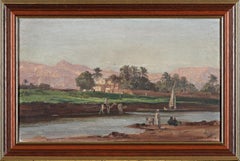
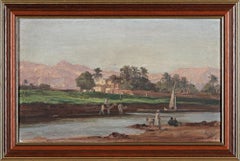
Both signed lower right. The works come from a private collection. The scenes represent soft sunset backdrops in scenic locations in Egypt with small figures to anchor the foreground.

Category

Early 20th Century Romantic Paintings

Materials

Paper, Watercolor

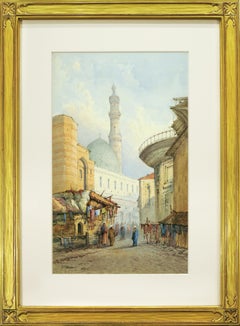
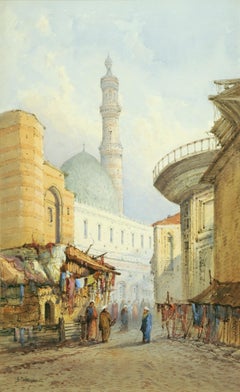
Street Scene in Cairo, Egypt

Street Scene in Cairo, Egypt

By Frank Catano

Located in New York, NY

Signed lower left Francesco (Frank) Catano was a popular 19th Century Italian painter who exhibited between 1880 and 1914. He worked mainly in watercolour and his subject-matter inc...

Category

Early 20th Century Romantic Paintings

Materials

Paper, Watercolor

Oedipus leaves Thebes guided by Antigone

Oedipus leaves Thebes guided by Antigone

Located in Pasadena, CA

Oil on canvas attributed Rousseau-Decelle, French painter of the XIXth century. Student of Bouguereau and Ferrier In 1903, the artist whose studio is located at 235 rue du Faubourg ...

Category

1860s Romantic Paintings

Materials

Oil

Three Head Portraits of a Young Girl

Three Head Portraits of a Young Girl

Located in Fairlawn, OH

Hippolyte Roques (active 1838-1864) Three Head Portraits of a Young Girl Oil on grey wove paper, c. 1850 Unsigned Provenance: Estate of the artist Shepherd Galle...

Category

1850s Romantic Paintings

Materials

Oil

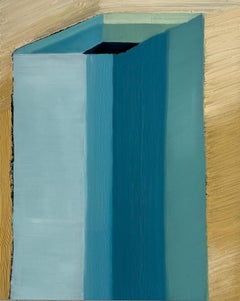
#4423
#4423

#4423

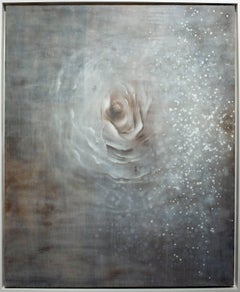
By Hiro Yokose

Located in Phoenix, AZ

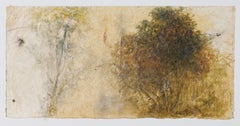
oil and wax on canvas 62 x 50 inches framed Neo-romantic painter Hiro Yokose fuses multiple layers of wax and oil paint to create mysterious, veiled landscapes illuminated with fl...

Category

Early 2000s Romantic Paintings

Materials

Canvas, Cotton Canvas, Wax, Oil

A Walk into Town, Oil Painting, Dutch Romantic and Hague Schools

A Walk into Town, Oil Painting, Dutch Romantic and Hague Schools

By Bernardus Johannes (Bernard) Blommers

Located in New York, NY

Oil on board 9 1/4 x 13 inches (23.5 x 33 cm) Framed: 19 1/4 x 23 inches (48.9 x 58.4 cm) Signed lower right: Blommers Provenance: Jacques Goudstikker, The Netherlands Acquired from...

Category

Early 20th Century Romantic Paintings

Materials

Oil, Canvas

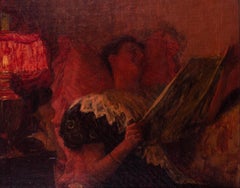
19th Century, British, lady reading by lamplight in red tones by La Thangue

19th Century, British, lady reading by lamplight in red tones by La Thangue

By Henry Herbert La Thangue

Located in Petworth, West Sussex

A beautiful composition by the great British artist Henry Herbert La Thangue of a girl reading in warm red tones by lamplight. The details of the work are as follows: HENRY HERBER...

Category

19th Century Romantic Paintings

Materials

Canvas, Oil

‘Fishermen’s Cove with two fishing boats on the beach’ by Johan Hendrik Meijer

‘Fishermen’s Cove with two fishing boats on the beach’ by Johan Hendrik Meijer

By Johan Hendrik Louis Meijer

Located in Knokke, BE

Johan Hendrik Louis Meijer Amsterdam 1809 – 1866 Utrecht Dutch Painter ‘Fishermen’s Cove with two fishing boats on the beach’ Signature: signed lower right ‘L Meijer’
Medium: oil o...

Category

19th Century Romantic Paintings

Materials

Oil, Panel

Cossacks Hunting
Cossacks Hunting

Cossacks Hunting

Located in New York, NY

Signed lower right. Multiple labels on reverse. The painting is typical of Gedlek's genre scenes, often depicting genre scenes from the life of the Cossacks, in particular the Ukrai...

Category

19th Century Romantic Paintings

Materials

Oil, Wood Panel

Set of Four 18th Century Romantic Italian Paintings

Set of Four 18th Century Romantic Italian Paintings

Located in Palm Beach, FL

Here is a set of four 18th century Italian paintings depicting various romantic dramas. All four painted in old world style and presented in the original stretchers and frames. Findi...

Category

18th Century Romantic Paintings

Materials

Oil

Crows Series, Watercolour on paper, Rare Art by Indian Bengal Artist "In Stock"

Crows Series, Watercolour on paper, Rare Art by Indian Bengal Artist "In Stock"

By Dipen Bose

Located in Kolkata, West Bengal

Rare Collectible by Bengal School Artist Artist : Dipen Bose Medium : Watercolours on paper Size : 7.5 x 5 inches Paintings on both sides of the paper. Extraordinary and Unique. Here the master artist shows very subtly the command he has over the brush. The dramatic effect that Monotone watercolours created, to play and tantalise all of our senses. Effortlessly executed, one cannot miss the expertise and uniqueness in the works. Even the less dense watercolours, speaks to its viewers. Its never been easier to connect with watercolours and its essence. Bengal Master Artist Dipen Bose (1921-1964)  Born in Calcutta, West Bengal. Education : Self-taught artist with no academic training in art. 1942 Completed Graduation, Calcutta. Grandfather, Nagendra Bose inspired him to start painting. Learnt the technique of oil painting from artist Debi Prasad Roychowdhury. 1947 Started to paint after giving up his job at Central Excise Service, Calcutta. His association with the Indian Institute of Art and Industry and Indian Society of Oriental Art played a vital role in his life. He was close to Indra Dugar. Associated with Art in Industry and Rachana till 1952. These associations inspired him towards traditional Indian Art, French Impressionism and Chinese Art. 1953 His painting was presented to the President, Federal Republic of Germany by Govt. of India. Dipen Bose Wrote articles on art in newspapers and journals. Style : For inspiration and evolving a personal style, Dipen looked at part of the history of art that seemed useful- Jain and Kangra painting...
Category

1960s Romantic Paintings

Materials

India Ink, Watercolor

Romantic paintings for sale on 1stDibs.

Find a wide variety of authentic Romantic paintings available for sale on 1stDibs. Works in this style were very popular during the 21st Century and Contemporary, but contemporary artists have continued to produce works inspired by this movement. If you’re looking to add paintings created in this style to introduce contrast in an otherwise neutral space in your home, the works available on 1stDibs include elements of blue, purple and other colors. Many Pop art paintings were created by popular artists on 1stDibs, including Hiro Yokose, Dipen Bose, William Oxer F.R.S.A., and Sheila Querre. Frequently made by artists working with Paint, and Oil Paint and other materials, all of these pieces for sale are unique and have attracted attention over the years. Not every interior allows for large Romantic paintings, so small editions measuring 4.5 inches across are also available. Prices for paintings made by famous or emerging artists can differ depending on medium, time period and other attributes. On 1stDibs, the price for these items starts at $178 and tops out at $1,300,000, while the average work sells for $3,061.