1880s Art

to
137
703
228
169
79
89
Overall Width
to
Overall Height
to
7,454
21,379
163,686
232,356
2,022
2,270
4,927
6,502
5,803
15,007
20,724
25,767
18,674
14,124
5,305
293
131
17
14
11
5
3
1
1
619
605
10
818
400
298
235
180
116
103
96
80
78
64
59
58
53
51
47
46
39
35
34
436
349
320
241
223
61
52
34
33
14
437
406
577
449
Period: 1880s
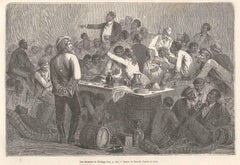
Du, du liegst mir im Herzen.  [Musicians of Bremen]

Du, du liegst mir im Herzen. [Musicians of Bremen]

Located in New York, NY

Du, du liegst mir im Herzen. [Musicians of Bremen.] This brightly colored large-scale color lithograph was published by C. Burckardt, Deponirt "Druck u.Verlag v. C. Burckardt's Na...

Category

Other Art Style 1880s Art

Materials

Lithograph
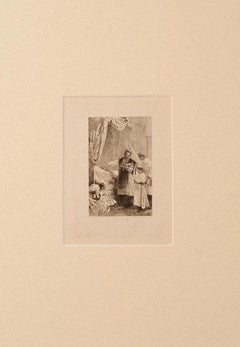
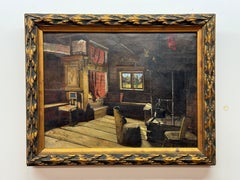
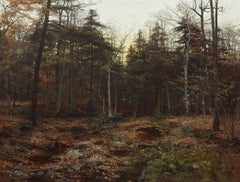
1880 Cottage Interior

1880 Cottage Interior

Located in San Francisco, CA

1880 cottage interior oil on canvas 14.75 x 19.25 unframed, 18.25 x 22.75 framed Signature indecipherable

Category

1880s Art

Materials

Canvas, Oil

French school Landscape Forest Path with Figures Anonym school of Barbizon

French school Landscape Forest Path with Figures Anonym school of Barbizon

Located in Zofingen, AG

➡️ Landscape Forest Path with Figures Anonym school of Barbizon⬅️ ⏩It is unsigned - Anonym⏪ ⭐Medium:⭐ Oil on canvas ⭐Technique: ⭐Impasto painting with expressive brushwork. ⭐Si...

Category

Barbizon School 1880s Art

Materials

Gesso, Oil, Wood Panel, Stretcher Bars

19th century etching black and white seascape print boats water buildings signed

19th century etching black and white seascape print boats water buildings signed

By Thomas Moran

Located in Milwaukee, WI

This black and white etching by American painter and print maker of the Hudson River School in New York: Thomas Moran, is a rare Klackner #53 of the catalogue raisonné, depicting "The Harbor of Vera...

Category

Hudson River School 1880s Art

Materials

Parchment Paper, Etching

Maximilien Luce La Cueilleuse de Fruits

Maximilien Luce La Cueilleuse de Fruits

By Maximilien Luce

Located in Dallas, TX

Maximilien Luce (French, 1858-1941) La Cueilleuse de Fruits oil on newsprint laid down to board signed Luce (lower right) Sight: 13 1/2 x 6 1/2 in. (34.3 x 16.5cm) Frame: 17.5 x 10 I...

Category

Expressionist 1880s Art

Materials

Oil, Newsprint

Die Balldame - Etching by Max Klinger - 1884

Die Balldame - Etching by Max Klinger - 1884

By Max Klinger

Located in Roma, IT

Rare etching realized by Max Klinger in 1884. II state on 2. Image dimensions: 13.9x19 cm. Very good condition except for some diffused foxing in the margins. Ref. Singer, 284.

Category

Symbolist 1880s Art

Materials

Etching

MIKE + MECHANICS - Signed limited edition still life fine ar print, Record cover

MIKE + MECHANICS - Signed limited edition still life fine ar print, Record cover

By Geoff Halpin

Located in Sant Cugat del Vallès, Barcelona

MIKE + MECHANICS - Signed limited edition archival pigment print - Edition of 5 Record cover for Mike + The Mechanics 'Living Years’ 1988 This image was captured on film. The...

Category

Contemporary 1880s Art

Materials

Photographic Film, Archival Paper, Black and White, Giclée, Pigment, Arc...

Edouard Detaille (1848 1912), A trophy of arms, 1885,  drawing signed and dated

Edouard Detaille (1848 1912), A trophy of arms, 1885, drawing signed and dated

By Jean Baptiste Édouard Detaille

Located in Paris, FR

Edouard Detaille (1848-1912) A trophy of arms, 1885 11.5 x 20 cm Pen and ink with heightenings of white gouache on paper Signed and dated 1885 lower right and annotated "Armée française...

Category

Academic 1880s Art

Materials

Ink

Theodore Blake Wirgman (1848-1925)  Portrait of Ernest Albert Waterlow, drawing

Theodore Blake Wirgman (1848-1925) Portrait of Ernest Albert Waterlow, drawing

By Theodore Blake Wirgman

Located in Paris, FR

Theodore Blake Wirgman (1848-1925) Portrait of Sir Ernest Albert Waterlow RA, (1850-1919) pen and black ink on paper, inscribed with the name of the sitter on the verso of the sheet, now not visible under the framing 15 x 12 cm In a modern frame 34.5 x 30 cm Theodore Blake Wirgman (29 April 1848 – 16 January 1925) was an English painter and etcher who moved to London, studied at the Royal Academy schools, became a painter of history and genre subjects, and worked as a portrait artist for The Graphic. A number of these portraits are held at the National Portrait Gallery. Theodore Blake Wirgman was born in Belgium and died in London. He worked from a studio at 24 Dawson Place, Notting Hill, London, and joined The Arts Club in 1892. Wirgman was part of a group of avant-garde young artists who emulated Edward Burne-Jones and Simeon Solomon...

Category

Academic 1880s Art

Materials

Ink

Water Mill

Water Mill

By Sir Frank Short

Located in Plano, TX

Water Mill (after the drawing by J.M.W. Turner, R.A., 1775-1851). 1885. Mezzotint. Hardie 3.ii. With the publication line. 7 x 10 1/8 (sheet 12 1/4 x 16 5/8...

Category

1880s Art

Materials

Mezzotint

French School 19th Century, Studies of horses, two drawings

French School 19th Century, Studies of horses, two drawings

Located in Paris, FR

French School 19th Century, Studies of horses, two drawings in the same frame 7 x 11 cm (oval) and 7 x 9.8 cm pencil on paper Condition : The oval one on the left with foxings (see...

Category

Academic 1880s Art

Materials

Pencil

France 19th Century,  Peasants and donkeys at the fountain in Italy, watercolor

France 19th Century, Peasants and donkeys at the fountain in Italy, watercolor

Located in Paris, FR

French School 19th Century, Peasants and donkeys at the fountain, in Italy watercolor with heightenings of gouache on paper 27.5 x 34.5 cm No frame, no mat A charming, well-execut...

Category

Romantic 1880s Art

Materials

Watercolor, Gouache

19th Century Dutch Landscape: Watercolor of Riverbank in Holland

19th Century Dutch Landscape: Watercolor of Riverbank in Holland

Located in New York, NY

Stamp Signed: Jongkind and dated: Sept 84 Inscribed: 30-142 in ink lower right Provenance: Private collection, Pennsylvania Jongkind was born in Lattrop, in the eastern part of The...

Category

Romantic 1880s Art

Materials

Paper, Chalk, Watercolor, Pencil

Winter Ploughing - Pre-Raphaelite watercolour by William Bell Scott

Winter Ploughing - Pre-Raphaelite watercolour by William Bell Scott

By William Bell Scott

Located in London, GB

WILLIAM BELL SCOTT (British 1811-1890) Winter Ploughing Signed with initials and dated l.r.: WBS 1885 Watercolour with scratching out on paper 12 by 17 cm., 4 ¾ by 6 ¾ in. (frame size 31 by 35.5 cm., 12 ¼ by 14 in.) Provenance: Agnews, London William Bell Scott was the son of Robert Scott, an Edinburgh engraver and brother of the artist David Scott. He was born at St Leonard’s, Edinburgh and studied under his father, and at the Trustees’ Academy before leaving for London in 1837. After entering for the Westminster Hall Competition he was appointed as master of the Government School of Design in Newcastle in 1843. Rossetti wrote to him in 1847 praising one of his poems, the two became close friends and Scott contributed several poems to The Germ...

Category

Pre-Raphaelite 1880s Art

Materials

Watercolor, Paper

Cotherstone racehorse with stud groom Wilson watercolour by H Fluiss

Cotherstone racehorse with stud groom Wilson watercolour by H Fluiss

Located in London, GB

H. Fluiss Cotherstone with stud groom "Wilson" (1862) Watercolour 30 x 39 cm A late-nineteenth century watercolour depicting Cotherstone, the British Thoroughbred racehorse and sire...

Category

Modern 1880s Art

Materials

Watercolor

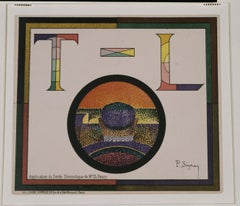
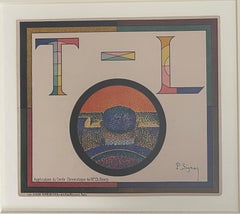
Let It Be Orange

Let It Be Orange

By Julian Stanczak

Located in Fairlawn, OH

Signed in pencil lower right Published by Eugene Schuster, London Art Printer: Vistec, Rochester, New York Regular edition unrealized per Stanczak web site This annotated "H.C." ...

Category

Op Art 1880s Art

Materials

Screen

Hampton Court From the Fountain screenprint by Brendan Neiland

Hampton Court From the Fountain screenprint by Brendan Neiland

By Brendan Neiland

Located in London, GB

Brendan Neiland (b.1941) R.A. (Expelled) Hampton Court (1984) Screenprint 74 x 51 cm Signed, dated, titled, and numbered 152/250 in pencil. A print of one of Hampton Court's magnificent facades, reflected in its fountain. Reflected architecture is one of Neiland's most recurring themes. The Fountain Court was designed by Sir Christopher Wren; he began remodelled the palace in the baroque style for William III and Mary II...

Category

1880s Art

Materials

Screen

L'embarquement de boeufs - Impressionist Oil, Cattle by Jean Francois Raffaelli

L'embarquement de boeufs - Impressionist Oil, Cattle by Jean Francois Raffaelli

By Jean-Francois Raffaelli

Located in Marlow, Buckinghamshire

Wonderful signed oil on panel cattle and figures in landscape by French impressionist painter Jean-Francois Raffaelli. The work depicts oxen being loaded onto ships in Honfleur, France en route to England. Signature: Signed lower right Dimensions: Framed: 18"x16" Unframed: 9"x8" Provenance: Exhibition Jean Francois Raffaélli held at Galerie Simonson, 19 Rue Caumartin Paris - October 1929 (number 44) Jean-François Raffaëlli's father was a failed Italian businessman and Raffaëlli himself was, among other things, a church chorister, actor and theatre singer. He then studied under Gérôme at the École des Beaux-Arts in Paris. He travelled to Italy, Spain and Algeria and on his return to France settled in Asnières. In 1876, on a trip to Brittany, he first saw the potential of realist subject matter, if treated seriously. He became involved in meetings of artists at the Café Guerbois, where the Impressionist painters used to gather. As a result, Degas, contrary to the advice of the group, introduced Raffaëlli to the Impressionist exhibitions - according to one uncertain source as early as the very first exhibition, at the home of Nadar, and certainly to those of 1880 and 1881. In 1904, Raffaëlli founded the Society for Original Colour Engraving. He first exhibited at the Salon de Paris in 1870 and continued to exhibit there until he joined the Salon des Artistes Français in 1881, where he earned a commendation in 1885, was made Chevalier of the Légion d'Honneur in 1889 and in the same year was awarded a gold medal at the Exposition Universelle. In 1906 he was made Officier of the Légion d'Honneur. He was also a member of the Société Nationale des Beaux-Arts. In 1884, a private exhibition of his work cemented his reputation. He contributed to several newspapers such as The Black Cat (Le Chat Noir) in 1885 and The French Mail (Le Courrier Français) in 1886 and 1887. He published a collection entitled Parisian Characters, which captured his favourite themes of the street, the neighbourhood and local people going about their lives. In 1880 he participated, with Forain, on the illustration of Joris Karl Huysmans' Parisian Sketches (Croquis Parisiens). He also illustrated Huysman's Works. As well as working as an illustrator, he also made etchings and coloured dry-points. His early attempts at painting were genre scenes, but once he was settled in Asnières he started to paint picturesque views of Parisian suburbs. From 1879 onwards, his subject matter drew on the lives of local people. These popular themes, which he treated with humanity and a social conscience, brought him to the attention of the social realist writers of the time such as Émile Zola. In addition to his realist style, Raffaëlli's dark palette, which ran contrary to the Impressionist aesthethic, helped to explain the opposition of those painters to his participation in their exhibitions. More concerned with drawing than colour, he used black and white for most of his paintings. Towards the end of his life, he lightened his palette, but without adopting any other principles of the Impressionist technique. After painting several portraits, including Edmond de Goncourt and Georges Clémenceau, he returned to genre painting, particularly scenes of bourgeois life. Later in his career, he painted mainly Breton-inspired sailors and views of Venice. His views of the Paris slums and the fortifications, sites which have almost completely disappeared, went some way towards establishing a genre in themselves and perpetuated the memory of the area: The Slums, Rag-and-Bone Man, Vagabond, Sandpit, In St-Denis, Area of Fortifications. His realistic and witty portrayal of typical Parisian townscapes accounts for his enduring appeal. Born in Paris, he was of Tuscan descent through his paternal grandparents. He showed an interest in music and theatre before becoming a painter in 1870. One of his landscape paintings was accepted for exhibition at the Salon in that same year. In October 1871 he began three months of study under Jean-Léon Gérôme at the École des Beaux-Arts in Paris; he had no other formal training. Raffaëlli produced primarily costume pictures until 1876, when he began to depict the people of his time—particularly peasants, workers, and ragpickers seen in the suburbs of Paris—in a realistic style. His new work was championed by influential critics such as J.-K. Huysmans, as well as by Edgar Degas. The ragpicker became for Raffaëlli a symbol of the alienation of the individual in modern society. Art historian Barbara S. Fields has written of Raffaëlli's interest in the positivist philosophy of Hippolyte-Adolphe Taine, which led him to articulate a theory of realism that he christened caractérisme. He hoped to set himself apart from those unthinking, so-called realist artists whose art provided the viewer with only a literal depiction of nature. His careful observation of man in his milieu paralleled the anti-aesthetic, anti-romantic approach of the literary Naturalists, such as Zola and Huysmans. Degas invited Raffaëlli to participate in the Impressionist exhibitions of 1880 and 1881, an action that bitterly divided the group; not only was Raffaëlli not an Impressionist, but he threatened to dominate the 1880 exhibition with his outsized display of 37 works. Monet, resentful of Degas's insistence on expanding the Impressionist exhibitions by including several realists, chose not to exhibit, complaining, "The little chapel has become a commonplace school which opens its doors to the first dauber to come along."An example of Raffaëlli's work from this period is Les buveurs d'absinthe (1881, in the California Palace of Legion of Honor Art Museum in San Francisco). Originally titled Les déclassés, the painting was widely praised at the 1881 exhibit. After winning the Légion d'honneur in 1889, Raffaëlli shifted his attention from the suburbs of Paris to city itself, and the street scenes that resulted were well received by the public and the critics. He made a number of sculptures, but these are known today only through photographs.[2] His work was also part of the painting event in the art competition at the 1912 Summer Olympics. In the later years of his life, he concentrated on color printmaking. Raffaëlli died in Paris on February 11, 1924 Museum and Gallery Holdings: Béziers: Peasants Going to Town Bordeaux: Bohemians at a Café Boston: Notre-Dame; Return from the Market Brussels: Chevet of Notre-Dame; pastel Bucharest (Muz. National de Arta al României): Market at Antibes; Pied-à-terre Copenhagen: Fishermen on the Beach Douai: Return from the Market; Blacksmiths Liège: Absinthe Drinker...

Category

Impressionist 1880s Art

Materials

Oil, Panel

"Spring Calf, " Frederic Ede, watercolor, impressionist, pastoral landscape, 1889

"Spring Calf, " Frederic Ede, watercolor, impressionist, pastoral landscape, 1889

By Frederic Charles Vipond Ede

Located in Wiscasset, ME

Frederic Charles Vipond Ede was born in 1865 in Nottawa in Ontario, Canada. He began his studies in America before traveling to Paris, where he studied at the Académie Julian under T...

Category

Impressionist 1880s Art

Materials

Watercolor

On the Moors - England Original Watercolor 19th Century

On the Moors - England Original Watercolor 19th Century

By David Cox the Younger

Located in Soquel, CA

On the Moors - England Original Watercolor 19th Century Mid 19th century watercolor of the North York Moors in Spring by David Cox (English, 9 July 1809 – 6 December 1885), known as...

Category

Contemporary 1880s Art

Materials

Watercolor, Laid Paper

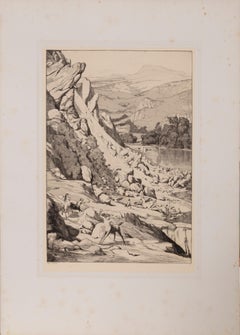
Bunch of Iris
Bunch of Iris

Bunch of Iris

Located in Saint-Ouen, FR

Joseph Alexis KREYDER (1839-1912) Bunch of Iris Oil on canvas signed low left Old frame gilded with leaves Dim canvas : 82 X 61 cm - Dim frame : 104 X 8...
Category

Post-Impressionist 1880s Art

Materials

Oil

Original watercolour Victorian children's book illustration by Sowerby

Original watercolour Victorian children's book illustration by Sowerby

By John George Sowerby 1

Located in London, GB

JOHN GEORGE SOWERBY (1849-1914) Tailpiece for “A Rainy Day” Watercolour heightened with white, circular Unframed, in mount only Diameter 7 cm., 2 ¼ in. (mount size 25.5 by 20 cm., 10 by 8 in.) Reproduced: J G Sowerby & Thomas Crane, At Home, Marcus Ward & Co, 1881, p.17. The current work was reproduced in Sowerby and Crane’s 1881 children’s book...

Category

Realist 1880s Art

Materials

Watercolor