1910s Art

2,177 Results
to
259
1,149
358
403
195
189
Overall Width
to
Overall Height
to
7,661
21,537
166,425
237,001
2,154
2,345
4,720
6,593
6,008
15,867
21,204
26,526
19,348
14,135
5,467
471
293
144
127
54
35
19
12
5
1
1,263
940
38
1,463
718
611
421
392
369
224
145
143
140
134
129
115
107
97
93
81
79
64
61
868
627
518
431
409
136
53
33
24
23
902
443
1,197
1,116
Period: 1910s
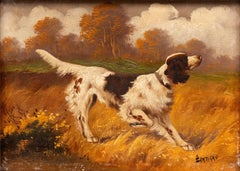
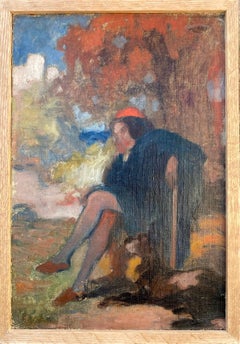
Hunting Dog at the Ready (l)- Louis Lartigau (French, 19th/20th)

Hunting Dog at the Ready (l)- Louis Lartigau (French, 19th/20th)

Located in SANTA FE, NM

Hunting Dog at the Ready (L) Louis Lartigau (French, 19th/20th) Oil on canvas 9 1/8 x 11 3/4 (frame) Signed lower right A very finely drawn and executed painting of a hunting dog at...

Category

1910s Art

Materials

Canvas, Oil

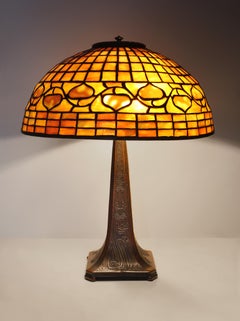
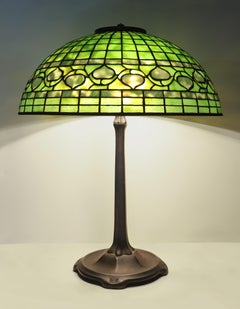
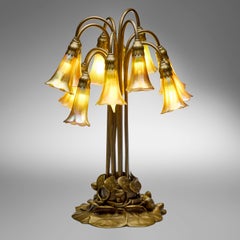
Tiffany Studios Vine Border Desk Lamp

Tiffany Studios Vine Border Desk Lamp

By Tiffany Studios

Located in Miami, FL

Tiffany Studios "Vine Border" Desk Lamp, circa 1905 with a "Chinese" base, leaded glass, patinated bronze shade impressed "Tiffany Studios, New York, 1420" base impressed "Tiffany St...

Category

Art Nouveau 1910s Art

Materials

Bronze

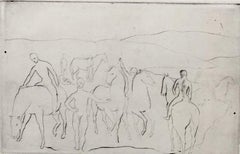
Pablo Picasso, L'Abreuvoir from La Suite Saltimbanques

Pablo Picasso, L'Abreuvoir from La Suite Saltimbanques

By Pablo Picasso

Located in Chatsworth, CA

This piece is an original drypoint created by Pablo Picasso in 1905 and printed by Ambroise Vollard after steel-facing in 1913. It is from a series entitled La Suite des Saltimbanque...

Category

Surrealist 1910s Art

Materials

Drypoint

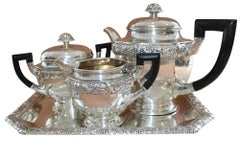
Antique art deco Sterling Silver tea service

Antique art deco Sterling Silver tea service

Located in Riga, LV

Antique art deco silver tea service by Laurits Berth(1857-1917). Consists of: teapot (h.19cmxl.27cmxw.14cm;volume 1.5 l), milk jug(h.10cmxl.15cmxw.9cm), sugar bowl(h.14cmxl.18cmxw.12...

Category

Art Deco 1910s Art

Materials

Silver

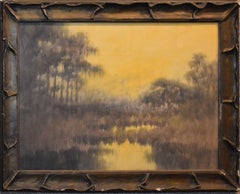
"Misty Bayou"  HAZE.  ONE OF HIS BEST Dated 1917 Alexander Drysdale (1870-1934)

"Misty Bayou" HAZE. ONE OF HIS BEST Dated 1917 Alexander Drysdale (1870-1934)

By Alexander John Drysdale

Located in San Antonio, TX

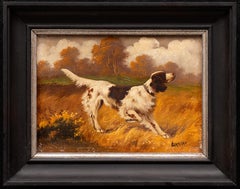
Alexander John Drysdale (1870-1934) New Orleans Louisiana / New York Artist Size: 20 x 30 Frame: 26 x 36 Medium: Oil Wash? Watercolor? Dated: 1917 "Misty Bayou" Housed in the original magnificent frame. Alexander John Drysdale (1870-1934) New Orleans Louisiana / New York Artist Alexander John (A.J.) Drysdale was an early 20th century Louisiana artist who specialized in landscapes using the technique of oil wash, that gave his works a characteristic of a hazy look. Drysdale made use of this technique by diluting the oil paint with kerosene and applying it with cotton balls. Alexander John Drysdale, born in Marietta, Georgia on March 2, 1870, came to New Orleans at the age of fifteen with his parents. His father, Reverend Alexander J. Drysdale, became the rector of Christ Church Cathedral. Alex received private tutoring from a Professor Mehado and art lessons from Ida Hackell at the Southern Art Union. Later in New Orleans (1887) he studied art under Paul Poincy (1833-1909). The exact date of Drysdale's arrival in New York is unknown, but he enrolled in the Art Students League where he received instruction from Charles C. Curran and Frank Vincent DuMond. Apparently, he remained in New York for about five years and did not go to Europe for further study. After some time, Drysdale began specializing in landscapes, executed in a tonalist manner. Back in New Orleans, Drysdale was inspired by local subjects, especially swamp or bayou areas and other desolate wetlands. Over a period of many years Drysdale's landscapes evolved to a unique stylistic maturity. In 1909 he received a gold medal from the New Orleans Art Association. It is easy to see the influence of two artists that he admired: Corot and Inness. Working equally well in oil and watercolor (he also did scenes in charcoal), Drysdale usually divided his scene into halves or thirds, typically, a foreground consisting of tall swamp grasses achieved with broad vertical strokes; a middle ground consisting of a backdrop row of trees at the horizon line executed with staccato, jabbing strokes resulting in textural contrast; and a background devoted totally to a tonalist-like moisture-laden sky often hazy with no clouds or only a slight indication of them. This formulaic compositional format rendered with an economy of technique resulted in imagery with repetitious forms and shapes diffused in a nebulous space. In this regard, Drysdale's works are impressionistic; he also tended to use the violets and blues of the impressionist palette. Yet he lacked a specific interest in color and light. Although his expression of the Louisiana scenery is very personal, even mystical, the artist appears to have been very limited in subject matter. One of his last works was a mural for the Shushan (New York) Airport administration building, and shortly before his death he was employed as an artist by the Civil Works Administration. Drysdale was a member of the Arts and Crafts Club of New Orleans, and his work was in the permanent collection of the Delgado Museum for many years. The artist worked at his studio at 320 Exchange Place in the picturesque Vieux Carré until his death at the age of sixty-three. Stewart (in Painting in the South, 1983), describes how Drysdale was a shrewd businessman. He would solicit new homeowners who might need a canvas to decorate a wall, or a cotton broker who recently made the headlines. Drysdale died in New Orleans, on February 9, 1934. Sources: Louisiana Artists from the Collection of Dr. and Mrs. James W. Nelson. Baton Rouge, LA: Louisiana State University, 1968; Wiesendanger, Martin and Margaret Wiesendanger, Nineteenth Century Louisiana Painters and Paintings from the Collection of W. E. Groves. New Orleans: W. E. Groves Gallery, 1971, pp. 44-45; Painting in the South: 1584-1980, Exh. cat. Richmond, VA: Virginia Museum, 1983, pp. 106-107, 114, 276; Chambers, Bruce W., Art and Artists of the South: The Robert P. Coggins Collection of American Paintings. Exh. cat. Rochester, NY: Memorial Art Gallery of the University of Rochester, 1984, p. 88; Zellman, Michael David, 300 Years of American Art. Seacacus, NJ: Wellfleet Press, 1987, p. 634; Gerdts, William H., Art across America: Two Centuries of Regional Painting, 1710-1920. New York: Abbeville Press, 1990, vol. 2, pp. 110-111. Submitted by Richard H. Love and Michael Preston Worley, Ph.D. Biography from The Johnson Collection ALEXANDER JOHN DRYSDALE (1870–1934) Born in Marietta, Georgia, Alexander John Drysdale was the only son of an ordained Episcopal priest whose ministry required frequent moves to parishes in Georgia, Alabama, and Tennessee. In 1883, he accepted the call to become dean of Christ Church Cathedral, New Orleans, and was later elected a bishop. Alexander, thirteen years old when the family settled in New Orleans, began his art studies under the instruction of Ida C. Haskell, a California-born artist who was on the faculty of the recently established Southern Art Union. The local academy had been founded by several leading artists, including Andres Molinary, William Henry Buck...

Category

Impressionist 1910s Art
Materials

Mixed Media

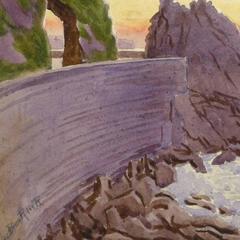
Vintage French Watercolor - Edge of the Riviera

Vintage French Watercolor - Edge of the Riviera

Located in Houston, TX

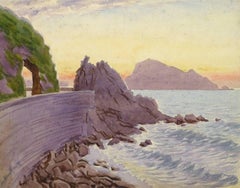
Striking watercolor of a beautiful sunset over a rocky shore along the French Riviera by French artist L. Bourlier, circa 1920. Signed lower left. Original artwork on paper display...

Category

1910s Art

Materials

Paper, Watercolor

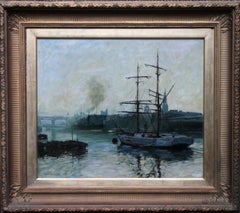
The Port of Newcastle Upon Tyne - British 1914 marine art oil painting

The Port of Newcastle Upon Tyne - British 1914 marine art oil painting

By Joseph Henry Kirsop

Located in Hagley, England

This lovely historically interesting British marine oil painting is by Newcastle artist Joseph Henry Kirsop. Painted in 1914, the location of the painting is the port of Newcastle up...

Category

Realist 1910s Art

Materials

Oil

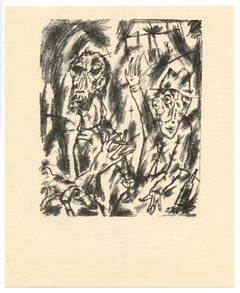
original lithograph

original lithograph

By Otto Gleichmann

Located in Henderson, NV

Medium: original lithograph. Printed in 1919 for Das Kestnerbuch (a portfolio of original prints published during the height of the German Expressionist movement). Image size: 7 x 5 ...

Category

Expressionist 1910s Art

Materials

Lithograph

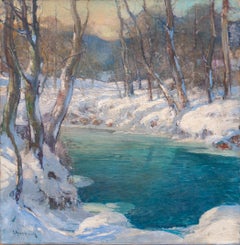
'Winter', ASL, Paris, Société des Artistes Français, South Bend, Indiana, AIC

'Winter', ASL, Paris, Société des Artistes Français, South Bend, Indiana, AIC

By George Ames Aldrich

Located in Santa Cruz, CA

'Winter' by George Ames Aldrich. ASL, Paris, Société des Artistes Français, South Bend, Indiana, AIC ----- Signed lower left, 'G. Ames Aldrich' for George Ames Aldrich (American, 18...

Category

Other Art Style 1910s Art

Materials

Canvas, Oil

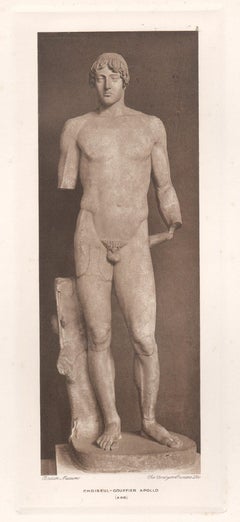
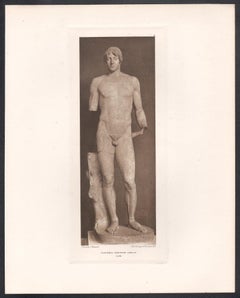
Choiseul-Gouffier Apollo, British Museum Roman Classical sculpture photogravure

Choiseul-Gouffier Apollo, British Museum Roman Classical sculpture photogravure

Located in Melbourne, Victoria

'Choiseul-Gouffier Apollo' Photogravure from a collection of photogravures depicting Greek and Roman marbles and bronzes in the British museum. Plate number above top right corner o...

Category

Other Art Style 1910s Art

Materials

Photogravure

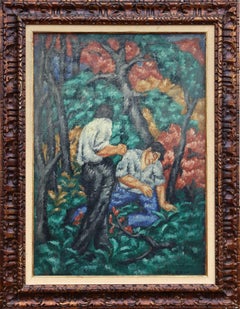
People in the Woods, Oil Painting by Ben Benn

People in the Woods, Oil Painting by Ben Benn

By Ben Benn

Located in Long Island City, NY

Artist: Ben Benn, Russian/American (1884 - 1983) Title: People in the Woods Year: 1917 Medium: Oil on Canvas, signed l.r. Size: 31 x 22 in. (78.74 x 55.88 cm) Frame Size: 39 x 30 i...

Category

American Impressionist 1910s Art

Materials

Oil

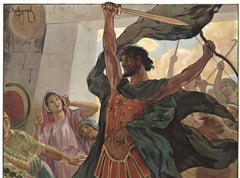
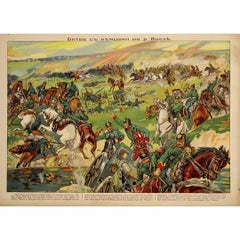
1915 Russian WWI Poster – Battle Against Germans on the Vistula

1915 Russian WWI Poster – Battle Against Germans on the Vistula

Located in PARIS, FR

This vivid circa 1915 original Russian poster depicts a dramatic battle scene from the Eastern Front during the First World War, titled: “Battle Against the Germans on the Vistula.”...

Category

1910s Art

Materials

Linen, Paper, Lithograph

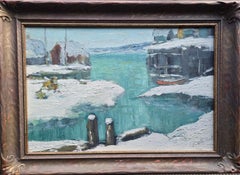
Maine Harbor, Winter

Maine Harbor, Winter

Located in North Clarendon, VT

Wonderful oil on board of a winter harbor scene, likely Maine. American/Canadian artist Charles E. Duncan Rodick. 10" x 14", signed lower right, in a period frame. Mr. Rodick was a ...

Category

American Impressionist 1910s Art

Materials

Oil

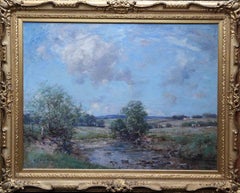
Stirling River Landscape Scotland - Scottish Impressionist 1910 art oil painting

Stirling River Landscape Scotland - Scottish Impressionist 1910 art oil painting

By Joseph Morris Henderson

Located in Hagley, England

This lovely Scottish Stirlingshire Impressionist landscape is by noted artist Joseph Morris Henderson. Painted circa 1910 the composition is a river landscape with the river in the foreground and cows in the fields beyond. In the distance one can see some dwellings and hills beyond those, all beneath a summers sky. The impressionistic brushwork and colouring are just lovely. This is an excellent large example of Henderson's work and of Scottish landscape art...

Category

Impressionist 1910s Art
Materials

Oil

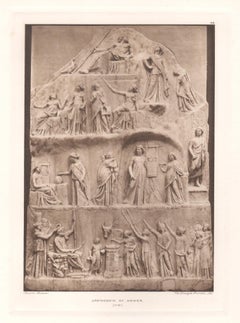
Apotheosis of Homer, British Museum Roman Classical sculpture photogravure

Apotheosis of Homer, British Museum Roman Classical sculpture photogravure

Located in Melbourne, Victoria

'Apotheosis of Homer' Photogravure from a collection of photogravures depicting Greek and Roman marbles and bronzes in the British museum. Plate number above top right corner of the...

Category

Other Art Style 1910s Art

Materials

Photogravure

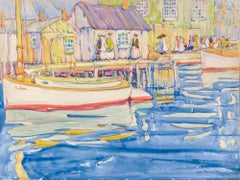
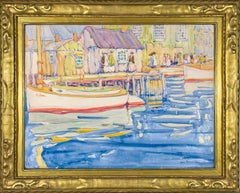
The White Boat, Edgartown

The White Boat, Edgartown

By Jane Peterson

Located in Bryn Mawr, PA

The White Boat, Edgartown, c. 1916 Watercolor and gouache on board 18 x 24 inches (45.7 x 61 cm) Framed dims: 24 x 29 1/2 inches Signed at lower right: JANE PETERSON Inscribed on ver...

Category

American Impressionist 1910s Art

Materials

Watercolor, Gouache, Board

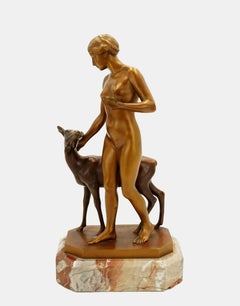
Forest idyll / - Soulmate -

Forest idyll / - Soulmate -

By Rudolf Kaesbach

Located in Berlin, DE

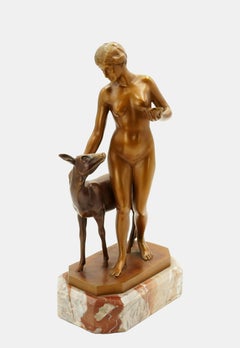
Rudolf Kaesbach (1873 Gladbach - 1955 Berlin), Forest idyll, around 1915. Bronze, gold and golden brown patina, with cast plinth, mounted on a marble base (5 cm high), total height 36 cm, dimensions of the bronze: 31 cm (height) x 17 cm (length) x 12 cm (width). Weight 4,6 kg, signed on the plinth "R.[udolf] KAESBACH". - a few rubbed areas, overall in excellent condition for its age - Soulmate - The bronze sculpture depicts a young woman in an intimate exchange with a deer that accompanies her. The animal pauses to turn toward her, while the nude beauty slows her pace to look into the deer's eyes and tenderly caress it with her hand. The woman and the deer are in inner harmony. Even though her lips remain motionless, she speaks the language of the animal with which she is deeply connected. The golden patina, which contrasts with the more naturalistic coloring of the deer, gives the young woman the appearance of a saint, even if she cannot be identified as such. At the same time, she evokes memories of Diana, the goddess of the hunt, or a nymph. But she lacks the ferocity. In her innocent naivety, she is more like a vestal virgin, who is not at home in the solitude of the forest. And yet, the young beauty, moving unclothed in the heart of nature, looks like a priestess with her hair tied up and a carefully carried bowl on her way to a sacred grove. In order to open up the above-mentioned associations, Kaesbach deliberately designed the female figure in such a way that she cannot be identified as a specific person. He has created an allegory of natural femininity, characteristic of Art Nouveau, in which the deer is far more than a companion animal. It displays the same gracefulness as the young woman, and the inner resemblance between the two makes the deer appear as her other self. In animal terms, it embodies her inner being, which also gives the deer an allegorical character. About the artist Rudolf Kaesbach studied sculpture at the Hanau Academy and worked in a bronze foundry in Paris in 1900. In order to work as an independent artist, he opened a workshop in Düsseldorf, where he cast bronzes from models he designed. In 1902 he made his debut at the German National Art Exhibition in Düsseldorf. The following year Kaesbach went to the academy in Brussels. There he was inspired by contemporary Belgian sculpture, especially the work of Constantin Meunier. He moved to Berlin, where he opened a studio in the villa district of Grunewald and devoted himself to life-size marble sculptures and the design of bronzes. From 1911, he regularly presented his works at the major art exhibitions in Berlin, as well as in Düsseldorf and Malmö. Between 1936 and 1939, he also created models for the Rosenthal porcelain factory. From 1939 to 1944, Kaesbach was represented at the major German art exhibitions in Munich. GERMAN VERSION Rudolf Kaesbach (1873 Gladbach - 1955 Berlin), Waldidyll, um 1915. Gold und goldbraun patinierte Bronze mit gegossener Plinthe, auf einem Marmorsockel montiert (5 cm Höhe), Gesamthöhe 36 cm, Maße der Bronze: 31 cm (Höhe) x 17 cm (Länge) x 12 cm (Breite). Gewicht 4,6 kg, auf der Plinthe mit „R.[udolf] KAESBACH“ signiert. - vereinzele beriebene Stellen, insgesamt in einem altersgemäß ausgezeichneten Zustand - Seelenverwandtschaft - Die Bronzeplastik veranschaulicht eine junge Frau im innigen Austausch mit einem sie begleitenden Reh. Das Tier hält inne, um sich zu ihr hochzuwenden, während die nackte Schönheit ihren Schritt verlangsamt, um dem Reh ebenfalls in die Augen zu schauen und es zärtlich mit der Hand zu liebkosen. Die Frau und das Reh sind in einem inneren Gleichklang. Auch wenn ihre Lippen unbewegt bleiben, spricht sie die Sprache des Tieres, mit dem sie auf eine tief empfundene Weise verbunden ist. Die im Kontrast zur naturalistischeren Einfärbung des Rehs aufstrahlende goldfarbene Patina lässt die junge Frau wie eine Heilige erscheinen, auch wenn sich nicht als Heilige identifizierbar ist. Zugleich ruft sie Erinnerungen an die Jagdgöttin Diana oder eine Nymphe hervor. Dafür fehlt ihr allerdings die Wildheit. In ihrer unschuldigen Naivität gemahnt sie vielmehr an eine Vestalin, die freilich nicht in der Waldeinsamkeit zu Hause ist. Und doch wirkt die sich unbekleidet im Herzen der Natur bewegende junge Schönheit wie eine Priesterin, die sich mit hochgebundenem Haar und der vorsichtig getragenen Schale und dem Wege zu einem Heiligen Hain befindet. Um die gennannten Assoziationen zu eröffnen, hat Kaesbach die Frauenfigur bewusst so gestaltet, dass sie nicht als konkrete Person identifizierbar ist. Damit hat er eine für den Jugendstil charakteristische Allegorie natürlicher Weiblichkeit geschaffen, bei der das Reh weit mehr als ein Begleittier ist. Es weist dieselbe grazile Anmut wie die junge Frau auf und der innere Gleichklag der beiden lässt das Reh als ihr anderen Ich erscheinen. Es verkörpert – ins Animalische übertragen - ihr inneres Wesen, wodurch auch dem Reh ein allegorischer Charakter zukommt. zum Künstler Rudolf Kaesbach studierte an der Akademie Hanau Bildhauerei und war im Jahr 1900 in einer Pariser Bronzegießerei tätig. Um sich als eigenständiger Künstler betätigen zu können, eröffnete er in Düsseldorf eine Werkstatt, in der er Bronzen nach selbstentworfenen Modellen goss. 1902 debütierte er auf der Deutschen Nationalen Kunstaustellung in Düsseldorf. Im Folgejahr ging Kaesbach an die Akademie nach Brüssel. Dort wurde er von der zeitgenössischen belgischen Bildhauerei, insbesondere vom Werk Constantin Meuniers, inspiriert. Zurückgekehrt zog er nach Berlin, wo er im Villenviertel Grunewald ein Atelier eröffnete und sich neben dem Entwurf für Bronzen der lebensgroßen Marmorbildhauerei widmete. Ab 1911 präsentierte er seine Werke regelmäßig auf den Großen Berliner Kunstausstellungen, aber auch in Düsseldorf und Malmö. Zwischen 1936 und 1939 fertigte er zudem Modelle für die Porzellan-Manufaktur Rosenthal an. Von 1939 bis 1944 war...

Category

Jugendstil 1910s Art

Materials

Bronze

THE THAW
THE THAW

THE THAW

By William Seltzer Rice

Located in Santa Monica, CA

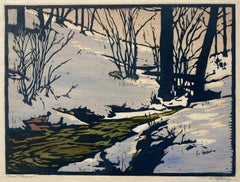
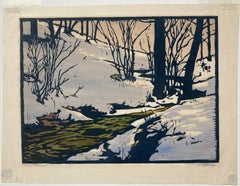
WILLIAM SELTZER RICE (1873 - 1963) THE THAW c 1915-20 Color woodcut, signed and titled in pencil. Image 8 7/8 x 12 inches, sheet 10 3/4 x 14 3/8 inches. On textured fibrous paper. V...

Category

American Modern 1910s Art

Materials

Color, Woodcut

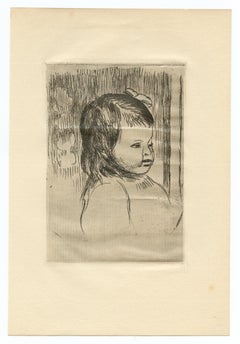
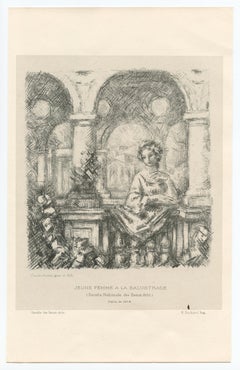
"Jeune femme a la balustrade" original lithograph

"Jeune femme a la balustrade" original lithograph

Located in Henderson, NV

Medium: original lithograph. Printed in 1914 on chine-colle paper by E. Duchatel and published in Paris by Gazette des Beaux-Arts. The catalogue reference is Sanchez and Seydoux 1914...

Category

1910s Art

Materials

Lithograph

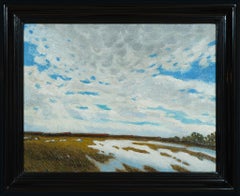
A Rare Winter Landscape With Clouds by Sam Uhrdin (1910)

A Rare Winter Landscape With Clouds by Sam Uhrdin (1910)

By Sam Uhrdin

Located in Stockholm, SE

This atmospheric landscape from 1910 offers a rare glimpse into a lesser-known side of Sam Uhrdin’s work. Painted before his formal art education, the canvas reveals an emerging arti...

Category

Post-Impressionist 1910s Art

Materials

Canvas, Oil

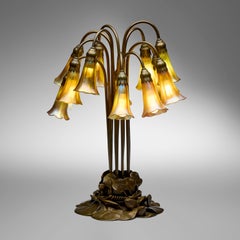
Tiffany Studios "Vine Border" Table Lamp

Tiffany Studios "Vine Border" Table Lamp

By Tiffany Studios

Located in Miami, FL

Tiffany Studios "Vine Border" Table Lamp, circa 1910 leaded glass, patinated bronze, shade impressed "Tiffany Studios, New York, 1488" base impressed "Tiffany Studios, New York, 533"...

Category

Art Nouveau 1910s Art

Materials

Bronze

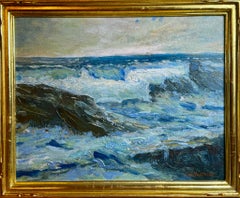
Crashing Surf
Crashing Surf

Crashing Surf

Located in North Clarendon, VT

Beautiful seascape by the talented William H. Partridge. 8" x 10" oil on board , signed lower right. Housed in a carved guilded 15" x 17" frame. William Henry Partridge (1858–1938...

Category

American Impressionist 1910s Art

Materials

Oil

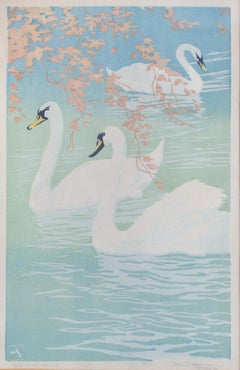
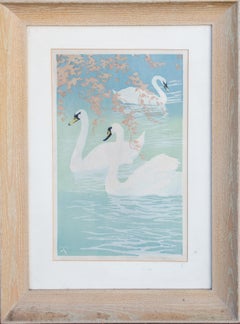
Swans Woodblock by Hans Neumann, 1913

Swans Woodblock by Hans Neumann, 1913

By Hans Neumann

Located in New York, NY

Hans Neumann (German, 1873 - 1957) Schwäne (Swans), 1913 Woodblock Sight: 17 x 11 in. Framed: 25 3/4 x 19 in. Signed & inscribed bottom, artist monogram lower left This outstanding ...

Category

Academic 1910s Art

Materials

Woodcut

Autumn Landscape Oil Painting, American Impressionist, Circa 1915

Autumn Landscape Oil Painting, American Impressionist, Circa 1915

By Royal Milleson

Located in Fairlawn, OH

Autumn Landscape Oil on relined canvas, c. 1915 Signed lower right corner: "Royal H. Milleson" Condition: Excellent Canvas size: 14 1/2 x 20 3/8 inches Frame size: 19-1/4 x 25-1/4 x 2-1/2 inches Clearly among the artist's finest paintings! Provenance: Private Collection, Greencastle, Indiana Ray H. French Collection (1919-2000) Martha A. French Trust Royal Hill Milleson...

Category

American Impressionist 1910s Art

Materials

Oil

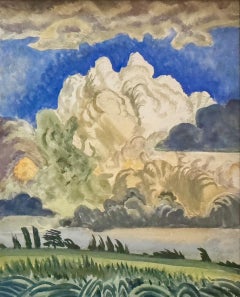
Antique American Panoramic Cloudscape Cows Grazing Bucolic Landscape Painting

Antique American Panoramic Cloudscape Cows Grazing Bucolic Landscape Painting

Located in Buffalo, NY

Antique impressionist landscape oil painting. Oil on canvas. Framed. Signed. In excellent original condition. Handsomely framed in a giltwood molding. Excellent condition, ready...

Category

Impressionist 1910s Art
Materials

Oil, Canvas

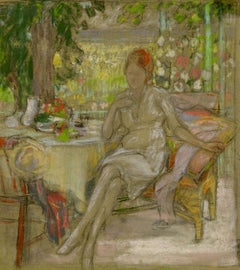
Woman on a Patio, Pastel on Paper, Abstract Impressionist, Circa 1915

Woman on a Patio, Pastel on Paper, Abstract Impressionist, Circa 1915

By Karl Albert Buehr

Located in Fairlawn, OH

Woman on a Patio Pastel on paper, c. 1915 Unsigned Provenance: Gift of the artist to his wife, Mary Hess Buehr By decent to the artist's niece, daughter of Will Hess David Saltzman Robert Henry Adams Fine Art Thomas French Fine Art Ronald C. Sloter, Columbus, Ohio Columbus College of Art and Design (de-accessed) Exhibited at Robert Henry Adams Fine Art, 1994, the first exhibition at the North Franklin Street Gallery. One of the early Chicago artists to adopt Impressionism, Karl Buehr became a figure and landscape painter. As a figure painter, his specialty became "gorgeously colored images of young women on porches overlooking brilliant summertime gardens." (Kennedy 98) His later work often showed a female figure with serious expression engaging the viewer with a direct stare. In his landscapes, he was noted for his strong coloration. In a December 1896 student exhibition at the Art Institute, a reviewer for the "Chicago Times Herald" described Buehr's landscapes as "blithe and joyous" with "country roads brilliant in sunlight . . . fields rich in summer verdure, under soft skies painted in a high, musical key." (Gerdts 68) Buehr was born as one of seven sons to a prosperous German family who immigrated to America and settled in Chicago in 1869. He was first exposed to his signature style of Impressionism in 1888 when he enrolled in night classes at the Art Institute while working in the shipping department of a lithographic firm near the Institute. He remained a student there until 1897 and was recognized in a "Chicago Times Herald" editorial of June 13, 1897 as one of the Institute's most outstanding pupils. The next year, his art career was temporarily put on hold when he briefly enlisted with the U.S. Army in the Spanish American War. In 1899, he resumed his art studies, this time with Frank Duveneck. He exhibited a painting at the Paris Salon of 1900. In 1905, thanks to a wealthy Chicago patron, Buehr and his family moved to France. They spent the following year in Taormina, Sicily, and spent time in Venice as well. In Paris, Buehr studied at the Academy Julian with Raphael Collin for two years. Then he went to England, enrolling in the London Art School but had returned to Paris by 1908. During this time, he began painting at Giverny, the home of Impressionist leader Claude Monet (1840-1926, and by 1912, Buehr was listing that village as his home address. One of his good friends and associates at Giverny was Frederick Frieseke. One of Buehr's paintings from that time, "News from Home", was exhibited in 1913 at the French Salon in Paris and at the annual exhibit of the Chicago Art Institute. It shows a woman in floral dress sitting on a porch with a background with potted flowers and lush greenery background. Of his painting done at Giverny, Buehr wrote in 1912 to William Macbeth of Macbeth Galleries in New York: "My figures painted in and around Giverny are costumed and in appropriate out door settings." (Gerdts 68) In 1914, he returned to the United States and took a teaching position in Chicago at the Art Institute, which he held for the remainder of his life. He was married to Mary Hess, a painter of miniatures and decorative works. In 1928-29, he was a guest artist at Stanford University. Courtesy, AskArt “Karl Albert Buehr (1866–1952) was a painter born in Germany. Buehr was born in Feuerbach - near Stuttgart. He was the son of Frederick Buehr and Henrietta Doh (Dohna?). He moved to Chicago with his parents and siblings in the 1880s. In Chicago, young Karl worked at various jobs until he was employed by a lithograph company near the Art Institute of Chicago. Introduced to art at work, Karl paid regular visits to the Art Institute, where he found part-time employment, enabling him to enroll in night classes. Later, working at the Institute as a night watchman, he had a unique opportunity to study the masters and actually posted sketchings that blended in favorably with student's work. Having studied under John H. Vanderpoel, Buehr graduated with honors, while his work aroused such admiration that he was offered a teaching post there, which he maintained for many years thereafter. He graduated from the Art Inst. of Chicago and served in the IL Cav in the Spanish–American War. Mary Hess became Karl's wife—she was a student of his and an accomplished artist in her own right. In 1922, he was elected into the National Academy of Design as an Associate member. Art Studies in Europe In 1904, Buehr received a bronze medal at the St. Louis Universal Exposition, then, in 1905, Buehr and his family moved to France, thanks to a wealthy Chicago patron, and they spent the following year in Taormina, Sicily, where the artist painted local subjects, executing both genre subjects and landscapes as well as time in Venice. Buehr spent at least some time in Paris, where he worked with Raphaël Collin at the Académie Julian. Giverny and American Impressionism Prior to this time, Buehr had developed a quasi-impressionistic style, but after 1909, when he began spending summers near Monet in Giverny, his work became decidedly characteristic of that plein-air style but he began focusing on female subjects posed out-of-doors. He remained for some time in Giverny, and here he became well-acquainted with other well known expatriate America impressionists such as Richard Miller, Theodore Earl Butler, Frederick Frieseke, and Lawton Parker. It seems likely that Buehr met Monet, since his own daughter Kathleen and Monet’s granddaughter, Lili Butler, were playmates, according to George Buehr, the painter’s son. His other daughter Lydia died before adulthood due to diabetes. He returned to Chicago at the onset of World War I and taught at The Art Inst for many years. One of his noted pupils at the Art Institute was Archibald Motley...

Category

Abstract Impressionist 1910s Art
Materials

Pastel

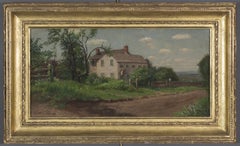
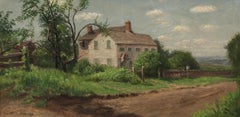
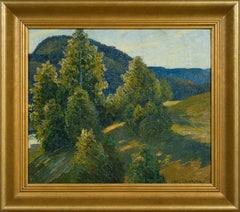
A house in the country, probably near Morristown NJ

A house in the country, probably near Morristown NJ

By Frank Waller

Located in Philadelphia, PA

Frank Waller (American, 1842-1923) House in the Country Oil on canvas, 10 1/2 x 20 1/4 inches FRAMED: 16 x 26 inches (approx.) Signed and dated at lower left: "Frank Waller Study 19...

Category

Realist 1910s Art
Materials

Canvas, Oil

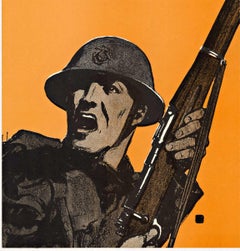
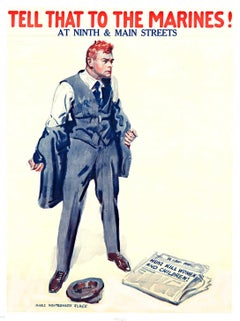
Original 1918 Tell That To The Marines vintage World War 1 poster  linen backed

Original 1918 Tell That To The Marines vintage World War 1 poster linen backed

By James Montgomery Flagg

Located in Spokane, WA

Original WWI James Montgomery Flagg Poster — “Tell That to the Marines!” (1918) — Rare Vintage Patriotic Artwork—archival linen backing and ready to frame. The poster edge was trimmed to 38.5 x 27.5 inches. Without the trim, the poster would grade as excellent (grade A), but with the trim, it is listed as B+. This is a rare and original World War I propaganda poster created by renowned American artist James Montgomery Flagg, famous for the iconic “I Want YOU for U.S. Army” Uncle Sam poster...

Category

American Realist 1910s Art
Materials

Lithograph

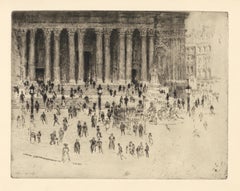
"The Pavement, St. Paul's" original etching

"The Pavement, St. Paul's" original etching

By Joseph Pennell

Located in Henderson, NV

Medium: original etching. Printed in 1910 by K. K. Hof and the Staatsdruckerei of Vienna. Plate size: 8 1/2 x 11 inches (225 x 280mm). Sheet size: 11 x 15 1/2 inches. A nice, dark im...

Category

1910s Art
Materials

Etching