1910s Paintings

702 Results
to
102
140
151
208
132
96
Overall Width
to
Overall Height
to
2,050
6,517
43,545
122,523
770
1,320
1,727
1,700
2,457
3,077
3,593
3,355
3,379
1,045
196
99
38
14
9
6
2
2
397
318
10
372
194
122
95
81
71
57
54
36
35
32
31
27
25
25
24
20
19
18
18
688
631
368
359
101
19
8
8
5
4
598
20
439
286
Period: 1910s
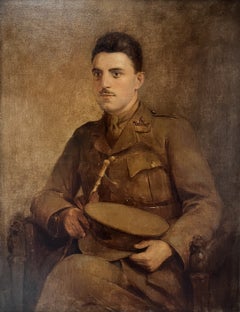
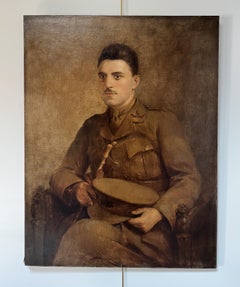
British School, early 20th century, Portrait of an Officer, oil on canvas

British School, early 20th century, Portrait of an Officer, oil on canvas

Located in Paris, FR

British School, early 20th century Portrait of an Officer of the East Riding of Yorkshire Yeomanry c. 1915-1918 Oil on canvas Dimensions: 85 x 65 cm (H 33.46 in. x W 25.59 in) (unfr...

Category

Impressionist 1910s Paintings

Materials

Oil

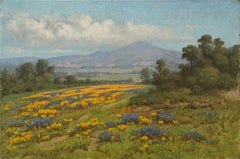
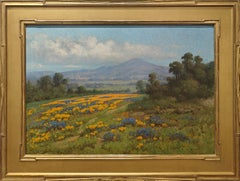
"California Poppy Fields" William Franklin Jackson, Bright Flowers, Western

"California Poppy Fields" William Franklin Jackson, Bright Flowers, Western

Located in New York, NY

William Franklin Jackson California Poppy Fields, circa 1918 Signed lower right Oil on canvas 20 x 30 inches Provenance Ben Ali Temple, Sacramento, California Collection of David W. Crosland Private Collection, Washington D.C, circa 1965 Estate of the above, 2025 Jackson was born in Council Bluffs, Iowa, in 1850. His father, Daniel Jackson...

Category

American Impressionist 1910s Paintings

Materials

Canvas, Oil

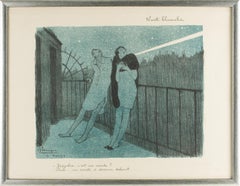
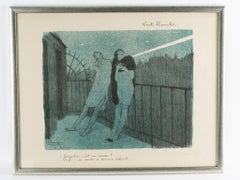
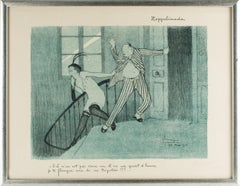
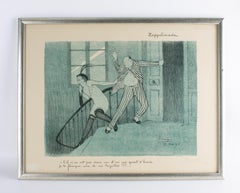
Nuit Blanche, Signed and Numbered Caricature Lithograph by Jean-Gabriel Domergue

Nuit Blanche, Signed and Numbered Caricature Lithograph by Jean-Gabriel Domergue

By Jean-Gabriel Domergue

Located in Atlanta, GA

A rare early lithograph by Jean‑Gabriel Domergue (1889–1962), titled Nuit blanche (Sleepless Night) and dated 21 March 1915. This atmospheric nighttime scene shows two elegant figure...

Category

Art Deco 1910s Paintings

Materials

Charcoal, Paper

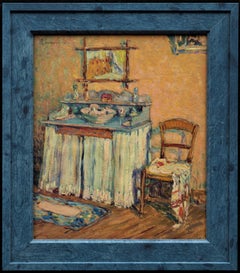
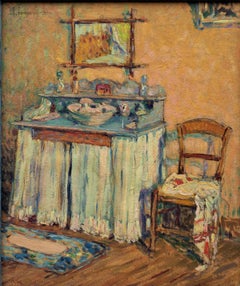
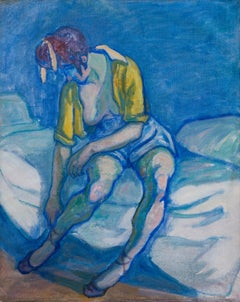
"Interior with Chair and Vanity" circa 1918 by Ricardo Gomez-Gimeno (1892-1954)

"Interior with Chair and Vanity" circa 1918 by Ricardo Gomez-Gimeno (1892-1954)

Located in SANTA FE, NM

"Interior with Chair and Vanity" circa 1918 Ricardo Gomez-Gimeno (Spain/France 1892-1954) Oil on cardboard Signed 17 1/4 x 14 1/4 (22 1/2 x 19 1/2 frame) This painting and its mat...

Category

Post-Impressionist 1910s Paintings

Materials

Oil, Cardboard

Giverny, American Impressionist, Karl Albert Buehr, Expatriot, c. 1910

Giverny, American Impressionist, Karl Albert Buehr, Expatriot, c. 1910

By Karl Albert Buehr

Located in Fairlawn, OH

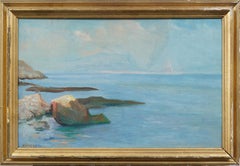
Karl Albert Buehr (1866-1952) Strolling in the Park Oil on canvas, relined, c. 1910 Unsigned Provenance: Gift of the Artist to his wife, Mary Hess Beuhr The artist's niece, daughter of Will Hess David Saltzman Robert Henry Adams Fine Art, Chicago, exhibited 1994 Karl Albert Buehr at Robert Henry Adams Fine Art, Chicago Exhibition dates The exhibition was held in 1994 at Robert Henry Adams Fine Art, 715 North Franklin Street, Chicago. Surviving provenance records describe it as the gallery’s first exhibition at its North Franklin Street location. Works documented as included include Woman on a Patio, Rocky Inlet (France), and apparently other paintings and studies acquired through David Saltzman from the family of Buehr’s wife, Mary Hess Buehr. The 1994 Karl Albert Buehr exhibition at Robert Henry Adams Fine Art represented an important act of historical recovery. Although Buehr enjoyed considerable recognition during his lifetime—as an exhibiting painter, prizewinner, and influential teacher at the School of the Art Institute of Chicago—his reputation had become less visible in the decades following his death. By bringing together paintings and works on paper that had descended through the artist’s family, the Adams exhibition helped restore Buehr to his proper position among the leading exponents of American Impressionism and the most important Chicago-trained painters working in France before the First World War. Giverny was crucial to Buehr’s mature development. American painters had been drawn to the Norman village since the late 1880s, attracted both by Monet’s presence and by the region’s gardens, river valleys, cultivated fields, and distinctive northern light. Buehr did not simply imitate Monet. His figure compositions remained grounded in the academic training he received in Chicago and Paris, but he enlivened that structure with broken brushwork, heightened complementary color, and an increasingly luminous palette. His characteristic compositions place elegantly dressed young women on terraces, beside windows, or within flowering gardens. These figures are neither conventional society portraits nor anonymous decorative accessories. They occupy a carefully balanced space between individual presence and pictorial harmony. Faces and gestures are often quietly observed, while dresses, parasols, flowers, foliage, and shifting sunlight become vehicles for color. Lavender shadows, rose and coral fabrics, emerald foliage, and brilliant passages of yellow or blue transform the garden into a chromatic environment surrounding the sitter. Works associated with the Adams exhibition illuminate the breadth of Buehr’s French production. The pastel Woman on a Patio, circa 1915, demonstrates his ability to translate Impressionist color into the immediacy of a dry medium. Pastel allowed him to place one hue directly beside another without losing intensity. The resulting surface possesses a soft atmospheric unity while retaining the energy of individual strokes. The work’s history—gifted by Buehr to Mary Hess Buehr and subsequently descending through her family—also gives it a particularly intimate character. Rocky Inlet (France) presents another aspect of Buehr’s practice. In place of the cultivated garden and poised female figure, the artist confronts a rugged coastal landscape. Yet his essential concern remains light acting upon color. Rock, water, and vegetation are constructed through abbreviated touches rather than continuous modeling. The small scale suggests direct observation, possibly an outdoor study made during Buehr’s travels in Normandy. Its provenance likewise begins with Mary Hess Buehr and passes through the family before reaching David Saltzman and Robert Henry Adams Fine Art. This family provenance was central to the significance of the 1994 exhibition. The works had not merely circulated anonymously through the market; many retained a direct association with the artist’s household. Such a group could include informal studies, experimental compositions, and personal gifts that Buehr elected to keep rather than send to public exhibitions. Together they offered a more private and exploratory view of his career. Condition: relined canvas and cleaned Image/Canvas size: 10 x 9 inches Frame: 16-3/4 x 15-3/4 x 1-3/4 inches Karl Albert Buehr (1866–1952): France and the Giverny Years Karl Albert Buehr—whose surname is sometimes misspelled “Beuhr”—was a German-born American painter and influential teacher associated with the second generation of American Impressionists working at Giverny. Although his artistic identity was rooted in Chicago, the years he spent in France transformed his palette, subject matter, and approach to painting. Born on February 14, 1866, in Feuerbach, near Stuttgart, Buehr immigrated with his family to Chicago, probably in 1881. After working briefly for a commercial lithographer, he enrolled at the School of the Art Institute of Chicago in 1888. He studied with John H. Vanderpoel and graduated with honors in 1894, after which the school invited him to teach. He also served in the Illinois cavalry during the Spanish-American War and married Mary Guion Hess, one of his students and an accomplished artist in her own right. Early study in Europe Buehr’s European education unfolded in several stages. Around 1900 he settled in Paris and studied at the Académie Julian, principally under the French painter Raphaël Collin. Collin was known for idealized female figures placed in luminous outdoor settings, a combination of academic draftsmanship and Impressionist light that anticipated Buehr’s mature work. Buehr reportedly received a gold medal at the Académie in 1901. His early European paintings included portraits, landscapes, and scenes of rural labor. Visits to Holland exposed him to the restrained tonalism of the Hague School, while his travels in Italy—particularly Taormina, Sicily, during 1906 and 1907—encouraged a brighter response to Mediterranean sunlight. He also studied in London, where his contacts with Frank Brangwyn and the decorative currents of British painting strengthened his interest in broad design, rhythmic composition, and large arrangements of figures. A decisive factor in this extended European residence was the patronage of Chicago philanthropist Lydia Coonley Ward. From approximately 1906 until 1913, Ward provided Buehr with a monthly stipend, enabling the artist, his wife, and their children to remain abroad and pursue their work without the immediate pressures of the American market. Buehr at Giverny Buehr entered the Anglo-American artistic community at Giverny around 1909, probably through his friendship with Henry Salem Hubbell, another American figure painter supported by Lydia Coonley Ward. From approximately 1909 through 1912, Buehr generally spent winters in Paris and the warmer months at Giverny. In 1912 and the summer of 1913, the family reportedly lived at Sainte-Geneviève-lès-Gasny, close to Giverny. By this date Giverny was no longer merely the village in which Claude Monet lived. It had become an international artists’ colony, particularly attractive to American painters who admired Impressionist color but wished to retain firm drawing and carefully organized figure compositions. Buehr’s associates included Frederick Carl Frieseke, Richard Edward Miller, Guy Rose, Lawton Parker, Louis Ritman, Edmund Greacen, Karl Anderson, and Theodore Earl Butler. Buehr was especially close to the circle of Frieseke and Miller. These artists specialized in decorative paintings of fashionably dressed women reading, sewing, taking tea, or resting in sunlit gardens. Their figures were surrounded by flowers, patterned fabrics, parasols, and flickering passages of colored light. Buehr adopted this repertoire, but his paintings usually retained a stronger structural organization and a more assertive contrast between complementary colors. During his first months at Giverny, Buehr worked on a large decorative panel of dancing figures. The composition received an honorable mention at the Paris Salon of 1910, an important professional recognition. That summer, however, he increasingly turned toward intimate garden scenes and outdoor figure studies. The influence of Richard Miller can be detected in the decorative arrangement of the figures, while Frieseke’s example encouraged Buehr s use of brilliant sunlight, patterned surfaces, and saturated hues. Relationship with Claude Monet Claude Monet was Buehr’s artistic hero, but the extent of their personal relationship should not be overstated. Buehr’s children played with the children of Theodore Butler, Monet’s son-in-law, and they visited the Monet household. Buehr’s daughter Kathleen later recalled that Monet was gracious to the children. Nevertheless, the best available scholarship suggests that no close personal association between Buehr and Monet has been documented. Monet’s importance to Buehr was therefore primarily artistic. At Giverny, Buehr learned to regard colored light as a central subject rather than merely a means of describing objects. Shadows became violet, blue, or green; white dresses reflected the surrounding garden; and faces and arms were modeled through small strokes of warm and cool color. The enclosed garden also became a kind of outdoor studio in which human figures, flowers, fabrics, and sunlight could be orchestrated into a unified decorative design. The Giverny style Buehr became best known for paintings of young women seated or standing in gardens, often accompanied by colorful parasols. Works such as Springtime in Giverny, Under the Parasol, and related pictures of women reading or conversing exemplify his mature style. Although inspired by French Impressionism, these paintings are not spontaneous transcriptions of fleeting visual experience in the strict Monet tradition. They are carefully staged figure compositions. Buehr himself explained that the outdoor figure painter should concentrate upon the ensemble—grouping, arrangement, and color—rather than laboriously describing every feature. This principle helps distinguish his Giverny paintings...

Category

American Impressionist 1910s Paintings
Materials

Oil

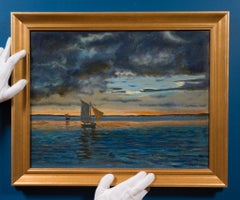
1918 Norwegian Evening Seascape after Amaldus Nielsen

1918 Norwegian Evening Seascape after Amaldus Nielsen

Located in Stockholm, SE

After Amaldus Nielsen (1838–1932) Norway Evening at Fredrikstad, 1918 signed indistinctly, possibly “Hj. U…”, and dated “18” lower right oil on board unframed 42 × 55 cm (16.5 × 21.7 in) framed 53 × 65 cm (20.9 × 25.6 in) Comparative work: Amaldus Nielsen, Aften ved Fredrikstad (Evening at Fredrikstad), 1909, oil on canvas, present location unknown. Condition report: Very good condition with bright and clear colors. Ready to hang. Please contact the gallery for a detailed condition report. Essay: This atmospheric evening seascape was painted in 1918 by an as yet unidentified artist and closely follows Amaldus Nielsen’s Aften ved Fredrikstad of 1909. The relationship between the two compositions is unmistakable. In both, a sailing boat occupies the central waters beneath an expansive and dramatically clouded sky, while a narrow strip of intense evening light separates sea from horizon. Smaller vessels recede into the distance, establishing both scale and a sense of stillness across the broad surface of the water. The present painting is nevertheless not a mechanical copy. The unidentified artist has altered several details and developed the scene through a more concentrated and chromatically intense palette. The central vessel is brought into sharper prominence, its sails forming a strong silhouette against the illuminated horizon. Deep blues dominate the foreground water and the upper sky, while streaks of orange, ochre and pale turquoise register the last light of sunset. The sky occupies approximately two thirds of the composition and becomes almost a subject in itself. Heavy clouds gather above the tranquil water, their dark masses opening intermittently to reveal passages of luminous blue and warm reflected light. The model for the composition was created by Amaldus Nielsen, one of the most important Norwegian painters of the coast during the nineteenth and early twentieth centuries. Born at Halse near Mandal in 1838, Nielsen studied in Copenhagen before continuing his training with Hans Gude at the Düsseldorf Academy. Gude’s emphasis on close observation of landscape remained fundamental to Nielsen, but he gradually moved away from the constructed romantic landscape towards an increasingly direct study of nature. Nielsen became especially associated with the coastlines of southern and western Norway and has often been described as one of Norway’s earliest naturalist landscape painters. From the 1860s onward he frequently completed paintings outdoors before the motif, an unusually direct working method in Norwegian art of the period. Light, weather and changing atmospheric conditions became central to his practice. The same location might be returned to repeatedly under different conditions of morning, evening, mist or changing weather. Fredrikstad and its surrounding archipelago formed part of this geography. Nielsen is documented working at Arisholmen near Fredrikstad as early as 1884, and surviving paintings demonstrate his continued interest in the coastal landscape of Østfold. By the time he painted Aften ved Fredrikstad in 1909, the theme of boats at rest or moving quietly across evening water had become deeply embedded within his art. The 1909 painting...

Category

Post-Impressionist 1910s Paintings

Materials

Oil, Board

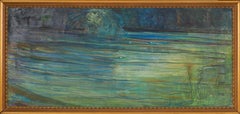
Aurora Over a Northern Lake, Expressionist Oil on Canvas, Framed, 1916

Aurora Over a Northern Lake, Expressionist Oil on Canvas, Framed, 1916

Located in Stockholm, Stockholm

Aurora over a Northern Lake, signed and dated “G Claeson 1916”, oil on canvas. This evocative landscape, executed in an expressionist manner, and on the same time almost modern, cap...

Category

Expressionist 1910s Paintings

Materials

Canvas, Oil

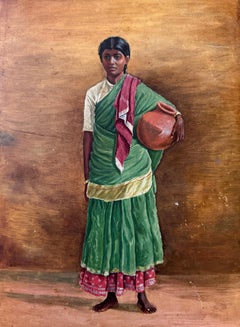
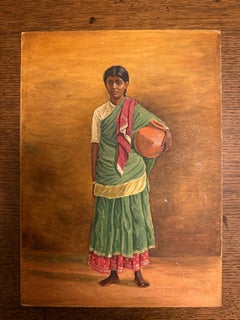
India Madras Painting on board Portrait of Serving Girl with Pot c 1910

India Madras Painting on board Portrait of Serving Girl with Pot c 1910

Located in Norfolk, GB

Madras School C 1910 Acrylic on board 11.5" x 8" Address on verso This painting dating to the early 20th century, c 1910, shows a young woman, possibly from Madras (see info on reverse), The colours follow the conventions of a genre of art called Company School painting...

Category

Realist 1910s Paintings

Materials

Mixed Media, Board

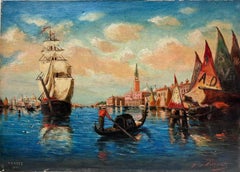
The Grand Canal Venice Antique 1910 Signed Oil Painting on Canvas Many Boats

The Grand Canal Venice Antique 1910 Signed Oil Painting on Canvas Many Boats

Located in Cirencester, Gloucestershire

Shipping on the Grand Canal, Venice signed & dated 1910 oil on canvas, unframed canvas: 13 x 18 inches provenance: private collection, Europe condition: basic good condition though w...

Category

Victorian 1910s Paintings

Materials

Oil, Canvas

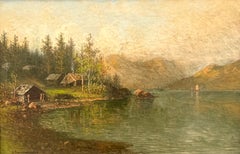
“Norwegian Lakeside Landscape”

“Norwegian Lakeside Landscape”

Located in Southampton, NY

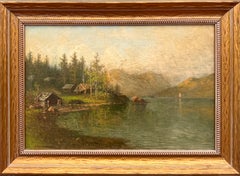
Original oil on canvas painting of a lakeside Norwegian landscape complete with several rustic cabins and snow covered mountains in the background. The artist of the painting is Joh...

Category

Academic 1910s Paintings

Materials

Canvas, Oil

Collector´s Study, Interior Oil on Canvas, Signed, 1912, Neoclassical Style

Collector´s Study, Interior Oil on Canvas, Signed, 1912, Neoclassical Style

Located in Stockholm, Stockholm

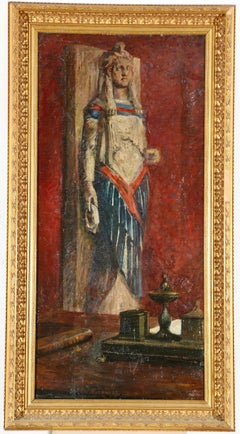
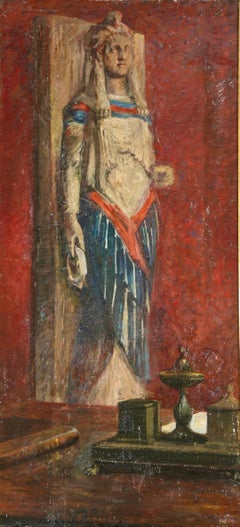
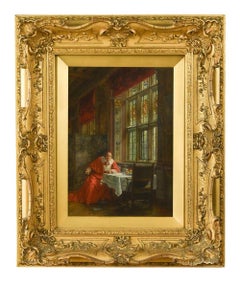
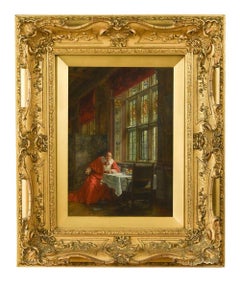
Interior scene from a study or collectors room signed and dated with monogram "HNH 1912", Hans Nikolaj Hansen (1853-1923) presenting a quiet yet intellectually charged space. In the foreground stands a writing desk furnished with an inkwell and a book, objects that suggest reflection, scholarship, and artistic contemplation. Beyond the desk, set against a deep red wall, rises a large neoclassical sculpture whose pale surface contrasts with the warmth of the interior. The composition balances intimacy with monumentality: the scholar’s table before us, the silent authority of antiquity behind. Executed in oil on canvas, the painting reveals Hansen’s characteristic sensitivity to historical atmosphere. Hans Nikolaj Hansen was a Danish painter and Illustrator, born in 1853, the son of wine merchant C.J.A. Hansen and Sophie. After graduating in 1872 from Borgerdydskolen on Christianshavn, he followed his early artistic inclination and enrolled at the Royal Danish Academy of Fine Arts in Copenhagen, completing his studies in 1877. He debuted the following year with the historical painting "Uden for Sigbrits Port", before travelling to Paris where he continued his education under the influential French painter Léon Bonnat. The Parisian training left a lasting imprint on his painterly discipline and compositional clarity. He also stayed in Rome for a time where he painted numerous historical and genre works. His art is distinguished by originality, narrative imagination, and a keen sense for historical character. Hansen achieved his greatest recognition as an illustrator and graphic artist. His illustrations for Gaffelen by Johan Herman Wessel...

Category

Other Art Style 1910s Paintings

Materials

Canvas, Oil

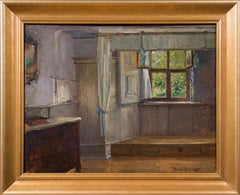
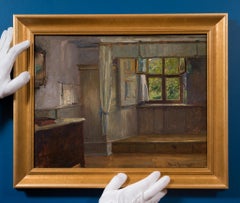
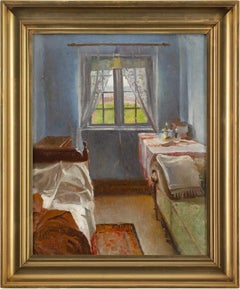
Summer Interior with Open Window, Oil on Wood Panel

Summer Interior with Open Window, Oil on Wood Panel

Located in Stockholm, SE

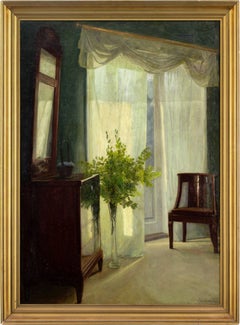
This intimate interior by Henrik Nordenberg demonstrates the artist's remarkable ability to transform an ordinary domestic setting into a scene of quiet beauty and contemplation. Exe...

Category

Post-Impressionist 1910s Paintings

Materials

Oil, Wood Panel

"Soldier's Pride" House of Kuppenheimer Military Fashion Advertisement

"Soldier's Pride" House of Kuppenheimer Military Fashion Advertisement

By Joseph Christian Leyendecker

Located in Fort Washington, PA

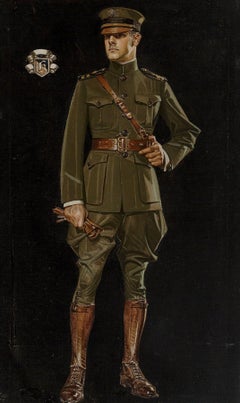
Medium: Oil on Canvas Signature: n/a Soldier's Pride was created as a component of Kuppenheimer's six-piece easel-backed World War I advertisement placards for in-store display. These pieces were expertly printed on a coated cardboard substrate so the black background would dramatically display the clothing item. Kuppenheimer & Hart Schaffner Marx...

Category

1910s Paintings

Materials

Canvas, Oil

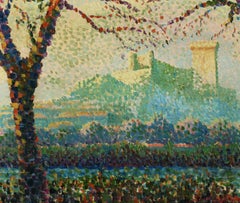
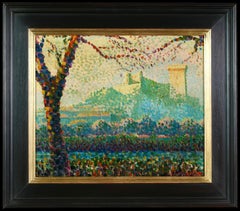
Vue de Provence - Pointillist Landscape Oil by Lucie Cousturier

Vue de Provence - Pointillist Landscape Oil by Lucie Cousturier

Located in Marlow, Buckinghamshire

Signed oil on board pointillist landscape circa 1910 by French post impressionist painter Lucie Cousturier. The work depicts a castle on a hilltop in Provence, in the south of France...

Category

Pointillist 1910s Paintings

Materials

Oil, Board

Giverny Landscape, Karl Albert Buehr, c. 1912, American Impressionism, Expatriot

Giverny Landscape, Karl Albert Buehr, c. 1912, American Impressionism, Expatriot

By Karl Albert Buehr

Located in Fairlawn, OH

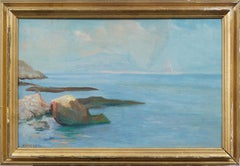
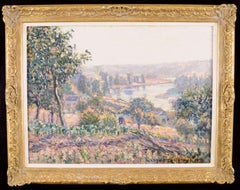
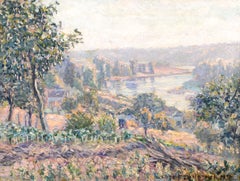
Karl Albert Beuhr (1866-1952) Giverny Landscape Oil on relined canvas, c. 1912 Signed lower right: K A Buehr Condition: Canvas relined for support Image size: 13 1/4 x 15 3/8 inches Frame size: 19 5/8 x 21 7/8 inches Provenance: Gift of the artist to his wife, Mary Hess Beuhr The artist's niece, daughter of Will Hess Buehr David Saltzman Robert Henry Adams Thomas French Fine Art Mr. and Mrs. Thomas Horner, Canton, Ohio Exhibited: Canton Museum of Art, Impressionism: An American View, 1983, label on verso Karl Albert Buehr at Robert Henry Adams Fine Art, Chicago Exhibition dates The exhibition was held in 1994 at Robert Henry Adams Fine Art, 715 North Franklin Street, Chicago. Surviving provenance records describe it as the gallery’s first exhibition at its North Franklin Street location. Works documented as included include Woman on a Patio, Rocky Inlet (France), and apparently other paintings and studies acquired through David Saltzman from the family of Buehr’s wife, Mary Hess Buehr. The 1994 Karl Albert Buehr exhibition at Robert Henry Adams Fine Art represented an important act of historical recovery. Although Buehr enjoyed considerable recognition during his lifetime—as an exhibiting painter, prizewinner, and influential teacher at the School of the Art Institute of Chicago—his reputation had become less visible in the decades following his death. By bringing together paintings and works on paper that had descended through the artist’s family, the Adams exhibition helped restore Buehr to his proper position among the leading exponents of American Impressionism and the most important Chicago-trained painters working in France before the First World War. Giverny was crucial to Buehr’s mature development. American painters had been drawn to the Norman village since the late 1880s, attracted both by Monet’s presence and by the region’s gardens, river valleys, cultivated fields, and distinctive northern light. Buehr did not simply imitate Monet. His figure compositions remained grounded in the academic training he received in Chicago and Paris, but he enlivened that structure with broken brushwork, heightened complementary color, and an increasingly luminous palette. His characteristic compositions place elegantly dressed young women on terraces, beside windows, or within flowering gardens. These figures are neither conventional society portraits nor anonymous decorative accessories. They occupy a carefully balanced space between individual presence and pictorial harmony. Faces and gestures are often quietly observed, while dresses, parasols, flowers, foliage, and shifting sunlight become vehicles for color. Lavender shadows, rose and coral fabrics, emerald foliage, and brilliant passages of yellow or blue transform the garden into a chromatic environment surrounding the sitter. Works associated with the Adams exhibition illuminate the breadth of Buehr’s French production. The pastel Woman on a Patio, circa 1915, demonstrates his ability to translate Impressionist color into the immediacy of a dry medium. Pastel allowed him to place one hue directly beside another without losing intensity. The resulting surface possesses a soft atmospheric unity while retaining the energy of individual strokes. The work’s history—gifted by Buehr to Mary Hess Buehr and subsequently descending through her family—also gives it a particularly intimate character. Rocky Inlet (France) presents another aspect of Buehr’s practice. In place of the cultivated garden and poised female figure, the artist confronts a rugged coastal landscape. Yet his essential concern remains light acting upon color. Rock, water, and vegetation are constructed through abbreviated touches rather than continuous modeling. The small scale suggests direct observation, possibly an outdoor study made during Buehr’s travels in Normandy. Its provenance likewise begins with Mary Hess Buehr and passes through the family before reaching David Saltzman and Robert Henry Adams Fine Art. This family provenance was central to the significance of the 1994 exhibition. The works had not merely circulated anonymously through the market; many retained a direct association with the artist’s household. Such a group could include informal studies, experimental compositions, and personal gifts that Buehr elected to keep rather than send to public exhibitions. Together they offered a more private and exploratory view of his career. Karl Albert Buehr (1866–1952): France and the Giverny Years Karl Albert Buehr—whose surname is sometimes misspelled “Beuhr”—was a German-born American painter and influential teacher associated with the second generation of American Impressionists working at Giverny. Although his artistic identity was rooted in Chicago, the years he spent in France transformed his palette, subject matter, and approach to painting. Born on February 14, 1866, in Feuerbach, near Stuttgart, Buehr immigrated with his family to Chicago, probably in 1881. After working briefly for a commercial lithographer, he enrolled at the School of the Art Institute of Chicago in 1888. He studied with John H. Vanderpoel and graduated with honors in 1894, after which the school invited him to teach. He also served in the Illinois cavalry during the Spanish-American War and married Mary Guion Hess, one of his students and an accomplished artist in her own right. Early study in Europe Buehr’s European education unfolded in several stages. Around 1900 he settled in Paris and studied at the Académie Julian, principally under the French painter Raphaël Collin. Collin was known for idealized female figures placed in luminous outdoor settings, a combination of academic draftsmanship and Impressionist light that anticipated Buehr’s mature work. Buehr reportedly received a gold medal at the Académie in 1901. His early European paintings included portraits, landscapes, and scenes of rural labor. Visits to Holland exposed him to the restrained tonalism of the Hague School, while his travels in Italy—particularly Taormina, Sicily, during 1906 and 1907—encouraged a brighter response to Mediterranean sunlight. He also studied in London, where his contacts with Frank Brangwyn and the decorative currents of British painting strengthened his interest in broad design, rhythmic composition, and large arrangements of figures. A decisive factor in this extended European residence was the patronage of Chicago philanthropist Lydia Coonley Ward. From approximately 1906 until 1913, Ward provided Buehr with a monthly stipend, enabling the artist, his wife, and their children to remain abroad and pursue their work without the immediate pressures of the American market. Buehr at Giverny Buehr entered the Anglo-American artistic community at Giverny around 1909, probably through his friendship with Henry Salem Hubbell, another American figure painter supported by Lydia Coonley Ward. From approximately 1909 through 1912, Buehr generally spent winters in Paris and the warmer months at Giverny. In 1912 and the summer of 1913, the family reportedly lived at Sainte-Geneviève-lès-Gasny, close to Giverny. By this date Giverny was no longer merely the village in which Claude Monet lived. It had become an international artists’ colony, particularly attractive to American painters who admired Impressionist color but wished to retain firm drawing and carefully organized figure compositions. Buehr’s associates included Frederick Carl Frieseke, Richard Edward Miller, Guy Rose, Lawton Parker, Louis Ritman, Edmund Greacen, Karl Anderson, and Theodore Earl Butler. Buehr was especially close to the circle of Frieseke and Miller. These artists specialized in decorative paintings of fashionably dressed women reading, sewing, taking tea, or resting in sunlit gardens. Their figures were surrounded by flowers, patterned fabrics, parasols, and flickering passages of colored light. Buehr adopted this repertoire, but his paintings usually retained a stronger structural organization and a more assertive contrast between complementary colors. During his first months at Giverny, Buehr worked on a large decorative panel of dancing figures. The composition received an honorable mention at the Paris Salon of 1910, an important professional recognition. That summer, however, he increasingly turned toward intimate garden scenes and outdoor figure studies. The influence of Richard Miller can be detected in the decorative arrangement of the figures, while Frieseke’s example encouraged Buehr s use of brilliant sunlight, patterned surfaces, and saturated hues. Relationship with Claude Monet Claude Monet was Buehr’s artistic hero, but the extent of their personal relationship should not be overstated. Buehr’s children played with the children of Theodore Butler, Monet’s son-in-law, and they visited the Monet household. Buehr’s daughter Kathleen later recalled that Monet was gracious to the children. Nevertheless, the best available scholarship suggests that no close personal association between Buehr and Monet has been documented. Monet’s importance to Buehr was therefore primarily artistic. At Giverny, Buehr learned to regard colored light as a central subject rather than merely a means of describing objects. Shadows became violet, blue, or green; white dresses reflected the surrounding garden; and faces and arms were modeled through small strokes of warm and cool color. The enclosed garden also became a kind of outdoor studio in which human figures, flowers, fabrics, and sunlight could be orchestrated into a unified decorative design. The Giverny style Buehr became best known for paintings of young women seated or standing in gardens, often accompanied by colorful parasols. Works such as Springtime in Giverny, Under the Parasol, and related pictures of women reading or conversing exemplify his mature style. Although inspired by French Impressionism, these paintings are not spontaneous transcriptions of fleeting visual experience in the strict Monet tradition. They are carefully staged figure compositions. Buehr himself explained that the outdoor figure painter should concentrate upon the ensemble—grouping, arrangement, and color—rather than laboriously describing every feature. This principle helps distinguish his Giverny paintings...

Category

American Impressionist 1910s Paintings
Materials

Oil

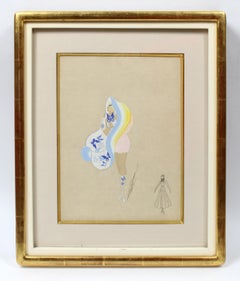
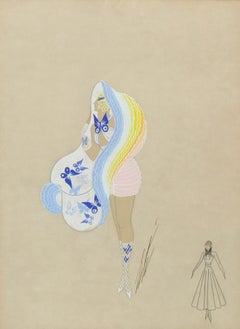
1910's Art Deco Erte Gouache Painting Original Hand Signed Rare French Costume

1910's Art Deco Erte Gouache Painting Original Hand Signed Rare French Costume

By Erté

Located in Buffalo, NY

A rare original signed Art Deco gouache on paper by Erte (Romain de Tirtoff) . This stunning theatrical costume design is signed Erte at the lower right. The piece is 20 by 18 fram...

Category

Art Deco 1910s Paintings

Materials

Gouache, Archival Paper, Pencil

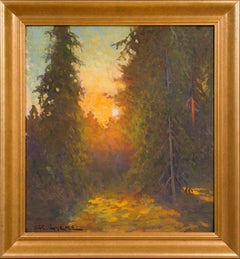
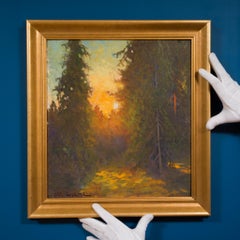
Sunset in the Forest, c. 1910

Sunset in the Forest, c. 1910

By Oscar Lycke

Located in Stockholm, SE

This luminous painting by Oscar Lycke captures a tranquil sunset scene deep within a Nordic forest. The warm, golden light of the setting sun filters through the dense spruce trees, ...

Category

Post-Impressionist 1910s Paintings

Materials

Oil, Board

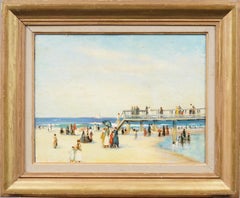
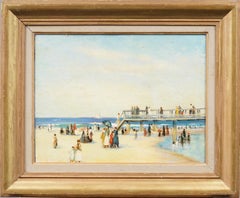
Antique American Impressionist Framed Good Harbor Beach Boston Area Oil Painting

Antique American Impressionist Framed Good Harbor Beach Boston Area Oil Painting

Located in Buffalo, NY

Amazing early 1900s impressionist beach scene of Good Harbor Beach in Massachusetts. Very finely pained with great color and lots of detail and figures. Located on verso. Nicely f...

Category

Impressionist 1910s Paintings

Materials

Canvas, Oil

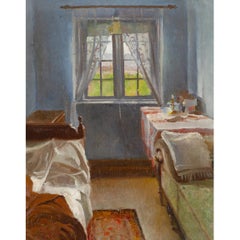
Bedroom Interior, Early 20th-Century Danish Oil Painting

Bedroom Interior, Early 20th-Century Danish Oil Painting

Located in Cheltenham, GB

This early 20th-century oil painting by Danish artist Harry Kluge (1879-1963) depicts the interior of a bedroom with a view. A simple bed stands opposite what appears to be a chaise...

Category

1910s Paintings

Materials

Canvas, Oil

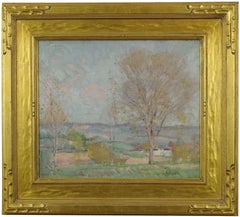
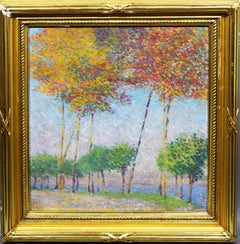
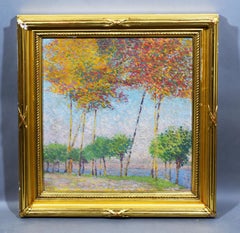
Antique American School Pointillist Fall Landscape Lake View Oil Painting

Antique American School Pointillist Fall Landscape Lake View Oil Painting

Located in Buffalo, NY

Antique American school pointillist landscape painting. Oil on board, circa 1920. Unsigned. Displayed in a period impressionist frame. Image size, 14"L x 16"H.

Category

Pointillist 1910s Paintings

Materials

Canvas, Oil

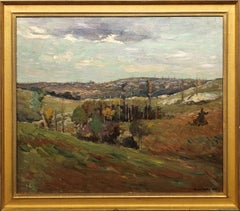
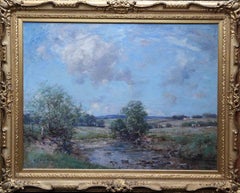
Stirling River Landscape Scotland - Scottish Impressionist 1910 art oil painting

Stirling River Landscape Scotland - Scottish Impressionist 1910 art oil painting

By Joseph Morris Henderson

Located in Hagley, England

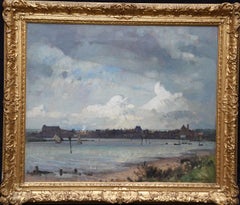
This lovely Scottish Stirlingshire Impressionist landscape is by noted artist Joseph Morris Henderson. Painted circa 1910 the composition is a river landscape with the river in the foreground and cows in the fields beyond. In the distance one can see some dwellings and hills beyond those, all beneath a summers sky. The impressionistic brushwork and colouring are just lovely. This is an excellent large example of Henderson's work and of Scottish landscape art...

Category

Impressionist 1910s Paintings

Materials

Oil

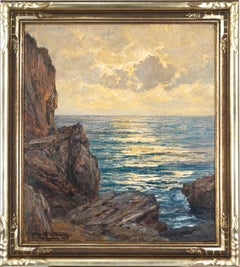
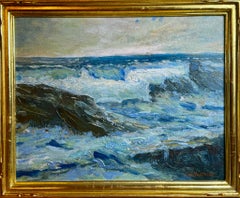
Crashing Surf
Crashing Surf

Crashing Surf

Located in North Clarendon, VT

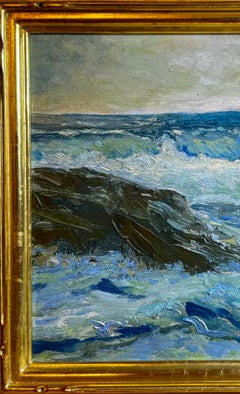
Beautiful seascape by the talented William H. Partridge. 8" x 10" oil on board , signed lower right. Housed in a carved guilded 15" x 17" frame. William Henry Partridge (1858–1938...

Category

American Impressionist 1910s Paintings
Materials

Oil

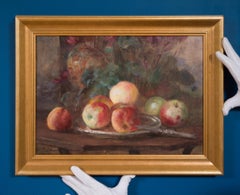
Still Life with Apples, c. 1910

Still Life with Apples, c. 1910

By Emma Ekwall

Located in Stockholm, SE

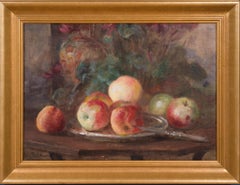
Still Life with Apples is an exquisite still-life painting that captures a quiet moment of abundance and peace. On a humble wooden table lies a cluster of ripe apples, their rosy and...

Category

Realist 1910s Paintings
Materials

Canvas, Oil

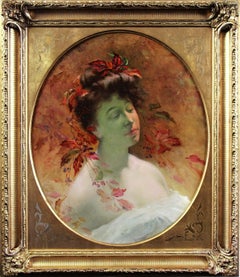
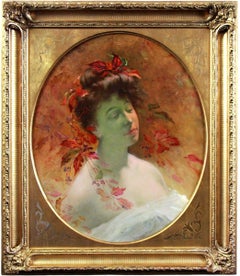
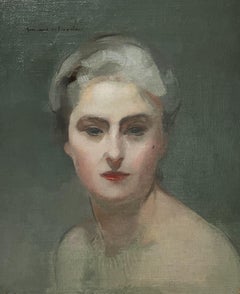
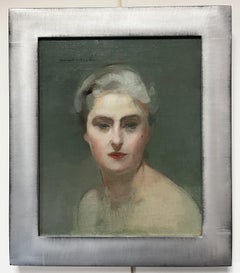
Lucien-Victor Guirand de Scévola (1871-1950) Portrait of his wife, oil signed

Lucien-Victor Guirand de Scévola (1871-1950) Portrait of his wife, oil signed

By Lucien-Victor Guirand de Scévola

Located in Paris, FR

Lucien-Victor Guirand de Scévola (1871-1950) Portrait of his wife, Marie-Thérèse Pierat signed upper left oil on canvas 46 x 38 cm Framed : 57,5 x 49,5 cm The intensity and unique...

Category

Art Deco 1910s Paintings
Materials
Oil