1910s Art
to
273
1,083
357
390
190
167
Overall Width
to
Overall Height
to
7,534
21,275
158,862
232,588
1,965
2,239
4,923
6,410
5,809
13,282
19,671
25,657
18,301
13,585
5,380
410
311
138
138
47
20
19
12
6
1
1,224
880
32
1,424
688
591
408
384
349
215
151
144
137
132
119
114
100
94
91
76
76
59
58
862
626
482
396
384
95
51
34
23
22
845
362
1,165
949
Period: 1910s
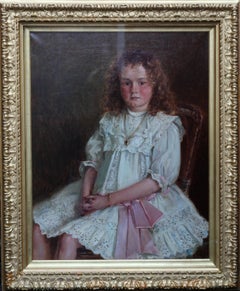
Portrait of a Lady in Orange Shawl - British Edwardian art portrait oil painting
Located in Hagley, England
This lovely British Edwardian portrait oil painting is attributed to female artist Ursula Wood. Painted circa 1910 is is a half length portrait of a beautiful woman in an orange shaw...
Category
Realist 1910s Art
Materials
Oil
Old Soldier
Located in New York, NY
Humphris is a highly acclaimed American sculptor and created a large body of work of Western subject matter, particularly of the American Indian so rare to get a soldier. He did liv...
Category
American Realist 1910s Art
Materials
Bronze
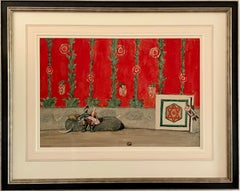
Bayros-Mappe III - Héliogravure by Fraz von Bayros - 1913
Located in Roma, IT
Héliogravure on japanese paper realized by Fraz von Bayros in 1913 for Ex Libris Verlag K. Th. Senger, Munich.
Mounted on passepartout. Edition of 260, hand signed in pencil by the ...
Category
Symbolist 1910s Art
Materials
Photogravure
The European Macabre Dance N.2 - Lithograph by A. Martini - 1915
Located in Roma, IT
The European Macabre Dance N.2 is an hand-colored lithograph, from the Series "La Danza Macabra Europea" illustrated by Alberto Martini (Oderzo, 1876 – Milan, 1954) in 1915.
Signed...
Category
Symbolist 1910s Art
Materials
Lithograph
Elegant Woman Seen in Cafe de la Paix (Paris) - Pencil drawing - circa 1914
Located in Paris, IDF
Georges CONRAD (1874-1936)
Elegant Woman Seen in Cafe de la Paix (Paris)
Original pencil and color pencils drawing
Signed with the stamp of atelier
On paper 26.5 x 20 cm (c. 10,4 x ...
Category
Academic 1910s Art
Materials
Carbon Pencil, Color Pencil
Circa 1910 illustrated document by Paillon - Panoramic view of the Mont Blanc
Located in PARIS, FR
This rare circa 1910 illustrated document by Maurice Paillon presents a detailed panoramic view of the Mont Blanc Massif, one of the most legendary and awe-inspiring mountain ranges in the world. Capturing the majesty of Western Europe’s highest peak (4,809m) and its surrounding summits, glaciers, and valleys, this historical document serves as both an artistic masterpiece and a valuable mountaineering reference.
At the time of its creation, alpinism was flourishing, with climbers from across Europe eager to conquer Mont Blanc and its neighboring peaks. The illustration, likely derived from photographic and topographic studies, offers a remarkably accurate relief representation of the range. Every major peak, ridge, and glacier is meticulously labeled, providing an invaluable geographical guide to the region.
The sepia-toned print evokes the early 20th-century aesthetic, blending scientific precision with artistic craftsmanship. The inclusion of key locations such as Chamonix, Aiguille du Midi, Dôme du Goûter, and the Vallée...
Category
1910s Art
Materials
Linen, Paper, Lithograph
A Jolly Time -- German Genre Tavern Painting, 1918
Located in Soquel, CA
Wonderful German genre painting of 17th century tavern scene in style of Franz Hals by Karl Josef Muller (German, 1864-1942) dated 1918. Signed and dated lower left corner "Karl Muller - Hamburg 1918". Condition: Good; professionally restored: Canvas restreched on new stretcher bars; five repairs made to small tears in canvas (see image); cleaned and re-varnished with UV-resistant varnish. Unframed. Image size: 39.5"H x 55"W. We have the original frame which needs some extensive repair to the gesso. Happy to include the frame with the painting as is.
Karl Müller was born in Hamburg-Altstadt in 1865. His wealthy Jewish parents Abraham Müller (1832-1896), citizen of the Hanseatic city since 1869, and Henriette "Jette", b. Burchard (born 1832 Neubuckow / Mecklenburg), had a cigar factory at Spielbudenplatz 5 in St.Pauli. When Karl Müller was ten years old, next to factory and warehouse, now at Speersort 11 (Altstadt), there was also a branch in Altona-Ottensen with the address Am Felde 68. The family lived at the time at Pferdemarkt 13 (Old Town).
After attending the Jewish Foundation School at the Zeughausmarkt, Karl Müller completed a three-year lithography apprenticeship. From 1886 to 1888, he studied at the Royal Saxon School of Applied Arts in Dresden with the history and decoration painter Donadini, then with Professor Hanke of the Prussian Academy of Arts in Berlin.
Karl Müller's painting style was conventional-realistic and did not follow modern trends. In 1891, the oil paintings "Preparation for the Service", "In the guardroom", tattoo", "gymnastics lesson", "covert patrol” and "return from the field service exercise”, whose main motive almost always soldiers formed.In 1893, he painted the" invasion of the 76er " as a horizontal format in black and white, the painting was acquired by the Museum of Hamburg History in 1930. The disposition of Karl Müller could be classified as "kaisertreu" and "national" (Maike Bruhns) at this time - not by chance he acted with his Nicknamed "Soldatenmüller", he successfully participated in exhibitions in Berlin and Hamburg before the turn of the century.
Even at this time, the frequent change of residence is striking: 1893 Papendamm 25 (Rotherbaum), 1896 Bundesstraße 9 (Rotherbaum). In 1898 he was in the Hamburg address book as a "genre and portrait painter" with the residential address 1. average 43 (Rotherbaum) out.
At the age of 38, Karl married in 1903 in the Hanseatic city of the Jewish Louise Hauer (born 12.2.1872 in Hamburg), called "Lieschen". Before her marriage, she lived with her mother at Grindelberg 78. Her father, Martin Hauer (1836-1897), also born in Hamburg and was a citizen of the city since 1862, owned a factory for soap and perfume. In 1904 and 1911, the two daughters Karla and Lotte were born.
1904, the family lived at this time in the Bogenstraße 20, Karl Müller commissioned a portrait of the emigrated hamburger Henry Jones opening the same lodge in the Hartungstraße 9-11. Already at this time he might have been a member of the Hamburg Artists Association of 1832.
Starting from 1908 further change of dwellings on the basis of the telephone books are comprehensible: nearly yearly the family moved and moved thereby from the Grindel quarter over Hoheluft east to Harvestehude and Winterhude. Around 1912 she moved into an apartment in Sierichstraße 156. Here, the landlord Schröder provided the artist with an area of around 45 square meters as a studio on the dry floor. But the building police criticized this use and after some disputes, the painter had to move once again with family and studio. The official telephone directory recorded as an address from 1914 to 1918 Klosterallee 20 (Harvestehude).
Friedrich Jansa described Karl Müller's changed motif choice in his artist's glossary in 1912: "In recent years he has been watercolouring a lot in the Hamburg area and now mainly takes his motifs from Hamburg harbor...
Category
Realist 1910s Art
Materials
Linen, Oil
$6,000 Sale Price
20% Off
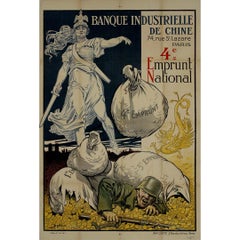
1918 original poster for 4th national loan for the Banque Industrielle de Chine
Located in PARIS, FR
The original poster by J. Basté in 1918, promoting the 4th national loan for the Banque Industrielle de Chine, stands as a testament to the financial mobilization efforts during Worl...
Category
1910s Art
Materials
Linen, Paper, Lithograph
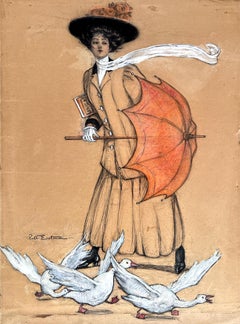
1918 original poster for - "We Will Know How to Do Without"
Located in PARIS, FR
This 1918 original poster by Camille Boutet, titled "Nous Saurons Nous en Priver" ("We Will Know How to Do Without"), is a striking piece of World War I propaganda, designed to encou...
Category
1910s Art
Materials
Paper, Lithograph
Vaslav Nijinsky as Siegfried in Swan Lake.
Located in London, GB
BARBIER, George.
Vaslav Nijinsky as Siegfried in Swan Lake.
London, C. W. Beaumont, 1913.
‘The designs, although somewhat fantastic in treatment, do convey the impression produced...
Category
Art Nouveau 1910s Art
Materials
Lithograph
Trafalgar Square, London
By Alvin Langdon Coburn
Located in London, GB
Signed on mount
Inscribed 'Christmas Greetings to members of the Academy of Osiris from Bro. Alvin & Sr. Edith, 1956'
Photogravure, mounted on card
10 1/4 x 7 3/4 inches
Category
1910s Art
Materials
Photogravure
Beauregard House, New Orleans
Located in New Orleans, LA
Louis Oscar Griffith (1875-1956) was an American painter known for his etchings, paintings, and aquatints of landscapes, especially scenes of Brown County, Indiana, New Orleans, LA and Texas. Griffith was born in Indiana in 1875 but later moved to Dallas, TX with his family. As a teen, he took art lessons with acclaimed landscape artist, Frank Reaugh...
Category
Impressionist 1910s Art
Materials
Paper, Graphite
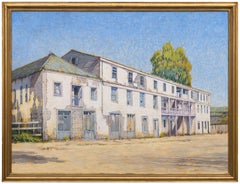
Early 20th Century Original Autumnal Landscape -- The Old Adobe Water Mill
Located in Soquel, CA
Early 20th Century Original Autumnal Landscape of Old Water Mill in Oil on Linen
Wonderful antique landscape of water mill during autumn season. Smoke billowing from the mill adds t...
Category
American Impressionist 1910s Art
Materials
Linen, Oil, Stretcher Bars
$520 Sale Price
20% Off
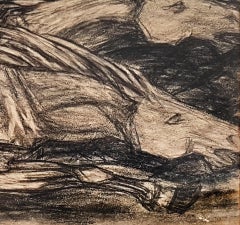
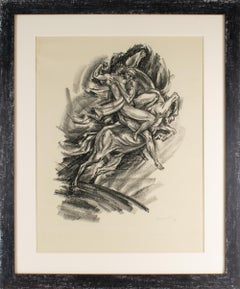
Galloping Horses - Charcoal on Paper by Giuseppe Cominetti - 1916
By Giuseppe Cominetti
Located in Roma, IT
Galloping Horses is a wonderful and original drawing in charcoal on paper, realized by the italian divisions artist Giuseppe Cominetti.
Hand-signed in charcoal and dated on the lower...
Category
Post-Impressionist 1910s Art
Materials
Charcoal
Le Serpent, Impressionist Woodblock by Raoul Dufy
By Raoul Dufy
Located in Long Island City, NY
Raoul Dufy, French (1877 - 1953) - Le Serpent, Year: circa 1911, Medium: Woodblock, Image Size: 8 x 7.5 inches, Size: 13 x 10 in. (33.02 x 25.4 cm), Descr...
Category
Impressionist 1910s Art
Materials
Woodcut
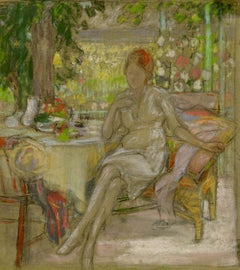
untitled Woman by the Windows
Located in Fairlawn, OH
Untitled (Woman by the Windows)
Unsigned.
Pastel on board, c. 1915
Created while the artist was in Giverny, France
Provenance:
Gift of the artist to his wife, Mary Hess Buehr
by Desc...
Category
Abstract Impressionist 1910s Art
Materials
Pastel
Bayros-Mappe III - Héliogravure by Fraz von Bayros - 1913
Located in Roma, IT
Héliogravure on japanese paper realized by Fraz von Bayros in 1913 for Ex Libris Verlag K. Th. Senger, Munich.
Mounted on passepartout. Edition of 260, hand signed in pencil by the ...
Category
Symbolist 1910s Art
Materials
Photogravure
Bayros-Mappe III - Héliogravure by Fraz von Bayros - 1913
Located in Roma, IT
Héliogravure on japanese paper realized by Fraz von Bayros in 1913 for Ex Libris Verlag K. Th. Senger, Munich.
Mounted on passepartout. Edition of 260, hand signed in pencil by the ...
Category
Symbolist 1910s Art
Materials
Photogravure
Bayros-Mappe III - Héliogravure by Fraz von Bayros - 1913
Located in Roma, IT
Héliogravure on japanese paper realized by Fraz von Bayros in 1913 for Ex Libris Verlag K. Th. Senger, Munich.
Mounted on passepartout. Edition of 260, hand signed in pencil by the ...
Category
Symbolist 1910s Art
Materials
Photogravure
Bayros-Mappe III - Héliogravu by Fraz von Bayros - 1913
Located in Roma, IT
Héliogravure on japanese paper realized by Fraz von Bayros in 1913 for Ex Libris Verlag K. Th. Senger, Munich.
Mounted on passepartout. Edition of 260, hand signed in pencil by the ...
Category
Symbolist 1910s Art
Materials
Photogravure
Bayros-Mappe III - Héliogravu by Fraz von Bayros - 1913
Located in Roma, IT
Héliogravure on japanese paper realized by Fraz von Bayros in 1913 for Ex Libris Verlag K. Th. Senger, Munich.
Mounted on passepartout. Edition of 260, hand signed in pencil by the ...
Category
Symbolist 1910s Art
Materials
Photogravure
Profile of Woman - Drawing - 1910
Located in Roma, IT
Profile of Woman is a drawing realized by Dinz in 1910.
Charcoal on ivory-colored paper.
Hand-signed on the lower
Good conditions.
The artwork realized through deft quick strokes...
Category
Modern 1910s Art
Materials
Charcoal
Portrait de Femme - Modernist Portrait Oil Painting by Alfredo Guttero
Located in Marlow, Buckinghamshire
Signed oil on canvas portrait painting by Argentine modernist painter Alfredo Guttero. The work is a head and shoulders portrait of a woman with black hair and wearing a shawl.
Sign...
Category
Modern 1910s Art
Materials
Canvas, Oil
The Golden Apple - British RSA exh art female portrait oil painting peacock bird
By Robert Hope
Located in Hagley, England
This sumptuous Scottish oil painting is by noted artist Robert Hope. It was most recently part of the Paisley Art Institute Collection, formerly held by the Paisley Museum and Art Ga...
Category
Pre-Raphaelite 1910s Art
Materials
Oil
$85,254 Sale Price
20% Off
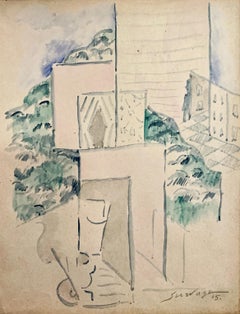
"Paysage Cubiste" Watercolor 1915 cm. 23, 5 x 18, 5 Cubism
Located in Torino, IT
Survage,Cubism,1915,france
Leopold Survage ( 1879-1968)
Work signed lower right
Provenance :
Gallerie Zlotowski Paris
Galerie Guillermo de Osma ,Madrid
Private collection In Madrid...
Category
Cubist 1910s Art
Materials
Paper, Watercolor
$7,657 Sale Price
20% Off
Les bords de l’Allier, à Pont-du-Château, fin d’après-midi d’été
Located in Barbizon, FR
In parallel to his studies of architecture, Lebourg takes courses at the school of the Beaux-Arts of Rouen.
After a stay of several years in Alger, where he taught drawing, he returned to France and exhibited in the salon from 1878 and then regularly until 1914.
He participated in the Impressionists' exhibition in 1879 and became a member of the National Society of Fine Arts in 1894. He was promoted to Knight of the Legion of Honor in 1903 and then to the rank of Officer in 1924.
Winter landscapes and waterfront sites had the preference of the artist, for whom values prevail over tones. Lebourg did not divide the tone but fragmented the key to make the color vibrate.
In 1916 a major exhibition will be devoted to his work with more than 200 painted works exposed.
Museums :
Alger – Agen – Aix les Bains...
Category
Impressionist 1910s Art
Materials
Canvas, Oil
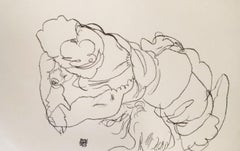
R. Layni, Zeichnungen folio, "Seated Woman with Bent Knee" Collotype plate I
Located in Palm Beach, FL
After Egon Schiele (1890 – 1918), AUSTRIA
“ART CANNOT BE MODERN, ART IS PRIMORDIALLY ETERNAL.” -SCHIELE
Defiantly iconoclastic in life and art, Egon Schiele is esteemed for his mas...
Category
Vienna Secession 1910s Art
Materials
Paper
1910 original poster by Henri Gray for the Exposition Universelle Internationale
By Henri Gray (Henri Boulanger)
Located in PARIS, FR
The 1910 original poster by Henri Gray for the Exposition Universelle Internationale in Brussels, created for the Chemin de Fer du Nord, is an exquisite representation of early 20th-...
Category
1910s Art
Materials
Paper, Lithograph
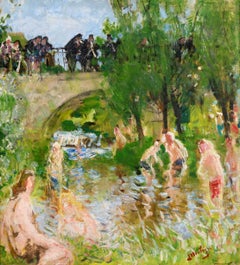
Au Jardin
Located in Mc Lean, VA
Elegant figures in a spring garden with mother and child. Colors are pure and fresh. Has everything that one would want in a D'espagnat . A top 2 % work by this artist .. Signed ...
Category
1910s Art
Materials
Oil
$118,000
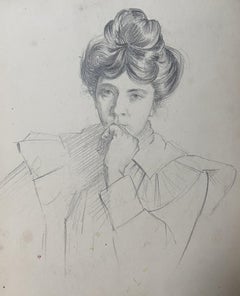
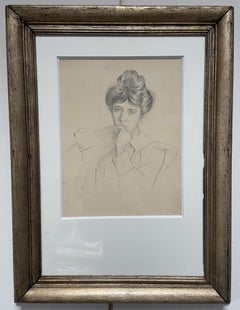
André Eugène Costilhes (1865-1940) A Pensive young woman, portrait drawing
Located in Paris, FR
André Eugène Costilhes (1865-1940)
A Pensive young woman
pencil on paper
29.5 x 22.5 cm (view)
In good condition, except some traces of stains
Framed : 55.5 x 41.5 cm (vintage frame...
Category
Symbolist 1910s Art
Materials
Pencil
The Old Days - Historical Photo - 1915
Located in Roma, IT
The Old Days - Historical Photo is a black and white vintage photo, realized in 1915.
It belongs to historical album including historical moment, royal families, and political eve...
Category
Modern 1910s Art
Materials
Photographic Paper
Basting the Turkey, Saturday Evening Post Cover Study
Located in Fort Washington, PA
Medium: Oil on Canvas Laid on Board
Signature: Unsigned
The Saturday Evening Post, November 16, 1912 cover Study (Thanksgiving Edition)
Category
1910s Art
Materials
Canvas, Oil, Board
“A Lovely Day”
Located in Southampton, NY
Oil on canvas laid down on fiberboard by the American artist, Albert Lorey Groll. Signed lower left and in pencil lower right. Signed verso as well. Condition is good. Circa 1910. Sa...
Category
Tonalist 1910s Art
Materials
Canvas, Oil, Fiberboard
$1,120 Sale Price
20% Off
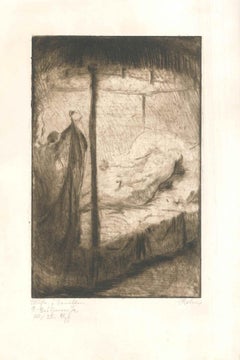
Mein Weg mit dem Weib #18 - Original Etching by W.R. Rehn
Located in Roma, IT
Drypoint and aquatint (brown ink) on cream paper.
Signed "Rehn" in pencil on the lower right margin. Titled and numbered in pencil on the lower left margin. Edition of 25 prints. Fr...
Category
Symbolist 1910s Art
Materials
Drypoint, Aquatint
The Old Days - Historical Photo - The Early 20th century
Located in Roma, IT
The Old Days - Historical Photo is a black and white vintage photo, realized in Early 20th century.
It belongs to historical album including historical moment, royal families, and ...
Category
Modern 1910s Art
Materials
Photographic Paper
1918 original poster titled Ligue Maritime Française - Les Réalités de la Guerre
Located in PARIS, FR
The 1918 original poster titled Ligue Maritime Française - Les Réalités de la Guerre sur Mer was created by Léon Haffner, a renowned French artist and naval illustrator. Known for his depictions of maritime themes, Haffner produced this piece during the final year of World War I, under the commission of the Ligue Maritime Française.
This poster was part of a broader campaign by the Ligue Maritime Française to raise awareness of France’s naval challenges and achievements during the war. The focus was on the harsh realities faced by the French Navy as it defended the country’s waters against the threat of German U-boats (submarines). By highlighting the significant victories of the French Navy, particularly the destruction of numerous German submarines, this work was intended to educate the public about the importance of France's maritime defense during the war.
The Ligue Maritime Française played a crucial role in promoting maritime interests in France, especially during a time when naval power was critical to national security. Through this poster and similar works, the organization aimed to strengthen public support for the war effort by emphasizing the vital role of the French Navy in protecting the nation.
Léon Haffner's involvement in this project underscores his reputation as an artist who could convey the significance of naval warfare through his work. His contributions helped elevate public consciousness regarding the maritime front of World War I, fostering both pride in French naval accomplishments and awareness of the ongoing risks and challenges faced by the nation at sea.
The 1918 poster Les Réalités de la Guerre sur Mer is more than just a piece of wartime propaganda; it serves as a historical document, reflecting the broader efforts of France to mobilize public opinion and support for the war. It remains an important artifact from World War I, capturing a critical aspect of the conflict and Léon Haffner's role in illustrating the maritime realities of that time.
Original Poster
War 14-18 - Navy
Maritime map...
Category
1910s Art
Materials
Paper, Lithograph
Oil Painting Pair by Robert Watson "Highland cattle and Sheep in the Glen"
Located in Mere, GB
Oil Painting Pair by Robert Watson "Highland cattle and Sheep in the Glen" A Cheshire painter of Highland cattle and sheep represented in the Harris museum Preston. Both oil on canv...
Category
1910s Art
Materials
Oil
Banquet of Love - Etching by Alberto Martini - 1917
Located in Roma, IT
Banquet of love is a modern artwork realized by Alberto Martini in 1917.
Etching and drypoint. Second state of three.
Signed on plate
Printed in 1945 in 25 specimen.
Alberto Mar...
Category
Symbolist 1910s Art
Materials
Etching
Charming Small-scale Landscape by James GH Spindler, Royal Scottish Academy
Located in New York, NY
James Gustavus Hope Spindler (Scottish, 1862-1916)
Untitled, 1913
Oil on board
7 x 9 3/4 in.
Frame: 15 x 17 3/4 x 2 1/4 in.
Signed and dated lower left: James GH Spindler 1913
James...
Category
English School 1910s Art
Materials
Oil, Board
Reclining Nude on Bed
By Rudolf Bauer
Located in Fairlawn, OH
Reclining Nude on Bed
Lithograph, c. 1910
Signed in pencil lower right and in the plate, lower right
Image size: 7-1/4 x 13"
Sheet size: 12 1/2 x 19 inches
Condition: very good
Some aging to the tan paper
Provenance: Estate of the Artist
Borghi & Company, New York
Rudolph Bauer
1889-1953
Rudolf Bauer was born in Lindenwald near Bromberg, Silesia, in 1889 but his family moved only a few years later to Berlin. In 1905 Bauer began his studies at the Berlin Academy of Art but left the Academy only a few months later to educate himself. The upshot was paintings, caricatures and comical drawings which were published in 'Berliner Tageblatt', 'Ulk' and 'Le Figaro'.
From 1912 Bauer contributed to the magazine and Gallery 'Der Sturm' founded by Herwarth Walden and pivotal to German Expressionism and the international avant-garde. In 1915 Rudolf Bauer participated for the first time in a group show at Walden's gallery. There he met Hilla von Rebay, with whom he began a relationship of many years that was crucial to Bauer's later work. By 1922 Bauer had shown work at about eight exhibitions mounted by 'Der Sturm'. From 1918 he also taught at the 'Der Sturm' art school, where Georg Muche was the director. After the war ended, Bauer was a founding member of the 'November Group' although he did not collaborate closely with the group. In 1919 Bauer joined forces with the painter and architect Otto Nebel and with Hilla von Rebay to found the artists' association 'Die Krater'. Impressionist at the outset, Bauer's early work reveals Cubist and Expressionist influences. By 1915/16 Bauer had switched to an abstract pictorial idiom, which is markedly influenced by Kandinsky. In the early 1920s Bauer was also preoccupied with Russian Constructivism as well as the Dutch de Stijl group. Bauer's decided preference for non-representational painting culminated in 1929 with the foundation of a private museum, 'Das Geistreich', which he directed as a salon for abstract art.
Political developments in Germany forced Bauer to sell some of his work in America from 1932. His agent in America was Hilla von Rebay, who was by now director of the Guggenheim Collection. In 1936 she organized a touring exhibition of non-representational European art that included sixty Rudolf Bauer oil...
Category
Jugendstil 1910s Art
Materials
Lithograph
untitled (Young Woman Washing)
By Rudolf Bauer
Located in Fairlawn, OH
untitled (Young Woman Washing)
Lithograph, c. 1910
Signed in pencil lower right; signed in the plate lower right (see photo)
Image size: 11 x 5-1/8"
Sheet size: 18 7/8 x 12 5/8 inches
Condition: Very good
Aging to the tan paper it is printed on
Provenance: Estate of the Artist
Borghi & Company, NYC
Rudolph Bauer
1889-1953
Rudolf Bauer was born in Lindenwald near Bromberg, Silesia, in 1889 but his family moved only a few years later to Berlin. In 1905 Bauer began his studies at the Berlin Academy of Art but left the Academy only a few months later to educate himself. The upshot was paintings, caricatures and comical drawings which were published in 'Berliner Tageblatt', 'Ulk' and 'Le Figaro'.
From 1912 Bauer contributed to the magazine and Gallery 'Der Sturm' founded by Herwarth Walden and pivotal to German Expressionism and the international avant-garde. In 1915 Rudolf Bauer participated for the first time in a group show at Walden's gallery. There he met Hilla von Rebay, with whom he began a relationship of many years that was crucial to Bauer's later work. By 1922 Bauer had shown work at about eight exhibitions mounted by 'Der Sturm'. From 1918 he also taught at the 'Der Sturm' art school, where Georg Muche was the director. After the war ended, Bauer was a founding member of the 'November Group' although he did not collaborate closely with the group. In 1919 Bauer joined forces with the painter and architect Otto Nebel and with Hilla von Rebay to found the artists' association 'Die Krater'. Impressionist at the outset, Bauer's early work reveals Cubist and Expressionist influences. By 1915/16 Bauer had switched to an abstract pictorial idiom, which is markedly influenced by Kandinsky. In the early 1920s Bauer was also preoccupied with Russian Constructivism as well as the Dutch de Stijl group. Bauer's decided preference for non-representational painting culminated in 1929 with the foundation of a private museum, 'Das Geistreich', which he directed as a salon for abstract art.
Political developments in Germany forced Bauer to sell some of his work in America from 1932. His agent in America was Hilla von Rebay, who was by now director of the Guggenheim Collection. In 1936 she organized a touring exhibition of non-representational European art that included sixty Rudolf Bauer oil...
Category
Jugendstil 1910s Art
Materials
Lithograph
1917 Original advertising poster for "Les On Dit" satirical newspaper - WWI
Located in PARIS, FR
The 1917 original advertising poster for "Les On Dit" stands as a testament to the vibrant press culture of its time. This satirical publication, with its bold and compelling poster,...
Category
1910s Art
Materials
Linen, Paper, Lithograph
"Love" Copper Plate Heliogravure
Located in Palm Beach, FL
2018 marks the centenary anniversary of Ferdinand Hodler’s death. In that 100 years time, the art world’s esteem of this important artist has proved fickle. It has shifted from extolling his artistic merits during his lifetime to showing something of a feigned disdain- more reflective of the world political order than a true change of heart for Hodler’s work. After years of Hodler being all but a footnote in the annals of art history and generally ignored, finally, the pendulum has righted itself once again. Recent retrospective exhibitions in Europe and the United States have indicated not only a joyful rediscovery of Hodler’s art but a firm conviction that his work and world view hold particular relevance today. DAS WERK FERDINAND HODLERS is not only a collection of printed work reflecting the best of all of his painted work created up to 1914 just before the outbreak of World War I, the portfolio itself is an encapsulation of Hodler’s ethos, Parallelisme.
Hodler developed his philosophy of Parallelisme as a unifying approach to art which strips away detail in search of harmony. By means of abstraction, symmetry and repetition, Hodler sought ways to depict Nature’s essence and her fundamental, universal order. He believed these universal laws governing the natural, observable world extend to the spiritual realm. Symbolist in nature with Romantic undertones, his works are equally portraits of these universal concepts and feelings governing all life as they are a visual portrait in the formal sense. Whether his subject is a solitary tree, a moment in battle, mortal fear, despair, the awe inspired by a vast mountain range, a tender moment or even the collective conviction in a belief, Hodler unveils this guiding principle of Parallelisme.
Several aspects of Hodler’s portfolio reinforce his tenets of Parallelisme. The Table of Contents clearly preferences a harmonious design over detail. The two columns, consisting of twenty lines each, list the images by order of appearance using their German titles. The abbreviated titles are somewhat cryptic in that they obscure the identities of the sitters. Like the image Hodler presents, they are distillations of the sitter without any extraneous details. This shortening was also done in an effort to maintain a harmonious symmetry of the Table of Contents, themselves, and keep titles to a one-line limit. The twenty-fourth title: “Bildnis des Schweizerischen Gesandten C.” was so long, even with abbreviation, that it required two lines; so, for the sake of maintaining symmetry, the fortieth title: “Bauernmadchen” was omitted from the list. This explains why the images are not numbered. Hodler’s reasoning is not purely esoteric. Symmetry and pattern reach beyond mere formal design principles. Finding sameness and imposing it over disorder goes to the root of Hodler’s identity and his art. A Swiss native, Hodler was bi-lingual and spoke German and French. Each printed image, even number forty, have titles in both of Hodler’s languages. Certainly, there was a market for Hodler’s work among francophones and this inclusion may have been a polite gesture to that end; however, this is the only place in the portfolio which includes French. With German titles at the lower left of each image, Hodler’s name at bottom center and corresponding French titles at the lower right of each image, there is a harmony and symmetry woven into all aspects of the portfolio. This holds true for the page design, as it applies to each printed image and as it describes the Swiss artist himself. Seen in this light, Hodler’s portfolio of printed work is the epitome of Hodler’s Parallelisme. DAS WERK FERDINAND HODLERS is also one of the most significant documents to best tell the story of how Hodler, from Switzerland, became caught between political cross-hairs and how the changing tides of nations directly impacted the artist during his lifetime as well as the accessibility of his art for generations to come.
The Munich-based publisher of the portfolio, R. Piper & Co., Verlag, plays a crucial role in this story. Publishing on a wide range of subjects from philosophy and world religion to music, literature and the visual arts; the publisher’s breadth of inquiry within any one genre was equal in scope. Their marketing strategy to publish multiple works on Hodler offers great insight as to what a hot commodity Hodler was at that time. R.Piper & Co.’s Almanach, which they published in 1914 in commemoration of their first ten years in business, clearly illustrates the rapid succession- strategically calculated for achieving the deepest and broadest impact - in which they released three works on Hodler to hit the market by the close of 1914. DAS WERK FERDINAND HODLERS was their premier publication. It preceded C.A. Loosli’s Die Zeichnungen Ferdinand Hodlers, a print portfolio after 50 drawings by Hodler which was released in Autumn of 1914 at the mid-level price-point of 75-150 Marks; and a third less expensive collection of prints after original works by Hodler, which had not been included in either of the first two portfolios, was released at the end of that year entitled Ferdinand Hodler by Dr. Ewald Bender.
The title and timing of DAS WERK FERDINAND HODLERS' debut leaves little doubt as to the connection it has with another avant-garde portfolio of art prints, Das Werk Gustav Klimts, released in 5 installments from 1908 -1914 by Galerie Miethke in Vienna. Hodler, himself, was involved in Klimt’s ground-breaking project. As the owner of Klimt’s 1901 painting, “Judith with the Head of Holifernes” which appears as the ninth collotype print in the second installment of Das Werk Gustav Klimts, Hodler was obliged to grant access of the painting to the art printers in Vienna for them to create the collotype sometime before 1908. Hodler had been previously invited in 1904 to take part in what would be the last exhibition of the Vienna Secession before Klimt and others associated with Galerie Miethke broke away. In an interview that same year, Hodler indicated that he respected and was impressed by Klimt. Hodler’s esteem for Klimt went beyond the art itself; he emulated Klimt’s method aimed at increasing his market reach and appeal to a wider audience by creating a print portfolio of his painted work. By 1914, Hodler and his publisher had the benefit of hindsight to learn from Klimt’s Das Werk publication.
Responding to the sluggish sales of Klimt’s expensive endeavor, Hodler’s publisher devised the same diversified 1-2-3 strategy for selling Hodler’s Das Werk portfolio as they did with regards to all three works on Hodler they published that year. For their premium tier of DAS WERKS FERDINAND HODLERS, R. Piper & Co. issued an exclusive Museum quality edition of 15 examples on which Hodler signed each page. At a cost of 600 Marks, this was generally on par with Klimt’s asking price of 600 Kronen for his Das Werk portfolio. A middle-tiered Preferred edition of 30, costing somewhat less and with Hodler’s signature only on the Title Page, was also available. The General edition, targeting the largest audience with its much more affordable price of 150 Marks, is distinguishable by its smaller size.
Rather than use the subscription format Miethke had chosen for Klimt’s portfolios which proved to have had its challenges, R. Piper & Co. employed a different strategy. In addition to instantly gratifying the buyer with all 40 of the prints comprising DAS WERK FERDINAND HODLERS and the choice among three price points, they advertised in German journals a fourth possibility of ordering single prints from them directly. These printed images are easily discernible from the three complete folio editions. The paper size of the single purchased images is of the larger format like the Museum and Preferred editions, measuring 65 h x 50 w cm; however, the paper itself is the same copper print paper used in the General edition and then mounted on poster board. The publishing house positioned itself to be a direct retailer of Hodler’s art. They astutely recognized the potential for profitability and the importance, therefore, of having proprietary control over his graphic works.
R. Piper & Co. owned the exclusive printing rights to Hodler’s best work found in their three publications dating from 1914. That same year, a competing publication out of Weimar entitled Ferdinand Hodler: Ein Deutungsversuch von Hans...
Category
Symbolist 1910s Art
Materials
Paper
1911 Quinquina Bonnet original aperitif poster by PB - French Advertising
Located in PARIS, FR
Advertising has always been a captivating reflection of its time, and the 1911 Quinquina Bonnet aperitif poster by PB, a French wine-based aperitif advertisement, is no exception. Th...
Category
1910s Art
Materials
Linen, Paper, Lithograph
L'eglise de Villeneuve sur Bellot, Seine-et-Marn
Located in San Francisco, CA
Artist: August Lepere – French (1849-1918)
Title: L'eglise de Villeneuve sur Bellot, Seine-et-Marn
Year: 1915
Publisher: Edmond Sagot (blindstamp, lower ...
Category
Realist 1910s Art
Materials
Etching
Adoration of the Magi / - The Rider of the Sun -
Located in Berlin, DE
Walter Helbig (1878 Falkenstein - 1968 Ascona), Adoration of the Magi, 1918. Hand-colored linocut, 30 cm x 22.5 cm (depiction), 50 cm x 35 cm (sheet size), signed “W.[alter] Helbig” in pencil lower right, inscribed “Adoration of the Magi” lower left and dated “1918”. Below this a handwritten dedication “with heartfelt Christmas greetings”.
- Paper somewhat darkened and with slight creases, thumbtack holes in the corners
- The Rider of the Sun -
The 'apocalypse' of World War I brought about a return to sacred art. Walter Helbig belonged to the circle of the 'Brücke' and the 'Blauer Reiter'. With his reinterpretation of religious themes in an expressionist formal language, Helbig shaped an avant-garde neo-sacred art. This is symbolically expressed in the silhouette of the rider against the sun-like yellow background. It refers to the awakening initiated by the Blue Riding, which is now linked back to the sacred.
The rider and horse "look" at Mary and the Christ Child, who occupy the entire field. Opposite them are the three kings, the eldest of whom kneels before Christ and offers him a gold-filled casket. The expressionist lines give rise to a tower that rises into the "sun", so that the gift has become a Gothic church, expressing the hope that the fallen world will be resurrected in the name of Christ. This dimension of meaning is emphasized by the magical effect of the color scheme.
About the artist
In 1895, Walter Helbig began studying at the Dresden Academy of Art, where he became friends with the future Brücke artist Otto Müller, with whom he lived in Dresden from 1903 to 1905. While studying in Italy from 1897 to 1899, he met Arnold Böcklin and Adolf von Hildebrand. After completing his studies, he first worked for Otto Gussmann, painting churches. From 1905 to 1909 he worked as a freelance painter in Hamburg. In 1909, through the mediation of Otto Müller, Helbig made the acquaintance of artists from the 'Brücke'. In 1910 he exhibited at the founding exhibition of the Berlin 'Neue Sezession'. In the same year, he moved to Switzerland, where, together with Hans Arp and Oscar Lüthy, he founded the 'Moderne Bund' in Weggis, to which Cuno Amiet and Giovanni Giacometti also belonged. At the second exhibition of the 'Moderne Bund' in Zurich in 1911, Henri Matisse and Robert Delaunay were represented alongside artists from the 'Blauer Reiter'. In 1913, Helbig traveled to Paris with Arp and Lüthy. After the dissolution of the 'Moderne Bund', Helbig was represented at the first Dada exhibition in Zurich in 1914. In 1919, he joined the Berlin 'Novembergruppe'. After the devastation of World War I, Helbig turned increasingly to religious themes in his work. In 1924, like many other artists of his time, he moved to Ascona for financial reasons, where he became a naturalized citizen in 1938. There he founded the artists' association "The Great Bear", to which Marianne von Werefkin...
Category
Expressionist 1910s Art
Materials
Paper
The Thames near Bell Lock, a river landscape
Located in St. Albans, GB
Carl BRENNIR
A classic opportunity to buy a premier piece painted by Carl Brennir. It is oil on canvas and the canvas is in very good condition. It is not relined and is titled and ...
Category
Victorian 1910s Art
Materials
Oil
The Fortune Teller - Original China Ink by Gabriele Galantara - 1910s
Located in Roma, IT
The Fortune Teller is an original drawing in china ink drawing on creamy paper realized by Gabriele Galantara (1865-1937), in 1910s.
In good conditions.
This is an original drawi...
Category
Modern 1910s Art
Materials
Ink
Mother Happiness / - The ecstasy of maternal joy -
Located in Berlin, DE
Johannes Boese (1856 Ostrog - 1917 Berlin), Mutterglück, um 1910. Goldbraun patinierte Bronze auf gegossener rechteckiger Plinthe, montiert auf zweifarbigem Marmorsockel (9,5 cm Höhe...
Category
Art Nouveau 1910s Art
Materials
Bronze
Original poster Professeur Pagès L'art décoratif dans le dressage - Circus
By Harford
Located in PARIS, FR
Original poster by Harford, titled "Professeur Pagès et ses sensationnelles nouveautés L'art décoratif dans le dressage - La fontaine vivante et lumineuse," unveils a captivating spe...
Category
1910s Art
Materials
Linen, Paper, Lithograph
View of Istanbul – Golden Horn and Süleymaniye Mosque
Located in Paris, Île-de-France
Orientalist School
Attributed to Émile Willaey (1880-1963)
Title View of Istanbul – Golden Horn and Süleymaniye Mosque
Date 1910
Medium Oil on canvas
Dimensions 50 × 89 cm (canvas)...
Category
Art Nouveau 1910s Art
Materials
Oil
Satiric Scene For l’Asino - Pen and Pencil Drawing by G. Galantara - 1910s
Located in Roma, IT
Satiric Scene For l’asino is an original drawing in pencil and pen realized in 1910 ca. by Gabriele Galantara.
The state of preservation of the artwork is good.
The artwork with a ...
Category
Modern 1910s Art
Materials
Pen, Pencil
Amer Picon Poster 1910 by Bouchet Woman with Orange Peel
Located in Boca Raton, FL
In this poster, we see an orange peel transform into a beautiful woman who offers the viewer a taste of Amer Picon. It is interesting to note that the image...
Category
1910s Art
Materials
Lithograph
Mein Weg mit dem Weib - Original Etching by W.R. Rehn
Located in Roma, IT
Etching and aquatint on cream paper.
Signed in pencil on the lower right margin. Titled and numbered in pencil on the lower left margin. Edition of 25 prints.
Plate in excellent co...
Category
Symbolist 1910s Art
Materials
Drypoint, Aquatint
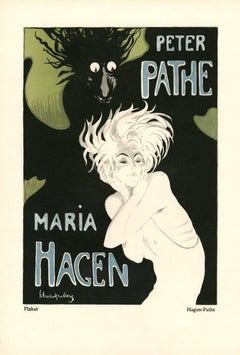
Kostume, Plakate, und Dekorationen, "Hagen-Pathe"
Located in Palm Beach, FL
Walter Schnackenberg’s style changed several times during his long and successful career. Having studied in Munich, the artist traveled often to Paris where he fell under the spell o...
Category
Expressionist 1910s Art
Materials
Lithograph
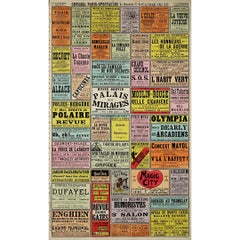
Poser - Officiel Paris-Spectacles 7 année April 6th to Saturday April 12th, 1913
Located in PARIS, FR
The original poster for "Officiel Paris-Spectacles 7 année" from Sunday, April 6th to Saturday, April 12th, 1913, offers a vibrant snapshot of the entertainment scene in Paris during...
Category
1910s Art
Materials
Paper, Lithograph
Work by Léon Bakst - early 20th-century wartime propaganda Avant-garde
By Leon Bakst
Located in PARIS, FR
This striking work by Léon Bakst, titled “Le grand peintre russe nous promet pour bientôt…” (“The great Russian painter promises us soon…”), vividly captures the spirit of early 20th...
Category
1910s Art
Materials
Linen, Paper, Lithograph
Original U. S. Marines, Soldiers of the Sea vintage WW1 poster linen backed
Located in Spokane, WA
Original U.S. Marines "Soldiers of the Sea" vintage poster by J.C. Leyendecker (c. 1917); linen-backed in A-, B+ condition, ready to frame.
The poster h...
Category
Art Deco 1910s Art
Materials
Offset
The Triumph of Bacchus, a large oil painting by Ferdinand Leeke
Located in London, GB
The Triumph of Bacchus, a large oil painting by Ferdinand Leeke
Oil-on-canvas, German, 1918
Frame: height 175cm, width 227cm, depth 10cm
Canvas: height...
Category
Romantic 1910s Art
Materials
Canvas, Oil
Danseuse au Voile, Renoir, Sculpture, impressionism, naked woman, nude, bronze
Located in Geneva, CH
PIERRE-AUGUSTE RENOIR (1841-1919) La Danseuse au Voile
Cast in 1964
Ed. 14/20 pcs / Conceived in 1913 Bronze with a black patina
64 x 46 x 28 cm
Signed, foundry's stamp and numbered ...
Category
Impressionist 1910s Art
Materials
Bronze